

How mentors at youth camps shape kids for life
Discover how mentors at youth camps build leadership, resilience, and self-esteem in children. A practical guide for parents choosing the right camp program.
TL;DR:
- Mentors at summer camps model positive behaviors, provide emotional support, and facilitate personal growth.
- Effective camps build structured mentorship programs with training, feedback, and leadership responsibilities.
- Outdoor environments enhance mentorship impact by offering real challenges, promoting resilience, and encouraging independence.
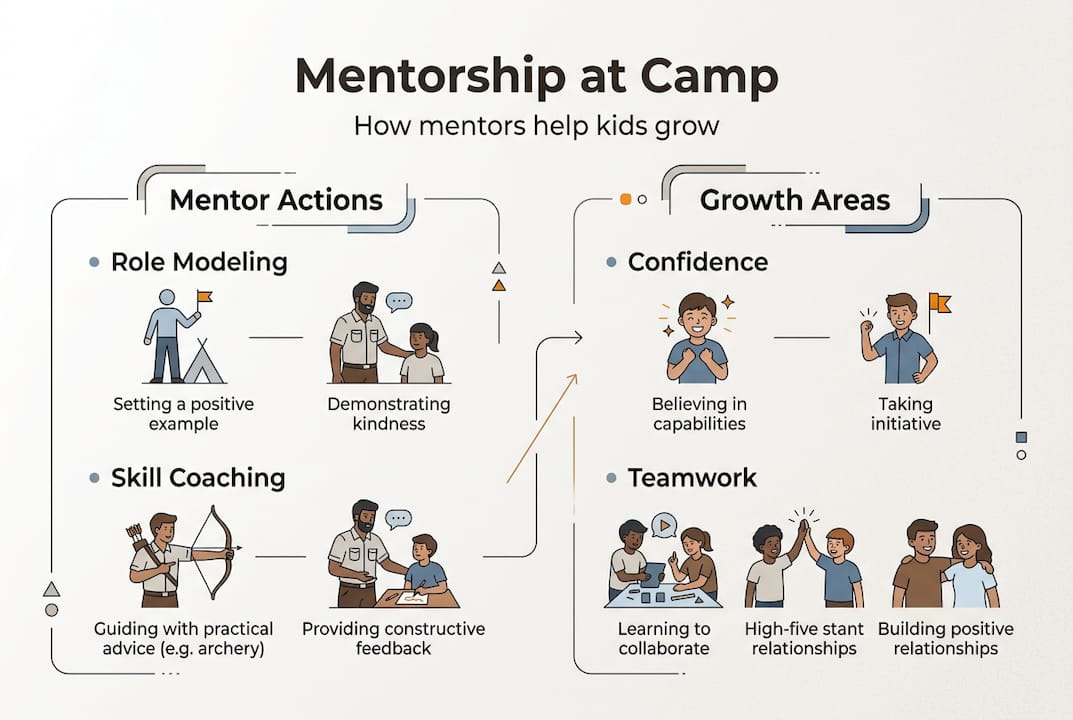
Most parents assume the biggest benefit of sending their child to a summer camp is the activities. The climbing walls, the mountain trails, the team sports. And yes, those matter. But the real driver of lasting change is often the person standing next to your child on that trail. Mentors model positive behaviors, provide emotional support, teach responsibility and teamwork, and facilitate personal growth through daily interactions and feedback. The activities are the stage. The mentor is the director. This guide breaks down exactly what mentors do, how great camps structure mentorship, and what you should look for when choosing a program for your child.
Table of Contents
- What mentors do: The hidden engine of youth camp growth
- How camps structure mentorship: Programs, methods, and routines
- The outdoor advantage: Why nature plus mentoring works
- What the research says: Real impacts and nuances
- What most parents overlook about camp mentorship
- Find the right camp for your child’s growth
- Frequently asked questions
Key Takeaways
| Point | Details |
|---|---|
| Mentors are the difference | Mentors turn regular camp activities into critical learning experiences that build lifelong skills. |
| Structured programs matter | Look for CIT/LIT mentorship, progression, and leadership roles for the most effective camp impact. |
| Outcomes are measurable | Well-mentored campers show higher self-esteem, better habits, and improved social skills, proven by research. |
| Nature amplifies growth | Outdoor settings give mentors opportunities to teach resilience, confidence, and teamwork in real time. |
What mentors do: The hidden engine of youth camp growth
When your child comes home from camp talking about a counselor who “really got them,” that is not a coincidence. It is the result of intentional mentorship in action. Mentors at youth camps are far more than supervisors keeping kids safe. They are role models, coaches, teachers, and sometimes the first adult outside the family who a child genuinely trusts.
The day-to-day role of a camp mentor covers a surprising range of responsibilities:
- Modeling behavior: Mentors demonstrate how to handle frustration, resolve conflict, and support teammates. Kids absorb this through observation, a process psychologist Albert Bandura called observational learning.
- Emotional support: Mentors check in individually, notice when a camper is struggling, and create space for honest conversation.
- Skill instruction: From navigation to cooking over a fire, mentors teach practical skills that build real confidence.
- Feedback and reflection: After activities, mentors help campers process what happened, what worked, and what to try differently next time.
- Group dynamics: Mentors keep a pulse on the social climate of the group, stepping in before small tensions become big problems.
As one framework puts it:
“Mentors in youth camps model positive behaviors, provide emotional support, teach skills like responsibility and teamwork, and facilitate personal growth through daily interactions and feedback.”
This is not passive supervision. It is active, intentional development happening in real time. The best mentors understand camp counselor perspectives and know that a single conversation after a tough hike can shift a child’s self-image more than any formal lesson.
Mentors also play a critical role in encouraging healthy peer relationships. They set the tone for how the group treats each other. When a mentor models empathy and respect, campers follow. When a mentor calls out unkind behavior calmly and constructively, the whole group learns something. That ripple effect is powerful and often invisible to parents watching from a distance.
How camps structure mentorship: Programs, methods, and routines
Understanding the value of mentors, let’s look at how leading camps intentionally design their mentorship programs for maximum impact. Because good mentorship does not happen by accident. It is built into the structure of the camp itself.
The most effective camps use a progression model. Older teens move through Counselor-in-Training (CIT) and Leader-in-Training (LIT) pipelines, typically starting around age 12 to 15. These programs give young people real responsibilities, not just observation time. A CIT might lead a morning warm-up, facilitate a group debrief, or navigate a trail segment for their cabin group.
Here is how the key methods compare in terms of what they build:
| Method | Primary skill developed | Age range |
|---|---|---|
| CIT/LIT programs | Leadership and accountability | 12 to 17 |
| Cabin leader roles | Decision-making and empathy | 10 to 15 |
| Trip navigation tasks | Problem-solving and confidence | 11 to 17 |
| Structured reflection/debrief | Self-awareness and communication | 8 to 17 |
| Peer mentoring pairs | Social skills and trust | 8 to 14 |
High-quality CIT programs are also one of the best solutions to camp staffing challenges, creating a pipeline of trained, values-aligned staff who already know the camp culture.
The most impactful mentorship follows this sequence:
- Introduce the skill through a real task, not a lecture.
- Let the camper try with a mentor present but not controlling.
- Debrief immediately using specific, honest feedback.
- Repeat with more complexity as confidence grows.
- Transfer ownership so the camper leads the next round.
This is exactly what developing future leaders through counselor training looks like in practice: repeated exposure, concrete responsibilities, timely feedback, and progressive challenge.
Pro Tip: When vetting camps, ask how many training hours staff receive before campers arrive and whether mentors use structured observation or feedback rubrics. Camps that measure mentor performance take development seriously. You can also explore fostering team spirit and teen summer camp structure to understand how programs are built around these principles.
The outdoor advantage: Why nature plus mentoring works
Mentorship works in classrooms and community centers. But it is particularly powerful in the outdoors. Here is why outdoor camps are a hotbed of growth.
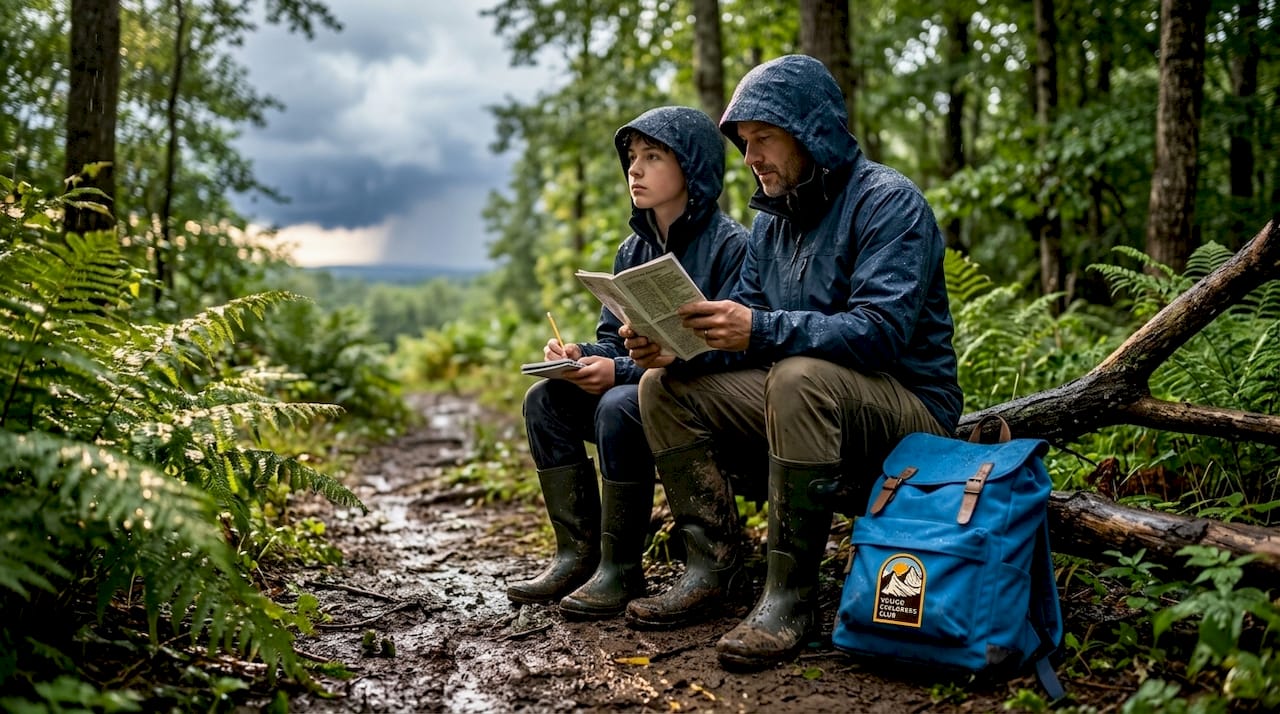
Nature introduces genuine unknowns. A rainstorm during a camping trip is not a simulation. It is a real challenge that requires real problem-solving. When a mentor guides a group through that moment, staying calm, distributing tasks, and checking in on nervous campers, the lesson sticks in a way that no classroom exercise can replicate.
Outdoor mentoring also relies on what researchers call challenge-by-choice. Campers choose how far to push themselves, but mentors design the environment so every choice leads to growth. Climb the harder route or the easier one? Both teach something. The mentor’s job is to make sure the camper reflects on what they learned either way.
Here is how structured outdoor mentoring compares to unstructured camp experiences:
| Factor | Structured outdoor mentoring | Unstructured camp |
|---|---|---|
| Self-efficacy gains | High | Moderate |
| Resilience development | Consistently strong | Variable |
| Social skill growth | Guided and measurable | Peer-dependent |
| Leadership practice | Built into daily tasks | Occasional |
In experiential outdoor settings, mentors leverage nature immersion, challenge-by-choice activities, cabin life routines, and wilderness trips to build resilience, self-efficacy, and social skills through observational learning. A nature-based mentoring study confirms that outdoor environments amplify the effects of mentoring by creating conditions that are impossible to manufacture indoors.
Key benefits of the outdoor mentoring combination include:
- Real stakes that make feedback feel relevant and urgent
- Physical challenges that build mental toughness alongside social skills
- Group routines like cooking, setting up camp, and navigating that create natural leadership moments
- Distance from screens and social pressures that allows campers to reset and reconnect with themselves
Explore building independence at camp and custom camp experiences to see how these principles translate into real program design.
What the research says: Real impacts and nuances
If you are weighing whether these mentorship elements really matter, the data adds clarity and nuance.
The numbers are striking. In the Reach and Rise mentoring program, delinquency rates dropped to 8% among mentored youth versus 15% in the control group. Substance use fell from 43% to 28%. School connectedness improved with an effect size of d=0.267. Camps with strong mentorship programs consistently show gains in self-esteem, optimism, and leadership capacity.
But the research also reveals nuances that matter for parents:
- General findings: Mentored youth show meaningful gains in self-esteem, leadership, and prosocial behavior compared to peers in unstructured programs.
- Specialty and edge cases: In medical specialty camps, mentors focus on character strengths like advocacy and authenticity for youth with illnesses or disabilities. The approach must be tailored.
- Duration and frequency matter: Programs with fewer than 20 sessions per year show limited long-term impact. For at-risk youth especially, year-round follow-up is important.
- What to ask: Request pre and post growth data from any camp you are seriously considering. Camps that track outcomes take their mission seriously.
Pro Tip: Ask camps directly, “How do you measure camper growth?” If they can only point to testimonials and not structured assessments, that tells you something important about their commitment to real outcomes.
You can also read about conflict handling at camp and residential camp benefits to understand how mentorship plays out in day-to-day camp life. For a deeper look at program-level evaluation, this mentoring impact evaluation offers a thorough breakdown of what works and why.
What most parents overlook about camp mentorship
Here is the uncomfortable truth: most parents pick camps based on the wrong things. They compare zip lines and swimming pools. They look at photos of mountain views and read bullet points about activities. Those things are fine. But they are not what determines whether your child comes home changed or just tanned.
What actually matters is the quality of the people your child spends time with and the systems those people operate within. A camp with mediocre facilities and exceptional mentors will outperform a luxury camp with undertrained staff every single time. Leadership and values do not trickle down from a brochure. They come from the counselor who stays up late talking with a homesick camper or the CIT leader who models grace under pressure on a difficult trail.
When we look at what separates transformational camps from forgettable ones, it always comes back to structure: mentor training hours, staff return rates, feedback protocols, and outcome tracking. Explore international camp culture to see how these values show up in practice. The right mentors make the difference between a fun week and a life-changing summer.
Find the right camp for your child’s growth
If you are ready to find a camp where mentors shape meaningful growth, start here.
At The Young Explorers Club, mentorship is not a buzzword. It is built into every program, from structured leadership roles to daily reflection routines in the Swiss Alps. Our camps are designed for children and teens who are ready to grow, not just have fun. Whether you are exploring camps that encourage kids to step outside their comfort zone, looking for teen summer camps with real leadership pipelines, or searching for tools like journaling prompts for campers to extend the growth beyond camp, we have resources to help you choose with confidence. Reach out to speak with our team or download our program guide to get started.
Frequently asked questions
How do mentors at youth camps support my child’s emotional and social growth?
Mentors model positive behaviors, give daily feedback, and create safe opportunities for campers to practice leadership, teamwork, and resilience in real situations.
What’s the difference between a camp with strong mentorship and one without?
Camps with structured mentorship programs show greater gains in self-esteem and leadership, plus significantly lower rates of risky behavior, compared to unstructured programs.
What should I look for in a camp’s mentorship structure?
Prioritize camps with trained mentors, structured CIT programs, low camper-to-mentor ratios, multi-day immersions, and clear outcome measurements to assess real developmental progress.
Are one-week camps effective or do results require longer-term mentorship?
Short-term camps offer real benefits and quick confidence boosts, but sustained leadership growth comes from multi-year mentorship pipelines and structured follow-up beyond the initial camp experience.
Recommended
- How Camps Teach Accountability Naturally | Young Explorers Club Switzerland
- Why Camps Are A Safe Space For Personal Growth | Young Explorers Club Switzerland
- How Camps Encourage Healthy Peer Relationships | Young Explorers Club Switzerland
- How Camps Foster Team Spirit Without Competition | Young Explorers Club Switzerland
