Outdoor Leadership Qualities List: 10 Traits That Matter
Discover the essential outdoor leadership qualities list! Uncover 10 vital traits that every effective leader needs to thrive in nature.
TL;DR:
- Outdoor leadership requires a combination of adaptability, communication, and trust-building to ensure group safety and cohesion in unpredictable environments. Essential qualities such as technical competence, social intelligence, and resilience must be developed through deliberate practice and real-time coaching. Effective leaders model these traits consistently, especially during friction moments, to foster growth and responsible environmental stewardship.
Outdoor leadership qualities are the essential traits a leader must embody to guide groups safely, make sound decisions under pressure, and build genuine team cohesion in unpredictable natural environments. Unlike office management, outdoor leadership demands that you read both terrain and people simultaneously, often with limited resources and no safety net. The field draws on frameworks from organizations like the Boy Scouts of America, training programs like IOLS (Introduction to Outdoor Leader Skills), and research from institutions like Psychology Today to define what separates a capable guide from a truly effective leader. This outdoor leadership qualities list covers the ten traits that matter most, with practical examples drawn from youth programs, backcountry expeditions, and camp settings.
What is the outdoor leadership qualities list every leader needs?
The outdoor leadership qualities list is not a personality checklist. It is a performance framework built around the real demands of leading people through nature. Adaptability, communication, confidence, empathy, decision-making, trust-building, technical competence, resilience, social intelligence, and patience are the ten qualities that consistently appear across expert frameworks and field experience. Each one directly affects group safety, morale, and the ability to reach shared goals. The order matters less than the integration: the best outdoor leaders do not switch these traits on and off. They apply them simultaneously, adjusting emphasis based on conditions.
1. Adaptability
Adaptability is the capacity to shift plans, tone, and tactics when conditions change without losing group confidence. Weather turns, injuries happen, and group energy collapses at unpredictable moments. A leader who freezes when the trail washes out or the campsite floods becomes a liability. Adaptability means you have already thought through contingencies and can communicate a new direction calmly. In youth programs specifically, this quality sets the tone for how young participants respond to setbacks. When they see a leader pivot without panic, they learn that problems are solvable.
2. Communication skills
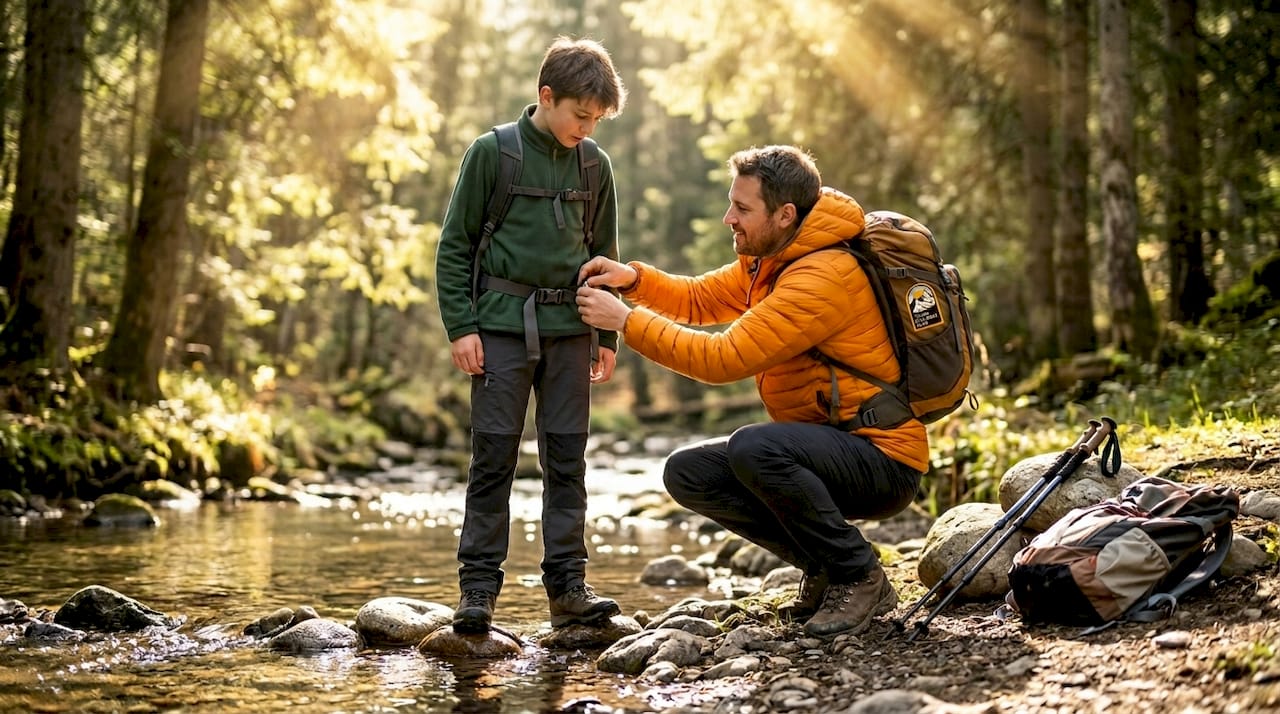
Clear communication outdoors requires simple language, nonverbal cues, and regular check-ins to maintain group cohesion, because environmental noise and chaos distort messages in ways that office settings never produce. A leader shouting instructions across a windy ridgeline needs to know that hand signals, eye contact, and pre-agreed group signals carry as much weight as words. Short, direct sentences outperform detailed explanations when a group is cold, tired, or scared. Regular check-ins, even brief ones, prevent small misunderstandings from becoming dangerous gaps in group awareness.
Pro Tip: Before any outdoor activity, establish two or three nonverbal signals with your group. A raised fist for “stop,” an open palm for “gather here,” and a thumbs-down for “problem.” These take two minutes to teach and can prevent serious miscommunication in the field.
3. Confidence
Confidence is not the absence of doubt. It is the ability to act decisively while doubt is present. Groups read their leader’s body language constantly, and hesitation spreads faster than enthusiasm. In outdoor settings, confidence is built through preparation: knowing your route, understanding your gear, and having practiced your emergency protocols. Leaders who have completed formal training like IOLS certification, a two-day intensive with hands-on field assessments, carry a measurable advantage because their confidence is grounded in verified competence, not assumption.
4. Empathy
Empathy in outdoor leadership means recognizing that a teenager who refuses to cross a stream is not being difficult. She is scared, and that fear is real. Effective leaders identify emotional states before they become behavioral problems. This requires watching body language, listening to tone, and asking direct questions rather than assuming. In camp settings, empathy is what separates a counselor who loses a group’s trust by day three from one who builds loyalty that lasts the whole session. Empathy also informs pacing decisions: a leader who reads fatigue early prevents the kind of group breakdown that turns a challenging hike into a dangerous one.
5. Decision-making under pressure
Sound decision-making under pressure is the quality most tested in outdoor leadership and the one most difficult to develop without real experience. The key is building a mental framework before you need it. Leaders who practice scenario thinking, asking “what would I do if X happened right now,” make faster and more accurate calls in actual emergencies. Effective outdoor leaders use difficult moments and failures as teaching opportunities, assessing individual and group behavior under stress to sharpen future judgment. Decision-making also requires knowing when not to decide alone: involving experienced group members in low-stakes choices builds collective problem-solving capacity.
6. Technical competence
Technical competence is the entry fee for outdoor leadership. Without it, every other quality is undermined. Leaders must know navigation, campsite selection, first aid, and equipment use at a functional level. The 3-layer clothing system and the 10-degree rule for sleeping bags, which states that a bag should be rated 10 degrees lower than the coldest expected temperature, are examples of the practical knowledge that separates prepared leaders from dangerous ones. Testing gear before a trip, not on the first night in the field, is a non-negotiable habit. Formal training through programs like IOLS, which spans 16 to 24 hours over a weekend, provides the structured foundation that self-taught leaders often miss.
7. Trust-building
Trust is built through consistency, not charisma. Groups trust leaders who do what they say, share relevant information, and acknowledge mistakes openly. In outdoor settings, trust has a direct safety function: a group that trusts its leader follows instructions faster in emergencies. Leaders who accept feedback and learn from mistakes have the highest potential for long-term success, because they model the exact behavior they need from their groups. Trust-building also means delegating meaningfully. Giving a participant responsibility for navigation or campsite setup signals that you believe in their capacity, which strengthens group cohesion faster than any team-building exercise.
8. Social intelligence
Social intelligence, which includes social expressiveness, social sensitivity, and social control, is the most overlooked quality on any outdoor leadership skills checklist. Emotional intelligence tells you how you feel. Social intelligence tells you how the group is functioning as a system. A leader with high social sensitivity notices that two participants have stopped speaking to each other before the tension affects the whole group. Social control, the ability to manage your own presentation in group settings, allows leaders to project calm authority without suppressing genuine connection. Social intelligence goes beyond emotional intelligence and is vital for nuanced group management in outdoor settings.
Pro Tip: At the end of each day in the field, spend five minutes observing your group without participating. Watch who gravitates toward whom, who isolates, and who is carrying more than their share of the group’s emotional weight. This habit builds the social awareness that formal training rarely teaches.
9. Resilience
Resilience in outdoor leadership means recovering from setbacks without transferring frustration to the group. A leader who visibly deflates when a plan fails teaches the group that failure is catastrophic. A leader who reframes the same failure as information teaches the group that adaptation is normal. The true measure of leadership is the ability to develop other leaders, not followers, and resilience is the quality that makes that development possible. You cannot teach someone to handle adversity if you cannot model it yourself. Resilience is also physical: managing sleep, nutrition, and hydration in the field directly affects your capacity to lead effectively over multiple days.
10. Environmental stewardship
Environmental stewardship is an emerging quality on the essential outdoor leadership traits list, and it belongs there permanently. Leaders who promote Leave No Trace principles and ethical outdoor practices build trust and model responsibility in ways that extend far beyond the trip itself. When a leader picks up litter without being asked or chooses a campsite to minimize ecological impact, the group absorbs that standard of care. For youth leaders specifically, this quality shapes how the next generation of outdoor participants relates to natural spaces. Stewardship is not a soft add-on. It is a leadership characteristic in nature that defines the culture of any outdoor program.
Key takeaways
Effective outdoor leadership requires integrating ten core qualities simultaneously, with technical competence as the foundation and social intelligence as the most frequently overlooked differentiator.
| Point | Details |
|---|---|
| Social intelligence is underrated | Most leaders focus on emotional intelligence but miss the group-level awareness that social intelligence provides. |
| Technical competence is non-negotiable | Gear knowledge, first aid, and navigation are the baseline before any interpersonal quality can function. |
| Trust is built through consistency | Groups follow leaders who do what they say and acknowledge mistakes, especially in high-stakes outdoor moments. |
| Resilience must be modeled | Leaders who reframe setbacks teach groups that adaptation is normal, not failure. |
| Stewardship shapes group culture | Environmental ethics practiced by the leader become the behavioral standard for the entire group. |
What I’ve learned about developing these qualities in the field
I have watched skilled adults fall apart on day two of a backcountry trip because they confused preparation with competence. They had the right gear, the right certifications, and the right vocabulary. What they lacked was the ability to read the room when the group started fracturing under fatigue. That gap between technical readiness and interpersonal awareness is where most outdoor leadership development stalls.
The quality that consistently separates good leaders from great ones is what I call friction tolerance. When structure before speed becomes the operating principle, meaning you prioritize shelter, water, and group stability before pushing toward the next objective, you create the conditions where real leadership can be observed and practiced. The friction moments, building a fire in the rain, managing a conflict between two participants at altitude, deciding whether to push on or turn back, are where every quality on this list gets tested simultaneously.
For youth leaders and educators, the most practical advice I can offer is this: stop evaluating leadership in the debrief. Evaluate it in the moment, when things go sideways. The outdoor leadership skills checklist you use before a trip matters far less than your ability to observe and coach in real time. Curiosity and a bias for growth, not perfection, are what separate leaders who plateau from those who keep developing. Build programs that create friction deliberately, and then stay present enough to use it.
— Guillem
Build real outdoor leadership at Youngexplorersclub
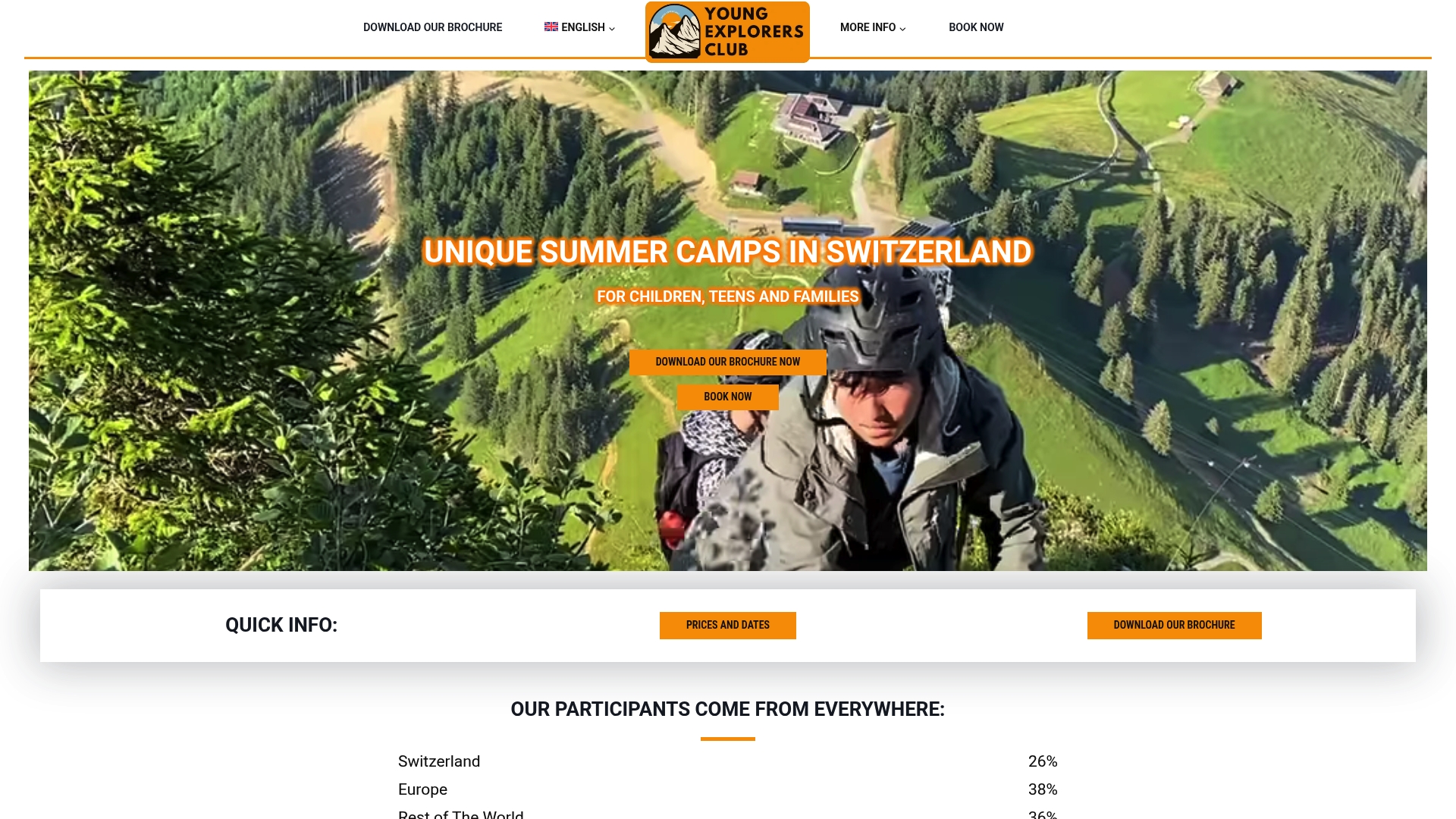
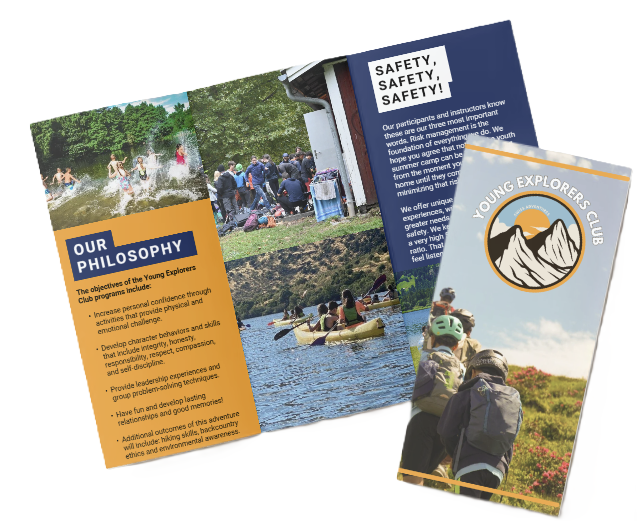
Youngexplorersclub runs international summer camp programs in Switzerland that put every quality on this list into practice across real terrain. From mountain biking and climbing to survival skills and multisport adventures, participants develop adaptability, communication, and resilience through structured challenges designed by experienced outdoor educators. The programs integrate safety training aligned with Youth Protection and First Aid standards, giving both participants and supervising adults a foundation in technical competence. Educators and youth leaders looking to deepen their own skills while supporting young people’s growth will find the camp programs in Switzerland a practical and memorable environment for that development. You can also explore the leadership development resources Youngexplorersclub provides for program directors and educators.
FAQ
What are the most important outdoor leadership qualities?
Adaptability, communication, and social intelligence are the three qualities that appear most consistently across expert frameworks for outdoor leadership. Technical competence is the required baseline, but interpersonal skills determine whether a group stays cohesive under pressure.
How does social intelligence differ from emotional intelligence in outdoor settings?
Emotional intelligence focuses on self-awareness and personal emotional regulation. Social intelligence extends to reading and managing group dynamics, making it more directly applicable to leading teams through complex outdoor environments.
What formal training supports outdoor leadership development?
Programs like IOLS require a 16 to 24-hour weekend training with hands-on field assessments, with prerequisites including Youth Protection Training and CPR/First Aid certification. These programs build technical competence and decision-making frameworks simultaneously.
How do leadership qualities shift across different outdoor settings?
Backcountry expeditions demand faster decision-making and stronger technical competence, while youth camp settings prioritize empathy, patience, and trust-building. The structure before speed principle applies across all settings when group energy is low.
Can outdoor leadership qualities be developed, or are they innate?
These qualities are developed through deliberate practice and real-world experience, not inherited. Leaders who take ownership, seek feedback, and treat friction moments as teaching opportunities show the highest rates of long-term leadership growth.