The Role Of Free Choice Activities In Camp Programs
Free-choice camp activities boost autonomy, creativity and leadership. Schedule ~20–30% daily; staff scaffold with non-directive support.
Free Choice Activities — Overview
What they are
Free choice activities are deliberate program blocks where campers select the activity, pace, peers, and challenge level. These blocks intentionally promote autonomy, intrinsic motivation, creativity, social learning, leadership practice, and self‑regulation. Staff provide structure through supervision and scaffolding rather than direct instruction.
Scheduling and Session Length
Time allocation
We allocate approximately 20–30% of each day to free choice. In a 6‑hour day this equates to about 1.5 hours. Session lengths should vary by age to balance freedom and attention span.
- Younger campers: shorter, more frequent sessions.
- Older campers: longer blocks to support deeper exploration.
Staff Role and Scaffolding
Observation first
Staff should prioritize observation over instruction. Circulate, watch emergent play, and use non‑directive prompts to scaffold rather than take over. Intervene only for safety or serious conflict. Turn field notes into follow‑ups and learning opportunities.
Operational Design
Centers, materials, and staffing
Design operational details so engagement and supervision remain manageable.
- Use about 6–8 centers for roughly 60 campers.
- Set center sizes at 6–12 campers depending on activity complexity.
- Rotate materials and centers weekly to maintain engagement.
- Follow age‑based staffing ratios:
- 1:6 for ages 4–6
- 1:8 for ages 7–10
- 1:10 for ages 11–14
Measurement and Risk Management
Outcomes and safety targets
Track both impact and risk using concrete targets.
- Participation: target over 75% of campers participating at least once daily.
- Enjoyment: aim for average scores of 4/5 or higher.
- Incidents: keep reportable incidents below 1 per 1,000 camper‑hours.
- Use IAPs (Individualized Accommodation Plans) to include all campers.
- Apply a risk‑benefit rubric to accept and manage appropriate levels of risk.
Key Takeaways
- Purposeful element: Free choice functions as an intentional part of programming to build autonomy, motivation, and social skills.
- Time allocation: Schedule roughly 20–30% of the day (about 1.5 hours in a 6‑hour day), with session lengths adjusted by age.
- Staff practice: Observe first, scaffold with non‑directive prompts, and intervene primarily for safety or serious conflicts.
- Operational design: Keep centers, materials, and ratios manageable and rotate resources to sustain engagement.
- Measurement & safety: Monitor participation, enjoyment, and incident rates; use IAPs and a risk‑benefit rubric to include campers while managing risk.
What Free Choice Activities Are and Why They Matter
We at the Young Explorers Club define free choice activities as program blocks when campers pick their own activities, pace, peers, and challenge level without pre-assigned instruction. These periods—called free play, child-led learning, choice time, activity centers, or emergent play—let children set the agenda and experiment at their own rhythm. By contrast, instructor-led activities are structured classes or skills clinics where staff set goals, pace, and outcomes.
Why free choice matters
Below are the core functions free choice serves in a quality camp program:
- Autonomy: Campers practice decision-making and ownership, which strengthens long-term independence and confidence.
- Intrinsic motivation: Kids pursue activities because they want to, not because they’re told to, boosting engagement and persistence.
- Social learning: Choice time becomes a rehearsal space for negotiation, alliance-building, and conflict resolution.
- Creativity and emergent play: Open-ended materials and loose goals spark innovation and imaginative scenarios.
- Self-regulation: Children learn to manage frustration, boredom, and focus without adult prompting.
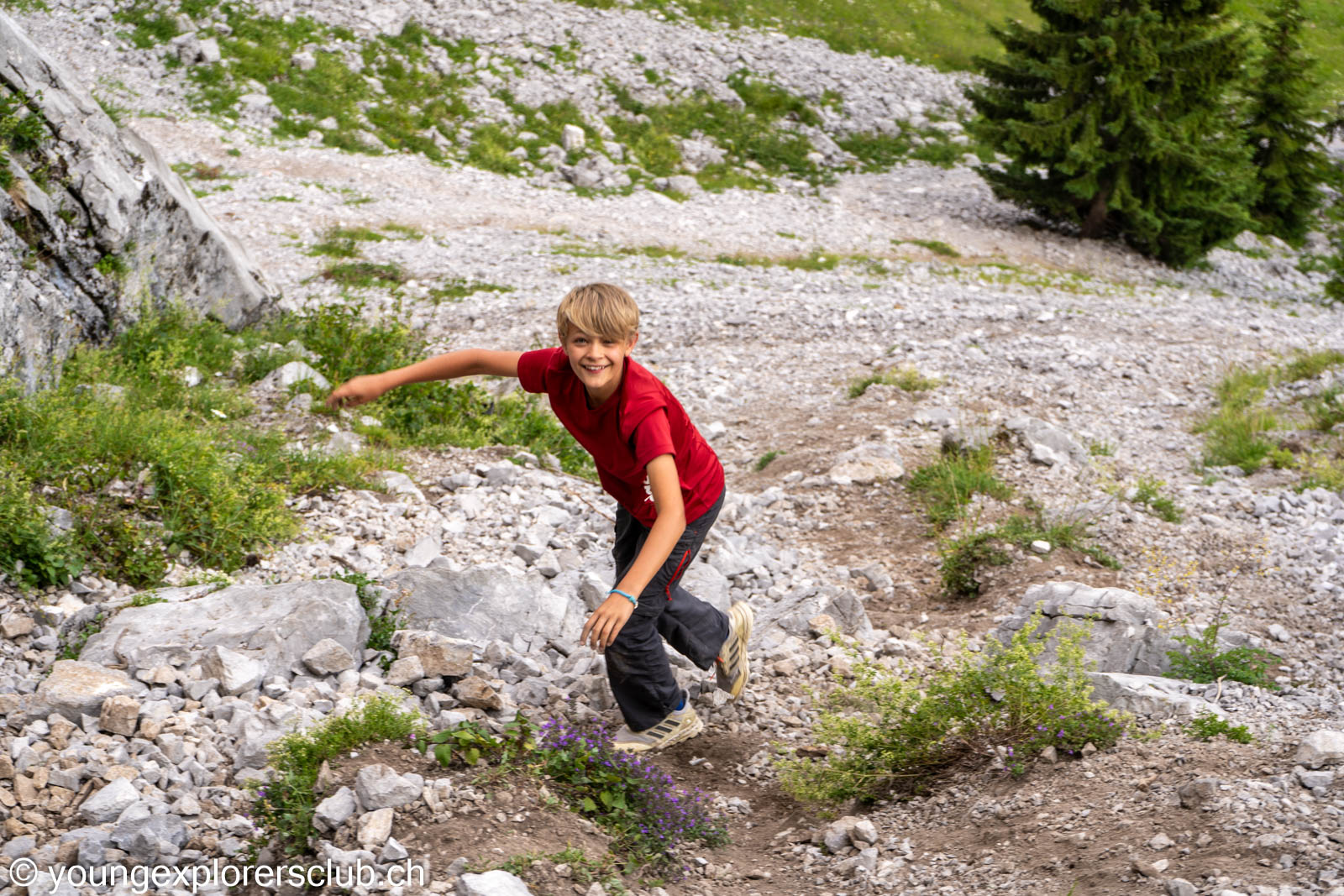
- Leadership and risk management: Peer-led groups rotate leadership, pros and cons of choices get tested, and safe risk-taking is practiced.
Practical definition and scheduling guidelines
I structure free choice as a deliberate program element, not a gap in supervision. Many camps, including ours, block recurring segments for choice time so kids know what to expect. For a typical 6-hour day camp I recommend about 20–30% of the schedule for free choice. A practical split looks like this:
- ~3 hours of instructor-led classes and skills sessions, 1.5 hours of free choice split between morning and afternoon, and the rest for meals and transitions.
We keep free choice purposeful. Staff circulate, observe, and step in only to coach safety, suggest challenges, or scaffold social problems. We also rotate activity centers so emergent play stays fresh and campers can discover new interests. If you want an example of how to balance adult guidance with child-led time, read how camps balance freedom and structure in our programs: balance freedom and structure.
When setting up choice time, label spaces clearly, limit the number of simultaneous options, and rotate materials weekly. That reduces overwhelm and increases deep play. We train staff to nudge gently, ask open questions, and let failure be a learning moment. Free choice activities are where autonomy, intrinsic motivation, and social problem-solving meet—and they make camp learning stick.
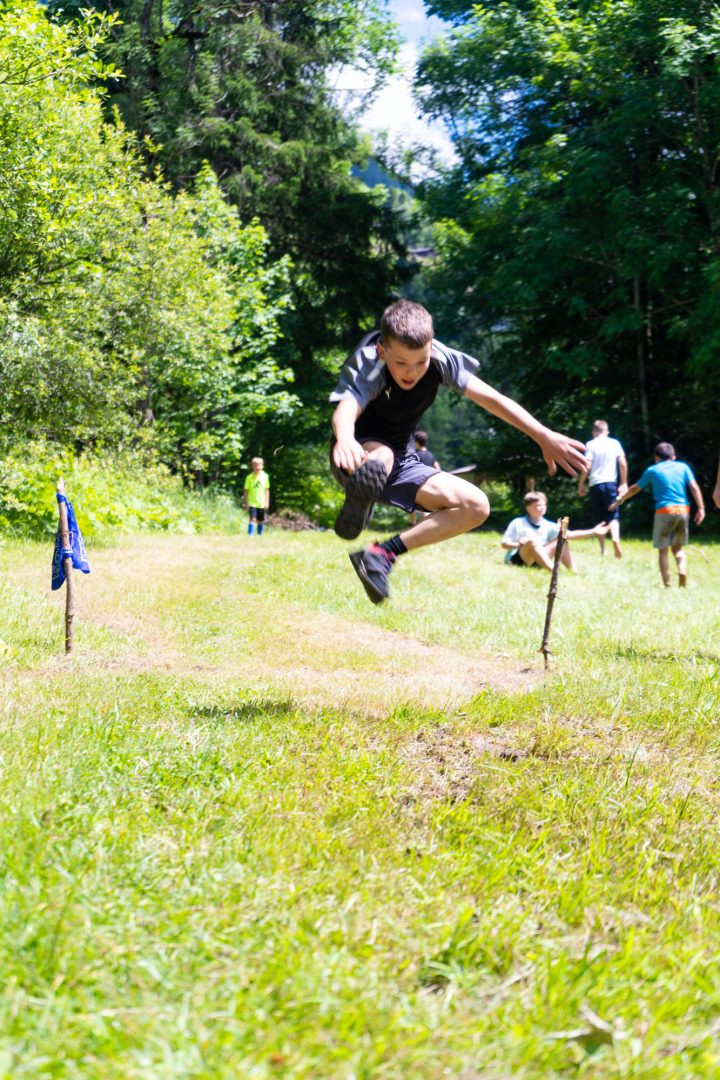
Evidence and Developmental Benefits
We, at the Young Explorers Club, structure free-choice activities to support autonomy and sustained engagement because the evidence links autonomy-supportive settings to stronger motivation and development. Self-Determination Theory (Deci & Ryan, 2000) explains that satisfying the need for autonomy raises intrinsic motivation, which shows up as longer engagement and more voluntary participation. For a practical view on how this builds healthy independence, see camps that encourage healthy independence.
Theoretical and empirical backing
I draw directly on several influential sources. The American Academy of Pediatrics policy statement ‘The Importance of Play‘ (Ginsburg, 2007) frames play as essential for healthy child development and supports free-choice time as more than recreation. Deci & Ryan (2000) provide the mechanism: autonomy fuels intrinsic motivation and persistent engagement.
Research on types of play adds domain-specific benefits: Brussoni et al. (2015) show risky play supports physical confidence and risk assessment; Lillard et al. (2013) link pretend play to gains in self-regulation and problem solving. Camp-focused studies (Scanlin et al.) report broad outcomes from participation, including social skills and leadership growth. Together these findings let us make clear claims: free choice satisfies a basic psychological need (autonomy), fosters leadership and peer negotiation, and increases sustained engagement in ways you can observe and measure.
Practical, measurable outcomes camps can track
We monitor several concrete indicators to tie free-choice offerings to development. Key metrics we track include:
- Self-reported confidence: simple pre/post surveys or quick daily check-ins that capture perceived competence.
- Observed leadership behaviors: staff use a short rubric to note initiation, delegation, and peer coaching.
- Time-on-task and sustained engagement: logs or brief observation windows record how long campers stay with chosen activities.
- Conflict-resolution and cooperation: incident notes coded for negotiation tactics and joint problem solving.
- Executive function markers: quick games or structured challenges that assess working memory, inhibition, and cognitive flexibility.
- Stress reduction and wellbeing: short mood scales and behavioral signs (calmer transitions, better sleep) recorded by staff.
We use these measures to refine activity offerings, tweak autonomy levels, and demonstrate how free choice advances social-emotional growth, creativity, physical skills, and executive function.

Designing Free Choice: Time, Space, Staff Roles, and Training
We, at the Young Explorers Club, schedule free choice so it supports skill development and autonomy without fragmenting the day. Allocate about 20–30% of each day to free choice, and vary that by age and program goals. That time allocation helps balance structure and play; for more on program balance see balance freedom and structure.
Time and session lengths
Use these session length guidelines and an example placement to plan daily flow:
- Preschool: 30–60 minutes continuous blocks for free choice to support sustained engagement.
- School-age: 60–120 minutes total per day, split into shorter blocks if attention flags.
- Teens: flexible 60+ minute blocks that allow deeper projects and peer-led initiatives.
- Sample daily placement:
- 08:30–09:15 Free Choice
- 09:30–11:00 Structured Skill Session
- 11:30–12:15 Lunch/Free Choice
- 13:15–14:45 Camp-Wide Choice Activity
Design session length with emergent curriculum in mind so spontaneous interests can expand into longer work periods.
Activity centers and space
We size activity centers to match group dynamics and program scale. For a cohort of about 60 campers, offer 6–8 centers with roughly 6–10 campers per center. Each center should comfortably serve 6–12 participants. Provide multiple concurrent options so kids can self-select based on energy and interest:
- Art
- Nature exploration
- Low-ropes
- Sports freestyle
- Quiet reading nook
Staff-to-camper ratios
We set staff-to-camper ratios by age and risk. Recommended minimums:
- Ages 4–6: 1:6
- Ages 7–10: 1:8
- Ages 11–14: 1:10
Adjust upward for high-risk activities or local regulation. Use these ratios to inform how many centers run concurrently and where to position staff.
Supervision model
Our supervision model emphasizes observation over instruction. Staff should scan and ping: circulate, make quick check-ins, and observe patterns. Intervene only for safety, serious conflict, or to scaffold a stuck child. Use non-directive prompts and scaffold without taking control. Train staff to use risk-balancing language—acknowledge hazards while naming the learning opportunity—to let autonomy grow safely.
Staff training
Staff training focuses on practical skills and repetition. Core topics include:
- Scaffolding vs directing
- Observation techniques
- Conflict mediation
- Risk management
- Fostering autonomy
- Recognizing teachable moments
Recommended training cadence:
- Pre-season training: 8–16 hours
- Weekly in-service: 1–2 hours
- Daily staff huddle: 10–15 minutes
Use observation checklists and peer coaching to evaluate and refine practice.
We expect staff to record quick field notes during free choice windows to capture emergent curriculum opportunities. Encourage staff to convert observations into small, achievable structured follow-ups that can be offered the next day. This keeps free choice connected to learning without eroding camper independence.

Practical Activity Types, Materials, and Operational Supports
We, at the Young Explorers Club, set up purposeful enrichment centers to support maker-space, open art, dramatic play, nature play, risky play and low-structure activities. Each center runs best with clear materials lists, predictable maintenance, and simple operational links to registration and staff tools. I’ll lay out center examples, core supplies, rotation rhythms, and the platforms we use to track participation and safety.
Activity centers and suggested set-ups
Below are 8 sample centers with the essential materials, safety items, and a quick operational tip. Aim for center size of 6–12 campers to keep engagement high and supervision manageable.
- Maker Table — Hand tools, screws, scrap wood, safety goggles, clamps; durable tool set and labeled storage; staff demo area for tool safety.
- Art Corner (open art) — Acrylic and tempera paints, brushes, paper, aprons, wash stations; keep expendables in small bins for easy replenishment.
- Nature Table — Magnifiers, field guides, insect jars, specimen trays; rotate specimens weekly and post ID cards for self-led discovery.
- Loose Parts Play — Ropes, tires, crates, buckets, carabiners (non-load-bearing); provide guidelines for stacking and moving large pieces.
- Dramatic/Pretend Play — Costumes, props, small-stage area, mirror; store costumes on labeled hangers and sanitize fabric between sessions.
- STEM Tinkering — Simple circuits, building blocks, measuring tools, multimeters for older kids; keep small parts in compartment boxes and supervise battery use.
- Quiet Zone — Books, puzzles, cozy seating, soft lighting; limit this area to 6–8 campers to protect the calm.
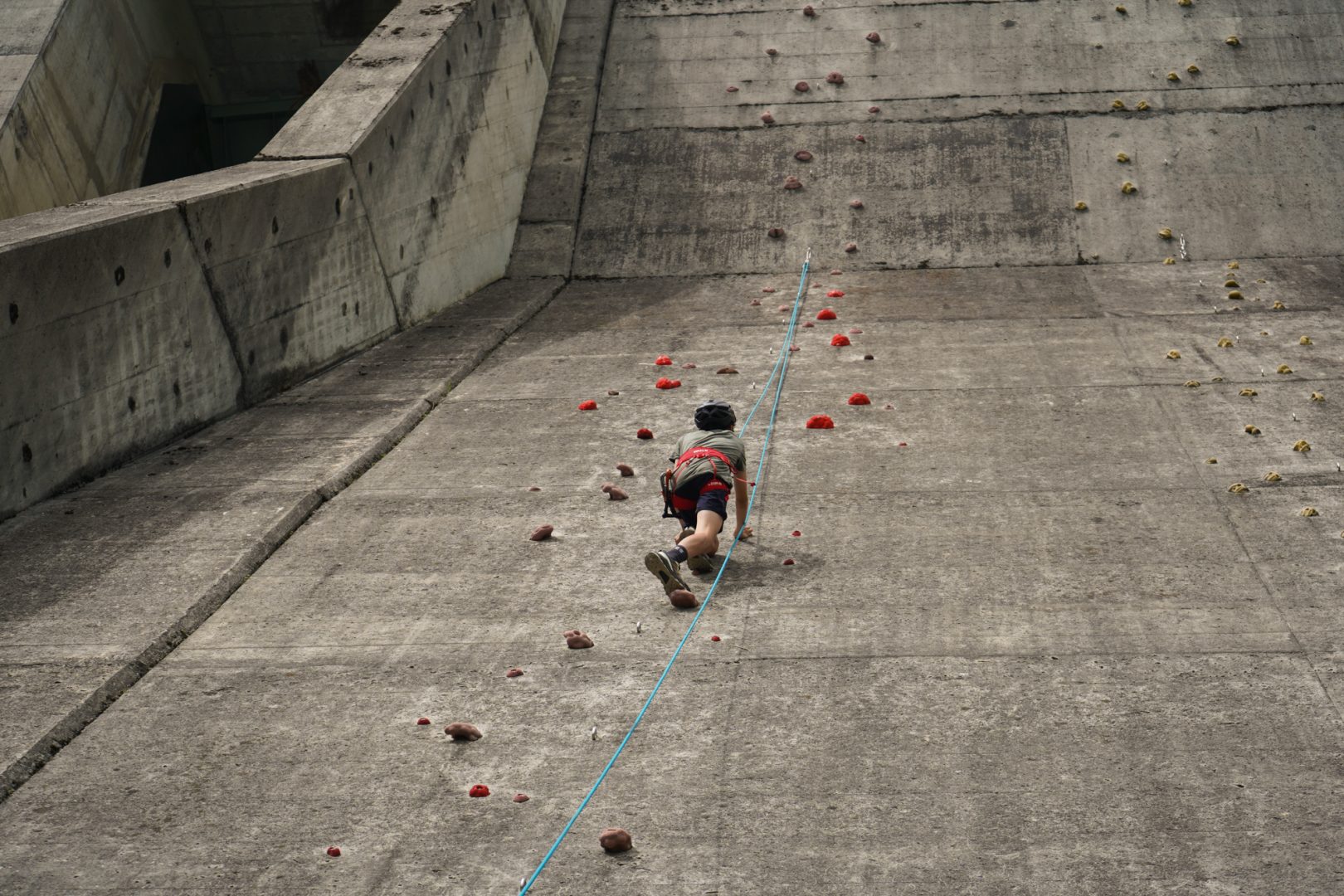
- Challenge/Balancing Area (risky play) — Balance beams, low-ropes, helmets, soft landing mats; inspect helmets and ropes monthly and require a staff spotter for each activity.
Use durable supplies for high-use items (scissors, glue, basic tools). Keep consumables like paper and clay on predictable replacement cycles. Label storage so staff and kids can find and return items quickly.
Rotation, budget, maintenance, and operational tools
Rotate high-engagement materials weekly to sustain interest, and refresh center themes monthly to introduce new prompts. Replace consumables on a seasonal schedule — for example, swap out paintbrushes each season — and inspect safety gear monthly. Choose inexpensive, long-lived items when possible; second-hand crates, recycled lumber, and robust fabric save money without sacrificing quality.
Integrate sign-ups and attendance in your camp management system so you can monitor participation and uptake in real time. We embed activity sign-ups into CampMinder or CampBrain and push rosters to Trello or Slack channels for the day’s staff. For registration use CampMinder, CampBrain, UltraCamp, or Active Network. For health forms and consent we rely on CampDocs. For evaluation I use Qualtrics, SurveyMonkey, or Google Forms and target a response rate greater than 70% for pre/post surveys. Staff coordinate with Trello, Slack, or Microsoft Teams; scheduling runs well on Sched or simply Google Sheets.
Operational tips you can act on now:
- Embed activity sign-ups in your registration tool to track demand and balance capacity.
- Set predictable replacement cycles for consumables and high-wear items.
- Inspect all helmets, ropes, and spotter equipment monthly and log inspections.
- Use short post-session surveys to hit that >70% response target for meaningful evaluation.
For programs that emphasize independence but keep safe structure, consult resources on how camps balance structure — I link a short note on how to balance freedom and structure for concrete examples.

Inclusion, Risk-Tolerance, and Common Challenges (with Solutions)
Inclusion and accessibility
We, at the Young Explorers Club, design free-choice activities so every camper can join. Adaptations span space, materials, and staff roles to meet varied physical, cognitive, and sensory needs. IAPs (Individual Accommodation Plans) sit at the center of that work. We create them from registration information and update them after initial meetings or observations. For campers who need intensive support we allocate 1:1 or 1:2 assistants and durable adaptive equipment so participation is real and dignified.
Use the checklist below to make inclusion operational across a session:
- Identify needs at registration and flag IAPs for staff before arrival.
- Draft IAPs that specify physical adaptations, communication supports, and sensory strategies.
- Allocate explicit staff supports (1:1, 1:2, floaters) by day and activity.
- Adapt rules, materials, and activity flow using universal design so multiple entry points exist.
- Provide adaptive equipment (mounting, grips, alternative seating) and storage plans.
- Schedule quiet/reflection spots and predictable transitions to reduce sensory overload.
- Train staff on plain-language prompts and alternative communication methods.
We keep this checklist visible in the staff hub and review it during pre-season trainings. That keeps reasonable modifications consistent and trackable.
Risk-tolerance framework and common challenges with solutions
We use a clear risk-benefit assessment to allow managed risk. Reasonable risk supports resilience, problem-solving, and motor skills. Our rubric scores likelihood × severity to set supervision levels and PPE requirements. For example, low-likelihood/low-severity activities need standard supervision; moderate scores require a dedicated facilitator and prompted exit strategies; high scores trigger engineering controls or cancellation.
Parental communication matters. We provide a concise FAQ that explains the developmental rationale, safety practices, and our supervision model. That FAQ also answers common worries about “unstructured time” and points parents to resources that describe how freedom and boundaries coexist — see balance freedom and structure. We send the FAQ at registration and again during pre-camp orientation to manage expectations.
Staff discomfort with non-directive roles is common but fixable. I equip staff with role-specific coaching and short facilitator scripts they can use in the moment. Examples:
- “Tell me about your plan.”
- “What will you do if that doesn’t work?”
- “Who else might help you with that?”
We run live role-plays in week one so prompts become habit.
Variable engagement across ages requires small design moves. We use micro-structures and loose scaffolds: a 5-minute kickoff for younger groups, choice boards for middle ages, and multi-hour maker windows for older campers. We shorten task cycles with clear stop signs for younger kids and add open-ended extension options for older ones.
Safety and compliance sit in one-page policy documents. Our free choice policy summarizes supervision levels, the risk-benefit assessment process, incident reporting steps, and alignment with licensing and insurance requirements. Staff carry pocket cards with critical actions for common incidents. We log incidents promptly and review them in morning huddles.
Address recurring challenges early. We target the first two weeks of the season for intensive coaching, parent Q&A, and policy tweaks. That timing gives staff confidence and lets us adjust micro-structures before patterns become habits.
Finally, securing staff buy-in and parent education is a joint effort. We make expectations transparent, emphasize developmental outcomes, and show how reasonable risk leads to real growth. That combination keeps free-choice time both liberating and safe.
https://youtu.be/5n7h0J-X1WI
Evaluation, Metrics, Case Models, and Takeaway Templates
We, at the young explorers club, track free-choice outcomes with an outcome evaluation approach that mixes objective metrics and qualitative insight. I measure participation, observed social behaviors, self-reported enjoyment and competency, stakeholder perceptions, and safety incidents to create a clear picture of program performance.
What to measure and recommended instruments
I focus on these core indicators and recommended instruments:
- Participation: percentage of campers engaging in free-choice at least once daily (target >75%).
- Observed social behaviors: leadership, sharing, and problem-solving via an observed behavior checklist.
- Camper self-report: enjoyment and perceived competency.
- Stakeholder perceptions: parent and staff feedback.
- Safety incidents: incidents per 1,000 camper-hours.
For psychometrics use the Strengths and Difficulties Questionnaire (SDQ), the Basic Psychological Needs Satisfaction Scale (BPNS) for autonomy, and the Social Skills Improvement System (SSIS). Pair those with custom observational checklists for leadership and negotiation.
Data cadence and analysis guidance
Collect baseline data on day one, repeat at midpoint, collect at end-of-session, and run a 3-month follow-up to assess durability. Use a pre-post design and mixed methods: quantitative tests plus short qualitative interviews or focus groups.
For quantitative change:
- Run paired t-tests or Wilcoxon signed-rank tests as appropriate.
- Report pre-post mean differences and effect size; interpret Cohen’s d as 0.2 small, 0.5 medium, 0.8 large.
- Complement those with percent-change metrics for key performance indicators and include thematic summaries of observation notes.
Present results in an anonymized metrics dashboard by session and age band for program leads and parents.
Operational KPIs and targets
Core Operational KPIs and suggested targets:
- Participation: >75% of campers engaging in free-choice at least once daily.
- Safety: incidents <1 per 1,000 camper-hours (incident rate = incidents ÷ total camper-hours × 1,000).
- Enjoyment: average camper enjoyment rating ≥4/5.
- Social growth: measurable positive change on SSIS or SDQ subscales for at least a medium effect size (Cohen’s d ≥0.5) across the cohort.
Example evaluation plan (compact template)
- Measures — BPNS, SSIS, 5-item enjoyment survey, observed behavior checklist (leadership, negotiation, sharing).
- Data points — baseline, midpoint, end, 3-month follow-up.
- Analysis — paired t-test or Wilcoxon signed-rank, report Cohen’s d and percent of campers showing positive change.
- Reporting — anonymized metrics dashboard by session and age band plus short narrative summaries for staff and families.
Case model templates
Choice-Block Model
- Problem: Campers lacked predictable windows for free choice, so participation was inconsistent.
- Implementation steps: Create 2–3 daily choice blocks (morning, after lunch, late afternoon); rotate materials and themes weekly; brief staff on non-directive supervision.
- Data collected: participation rate per block, observed leadership checklists, enjoyment ratings.
- Outcomes: higher daily uptake concentrated in defined blocks; detectable increases in peer-led initiatives and leadership scores on observed checklists.
Activity-Center Circuit
- Problem: Open slots were underused and equipment bottlenecks reduced engagement.
- Implementation steps: Set up rotation circuits with open slots per center; use visual timers and sign-up ropes; staff prompt without directing.
- Data collected: rotational uptake per center, time-on-task, enjoyment by activity.
- Outcomes: more even use of resources, improved equipment safety checks, higher enjoyment scores in previously underused centers.
Emergent Curriculum Model
- Problem: Camper interest waned when activities felt adult-curated rather than child-generated.
- Implementation steps: Run short ideation sessions, let campers propose themes, allocate project time across multiple days, support with materials and minimal staff scaffolding.
- Data collected: project completion rates, sustained engagement across days, qualitative project narratives.
- Outcomes: deeper sustained engagement, higher perceived competency on BPNS autonomy items, and richer peer-led problem solving.
Quick templates/checklists
Use these one-page tools for daily use:
- Free Choice Set-Up checklist
- Staff Role Card (non-directive prompts, safety boundaries)
- Parent FAQ (participation targets, safety metrics)
- Inclusion Checklist (materials, cultural access, mobility needs)
- Incident & Risk Log (timestamp, camper-hours calculation, resolution)
-
Minimal observation checklist (6 items):
- Scanning
- Presence
- Non-directive prompts
- Conflict mediation
- Equipment safety
- Documentation
I recommend embedding one clear internal link about how camps encourage healthy independence to help leaders align philosophy with practice: healthy independence.

Sources
Relevant sources and references for free choice activities in camp programs:
American Camp Association — State of the American Camp Experience
Self-Determination Theory — Self-Determination Theory (overview and resources)
MDPI — What is the relationship between risky outdoor play and health in children?
APA PsycNet — The Impact of Pretend Play on Children’s Development: A Review of the Evidence
SDQinfo.org — Strengths and Difficulties Questionnaire (SDQ)
Self-Determination Theory — Basic Psychological Needs Scale (BPNS)
CampMinder — Camp Management Software
CampDocs — Health & Waiver Forms for Camps