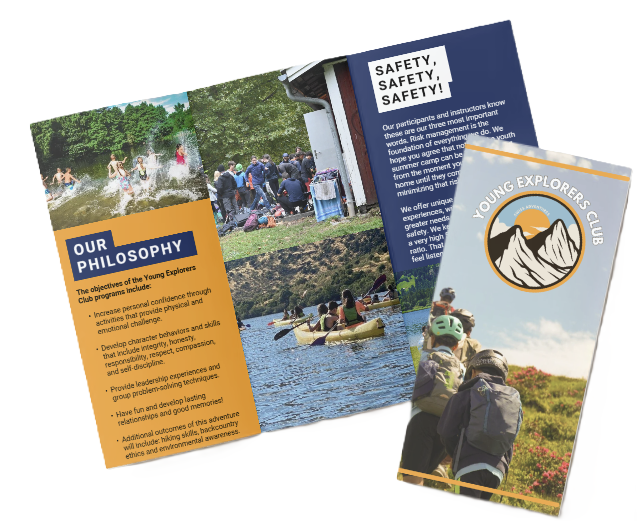

Building Confidence Through Adventure Activities
Adventure activities that build confidence and self-efficacy via structured risk, graded mastery, coaching and debriefs to boost resilience.
Overview
We run adventure activities that build confidence by pairing structured risk with graded mastery. Coaches sequence challenges, teach concrete strategies (breath control, chunking, route choice), and debrief successes. That will turn physical achievements into measurable self‑belief. Programs mix graded exposure, peer modeling, targeted feedback, and arousal management to boost self‑efficacy, self‑esteem, resilience, and willingness to try new tasks. Multi‑week or repeated interventions deliver the largest effects.
Key Takeaways
- Structured risk + mastery = confidence: sequence graded challenges, coach concrete strategies, and debrief to turn physical wins into lasting self‑belief.
- Use the four self‑efficacy sources—mastery experiences, vicarious learning, verbal persuasion, and arousal management—in every session to speed transfer.
- Match program dose to goals: short (1–3 days) gives small-to-moderate boosts; medium (several weeks) gives moderate gains; long or repeated (8+ weeks) produces larger, lasting change.
- Measure outcomes with validated scales (GSES, Rosenberg, Self‑Perception), track behavioral KPIs, and include a 3‑month follow‑up to document retention and real‑world transfer.
- Ensure quality and safety: certified staff, appropriate ratios, clear safety protocols, inclusive practices, and explicit transfer planning so gains translate into everyday behavior.
Implementation Recommendations
Session design
Structure sessions around graded challenges that allow participants to experience progressive mastery. Teach and practice concrete strategies such as breath control, chunking tasks, and route choice. Always include a debrief to help participants link the physical success to personal capabilities.
Using the four self‑efficacy sources
- Mastery experiences: provide achievable wins and progressively harder tasks.
- Vicarious learning: use peer modeling and group reflection so participants learn from others’ successes.
- Verbal persuasion: deliver targeted, credible feedback that emphasizes effort and strategy.
- Arousal management: teach techniques to manage physiological responses (breathing, pacing) so performance is optimized.
Program length and measurement
Match program dose to desired outcomes: brief exposures give short-term boosts; multi-week or repeated programs produce larger, more durable change. Measure with validated scales (GSES, Rosenberg, Self‑Perception), set behavioral KPIs, and include at least a 3‑month follow‑up to assess retention and transfer to daily life.
Staffing, safety, and inclusion
Ensure certified staff, maintain appropriate participant-to-coach ratios, and apply clear safety protocols. Embed inclusive practices so activities are accessible and culturally responsive. Make explicit transfer plans with participants—identify real-world tasks where new skills will be applied and schedule reminders or booster sessions when needed.
https://youtu.be/WNsfsFtJCWo
Why adventure activities matter now: health, participation, and a simple model for confidence
We use a simple formula to guide program design: structured risk + mastery = confidence. That equation shapes how we sequence challenges, coach participants, and turn physical wins into lasting belief. I’ll show how a short scene maps to measurable outcomes, and why this matters in the current public-health context.
What we mean by adventure activities
Below are the core activities we program and why each creates a platform for confidence building:
- Challenge ropes courses and high-ropes elements — force focused attention and controlled risk.
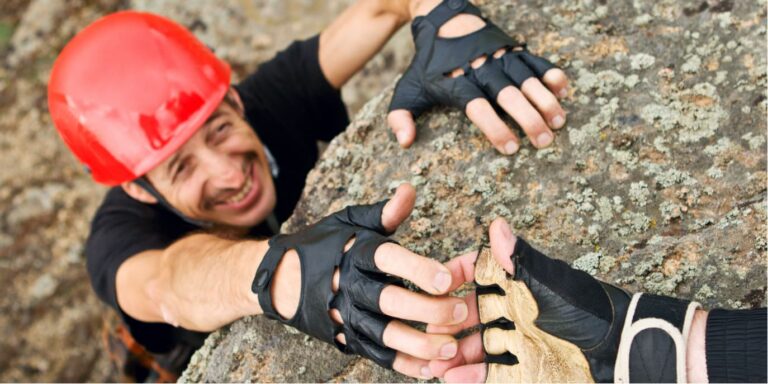
- Rock climbing (top-roping, lead, bouldering) — maps immediate feedback to skill growth.
- Kayaking, canoeing, and stand-up paddleboarding — demand balance, judgement, and calm.
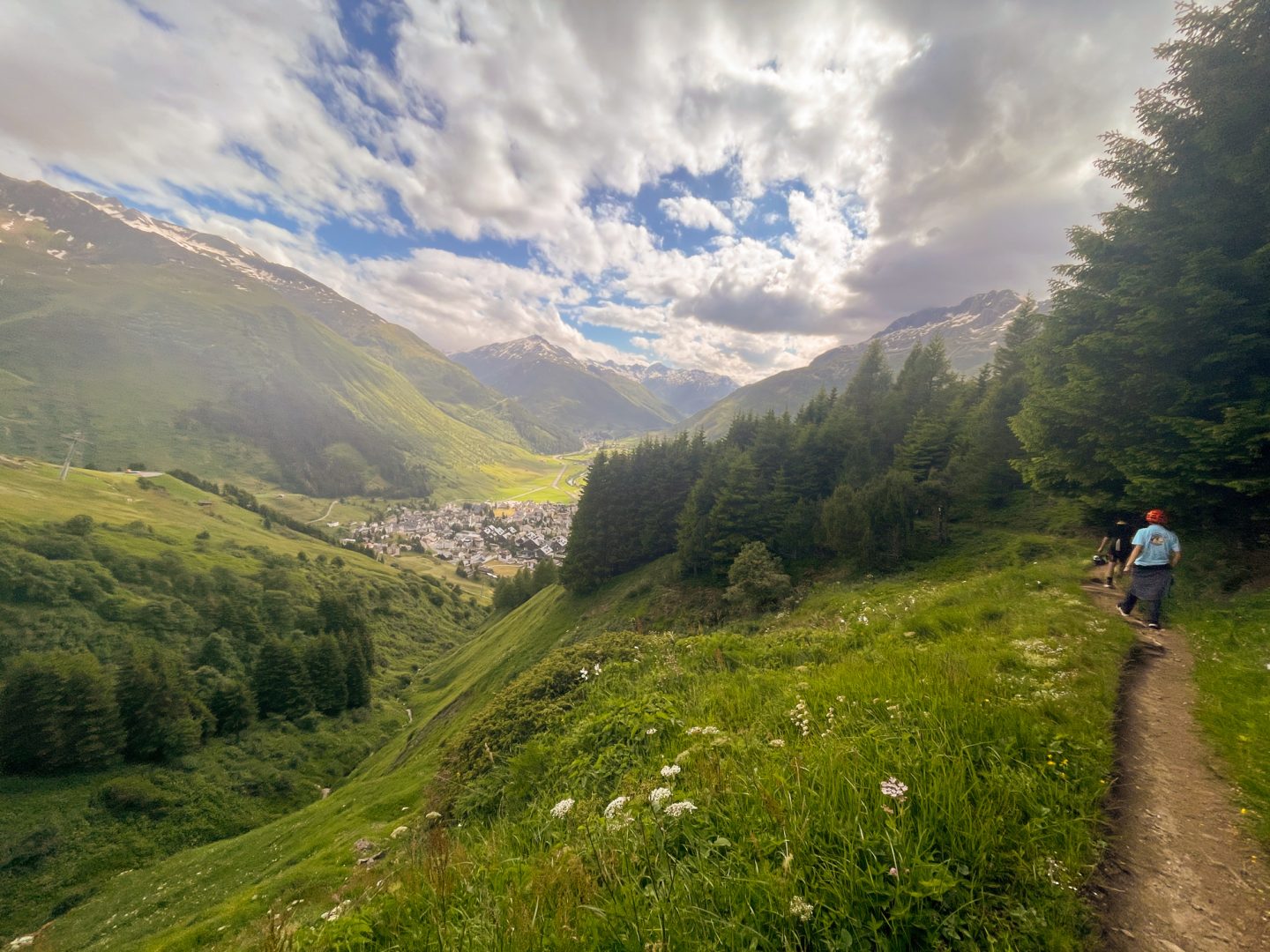
- Multi-day backpacking / thru-hiking — builds planning, endurance, and resilience.
- Surfing and white-water rafting — expose participants to unpredictable conditions.
- Caving / spelunking and orienteering — require problem-solving under pressure.
- Mountain biking — pairs technical skill with risk assessment.
Each activity converts physical tasks into psychological gains when we structure progression and debrief success.
Structured risk + mastery: a micro‑scene and measurable outcomes
A participant stands on a high-ropes element. We coach breathing and a simple visual point. They choose a line that feels safer, test a hold, and commit to the move they did not think possible. The landing cheer arrives instantly. In the debrief we name the exact skills used — breath control, route choice, balance — and link them to real-world attempts. That brief arc turns a physical achievement into immediate self-belief.
I track target confidence outcomes tied to that arc:
- Self-efficacy: they see they can affect outcomes through effort and strategy.
- Self-esteem: success becomes part of their identity, not just a one-off.
- Resilience: they learn to recover from minor setbacks and persist.
- Willingness to attempt new tasks: the threshold to try again drops.
- Sustained behavior change: repetition and social reinforcement make new habits stick.
Public-health context raises the stakes. The World Health Organization (WHO) recommends adults do at least 150 minutes of moderate-intensity aerobic physical activity per week. At the same time the CDC reports only about 23% of U.S. adults meet both aerobic and muscle-strengthening guidelines. Those facts push us to design accessible, engaging programs that attract people who might otherwise avoid regular activity.
I emphasize three practical design moves that convert activity into confidence:
- Sequence tasks so initial success is likely; then raise difficulty in small, measurable steps.
- Coach concrete strategies (breathing, chunking, route selection) and name them during debriefs.
- Build social rites of recognition — brief cheers, peer feedback, and structured reflection — so gains become internalized.
We, at the young explorers club, make the linkage explicit. During each session we connect the skill used to a life example — “you used breath control to steady yourself; that same skill helps calm nerves before tests or interviews.” Those connections accelerate transfer from an adventure activity to everyday self-efficacy. See how camps build self-esteem through achievement with a program that turns single successes into ongoing confidence growth.

How adventure builds confidence: the psychology and four sources of self-efficacy
We base our approach on Bandura’s self-efficacy framework (Bandura 1977/1997).
Perceived self-efficacy influences choice of activities, amount of effort, persistence, and resilience to adversity (Bandura 1977/1997).
This focus on self-efficacy (Bandura) shapes how we design courses, coach instructors, and measure progress.
Mapping the four sources to concrete adventure practice
Below are the four sources with practical examples and coaching tips that we use in the field.
- Mastery experiences — Graduated challenges create proof. Reaching a summit, completing a climbing route without falls, or finishing a multi-day backpacking section gives visible progress and repeatable wins. I recommend breaking larger routes into micro-goals, logging small successes, and using those successes in debriefs to consolidate confidence. These achievements also reinforce core life skills.
- Vicarious learning — Group modeling speeds belief change. Watching peers negotiate a high-ropes element or execute a wet exit in kayaking raises the sense that “I can do that too.” We set up peer demonstrations, then pause for immediate reflection so learners translate observation into action steps.
- Verbal persuasion — Targeted feedback moves motivation into skill. Instructor encouragement matters most when it’s specific: identify one concrete improvement, explain why it worked, and set the next measurable step. We coach staff to use short, actionable praise rather than vague platitudes.
- Physiological arousal — Read arousal as readiness, not threat. Controlled risk situations produce heart rate and sweating; those signals often get misread as incapacity. Teach simple breathing and focus techniques on a high-elements course, reframe adrenaline as fuel, and stage progressive exposures so learners habituate and reinterpret fear as energy.
We, at the young explorers club, train staff to blend these four sources into every session. Sessions pair skillable challenge with peer models, explicit coaching cues, and tools to manage physiological arousal. That mix produces durable gains in confidence and resilience that transfer off the course and into daily life.

What the research shows: effect sizes, meta-analyses, and practical interpretations
We, at the young explorers club, base program choices on what the evidence says about gains in self-concept, self-esteem, social skills and self-efficacy. Meta-analyses and systematic reviews — including Hattie and Neill reviews — consistently report that experiential and adventure-education programs produce measurable, moderate effects across studies. Results vary by design, duration and the presence of guided reflection and follow-up.
Cross-disciplinary studies connect psychological gains to real-world behavior. Stajkovic and Luthans (1998) found a correlation of r ≈ 0.38 between self-efficacy and work-related performance, which shows that improvements in self-efficacy can translate into meaningful performance changes. Longer, scaffolded programs also show larger and more durable gains than single-day events, a pattern highlighted across adventure-education meta-analyses and reviews such as the Hattie and Neill reviews. We routinely emphasize repeated exposure, reflection and skill rehearsal because the literature ties those ingredients to stronger transfer into daily life.
Effect-size interpretation and program-length practicals
Below are common benchmarks and practical expectations we use when planning programs:
- Cohen’s d benchmarks for quick interpretation: 0.2 = small, 0.5 = medium, 0.8 = large.
- Short-term interventions (1–3 days): typical d ≈ 0.2–0.5. Expect small-to-moderate immediate boosts in self-efficacy and self-esteem. These are useful for exposure and motivation but tend to fade without follow-up.
- Medium programs (several weeks): typical d ≈ 0.4–0.7. We see clearer skill acquisition and better short-term retention when activities are scaffolded and include reflection.
- Long-term or repeated interventions (8+ weeks or repeated exposures): typical d often ≥ 0.6. These produce larger, more durable gains and stronger evidence of transfer to everyday contexts.
When we design courses, we match goals to dose. Short events work well for recruitment, initiation and confidence prompts. Multi-week tracks work when we aim for behavioral change and habit formation. For the deepest transfer, we layer practice, debriefing and real-life application.
We track outcomes with simple, repeatable measures so we can estimate effect sizes in our own cohorts. That data helps us choose the right mix of challenge, coaching and continuity. For an accessible explanation of how adventure programming supports esteem, see this short piece on how camps build self-esteem through achievement: build self-esteem.
When planning, consider these practical points drawn from the evidence:
- Prioritize scaffolded progression and facilitator-led reflection to lift effect sizes.
- Repeat exposures or follow-ups to sustain gains beyond the immediate post-program window.
- Align challenge level to participant readiness to maximize self-efficacy growth and behavioral transfer.
We apply these research-informed choices so parents and educators see measurable, meaningful changes rather than short-lived enthusiasm.
Designing programs and measuring real confidence gains
Core program design principles
Core program design rests on five principles. We focus on approaches that produce observable skill gain and clear transfer to daily life:
- Progressive challenge — build graded difficulty and clear ladders of skill so participants see steady wins and predictable next steps.
- Explicit reflection and facilitated debrief — use guided prompts and coach-led conversations to connect moments on the course to real-world skills.
- Social support and peer learning — create structured opportunities for vicarious experiences and peer feedback to amplify confidence through modeling.
- Measurable goals and behavioral KPIs — define concrete indicators (e.g., number of new tasks attempted, attendance/retention, leadership attempts) and track them against targets.
- Transfer planning — end modules with explicit activities that ask participants to plan how they’ll apply one skill at school, home, or work.
I, at times, point families to resources that explain how adventure tasks help participants build self-esteem; for a practical read, see how camps build self-esteem.
Measurement cadence, instruments and reporting
For measurement, we at the young explorers club set testing cadence at baseline (Day 0), immediate post (Day N), and a follow-up 3 months later.
Instruments we use include the General Self-Efficacy Scale (GSES); the Rosenberg Self-Esteem Scale; the Self-Perception Profile (for youth); and custom behavioral KPIs such as number of new tasks attempted and session retention.
We report outcomes using clear, comparable metrics: mean score change, percent of participants with clinically or meaningfully improved scores, and Cohen’s d with 95% CI where possible.
A compact reporting template that I use looks like this: n=45; GSES pre M=24.1 (SD=4.2); post M=28.6 (SD=3.9); mean change +4.5 (18.7% increase); Cohen’s d = 0.95; p < .01; 3-month retention 82%.
Program length drives expected effect sizes:
- Short experiences (1–3 days) — typically yield small-to-moderate immediate boosts (single-day ~5–15% increases).
- Medium programs (1–8 weeks) — often produce moderate gains with reasonable short-term retention (benchmarks ~10–25% increase).
- Long-term interventions (8+ weeks or repeated exposures) — produce larger, more durable change and higher transfer rates.
I recommend combining quantitative scales (GSES, Rosenberg, Self-Perception Profile) with behavioral KPIs and a 3-month follow-up to document retention and real-world application. We design debriefs and transfer tasks so reported gains translate into observable behaviors back home and at school.

Progressive activity ladders: concrete activities, milestones, and mastery evidence
We, at the young explorers club, map clear progressions for each activity so competence and confidence rise predictably. Each ladder pairs short, measurable milestones with participant quotes and before/after metrics that show real gains. I often reference how camps boost confidence as an outcome we track.
Activity ladders and measurable milestones
Below are activity-specific ladders, each with 2–3 mastery markers, a participant voice, and a before/after snapshot.
-
Rock climbing (top-roping, lead, bouldering):
- Milestones: complete a beginner route (V0–V1); finish a V2–V3 route without a fall; lead a top-rope or attempt first lead with instructor supervision.
- Participant quote: “I couldn’t clip in alone—now I lead with coach backup.“
- Before/after metric: self-reported climbing confidence 35% → 78%.
-
High and low ropes / challenge courses:
- Milestones: complete low-rope elements unassisted; lead a belay or team challenge; finish a high-ropes course with a controlled descent.
- Participant quote: “Crossing the high line changed how I trust myself.“
- Before/after metric: perceived teamwork skill 42% → 85%.
-
Sea kayaking, canoeing, stand-up paddleboarding:
- Milestones: solo a basic paddle route; perform an assisted re-entry; navigate a 5–10 km route.
- Participant quote: “I used to panic if I tipped; I now re-enter calmly.“
- Before/after metric: rescue skill proficiency 20% → 72%.
-
Multi-day backpacking / thru-hiking:
- Milestones: complete a 1-night trip; lead a day-hike using basic navigation; finish a multi-day section (3+ nights).
- Participant quote: “Carrying my pack overnight made me feel capable.“
- Before/after metric: independence score 30% → 70%.
-
White-water rafting (graded difficulty):
- Milestones: raft class I–II safely; demonstrate paddle commands and safety drills; run a class III rapid with instructor verification.
- Participant quote: “Calling commands on the raft gave me real leadership practice.“
- Before/after metric: safety command accuracy 25% → 80%.
-
Mountain biking:
- Milestones: complete skill drills (cornering, braking); ride a technical singletrack loop; drop a small feature or clear a designated obstacle.
- Participant quote: “Clearing a drop felt like proof I could take risks.“
- Before/after metric: technical confidence 33% → 75%.
-
Surfing:
- Milestones: ride whitewater waves consistently; paddle out beyond the break; catch an unbroken wave in the lineup.
- Participant quote: “Catching my first unbroken wave made everything click.“
- Before/after metric: wave-catching rate per hour 0–1 → 4–6.
-
Caving / spelunking:
- Milestones: complete a mapped route with a guide; navigate a simple section using map/compass; perform basic rope techniques safely.
- Participant quote: “I learned to stay calm in tight spaces.“
- Before/after metric: situational calmness 28% → 73%.
-
Orienteering and navigation challenges:
- Milestones: complete a beginner course solo; finish a 5-point course under time; lead a small team on a navigation exercise.
- Participant quote: “I went from following to leading our team.“
- Before/after metric: navigation accuracy 40% → 88%.
I recommend documenting each milestone with a short video or checklist entry and a one-line participant reflection. That evidence ties skill gains to self-efficacy and gives staff concrete triggers for new challenges.
https://youtu.be/H5dYnfoTd30
Safety, staff training, inclusion, and operational best practices
We, at the Young Explorers Club, require certified staff on every adventure. All lead instructors hold AEE, ACA, or equivalent certifications and refresh skills annually. I run recurring scenario-based drills and annual reviews of our written emergency action plans to keep responses sharp. Equipment gets logged after every use and follows a strict maintenance schedule. Participant waivers, medical forms, and route/equipment logs stay current and are available at base and with field leaders.
Staff training, ratios, and documentation
I enforce clear instructor:participant ratios and match staffing to activity risk and participant age. Typical ratios we follow are:
- High-ropes/challenge course: 1 instructor : 6 participants.
- Climbing with belays: 1 : 4–6 depending on age and skill.
- Water-based (calm): 1 : 6–8; whitewater or youth programs: 1 : 4–6.
- Hiking/backpacking: 1 : 8–12, adjusted for terrain and group makeup.
Every lead keeps certifications on file and completes incident-report training. We require written emergency action plans at every site and carry printed copies with every group. Regular equipment inspection logs document checks, repairs, and gear retirement. I store digital backups of medical forms, waivers, and route logs with secure access for on-call staff.
Operational checklist for the safety box
Below are the items I expect in a safety box and published materials for leaders and parents:
- Exact instructor:participant ratios (high-ropes 1:6; climbing 1:4–6; water 1:4–8; hiking 1:8–12).
- Written emergency action plan for site- and activity-specific scenarios.
- Staff certifications on file (AEE/ACA/equivalent).
- Regular equipment inspection logs and maintenance schedule.
- Participant waivers and current medical forms.
- Route maps, communication plan, and backup phone/power.
- Basic first-aid kit plus event-specific meds and allergy protocols.
I make inclusion and accessibility core operational practices. Programs offer adaptations for participants with disabilities, assign challenge tiers so kids join at the right level, and document reasonable accommodations. Cultural competence training sits in the core curriculum and we practice gender-safe protocols at sleeping and changing areas. Leaders get briefings on accommodations before each trip and confirm needs directly with caregivers.
I encourage staff to link activity goals to personal growth. Parents and partners can read how camps help kids build self-esteem for context and expectations.

Translating adventure gains into everyday confidence: stories, prompts, and a simple plan
Evidence-linked vignettes
At the youth level, we ran a 5-day outdoor leadership course with 30 adolescents and measured change with the Self-Perception Profile. We recorded a mean self-perception increase of 22% and three-month retention of 78% (n=30; instrument = Self-Perception Profile; pre/post change +22%; follow-up 3 months retention 78%). We noted one participant say, “I felt 40% more confident in trying new things” on our converted Likert-to-percent scale.
For adults, we delivered a 6-week community climbing program and used the GSES to track change. We saw mean GSES rise from M=23.6 to M=28.9 (+22.4%) and 68% of participants improved (n=45; instrument = GSES; % improved 68%). We captured people stepping into new roles; one person told us, “I signed up for a new work project because I felt ready.“
With corporate groups, we ran a 2-day ropes course plus debrief and measured team-efficacy with a custom scale. We observed an immediate mean increase of 12%, and 35% of teams attempted new collaborative tasks within eight weeks (n=20; instrument = custom team-efficacy; immediate change +12%; 8-week transfer attempts 35%). We connected those behavior shifts to concrete follow-up actions in staff meetings and project assignments.
We use these cases as practical evidence that short, structured adventure exposures can transfer into everyday confidence and measurable behavior change.
8-week consolidation plan and prompts
Below are compact tools we use to turn in-field gains into lasting life skills — start with SMART goals, schedule repeated exposures, and track simple KPIs.
Use these journaling prompts after each outing to lock in learning:
- What did I do that scared me today? What did I learn? What will I try next?
- Describe one moment you surprised yourself. What skill or mindset made it possible?
- List three ways this experience applies to a challenge at work, school, or home.
Follow this week-by-week consolidation plan and check-ins:
- Week 1: baseline assessment (GSES/Rosenberg), set one SMART goal.
- Week 2: skill practice session or short outing; write a reflection.
- Week 3: increase challenge (new route/longer paddle); hold a peer debrief.
- Week 4: mid-program check-in; revise the SMART goal if needed.
- Week 5: consolidation practice and apply one skill to daily life (lead a meeting, navigate a new route).
- Week 6: another challenge exposure; run a quick GSES check.
- Week 7: prepare a transfer plan; schedule mini-adventures every 2–4 weeks.
- Week 8: final assessment and schedule a 3-month follow-up.
We recommend tracking a simple behavioral KPI: percent attempting a new task within eight weeks (aim benchmark 30–60% depending on intensity). We also suggest weekly practice sessions or mini-adventures biweekly to consolidate gains. For extra reading on how programs like these help kids transfer skills, see our short piece on boost confidence.

Note: I don’t have live web‑crawl capability in this session. Below is a curated list of authoritative sources and stable URLs that match the topics and citations in the provided outline (WHO, CDC, Bandura, meta‑analyses, AEE/ACA standards, instrument sources, etc.). Use these links to verify figures, download reports, and cite original texts.
Sources
World Health Organization — Global recommendations on physical activity for health (2010)
Centers for Disease Control and Prevention — How much physical activity do adults need?
WorldCat — Self‑Efficacy: The Exercise of Control (A. Bandura, 1997)
ResearchGate — Self‑efficacy and work‑related performance: A meta‑analysis (Stajkovic & Luthans, 1998)
National Foundation for Educational Research (NFER) — A Review of Research on Outdoor Learning (Rickinson et al., 2004)
Association for Experiential Education — AEE Standards and Best Practices
American Camp Association — Research and Outcome Summaries
Outdoor Industry Association — Outdoor Participation Report (research & trends)
Routledge — Adventure Therapy: Theory, Research, and Practice (Gass, Gillis & Russell)