
German-speaking Summer Camps In Switzerland: Top Picks
Young Explorers Club: German-language summer camps in Switzerland—15–25 hrs/week, day & residential options, immersion in Swiss German regions.
Young Explorers Club — Swiss German immersion shortlist
We, at the Young Explorers Club, present a shortlist of residential and day programmes that mix Standard High German classroom instruction with casual exposure to Swiss German dialects in mountain, lakeside and city settings. Short travel times and reliable public transport keep groups compact. The country maintains high safety and health standards. Typical instruction runs 15–25 hours per week. Switzerland suits learners who want 1–4 week options, from budget day camps to premium boarding-school intensives.
Key Takeaways
- Switzerland gives real-world immersion. About 62.6% of residents speak German. Swiss German dominates street speech, while schools teach Standard High German. Teach lessons in High German and add casual activities to boost dialect comprehension.
- Logistics suit families. Major hubs lie about 1–3 hours apart by train. Public transport runs reliably. The country maintains high safety and health standards.
- Program formats include day camps, residential language courses, adventure or sports blends, and academic boarding-school programmes. Typical class sizes run 8–12. Instruction usually totals 15–25 hours per week.
- Costs vary widely. Expect day camps at CHF 150–500 per week. Residential options cost CHF 800–3,000+ per week. Premium programmes charge more. Book 3–6 months ahead for standard weeks. Reserve 6–12 months ahead for elite or full-boarding options. Budget for flights, insurance and extra gear.
- Prioritize safety and measurable progress. Require DaF/DaZ-qualified teachers. Check staff-to-camper ratios and background checks. Use pre- and post-assessments linked to CEFR levels. One week builds confidence. Two weeks improves fluency. Three to four weeks can deliver measurable CEFR gains at 15–25 hours per week.
Recommendation
For families seeking short travel and reliable logistics, consider programmes near major train hubs. For accelerated progress, choose residential options that combine High German classroom hours with abundant informal exposure to Swiss German. Always verify staff qualifications, safety protocols and CEFR-aligned assessments before booking.
Why Switzerland for a German-language summer camp?
We, at the Young Explorers Club, choose Switzerland because language, logistics and safety converge to create a superior immersion setting. About 62.6% of the population speaks German (Swiss Federal Statistical Office), and with roughly 8.7 million residents that means everyday life in many regions runs on German — ideal for camps that want real-world practice.
Language reality: Swiss German vs High German
Swiss German (Alemannic dialects) is what campers will hear on the street, in shops and at home. Schools and formal lessons use Standard High German for teaching and written work. Expect spoken Swiss German around town and Swiss High German in classrooms and course materials. I recommend structuring lessons in High German while scheduling plenty of informal activities — hikes, market visits and team projects — to build listening comprehension and confidence with dialects.
Practical advantages
Here are the main practical benefits families and organizers will notice:
- Compact geography and fast trains: major destinations sit 1–3 hours apart, with Zurich–Interlaken around 2 hours and Zurich–Geneva about 3 hours. That keeps travel days short and activity time long.
- Daily immersion: high prevalence of German speakers means language practice happens off-campus, not just during lessons.
- Safety and infrastructure: high health standards, strong tourism networks and reliable public services reduce risk and simplify logistics.
- Easy logistics for parents: frequent rail links and predictable public transport mean arrivals, departures and supervised day trips run smoothly.
We pair our camp programs with clear guidance for parents and counselors so language goals match on-campus teaching and off-campus exposure. For a practical planner and camp selection tips, see our Sommercamp 2024 guide to compare regions, travel times and program styles.

Top picks — Recommended German-speaking camps & programs
We, at the Young Explorers Club, recommend these German-speaking summer programs for learners who want solid classroom time plus outdoor or creative activities. I’ll keep each pick short and practical so you can compare quickly.
EF Junior / EF Summer Switzerland — common Zurich or lakeside campuses
- Age range: 10–17 (EF Education First).
- Program focus: international mix, general language immersion with afternoon activities (EF Education First).
- Quick facts: residential 2–4 week options; instruction 15–25 hours/week; campus/residence accommodation; price CHF 1,200–3,000 per week (residential, approx.) (EF Education First).
Alpadia Junior Camps — Interlaken / Zurich
- Age range: 8–17 (Alpadia Language Schools).
- Program focus: language classes plus adventure/activity afternoons (Alpadia Language Schools).
- Quick facts: weeks offered 1–4; class sizes typically 8–12; instruction 15–25 hours/week; residence accommodation; price CHF 800–2,200 per week (approx.) (Alpadia Language Schools).
Berlitz Junior Program (Switzerland)
- Age range: 7+ (Berlitz).
- Program focus: strong spoken-German emphasis in junior camps (Berlitz).
- Quick facts: typical length 1–3 weeks; instruction typically 15–25 hours/week; accommodation varies; price varies by location (approx.) (Berlitz).
TASIS Summer Programs
- Age range: 10–18 (TASIS).
- Program focus: academic tracks and arts, campus-based immersion (TASIS).
- Quick facts: weeks offered 1–4+; instruction varies by track; boarding accommodation; premium pricing (approx.) (TASIS).
Leysin American School — Leysin Summer School
- Age range: about 8–18 (Leysin American School).
- Program focus: sports, language and arts on a mountain campus (Leysin American School).
- Quick facts: 1–4 week options; instruction varies; boarding accommodation; premium pricing (approx.) (Leysin American School).
Aiglon College — Aiglon Summer Programme
- Age range: 13–18 (Aiglon College).
- Program focus: outdoor education combined with academics in a boarding-school setting (Aiglon College).
- Quick facts: weeks offered 1–4; instruction hours vary; boarding accommodation; premium pricing (approx.) (Aiglon College).
Institut Montana Zugerberg — Summer School
- Age range: varied junior/adolescent groups (Institut Montana Zugerberg).
- Program focus: structured language and academic prep with smaller groups (Institut Montana Zugerberg).
- Quick facts: smaller class sizes; instruction 15–25 hours/week typical; boarding accommodation; premium/varied pricing (approx.) (Institut Montana Zugerberg).
St. George’s International School — Summer Program
- Age range: varied (St. George’s International School).
- Program focus: English-curriculum school with summer options and language tracks (St. George’s International School).
- Quick facts: instruction and accommodation vary; price varied (approx.) (St. George’s International School).
Quick comparison at a glance
- Typical class size: 8–12 students (cross-cutting fact).
- Instruction range: 15–25 hours/week common (cross-cutting fact).
- Residential price range: roughly CHF 800–3,000+/week depending on program level (cross-cutting fact).
- Stay durations: 1–4 weeks most common; some providers offer longer options (cross-cutting fact).
For planning details and packing lists, see Sommercamp 2024.

Types of German-speaking camps in Switzerland (who they’re for)
We, at the Young Explorers Club, group German-speaking camps by format and learner goal so families can match expectations to outcomes. Below I outline the main camp types, typical ages, and what each delivers in language exposure and activity.
- Day camps (ages 6–14) — Local learners return home daily. Focus on fun, short language blocks and lots of play-based practice.
- Residential camps (ages 8–17) — Boarding with true language immersion and a full activity schedule.
- Adventure and sports combos — Merge outdoor pursuits (hiking, water sports, shoulder-season snow activities) with 3–5 hours of German instruction per day.
- Academic / boarding-school-run summer schools — Structured workshops, portfolio work and a higher academic load; often more intense pacing.
- Family language holiday programs — Parents and children learn together in shared activities and classes.
I typically see programs offering 15–25 hours/week of German instruction; blended formats may provide 8–12 hours/week. Program lengths most often span 1–4 weeks, letting families choose short taster stays or longer immersion blocks.
Side-by-side compact comparison
- Day camp (ages 6–14) — Accommodation: none (day) — Daily instruction: 2–4 hours — Extracurriculars: local activities — Price tier: low (Day camp CHF 150–500/week approx.)
- Residential camp (ages 8–17) — Accommodation: boarding/residence — Daily instruction: 3–6 hours (total 15–25 hrs/week) — Extracurriculars: full program (sports, excursions) — Price tier: mid–high (Residential CHF 800–3,000+/week approx.)
- Adventure/sports + language — Accommodation: residential — Daily instruction: 3–5 hours — Extracurriculars: outdoor sports, multi-day hikes — Price tier: mid–high
- Academic/boarding-school-run — Accommodation: boarding school — Daily instruction: varies, often higher academic load — Extracurriculars: workshops, portfolio — Price tier: high
Which type fits which goal
- First-timers: one-week immersion day camps or short residential stays work best.
- Serious learners: choose 2–4 week residential programs with 20+ hours/week.
- Academic prep: pick boarding-school summer programs with focused workshops.
- Family stays: enroll in family language holiday programs.
Sample daily schedule (residential immersion)
- 08:30–12:30 classroom (≈4 hours including short breaks)
- 12:30–14:00 lunch / free time
- 14:00–17:00 activities or excursions (≈3 hours)
- 17:30–19:00 free time and dinner
- 19:00–20:00 supervised social language practice or Deutsch games (≈1 hour)
That format yields roughly 15–25 hours of classroom instruction per week depending on program length and optional extras.
For curated options and program details, check our page on Sommercamps in der Schweiz for camp profiles and age-specific recommendations.

Regions & camp locations — how geography affects experience
We, at the young explorers club, put location first when matching campers to programs. Location shapes daily rhythm, supervision needs and excursion choices. I’ll break down the main German-speaking bases and show how mountain, lakeside or urban settings change the experience.
Regional snapshots
Here’s a quick region guide:
- Zurich — Urban + culture. Camps here pair language lessons with museum visits and short day trips. Best for families who want easy access and a strong cultural program.
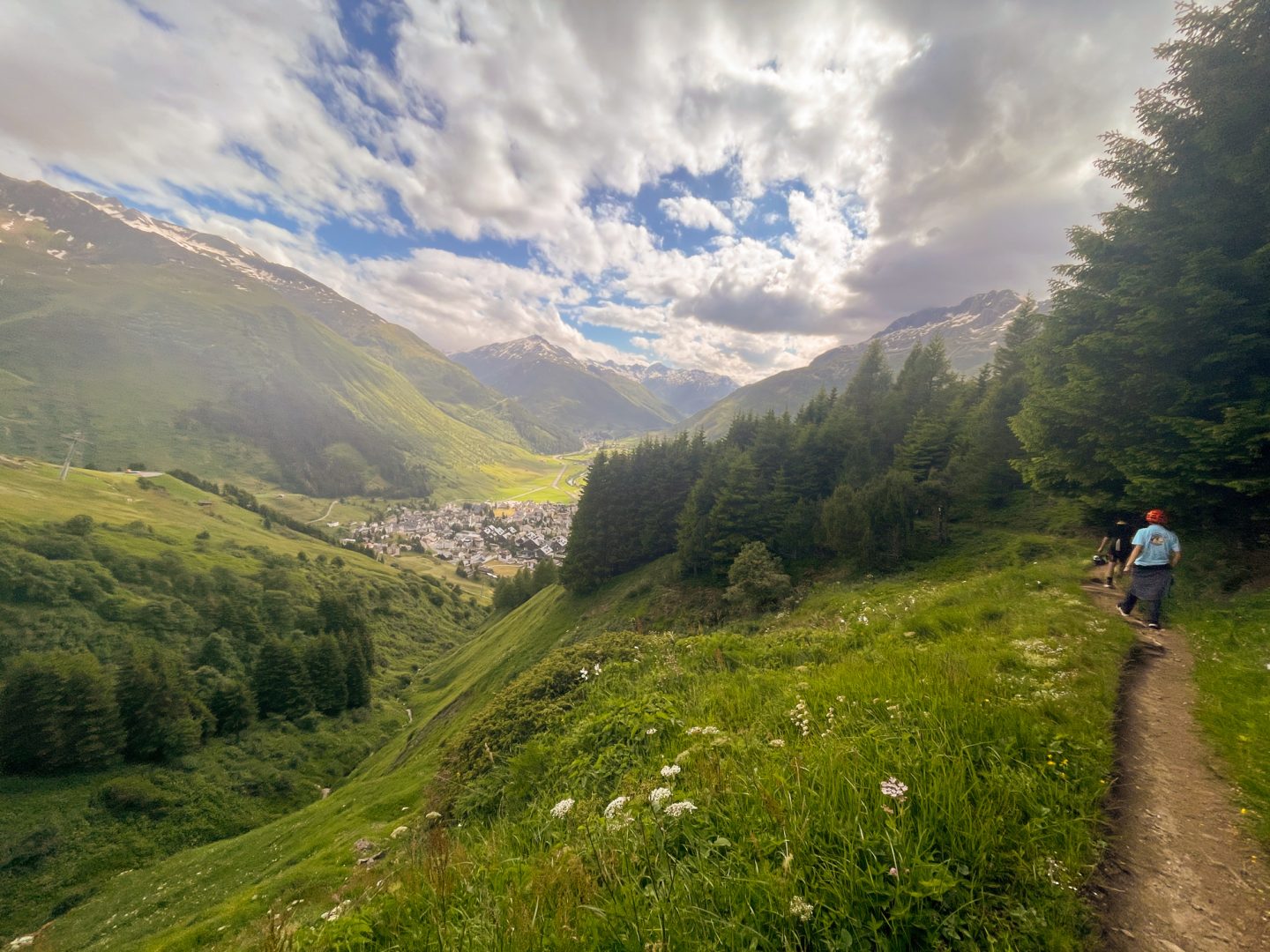
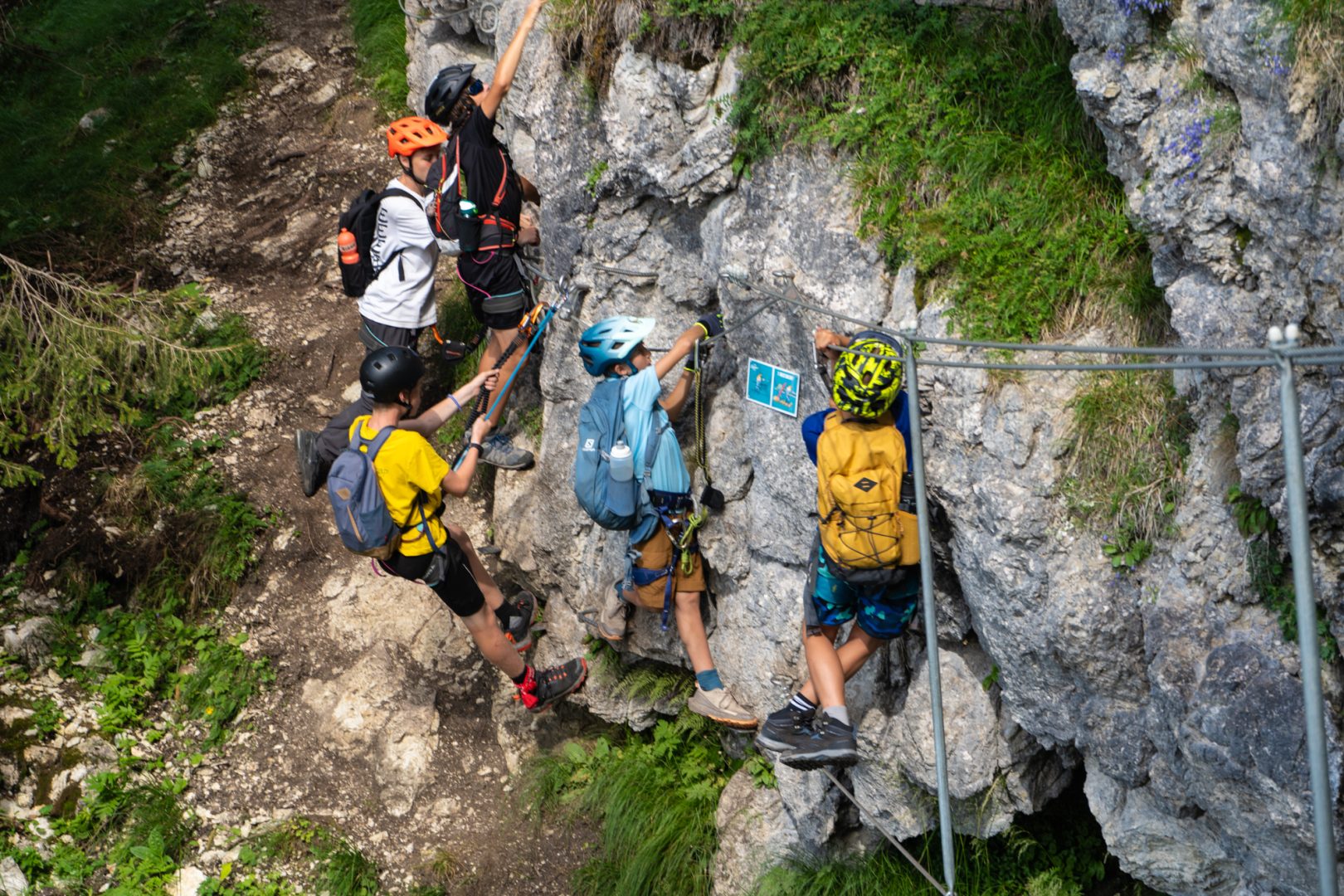
- Interlaken (Bernese Oberland) — Adventure + lakes. Expect multi-day hikes, water sports and high-alpine excursions. Best for outdoor and sports immersion.
- Lucerne — Lakeside + central access. Camps balance outdoor time with cultural stops and make day trips simple and fast.
- Basel, St. Gallen — Regional cultural centers. Programs emphasize local events, markets and museum-based projects.
- Graubünden — Mixed-language (German/Romansh). We verify the language mix for each camp; be sure to check if German will be the primary language on-site.
Geography, travel & sample weeks
Alpine locations like Interlaken, Leysin and Villars push programs toward active, multi-day excursions. They use early-morning departures and overnight experiences. Camp days run longer in the field and include more technical supervision and kit checks.
Lakeside sites favor water skills, canoeing and relaxed afternoons by the shore. They still include hikes, but the pace feels gentler than high-alpine weeks. Urban camps in Zurich or Basel swap long outdoor pushes for guided city walks, markets and museum projects. They suit kids who like shorter, varied outings and frequent family visits.
Train travel between major hubs usually takes 1–3 hours. That makes transfers simple for families and helps with one-day excursions from central bases. We recommend arrival airports based on proximity: Zurich (ZRH) for most German-speaking camps, Geneva (GVA) if you combine French- and German-speaking regions, and Basel (BSL) for camps in the northwest.
For parents comparing options, consider this guide to Sommercamps in der Schweiz as a starting point to match goals, dates and logistics.
Mountain / Adventure week
- Mon–Fri: 08:30–12:30 language lessons; 14:00–17:00 canyoning, hiking or lake activities; evenings: group language games and reflection circles to reinforce vocabulary.
- Sat: Full-day trip — Jungfraujoch or a boat on Lake Thun, depending on weather and age group.
Urban / Cultural week
- Mon–Fri: 08:30–12:30 language lessons; 14:00–17:00 guided city walks, museum visits and local market projects that put vocabulary into practice; evenings: film night in German and themed language challenges.
- Sat: Day trip to Lucerne or a Rhine cruise from Basel.
When choosing a region, weigh program focus, family access and the language environment. We handle many of the logistics, but we advise checking transfer times and language notes before you book.
Costs, inclusions, booking timeline & travel logistics
We, at the young explorers club, break down realistic costs and practical logistics for German-speaking summer camps in Switzerland. Read the timelines and payment tips and plan early for peak weeks.
Price ranges and what’s usually included vs budget extras
- Day camp — CHF 150–500 per week (approx.). Usually includes tuition, daily activities, and supervision for the scheduled hours. Often excludes extended care, special equipment, travel and meals outside program hours.
- Residential junior language camps — CHF 800–3,000+ per week (approx.). Typical inclusions are tuition, accommodation, three meals a day, core activities, some excursions, and local transport for scheduled trips. Budget extras commonly are flights, travel insurance, pocket money, optional excursions, and special activity gear (skis, wetsuits).
- Premium boarding-school intensive programs — often exceed CHF 3,000 per week for full board plus excursions. These typically add academic coaching, higher staff ratios, and premium excursions; optional private lessons or bespoke activity packages may cost extra.
- Usually included vs commonly excluded — plan for tuition, room, board, core activities, and some local trips as baseline. Reserve extra funds for flights, visas, travel insurance, mandatory equipment, and incidental spending.
Book 3–6 months ahead for regular summer weeks and 6–12 months ahead for elite or full-boarding programs. Deposits usually run 10–30% at booking. We recommend checking for early-bird reductions and sibling discounts; they cut your cost without extra hassle.
Schengen visa processing can take up to 15 calendar days, so start early. EU/EEA citizens generally don’t need a Schengen short-stay visa for brief stays. Non-EU families must check embassy guidance and allow extra lead time for paperwork and invitation letters.
Arrive into Zurich, Geneva, or Basel for fastest connections to most camps. Swiss rail is punctual and frequent; take advantage of it. For families planning multiple day trips, consider a Swiss Travel Pass for flexibility and predictable transfer costs.
Sample booking timeline — two practical variants:
-
EU family (no visa needed):
- 3–6 months before — reserve the spot and pay the deposit.
- 1 month before — complete final payment, medical forms, and emergency contacts.
- 1–2 weeks before — submit any last-minute consent or medication instructions.
-
Non-EU family (visa required):
- 6–12 months before — research programs and secure a place for elite camps.
- 3–4 months before — submit Schengen visa application (allow up to 15 days processing) with the camp acceptance letter; pay the deposit and follow provider-specific document requests.
- Complete final payment per the provider’s terms as required by the programme.
Practical payment tips I use with families
- Ask for an itemised invoice so you see what’s covered.
- Reserve funds for cancellation or trip-insurance options.
- Use a credit card that offers travel protection for larger deposits.
Extra logistics to budget for
- Airport transfers or private pickups, especially for younger campers.
- Local transfers beyond scheduled camp shuttles.
- Rental or purchase of special activity gear and any instructor fees for optional activities.
- Medical or private travel insurance and any mandatory health requirements at time of travel.
For help comparing options and finding appropriate German-speaking programmes, see beste Sommercamps.

Choosing the right camp and ensuring measurable progress (safety, staff, assessments, prep)
Safety and staff qualifications
We insist on clear staff-to-camper ratios before booking. Typical ratios are 1:6–1:10 for younger children and 1:10–1:15 for older teens. Ask camps for their average ratio by age group so expectations match reality.
We expect German instruction from native or certified teachers. Request DaF/DaZ accreditation or an equivalent qualification; TEFL/TESOL alone is not sufficient for German language teaching. Get copies of teacher certificates and, where possible, short CVs that show classroom experience with the relevant age group.
Verify local accreditation and insurance coverage. Confirm whether the camp holds Swiss accreditation or recognized local approvals and that insurance covers both accidents and liability. Insist on clear emergency procedures: on-site nurse or formal connection to the nearest clinic or hospital, documented evacuation plan, and written lines of responsibility for off-site activities. Background checks should include Swiss police checks for all staff members.
Printable parent checklist, assessment standards and prep
Before you call or email, have this short checklist ready and request the documents listed below.
- Sample daily schedule
- Teacher qualifications (DaF/DaZ or equivalent) and staff CVs
- Staff-to-camper ratios by age group
- Background checks / Swiss police checks for staff
- Accreditation details and proof of insurance coverage
- Medical coverage, on-site nurse status, and emergency protocols
- Sample pre-test and post-test or a clear assessment policy
- References or testimonials from past parents
- Typical student nationalities and language-mix in groups
- Hours of instruction per week (detail lesson vs. activity time)
- Accommodation details and supervision arrangements
- Cancellation policy, refund terms, and visa acceptance letter if needed
- Clear answer to: who is responsible for off-site activities, nearest hospital contact, and emergency evacuation plan
I recommend comparing shortlisted options with a focused search; for a compact list of vetted programs see besten Sommercamps.
Assessment standards and expected progress
Look for camps that map outcomes to the CEFR (A1, A2, B1, etc.) and that run a pre-test and post-test. Programs that provide clear mapping to CEFR levels make it easy to measure gains. Expect the following general guidance: one week mainly builds confidence and conversational exposure; two to four weeks can yield measurable CEFR progress for motivated students. Aim for programmes that offer 15–25 hours per week of focused instruction to increase the chance of measurable gains.
Practical prep and packing
Pack smart for Swiss weather and active days: layers, a waterproof jacket, suitable footwear for trails and activities, an EU plug adapter, and a small personal first-aid kit. Label everything and include a printed copy of medical instructions and any prescriptions.
- Layers and a waterproof jacket
- Suitable footwear for trails and activities
- EU plug adapter
- Small personal first-aid kit
- Printed medical instructions and prescriptions
- Label everything
Short warm-up goals to set before arrival
- Install a basic German app and complete daily 10-minute sessions.
- Learn 50 useful phrases in the fortnight before camp.
- Aim to hold a 5-minute conversation in German after two weeks.
Expected outcomes (quick reference)
- 1 week: increased confidence, conversational exposure, comfort with everyday phrases.
- 2 weeks: grammar consolidation, improved listening and speaking fluency.
- 3–4 weeks: possible measurable CEFR sublevel gains, conditional on intensity (15–25 hours/week) and learner engagement.
How we recommend following up after camp
Keep momentum with weekly conversation partners or pen pals and a scheduled review of camp materials. Enroll in local classes if possible and set short daily goals — 10–15 minutes of focused German practice preserves gains and turns progress into lasting skill.

Sources
Swiss Federal Statistical Office (FSO) — Languages of the resident population
MySwitzerland / Switzerland Tourism — Family holidays in Switzerland
SBB Swiss Federal Railways — Swiss Travel Pass & travelcards (timetables and passes)
Federal Office of Public Health (FOPH) — Health advice and travel information
Goethe-Institut — Learn German (courses and resources)
Council of Europe — Common European Framework of Reference for Languages (CEFR)
European Commission — Schengen visa (short-stay visa information)
State Secretariat for Migration (SEM) — Entry, visa and residence information for Switzerland
ICEF Monitor — Industry insights on study travel and summer programmes
Study Travel — News and trends for international summer programmes