How Swiss Camps Handle Severe Weather Situations
Swiss camps use clear triggers (MeteoSwiss/SAC Level 3), IC + backups, redundant comms, mapped shelters, 72‑hour supplies and drills
Swiss camp severe-weather protocols
Swiss camps publish clear trigger thresholds—typically MeteoSwiss warning Level 3, SAC avalanche Level 3, or camp-specific Alertswiss settings—that immediately activate severe-weather protocols and require sheltering, halting alpine activities, or evacuation. Programs assign a named Incident Commander plus backups. Redundant communications (mobile plus radio or satellite) cover failures, and we do not rely on a single channel. Published evacuation targets set clear goals (for example, full evacuation ≤30 minutes). Shelters get mapped and 72-hour supplies get stocked. Mandatory drills run with certified staff, and canton-specific legal and insurance paperwork keeps responses rapid and auditable.
Trigger thresholds and immediate actions
Triggers are explicit and unambiguous so staff can act without delay:
- MeteoSwiss warning Level 3 — automatic activation of severe-weather plan.
- SAC avalanche Level 3 — suspend alpine operations and move to shelter if required.
- Alertswiss settings — camp-specific thresholds that map to the same immediate actions.
Command structure
Clear roles and succession reduce confusion:
- Named Incident Commander with documented backups.
- Role-specific officers: Communications, Transport, Medical, etc.
- ISO‑timestamped action logs maintained in real time; these logs are required and must not be skipped.
Communications
Redundancy and testing are essential:
- Redundant alerts (mobile push plus radio or satellite) to avoid single points of failure.
- Draft parent and stakeholder messages in advance for rapid dissemination.
- Test devices and settings weekly to ensure reliability.
Evacuation planning and shelters
Evacuation planning is specific and measurable:
- Published shelter locations with mapped distances and estimated evacuation timings.
- Published evacuation targets such as full evacuation within a defined timeframe (e.g., ≤30 minutes).
- Evacuation drills practiced to validate timings and transport plans.
Supplies and equipment
Sustainability for at least 72 hours is standard:
- Minimum water: 9 L per person for 72 hours.
- Non-perishable food sufficient for the sheltering period.
- First-aid kits, backup power, and two satellite communicators per site.
Legal, insurance, and exercises
Compliance and learning close the loop:
- Follow canton notification rules and meet insurance requirements.
- Run a full evacuation drill within 48 hours of establishing operations and then weekly thereafter.
- Record after-action reviews and keep documentation auditable.
Key Takeaways
- Publish and apply clear trigger thresholds (MeteoSwiss Level 3, SAC Level 3, Alertswiss) so staff take immediate, unambiguous action.
- Assign an Incident Commander and role-specific officers (Communications, Transport, Medical). Keep ISO‑timestamped action logs; don’t skip them.
- Use redundant alerts (mobile push plus radio or satellite). Draft parent messages in advance. Test devices and settings weekly.
- Publish shelter locations with distances and evacuation timings. Stock minimums like 9 L water per person for 72 h, non-perishable food, first-aid kits, backup power, and two satellite communicators.
- Follow canton notification rules and insurance requirements. Run a full evacuation drill within 48 hours and then weekly. Record after-action reviews.
https://youtu.be/MO0jS3NJzys
Immediate action: trigger thresholds, on-site protocols and communications
We set clear, publishable triggers that force immediate action and remove doubt. We publish those thresholds on the camp site and in our parent handbook so everyone knows when the protocol starts.
Trigger thresholds, evacuation goals and public metrics
Below are the core operational triggers and the minimum evacuation metrics we adopt and publish:
- MeteoSwiss warning Level 3 (Orange) for thunderstorms or heavy precipitation — activate severe-weather protocol immediately (MeteoSwiss).
- SAC avalanche danger level 3 or higher for the operational area — suspend mountain hiking and overnight alpine activities immediately (SAC).
- Alertswiss Level X (camp-specific) — treat equal to or higher than MeteoSwiss Level 3 depending on the message content (Alertswiss).
-
Template trigger statement for staff (copy/paste and fill camp fields):
“If Alertswiss issues a Level [INSERT] or MeteoSwiss issues Level 3 for our GPS coordinates [LAT, LON], the camp director will: 1) announce shelter order; 2) move all campers within 15 minutes to the designated building; 3) contact parents via WhatsApp + phone tree; 4) log all times and actions.”
- Evacuation time target example: full evacuation in ≤30 minutes — we publish our camp-specific target on the website.
- For each shelter we publish: distance to shelter (meters), estimated evacuation time (minutes by age/ratio), and shelter occupancy capacity.
- Staff-to-camper supervisory ratios: we state legal/cantonal guidance or our internal standard (example: 1:6 for under-12; 1:10 for older youth) and mark the canton rule that governs each activity.
- Drill policy: run a full severe-weather drill within the first 48 hours and after any staff turnover or forecast upgrade; record start/end times and lessons learned.
On-site roles, communications and immediate-duty actions
We assign an Incident Commander (IC) and at least one named backup on every rota. The IC confirms the trigger, enacts the emergency plan, liaises with cantonal authorities, and authorizes evacuations or closures. The IC also ensures roll-call leaders are assigned and confirms nearest hospital and ETA.
Communications Officer issues on-site PA announcements and pushes pre-written templates to parents and stakeholders. We require redundancy before sending outbound messages: mobile data push (WhatsApp/SMS/email) plus radio (VHF/UHF) or satellite (Garmin inReach/Iridium) for remote camps. We update the website and social channels and keep a message log with timestamps. For guidance on evaluating procedures we compare against published camp safety standards.
Transport Officer assesses internal transport needs, dispatches vehicles and secures drivers and fuel. The Medical Lead triages, sets up a casualty clearing area, requests external EMS when needed and readies transport to hospital. Every action gets logged with ISO timestamps, actor name, action taken and outcome, in both electronic and paper formats.
We keep pre-written parent messages ready to send with placeholders for [LAT,LON], [NUM], [HOSPITAL NAME & TEL], and [CAMP NAME]. Examples we use:
- “[CAMP NAME] — Severe Weather Alert: At [TIME ISO], MeteoSwiss issued Level 3 warnings for coordinates [LAT,LON]. Number on-site: [NUM] campers + [NUM] staff. Camp director activating severe-weather protocol. Move to designated shelter E1 within 15 minutes. Nearest hospital: [HOSPITAL NAME, TEL]. We will send updates every 15 minutes.”
- “[CAMP NAME] — EVACUATION ORDER: At [TIME ISO], IC ordered full evacuation to Shelter [ID]. All groups assemble at [SHELTER NAME] immediately. Evacuation target: full evac ≤[INSERT TARGET] minutes. Numbers on-site: [NUM]. Transport status: [vehicle count/ETA]. Contact: Communications Officer [NAME, TEL].”
- “[CAMP NAME] — ALL-CLEAR: At [TIME ISO], authorities/MeteoSwiss downgraded to Level [LEVEL]. IC authorizes resumption of activities at [TIME]. Current on-site numbers: [NUM]. Medical status: [brief]. Parents may contact [COMM OFFICER NAME, TEL] for details.”

Monitoring, forecasting and alerting tools used by camps
We, at the young explorers club, keep a tight watch on official feeds and operational tools. We prioritise national and canton-level sources first: MeteoSwiss for forecasts and radar nowcasts, Alertswiss for civil-protection pushes, the SAC avalanche bulletin for alpine danger, and cantonal police or municipal sirens for local emergency messages.
MeteoSwiss delivers two distinct products we treat differently. Use the radar-based nowcast for 0–6 hour operational choices like sheltering or cancelling a hike. Use MeteoSwiss general forecasts for 24–72+ hour planning and staff allocation. Treat the SAC avalanche bulletin as authoritative in the mountains; suspend or reroute activities at level 3 and above. When Alertswiss issues a message affecting our coordinates, we move to immediate operational triggers. Local police or civil-protection messages override routine updates and demand instant action.
Configure push alerts before camp opens and test weekly. On devices, set camp GPS coordinates and enable the highest-priority notifications. Designate an on-shift weather monitor responsible for nowcasts and immediate decisions. Keep at least two satellite communicators for redundancy and licence-approved radios for site communications. Verify Swiss frequency rules before deploying licensed VHF/UHF gear. For overall procedures, cross-check our setup against camp safety standards to ensure alignment with best practice and compliance: camp safety standards.
Recommended tools, configuration checklist and operational items
Below are the items we insist on and the steps we run weekly:
- Core apps and feeds to enable: MeteoSwiss (nowcast + forecasts), Alertswiss (push notifications), SAC avalanche app/bulletin, cantonal police/civil-protection feeds, and MeteoSwiss radar for 0–6h evolution.
- Minimum hardware kit: two satellite communicators (Garmin inReach or Iridium recommended), PMR446 handhelds (e.g., Motorola T82/T92) and at least one licensed VHF/UHF handset where permitted. Keep spare smartphones/tablets and powerbanks.
- Key device settings to apply: set camp GPS coordinates in MeteoSwiss and Alertswiss, enable all severe-weather notifications, subscribe to SAC operational sectors and Level 3+ alerts, set high-priority vibration on Alertswiss.
- Weekly test checklist:
- Confirm receipt of test alerts;
- Battery levels >80%;
- Log tests with timestamp;
- Verify firmware/serials;
- Run radio comms check with base.
- Hardware cost and maintenance notes (estimates): Garmin inReach $100–350 + $10–30/mo subscription; Iridium handset $500–1,500; PMR radios $60–200; licensed handhelds $300–1,200+. Test monthly, charge after use, store spares in weatherproof cases and perform load tests on generators/battery banks quarterly.
- Roles and cadence: automated pushes to Incident Commander, Communications Officer and on-shift weather monitor; daily morning briefings and 0–6h ad-hoc nowcast checks; maintain printed and digital alert-log with timestamps for each official message and action.

Shelters, infrastructure and emergency supplies
Shelters and placement guidance
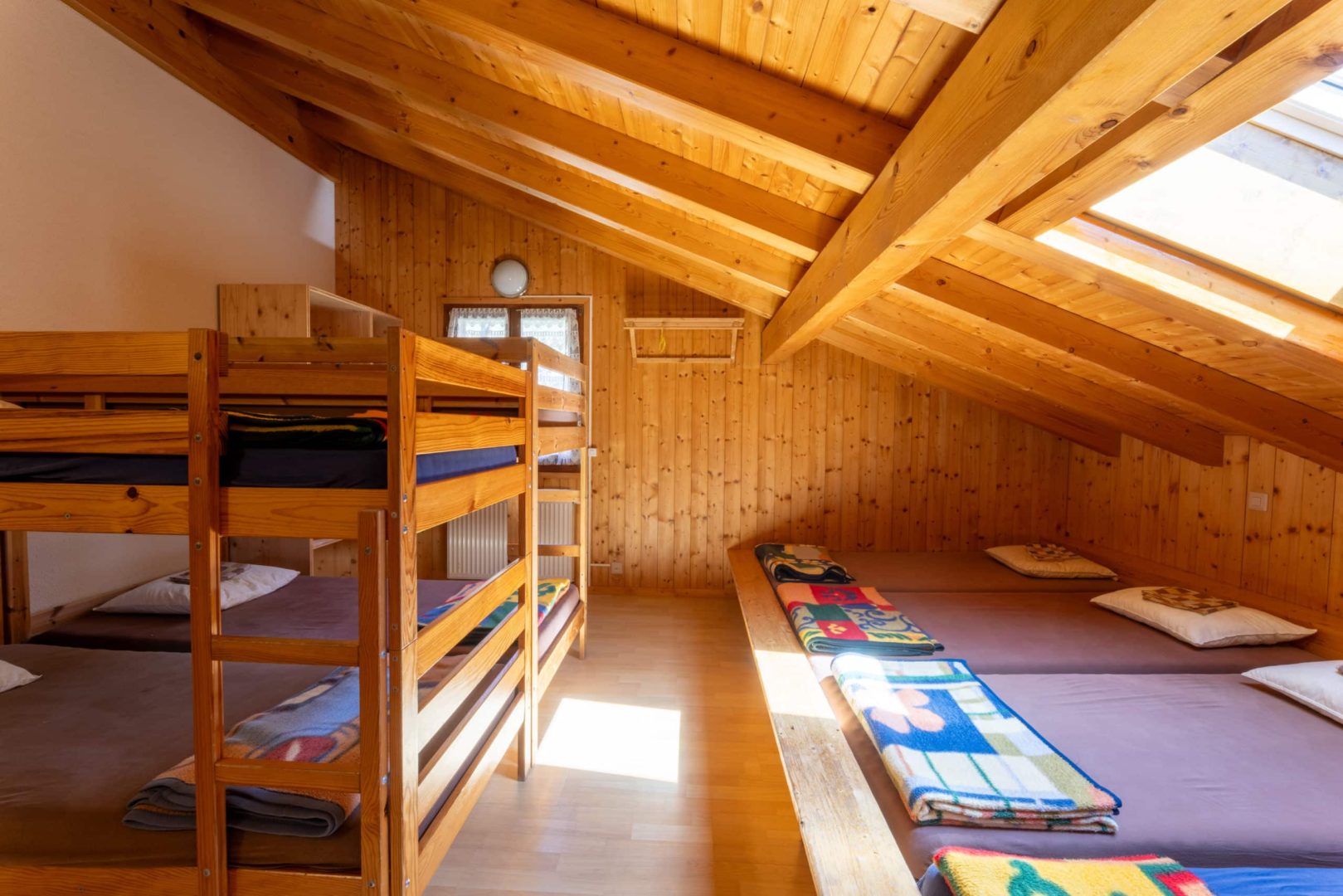
We, at the Young Explorers Club, classify shelters into clear tiers and assign them on maps with distances and walking-time estimates for children and older participants. Primary shelters are permanent indoor buildings with documented capacity and egress routes; we post capacity and egress details at every entrance. Secondary options include pre-arranged municipal shelters — churches, school gyms — covered by written agreements. On-site storm shelters are reinforced rooms inside main buildings, located away from windows and with overhead protection.
We mark high-ground assembly points outside flash-flood runout zones and calculate walking times from common areas. For camps in avalanche terrain we use SAC hazard maps to place assembly zones well outside identified start and runout zones and annotate those on the site map. We keep a printed map at dorms, the main hall and the office so staff and participants can find the closest shelter in under the posted evac time.
For parents and staff who want packing and prep advice, see how we prepare for camp.
Concrete supplies checklist and redundancy
Below I list the minimum stock and redundancy items you should adapt to population and remoteness:
- Water: 3 L/person/day × 3 days = 9 L/person for 72 h. Store rotated containers and a water-treatment method.
- Food: non-perishable 72-hour rations — plan 2,400–3,000 kcal/person/day depending on age and activity; include finger-foods and easy-to-prepare meals.
- First-aid: one basic Swiss Red Cross kit per 25 people; one advanced trauma kit (tourniquet, chest seal, splints) per remote group/vehicle.
- Evacuation gear: at least 2 stretchers per site or per 50 people, plus one blanket and one space blanket per person.
- Lighting & power: one headlamp per person; communal lanterns and spare batteries. Backup power sized to run comms + essential lighting for 24 h (calculate continuous load and add 25% margin).
- Communications: two independent systems (mobile + radio or satellite); 2 satellite communicators (primary + backup); 4–8 handheld radios covering IC, Comm, Transport, Medical, with spares.
- Sanitation & shelter: portable toilets sized for 72 h, tarps, ropes, tools, spare clothing, mats and infant supplies if needed.
- Documentation & signage: each shelter must display: shelter ID, capacity — [insert numbers], available beds/mats, distance from activity areas (m) and estimated evac time (min). Post site map with primary/secondary shelters, evacuation routes, assembly points, emergency vehicle access and nearest hospital/EMS coordinates and drive times.
- Maintenance: keep an annual inspection log for structures, exits, smoke detectors, ventilation, stock rotation and battery health. Test satellite units and generators monthly and record fuel/service dates.
- Operational notes: maintain two independent comms, enforce stock rotation, and rehearse evacuations using the posted walking-time estimates so staff act fast and calmly.

Legal, institutional framework, reporting and insurance
We coordinate legal responsibilities with federal, cantonal and municipal authorities so our decisions stand up in an emergency. At federal level the Federal Office for Civil Protection (FOCP) provides the national civil protection framework and coordination; MeteoSwiss supplies the operational weather warnings; and FOEN gives the climate and hydrology context that shapes flood and avalanche advice. Cantonal police and cantonal civil protection issue operational instructions and have jurisdiction for evacuations and closure orders, while municipal authorities manage local sheltering and site-specific instructions. Alertswiss — the national alerting service (push notifications) — is the primary national channel; municipal sirens and cantonal instructions carry legal weight in acute situations. We accept that camp operators retain the duty of care / liability for organisers and must make the on-site decisions, handle registrations and comply with canton-specific rules.
Registration and notification rules differ by canton. Many cantons require advance notification for multi-day youth programs, minimum staffing and first-aid provisions, and proof of insurance. We document those requirements in the emergency action plan (EAP) and embed the phrase cantonal camp/overnight stay notification requirements — [insert canton-specific rule examples] so staff check the exact texts before each season. We also file any required acknowledgements from municipal or cantonal offices and keep copies on-site and in digital form.
Insurance is a legal and practical backstop. We treat these coverages as minimum recommended items and verify each policy before campers arrive:
- Liability insurance / public liability — to cover third‑party injury or damage.
- Accident insurance (campers & staff) — confirm group accident coverage where mandatory.
- Property insurance — for infrastructure and contents.
- Business interruption coverage — for prolonged closures or evacuation-driven losses.
We record insurer name, policy number, coverage limits in CHF and deductible amounts in the financial risk register and keep insurer confirmations with CHF limits attached to the EAP.
Example canton summaries (examples only; verify exact legal text on canton websites before camp):
- Canton of Zurich commonly asks for notification of multi-day youth camps, minimum first-aid provision and a local emergency action plan filed with municipal authorities [verify Zurich cantonal ordinance and insert citation].
- Canton of Geneva expects organisers to register overnight stays and to demonstrate medical coverage and evacuation plans [verify Geneva rules and insert citation].
- Canton of Valais, given alpine terrain, typically enforces stricter checks on mountain leaders’ qualifications and avalanche safety plans [verify Valais cantonal requirements].
We instruct every camp manager to check the canton(s) where activities occur and paste exact legal citations into the EAP.
Pre-departure legal checklist (filed with canton/municipality)
Before any multi-day activity we complete and file the following items:
- Confirm registration/notification requirements for the host canton and submit required paperwork within prescribed deadlines.
- Verify insurance: liability insurance / public liability, accident insurance (campers & staff), property and business interruption coverage; record insurer, policy number, coverage limits (CHF) and deductibles.
- File the emergency action plan with municipal/cantonal contact and obtain written acknowledgement where required.
- Confirm radio/satellite licensing compliance where frequencies or usage require permits.
- Keep copies of staff certifications and training IDs on-site and included in the filed EAP.
After an incident we keep exact records. The incident-report checklist we use includes:
- Time-stamped log (ISO times).
- Staff-on-duty list.
- Weather-feed snapshots/screenshots.
- Photos and video.
- Witness statements.
- Triage and medical records.
- Vehicle logs.
- Communications log showing sent messages.
- Insurer notification timestamp.
We maintain a financial risk register with estimated losses and insurer contact, and we record whether the event meets policy terms along with confirmed CHF coverage limits. For practical guidance about on-site preparation and parental communication, we point organisers to resources that help them prepare for camp.

Staff training, medical preparedness and drill schedules
We, at the Young Explorers Club, require clear, auditable training and medical readiness so staff can respond fast and confidently during severe weather events. I keep staff files up to date with certificate IDs and renewal dates, and I post a staff-training matrix on-site for inspectors and parents.
Training requirements and tracking
We require the following certified trainings and record-keeping; items include:
- First-aid certification: require first-aid certification (e.g., Swiss Red Cross/medical provider) with certificate IDs and renewal dates on file (Swiss Red Cross as preferred provider).
- Outdoor & emergency medicine basics: recommended for the Medical Lead and key staff on remote camps; we log provider and last renewal.
- Radios and communications: approved training for VHF/UHF and satellite communicator use; Communications Officers must show IDs and refresh training regularly.
- Weather interpretation basics: MeteoSwiss nowcast interpretation for on-shift weather monitors and documentation of helpdesk or course completion (cite MeteoSwiss).
- Avalanche awareness and route-finding: require SAC avalanche awareness training for any mountain leader operating in avalanche terrain (cite SAC).
- Workplace safety guidance: reference SUVA for site-safety policy and include provider name in records.
I maintain a visible staff-training matrix with these columns: Role | Required training | Certification ID | Provider | Renewal interval | Last renewal date | Notes.
Example rows I post:
- Incident Commander — EAP & incident command training | [ID] | Internal/Provider | 24 months | [date]
- Communications Officer — Crisis communications & app configuration | [ID] | [Provider] | 24 months | [date]
- Medical Lead — Swiss Red Cross First Aid & emergency medicine | [ID] | Swiss Red Cross | 24 months | [date]
- Mountain Leader — SAC avalanche awareness | [ID] | SAC | 24 months | [date]
I require staff to present originals on arrival and keep scanned copies on-site. We use provider names (Swiss Red Cross, SAC, SUVA) and certification IDs in both paper and digital files for auditability.
Drills, logging and on-site medical capacity
I enforce “drill frequency: initial within 48 hours; weekly thereafter” and log every exercise with ISO timestamps. The initial full evacuation drill must run inside the first 48 hours of camp start. I record start/end times, evacuation completion times by group, bottlenecks and corrective actions. Weekly drills are short and sharp — shelter-in-place or quick-evac scenarios to keep muscle memory active. I also run triggered drills after any major staff change, after significant forecast upgrades, or following a real event where procedures were used.
Drill logs capture:
- ISO timestamps and personnel present (names & roles)
- Evacuation times per group and equipment used
- Communications checks (radio & satellite)
- After-action review (AAR) notes and corrective actions with owners and due dates
For medical capacity I publish targets and measure against them. Policy language includes the explicit phrase “on-site medical capacity: 1 trained first-aider per [insert ratio]”. You should define the exact ratio by activity and canton; common ranges run 1 per 10–25. I aim for at least one qualified first-aider on every shift; remote activities get additional medics or a Medical Lead with extra training.
Emergency transport plans sit with every site file. I document nearest EMS response times, the nearest hospital with contact number and approximate ambulance drive time (target: nearest hospital under 30 minutes for typical lowland camps; remote alpine camps record realistic longer times and contingency transport). During incidents and drills I record actual ambulance/hospital arrival and transport times to validate plans and refine SOPs.
Parents and inspectors can check our supervision and training summaries online; see our notes on camp supervision for how we align ratios, training and on-site coverage with local rules.

Data, trends, case studies and ready-to-use templates
We, at the young explorers club, classify Swiss camp hazards by season:
- Summer (Jun–Aug): thunderstorms and lightning peak.
- Spring / early summer & late summer (Mar–May, Aug–Sep): heavy precipitation and flash floods appear.
- Mid-summer: heatwaves concentrate.
- Autumn & winter (Sep–Feb): gale-force winds and storms hit.
- Autumn/winter and early/late-season snow: heavy snowfall and avalanche risk affect alpine camps.
We reference MeteoSwiss warning levels 1–4 and the SAC avalanche danger scale 1–5 as the operational triggers camps should use for decisions.
Operational guidance: use MeteoSwiss Level 3 and SAC danger 3 as high-probability trigger points for elevated action. We set thresholds in our Emergency Action Plans (EAPs) to map those levels to specific steps:
- Increased monitoring (more frequent weather/watch checks and staff readiness).
- Sheltering (move participants to designated shelters).
- Relocation (move camp areas to safer sites or lower elevations).
- Full evacuation (when thresholds and routing permit).
How to fetch & insert up-to-date official figures (step-by-step)
- MeteoSwiss warnings — go to the MeteoSwiss statistics portal or download the annual warning summary CSV. Extract total annual warnings and counts by level for the last 3–5 years. Label each row with the calendar year and source.
- SAC avalanche days — download SAC avalanche bulletin archives and count days with danger level ≥3 for each winter season. Label seasons like 2022/23 and report counts per season.
- FOEN/FSO climate normals — obtain the latest 30-year normal dataset (e.g., 1991–2020 or updated range) and record mean temperature and precipitation change versus the previous 30-year period. Note the FOEN/FSO dataset year.
- Insert figures into templates and charts, always adding the data year in parentheses beside each numeric value so reviewers can see vintage at a glance.
Suggested quality checks while fetching: verify timestamps, keep raw CSV copies, and archive screenshots of source pages. Before sharing plans externally, cross-check numbers with canton-level emergency services.
We advise teams to review basic preparedness guidance; see how to prepare for camp for operational checklists and coordination notes.
HINTS FOR FORMATTING AND OUTPUTS
Prepare these small time-series outputs for your reports, then populate them with the fetched data:
- A table of MeteoSwiss warnings per year (last 3–5 years) with columns Year | Level1 | Level2 | Level3 | Level4.
- A seasonal chart showing distribution of warnings as percentages by season (Jun–Aug, Sep–Nov, Dec–Feb, Mar–May).
- A table of SAC avalanche-days at level 3+ per winter season (last 3–5 seasons).
CASE STUDY TEMPLATE AND EXAMPLE
Use this structure for each real incident you record:
- Title (Year, Canton) —
- Timeline: official warning(s) timestamps → internal decision points → actions taken → outcomes → lessons learned / after-action items.
- Record exact MeteoSwiss warning time (ISO), Alertswiss alert time, evacuation order time, evacuation completion time, injuries (if any), material damage, and insurer outcomes.
Example template entry (fill fields with official timestamps and statements):
“Camp evacuation due to heavy precipitation (Year: [YYYY], Canton: [NAME])” — MeteoSwiss warning: [TIME ISO]; Alertswiss alert: [TIME ISO]; evacuation order: [TIME ISO]; evacuation complete: [TIME ISO]; injuries: [count]; damage: [brief]; insurer notified: [TIME ISO]; AAR items: [list].
READY-TO-USE TEMPLATES (fillable fields)
- Pre-camp checklist — fields: camp name, canton, GPS coordinates, total on-site numbers, designated shelters (IDs & capacities), staff roster with alternates, contact tree, nearest hospital and phone, insurance policy numbers, canton acknowledgement and sign-off.
- Emergency Action Plan (EAP) template — fields: trigger thresholds (MeteoSwiss Level 3 / SAC 3+), assigned staff roles and alternates, communication procedures (who calls whom and by what medium), primary and secondary evacuation routes with distances and expected travel times, shelter details, equipment list (generators, radios, first-aid kits), insurer contacts and policy references.
- Drill log template — fields: drill type, date/time start, date/time end, participant list, evacuation completion times by group, deviations noted, corrective actions assigned with owner and due date.
- Incident report template — fields: incident ID, event start time (ISO), warnings received (timestamps + screenshots), actions taken (timestamps), injuries, photos/videos attached (Y/N), insurer notified (time), AAR summary.
INSERTION & LABELING INSTRUCTIONS FOR NUMERIC DATA
For every numeric placeholder, insert the official figure followed by the data year in parentheses. Example: “MeteoSwiss warnings in 2023: 412 warnings (2023).” For seasonal or seasonal-comparison indicators, include the dataset year and source tag (e.g., FOEN/FSO). Always note the source organization when you quote counts.
DATA LIMITATIONS AND FINAL NOTE
Important: I cannot fetch live datasets or current-year official counts in this output. Replace every [INSERT …] placeholder in the templates and charts with the latest figures from MeteoSwiss, SAC, FOEN/FSO and the relevant canton sites, and label each figure with its source year. For operational guidance on medical readiness and on-site care during incidents, include your camp’s medical protocols and compare them with local expectations such as medical care recommendations.

Sources
MeteoSwiss — Radar & nowcasting
alertswiss — The Swiss Alerting Service
WSL Institute for Snow and Avalanche Research SLF — Avalanche bulletin
Federal Office for Civil Protection (FOCP) — Civil protection in Switzerland
Federal Office for the Environment (FOEN) — Natural hazards
Federal Statistical Office (FSO) — Climate change
Suva — Accident prevention and workplace safety
bfu — Swiss Council for Accident Prevention
Swiss Re Institute — Research on natural catastrophes and risk