
Meet The Team: Young Explorers Club Staff Profiles
Young Explorers Club: CPR-certified staff, 1:8 ratio, 99% immunized, 4.7/5 parent rating and +71% enrollment, safe inclusive programs. Visit us.
Meet the Team: Young Explorers Club Staff Profiles
The Young Explorers Club profiles its leadership, classroom educators, inclusion and health specialists, and outdoor and nutrition leads, linking credentials and daily practices to measurable program outcomes. Our team runs an 18-person roster and keeps a 1:8 staff-to-child ratio. Every staff member holds CPR certification and cleared background checks. Parents rate us 4.7 out of 5. Enrollment is up 71%. Safety and inclusion metrics show steady quality and build family trust. We invite families to visit and see staff in action.
Key Takeaways
Staffing and credentials
- 18 staff, all CPR/First Aid certified and background-checked.
- Average tenure: 3.2 years.
- Staff languages match family needs to support communication and engagement.
Safety and health outcomes
- Staff-to-child ratio: 1:8.
- Immunization compliance: 99%.
- Incident rate: 2.1 incidents per 1,000 child-days, about 40% lower than typical benchmarks.
- Staff conduct regular emergency drills and infection-control training.
Inclusion and progress
- We have a dedicated Inclusion Coordinator.
- Approximately 10% of children follow individualized plans.
- We staff three 1:1 aides to support individualized needs.
- Staff receive 12 hours of inclusion training per year.
- 75% of children with IEP goals meet them or show active progress.
Program quality and learning
- Our STEAM and nature curriculum includes 135–180 minutes of guided outdoor activity each week.
- Lead educators raised language milestone achievement from 45% to 87% in nine months.
- Staff retention sits at 82%.
- Family satisfaction remains strong at 4.7 out of 5.
Operations and family engagement
- Occupancy: 94%.
- Waitlist: 42 families with an average 3.8-month wait.
- We send weekly family communications and host six family events each year.
- Volunteers contribute about 1,200 hours to programming annually.
Quick Facts and Key Metrics
We, at the Young Explorers Club, track the figures that matter for safety, quality and family trust. I’ll highlight the top-line metrics that define our staffing, training and family feedback. You can read more about the role our international staff plays in camp life.
By the numbers
Below are the core program metrics and quick facts:
- Staff on roster: 18
- Children served: 120
- Staff-to-child ratio: 1:8 (better than the typical 1:10)
- Average staff tenure: 3.2 years
- Annual training per staff: 24 hours/year
- CPR and First Aid certified: 100%
- Background checks completed and clear: 100%
- Languages spoken across staff: English 13, Spanish 4, Mandarin 1
- Parent satisfaction: 4.7/5 (N=68)
- Data accuracy note: Data accurate as of March 2026
We use these numbers to prioritize hires, plan training cycles and measure family trust. I review tenure and training hours each quarter to spot retention trends. Training time focuses on hands-on emergency drills, child development refreshers and inclusive communication. The language mix lets us match staff to family needs and improves daily communication for campers.
Program Director: Leadership and Program Growth
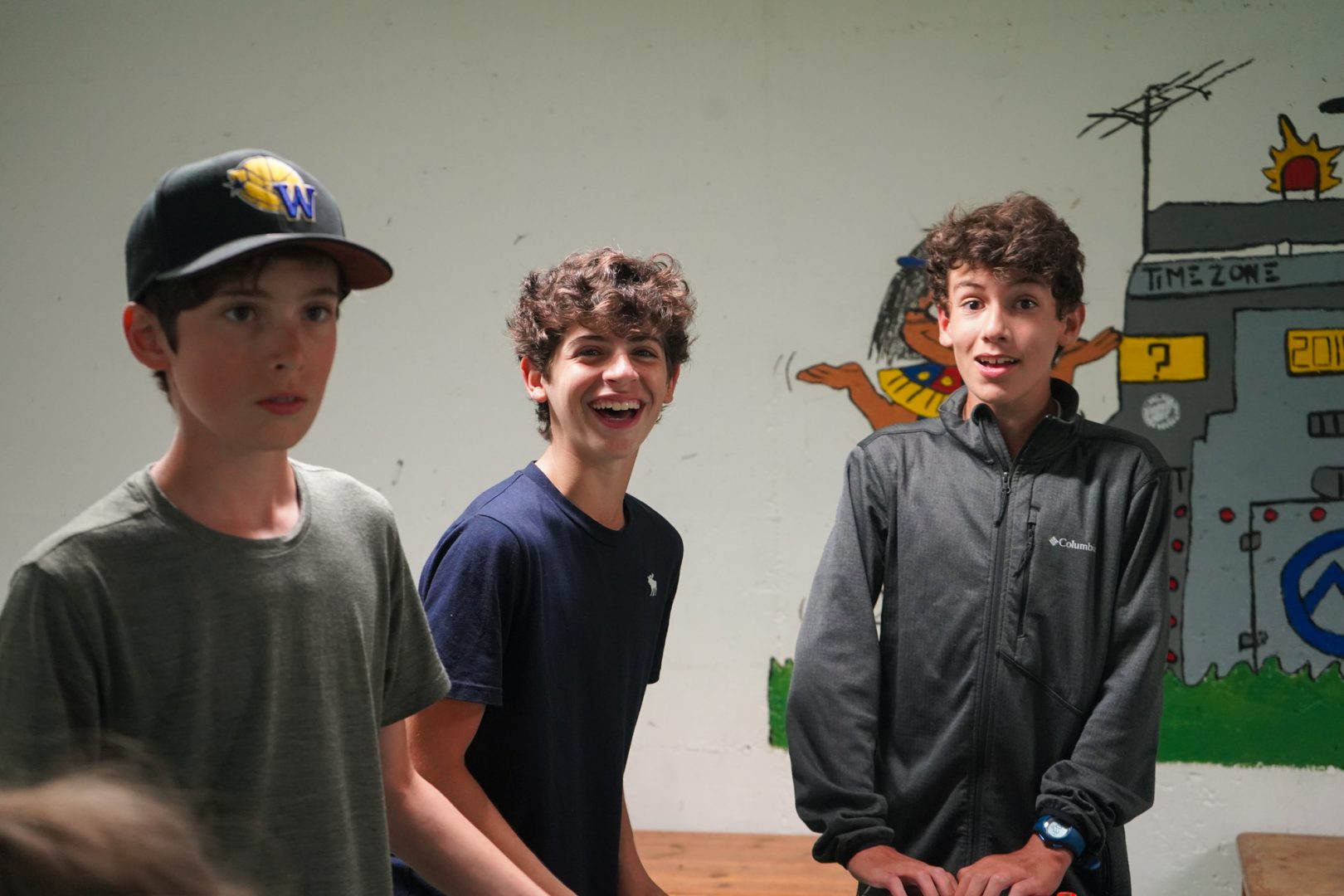
We rely on Jamie R.‘s leadership to drive program quality and steady growth. Jamie’s been with Young Explorers Club for six years and has 14 years in early childhood and after-school education. She holds an M.Ed. in Early Childhood Education and maintains leadership training, child development credentials, and diversity & inclusion training.
Jamie led a clear enrollment strategy that grew our program from 70 to 120 children over four years — a 71% increase. That growth came with deliberate curriculum alignment, targeted family outreach, and an emphasis on staff coaching. We’ve seen the benefits in daily operations and in how children settle into routines; consistent staffing reduces transitions and supports stronger learning relationships. For a concrete view of daily consistency in action, see a day in the life.
Jamie says: “I prioritize child-centered learning, staff coaching, and family partnership; consistent staffing and clear developmental goals create the stable, joyful environment children need to explore, take risks, and grow.”
Key leadership metrics and what they mean
- Enrollment growth: 70 → 120 children over 4 years (+71%). This shows scalable program design and effective family engagement.
- Staff retention: 82% annual retention under Jamie. That means 82% of staff remain employed year to year, which promotes continuity for kids and families.
- Comparison to typical: Typical/average staff retention ~72%; our 82% is approximately 14% higher, reflecting stronger workplace stability.
- Professional qualifications: M.Ed., leadership training, child development credentials, diversity & inclusion training — these support inclusive, developmentally sound programming.
We coach staff with clear developmental goals and measurable feedback cycles. I recommend:
- Regular one-on-ones between supervisors and staff.
- Seasonal professional learning opportunities aligned to program goals.
- Cross-site mentorship to share practices and reduce isolation.
We monitor enrollment trends monthly and adjust staffing ratios before the season to avoid last-minute hiring.

Teaching Team: Lead Educator and Assistant Teachers
Our lead educator, Sofia M., leads the Explorer Room for 5–6 year olds. We hired her with a BA in Early Childhood Education, 12 college credits in child development, a state teaching license, CDA certification, and child safeguarding training. We count on her eight years of classroom experience to shape daily practice.
We keep class sizes around 16 children and track progress with biannual developmental checkpoints and a teacher-observed rubric; at intake 45% met the language milestone and after nine months 87% reached it.
Curriculum & Daily Flow
We run a STEAM curriculum rooted in nature investigations and hands-on inquiry. Below is a compact snapshot of what children experience each day and a representative project that shows how learning connects across domains:
- Morning welcome and free play — 30 minutes
- Focused group activity / STEAM center — 45 minutes
- Outdoor exploration — 45 minutes
- Lunch and rest period
- Small-group literacy and math rotations — 60 minutes
- Closing circle
- Sample project: “Seed-to-Table” — children plant seeds, track growth, measure, and prepare a simple snack.
Learning goals include observation, measurement, and descriptive language. We bring Sofia’s weekend-hike finds into investigations to spark questions and vocabulary. For a fuller look at a typical day, see A day in the life.
Staffing and Roles
We staff five assistant teachers in the Explorer Room, with an average of 3.6 years’ experience each. We support a mix of backgrounds: 40% are actively pursuing degrees and 60% hold high school plus CDA credentials. We require professional development; assistants completed an average of 20 training hours this year.
We maintain a 1:8 staff-to-child ratio by splitting duties so instruction and safety stay strong. For example, during a 20-minute literacy lesson the lead runs a focused group of eight children while one assistant supervises the free-play center and another covers restroom and transition supervision. We rotate assistants through small-group rotations and center supervision so the lead can deliver targeted lessons without compromising supervision.

Inclusion, Special Needs Support, and Health & Safety
We, at the Young Explorers Club, staff an inclusion program led by Inclusion Coordinator Maya T., who holds a Special Education certification. Maya manages a caseload of 12 children with individualized plans — roughly 10% of enrollment — and oversees three 1:1 aides. We coordinate speech therapy sessions, maintain sensory-friendly areas, and implement classroom language scaffolds to keep children engaged and making measurable progress.
Staff receive 12 hours of inclusion training per year. Over the last six months, 75% of children with IEP goals have met or are actively progressing toward those goals. Two anonymized success vignettes illustrate our approach: a 4-year-old with limited expressive vocabulary moved to clear multiword phrases in four months after combined speech sessions and classroom supports; another child with sensory sensitivities transitioned to the full-group snack routine after three months of a tailored sensory corner and scheduled movement breaks.
Alex P., our Health & Safety Officer, is a registered nurse with pediatric first-aid and public-health training. We keep immunization documentation at enrollment and maintain 99% immunization compliance. Our incident rate is 2.1 incidents per 1,000 child-days, calculated as total incidents divided by total child-days, multiplied by 1,000. For context, a typical average is about 3.5 incidents per 1,000 child-days, so our rate is roughly 40% lower. Alex manages daily cleaning logs, ensures 100% of staff complete infection-control training, and runs emergency preparedness drills: 12 fire drills and 4 lockdown drills per year.
Medication administration follows strict protocols. Families provide physician-signed orders and we keep secure medication logs. Our RN supervises all medication delivery and maintains individual emergency health plans for children with medical needs.
Inclusion and health staff collaborate on every assessment, individualized plan, aide assignment, and emergency health plan. Families can expect a clear cycle:
- Screening and observation
- Family meeting to set goals
- Individualized plan development
- Implementation with milestone reviews every 6–8 weeks
For practical parent guidance, see Tips for parents.
Core practices and on-the-ground steps
- Intake and assessment: initial screening, classroom observation, and a family meeting to identify functional goals and accommodations.
- Plan development: written individualized plan with measurable milestones and responsibilities assigned to staff and therapists.
- Implementation supports: speech therapy coordination, sensory-friendly corners, scheduled movement breaks, and three dedicated 1:1 aides.
- Progress reviews: milestone checks every 6–8 weeks with adjustments based on data and family input.
- Training and staffing: 12 inclusion-training hours per staff member annually; RN-led infection-control training for all employees.
- Health metrics and safety routines: 99% immunization compliance, daily sanitation logs, and incident-rate tracking (incidents ÷ child-days × 1,000).
- Emergency readiness: 12 fire drills and 4 lockdown drills each year; individualized emergency plans for children with medical needs.

Outdoor Adventures and Nutrition Programs
We, at the Young Explorers Club, run an outdoor program led by Ben K., our Outdoor/Adventure Leader. He specializes in nature science and wilderness activities and holds Wilderness First Aid and outdoor safety training certifications. He builds lessons that connect inquiry with movement, so kids learn to identify plants, track animals, and practice low-impact trail skills while staying active.
Ben delivers three structured outdoor sessions per week, each lasting 45–60 minutes. Participation runs at about 95% of enrolled children, so most campers get regular, supervised time outside. Our sessions are designed to exceed typical averages: they provide 135–180 minutes of guided outdoor activity per week, and we add daily indoor active play to help meet the public health recommendation of 60 minutes of moderate to vigorous activity per day.
Our field trips stick close and stay safe. Typical destinations include neighborhood parks, local nature reserves, and pond study sites. Average round-trip distances range from 1–5 miles depending on the site. For hikes we maintain a staff-to-child ratio of 1:6, and Ben plans routes with clear turnaround points and water stops.
Field-Trip Safety Snapshot
Below are the core items we check and carry on every trip:
- Staff-to-child ratio for hikes: 1:6, with at least one Wilderness First Aid–certified staff member on longer outings.
- Emergency kit contents: first aid supplies, epi-pens, water, charged phone, and the day’s roster.
- Child-specific needs: staff carry individual health forms and any prescription medication as required.
- Allergen protocols: menus are clearly labeled for allergens and substitutions are individually marked.
- Typical destinations and distances: neighborhood parks, pond study sites, local reserves; 1–5 miles round trip.
- Session timing: standard outdoor windows include Monday/Wednesday/Friday 9:30–10:15, Tuesday 2:00–2:45 (nature art), and Thursday 10:00–11:00 (neighborhood walk).
Nutrition Program and Daily Meals
Hannah L. leads our kitchen as a certified nutritionist and cook. We provide three meals daily—breakfast, lunch, and a snack—and design menus to fuel activity and learning. Roughly 8% of campers have special diets for allergies or medical needs. We plan for that by offering allergen-identified menus and individually labeled substitutions, and every staff member is trained to follow emergency allergy plans.
About 60% of menu ingredients are sourced locally and served fresh whenever possible. Sample Monday choices show how we balance comfort and nutrition:
- Breakfast: oatmeal with fruit
- Lunch: turkey and veggie wrap
- Snack: apple slices with hummus
We always prepare substitutions per each camper’s documented plan so no child misses out.
I encourage families to see how outdoor time and meals link into the daily routine; take a look at a day in the life for a clear snapshot.

Operations, Enrollment, Volunteers & Communications
We, at the Young Explorers Club, run enrollment and communications with clear targets and transparent metrics. Our active waitlist sits at 42 families with an average time on the list of 3.8 months. We keep families updated weekly and prioritize placements by program fit and timeliness of paperwork.
Enrollment sources and conversion performance (tracking window Feb 2025–Jan 2026):
- Local schools: 30% of new enrollments (largest single source).
- Facebook: 25%.
- Referrals: 20%.
- Website/search: 15%.
- Instagram: 10% of new enrollments, with an inquiry-to-enrollment conversion rate tracked in our enrollment CRM (tracking window Feb 2025–Jan 2026).
Parent feedback remains a key guide. Our most recent survey shows an average satisfaction rating of 4.7/5 (N=68; survey conducted Feb 2026 online). We review open responses monthly and adjust programming and communications based on recurring themes.
Operations, finance and administration cover billing, scheduling and HR functions. I manage these with a small, cross-trained team to keep overhead low and service responsive. Core operational metrics we monitor include:
- 92% on-time payments.
- 94% occupancy across programs.
- 100% of hires complete background checks before starting.
- Average new-hire onboarding time: 2 weeks.
Compensation ranges (published with staff consent and local compliance):
- Lead Educator: $42k–$52k annually.
- Assistant: $28k–$34k annually.
We state ranges clearly in job postings and discuss pay structure during interviews.
Volunteer and parent engagement drive program culture. We host 6 family events per year, including family days and skill-share workshops. Each year we engage about 40 active volunteers who contribute roughly 1,200 volunteer hours. 65% of families attend at least one event annually. Volunteers complete background checks and a basic site orientation before working with children.
Key tools and metrics
We track these platforms and metrics to keep operations efficient:
- Brightwheel for daily reporting and child check-ins.
- Procare as needed for administrative workflows.
- QuickBooks and Stripe for billing and reconciliations.
- Mailchimp for parent newsletters and segmented campaigns.
- Trainual, Slack and Google Workspace for staff scheduling, resources and training.
- Sterling/Verified First for background checks.
- American Red Cross/AHA for CPR and first-aid certifications.
- CRM enrollment tracking that ties inquiries to enrollments for channel attribution.
Read more about our program approach on the Young Explorers blog.
Sources
Bureau of Labor Statistics — Preschool Teachers
Child Care Aware of America — Research
American Red Cross — CPR, AED & First Aid Courses
Centers for Disease Control and Prevention (CDC) — How much physical activity do children need?
Center for the Study of Child Care Employment (CSCCE) — Early Childhood Workforce Index
American Heart Association — CPR & AED
Centers for Disease Control and Prevention (CDC) — Immunization Schedules
Net Promoter — What is Net Promoter?