The Best Summer Camp In Switzerland For Football Training
Top football summer camps Switzerland: UEFA coaches, structured sessions, altitude training, safe logistics and youth development.
Overview
Switzerland’s top football summer camps combine UEFA‑qualified coaches from professional academies with structured daily curricula, measurable testing (sprints, Yo‑Yo, technical counts) and age‑appropriate progressions. These programs emphasize speed player development for ages roughly 6–18. Alpine residential options add altitude training and focused strength and conditioning. Switzerland’s compact transport links, multilingual staff and strong safeguarding keep logistics and player welfare simple for international families. We recommend staging arrivals to allow acclimatisation and booking early to secure places.
Key Takeaways
- Coaching quality: Look for UEFA A/B (or Pro) coaches and club academy partnerships (e.g., FC Basel, FC Zürich, Servette, BSC Young Boys, Manchester City partners) to ensure progressive, academy‑style coaching and talent ID pathways.
- Program structure: Camps typically run 5–14 days with 2–6 hours of daily training, a professional‑style microcycle (technical, tactical, S&C, match simulation) and baseline/exit testing to track progress.
- Altitude, safety and logistics: Alpine sites (600–1,800 m) offer aerobic benefits if arrival is staged for acclimatisation; Switzerland’s low crime rates, multilingual staff and reliable transport reduce travel risk and stress.
- Ratios and age programming: Expect coach‑to‑player ratios of approximately 1:6–1:10 (elite weeks tighter around 1:6) and clearly defined age brackets (U6–U8 through U16–U18) with specific technical/tactical and S&C emphases.
- Costs and preparation: Week pricing ranges roughly CHF 400–800 for day camps and CHF 800–2,000+ for residential packages (usually including meals); book early for discounts and follow a 4–6 week pre‑camp fitness and paperwork checklist.
Recommendations
Arrival: Stage arrivals by at least 48–72 hours for alpine weeks to allow acclimatisation.
Booking: Reserve spots early—high‑quality weeks fill fast and often offer early‑book discounts.
Preparation: Complete medical paperwork, insurance and a 4–6 week conditioning plan before camp start.
Quick facts (at-a-glance)
We, at the Young Explorers Club, use these figures when planning football training weeks.
At-a-glance metrics
- Switzerland population: ≈ 8.7 million (2024).
- Average summer lowland temperatures: 20–26°C; many alpine training sites sit at elevations between 600–1,800 m, ideal for altitude training.
- Typical camp lengths: 5–14 day camps.
- Daily structured training: typically runs 2–6 hours.
- Coach-to-player ratios: usually range 1:6–1:10, which supports focused skill work.
- Typical ages accepted: 6–18.
- Coach qualifications on offer: UEFA A / UEFA B coaches, with occasional UEFA Pro staff at professional club camps — strong evidence of high-level youth football training and UEFA coaches presence.
- Price range: CHF 400–2,000 (day camps at the low end; residential with full board at the high end).
- Keywords and focus areas I prioritize: football summer camp Switzerland, soccer camp Switzerland, youth football training.
- For full program outlines and daily schedules see soccer camps in Switzerland.

Why it matters
We expect excellence because football development depends on the coach as much as the pitch. We choose programs that use UEFA coaches so players get modern, progressive methods and clear technical pathways.
Coaching quality and program credibility
I assess coaching staff, club partnerships and daily session plans before recommending a camp. Look for these indicators in any football program:
- Professional club academies involved, such as FC Basel, FC Zürich, Servette FC and BSC Young Boys.
- International school partnerships, for example Manchester City Football Schools partners.
- UEFA coaches on staff delivering age-appropriate progressions, individual feedback and small-group training.
- Structured match play and tournament formats that replicate academy scouting environments.
I also advise parents to review coach-to-player ratios, coach credentials and sample session plans. We run soccer camps with detailed daily plans and regular coach briefings for parents.
Altitude, safety and logistics
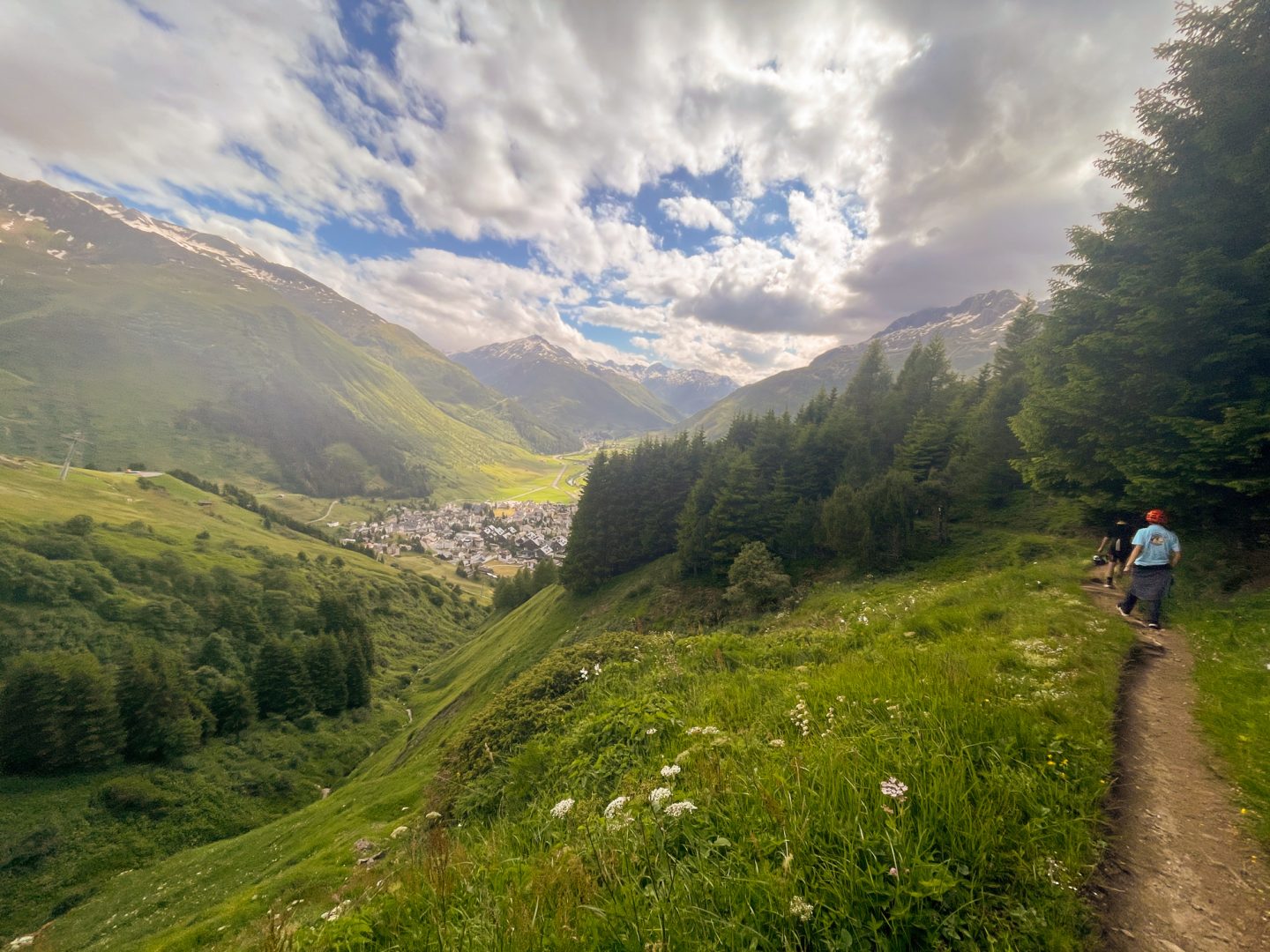
Alpine locations offer real performance advantages. Altitude training at 600–1,800 m increases aerobic capacity, sharpens pacing and forces tactical adaptation on varied terrain. I recommend a gradual build-up over the first two days to avoid fatigue. Hydration, sleep and reduced session intensity on arrival cut acclimatisation risks.
Switzerland’s safety profile matters as much as the training surface. Low crime rates and strong safeguarding norms mean we can keep focus on development and wellbeing. Multilingual staff provide bilingual/multilingual instruction in German, French, English and Italian, which eases communication for international families and speeds technical learning.
Compact geography and reliable transport reduce travel stress and let us schedule frequent matches and short tournaments without long bus transfers. For parents this means less downtime and better recovery between sessions. I encourage choosing camps that publish timetables and transport options up front, and that offer clear emergency procedures and parent communication channels.
Top camps to consider (profiles and quick comparisons)
We shortlist programmes that deliver serious football work and clear player pathways. Below I profile each option and note practical takeaways for parents and players.
FC Basel
Recommendation: I recommend this for youth players seeking a strong academy feel with clear elite ID weeks. Training runs 3–4 hours daily, mixing technical, tactical and S&C sessions (FC Basel Youth Academy). Coaches are club academy staff, many with UEFA A / UEFA B credentials (FC Basel Youth Academy). Expect a coach-to-player ratio around 1:8 (often advertised as 1:6–1:10 ratio) (FC Basel Youth Academy). Day camps cost about CHF 400–700 and residential weeks CHF 800–1,500 (prices checked July 2026) (FC Basel Youth Academy). Travel is easy: Basel airport 20–30 minutes and Basel SBB within 10–30 minutes (FC Basel Youth Academy).
FC Zürich
Recommendation: This is solid for broad age brackets and occasional first-team exposure. Sessions run 3–5 hours per day with development and elite ID weeks (FCZ Football School). Coaches are academy staff with UEFA A/B badges; first-team staff drop in sometimes (FCZ Football School). Ratio averages 1:8. Prices sit near CHF 450–750 (day) and CHF 900–1,600 (residential) (FCZ Football School). Logistics: Zürich Kloten airport and SBB links make travel simple (FCZ Football School).
Servette FC
Recommendation: I favor this for Geneva-based families aiming for talent identification. Training is 3–4 hours daily with development and elite weeks (Servette FC Academy). Coaches hold UEFA B/A qualifications and academy talent ID can be part of the camp (Servette FC Academy). Coach-to-player ratio typically 1:7–1:9. Pricing is CHF 400–700 (day) and CHF 850–1,500 (residential) (Servette FC Academy). Geneva airport is 20–30 minutes away by car or train (Servette FC Academy).
BSC Young Boys
Recommendation: Choose this for higher-altitude Bern sessions and potential first-team involvement. Camps run 3–5 hours daily across beginner to elite ID weeks (BSC Young Boys Youth Camps). Coaching mixes academy and first-team staff, UEFA A/B typical, with elite weeks often at 1:6–1:8 ratio (BSC Young Boys Youth Camps). Expect CHF 420–800 (day) and CHF 900–1,700 (residential) (BSC Young Boys Youth Camps).
Manchester City Football Schools (Switzerland partners)
Recommendation: These suit players wanting an international curriculum. Typical training is 2–4 hours per day with licensed City coaches and local UEFA-qualified staff (Manchester City Football Schools). Ratios are 1:8–1:10. Pricing ranges CHF 450–800 (day) and CHF 900–1,600 (residential). Locations vary by partner site.
Alpine residential elite academies
Recommendation: I suggest these for advanced players chasing altitude and an intensive daily load. Camps run 4–6 hours per day plus recovery sessions and often mirror pre-professional schedules (Alpine residential elite academies). Coach-to-player ratios tighten to about 1:6 and staff include UEFA A/B coaches plus specialised S&C and physio (Alpine residential elite academies). Expect higher residential pricing CHF 1,200–2,000+ (full board) and transfers of 60–120 minutes from major airports (Alpine residential elite academies). For related multi-sport or activity-rich options see our summer camp in Switzerland.
Quick comparison (price day/res | age range | elite pathway | UEFA/club coaches | residential | altitude)
Here are compact comparison points to scan when you’re deciding:
- FC Basel: CHF 400–700 / CHF 800–1,500 | 7–16 | Yes | Yes (UEFA A/B) | Yes | 300–400 m (FC Basel Youth Academy)
- FC Zürich: CHF 450–750 / CHF 900–1,600 | 6–18 | Yes | Yes | Yes | ~400 m (FCZ Football School)
- Servette FC: CHF 400–700 / CHF 850–1,500 | 7–17 | Yes | Yes | Yes | 350–400 m (Servette FC Academy)
- Young Boys: CHF 420–800 / CHF 900–1,700 | 6–18 | Yes | Yes | Yes | 540 m (BSC Young Boys Youth Camps)
- Manchester City Schools: CHF 450–800 / CHF 900–1,600 | 6–17 | No (partner pathway) | Yes | Yes | ~350–450 m (Manchester City Football Schools)
- Alpine elite academies: CHF 400–800 / CHF 1,200–2,000+ | 10–18 | Yes (pre-pro) | Yes | Yes | 1,200–1,600 m (Alpine residential elite academies)

Facilities, infrastructure and travel logistics
We, at the Young Explorers Club, pick sites that combine high-quality playing surfaces with dedicated support facilities so training stays consistent and focused. Pitch options at typical sites include natural grass / hybrid / 3G turf, with most venues fielding 1–4 full-size pitches and additional small-sided game (SSG) areas. Indoor halls are commonly available and keep sessions running during bad weather. Example facility counts in our profiles include setups like 2 full-size natural grass + 1 indoor hall.
Where dimensions are published, pitches meet FIFA/UEFA standard dimensions (~100–110 m x 64–75 m). I recommend checking the specific venue note in each camp profile before you book.
Onsite support facilities are standard at serious football camps. You’ll usually find:
- Video analysis rooms for match and session review, labeled as video analysis
- Strength & conditioning area with equipment such as free weights, plyo boxes, TRX and sleds
- Physio/medical room for acute care and recovery
- Classrooms for tactical sessions and classroom theory
Capacity and accommodation vary by provider. Larger academy-style sites often accommodate 50–300 players, while smaller independent camps host 20–80. Rooming options can be dorm-style or small shared rooms; I always advise confirming exact sleeping arrangements before arrival.
Weather resiliency matters. Indoor halls minimize cancellations and let you keep technical work on schedule. Most camps do not publish cancellation data; where not published, camp did not publish cancellation data. If reliable indoor space matters to your planning, ask the camp to confirm hall availability and contingency session plans.
Transport and location specifics are straightforward in Switzerland. Sites cluster within convenient ranges to major hubs: Zürich/Geneva/Basel airports and major rail nodes like Bern. Average travel times from Zürich/Geneva airports typically run 30–120 minutes depending on the site and alpine distance. I recommend using SBB Swiss Federal Railways for planning; services are frequent and reliable and often show the fastest public transfer options. As an example transfer, Geneva airport to a Servette-based camp takes roughly 20–30 minutes by car or a short train connection.
Typical onsite inventory (quick reference)
Below is a compact checklist that I use when evaluating a camp — it shows the standard items you should confirm before you commit:
- 1–4 full-size pitches available
- natural grass / hybrid / 3G turf surfaces present
- indoor hall available for bad-weather training
- SSG areas and multifunctional small pitches
- video analysis room for tactical breakdowns
- strength & conditioning space with free weights, plyo boxes, TRX, sleds
- physio or medical room on-site
- classrooms for theory and team briefings
- 50–300 player capacity (site-dependent)
- proximity to Zürich/Geneva/Basel airports with typical 30–120 minute transfer times; plan via SBB Swiss Federal Railways
For a focused view of our football-specific options and how these facilities translate into daily training, see our summary of soccer camps and the individual venue notes.
https://youtu.be/MutNdlfq42Q
Coaching staff, pedagogy, age programming and talent pathways
We at the Young Explorers Club expect camps to publish clear coach credentials and staff roles. Club-run weeks usually include UEFA A or UEFA B coaches and often invite first-team or academy staff to lead sessions. Certified physiotherapists and strength & conditioning coaches with relevant degrees or certifications should be on site to manage load, recovery and injury prevention. Many camps don’t publish full staff breakdowns, so we recommend asking for CVs or license lists before you book.
Know the difference between UEFA Pro, UEFA A and UEFA B licenses and why they matter. UEFA Pro is the top license and authorizes managers at the highest professional level. UEFA A allows coaches to lead youth and senior professional teams and deliver advanced curriculum. UEFA B focuses on developing youth and senior coaching at a solid professional standard. Each level affects session planning, advanced tactical delivery and authorization to coach elite youth teams.
We look for realistic coach-to-player ratios that match the camp’s goals. For elite, high-intensity weeks expect 1:6–1:8; for general development camps 1:8–1:12. Striking a balance is key, so aim for a coach-to-player ratio 1:6–1:10 if you want both individual feedback and small-group work.
Coaching methods and session structure should be evidence-based and match age goals. Core elements we expect include:
- Small-sided games (SSG) to increase touches, decision-making and intensity.
- Technical drills that isolate ball mastery and finishing.
- Tactical periodization and possession-based training for collective understanding.
- Finishing/set-piece work with repetition under pressure.
- Speed, agility and power sessions integrated with ball work.
- Video analysis for feedback and game sense.
- Psychological skills training for focus, resilience and routines.
A clear technical/tactical session breakdown helps families understand what each day contains. We recommend camps provide sample daily schedules showing session intent (technical, tactical, S&C, recovery) and measurable outcomes for each block.
Age-specific programming and talent pathway
Below are common age brackets and the program focus we want to see at a quality football camp:
- U6–U8: Fun, motor skills and positive early experiences. Sessions are short, play-led and high-energy.
- U9–U12 (skill acquisition): Focused on touch, passing, dribbling and decision-making. Expect roughly 70% technical / 30% tactical work.
- U13–U15 (talent development): Shift toward tactical understanding, combination play and structured S&C. Programs often split ~50% technical / 50% tactical & S&C.
- U16–U18 (elite pathway / pre-professional): Emphasis on tactical systems, position-specific S&C and match intelligence. Typical split is ~40% technical / 60% tactical & S&C.
Many professional club camps offer talent ID opportunities and occasional academy trials; exact trial numbers are rarely published, so ask the camp for details about selection criteria and follow-up pathways.
Plan for a practical weekly microcycle that mirrors professional environments. A sample Mon–Fri structure we recommend:
- Morning technical block: 60–90 minutes of ball work, SSG and skill circuits.
- Midday tactical session: 60 minutes focused on phase-of-play themes and tactical periodization.
- Afternoon S&C: 45–60 minutes combining speed, power and injury-prevention work.
- Late-afternoon match simulation: 60 minutes to apply learning under competitive conditions.
Many camps run 3–4 sessions per day during intensive weeks; recovery, nutrition and sleep windows should be scheduled between blocks.
We ask camps to clearly list coach credentials and show evidence of an academy pathway or post-camp scouting contacts. That transparency makes talent ID genuine and helps families compare options. For guidance on selecting a program that matches player goals and staff quality, consult our short guide on how to choose the best summer camp.
https://youtu.be/9np4fAZwE5Y
Training curriculum, session metrics, testing and measurable outcomes
Core curriculum and age emphasis
We structure every day around transferable skills: ball mastery, passing and receiving, 1v1 and finishing, positional play, set pieces, small-sided games (SSGs), conditioning, recovery protocols and practical nutrition education. Each session follows a clear technical ladder: warm-up to pattern work, applied drills, conditioned SSGs and a controlled finish. Coaches give frequent individual feedback and on-field corrections so players repeat the right movement patterns.
Age emphasis shifts across development:
- U9–U12: roughly 70% technical / 30% tactical. We focus on high-repetition drills, close control, and encouraging creativity.
- U13–U15: balanced technical/tactical with increasing strength & conditioning integration. We add gym sessions and monitored sprint work.
- U16–U18: tactical decision-making and physical readiness take priority. We emphasize speed, power and recovery strategies that match competitive demands.
Parents can review selection criteria in our guide to choose the best camp and see how we align programming with long-term development: choose the best camp.
Metrics, testing and measurable outcomes
Below are the core metrics and tests we capture to measure load and progress; these drive on-the-fly adjustments and individualized S&C prescriptions.
- Session load (minutes) and Session-RPE using an RPE scale
- Ball touches per session and technical action counts
- Sprint attempts per session and 10/20/30m sprint times
- GPS distance (typically 5–9 km per full session) and high-intensity runs (>19.8 km/h) counts
- Accelerometry-derived accelerations/decelerations and player load
- Yo-Yo test for intermittent fitness (Yo-Yo test, level 1)
- Vertical jump and ball-striking accuracy tests
We perform baseline and exit assessments (Yo-Yo, 10/20/30m sprints, vertical jump, technical accuracy). Coaches deliver individualized feedback and adjust training load based on results and RPE. Camps should present clear before/after performance improvements only when verified; typical multi-week programs may show sprint gains of 0.1–0.2s, but verification is required.
How we use the data:
- GPS and accelerometry show external load and movement patterns so we can reduce injury risk by limiting high-load spikes.
- RPE and sleep/nutrition logs give internal load context; we combine these to individualize recovery protocols.
- Technical counts such as ball touches per session help balance repetition quality against fatigue.
- Test results guide periodization: increased sprint focus if 10/20/30m sprint times lag, or extra power work if vertical jump is low.
Example norms can help benchmarking (for instance, a 10m sprint for 14–16y may average ~1.7–1.9s), but camps must verify their own data and cite sources and dates if they publish numeric norms. We document case studies that show verified before/after changes and use them to refine future programming.

Accommodation, food, safety, costs & pre-camp preparation
At the Young Explorers Club, we run residential accommodation options that fit different family needs: dorm-style on-campus, hotel partnerships and occasional family homestays for younger players. Camp size varies by program; expect small groups with dormitory capacity 20–300 across our network of academies and satellite sites. We place players by age and ability to keep groups consistent and focused.
We build menus around performance needs. Active youth require roughly 2,000–3,500 kcal/day, so we emphasize carbohydrate-rich meals, adequate protein for recovery and strict hydration protocols. Typical meal structure follows this pattern:
- Breakfast with carbs and protein.
- Balanced lunch (carbs/protein/veg).
- Pre-training snack.
- Recovery-focused dinner.
Camps will normally accommodate vegetarian diets and common allergies — always confirm specifics at booking.
Safeguarding is non-negotiable. We publish clear child safeguarding policies and maintain staff first-aid certifications on file. Expect details about:
- Background checks (ask for the Swiss equivalent to a DBS record).
- GDPR/privacy compliance for minors.
- An emergency response plan with evacuation and medical procedures.
- High staff-to-player ratios outside training (example 1:10), with 24/7 staff presence at residential sites.
- On-site physiotherapist coverage is standard at higher-level academies and should be listed in the program description.
Pricing follows scope and services. Day programs often range CHF 400–800 per week, while residential options typically run CHF 800–2,000 per week depending on length and extras. We include tuition, accommodation and meals in most residential packages — always list clearly what’s included (tuition/accommodation/meals) on each offer to avoid surprises. Optional extras commonly offered include:
- Physio sessions
- Private coaching
- Airport transfers
- Travel insurance
We incentivize early commitment. Early-bird booking windows of 3–6 months are common and discounts usually sit at 5–15%. Sibling discounts of 5–10% and occasional scholarships may be available. Typical refund policy examples let families get a full refund up to 30 days before start, with partial refunds after that; always verify the exact policy per camp.
I outline a short pre-camp checklist and packing list below to simplify your planning. Book early — aim for 2–4 months for peak July weeks to secure early-bird rates if available.
Packing, paperwork & pre-camp fitness checklist
Use the following items as a minimum checklist before arrival:
- Essential kit: 2–3 match kits, boots, turf shoes, shin guards, and a durable water bottle.
- Clothing & protection: training tops, warm layers for evenings, sunscreen, and a light rain jacket.
- Documents: medical form, passport, emergency contacts and proof of travel insurance that explicitly covers sports injuries.
- Logistics: confirm airport transfers (if booked) and double-check visa/Schengen requirements for non-EU players.
- Fitness prep: follow a 4–6 week pre-camp plan — aim for 3 technical sessions per week plus 2 strength & conditioning sessions to build load tolerance.
- Extras: small first-aid kit, spare laces, and any prescribed medications stored with staff along with dosing instructions.
We recommend families read program pages for specifics; for targeted football training details see our soccer camps link.

Sources
Swiss Federal Statistical Office — Population and household statistics
MeteoSwiss — The climate of Switzerland
Swiss Football Association (SFV/ASF) — Official site
FIFA — Technical development and coaching resources
PubMed — “Living high–training low” (Levine & Stray-Gundersen)
SBB — Swiss Federal Railways (travel and logistics in Switzerland)
MySwitzerland — Summer in the Swiss Alps
Swiss Olympic — National sports organisation and athlete support