
Two-week Summer Camp In Switzerland: The Ideal Duration
Two-week Swiss summer camp: 14 days, 30–50 instruction hours, strong safety (1:6–1:10), great travel value, fast social and language gains.
Two-week Summer Camp: Practical Balance
A two-week (14-day) summer camp in Switzerland strikes a practical balance between immersion and travel value. We recommend this length because it delivers about 30–50 hours of guided instruction, structured excursions, and staff-to-camper ratios (typically 1:6–1:10) that enhance safety and give clear, personalized feedback. For international families, 14 days lowers cost-per-day once you spread the airfare. Families get 7–10 days for acclimatization and habit formation. They see noticeable communicative and social gains without the larger time and budget commitment of multi-week stays.
Key Takeaways
- Fourteen days (336 hours) is the recommended sweet spot, offering roughly 30–50 total instruction hours and meaningful progress without burnout.
- Two-week programs maximize travel-to-stay ratio and lower cost-per-day for international travelers, offering better value than one-week stays.
- Plan for a brief adjustment period (3–5 days). Habits begin forming around days 7–10, which makes two weeks strong for social bonding and growing independence.
- Maintain staff-to-camper ratios of 1:6–1:10, include certified first-aid personnel, and use environment-specific guides and lifeguards as core safety standards.
- A typical day blends 2–4 hours of formal instruction, afternoon activities or excursions, and evening social programs to reinforce learning and retention.
Typical Day
A typical daily schedule combines focused learning with practical application: morning instruction (2–4 hours), afternoon excursions or activities that practice skills in real contexts, and evening social programs designed to build confidence and peer relationships.
Two weeks is the sweet spot: Executive summary and headline facts
We, at the Young Explorers Club, find that 14 days (336 hours) is the ideal duration for many international summer camps in Switzerland. That span balances concentrated learning, varied activities, and travel time without wearing campers out.
Quick rationale
I see three practical advantages that make the 2-week option compelling:
- Immersion is meaningful: 30–50 hours instruction across two weeks gives real progress while keeping energy high.
- Activity planning fits naturally: a 14-day cycle lets skills practice, excursions, and rest days slot in smoothly.
- Cost and time remain reasonable: families avoid the higher commitment of longer stays while still achieving impact.
For families weighing options, our two-week format often hits the sweet spot between impact and convenience.
Headline facts
Key numbers to know:
- Duration: 14 days (336 hours).
- Instruction: 30–50 hours total (typically 15–25 hours/week).
- Staff-to-camper ratio: usually 1:6 to 1:10.
- Group size: commonly 8–16 students per group.
- Quick comparisons: one-week programs ≈ 15–25 hours instruction; three–four-week programs deliver 60–100+ hours but require a larger time and budget commitment.
I recommend the two-week choice when you want measurable language or activity gains without a long stay. We schedule lessons and excursions to avoid burnout, alternating focused instruction blocks with active, social experiences.
Staffing levels at 1:6 to 1:10 let us offer personalized feedback while keeping group dynamics lively. Group sizes of 8–16 create enough peer interaction for confidence building and enough structure for targeted coaching.
If you need a short summary for parents: two weeks gives a meaningful dose of learning (30–50 hours instruction), strong supervision, and the flexibility to include travel and downtime. We design each day to maximize engagement and progress while keeping camp enjoyable.

Why two weeks works: travel, value and the 7 vs 14 vs 21–28 day trade-offs
Travel-to-stay ratio, flight time and acclimatization
We plan camp lengths around the travel-to-stay ratio so travel doesn’t dominate the experience. Long international flights and jet lag can eat up 2–3 days each way for some families. For many visitors that alone makes a 7-day stay feel short. Flight-time scenarios help clarify the math: Western Europe 1–3 hrs; UK 1–2 hrs; East Coast USA ~8 hrs; Asia ~10–12 hrs. Those longer flights strongly favor longer program lengths.
I’ll show the cost-per-day impact using the CHF 600–1,200 airfare example. Spread a CHF 600 round-trip across 7 days and the travel portion is about CHF 86/day; across 14 days it drops to CHF 43/day. At CHF 1,200 the numbers are CHF 171/day (7 days) vs CHF 86/day (14 days). That cost-per-day spread often tips value for international travellers toward two weeks.
Acclimatization and social timelines matter too. Initial homesickness and adjustment usually take 3–5 days. Habits and routines begin to form around days 7–10. A 10–14 days window generally lets campers move past early nerves and reach productive, comfortable days. If you want learning and friendships to stick, two weeks gives reliable return on travel time and cost.
You can read more about the benefits of shorter formats on our page about short adventure camps.
7 days vs 14 days vs 21–28 days — concise comparative summary
Below I break down the practical pros and cons and the typical instruction hours you’ll see.
- 1 week (7 days): Pros — lower upfront cost and less time off. Cons — limited adjustment, abbreviated social bonding, and roughly 15–25 hours instruction (1 week). Best if travel time is minimal and you need a short commitment.
- 2 weeks (14 days): Pros — strong balance of immersion and travel value, better acclimatization, and 30–50 hours instruction (2 weeks). Cons — higher cost and more time away than one week. This is the sweet spot for value given the CHF 600–1,200 airfare example and typical jet lag windows.
- 3–4 weeks (21–28 days): Pros — measurable academic gains and deeper cultural immersion, often 60–100+ hours (3–4 weeks). Cons — higher cost, more time off, and added logistical complexity for families.
When families weigh options we highlight three practical points: travel-to-stay ratio, cost per day, and the psychological timeline for acclimatization. Two weeks — roughly 10–14 days on-site — usually gives the best compromise between cost-efficiency and meaningful time for growth.
What campers gain in 14 days: learning outcomes and how to measure success
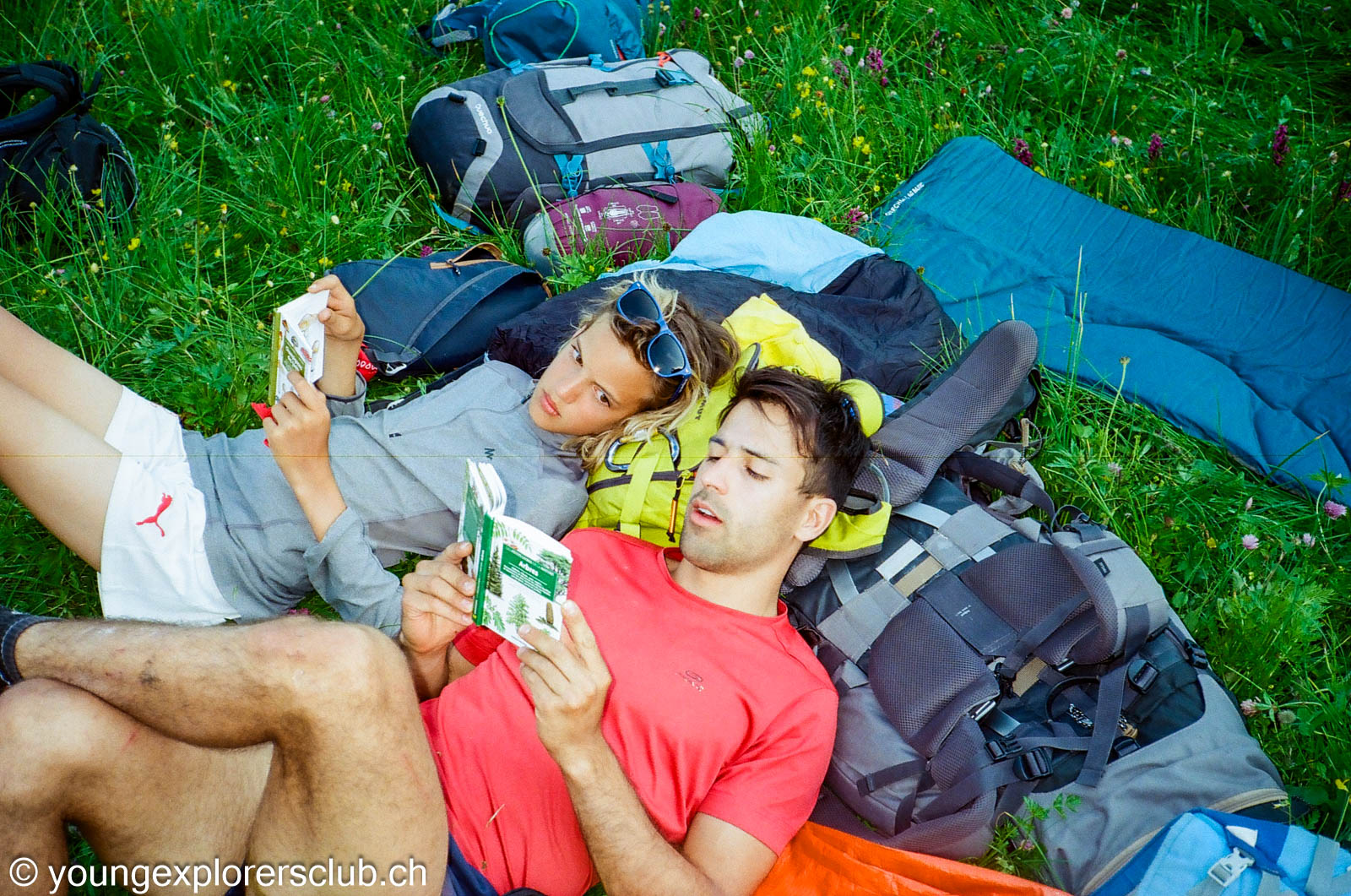
We design a two-week program around a clear lesson load: 15–25 hours/week of guided instruction, which totals 30–50 total hours over the fortnight. That amount gives concentrated practice, but it rarely equals a full CEFR-level jump. CEFR guided learning hours indicate ~180–200 guided hours are typically needed to advance one level for many adult learners. With 30–50 total hours, campers usually show faster fluency in everyday tasks rather than complete level changes.
We combine classroom time with daily activities so learners get real use of new language. That language immersion approach acts as a multiplier: classes plus activities often produce 2–3x reinforcement of skills compared with isolated lessons. We focus on usable outcomes you can track: speaking confidence increase, clearer pronunciation of common phrases, and smoother functional conversations for travel, shopping, and socialising.
I recommend families prepare for camp in advance so gains compound quickly; we point them to resources that help them prepare for camp. A bit of pre-study raises starting levels and makes the 30–50 total hours far more effective.
How we measure measurable progress
We use a mix of quantitative and qualitative checks to show measurable progress:
- Pre/post-test: CEFR-aligned or provider rubric to quantify skill changes. Use these to compare baseline and immediate outcomes.
- Camper satisfaction surveys: brief, daily or end-of-stay reflections that capture confidence and perceived improvements.
- Follow-up assessment (4–8 weeks later): measures retention and whether gains translated into everyday use.
- Instructor notes and performance tasks: recorded speaking tasks and teacher ratings for pronunciation, fluency, and interaction.
We recommend using all three: pre/post-test, satisfaction surveys, and the follow-up assessment 4–8 weeks later to capture both immediate gains and retention. If you or a provider use proprietary assessment data, label it clearly as proprietary when reporting results.
Realistic outcomes are easy to describe. After two weeks campers typically show noticeable speaking confidence increase, better recall of key phrases, and improved ability to manage short, functional conversations. Full CEFR-level jumps are unlikely without additional guided hours before or after the camp. We frame success by communicative gains and retention rather than by level promotion alone.
https://youtu.be/3zuB-YMjPmI
Social development, safety and staffing: wellbeing, bonding and accreditation
We, at the young explorers club, find that a 14-day stay hits a sweet spot for peer bonding and social integration. Two weeks gives campers time to move past first impressions and form stable friendships and teamwork habits. That extra week transforms tentative interactions into reliable group roles and shared routines.
Social milestones, independence and mental health
Fourteen days lets independence and resilience grow. Most independent-living skills—managing a schedule, doing laundry, basic budgeting—take about 7–10 days of hands-on practice; two weeks cements those habits. I encourage programming that intentionally phases challenges: low-pressure tasks early, team problems mid-stay, and leadership chances late. Expect an adjustment period (3–5 days); design mornings and small-group activities to ease that stretch and reduce anxiety.
Mental-health support must be continuous. Morning check-ins, a buddy system, and visible dedicated mental-health staff keep issues from escalating. We schedule regular debriefs after high-energy activities to normalize feelings and teach coping. Those measures drive resilience and smoother social integration across cabins and activity groups.
Staffing, safety standards and mountain/lake risks
Below I list the concrete staffing and safety items families should confirm before booking:
- Staff-to-camper ratios of 1:6–1:10, with younger campers at the lower end.
- Multiple staff certified in pediatric first aid/CPR and trained in wilderness first response.
- Comprehensive background checks on all staff and regular safeguarding refreshers.
- Written emergency procedures, visible evacuation plans for mountain weather, and a 24/7 contact on-site.
- Certified mountain guides for Alps routes and certified lifeguards for lake activities; explicit water safety protocols for each swim or boat session.
- Mountain rescue planning that accounts for altitude effects, access routes, and rapid evacuation options.
We design staffing models so several adults know every camper’s plan for the day. That redundancy matters in alpine terrain and on open water. Our activity leaders hold qualifications specific to their environment and run on-site drills with campers so everyone knows what to do in an emergency.
Families can get practical prep guidance before arrival; I suggest they prepare for camp with our checklist to speed adjustment and reduce homesickness.
https://youtu.be/9212RDUdrJw
Typical daily and two-week program structure with Swiss-specific activities and sample itinerary
Typical day structure and staffing
We structure a 6–8 hours activity day that balances learning, sport and downtime. Mornings usually include 2–4 hours formal instruction per day focused on language, outdoor skills or project work. Afternoons mix 2–3 hours of sports and outdoor activities and 1–2 hours of cultural workshops, excursions or free time. Evenings feature a social program or reflective sessions.
I keep weekly totals realistic: aim for 15–25 hours/week instruction and roughly 10–15 hours of excursions and active sessions per week. That adds up to about 30–50 total instruction hours across two weeks. We staff groups to be safe and effective, using a staff ratio 1:6–1:10 with group sizes of 8–16 students per cohort. That ratio lets instructors run intensive skill sessions and supervise alpine activities like hiking or mountain-biking.
Swiss-specific activities are woven into the schedule every week. Expect:
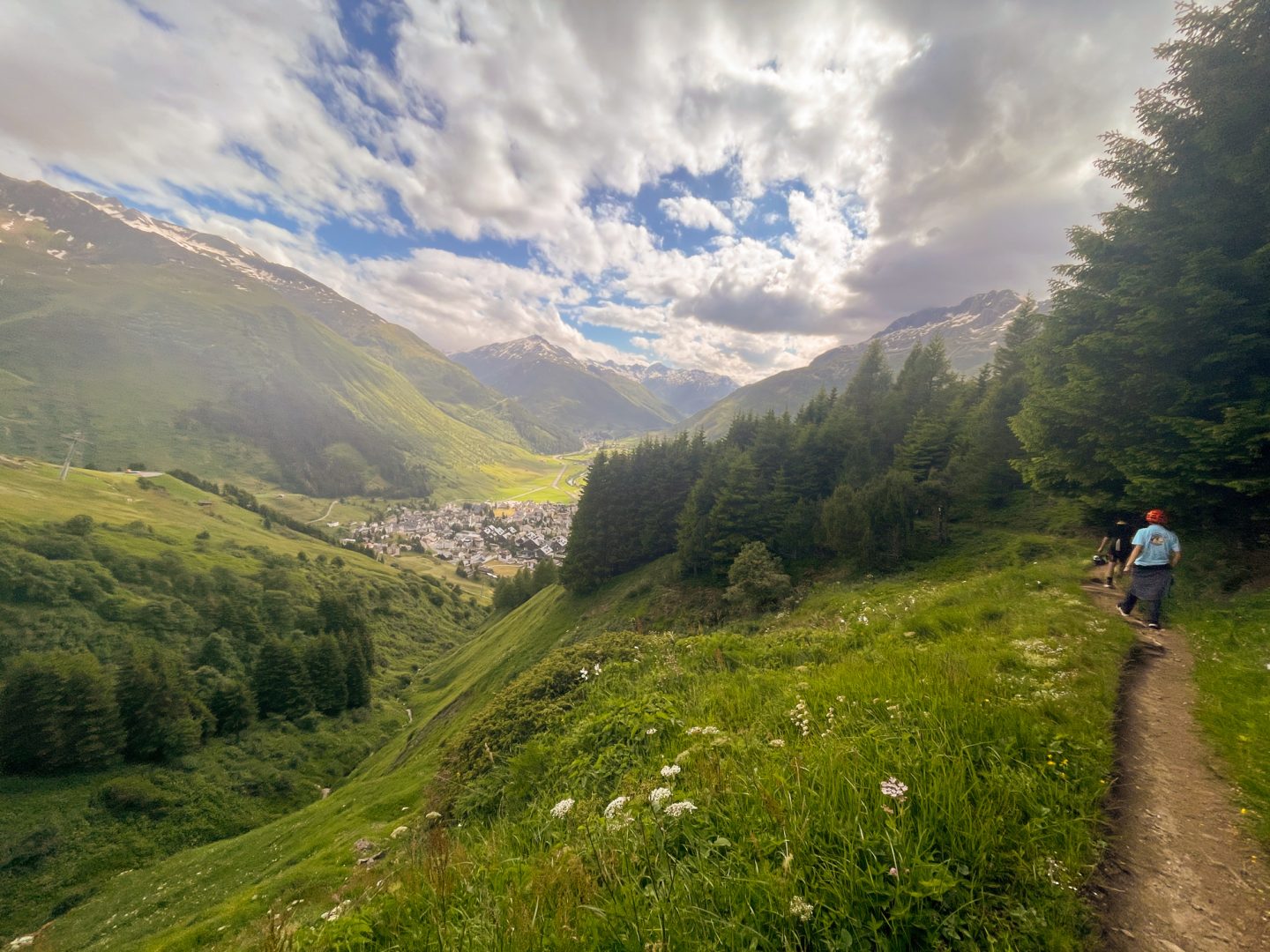
- Alpine hiking and cable-car rides in the Alps.
- Lake-based water sports on Lake Geneva and the surrounding lakes.
- Mountain-biking routes adjusted for age and ability.
- Hands-on chocolate and cheese workshops.
- Day visits to Lucerne, Geneva or Zurich with language exposure to German, French or Italian regions.
For packing, transfers and arrival details see our guide to prepare for camp.
Sample daily schedules and two-week itinerary
Below I give clear daily schedule samples and a compact two-week plan so you can picture typical flow and totals.
- Day 1: Arrival, orientation (2 hrs), icebreakers (2 hrs), light city walk (2 hrs) — Day 1 arrival is paced and low-key.
- Days 2–6 (Week 1):
08:30–10:00 classes (younger) or 09:00–12:00 classes/intensive skills (teens); 10:30–12:00 outdoor activity (younger) or 13:30–17:00 excursions (teens); 14:00–16:00 skills/cultural workshop (younger); evening social program (19:00–21:00 younger; 19:00–21:30 teens).
- Day 7: Full-day excursion (8–10 hours) — lake cruise on Lake Geneva + village visit or alpine summit via cable car.
- Days 8–12 (Week 2): Repeat varied activities from Week 1 with rotated workshops — mountain-biking, cheese making, Lucerne day trip.
- Day 13: Project presentations / farewell activities (4–6 hrs), celebration — time for reflection and performances.
- Day 14: Departure — allow 4–6 hrs for check-out and airport transfer buffer.
I recommend two full-day excursions and three half-day outings across the program to balance adrenaline and recovery. Build flexible rest blocks each afternoon to handle Alpine weather and to let learning sink in. The daily schedule sample above fits younger campers (8–12) and teens (13–17) with adjusted start times and longer excursion windows for older groups.
We, at the Young Explorers Club, design each two-week cycle to hit core learning hours while giving campers cultural depth in the Alps, Lucerne and around Lake Geneva.

Costs, budgeting, travel logistics, visas and family checklist
We, at the Young Explorers Club, price a typical two-week Swiss camp in the range CHF 1,200–4,500 for two weeks. Costs break down to roughly CHF 600–2,250 per week and change significantly by cost drivers such as accommodation standard, included excursions, elite boarding/tuition, airport transfers and meal plan. Expect optional add-ons to push a baseline up quickly.
We, at the Young Explorers Club, advise families to budget these additional items separately: airfare (sample CHF 600–1,200), visa fees where applicable, travel insurance, pocket money and optional excursions. For pocket money we recommend CHF 50–150 for two weeks depending on program extras and shopping opportunities.
We, at the Young Explorers Club, recommend arrival on Day 1 and departure on Day 14 to match the camp schedule. If you want a buffer, arrive Day 0 to reduce stress from delays and jet lag. Major entry hubs are Zurich (ZRH), Geneva (GVA) and Basel (BSL). We arrange coordinated airport transfers when requested; confirm pickup times early to avoid extra taxi costs.
We, at the Young Explorers Club, require families to respect Schengen short-stay rules — Schengen 90/180 rule — and to check nationality-specific visa requirements well ahead of travel. We insist on travel insurance and recommend policies that cover emergency medical evacuation and trip interruption. Camps have medical staff on site, but coverage gaps can leave families exposed.
Family checklist and timing
Use this checklist to prepare and avoid last-minute fees or delays:
- Passport valid for 6+ months and copies stored digitally and with guardians.
- Visa (if required): apply 6–8 weeks in advance and confirm embassy processing times.
- Consent and medical forms completed, signed and uploaded to camp portal.
- Health insurance details and policy numbers provided; purchase travel insurance that includes medical and evacuation.
- Emergency contacts and secondary guardian names entered clearly in camp records.
- Register flights and arrival details 2–3 weeks before camp to secure transfers.
- Arrival timing: consider arriving a day early if your budget allows to mitigate jet lag.
- Packing essentials: layered clothing for Alpine weather, swimwear, waterproof jacket, travel adapter, prescribed medications with labels.
- Communication and money: carry Swiss francs (CHF) for small purchases; set up a roaming/data plan or local SIM.
- Prep materials: complete pre-course materials and use smartphone phrasebook apps; learn basic local phrases to speed social integration.
- On-budget reminders: track cost drivers like extra excursions and upgrade options so final bills match expectations.
We, at the Young Explorers Club, also suggest families review our quick guide to how to prepare for camp for practical packing tips and timeline checklists: prepare for camp
Sources
Swiss Federal Statistical Office – Tourism statistics
Switzerland Tourism – Summer experiences
British Council – How long does it take to learn English?
American Camp Association – Standards & best practices for camps
World Health Organization (WHO) – Travel health
Federal Office of Public Health (FOPH/BAG) – Health information and travel medicine
European Commission – Short-stay (Schengen) visa / visa policy
Zurich Airport – Official airport information
World Tourism Organization (UNWTO) – Tourism data
European Centre for Disease Prevention and Control (ECDC) – Travel and health