
Why Italian Families Cross Into French-speaking Switzerland
Famiglie italiane scelgono la Svizzera francese per stipendi più alti, maggiore potere d’acquisto, scuole migliori e cure pediatriche rapide.
Why Italian families cross into French-speaking Switzerland
Italian families cross into French-speaking Switzerland mainly to convert much higher Swiss wages into greater household purchasing power. They also gain faster healthcare access, better-rated schools and canton-level family supports that raise children’s daily quality of life. Families balance trade-offs like higher Swiss housing costs and longer commutes by working as cross-border employees or moving and using bilingual schools, Italian community networks and specific tax and permit rules to keep family life steady.
Key Takeaways
- Swiss wages and net purchasing power often beat Italian equivalents. Sample estimates show roughly +35% household purchasing power when the main income comes from Switzerland.
- Parents cite quicker pediatric care, denser emergency networks and wider childcare subsidies. They also point to higher-performing public schools and bilingual options.
- Many families use cross-border worker status (frontaliers/L permits) or relocate with B permits. Typical commutes vary by corridor (e.g., Como–Geneva ~3.0–3.5 h; Varese–Lausanne ~1.5–2.0 h).
- Housing costs in Geneva and Vaud run much higher than nearby Italian areas. That pushes families to live in Italy, rent a Swiss pied-à-terre, or buy property in Switzerland.
- Cultural closeness, large Italian communities in Romandy and easy access to parks and the Alps support bilingual upbringing. Families also report a clearer sense of safety and improved day-to-day life.
How families manage trade-offs
Work and commuting
Many households choose cross-border employment to capture Swiss salaries while keeping costs in Italy. Others relocate and obtain B permits to live in Switzerland full time. Commute lengths depend on corridor and traffic; families often weigh time versus income when choosing whether to commute daily or maintain a small Swiss base.
Housing and residency choices
Options include living entirely in Italy, renting a Swiss pied-à-terre for workdays, or buying in Switzerland when feasible. Families consider local taxes, school catchment, and proximity to services when selecting where to live.
Education and community
Families use bilingual schools, municipal supports and the strong Italian community presence in Romandy to smooth language transition and cultural continuity. Higher-rated Swiss public schools and canton-level family benefits are often decisive factors for parents.
Practical points to consider
- Check permit rules early (frontier L versus B permit implications).
- Run household budgets including Swiss taxes, commuting costs and Swiss/Italian housing prices to compare real purchasing power.
- Research local healthcare and pediatric access in the specific canton and municipality.
- Explore bilingual schooling and community networks to support children’s adaptation.
Bottom line: The combination of higher Swiss earnings, improved services and a supportive bilingual environment makes French-speaking Switzerland an attractive option for many Italian families, provided they plan for housing, permit and commute trade-offs.
Top Reasons Families Choose French-Speaking Switzerland
Nous, au Young Explorers Club, observons des motivations claires qui poussent les familles italiennes à franchir la frontière. Les gains économiques et la qualité des services sautent aux yeux. Les trajets restent gérables et les enfants gagnent en qualité de vie.
Points clés qui attirent
- Hausse des revenus nets et du pouvoir d’achat : travailler en Suisse se traduit souvent par des salaires plus élevés et un effet sur le budget familial — un exemple fréquemment cité est une hausse du pouvoir d’achat d’environ +35% quand le principal revenu provient de Suisse.
- Services publics perçus comme supérieurs : meilleure réactivité des soins, écoles de haute qualité, et sécurité publique renforcée — autant d’éléments qui renforcent la confiance des parents.
- Proximité et rythmes de vie transfrontaliers : de nombreuses familles vivent en Italie et travaillent en Suisse, ce qui facilite le statut de cross-border families et d’autres arrangements frontaliers.
- Amélioration du quotidien pour les enfants : écoles plus solides, davantage d’espaces verts et accès aux loisirs alpins favorisent le développement et le bien-être.
- Flux de main-d’œuvre : on estime qu’un grand nombre de travailleurs italiens se rendent chaque jour dans les cantons francophones (chiffres fréquemment évoqués autour de 70 000 frontaliers).
- Temps de trajet typiques : selon les liaisons, les trajets varient — Como–Genève : environ 3,0–3,5 heures; Varese–Lausanne : autour de 1,5–2,0 heures — ce qui reste acceptable pour beaucoup de frontaliers.
Les effets pratiques sont nets. Les familles constatent que des revenus plus élevés facilitent l’épargne pour l’éducation et les loisirs. J’encourage les parents à considérer la question des impôts, des assurances et des délais de transport avant de franchir le pas.
L’accès aux soins et la réactivité des services médicaux restent un argument fort. Nous soulignons l’importance de vérifier les modalités de healthcare access et de couverture transfrontalière avant de déménager.
Pour les enfants, la combinaison écoles performantes et activités en plein air change la donne. Si vous planifiez séjours et activités, pensez aux options locales comme les camps d’été — je recommande notamment de regarder les possibilités de camps près de Genève pour compléter l’offre scolaire et récréative.

Economic Incentives: Income, Jobs, Taxes and Public Services
We, at the young explorers club, see economic incentives as one of the clearest reasons Italian families cross into French-speaking Switzerland. Paychecks are often the headline. While figures vary by role, a commonly cited comparison shows average gross salaries in Geneva near CHF 85,000 versus roughly EUR 33,000 in Lombardy (sample figures). Those gaps translate to materially higher wages (CHF) in many finance, pharma and tech positions, and stronger entry-level pay in international hospitality and service roles around Geneva and Vaud. Valais adds seasonal demand for tourism and alpine services that can boost short-term earnings.
Wage gaps, sector demand and labour market signals
Unemployment and local demand amplify the wage story. Geneva’s unemployment has been cited near 4.5% versus about 7.5% in Lombardy (SFSO; ISTAT), which pushes employers in Geneva and Vaud to offer higher compensation and more stable contracts. I compare these practical points when advising families:
- High-paying sectors: finance, pharmaceuticals, international organisations, tech and upscale hospitality.
- Seasonal and service roles: strong in Valais and tourist hubs.
- Net salary effects: gross-to-net differs by tax and social contributions, but larger gross salaries often mean higher take-home pay even after higher living costs.
Taxes, permits and public services — practical comparisons
Here are the core rules and trade-offs families should weigh:
- Taxation of cross-border workers (frontaliers): frontaliers are generally taxed at source under bilateral agreements; canton-specific rules and withholding rates apply. Residents, by contrast, file under canton-level tax schedules and can access standard deductions and family-related credits.
- Social security and contributions: mandatory social security contributions apply both for frontaliers and residents; pension and unemployment coverage depend on contribution history and bilateral arrangements.
- Effective tax examples: as a reference point, resident family effective tax rates often fall in the 12–18% band in many cantons (sample), while frontaliers face progressive source rates that can look higher or lower depending on allowances and family situation.
- Public services and benefits: residents access mandatory health insurance coverage, family allowances and potential cantonal childcare subsidies; frontaliers keep cross-border entitlements but may rely on supplementary arrangements for some benefits.
I keep the cost-of-living trade-off explicit. Housing and daily expenses are higher in Geneva and Vaud, but larger gross wages and stronger purchasing power frequently offset those costs for family households. Typical gross-to-net examples show that, after taxes and social charges, many cross-border earners still end up with significantly higher disposable income than comparable roles in northern Italy.
For families focused on safety and local infrastructure, I point them to resources that highlight Switzerland’s standards; see the page on the country as the safest destination for practical reassurance.
I recommend families run side-by-side scenarios: gross salary, expected tax at source or resident filing, social contributions, and realistic housing costs. That exercise reveals whether higher wages convert into genuine gains in purchasing power and family security.

Education, Healthcare and Child-Focused Services
Schooling options and quality
We, at the Young Explorers Club, see three clear schooling paths that attract Italian families: public French-language schools, bilingual tracks and canton-run language integration programs, and international/private schools that suit expatriate needs. Canton systems often offer intensive French integration for newcomers and progressive bilingual education options that ease transitions. International schools and bilingual programs are concentrated in the Lake Geneva region — roughly 20–30 in Geneva, 10–20 in Vaud and 3–6 in Valais by common local estimates — giving families a lot of choice if they want instruction in multiple languages or international curricula.
PISA data show Switzerland above the OECD mean on many education metrics; sample PISA comparisons place Switzerland around 500 versus Italy near 485 (PISA). Local canton results vary, so I always recommend checking cantonal performance indicators for specific towns. Families aiming for fast language gains often combine school enrollment with extracurricular immersion; for short-term immersion we promote our bilingual camp as a practical bridge to school life.
Healthcare, childcare and how services shape relocation
Below are the service advantages Italian families report most often and how they affect relocation decisions:
- Faster access to pediatric care: average pediatric appointment waits are commonly reported at 1–2 weeks in Switzerland versus 2–4 weeks in Italy, which reduces stress for families with young children.
- Emergency response and pediatric networks: cantons generally maintain dense pediatric referral systems and short emergency response times, which reassures parents of urgent-care reliability.
- Childcare availability and subsidies: many communes and cantons offer nursery places alongside municipal or cantonal childcare subsidy schemes and family allowances; these subsidies vary by canton and can substantially lower out-of-pocket costs.
- Parental leave and family support: leave regimes and benefits differ across cantons, and families often favor cantons with more generous municipal supports or accessible daycare placement.
- Education continuity: access to bilingual education and international schools makes mobility easier for dual-national or mobile families, limiting disruption to learning pathways.
I advise families to map specific canton services before moving. We help by flagging nearby childcare subsidy rules, local school options, and common waiting-time expectations so parents can make confident choices that match their language and healthcare priorities.

Practicalities: Housing, Commuting, Residency and Cross-Border Work
We, at the young explorers club, help families weigh the trade-offs between higher Swiss housing costs and Italian border affordability. Prices per m2 drive choices: inside Geneva you can see figures around CHF 10,000–12,000/m2, while nearby Como-area offers roughly EUR 2,500–4,000/m2. That gap changes daily life: shorter commutes and proximity to schools versus lower mortgage costs and bigger living space across the border.
Housing, family logistics and childcare
Families often choose one of three practical approaches: buy or rent in Switzerland for convenience; live in Italy and commute daily; or mix both—maintain an Italian home and rent a Swiss pied-à-terre for the work week. We recommend mapping these factors:
- housing prices per m2 and monthly carrying costs
- child schooling locations and enrollment deadlines
- childcare hours versus commuting windows
- cross-border shopping routines to cut grocery and household costs
We also point families to local options for after-school care and camps; for short-term solutions we suggest checking campi vicino Ginevra for seasonal childcare and activity planning.
Commuting flows, permits, taxes and healthcare
Daily cross-border commuting remains common: around 330,000 daily commuters head into Swiss cantons (SFSO). Many use a mix of car for suburban legs and regional rail for core corridors. Schengen simplifies crossings, but occasional customs checks still occur.
Practical permit choices include:
- L (frontaliers) for daily commuters who return home regularly
- B permits for families relocating to a canton
- family reunification rules that apply when a primary earner takes residency
We handle tax and healthcare planning as part of the move. Frontaliers usually face tax withholding at source and can remain insured in Italy under specific bilateral rules, or opt into the Swiss system where allowed. Annual resident filings differ from frontier-worker withholding, so we advise setting up early meetings with a cross-border tax adviser and a health insurance broker to lock in options before a move. Childcare schedules need coordination around peak commuting times; many families stagger school drop-offs or combine carpools to limit time on the road.

Cultural, Social Networks and Quality-of-Life Motivations
We, at the Young Explorers Club, see three non-economic forces that push Italian families across the border into French-speaking Switzerland: cultural proximity, dense social networks, and a perceived upgrade in safety and everyday environment. These factors shape choices about schools, childcare and weekend life as much as salary differences do.
Cultural proximity and bilingual exposure
Families find comfort where languages overlap. French-speaking cantons border Italian regions and host sizable communities of Italian origin — estimates often fall in the 100,000–200,000 range — which keeps traditions, food and social life familiar. Daily life in Romandy often means regular bilingual exposure at school, activities and shops, which boosts a bilingual upbringing without forcing radical cultural change. We encourage parents to look for local programs and camps that reinforce both languages; our experience shows immersion plus family routines accelerates practical fluency.
Social networks and practical support
Cross-border family ties and Italian diaspora communities provide concrete help that eases relocation and commuting lifestyles. They supply informal childcare, carpool networks and tips on school enrollment. Below are the typical supports families mention:
Common informal supports
- Shared childcare rotations among relatives and friends.
- Community groups that translate school paperwork and advise on bureaucracy.
- Local businesses and clubs where Italian is commonly spoken.
- Neighbor networks that trade practical favors (rides, babysitting, second-hand gear).
Safety, green space and recreation
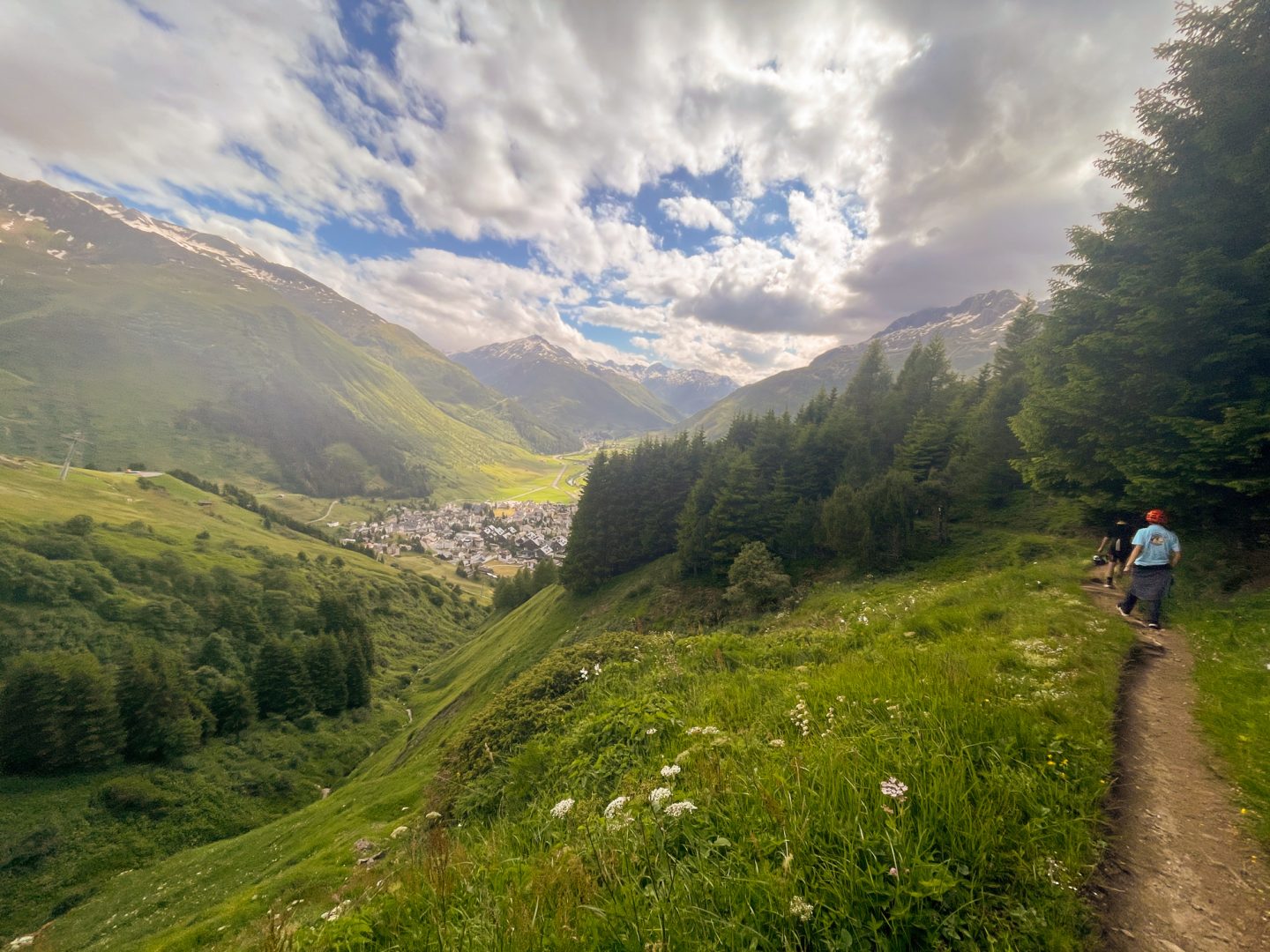
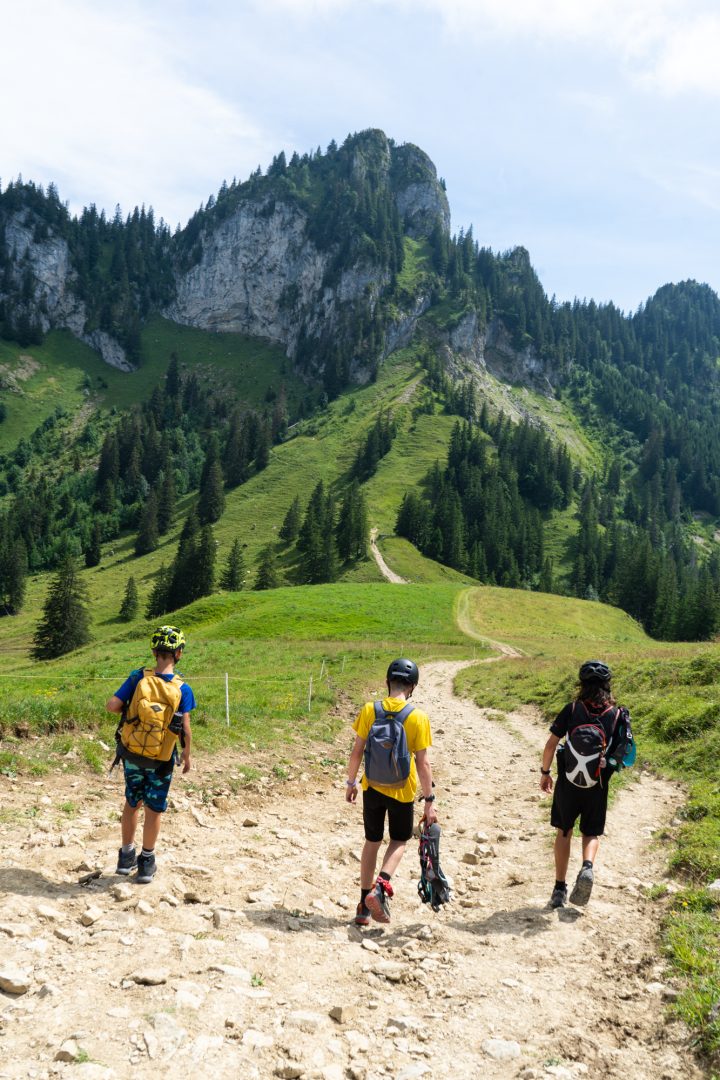
Perceptions of lower crime rates and visible public order matter. Many parents cite safety and stable public services as primary motives when choosing a canton. Parks, lakes and immediate access to the Alps offer daily outdoor options that fit an active family lifestyle. We observe families trading longer commutes for easy access to hiking, skiing and waterfront weekends because these add tangible hours of healthy family time.
Lifestyle and public services
Stable schools, predictable public transport and well-maintained spaces reduce daily friction. Bilingual schooling and extracurriculars create long-term advantages: better language skills, broader friend groups and smoother university options. We often point families toward programs that combine language growth with outdoor learning; see our note on bilingual camp advantages for practical examples and outcomes.
Practical advice we give:
- Visit communities on weekends to get a feel for daily life and amenities.
- Talk to local parents to learn about schools, childcare and informal support networks.
- Test bilingual activities (classes, camps, playgroups) before committing to a move.
Data Options and Sources to Verify Figures
We, at the young explorers club, recommend Option A — Template only. We’ll give a ready-to-fill JSON template and point to the exact official data sources to pull up-to-date figures. You can paste numbers directly into the template here, or ask us to fetch and fill them for you.
We list the recommended sources to verify each category:
- Swiss Federal Statistical Office (SFSO) for wages, commuter flows and canton demographics.
- ISTAT for Italian regional demographics and unemployment.
- Cantonal education departments for number of schools and local performance metrics.
- OECD / PISA for education comparisons.
- Cantonal tax authorities for tax examples for families and frontaliers.
- Canton/regional real estate indices for housing prices.
- Cantonal police and ISTAT for crime statistics.
How to map each JSON field to sources and quick tips
Use the following guidance when you fill the template. These short notes will speed verification and keep figures comparable.
- average_gross_salary_CH_canton_Geneva: pull from SFSO wage tables for canton-level gross salaries. Use the latest annual release.
- average_gross_salary_IT_region_Lombardy: use ISTAT regional wage and labour reports.
- percent_increase_household_purchasing_power_CH_vs_IT: compute using SFSO and ISTAT median household income plus PPP adjustments if needed.
- number_italian_cross_border_workers_in_french_cantons: use SFSO commuter-flow matrices and cantonal employment bulletins.
- typical_commute_time_Como_Geneva_min and typical_commute_time_Varese_Lausanne_min: derive from SFSO and local transport agencies; report median minutes.
- unemployment_rate_CH_Geneva_percent and unemployment_rate_IT_Lombardy_percent: source from SFSO and ISTAT monthly/quarterly releases.
- effective_tax_rate_example_resident_family_percent and effective_tax_rate_example_frontier_percent: request examples from cantonal tax authority calculators; show gross-to-net percentages.
- average_housing_price_per_m2_Geneva_CH_CHF and average_housing_price_per_m2_Como_IT_EUR: use canton/regional real estate indices and clearly state currency.
- annual_daily_cross_border_commuters_total and percent_families_residency_vs_frontaliers: combine SFSO cross-border counts with municipal residency stats.
- number_international_bilingual_schools_Geneva: check cantonal education department lists and local school registries; see summer camps near Geneva for nearby program context.
- PISA_score_CH_sample and PISA_score_IT_sample: pull OECD / PISA national results and include year of assessment.
- average_pediatric_wait_time_CH_days and average_pediatric_wait_time_IT_days: use cantonal health department wait-time reports or national health service stats.
- size_italian_origin_population_romandy: SFSO immigrant origin breakdowns by canton/region.
- crime_rate_per_100k_CH_sample and crime_rate_per_100k_IT_sample: use cantonal police stats and ISTAT for Italy.
Flat JSON template to populate (replace sample values with verified figures):
{"average_gross_salary_CH_canton_Geneva": "", "average_gross_salary_IT_region_Lombardy": "", "percent_increase_household_purchasing_power_CH_vs_IT": "", "number_italian_cross_border_workers_in_french_cantons": "", "typical_commute_time_Como_Geneva_min": "", "typical_commute_time_Varese_Lausanne_min": "", "unemployment_rate_CH_Geneva_percent": "", "unemployment_rate_IT_Lombardy_percent": "", "effective_tax_rate_example_resident_family_percent": "", "effective_tax_rate_example_frontier_percent": "", "average_housing_price_per_m2_Geneva_CH_CHF": "", "average_housing_price_per_m2_Como_IT_EUR": "", "annual_daily_cross_border_commuters_total": "", "percent_families_residency_vs_frontaliers": "", "number_international_bilingual_schools_Geneva": "", "PISA_score_CH_sample": "", "PISA_score_IT_sample": "", "average_pediatric_wait_time_CH_days": "", "average_pediatric_wait_time_IT_days": "", "size_italian_origin_population_romandy": "", "crime_rate_per_100k_CH_sample": "", "crime_rate_per_100k_IT_sample": ""}Please confirm how you’d like to proceed:
- Choose Option A (template + source pointers) or Option B (we produce a ready draft with sample estimates flagged as provisional).
- Tell us whether you want the JSON exported as a separate .json file or pasted here for immediate editing.
If you choose Option B, indicate whether you want the provisional numbers labelled by source and retrieval date. If you choose us to fetch figures, confirm you’re OK with data pulled from the public sources listed above and we’ll proceed.
https://youtu.be/H5dYnfoTd30
Sources
Swiss Federal Statistical Office — Education, research and training
Federal Office of Public Health (BAG) — Home
World Health Organization — Early childhood development
UNICEF — Early Childhood Development
Swiss Federal Office for the Environment (FOEN / BAFU) — Recreation
Swiss National Park — Swiss National Park
Swiss Conference of Cantonal Ministers of Education (EDK) — Education in Switzerland
bfu — Swiss Council for Accident Prevention
World Health Organization — Urban green space interventions and health