Scenic Train Journeys For Families In Switzerland
Family scenic trains in Switzerland: use Swiss Travel Pass, reserve Glacier/Bernina seats early; mix short hops with panoramic rides for kids.
Family Train Travel in Switzerland
Switzerland has an integrated, punctual rail network and scenic panoramic services. They link trains, buses, and boats to car-free towns and UNESCO-listed mountain lines that double as educational highlights. We’re the Young Explorers Club, and we recommend planning passes and seat reservations early. Mix short scenic hops with longer panoramic segments to suit children’s ages. Take altitude precautions: hydrate, acclimatise, and carry insurance for high-elevation spots like Jungfraujoch.
Key Takeaways
-
Choose passes first: Consider the Swiss Travel Pass or Half Fare Card. Add the Swiss Family Card so children travel for reduced or free fares.
-
Reserve panoramic trains: Book services such as the Glacier Express and Bernina Express two to three months ahead in peak season. Budget for reservation fees.
-
Balance itinerary pacing: Use short 20–60 minute hops for toddlers and 2–3 hour segments for primary-age kids. Split full-day routes across overnight stops to avoid travel fatigue.
-
Prepare for altitude risks: Watch children closely on high routes. Schedule acclimatisation stops, keep them hydrated, and carry travel insurance that covers mountain rescue.
-
Pack smart: Bring layered clothing, snacks, water, and a basic first-aid kit. Include a folding stroller and entertainment. Request window seats or family compartments early for comfort.
Practical Tips
Seat reservations can be mandatory on some panoramic trains—check policies for each service and reserve early to secure family seating. For mixed-age groups, plan a combination of short hops and longer panoramas so younger children aren’t overwhelmed while older kids still enjoy the scenic highlights.
Altitude and Health
Acclimatise gradually when visiting high points like Jungfraujoch. Keep activity levels lower for the first day at altitude, watch for symptoms of altitude sickness, and have a clear plan for descent or medical assistance if needed.
Packing Checklist
-
Layered clothing for variable mountain weather.
-
Reusable water bottles to stay hydrated.
-
Snacks and entertainment for train stretches.
-
Basic first-aid kit and any personal medications.
-
Folding stroller for station transfers and walks.
We’re happy to help secure family compartments and seat requests, and to advise on the best pass options and reservation timing for your trip. If you’d like, tell us your travel dates and the ages of your children and we’ll suggest a family-friendly rail itinerary.
Why Switzerland is ideal for family scenic train journeys
Switzerland‘s rail network makes family travel simple and scenic. It links trains, buses and boats with coordinated timetables and single-pass access across SBB and many private railways through the Swiss Travel System.
Punctual services reduce stress and keep schedules predictable for kids and parents (SBB). Many scenic lines are part of that integrated system, so a single pass often covers a whole day of travel without ticket confusion. Mountain towns like Zermatt are car-free, so families avoid mountain driving, parking hassles and extra logistics that wear out little travelers.
Season affects crowding and timetables. Summer (July–August) and winter ski season (Dec–Mar) are busiest. Shoulder seasons are quieter and often gentler for kids. The Glacier Express runs year-round but timetables change by season; expect peak demand in July–August and around Christmas/New Year and book reservations 2–3 months ahead.
UNESCO-listed engineering makes trips educational. The Rhaetian Railway Albula/Bernina line is on the World Heritage List (UNESCO Rhaetian Railway 2008). Kids light up at spirals, viaducts and mountain tunnels — it’s a museum on rails.
Be mindful of altitude and health. Key elevations include Oberalp Pass 2,033 m, Ospizio Bernina 2,253 m, Gornergrat 3,089 m and Jungfraujoch 3,454 m. Altitude sickness at Jungfraujoch is a real risk for children. Monitor kids closely, keep them hydrated, avoid heavy exertion and plan short acclimatisation stops. Carry travel insurance that covers mountain rescue.
We recommend planning a family trip route that mixes short scenic hops with longer panoramic segments so kids get variety without fatigue.
Practical advantages for families
Below are the practical reasons trains beat driving for family scenic travel:
- Punctual, frequent services that match tight family schedules (SBB).
- Seamless transfers between trains, buses and boats via the Swiss Travel System.
- Car-free towns and stress-free arrivals (for example, Zermatt).
- Easy luggage handling and often kids’ discounts or family fares.
- Educational highlights like UNESCO railway engineering that engage older children.
Keep routes flexible and have contingency plans for altitude or weather. Pack layered clothing, snacks, water and simple first-aid. Book panoramic or reserved seats early in high season to secure window views and peace of mind.
Top family-friendly scenic routes (with what families need to know)
We, at the young explorers club, pick routes that balance dramatic scenery with realistic pacing for children. Our notes focus on what to book, what to expect on board, and simple ways to split long journeys so kids stay happy.
We recommend the Glacier Express for families who want a slow, panoramic cross‑Alps experience. The full single‑seat through journey runs about eight hours (roughly 290–291 km), crosses 291 bridges and 91 tunnels, and reaches its highest point at Oberalp Pass (2,033 m). Reservations are required; there’s a dining car and wide panoramic windows, so plan meals and seat bookings in advance. Our practical tip: split the trip into two days with an overnight in Andermatt or Brig if you travel with younger children. Zermatt makes a great start or finish — it’s family‑friendly and car‑free, which cuts transfer stress.
Our favorite for dramatic engineering and glacier views is the Bernina Express. Depending on your origin it takes about 2.5–4 hours and climbs to Ospizio Bernina (2,253 m). The line is part of UNESCO Albula/Bernina 2008, and you’ll cross the signature Brusio spiral viaduct before descending into Italian vineyards. We advise reserving panoramic seats early; Tirano is an ideal reward for kids with gelato and short, flat walks.
We like the GoldenPass Line for variety between lakes and mountains. The Montreux–Interlaken segment can be done in around three hours depending on connections, and it passes Château de Chillon and Gstaad stops. Families who want a food‑and‑fun side trip should consider the seasonal Chocolate Train from Montreux to Gruyères, which pairs a visit to Maison Cailler with the medieval town — perfect for mixing hands‑on treats with scenery. For packing tips for family train travel, see our guide on what to pack for Switzerland for a perfect trip.
We recommend Jungfraujoch for a high‑altitude highlight if your kids handle elevation well. The Top of Europe sits at 3,454 m; expect 2–2.5 hours from Interlaken with transfers via Kleine Scheidegg. Attractions include the Ice Palace, a snow plateau and the Alpine Sensation walkway. Our safety note: watch for altitude effects in very young children and plan intermediate stops at Wengen or Kleine Scheidegg to acclimatize.
We suggest short rides and seasonal options when you want big views without long travel time. Below are practical half‑day or toddler‑friendly choices for families:
Short and seasonal family options
- Gornergrat Railway (Zermatt → Gornergrat): ~33 minutes to 3,089 m for excellent Matterhorn photos.
- Lucerne ↔ Engelberg: ~45 minutes — a calm ride that connects to easy mountain walks.
- Interlaken ↔ Lauterbrunnen: ~20 minutes, great for waterfalls and short valley strolls.
- Voralpen‑Express (St. Gallen ↔ Lucerne): comfortable half‑day option with varied scenery.
- Chocolate Train (Montreux → Gruyères): seasonal, family‑friendly and food‑focused.
- Short trips and activities: check family activities to do with your kids and teens on holiday in the Alps for ideas that pair well with train stops.
We help families choose by comparing ride length and kid tolerance. An eight‑hour Glacier Express offers a continuous cinematic experience, while GoldenPass segments let you break travel into 2–3 hour blocks and add lakeside or chocolate stops. Our planning tips: reserve panoramic seats early on popular trains; pack layered clothes and snacks; and schedule at least one leisurely stop between long segments.
We also point families to a general planning roundup and local highlights in our other resources, including family trip planning and weekend ideas: Vaud activities, and a selection of beautiful lakes to visit from train stations: beautiful lakes. For broader inspiration, explore our blog for themed itineraries and seasonal advice.
https://youtu.be/V0k0kCVlY_w
Tickets, passes and typical costs (what families should budget and book)
Core passes and who they cover
We recommend starting with the big-ticket pass options so you can model the rest of your budget.
The Swiss Travel Pass comes in 3, 4, 8 and 15 consecutive-day versions and gives unlimited travel on SBB and many private railways, buses and boats (SBB/Swiss Travel System).
The Half Fare Card cuts most standard fares by 50% and is valid for one month (SBB/Swiss Travel System). If a parent holds a Swiss Travel Pass or Swiss Half Fare Card, children travel free with the Swiss Family Card — check the current age limit with official sources (SBB/Swiss Travel System).
Reserve seats and factor reservation fees for top scenic trains. The Glacier Express requires a reservation and charges roughly CHF 17–40 depending on season (Glacier Express). Panoramic services like the Bernina Express and other specialty trains also ask you to reserve in advance.
Short scenic rides and mountain railways sit in predictable ranges that help with quick planning. Expect regional scenic rides of 20–60 minutes to run about CHF 10–30 per adult without discounts. Gornergrat roundtrips are typically CHF 70–100 per adult; Jungfraujoch roundtrips are commonly CHF 100–200 per adult depending on discounts and passes (SBB/Swiss Travel System). Always confirm live prices and rules before you pay (SBB/Swiss Travel System).
Booking checklist and sample budgets
Follow this quick checklist and sample budgets to avoid surprises and secure the best value.
- Choose passes first: decide between Swiss Travel Pass (consecutive days) or Half Fare Card based on how many long trips and mountain railways you plan to do (SBB/Swiss Travel System).
- Add Swiss Family Card if you travel with kids and one parent holds a qualifying pass (SBB/Swiss Travel System).
- Reserve panoramic trains early: Glacier Express and Bernina Express fill fast in July–August and around Christmas/New Year — aim to book 2–3 months ahead (Glacier Express).
- Budget for reservations: set aside CHF 17–40 per person for Glacier Express reservations and similar fees for other panoramics (Glacier Express).
- Use the Half Fare Card for uphill climbs where the Swiss Travel Pass doesn’t fully cover the premium sections; it often saves more on single high-cost routes (SBB/Swiss Travel System).
- Verify child discounts: many regional trains are free or heavily discounted for under-6s; children aged 6–15 can often travel free with the Swiss Family Card when accompanied by a parent (SBB/Swiss Travel System).
Sample family budgets (rough estimates per adult, final totals vary with age mix and route choices):
- Short regional scenic day (two short rides + local transport): CHF 30–80 per adult without passes; with Half Fare Card or family passes this drops significantly (SBB/Swiss Travel System).
- Mountain day to Gornergrat for adults: CHF 70–100 roundtrip; kids may qualify for free or reduced fares via Family Card or Half Fare (SBB/Swiss Travel System).
- Jungfraujoch day for adults: CHF 100–200 roundtrip depending on pass use and discounts (SBB/Swiss Travel System).
- Glacier Express journey: add the reservation fee CHF 17–40 per person on top of travel fare and seating category (Glacier Express).
We also point families to our planning page for practical packing and activity ideas if you want to link trips with kid-friendly itineraries: see our family trip in Switzerland guide.

Suggested sample family itineraries (timing, age suitability and pacing)
We, at the Young Explorers Club, plan itineraries that balance short thrills with restful travel. I keep daily blocks simple: morning activity, midday ride and lunch, afternoon exploration and evening rest. That rhythm helps maintain energy and keeps excitement high.
Sample itineraries and pacing
Below are practical itineraries with timing, age guidance and pacing you can use as-is or adapt.
- Half-day, toddler-friendly: Interlaken → Lauterbrunnen (20–25 minutes). Allow a short walk to Staubbach Falls, a picnic spot and 30–45 minutes of free play. Best for toddlers; plan for naps and stroller access. Keep total outing under 3–4 hours.
- 2-day Glacier Express (split): Day 1 — Zermatt → Andermatt (half-day onboard), overnight in Andermatt or Brig. Day 2 — continue to St. Moritz after a relaxed morning. Splitting the route makes the experience manageable for younger children. Reserve seats and couchettes early in high season.
- Full-day Glacier Express alternative: Book only if children are 8+ and used to long sits. Expect 7–8 hours travel time; build in long station breaks and interactive snacks.
- 3–4 day family loop (6+ children): Montreux (Chocolate Train & Maison Cailler) → GoldenPass to Gstaad → Interlaken with a Jungfraujoch day trip → Lucerne. Each rail leg ranges from 1–3 hours; alternate active sightseeing with scenic train time. This works well for families wanting a varied program without long continuous travel.
- One-week rail holiday: Combine Zermatt/Gornergrat, a split Glacier Express segment, Bernina Express and add 1–2 lake or rest days. Space longer stretches across days and use lakeshore afternoons for low-key recovery.
Practical pacing rules I recommend
- Morning: aim for one focused activity (museum, short hike, chocolate making).
- Midday: schedule the scenic train ride plus lunch on or off the train.
- Afternoon: plan 1–2 hours of exploration or a playground break.
- Evening: choose early dinners and hotel downtime.
Adjust ride length by age
- Toddlers: favor 20–60 minute rides and frequent stops.
- Primary-school kids: 2–3 hour scenic stretches work well if interspersed with active breaks.
- Older kids: full-day scenic trains can be rewarding if you break the trip overnight.
Booking and energy considerations
- Reserve early: Book major reservations 2–3 months ahead in busy periods to secure seat reservations.
- Break up routes: Choose overnight stops that break long routes into half-day sections if children are younger.
- Factor in naps and weather: Include nap times, weather contingency and flexible activities near stations.
For more family-focused trip ideas and packing tips, check our family trip page and adapt these samples to your pace and interests.

Onboard facilities, child-friendly services and practical packing tips
We, at the young explorers club, pick scenic trains with big windows and predictable services for family comfort. Panoramic windows are standard on most long scenic routes, so kids get continuous views. Some services offer family compartments; grab one where you can for privacy and extra space. On long routes like the Glacier Express there’s a dining car and at-seat trolley service, which keeps meal times simple and predictable.
Expect limits on facilities. Baby-changing areas aren’t common on many regional trains, so plan to use large station facilities before long legs. Toilets exist on many regional and panorama trains, but use station toilets before a long stretch to avoid surprises. There’s no checked luggage on Swiss trains; use rolling suitcases and keep essentials in a small daypack.
Arrive 15–30 minutes early for major departures. We check platform boards and train compositions at least that early so we can board calmly and secure luggage space. Check stroller policies for each carrier and always bring a folding stroller for quick station transfers or crowded trains. Consider using the luggage service SBB at major stations if you prefer door-to-door handling of larger bags.
Train packing checklist for kids
Use this checklist to pack smart and fast. Print or save a copy before you leave.
- Passports/IDs and tickets (include Swiss Family Card where applicable)
- Water bottles and easy snacks
- Small backpack per child with a change of clothes for toddlers
- Basic first-aid kit (plasters, antiseptic wipes, any prescription meds)
- Motion-sickness tablets or patches if someone is prone to queasy travel
- Sunscreen, hats, and a small thermos for hot or cold drinks
- Travel pillow and lightweight blanket for naps
- Headphones, tablets with offline content and charger banks
- Coloring books, crayons, and printable activity sheets
- Zip-lock bags and reusable wet wipes for spills and damp items
- Lightweight folding stroller and a compact baby carrier for steep stations
We also recommend packing a few zip-lock bags for trash and a spare set of clothes in carry-on for every child.
Comfort, timing and in-seat entertainment ideas
We choose seats near the window for kids and rotate sightings to keep them engaged. Try a simple window-spotting bingo to turn scenery into a game and spark conversation. Printable activity sheets and short audio stories work well for mixed-age groups. Keep screen time balanced with tactile activities like sketching or sticker books.
For long connections, ask staff about luggage space and family compartments at boarding; staff can often suggest the least crowded carriage. We book services early for family compartments, confirm stroller policies before travel, and use the luggage service SBB when hauling heavy bags between stations. These small steps keep the journey relaxed and let children enjoy the scenery instead of the logistics.
Scenic highlights, stopover activities and photography tips for families
We plan routes that balance scenic rail time with kid-friendly stops and simple logistics. Zermatt’s car-free streets make arriving by train stress-free. Ride the Gornergrat Railway up to Gornergrat 3,089 m — the trip takes about 33 minutes each way — and you’ll get an iconic Gornergrat Matterhorn photo from the summit. Allow 1–2 days for family hikes, the Matterhorn Museum and relaxed alpine play.
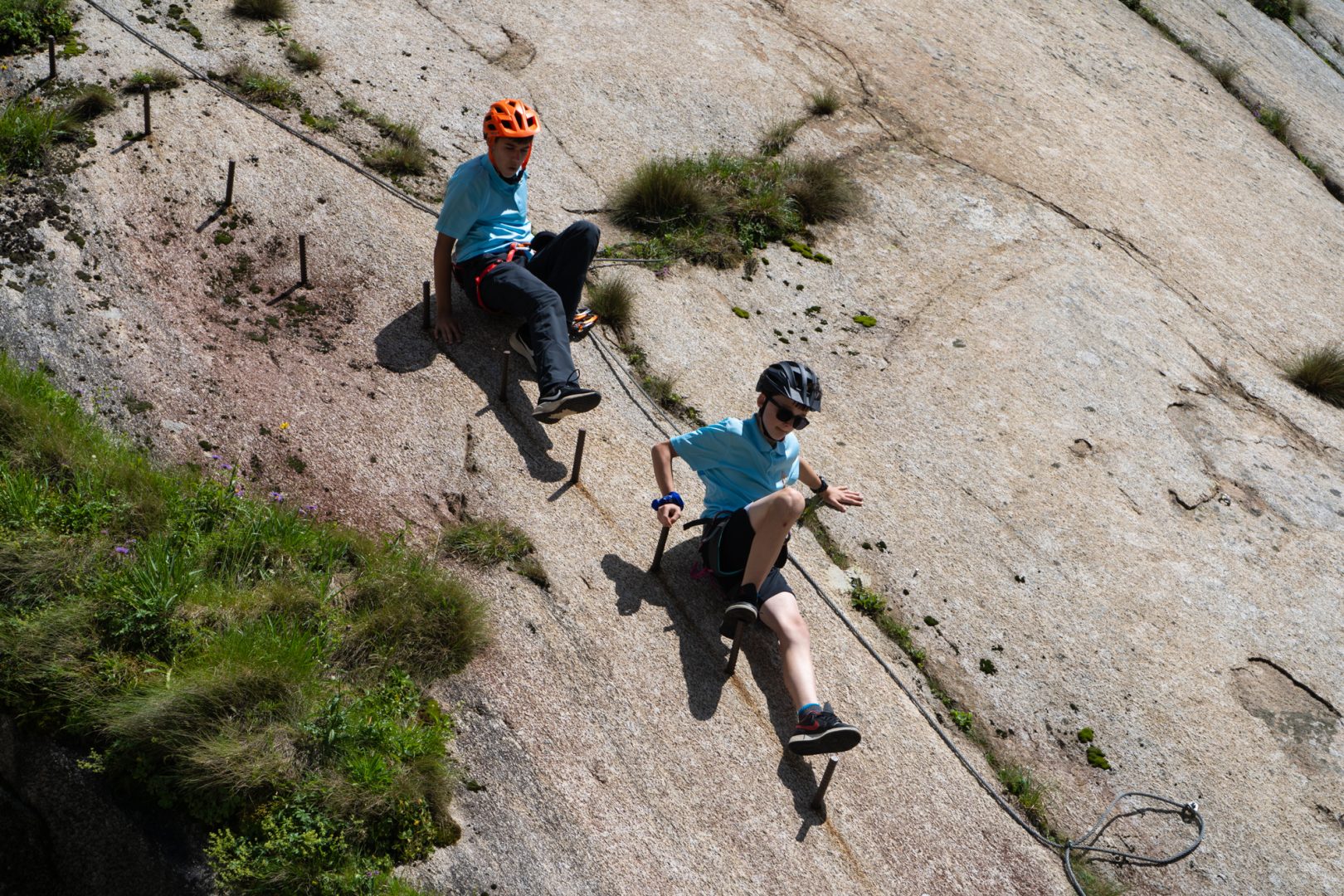
St. Moritz offers gentle lake promenades, playgrounds and wide-open Engadine valley family activities. The town works well as a calm overnight after a longer rail stretch. Gruyères pairs perfectly with the Chocolate Train: visit La Maison du Gruyère for a cheese tour (1–2 hours; good for kids 4+) and climb the medieval castle for panoramic shots. Interlaken is ideal for an active family: take a boat on Lake Brienz/Thun, try easy via ferrata or beginner canyoning for older kids, or keep it simple with lakeside picnics.
For a cultural contrast, stop in Tirano for Italian gelato and vineyard views — kids usually love the change in food and pace. Don’t miss the Brusio spiral photo spot on the Bernina line for a classic motion-shot frame. Oberalp Pass and the GoldenPass route offer wide panoramas and perfect lake views for sunset frames.
Stopover timing, quick activities and a small photo checklist
- Zermatt: 1–2 days — Gornergrat, short family hikes, Matterhorn Museum; Gornergrat Railway ride ~33 minutes each way.
- Gruyères: 1–2 hours for La Maison du Gruyère tour; add another hour for the castle and chocolate stops.
- Jungfraujoch: full-day excursion from Interlaken when weather’s clear.
- Interlaken: half to full day — boat on Lake Brienz/Thun and easy outdoor adventures for older kids.
- Tirano: 1–3 hours — gelato, quick vineyard walk and town photos.
Photo checklist to keep on your phone or a printed card:
- Gornergrat Matterhorn photo from the summit.
- Brusio spiral photo spot shot of the viaduct in motion.
- Panoramic lake shot from GoldenPass at sunrise or golden hour.
Photography and multimedia tips that actually work with kids
- Use a polarizing filter for lake and glacier shots to deepen skies and cut reflections.
- Keep ISO low in daylight; raise it only for evening train windows.
- Bring a charger and a power bank — trains and mountain huts rarely offer convenient plugs.
- Stabilize video with a small gimbal, or rest your phone on a seat/window ledge during curves for smoother footage.
- Shoot during low-motion sections for family video clips and save busy segments for photos.
For practical family planning ideas and activity inspiration, see our guide to family activities in the Alps.

Sources
Glacier Express — Glacier Express – The Slowest Express Train in the World
Rhaetian Railway (RhB) — Bernina Express
UNESCO — Rhaetian Railway in the Albula / Bernina Landscapes
Jungfrau Railways — Jungfraujoch – Top of Europe
Swiss Travel System — Swiss Travel Pass
SBB CFF FFS — SBB Mobile (app & timetable information)
MySwitzerland (Switzerland Tourism) — Family travel in Switzerland
The Chocolate Train — Chocolate Train (Montreux–Gruyères–Broc)
Gornergrat Bahn — Gornergrat Railway (Gornergrat Bahn)
Voralpen-Express (SOB) — Voralpen-Express
Federal Office of Public Health (BAG) — Federal Office of Public Health