How Swiss Camps Teach Environmental Stewardship
Swiss camps teaching environmental stewardship with hands-on learning, citizen science and measurable KPIs for lasting pro-nature habits
Program Overview
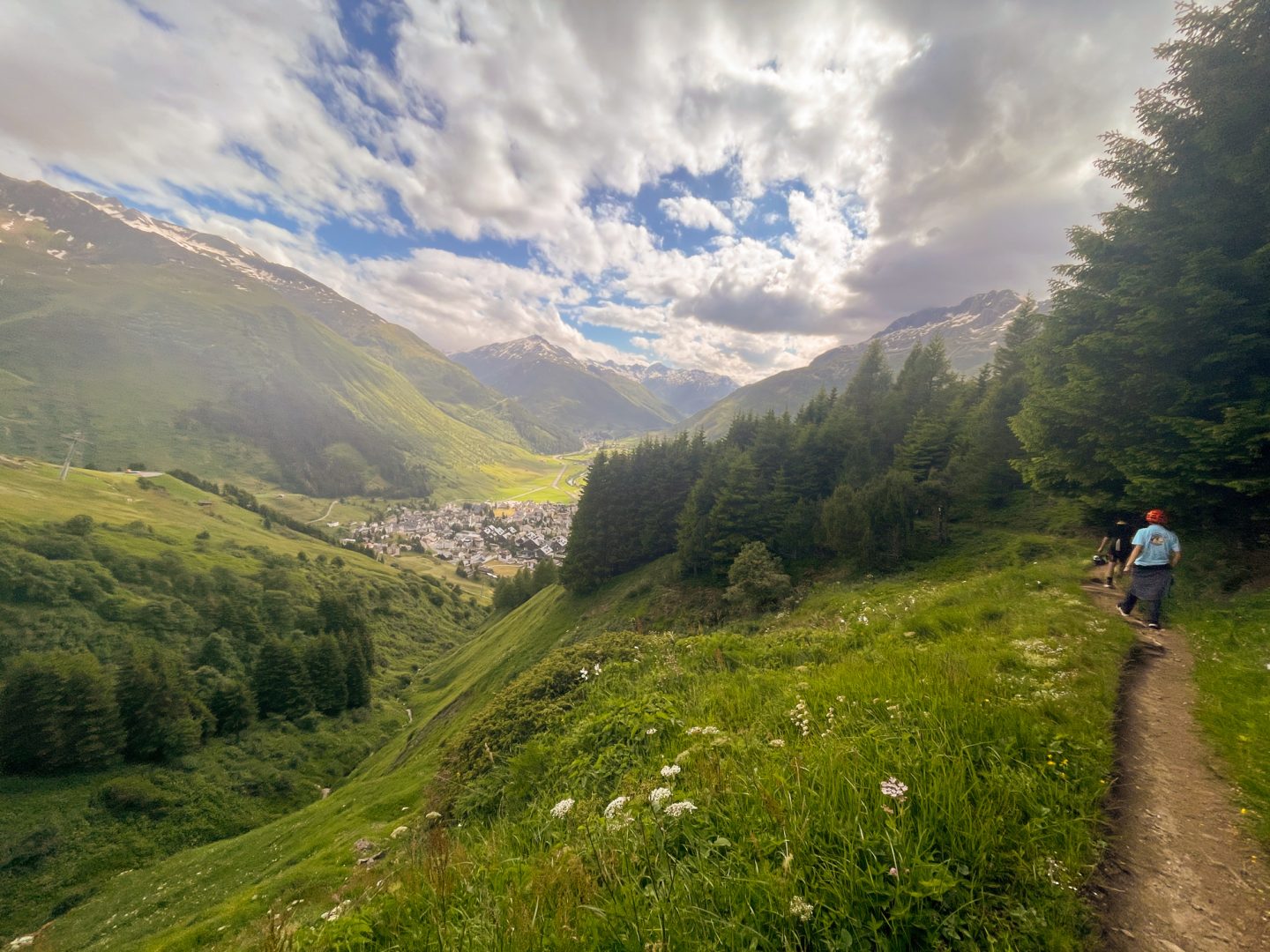
We run Swiss camps that teach environmental stewardship. They embed place-based, hands-on learning in nearby ecosystems — alpine slopes, forests and lakeshores.
Experiential Cycle
The program follows an experiential cycle that converts activities into lasting competency. The cycle is:
- Direct experience
- Reflection
- Conceptualization
- Application
This cycle turns activities into measurable skills and behaviors, linking practice to understanding.
We mix skill modules like species ID, Leave No Trace and composting with citizen-science uploads and badge progression. For evaluation we use pre/post surveys, 6–12 month follow-ups and objective KPIs to measure outcomes. Parental consent and anonymized records protect child privacy.
Key Takeaways
- A place-based experiential curriculum with short reflection blocks links practical skills to ecological literacy and lasting pro-environmental habits.
- Camps track three core outcomes:
- Ecological knowledge via pre/post tests
- Documented stewardship actions and hours
- Concrete environmental outputs — trees planted, restored area, waste diverted and species sightings
- Citizen science uses standardized field protocols — transects, macroinvertebrate sampling and water tests — to convert observations into monitorable data. Teams upload data to public databases.
- Operational tracking uses per-participant KPIs. It covers composting, source separation, energy upgrades, local food sourcing and transport choices to guide site improvements.
- We partner with national NGOs, cantonal offices and youth badge frameworks for training, verification and targets. Example targets include 20–30% gains in species ID and over 50% reporting continued nature activity at six months.
https://youtu.be/y1MtieihXwk
Measurable impacts: participant learning, environmental outcomes, and a sample KPI dashboard
Headline outcomes
We measure three core outcomes: participants’ ecological knowledge; documented stewardship actions; and tangible environmental outputs. Participants (ages 6–18) show clear knowledge gain (%) in short programs when we pair hands-on field tasks with focused pre/post surveys.
We track stewardship hours and volunteer contributions to capture behavior change beyond the classroom. Tangible outputs include trees planted, waste diverted (kg / %), restoration area (m2/ha) and species observations (#) logged to public databases.
We channel results into our environmental conservation programs to scale impact and share learning with partners. Data privacy is central: we always obtain parental consent before collecting child data or uploading identifiable observations. We combine self-report metrics with objective KPIs to reduce bias and strengthen interpretation.
Sample KPI dashboard & mock data
Below is the recommended KPI set to display prominently and example mock figures (CLEARLY LABELLED — replace with verified figures). Use cohort sizes above 30 where possible for basic inference.
- Participants served per season (total; ages 6–18 breakdown): Example: Participants: 150 (ages 6–18)
- Age breakdown (e.g., ages 6–18): 40% ages 6–10; 35% ages 11–14; 25% ages 15–18
- Leader-to-child ratio: 1:8
- Knowledge gain (%) — % increase in ecological knowledge (pre/post surveys): Example: Knowledge gain: +28% (pre/post surveys)
- % reporting ongoing nature activity at 6-month follow-up (follow-up 6–12 months): 55%
- Waste diverted (kg / %): Example: Waste diverted: 65% compost/recycle (waste diverted (%), composting)
- % composted / % recycled: 45% composted / 20% recycled
- Number of species observations submitted (species observations #): Example: Species observations: 1,250 records (iNaturalist, InfoFlora, eBird)
- Restoration area (m2 / ha): 3,000 m2 restored
- Number of trees planted (tree planting number): 420 trees planted
- Volunteer / stewardship hours (participant stewardship hours): Example: Stewardship hours: 1,200 hours
Evaluation benchmarks and targets
- Aim for a 20–30% increase in species ID accuracy after a week-long program.
- Target >30 participants per cohort for reasonable basic inference.
- Aim for >50% of participants reporting continued nature activity at 6-month follow-up where feasible.
Method notes on measurement and sampling
- Use pre/post surveys and a 6–12 months follow-up to capture knowledge gain (%) and sustained behavior.
- Pair self-report with objective environmental KPIs such as waste diverted (kg / %), species observations (#), restoration area (m2/ha) and trees planted.
- Follow the sample-size guidance: >30 participants per cohort; increase sample for subgroup analysis.
- Secure parental consent and anonymize records before analysis.
We present KPIs in dashboards so staff and funders can scan progress quickly and act on gaps.

Pedagogical approaches and a sample stewardship-focused daily schedule
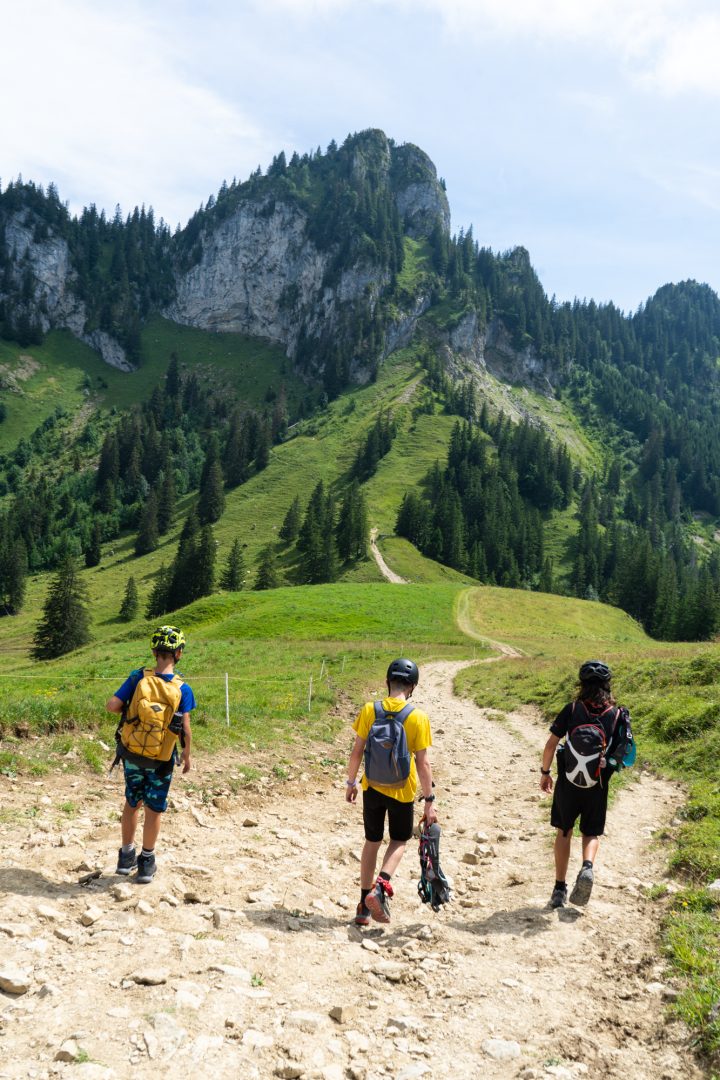
We, at the Young Explorers Club, teach stewardship by rooting learning in local ecosystems. Place-based education happens on alpine slopes, in forests, and along lakeshores so kids learn the ecology where they play. The experiential learning cycle guides every activity: direct experience → reflection → conceptualization → application. That cycle moves a single hike from observation to measurable change.
My teaching mixes skill-building with reflection. Skill-based modules cover navigation, Leave No Trace, species ID, composting and sustainable cooking. I link practical tasks to ecological literacy so students leave with clear concepts and usable skills. I also integrate citizen science and data literacy: observations get uploaded to iNaturalist or InfoFlora and become classroom data.
Leadership grows through progression. I run stewardship tracks that map to badges/certificates (Pfadi/Scouts, SAC). Badge milestones are woven into projects and assessment. I reference the Pfadibewegung Schweiz annual report for membership and badge participation rates when we report uptake and set targets. That keeps our badge program aligned with national practice and credible for parents.
I emphasize measurable behavioral outcomes. We set clear goals for durable pro-environmental behaviors and use short daily reflections to reinforce transfer from camp to home. Citizen science participation reinforces data habits and accountability. Practical outcomes include improved species ID accuracy, lower campsite impact, and repeated stewardship actions after camp.
Sample stewardship-focused day
- Morning: habitat hike and species ID session focused on local flora and fauna; students record observations and upload to iNaturalist/InfoFlora.
- Mid-day: skills training — navigation and low-impact camping, including a focused module on Leave No Trace principles and compact sheltercraft.
- Afternoon: restoration or citizen-science project such as tree planting, invasive removal, or water quality sampling; teams collect baseline data.
- Evening: reflection and commitment session where small groups synthesize what they learned and set follow-up actions.
Recommendation: include 10–20 minute reflection blocks after each major activity to link experience to values and to capture measurable outcomes (observations logged, actions planned, behavior intentions).
Example three-day watershed module
- Day 1: watershed orientation and measure water quality (Secchi, conductivity) to record a baseline.
- Day 2: identify macroinvertebrates and aquatic plants, practicing species ID and uploading observations.
- Day 3: design and implement a small stewardship action — streamside planting or erosion control — then reflect and commit to monitoring.
I use badges/certificates to motivate continued engagement, align assessments with Pfadi/Scouts and SAC standards, and document progress for participants and parents.

Hands-on stewardship projects and citizen science protocols
We run integrated projects at our camps that combine field work with data collection. We teach skills, collect useful datasets, and log participant stewardship hours. You can see the hands-on focus in our Environmental science camps programs.
Common hands-on projects and measurable outputs
Below are the typical projects we run and the outputs we track:
- Tree planting (number): count of trees planted and 1–3 year survival rate.
- Invasive species removal (kg or m²): kilograms of biomass removed and m² cleared.
- Trail maintenance (meters): meters of trail restored and erosion fixes completed.
- Riparian restoration: bank stabilization, native plantings, and water-edge buffers.
- Nest-box building and monitoring (number installed): number installed and occupancy rates.
We standardize reporting so every project includes the following elements:
- Project description
- Objectives
- Methods (protocols used)
- Outputs (quantified: tree planting (number); trail maintenance (meters); invasive species removal (kg or m²); nest boxes (number installed); participant stewardship hours)
- Short-term monitoring results
- Lessons learned and next steps
Citizen science integration is core to our approach. We train campers to use platforms and collect standardized data (iNaturalist; InfoFlora; eBird). Typical outputs include species observations (species observations (#)), habitat surveys, phenology records, and basic water quality tests.
Example field protocol — 1-hour transect → upload
Steps for a short transect protocol:
- Conduct a 1-hour linear transect.
- Record vascular plants and visible insects.
- Photograph and upload each observation to iNaturalist.
- Note GPS start/end and habitat type.
- Enter basic abundance notes.
Water protocol example
- Secchi disk measurement, temperature, conductivity.
- 3-minute macroinvertebrate kick-net sample.
- Identify to family level and upload results to the project portal.
Reporting template for a single project (use every time)
- Project description
- Objectives
- Methods (protocols used)
- Outputs (quantified: tree planting (number); trail maintenance (meters); invasive species removal (kg or m²); nest boxes (number installed); participant stewardship hours)
- Short-term monitoring results
- Lessons learned and next steps
Example reporting sentence: “Camp participants collectively contributed 1,200 iNaturalist observations in summer 20XX, including X rare species.”
I recommend we partner with cantonal conservation agencies or local NGOs for follow-up monitoring and standardized protocols to track survival rates and long-term impact. This ensures protocols are comparable and stewardship hours convert into measurable ecological outcomes.

On-site sustainable operations: practices, KPIs and example improvements
Typical operational practices
We run source separation and active composting at every kitchen we operate. Food waste gets diverted to on-site compost or to a nearby municipal facility, which improves our waste diversion rate. Remote huts get focused energy upgrades: insulation, efficient wood stoves and, where feasible, solar panels to supply lighting and hot water. We push water-saving practices in mountain huts and test small greywater systems to reuse basin and shower flows for toilet flushing or irrigation. Menus prioritize local, seasonal ingredients and offer clear vegetarian options so local food sourcing rises while kg CO2e from meals drops. We also encourage public transit and schedule group shuttles to cut transport emissions.
We pursue certifications that validate those practices — Ecolabel Suisse is our main benchmark for products and services, while larger sites often join Hostelling eco-programs and consider ISO/EMAS for formal environmental management.
I monitor performance through our green programs and share key results with staff and partners via our reporting routine. Visit our green initiatives to help teams adopt repeatable actions and communicate wins to families.
Operational KPIs to report
- Participants; Nights
- kg waste generated per person per day
- % waste composted / % waste recycled
- Waste diverted from landfill (%)
- Energy use per night (kWh) and % renewable energy (e.g., solar panels)
- % locally sourced food (local food sourcing)
- Liters water used per participant per day
- kg CO2e saved per participant via food/transport choices
Example improvement
After implementing composting and separate recycling, Camp X reduced landfill waste by 40% within one season (baseline: 2.5 kg/person/day to 1.5 kg/person/day). Measurement method: weigh waste streams weekly and report per-participant per-night averages.
Measurement advice and quick methods
I interview camp managers to confirm operational numbers and to capture seasonal variations and time frames. I recommend tracking KPIs by season (high-season vs low-season) and reporting per-participant per-night where appropriate.
- Waste: weigh waste streams at least weekly and log weights into a simple spreadsheet tied to participant nights.
- Energy: read meters monthly and attribute solar generation against site consumption to calculate % renewable energy.
- Food sourcing: track by supplier invoices and menu plans to compute % locally sourced food.
- Water: measure site water meters or use estimate-per-fixture and report liters per participant per day.
- Transport and CO2e: estimate kg CO2e saved per participant using simple emission factors and documented mode-share changes (e.g., percent arriving by public transit or shuttle).
- Reporting cadence: compile seasonal summaries and share key KPIs with staff and partners to drive continuous improvement.

Partnerships, policy alignment, certifications, and recommended case studies
Key partners and typical supports
We partner with a core set of Swiss organisations that deliver training, curricula and operational support:
- Pro Natura: provides training, curricula and technical support for hands-on nature projects (Pro Natura).
- WWF Schweiz (WWF Suisse): helps design youth programs and leads biodiversity education.
- Swiss Alpine Club (SAC): offers hut stewardship models and mountain-safety training (Swiss Alpine Club (SAC)).
- Pfadibewegung Schweiz (Scouts): supplies badge frameworks and access to large youth networks (Pfadibewegung Schweiz (Scouts)).
- Jugend+Sport (J+S): sets standards and offers training support (J+S).
- Cantonal nature offices and local NGOs: issue permits and coordinate biological monitoring.
- Swiss Youth Hostels and Naturfreunde: support accommodation choices and run eco-programs.
These partners cover pedagogy, safety, logistics and permitting. We lean on them to scale activities and to meet cantonal requirements.
Policy alignment, certifications and case studies
We align our programs with Education for Sustainable Development (ESD) goals and local biodiversity strategies. We pursue Ecolabel Suisse recognition for camps when feasible and document aligned learning outcomes. We also track which camps carry ecolabels or have NGO partnerships and ask partners to verify their counts.
Featured case studies I recommend profiling:
-
Pro Natura camps — Focus: nature immersion and hands-on projects. Typical cohort size: 50–200 participants.
- Example outputs: guided species surveys and small restoration projects.
- Example outcome: “Pro Natura camps reached X participants and documented Y species observations in year XXXX.” (example) (Pro Natura)
-
Swiss Alpine Club (SAC) hut programs — Focus: mountain skills and hut stewardship. Typical cohort size: 20–80 youth per program.
- Example outputs: hut maintenance and trail work.
- Example outcome: “SAC hut programs contributed Z volunteer hours to trail maintenance.” (example) (Swiss Alpine Club (SAC))
-
Pfadibewegung Schweiz (Scouts) — Focus: badges and community projects. Typical cohort size: variable, often 10–100.
- Example outputs: community clean-ups and badge-earned projects.
- Example outcome: “Pfadi groups completed N stewardship projects in year XXXX.” (example; see Pfadibewegung Schweiz annual report for membership and badge participation rates) (Pfadibewegung Schweiz (Scouts))
- Jugend+Sport (J+S) supported camps — Focus: sport and outdoor education with ESD elements. Typical cohort size: varies by program (J+S).
- WWF Schweiz youth programs — Focus: biodiversity education and citizen science involvement (WWF Schweiz (WWF Suisse)).
Funding and verification notes I use when advising camps
- Typical funding mixes include participant fees, cantonal support, NGO grants and sponsorships.
- I recommend camps quantify partnership reach (for example: number of camps with an ecolabel or an NGO partner). Ask camps or associations to provide audited numbers so you can report verified impact.
We embed practical checks into program design: documented learning outcomes aligned to ESD, partner-signed stewardship outputs, and at least one quantified metric per season. See our green work in our green initiatives.

Monitoring, evaluation and practical tips for camp leaders (measurement protocols and storytelling)
Evaluation mini-protocol and core metrics
We use a short, repeatable sequence to track learning and impact. Start with baseline data: a brief pre/post survey that checks species ID and stewardship attitudes. Repeat the same instrument immediately after the program for before/after metrics. Schedule follow-up at 6–12 months and recommend longitudinal tracking at 6 months, 1 year and 3 years to measure retention and behavioral outcomes (%).
During camp we collect objective environmental measurements daily: weigh waste streams, count species observations, record restoration area (m2/ha) and log trees planted. Aim for measurable goals such as a 20–30% increase in species ID accuracy for a week-long program and track behavior as the % reporting continued nature activities at 6 months. For environmental KPIs monitor waste diverted (%), % composted/recycled, number of species observations and restoration area in m2/ha. Use sample-size guidance of >30 participants per cohort and add control or comparison groups where feasible.
We train one leader per cohort to manage data collection and uploads; that supports clean longitudinal tracking and links field notes to pre/post surveys. Keep instruments short. Use unique IDs rather than names for child-level datasets to protect privacy.
Five-point pre-season checklist, daily practices and storytelling
Follow this quick checklist before season launch:
- Risk assessment & permissions: secure site permits and landowner or cantonal permissions.
- Data collection plan: prepare pre/post surveys, environmental KPI sheets and consent forms.
- Waste / food plan: set source separation, composting systems and target local food sourcing (%) goals.
- Leader training: cover pedagogy, first aid and safe field methods (including avalanche awareness).
- Partner contacts: confirm roles with cantonal offices and partner with Pro Natura/WWF/SAC for technical monitoring support.
Use these daily leader practices to keep data useful: hold short reflection sessions that link activities to values; log participant stewardship hours and key outputs each day; and ensure the designated data leader uploads observations to citizen-science portals like iNaturalist, eBird or InfoFlora with appropriate privacy settings.
For communications combine quantitative KPIs with participant quotes, photos and short project stories. I recommend 2–3 human-interest mini-profiles (participant, leader, partner) and attach one metric to each, such as hours volunteered. Use concrete numbers to build credibility and flag figures as examples where needed. Example (replace with verified data): “This summer Camp X trained 120 kids in species ID and removed 800 kg of invasive plant material.”
Respect data privacy and ethics: obtain parental consent for collecting child-level data and for publishing photos/quotes. When uploading observations to public portals follow privacy settings for sensitive species and minors. For program design inspiration see our environmental programs.
Sources
Swiss Federal Office for the Environment (FOEN) — Forests
Swiss Federal Statistical Office (FSO / BFS) — Land use
Monitoring der Biodiversität der Schweiz (BDM) — Monitoring der Biodiversität der Schweiz
Swiss Federal Office of Energy (SFOE / BFE) — Electricity statistics
Pro Natura Schweiz — Angebote für Kinder und Jugendliche
Pfadibewegung Schweiz — Pfadi (Natur & Umwelt)
Swiss Alpine Club (SAC) — Hütten und Jugend
Jugend+Sport (J+S) — Offizielle Seite
Ecolabel Suisse — Ecolabel Suisse
InfoFlora — Informationssystem zur Schweizer Flora
iNaturalist — Record and share biodiversity observations
Leave No Trace Center for Outdoor Ethics — Leave No Trace Principles