Olympic Training Programs For Talented Youth
Olympic youth training—LTAD-aligned talent ID and multidisciplinary support to develop 12–18 athletes for senior international competition.
Olympic training programs for talented youth
Overview
Our Olympic training programs identify, develop and transition talented youth—typically aged 12–18—into senior international competitors. We protect long-term athlete development and athlete wellbeing with LTAD-aligned curricula, ensuring health and education are prioritised alongside performance. Across local hubs and national centres we concentrate multidisciplinary support (coaching, strength and conditioning, physiotherapy, sport science, psychology and education coordination) so the model can accelerate progression, manage load and safeguard wellbeing.
Key Takeaways
-
LTAD phases and age-appropriate planning: Programs follow LTAD phases (FUNdamentals → Training to Win). Age-appropriate technical, physical and psychosocial goals guide planning. Typical weekly volumes are: under 12: 3–6 hours; 12–15: about 6–12 hours; 16–18: 10–20+ hours.
-
Delivery model — hubs and centres: Delivery balances local hubs (20–50 athletes, part-time support) with national centres (50–300+ athletes, full-time multidisciplinary teams). This dual model preserves community schooling while offering high-performance intensity.
-
Talent identification: Talent ID uses objective tests (anthropometry, sprints, CMJ, endurance, movement screens), coach scouting and school outreach. We include maturity assessment and corrective measures to reduce the Relative Age Effect and selection bias.
-
Training structure and monitoring: Training follows macro, meso and micro periodization. We run standardized tests every 8–12 weeks. Strength and conditioning progress focuses on movement quality. Practical tapering reduces volume by about 30–50% in the final 7–14 days before key competitions.
-
Safeguarding and athlete support: Programs embed safeguarding, injury prevention and dual-career support. They track KPIs such as injury days lost, retention, conversion to senior level and percent change in key performance metrics. Operational and strategic reporting occurs on a regular basis.
Operational notes
Multidisciplinary coordination is central: teams hold regular planning meetings to align coaching, S&C, medical and education priorities. Load management is monitored with objective metrics and athlete feedback, and selection decisions consider both current performance and long-term potential.
Testing and progression
Standardized assessments every 8–12 weeks provide objective progress markers and inform individualized training adjustments. Emphasis is placed on movement competency before high-load strength progressions and on measurable, age-appropriate benchmarks to guide transitions between LTAD phases.
Overview, purpose and scale of youth Olympic training programs
We design programs to identify, develop and transition talented youth—typically ages 12–18—into senior international competitors while protecting long-term athlete development, health and education. National Olympic Committees, sport federations and dedicated institutes deliver these pathways at multiple scales: local talent hubs serving dozens of athletes and national centres supporting hundreds.
We align our curriculum to Canadian Sport for Life / LTAD, following phases from:
- FUNdamentals
- Learning to Train
- Training to Train
- Training to Compete
- Training to Win
and we map those phases to age-appropriate technical, physical and psychosocial goals. Athletes aiming for Youth Olympic Games targets often fall in the 15–18 eligibility window for Summer YOG (some sports permit age 14), while feeder programs start earlier around 12 to build the base.
We concentrate multidisciplinary support—coaching, strength & conditioning, physiotherapy, sports science, sport psychology and education coordination—to accelerate development and protect welfare. Centralised programs speed international exposure, consolidate scarce expertise and create consistent competition pathways. Local hubs keep athletes connected to school and community; national centres intensify training, recovery and competition planning.
Typical size and staffing models are practical and predictable. Local hubs usually run with a head coach plus part-time S&C and physiotherapy support and host 20–50 athletes. National centres scale up to 50–300+ athletes with full-time multidisciplinary teams; budgets and service levels vary widely by NOC and federation funding priorities. We prioritize athlete retention by balancing performance demands with schooling and psychosocial support, and we embed practices that protect mental health and stress management through camp-style resilience work and counselling for elite juniors. For examples of how camps support that work see mental well-being.
Age-range comparisons and program emphasis
Below are typical event-specific timing notes and how we adjust program emphasis:
- Gymnastics: earlier specialization and competitive peaks often occur in mid-to-late teens; we limit volume and stress technical mastery in early teens.
- Artistic swimming / figure skating: peak windows trend earlier; we phase skill intensification sooner while monitoring growth and recovery.
- Sprint / power events: physiological peaks commonly in mid-20s; we focus on speed and power development across mid-adolescence.
- Endurance events (distance cycling, marathon): later peak-performance years; we build aerobic base and progressive load through late teens.
We monitor individual maturation, adapt progression rates and plan transitions to senior levels with clear performance benchmarks, education plans and gradual exposure to senior competition.

Talent identification (TID), recruitment and selection biases
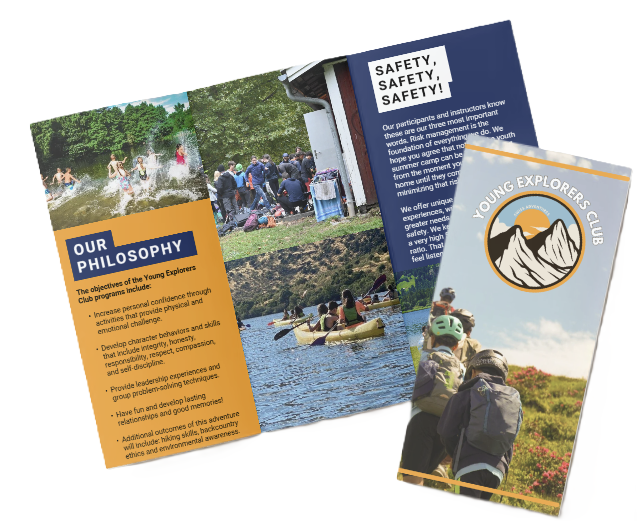
We, at the young explorers club, run Talent ID programs that combine objective testing, scouting and school outreach. Our approach mixes physiological and anthropometric measures, motor-skill batteries, competition scouting, coach nominations, school programs and targeted talent-transfer initiatives. We spot many prospects early; initial talent spotting typically occurs between ages 8 and 12. Most formal entries to national pathways happen later, usually between 12 and 15 years.
We use the term Talent ID to mark a process that must be transparent and repeatable. Objective testing reduces guesswork, but coaches’ eyes and competition results still matter. Scout information and school-based screens widen the pool. We track maturation closely, since biological age often diverges from chronological age.
Minimum TID checklist
Use this checklist as a practical baseline during selection camps and regional screens:
- Anthropometry: height, sitting height, weight, limb lengths.
- Speed: 20-m or 30-m sprint times.
- Power: vertical jump (CMJ), broad jump.
- Endurance: 20-m shuttle run or sport-appropriate Yo-Yo tests.
- Strength: relative submaximal strength tests or estimated 1RM where safe.
- Technical skill evaluation: sport-specific drills scored by coaches.
- Movement quality: FMS, Y-Balance or equivalent screens.
- Psychological screening: motivation, grit, coachability and mental-health flagging.
- Maturity assessment: maturity offset or PHV estimates.
We interpret test data in context. A tall 13-year-old who shows advanced anthropometry may still be a late maturer compared with peers. We cross-reference physical scores with technical ratings and psychological flags before moving a child into a pathway.
Relative Age Effect (RAE) biases selection in many systems. You’ll often see over-representation of athletes born early in the selection year. Studies commonly report a 20–40% skew in youth elite cohorts. We monitor birth-month distributions and use corrective tactics:
- Birth-month quotas
- Corrective selection windows
- Rotating cut-off policies
- Explicit delayed-selection tracks that favor late developers
A demonstrative cohort can show Q1 (Jan–Mar) 35%, Q2 25%, Q3 20%, Q4 20%—that pattern flags a strong RAE.
We push against premature specialization. Evidence supports continued multi-sport sampling until mid-adolescence for most sports to lower injury risk, reduce burnout and build transferable skills. We allow early specialization only in sports with very early performance peaks (for example, women’s gymnastics) and then we apply strict load management and psychosocial support.
We align our timelines with LTAD frameworks and the IOC consensus. Those guidelines encourage delaying full specialization until mid-adolescence in most cases and maintaining broad motor-skill exposure across childhood. We also embed regular reassessment windows so late bloomers can re-enter pathways without stigma.
We recommend transparent reporting of selection decisions. Coaches should document why athletes progress or are held back. We include measurable thresholds, maturity estimates and coach notes in each file. This reduces bias and helps stakeholders accept selection outcomes.
Training structure, periodization and physical testing for youth athletes
We set weekly training by age and pathway. For athletes under 12 the emphasis stays on play and fundamental skills. Organized practice typically sits at 3–6 hours per week. Between 12 and 15 years we increase volume and structure progressively; organized practice typically reaches about 6–12 hours weekly. For 16–18 year olds on elite pathways we expect 10–20+ hours per week, depending on the sport and competition calendar.
Annual planning anchors training to target competitions. I use a three-tier periodization framework:
- Macrocycle: an annual plan tied to priority events — national junior championships, Youth Olympic Games or continental competitions. The macrocycle sets peak windows and major adaptation goals.
- Mesocycles: 4–12 week blocks with distinct aims — general preparation, specific preparation, competition, and transition/recovery. Each mesocycle has measurable objectives and testing points.
- Microcycles: weekly plans balancing technical, tactical, strength & conditioning, conditioning and recovery. Every microcycle must consider training load, sleep, school demands and athlete maturity. I plan tapering so the peak aligns with major competitions.
Tapering follows practical rules. Reduce volume by roughly 30–50% in the final 7–14 days before key competitions. Maintain intensity while cutting volume and keep technical reps sharp. Adjust the taper for event duration, energy system demands and athlete maturity — younger athletes often need shorter, less aggressive tapers than older adolescents.
Strength and conditioning progression prioritizes movement quality. We insist on movement competency, balance and general strength before adding high loads. Progression follows a clear ladder:
- Start with bodyweight control and motor patterns.
- Add resisted movements and load only once movement quality is consistent.
- Introduce variations of Olympic lifts for technique, not maximal load.
- Move to higher loads only when technique, maturity and recovery capacity permit.
Practical coaching tips: schedule S&C sessions twice weekly in mid-development (12–15), and 2–3 times weekly for 16–18 athletes. Keep sessions 30–75 minutes depending on age and intensity. Use objective markers (jump height, bar speed) to decide when to increase load rather than arbitrary percentages alone.
Physical testing must be standardized and repeatable. I recommend the following battery with common protocols:
- Speed: 20-m or 30-m sprint.
- Power: countermovement jump (CMJ).
- Aerobic capacity: Yo-Yo Intermittent Recovery Test Level 1 (Yo-Yo IR1) or 20-m shuttle run.
- Anaerobic power: 30-s Wingate where it’s safe and appropriate.
- Strength: relative 1RM estimates or validated submaximal tests.
- Body composition: skinfolds or BIA.
- Movement quality: FMS and Y-Balance.
Test timing: test at baseline (pre-season) and then every 8–12 weeks to align with mesocycles or before and after major phases. Report results using age- and sex-specific percentiles and percent-change metrics — for example, “% change in CMJ pre/post mesocycle” — so coaches, parents and athletes can see practical improvements. We keep records that show both absolute values and relative change to capture growth and training effects.
Standardization and reliability matter for meaningful comparisons. Use consistent test protocols, trained testers and the same equipment whenever possible. Track percent changes (e.g., CMJ improved by 8% over 12 weeks) and benchmark against age/sex percentiles for context. Regular monitoring also flags fatigue and injury risk early.
We also link physical development to broader wellbeing and coordination work; for recommendations on play-based physical skills that support athletic development see physical fitness.
Sample weekly microcycles (illustrative)
Below are practical templates you can adapt to sport demands and athlete maturity.
-
<12 years (3–6 hrs/week):
- 2 technical/play sessions (45–60 min each)
- 1 multi-skill game-based session (45 min)
- 1 active play/rest session (light mobility/fun, 30–45 min)
-
12–15 years (~6–12 hrs/week):
- 3 technical/tactical sessions (60–90 min)
- 2 S&C sessions focused on movement competency and general strength (30–45 min)
- 1 conditioning session (intervals/aerobic, 30–45 min)
- 1 recovery/mobility session
-
16–18 years (10–20+ hrs/week):
- 3–4 technical/tactical sessions (90–120 min)
- 2–3 S&C sessions (45–75 min) emphasizing strength, power and injury prevention
- 2 conditioning sessions (aerobic/anaerobic per sport)
- 1 recovery session and ongoing monitoring
We keep plans flexible and data-driven. Adjust weekly loads based on testing, athlete stress, sleep and academic demands. Use the testing battery and percent-change reporting to decide when to progress load, extend a mesocycle, or prioritize recovery.
https://youtu.be/oBnHz4C4SfI
Multidisciplinary sports science support, coach education and safeguarding
Core services and measurable deliverables
We provide a full multidisciplinary package that maps directly to measurable athlete outcomes. Strength & Conditioning (S&C) focuses on movement competency, strength and power targets — for example monitoring countermovement jump (CMJ) and relative strength gains — and we schedule about two sessions per week for national-pathway athletes. Our sport scientist/performance analyst delivers training-load analysis, competition analytics and objective progress reports every mesocycle. Physiotherapy and medical staff run injury screening, weekly checks or on-call support, and we track injury days lost as a core metric. The sports nutritionist monitors energy availability, produces individualized plans, runs nutrition education and performs quarterly reviews. Sport psychology provides mental-skills training with at least monthly contact and wellbeing screening. An academic/dual-career advisor coordinates education or employment support and logs dual-career outcomes.
I’ll list the minimum KPIs we use to quantify impact and accountability:
- S&C: % change in CMJ, relative strength gains, adherence to injury-prevention plans.
- Nutrition: % of athletes meeting energy-availability targets, number of education sessions delivered.
- Physiotherapy: injury days lost per 1,000 hours, average return-to-play timelines.
- Psychology: session attendance, validated wellbeing score changes.
- Performance analysis: weekly load reports delivered, mesocycle progress summaries.
- Dual-career: % athletes maintaining academic/employment benchmarks.
We issue mesocycle reports that tie training inputs to these KPIs. Each athlete gets objective targets, monthly or quarterly reviews and clear action points for the next cycle.
Staffing models, coach certification and safeguards
We scale support to the environment. At a local hub you’ll find a head coach, part-time S&C and physiotherapy on-call; performance analysis is limited and the setup typically supports dozens of athletes. A national centre includes a full-time multidisciplinary team serving 50–300+ athletes with scheduled support across S&C, sport science, medical, nutrition, psychology and dual-career services.
Coach competence is non-negotiable. Coaches must be athlete-centred, literate in Long-Term Athlete Development (LTAD), competent in load management and talent identification (TID), versed in safeguarding and possess basic sports-science literacy. Certification runs in levels: introductory → development → performance, with mandated continuing professional development (CPD) and structured mentorship at each step. We require documented CPD hours and mentor sign-off before promotion between levels.
Safeguarding and anti-doping are embedded into daily practice. Minimum safeguarding elements include:
- Child-protection policy and clear reporting channels.
- Mandatory background checks and codes of conduct.
- Safe recruitment procedures and compulsory safeguarding training for staff.
- Confidentiality and privacy protections.
Juniors are subject to anti-doping rules and testing. Programs must deliver education on prohibited substances, supplement risks and the Therapeutic Use Exemption (TUE) process, and we log attendance at those education sessions.
Operationally, support cadence looks like this:
- S&C: twice weekly with prescribed and monitored loads.
- Physiotherapy: one routine weekly check plus on-call injury management.
- Sport psychology: one monthly individual or group touchpoint.
- Nutrition: one monthly review or education session with spot checks during camps.
- Performance analysis: weekly training reports and a monthly detailed review.
We, at the young explorers club, combine these systems into a single athlete dashboard so coaches and support staff share one source of truth for load, injuries, nutrition status, wellbeing and education progress. We also encourage coaches to build leadership skills through our youth leadership opportunities, which helps align on-field delivery with off-field development.

Injury prevention, load management and athlete wellbeing (physical and psychological)
We, at the young explorers club, prioritize a coordinated approach to reduce injury risk and protect athlete wellbeing. Our protocols reflect the common injury incidence in youth sport—roughly 1–4 injuries per 1,000 hours—with higher rates in competition—so we plan training with that context in mind.
Our risk profiling targets the main drivers of youth injury: rapid spikes in training load, early specialization, poor movement patterns and growth spurts around peak height velocity (PHV). We monitor PHV closely; girls average around 12 years and boys around 14 years, though individual timing varies. Our staff adjusts training loads during identified PHV windows to limit overload.
We combine internal and external load metrics for daily decision-making. Our internal load toolkit uses session-RPE × duration, wellness questionnaires and sleep/recovery logs. Our external metrics include GPS/accelerometer outputs (distance, high-speed running, accelerations), session counts and intensity bands. Our coaches review these data weekly and flag sudden load spikes for immediate follow-up.
Our prevention strategy layers structured warm-ups, strength progressions and balance work. We implement neuromuscular programs such as FIFA 11+ or the PEP Program at least 2–3 times per week to reduce lower-limb injuries. Our strength plans follow age-appropriate progressions with gradual plyometric exposure and clear technical checkpoints. We add Y-Balance elements into warm-ups to boost proprioception and single-leg control. Our periodization principle is simple: avoid week-to-week increases greater than 10% as a general guide and build planned deload weeks into every mesocycle.
Our recovery and wellbeing monitoring covers physical and psychological domains. We track sleep duration and quality, perceived recovery scores and short mental-health screeners. Our escalation thresholds trigger referral to medical staff or a sport psychologist when scores cross set limits. We teach sleep hygiene, nutrition basics, active recovery strategies and the value of planned rest days. We also integrate family education so parents reinforce healthy habits outside training. For resources on broader psychosocial support we link practical camp guidance on mental well-being.
Our implementation checklist keeps things usable for coaches and staff.
Practical implementation checklist
- Log session-RPE for every athlete after each session.
- Use standardized neuromuscular warm-ups (FIFA 11+ or equivalent) at least 2×/week.
- Conduct movement screens and baseline strength testing pre-season and each mesocycle.
- Track anthropometry every 3 months during adolescence and adjust loads during PHV windows.
- Enforce periodized progression; limit >10% weekly load jumps and plan regular deloads.
- Integrate progressive resistance cycles and gradual plyometric exposure.
- Include balance/agility circuits with Y-Balance drills in warm-ups.
- Maintain clear communication protocols for load spikes and injury reporting.
- Provide ongoing education to athletes and parents on sleep, nutrition and mental health.
Pathways to senior level, funding, program evaluation and case-study benchmarks
We, at the young explorers club, map clear competition ladders so athletes and coaches know the targets. Our sequence runs Local → Regional → National junior championships → Continental & World junior championships → Youth Olympic Games → Senior international events such as World Championships and Olympic Games. Progress along this ladder is predictable in structure but variable in outcomes; many juniors won’t sustain elite senior careers, and realistic conversion estimates often fall between 10–30% depending on sport.
We build programs with three parallel pillars: performance development, athlete welfare, and long-term transition support. National Olympic Committees, national sports institutes and federations usually lead delivery. Budgets differ widely: wealthier NOCs operate multi‑million‑dollar programs, while smaller nations execute targeted, lean initiatives that focus on high-impact interventions. We routinely recommend that any public budget or headcount quoted comes from official annual reports to ensure accuracy.
Two historical benchmarks shape modern practice. The Australian Institute of Sport (AIS), established in 1981, remains the archetype of a centralized, multidisciplinary institute that couples long‑term development with science support. The Youth Olympic Games, launched by the IOC in 2010, provides a multi‑sport competitive and educational platform designed to bridge junior competition and senior pathways. We use lessons from both when structuring athlete timelines and education offerings.
Program KPIs, cadence and sample evaluation metrics
Below I list the KPI categories we prioritize and the reporting cadence we recommend. Use these as a starting framework; adapt targets to sport-specific baselines.
- Performance KPIs and cadence
- Medals, finals reached, personal bests. Report quarterly for operational adjustments and annually for strategic review.
- Development KPIs
- % athletes progressing between pathway levels (e.g., regional → national). Track quarterly and aggregate multi-year trends.
- Retention KPIs
- Annual retention/dropout rates; flag cohorts with >15% dropout for immediate review.
- Health KPIs
- Injury days lost per 1,000 hours; prevalence of overuse injuries. Monitor monthly in-season; report quarterly.
- Dual-career KPIs
- % athletes completing education milestones or maintaining employment/education alongside sport. Review each semester.
- Conversion benchmarks
- Expect 10–30% conversion from successful junior competitor to sustained senior success; calibrate by sport.
- Reporting cadence and targets
- Operational: quarterly per mesocycle for training load, injury surveillance, progression.
- Strategic: annual and quadrennial reviews for cohort outcomes and Olympic cycles.
Sample annual report items we include
- Number of athletes in each pathway tier and % progressed to next stage.
- Total injury days lost per 1,000 hours and top injury types.
- Median % change in countermovement jump (CMJ) or other sport‑specific physical metrics across the season.
- Number of athletes completing dual‑career milestones and retention rates at 1, 3, and 5 years post‑junior success.
We integrate short‑term indicators (seasonal improvements, current retention) with long‑term indicators (3–8 year athlete outcomes) so selection and development decisions reflect both immediate form and future potential.
Implementation caveats and governance recommendations
- Source verification: When quoting budgets, medal counts or athlete numbers cite official annual reports or federation releases for accuracy and transparency.
- Context specificity: Make KPIs sport‑ and context‑specific; a sprint program’s CMJ target won’t fit a rowing cohort.
- Balanced monitoring: Combine performance KPIs with athlete welfare and education KPIs to avoid win‑at‑all‑costs outcomes. We mandate dual‑career monitoring alongside medical surveillance.
- Independent review: Use independent review panels for quadrennial evaluations and publish summaries to maintain stakeholder trust.
We connect athletes with our youth leadership pathway to strengthen life skills and improve long‑term retention while they progress through these competitive ladders.

Sources
International Olympic Committee — Youth Olympic Games
British Journal of Sports Medicine — International Olympic Committee consensus statement on youth athletic development
Sport for Life — Long-Term Athlete Development (LTAD)
World Athletics — Development
Australian Institute of Sport — About the AIS
UK Sport — Our work (high performance sport & talent)
United States Olympic & Paralympic Committee — Athlete Development
World Anti‑Doping Agency — Education resources
PubMed — Relative age effects in sport: a systematic review
F‑MARC (FIFA Medical Assessment and Research Centre) — 11+ Injury Prevention Program