Summer Camp In Switzerland For Sports Enthusiasts: Football, Biking, And Climbing
Swiss summer camps: football, mountain biking & climbing in the Alps (June-Aug). Fast rail links, certified guides, REGA/evacuation cover.
Summer camps in Switzerland — Overview
Summer camps in Switzerland combine football, mountain biking and climbing in high‑alpine locations while remaining well connected to major hubs by fast rail links to Zurich, Geneva and Basel. Many mountain towns are about 2–3 hours away by train. Programs run from June–August, with organizers booking cool morning and early‑evening slots to reduce thunderstorm risk in July. Coaches and guides must meet national standards, and camps require proper gear, travel insurance and confirmed evacuation coverage.
Key Takeaways
Timing and access
Most camps operate between June and August in mountain settings. Fast rail links from Zurich, Geneva and Basel shorten door‑to‑door travel; many destinations sit roughly 2–3 hours by train. We recommend the Swiss Travel Pass for flexible group travel and easier transfers.
Program formats and typical costs
- Day camps: typically CHF 150–400 per week.
- Residential stays: approximately CHF 700–2,500 per week.
- Guided biking or climbing packages with accommodation: usually CHF 500–2,000 per week.
- Equipment rentals: commonly CHF 40–150 per day.
- Certified IFMGA guides: charge around CHF 300–600 per day.
Budget for guide fees and rental price spikes during peak weeks.
Safety and staffing
Camps commonly field UEFA‑licensed coaches for football and IFMGA guides on technical alpine routes. Organizers keep written first‑aid protocols, carry on‑site first‑aid kits and AEDs, and confirm REGA membership or equivalent evacuation coverage. We advise checking staff ratios and emergency plans before booking.
Weather and daily operations
Technical sessions work best in cool morning or evening windows. Plan acclimatization days above roughly 1,500–2,000 m. Monitor forecasts closely and adjust plans for sudden storms. Account for altitude effects on performance and hydration, and build in flexible itineraries with clear backup options.
Logistics, gear and sustainability
- Rail‑first approach: use trains and the Swiss Travel Pass for simpler transfers.
- Biking routes: follow official Veloland routes.
- Packing: layered clothing, always wear helmets, and bring helmet lights for early starts.
- Rent bulky items locally when possible to cut costs and emissions.
- Refillable bottles and public fountains reduce plastic waste.
- Insurance: buy comprehensive travel and medical insurance that covers mountain rescue.
Practical tips before you go
Confirm evacuation coverage (REGA or equivalent), verify that staff hold required national certifications, check equipment rental conditions and reserve popular weeks early. Allow for acclimatization days at altitude and insist on written emergency procedures and clear communication channels from organizers.
Geography and access
We, at the Young Explorers Club, position our camps where Alpine terrain meets easy transport. Switzerland covers about 41,285 km² and roughly 60% is Alpine, with the highest summit, Dufourspitze, reaching 4,634 m. Major arrival points are Zurich (ZRH), Geneva (GVA) and Basel (BSL). The Swiss Federal Railways (SBB) links those airports to mountain towns efficiently, and many Alpine destinations are commonly a 2–3 hour train ride from the airports.
Getting there — travel times and practical tips
Below are representative travel times and travel notes to help you plan logistics and day trips.
- Zurich (ZRH) → Interlaken: ~2 hours by train (direct/fast connections available)
- Zurich (ZRH) → Zermatt: ~3–3.5 hours (change at Visp)
- Zurich (ZRH) → Verbier: ~3–3.5 hours (change at Martigny + local transport)
- Geneva (GVA) → Verbier/Valais region: ~2–3 hours depending on connection
- Geneva (GVA) → Zermatt: ~3–3.5 hours
- Basel (BSL) → Interlaken: ~2–2.5 hours
Plan with buffer time. Exact durations vary by connection and season, so check timetables before travel. Swiss Travel Pass holders enjoy unlimited travel on many trains, trams and buses, which simplifies multi-day trips and transfers.
Practical advice from our field teams:
- Choose arrival airport based on the activities and your group’s gear. Zurich suits northern and central targets; Geneva serves Valais and western resorts.
- Expect at least one transfer for most mountain destinations; light, wheeled luggage speeds up platform changes.
- Reserve key mountain links and cable cars in high season. Some local shuttles require prebooking for groups.
- If you want trail previews or ride recommendations, I suggest checking our page on top Swiss trails.
- For parents arranging travel, see how we advise families to choose the best camp and coordinate arrivals.
I always advise syncing arrival times with the camp check-in window. That reduces waiting and helps our coaches get participants on the pitch, trail or crag quickly.

Climate and seasonal window
We, at the Young Explorers Club, run camps in the prime summer months: June through August. Lowland days usually sit between 18–25°C, while alpine zones commonly range 5–15°C. Temperature drops about 6.5°C per 1,000 m of ascent, so expect noticeably cooler conditions as you climb.
July brings the highest precipitation risk. Afternoon thunderstorms occur frequently then. We schedule our key outdoor sessions for mornings and early evenings in lowland venues to avoid the worst of the storms. For higher-elevation sessions we keep them flexible, since alpine weather can shift fast even on otherwise clear days.
We plan around three operational ideas every day: protect, adapt, and recover. We protect athletes with shade, sunscreen, and hydration. We adapt by shifting technical sessions earlier or later and by shortening high-intensity drills at altitude. We prioritize recovery with mid-day rest windows and indoor options.
Practical scheduling and gear checklist
Use the following checklist to keep sessions safe and productive:
- Schedule major football work and team drills in the cool morning hours; for lowland football training see our football training.
- Put technical climbing or ridge travel where temperatures and storm risk are lowest. Review helmet fit before pushing grades; see our helmet tips.
- Reserve mid-day for indoor halls, tactical video, skills briefings, or active recovery.
- Keep high-energy mountain biking efforts on cooler windows; plan routes from our mountain biking options.
- Pack layered clothing: lightweight base, insulating mid-layer, and a waterproof shell.
- Monitor local forecasts each morning and have quick evacuation or shelter plans for thunderstorms.
- Hydration and electrolytes are compulsory during long lowland sessions; increase fluids at altitude even if it feels cooler.
We adjust daily plans rather than forcing a fixed schedule. That keeps athletes safe, maximizes skill time, and keeps energy high across football, biking, and climbing days.
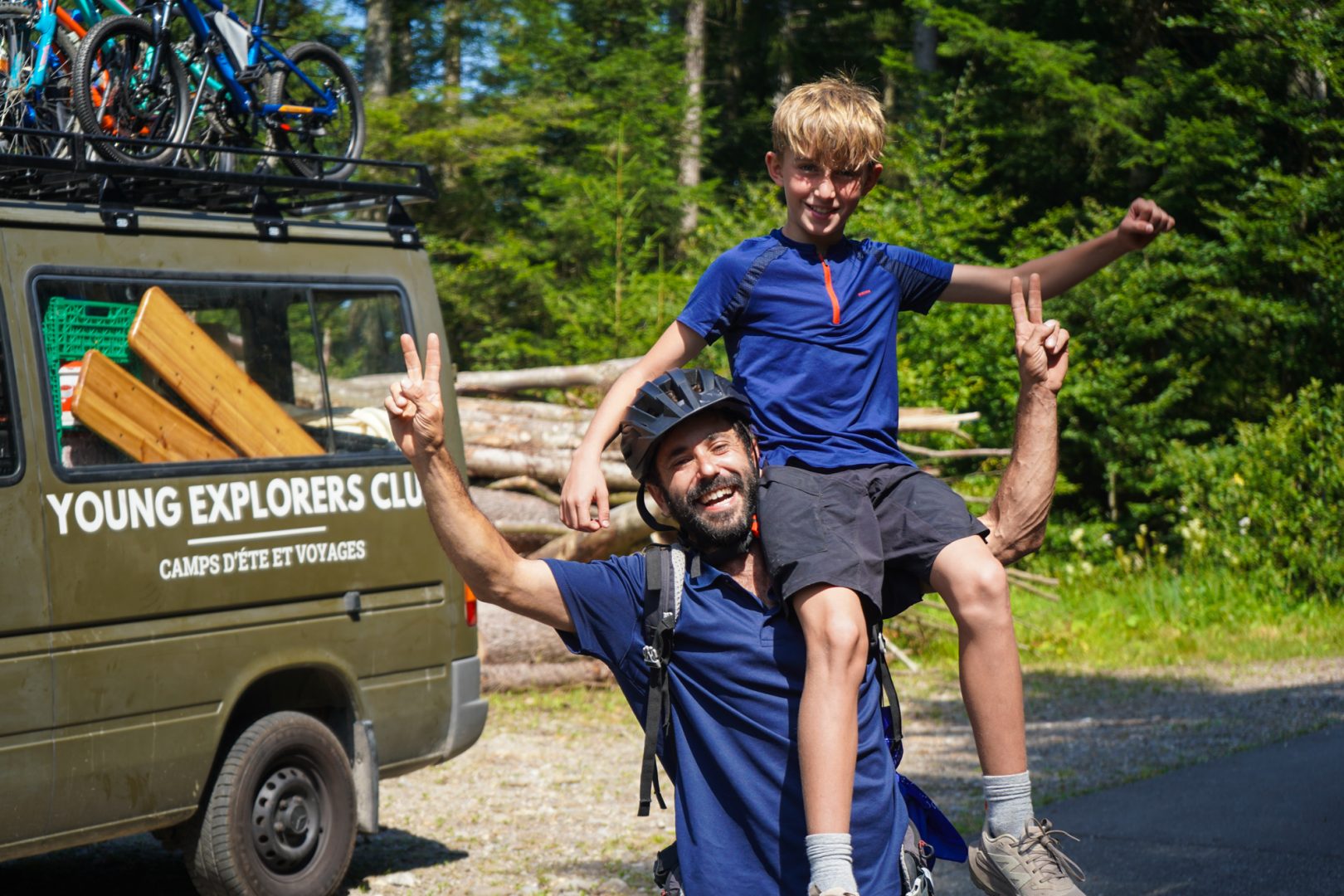
Safety and services
We, at the Young Explorers Club, make emergency preparedness visible from day one. We give families the essential Swiss emergency contacts — ambulance 144 and Swiss Air-Rescue (REGA) 1414 — at registration and in every camp briefing.
Switzerland has a low crime rate and high-quality healthcare, which lowers overall risk. Local mountain-rescue teams and IFMGA-certified guides are widely available for alpine activities, so I insist on camps that partner with certified professionals. We require written first-aid protocols, clear access to the nearest hospital, and explicit confirmation that the organizer has REGA or other evacuation coverage included in their emergency plan.
Emergency checklist for families
Use this checklist to confirm a camp’s emergency readiness:
- Emergency numbers posted and distributed (ambulance 144; Swiss Air-Rescue (REGA) 1414).
- Written first-aid and medical-response procedures on file.
- Name and distance of the nearest hospital, plus transfer time.
- Confirmation of REGA or evacuation coverage in the event of serious injury.
- Presence of on-site first-aiders and their certifications.
- Use of IFMGA-certified guides for climbing and technical mountain activities.
- On-site AED and trauma kit availability.
- Communication plan for notifying parents during an incident.
- Medication management process and allergy action plans.
- Insurance requirements and consent forms signed before arrival.
On-site medical and rescue capabilities
I recommend asking specific, direct questions before you sign up. Request the names and certificates of medical staff. Ask whether staff hold Wilderness First Responder or equivalent training. Confirm where the ambulance would meet the camp and how long transport to a local hospital takes. We run daily safety checks on equipment and log them for parents to view. We also practice evacuation and medical scenarios so staff respond quickly and without hesitation.
Parents can read our sports camp guide for full details on protocols, insurance, and how we manage emergency evacuations.
https://youtu.be/seKxX3KbGYw
Logistics and sustainability
We, at the young explorers club, plan travel around Switzerland‘s efficient rail system to keep transfers simple and low-impact. Switzerland Tourism recommends a rail-first approach, and the Swiss Travel Pass offers unlimited rail, tram and bus travel that I use to reduce car transfers for families and groups. I arrange pick-ups at major stations and schedule activities to match public-transport timetables so kids spend less time in transit and more time training.
I map cycling routes onto the national Veloland network when I design bike days. That network links safe, signed trails and helps me choose routes suited to age and skill. For detailed route options and daily drills, see our mountain biking resource on mountain biking. Equipment logistics get the same attention: I organize group bike checks, helmet inspections, secure storage at camp and easy drop-off points on rail-connected days. For climbing, I recommend checking helmet fit and standards before arrival; I reference guidance on the right climbing helmet when advising families.
Practical sustainability tips
- Bring refillable water bottles and use on-site refill stations to cut single-use plastics.
- Schedule rail-based transfers and buy Swiss Travel Passes for groups to reduce car mileage.
- Use Veloland routes for bike days to keep riders on maintained trails and avoid sensitive habitats.
- Follow Leave No Trace principles: stick to paths, pack out trash, and avoid disturbing wildlife.
- Rent equipment locally when possible to avoid long-distance shipping and excess baggage.
- Pack light and share group gear (first-aid kits, repair tools) to minimize transport volume.
- Stagger arrivals and departures around public-transport peak times to reduce congestion and stress on local services.
- Teach simple trail etiquette to campers: slow down when passing, announce overtakes, and yield appropriately.
I coordinate these steps with families before camp and reinforce them with hands-on briefings. That keeps the program efficient, lowers our footprint, and ensures kids learn practical habits they’ll keep after camp.

Football Camp Options, Coaching Standards and Costs
We, at the Young Explorers Club, run and evaluate football programmes with coach quality, playing surface and value as top priorities. We expect UEFA-licensed coaches (UEFA C/UEFA B/UEFA A or equivalent) for any camp that markets itself on development. UEFA C covers grassroots and youth, UEFA B covers higher youth and senior teams, and UEFA A covers top-tier youth/senior coaching.
Look for these coaching standards and delivery details:
- Clear coach-to-player ratios and the use of practical performance tools.
- Recommended ratios are:
- Beginner technical sessions: 1:6–8
- Advanced groups: 1:8–12
- Technical/performance weeks often include video analysis and GPS tracking — for example Polar or Garmin units. Confirm whether raw or processed data will be shared with parents and how long it will be stored. We recommend insisting on a minimum 1:8 for technical mornings and asking for written confirmation of ratios before you book.
We describe facilities and match formats so you can match a camp to your player’s needs. We prefer natural grass for full-speed drills and 3G artificial turf for rainy or compact schedules. Indoor halls should be available for heavy rain. Match formats will vary by age:
- U8–U9: often play 7v7
- U10–U12: typically play 9v9
- U13+: generally move to 11v11
Camp formats, age groups and packing checklist
Below are the common camp options, typical age brackets and what we tell families to pack:
- Camp formats:
- Day camps — coached sessions with on-site lunch/snack, no lodging.
- Residential boarding camps — full board, tournament play and recovery services.
- Club-linked academy weeks — run in partnership with established clubs.
- Goalkeeper-specific weeks — focused goalkeeper coaching and drills.
- Typical age groups:
- U8–U18, with age-appropriate coaching emphasis and match sizes.
- Participant checklist:
- Firm- and soft-ground boots (spare studs), turf trainers
- Shinpads, spare socks, lightweight rain jacket for mountain weather
- Water bottle, sunscreen, small first-aid kit
Costs and what they buy you
We present typical price bands so you can compare value. Day camps usually run CHF 150–400 per week and typically include coaching and lunch; they suit local players who want focused training without accommodation. Residential camps range widely from CHF 700–2,500 per week. Higher prices usually reflect better accommodation, transport, tournament play, lower coach-to-player ratios and a higher probability of UEFA-licensed coaches. Many residential programmes also include video/GPS analysis and recovery services.
Day versus residential — practical differences we flag
- Day camps: lower cost, easier logistics, variable coach qualifications — always confirm UEFA status.
- Residential camps: higher cost, more match play, structured recovery and likely better coach ratios and analysis tools.
Sample weekly structure we use as a template
We follow a consistent daily rhythm that balances technical work, physical conditioning and game intelligence:
- 09:00–10:30 technical session focused on ball mastery and small-sided skill drills
- 11:00–12:00 speed and conditioning tailored by age
- Lunch and rest
- 14:30–16:00 tactical patterns, positional play and side games
- 17:00 video review or active recovery, with one recovery day midweek and a friendly tournament at the end of the week
Practical booking and coaching questions we always ask
We tell parents to request coach CVs and licence proof, confirm coach-to-player ratios per session, and ask how video and GPS data will be shared and stored. If the camp claims club links, ask for the exact nature of the link; notable Swiss development systems include FC Basel Youth Academy, BSC Young Boys youth programmes and Grasshopper Club Zürich youth setups — FC Basel Youth Academy is widely recognised for producing top players.
For additional guidance on selecting a programme, we point families to our guide on how to choose the best summer camp.

Biking Camps: Routes, Difficulty, Rentals and Sample Itineraries
We map rides across Switzerland’s signposted network — Veloland lists roughly 5,500 km of national and regional routes. We include classic alpine climbs too: Grosse Scheidegg, Furka, Grimsel, Susten, Gotthard, Simplon and Albula all attract road cyclists and stage planners. We design programs from smooth lakeside loops to high-pass ascents.
We offer multiple camp formats: guided multi-day tours, cornering and descending skills clinics, mountain-bike technical weeks, e‑bike touring weeks and gravel camps. We at the young explorers club run focused mountain biking adventures that blend coaching with terrain time, and we adapt group intensity daily.
We expect riders to handle varying altitude and fitness demands. Daily elevation gains typically range from 500–3,000 m depending on the route and group ability; we recommend acclimatization for sustained riding above 1,500–2,000 m. We set guide-to-rider ratios around 1:6–10 for mixed-ability groups to keep pace manageable and safe. Helmets are mandatory on all our rides; knee and elbow protection are advised for technical MTB sessions.
We manage rentals and budget planning so groups can arrive ready to ride. Typical rental rates are:
- Road bikes: CHF 40–80/day
- E‑MTB: CHF 60–150/day
Guided camp packages with accommodation generally run CHF 500–2,000/week depending on nights, meals and extras. We always confirm the damage policy and recommend insuring higher-value hires.
We pair practical navigation with proven kit. Common GPS units we use are Garmin Edge and Wahoo Elemnt; apps like Komoot and Strava handle planning and tracking. For alpine backcountry stages we advise downloading offline SwissTopo maps and carrying a printed route. We flag e‑bike concerns early: battery range, charging logistics and seasonal pass restrictions affect high passes.
Quick comparisons, sample itineraries and checklist
Below are compact comparisons, sample routes (verify exact figures with the organizer) and a focused gear checklist to prep riders.
-
Route & bike-type comparison:
- Road bike: 60–150+ km/day, best for paved passes, high endurance.
- Gravel: 40–120 km/day, mixed surfaces, moderate–high fitness with tech skill.
- MTB: 20–60 km/day, technical singletrack, handling-focused.
- E‑bike: distances similar to road with assisted climbs; plan for battery and weight.
-
Sample routes (verify exact figures with organizer):
- Lake Geneva loop — ~200 km / ~2,000 m climb (multi-day option).
- Furka Pass climb — ~20–25 km / ~1,800–2,000 m ascent (classic alpine climb).
-
Safety & guide ratios:
- Aim for 1:6–10 in mixed groups.
- Helmet mandatory; pads recommended for technical sections.
-
Tech & navigation tips:
- Use Komoot for planning.
- Download offline SwissTopo maps for alpine stages.
- Reset routes daily for weather changes.
-
Gear checklist and rental tips:
- Helmet, spare tube / repair kit, pump/CO2, multi-tool.
- Appropriate shoes, weather layers.
- Confirm rental damage policy, insure high-value rentals, and check battery charging options for e‑bikes.
Climbing Camps: Disciplines, Guide Standards and Safety
We run climbing weeks across Switzerland that cover sport crags, bouldering and high alpine objectives. Routes cluster around Ticino and Glarus for sport crags and bouldering; Zermatt (Matterhorn area) and the Bernese Oberland (Grindelwald/Interlaken) host classic multi‑pitch alpine routes. Our programs also use the national via ferrata network—30+ routes across the country that work well for acclimatization and steady progression. For mixed outdoor weeks you can review our adventure summer camp options.
We staff alpine routes with IFMGA‑certified (UIAGM/IFMGA) mountain guides for expert leadership and route selection. Typical guide‑to‑client ratios reflect the objective: alpine technical routes usually run 1:1–1:2, multi‑pitch groups 1:2–1:4, and via ferrata groups 1:6–10 depending on participant experience. Guide fees typically range CHF 300–600 per day. You’ll find harness, shoes and helmet rental in the CHF 10–30/day bracket; a full kit rental commonly runs CHF 50–100/day.
Swiss climbing uses UIAA grades alongside international sport grades, so I make grading conversions part of pre‑trip briefings. Beginner sport routes sit around UIAA III–V (roughly French 4–6a). Bouldering is usually quoted in the Fontainebleau scale; expect problems from V0 up to V10 on harder sessions. Confirm route grades with organizers so you can self‑assess and choose an appropriate group.
Safety planning focuses on altitude, objective hazards and realistic progression. Many alpine climbs operate above 2,500–3,000 m, so we build acclimatization day(s) into high‑altitude programs. You must watch for rockfall, sudden storms and crevasse exposure on glaciated routes; we brief teams on hazard signs and escape options before every outing. We also insist on proper via ferrata kits: harness, via ferrata lanyard with energy absorber, and helmet are required for those routes.
Packing lists, gear notes and a sample alpine week
Below are compact packing lists and a sample weekly flow that I use to structure alpine intro weeks.
- Sport crag / bouldering camps (lower altitude, family‑friendly): climbing shoes, harness (if sport), chalk bag, bouldering pad for focused boulder sessions, lightweight approach shoes, sun protection.
- Alpine / multi‑pitch camps (high altitude, technical): harness, helmet, rope (if organizers don’t supply), ice axe, crampons, glacier travel kit (prussiks, slings, crevasse rescue items if applicable), belay device, warm layers and windproof shell.
- Via ferrata required kit: harness, dedicated via ferrata lanyard with energy absorber, helmet — either rent a set or purchase one for repeated use.
- Gear cost notes: IFMGA guide CHF 300–600/day; single item rentals CHF 10–30/day; full kit CHF 50–100/day.
Sample alpine intro weekly:
- Day 1: gear check, knot practice, belay technique and mock multi‑pitch on low exposure terrain.
- Day 2: multi‑pitch practice with short lead pieces and rope management drills.
- Day 3: guided ridge approach for route‑finding and acclimatization (short summit option).
- Day 4: longer multi‑pitch objective or summit attempt with glacier travel if required.
- Day 5: controlled descent, rope work review and skills debrief.
I always tell participants to confirm grades and objectives with staff before the trip. Bring layered clothing, a personal first‑aid kit and a clear plan for emergency communication; we provide route radios or satellite devices on higher objectives.

Gear, Tech, Brands and Practicalities (Insurance, Medical & Booking Tips)
Recommended gear, tech and a packing checklist
We, at the Young Explorers Club, recommend one or two trusted models per category so you can spot rentals or buy with confidence. For football bring boots like Nike Mercurial or Adidas Predator and a high-quality ball such as Molten or Select. Track sessions and GPS data with Polar Vantage or Garmin Forerunner. For cycling choose road frames like Specialized Allez, Trek Domane or Cannondale SuperSix; gravel options such as Specialized Diverge or Canyon Grail; MTB choices like Trek Fuel or Specialized Stumpjumper; and e‑MTB lines from Haibike or Specialized Turbo. Use bike GPS units like Garmin Edge 530/830 or Wahoo Elemnt Bolt and route apps such as Komoot and Strava. For climbing rely on harnesses from Petzl or Black Diamond, helmets by Petzl or Mammut, shoes from La Sportiva or Scarpa, and via ferrata lanyards by Petzl.
Prices and rentals vary—check with camp providers for availability. Typical reference ranges include bike rental CHF 40–150/day and IFMGA mountain guide rates CHF 300–600/day. For Swiss cycling networks note Veloland Switzerland 5,500 km as a planning cue.
Here’s a concise checklist to pack or request as rentals:
- Boots and ball: Mercurial/Predator + Molten/Select.
- Cycling: helmet, GPS unit (Edge 530 or Wahoo Bolt), spare tube, pump, multi-tool.
- Climbing: harness, helmet, shoes, via ferrata lanyard (Petzl).
- Tech extras: charged power bank, waterproof phone case, sunglasses with UV protection.
- Documents & meds: photocopy of insurance, parent consent form, personal meds, basic blister kit.
- Sustainability items: refillable bottle, small food containers, lightweight reusable bag.
Insurance, medical notes and booking practicalities
I recommend comprehensive travel and medical insurance and we require proof before arrival. Verify helicopter rescue and high-altitude evacuation coverage; REGA 1414 membership can cover air rescue costs. Keep emergency numbers handy: ambulance 144 and REGA 1414. Parents must complete consent forms and medical disclosures for minors. Confirm current COVID or vaccination policies with organizers before you book.
Watch for altitude sickness above 2,000–2,500 m. Early signs include headache and nausea; descend immediately if symptoms worsen. Prioritize hydration, sun protection and gradual activity increases. Ask camp staff about coach or guide credentials, coach-to-kid ratios and a sample daily schedule. Book early—popular weeks in late June through August fill fast—and check cancellation plus weather-refund policies.
Prepare with focused pre-arrival training: endurance rides for biking, aerobic and technical drills for football, and basic bouldering or rope skills for climbing. Consider rail travel using Swiss connections to lower your carbon footprint and ease logistics. For child-specific biking programs see our mountain biking adventures and for helmet selection consult our climbing helmet tips.

Final verification note
We, at the Young Explorers Club, treat the figures above as orientation only. Confirm exact prices and availability with each camp provider and rental shop before you commit. I recommend getting written quotes, checking dates, and asking about hidden fees so you won’t face surprises on arrival.
Confirm these variables directly because small changes affect budgets fast:
- Camp session dates and age brackets
- Equipment rental sizes and stock
- Guide rates and required certifications
- Route distances and elevation details
- Cancellation and refund rules
If you need extra guidance on comparing programs, consult our short guide to choose the best camp.
What to confirm (quick checklist)
Check the following with each provider and supplier before booking:
- Exact nightly or weekly camp price, plus what’s included.
- Current rental fees for helmets, bikes, and climbing gear.
- Availability for your dates and any minimum group sizes.
- Guide or instructor daily rates and whether travel time is billed.
- Route specifics: distance, total ascent, technical grade, and recent condition reports.
- Any permit or trail fees that aren’t in the base price.
- Insurance coverage: what’s included and what you must buy separately.
- Payment terms, currency, deposit amounts, and refund windows.
- Discounts for siblings, groups, or repeat bookings.
- Equipment replacement or damage policies and excess charges.
I always advise you to get a final, itemized invoice and a contact person for last-minute changes. Ask for certifications and recent trip reports for guides on technical routes. Call rental shops to confirm equipment sizes at least a week ahead.

Sources
Switzerland Tourism — Veloland Switzerland
Switzerland Tourism — Summer in Switzerland
Swiss Federal Statistical Office — Area of Switzerland
MeteoSwiss — Climate and Weather
Swiss Football Association (SFV-ASF) — Child and Youth Football
Swiss Cycling — Swiss Cycling (routes & national organisation)
Swiss Alpine Club (SAC) — Climbing and Alpine Information
IFMGA / UIAGM — Mountain Guide Standards
REGA — Why join REGA (Swiss Air-Rescue)
Garmin — Edge cycling computers
Komoot — Guides & Route Planning