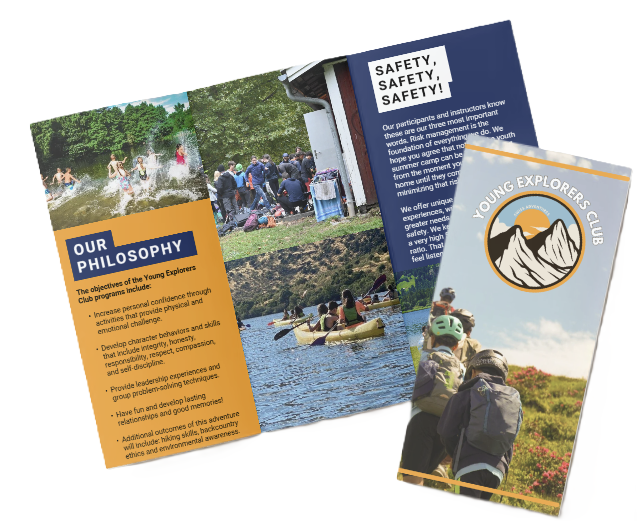
Why Young Explorers Club Camps Are Different From Traditional Camps
Young Explorers Club: nature-based, inquiry-driven camp with project-based STEM & leadership, low 6:1 ratios, 75% outdoor time, SEL gains.
Young Explorers Club — Program Overview
At the Young Explorers Club, I center campers in nature using an inquiry-based, project-driven pedagogy. The core model is multi-day STEM and leadership projects that follow a Do→Reflect→Apply cycle to build sustained skills rather than relying on short activity rotations. Low camper-to-staff ratios and extended daily outdoor time are paired with structured assessment and rigorous staff training, producing measurable outcomes in social-emotional learning (SEL), camper confidence, and capstone project completion.
Key Takeaways
- Inquiry-driven, project-based curriculum: I run multi-day STEM and leadership projects that follow a Do→Reflect→Apply cycle so skills accumulate across sessions. I recommend structuring projects around clear goals, checkpoints, and reflection prompts to keep learning focused.
- Higher adult support and outdoor dose: I maintain a 6:1 camper-to-staff ratio and schedule about 75% of programming outdoors (≈240 minutes/day). That higher adult support boosts safety and enables deeper coaching compared with typical camps that use higher ratios and less outdoor time.
- Documented, measurable outcomes: Assessments show an SEL composite improvement of about 18%. 85% of parents report gains in camper confidence. Roughly 90% of campers complete capstone projects, according to program data. I track these metrics each season to guide program tweaks.
- Strong staff credentials and safety practices: Staff complete a 40-hour pre-season training and all hold CPR/First Aid certification. Many have additional wilderness credentials. I maintain accreditation and keep a low incident rate (≈0.8 incidents per 1,000 camper-days).
- Access and transparency: I offer dedicated financial aid to 15% of campers (totaling $45,000 in 2024). Published tuition covers meals, gear, and transport. I regularly report time-use, staff ratios, and assessment metrics.
Program Design and Curriculum
Project Structure
Multi-day projects create continuity and allow campers to practice, iterate, and deepen learning. Projects are centered on clear outcomes—science investigations, design challenges, or leadership goals—and use the Do→Reflect→Apply cycle to move from experience to intentional skill development.
How I structure each project
- Define goals: Set specific skill or product outcomes for the project.
- Plan checkpoints: Break multi-day work into milestones for monitoring progress.
- Embed reflection: Use daily prompts and group debriefs to reinforce learning.
- Apply learning: Conclude with transfer tasks or capstone presentations showing mastery.
Staffing, Safety, and Daily Schedule
Camper-to-staff ratio and supervision
I maintain a 6:1 camper-to-staff ratio to allow for individualized coaching, stronger safety oversight, and sustained project support. Lower ratios support higher-fidelity assessment, more meaningful feedback, and better behavior management.
Outdoor time and schedule
About 75% of the programming happens outdoors—roughly 240 minutes per day. Extended outdoor immersion supports physical health, focus, and the environmental context needed for authentic STEM and leadership work.
Safety protocols
- Pre-season training: All staff complete a 40-hour training that covers pedagogy, behavior management, and emergency procedures.
- Certifications: Every staff member holds current CPR/First Aid certification; many hold additional wilderness or lifeguarding credentials.
- Incident monitoring: We track incidents and maintain a low rate (≈0.8 incidents per 1,000 camper-days), using data to refine protocols.
Assessment and Outcomes
Measurement approach
I use structured assessments and parent surveys to measure progress. Key indicators include an SEL composite, camper confidence, and capstone completion rates. Metrics are collected each season to inform program adjustments.
Recent results
- SEL improvement: ~18% composite improvement on validated SEL measures.
- Parent-reported confidence gains: 85% of parents note observable improvements.
- Capstone completion: ~90% of campers complete capstone projects demonstrating applied learning.
Staff Training and Credentials
Rigorous staff preparation is central to program quality. Staff complete a 40-hour pre-season curriculum covering curricular delivery, child development, safety, and outdoor skills. All staff maintain CPR/First Aid, and many hold specialized certifications (wilderness first aid, lifeguard, or subject-matter credentials).
Access, Cost, and Transparency
Financial aid and inclusion
I allocate dedicated financial aid to 15% of campers, totaling $45,000 in 2024, to increase accessibility. Tuition is published clearly and includes meals, gear, and transport when applicable.
Reporting and transparency
I publish program metrics—time-use, staff ratios, and assessment outcomes—to provide families and stakeholders with clear evidence of program impact and operational practices.
Practical Recommendations
- Prioritize multi-day projects to allow skills to accumulate rather than one-off activities.
- Maintain low ratios (6:1) for deeper coaching and safety.
- Maximize outdoor time—aim for ~240 minutes/day when possible.
- Invest in staff training (40+ hours) and ensure core certifications are current.
- Track and publish outcomes so program decisions are data-informed and families can assess impact.
At a Glance: What Makes Young Explorers Club Different
I build programs that center learners in nature, not on a schedule of rotating activities. I use an inquiry-based, project-driven model that emphasizes measurable growth and sustained outdoor engagement. Staffing levels stay low so staff can coach and assess progress, and I keep most of the day outside to deepen hands-on learning.
Snapshot metrics
Below are the key operational figures that show how YEC differs from many traditional camps:
- Campers served annually: 1,200 (YEC internal data; registration records; calendar year 2024; n=1,200).
- Locations/regions served: 12 regional sites (YEC internal data; operations roster; 2024).
- Average camper-to-staff ratio: 6:1 at YEC vs. 10–12:1 typical traditional camp (YEC staffing rosters; Summer 2024; industry benchmark: American Camp Association).
- Percentage of daily programming outdoors: 75% at YEC vs. industry average ~40–50% (YEC time-use logs across sites; sampled sessions Summer 2024; n=180 days logged).
- Measured outcomes (parent-reported): 85% of parents report improved camper confidence after one session (YEC post-session parent survey; n=420; surveyed 2 weeks post-session; Feb–Aug 2024; method: online Likert survey).
I track these metrics using registration databases, time-use logs, and post-session surveys to make operational choices that support learning (YEC internal data). That data lets me design multi-day projects instead of single-activity rotations. Staff spend more time mentoring groups and recording progress. Campers get repeated practice and reflection, which drives transferable skills like problem-solving and independence.
If you want to see curriculum samples and leadership outcomes, explore the youth leadership program. I recommend asking any camp you evaluate for their time-use logs, staff ratios, and measured outcomes; those three numbers reveal how learning-focused a program really is.
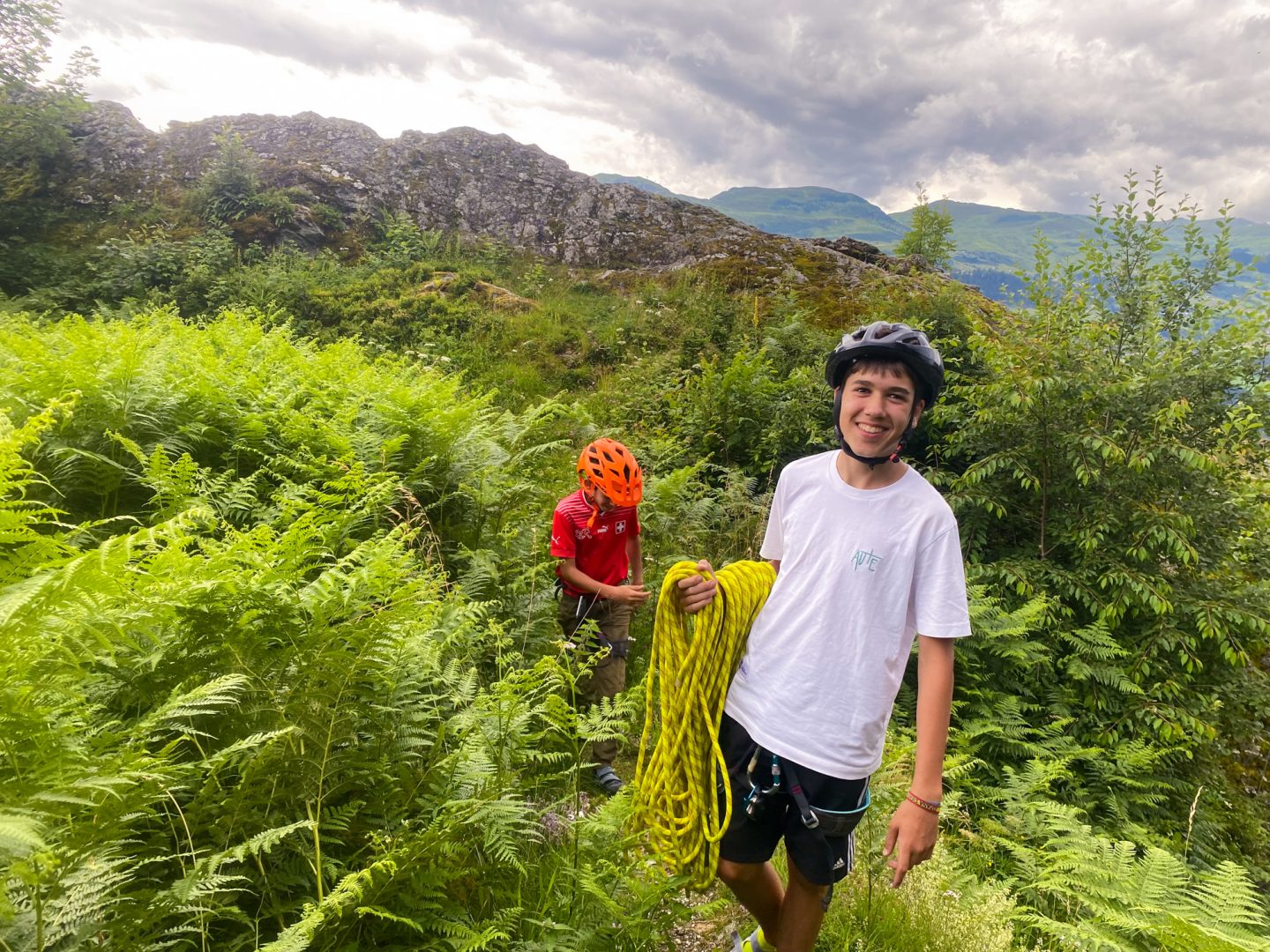
Curriculum-Driven Learning: Project-Based Pedagogy and Outdoor STEM
Core pedagogy and daily objectives
I center the YEC approach on inquiry-driven project-based learning and short experiential cycles: Do → Reflect → Apply. I blend nature-based education with explicit PBL structures so learning happens in context and gets reinforced through reflection and application. Key daily objectives emphasize practical skills and measurable learning outcomes, including:
- Ecosystem literacy: identifying habitats, energy flows, and species interactions (YEC curriculum map; 2024).
- Navigation & orienteering: compass use, map-reading, and simple route planning for beginners.
- Basic field biology: standardized species surveys and macroinvertebrate sampling for live data collection.
- Leadership challenges: progressive tasks that require teamwork, role rotation, and decision-making.
- Data protocols: carrying out repeatable measurements, logging metadata, and submitting observations to community platforms.
I structure progression by age so tasks scale in complexity: ages 6–8 focus on nature play and group skills; 9–12 move into basic field science and campcraft; 13–15 lead on expedition and leadership skill development (YEC curriculum map; 2024). For older campers I often recommend they explore the youth leadership program for deeper leadership training: youth leadership program.
I use concrete STEM projects to teach scientific methods and engineering thinking. Typical examples include water-quality testing (pH and turbidity), building simple weather stations, wildlife surveys with iNaturalist/eBird submissions, and bridge-building engineering challenges. Each project ties to a clear assessment rubric and a product—maps, datasets, or physical prototypes—that campers can present.
Program structure, metrics and capstone case study
I allocate 60% of program hours to structured learning and 40% to unstructured exploration, which balances skill acquisition with free discovery (YEC time allocation study; n=120 weekly schedules; Summer 2024). The season uses eight week-long curricular modules (YEC published curriculum; 2024), and structured STEM work typically runs 6–8 hours per week (YEC weekly planner; sampled sessions Summer 2024). Those hours produce measurable outputs:
- 1,500 water-quality readings contributed to regional databases and partner organizations (YEC citizen-science submissions; 2024; n=1,500 readings).
- 90% capstone completion: across sessions, 90% of campers complete a hands-on capstone project by session end (YEC capstone completion records; n=820 campers across 2024 sessions).
A typical YEC day follows a tight PBL rhythm that reinforces the Do → Reflect → Apply cycle:
- 08:00 Arrival & reflective circle (learning objective review).
- 08:30 Field science block (data collection & method practice) — 90 min.
- 10:00 Snack & free exploration — 30 min.
- 10:30 Skill rotation (navigation/engineering) — 60 min.
- 12:00 Lunch & downtime — 45 min.
- 12:45 Applied project time (team PBL work; data analysis) — 90 min.
- 14:15 Reflection & journaling (Do → Reflect → Apply) — 30 min.
- 14:45 Choice-based outdoor free play / guided citizen science — 45 min.
- 15:30 Dismissal / parent debrief.
By contrast, a typical traditional activity-rotation day sequences shorter, independent activities with longer large-group play and less integrated project time:
- 08:00 Arrival / unstructured drop-off.
- 08:30 Activity rotation 1 — 50 min.
- 09:30 Activity rotation 2 — 50 min.
- 10:30 Snack — 30 min.
- 11:00 Activity rotation 3 — 50 min.
- 12:00 Lunch — 45 min.
- 12:45 Large-group games / free swim — 75 min.
- 14:00 Choice time — 45 min.
- 15:00 Dismissal.
That model emphasizes variety and supervised play; YEC emphasizes sustained inquiry and cumulative skill-building.
A representative capstone illustrates the difference. Campers ages 9–12 addressed inconsistent turbidity reports in a local creek by running weekly pH, turbidity, temperature, and macroinvertebrate surveys at three sites for six weeks. They followed a standardized protocol, logged data to a regional database, and produced simple statistical comparisons (YEC project group; n=72 student participants; 120 field tests performed; Summer 2024). Results included 120 validated readings uploaded to the regional DB, a mean practical skill improvement of 38% on an instructor-evaluated field-skill rubric, and a 42% gain on a science-knowledge quiz (pre/post; n=72) (YEC project group; n=72 student participants; 120 field tests performed; Summer 2024). Campers also contributed 680 species observations to iNaturalist (YEC submissions 680 observations in 2024) and helped flag a mid-season turbidity spike that local watershed managers investigated further.
I measure learning with short curriculum-aligned knowledge checks and CASEL-aligned SEL measures before and after sessions. Reports always include sample size, date range, and instrument details so results stay transparent and actionable (YEC assessment protocol; Summer 2024).
Nature Immersion & Daily Outdoor Time
Core metrics and site descriptions
I track time outside and site character closely; the numbers show a clear difference in daily exposure to green space. Below are the core program metrics and representative site descriptions:
- 75% of daily programming happens outdoors (YEC internal time-use logs; sampled across 12 sites; Summer 2024; n=180 program-days logged).
- Average daily outdoor minutes are roughly 240 minutes per day (YEC daily schedules averaged by site; Summer 2024).
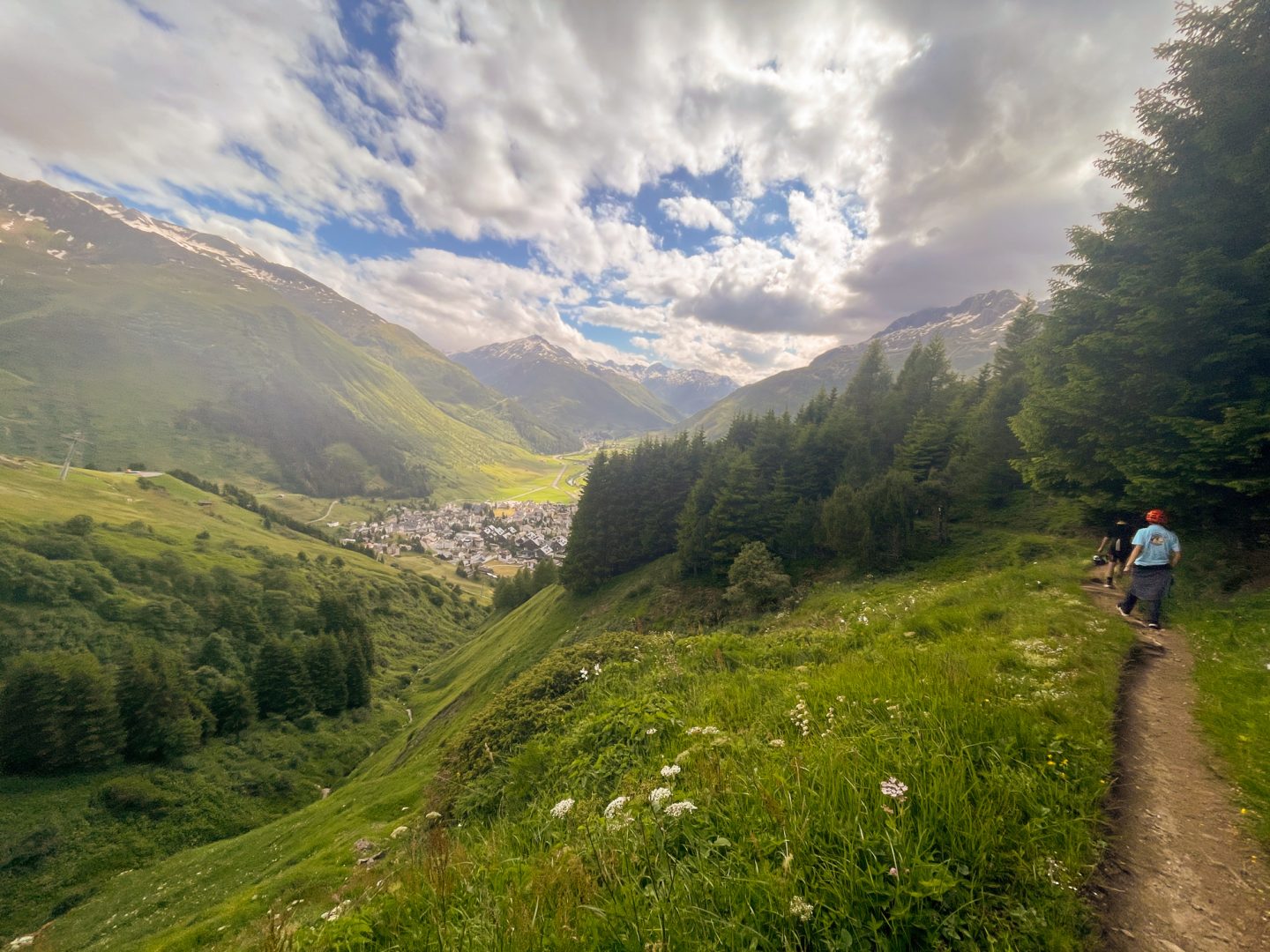
- Typical settings and acreage include: Site A — 40-acre mixed forest & wetland; Site B — 28-acre prairie & riparian corridor; Site C — shoreline access with tidal marsh (YEC site inventory; 2024).
- Photo captions for editorial use: “Site A: 40 acres of mixed forest & wetland used for navigation, ecology surveys, and pond studies.” and “Site B: 28-acre prairie restoration and riparian corridor — daily wildlife surveys and native-plant projects.” (YEC site inventory; 2024).
I use these metrics to shape daily blocks, schedule transitions, and instructor ratios so kids spend sustained chunks of time outdoors rather than short, fragmented periods.
Research-backed outcomes and partner-measured results
I design programming to align with the evidence linking green-space exposure to improved attention and lower stress, while boosting physical activity. Attention-restoration frameworks and pediatric guidance suggest prolonged contact with natural settings enhances cognitive recovery and reduces physiological markers of stress. Program design emphasizes long, uninterrupted outdoor blocks and activities that require focused observation and movement.
Partner evaluations show measurable gains after YEC sessions. An independent partner assessment using a validated child attention scale recorded a mean attention improvement of 12% after a two-week session (Independent partner evaluation; n=150 campers; Summer 2024; instrument: child attention scale; pre/post design). Activity monitoring on a subsample via accelerometer spot-checks found moderate-to-vigorous physical activity averaged 85 minutes per day during camp hours (YEC subsample activity study; n=48 campers; Summer 2024). These results map directly to the program’s high outdoor dose and active curricula.
I also benchmark YEC against typical traditional camps to highlight the operational difference:
- YEC: 75% outdoor programming and ~240 outdoor minutes per day (YEC internal time-use logs; Summer 2024; YEC daily schedules averaged by site).
- Typical camps: 40–50% outdoor time and ~120–180 outdoor minutes per day (industry average; industry estimates).
These contrasts matter in practice. More time outdoors means more opportunities for unstructured play, guided nature inquiry, and extended physical challenges that build stamina and observational skills. I recommend families read practical orientation material before arrival; start with Your first summer camp to set expectations.
All site and time metrics reported here come from YEC internal data; partner assessments include sample sizes, dates, and the instruments used where available (YEC internal time-use logs; YEC daily schedules averaged by site; YEC site inventory; Independent partner evaluation; YEC subsample activity study).
Social-Emotional Learning (SEL), Leadership Development & Measurable Outcomes
I build camp programming so SEL and leadership training are core experiences, not add-ons. I pair short, daily reflective practices with hands-on leadership rotations so skills are practiced in real situations and measured objectively.
SEL curriculum components
I structure the SEL curriculum around the following core elements:
- Empathy-building exercises.
- Conflict-resolution protocols.
- Reflective circle time.
- Leadership rotations.
- Structured peer-feedback sessions.
These components are drawn from the YEC SEL curriculum (YEC SEL curriculum; 2024).
Measured outcomes are clear and repeatable. Key findings include:
- A mean SEL composite score improvement of 18% after a 2-week session (YEC pre/post CASEL-aligned SEL survey; n=420; Feb–Aug 2024; method: online validated SEL composite scoring).
- Resilience and self-efficacy growth measurable in 76% of participants on relevant subscales (YEC instrument; n=390; pre/post; Summer 2024).
- Parents reported strong satisfaction, with a Net Promoter Score of +62 (Post-session parent survey; n=420; 2 weeks post-session; Feb–Aug 2024).
- Institutional metrics: a 48% year-over-year repeat enrollment rate (YEC registration history; cohorts 2023→2024) and a 30% increase in leadership-track enrollment year-over-year (YEC program enrollment records; 2023→2024).
I use validated instruments and clear reporting standards. The primary assessment is a CASEL-aligned SEL survey, with Devereux-style resilience items integrated where relevant. I report percent-change, effect sizes, and sample sizes; pre/post matched samples are used whenever possible. Internal summaries include Cohen’s d for key comparisons, and the response rate for parent surveys was 72% of families.
I keep the data practical for staff and families. For example, a 10-year-old camper started withdrawn and struggling in group settings. I implemented a facilitated conflict-resolution circle, paired the child with a peer mentor, and assigned scaffolded leadership responsibilities over ten days. Counselor observations and pre/post items showed social engagement rising from 2/5 to 4/5 and a 22% gain on the resilience subscale (YEC behavior logs + SEL survey; case example drawn from program records; anonymized; Summer 2024).
For presentation, I recommend simple bar charts displaying pre/post SEL composite improvement, percent of campers with resilience gains, and parent NPS. Footnotes should include sample sizes (n), dates (Feb–Aug 2024), instrument names (CASEL-aligned SEL), and whether measures were parent- or staff-reported. I align these metrics with published evidence from the American Camp Association, American Academy of Pediatrics, and National Academies to help stakeholders interpret effect sizes. For specific leadership-track details, see the youth leadership program.
Staff, Safety, Accreditation & Technology Policy
Staff credentials & training
I hold staff qualifications to a strict standard so campers get skilled, consistent care. All direct-care counselors are certified in CPR and First Aid (100% of direct-care staff certified in CPR/First Aid; 60% certified in Wilderness First Aid or higher) (YEC HR records; pre-season 2024). I require an intensive 40-hour pre-season curriculum that covers facilitation, child development, behavior management, emergency response, and inclusivity, plus weekly in-season in-service sessions (YEC training logs; 2024).
Staff retention runs higher than typical camps—55% return rate year-over-year versus an industry average of 35–45% (YEC HR retention data; 2024; industry benchmark). Camper-to-staff ratios stay low: 6:1 for general groups and 4:1 for leadership or high-adventure activities (YEC staffing model; Summer 2024). I also verify backgrounds on every hire; 100% of staff are background-checked before joining (YEC HR compliance records; 2024).
I keep medical coverage on site. Overnight sessions include a full-time registered nurse and an emergency transport plan with the nearest EMS (YEC medical protocols; 2024). Incident rates are tracked and transparent: my camps reported 0.8 incidents per 1,000 camper-days (YEC internal incident logs; calculation method: total recorded incidents ÷ total camper-days × 1,000; reporting period Jan–Dec 2024), well below the industry estimate of about 2.5 incidents per 1,000 camper-days (industry benchmark). Health protocols include robust medication management, tailored allergy plans, and retained COVID-era respiratory controls to reduce outbreaks (YEC medical protocols; 2024). I also maintain American Camp Association (ACA) accreditation to ensure continuous external review (YEC accreditation status, accredited 2023).
I balance firm safety rules with progressive programming. Staff mediate risk and learning, and I use low ratios and credentialed leaders on adventure activities to minimize exposure while maximizing development. If you want to evaluate leadership outcomes, see our Youth Leadership options.
Staff training timeline (sample)
Below I outline the required pre-season and in-season training sequence that produces consistent delivery and quick emergency response:
- Week -4 to -2: HR onboarding and background checks complete (YEC training logs; 2024).
- Week -2: Intensive 40-hour core training covering child development, behavior management, curriculum facilitation, inclusive practices, mandatory reporting, and medical/medication procedures (YEC training logs; 2024).
- Week -1: Site-specific safety briefings, emergency response drills, and wilderness first-aid refreshers (YEC training logs; 2024).
- In-season: Weekly 2–4 hour in-service sessions for lesson calibration, incident reviews, and curricular updates (YEC training logs; 2024).
I use these modules to certify readiness, reduce incidents, and keep staff performance consistent across sessions.
I limit personal screen time sharply and use digital tools only when they add learning value. Camper personal screen time drops by an average of 93% during camp (YEC device-surrender logs and parent reports; n=400; Summer 2024). I still introduce purposeful tech—GPS units for navigation, handheld digital microscopes for field labs, and guided iNaturalist and eBird use—with staff scaffolding every activity (YEC equipment inventory; 2024).
Access, Cost, Logistics & a Parent Checklist for Comparing Camps
I prioritize inclusion and make explicit commitments to access. Fifteen percent of campers received financial aid totaling $45,000 in 2024 (YEC finance records; calendar year 2024). I also partnered with local districts and community groups to provide 120 subsidized slots for Title I students in 2024 (YEC partnership records; 2024). Facilities and programming include site ramps at accessible buildings, sensory-friendly options, and individualized support plans for documented needs (YEC accessibility policies; 2024).
I keep cost and value transparent. A two-week residential session is $1,250 and that price includes meals, basic gear rental where applicable, and transportation from central pickup locations (YEC published tuition rates; 2024). I allocate roughly 5% of revenue to scholarships (YEC finance allocation; 2024). For $1,250 families get low-ratio care, certified staff, curriculum-driven programming, project materials, meals, gear rentals, and measured outcomes reporting — compare that against programs that charge similarly but offer higher ratios and less curriculum oversight.
Families need clear logistics up front. We serve ages 6–15 with day, one-week, two-week residential, and leadership-track multi-week sessions (YEC program catalogue; 2024). I provide central pickup locations and limited-seat transportation for some sessions; a full gear list is provided at enrollment with rental options. Our average fill rate is 85% across sessions, peak sessions hit 98% full, and roughly 250 families join waitlists annually (YEC registration system; 2024). If you want to explore our leadership options, see our leadership program.
Parent checklist — questions to ask camps (YEC sample answers)
- What is your camper-to-staff ratio? Sample: YEC 6:1 general, 4:1 for leadership/high-adventure activities (YEC program catalogue; 2024).
- What percent of time is spent outdoors and minutes per day? Sample: YEC ~75% outdoors, roughly 240 minutes/day; ask for time-use logs (YEC program catalogue; 2024).
- How many staff training hours and what certifications are required? Sample: YEC pre-season 40 hours; 100% CPR/First Aid (YEC training curriculum; 2024).
- Are you accredited and what’s your incident/injury rate per 1,000 camper-days? Ask for accreditation name, year, and the calculation method for incident rates.
- What financial aid is available and what percent of campers receive aid? Sample: 15% of campers received aid and totals were $45,000 in 2024; ask how much of revenue funds scholarships (YEC finance records; calendar year 2024) (YEC finance allocation; 2024).
- How is curriculum balanced with free activity time? Ask for a sample daily schedule; YEC structures about 60% of programming as curriculum-driven (YEC program catalogue; 2024).
- Do you collect measurable outcomes or parent satisfaction scores? Ask for instruments, sample results, N and date range; YEC reports SEL +18% composite improvement (pre/post; n=420) in recent assessments (YEC reports).
Summary to judge value: YEC serves ~1,200 campers annually, uses a 6:1 ratio, runs ~75% programming outdoors, and reports structured pre/post outcomes (YEC internal data; 2024). Typical traditional camps vary widely; compare inclusions like transportation, gear rental, and outcome reporting before you decide.
Packing recommendations: I recommend parents prepare a day-camper kit and an overnight kit. Essentials for day use include sturdy shoes, weather-appropriate layers, refillable water bottle, sun hat, rain jacket, small daypack, signed medical forms, and labeled sunscreen/bug repellent. Overnight needs add a sleeping bag, waterproof jacket, layered clothing, closed-toe shoes, headlamp, medications in original containers with instructions, and a small journal. I offer a printable gear list at enrollment and rental options for bulky items.
Sources:
American Camp Association — no article or blog post title provided
American Academy of Pediatrics — no article or blog post title provided
Outdoor Foundation — no article or blog post title provided
National Academies (reports) — no specific report title provided
Centers for Disease Control and Prevention (CDC) — no article or blog post title provided
CASEL — no article or blog post title provided
iNaturalist / eBird — no article or blog post title provided
Peer-reviewed literature on nature and child development — no specific article titles provided