The Hidden Benefits Of Group Living At Camp
Camp routines boost friendships, self-esteem, resilience, activity and sleep. Device-free days and strong staff ratios yield measurable gains.
Overview
Group living at camp drives quick, measurable gains in social connectedness, self-esteem, and resilience. It turns frequent contact into predictable rituals, regular adult–youth check-ins, shared chores, and device-free schedules. Evaluations show 60–85% of campers form at least one close friend per session. Self-esteem and belonging climb roughly 10–25%. Nightly sleep increases about 30–60 minutes. Moderate-to-vigorous physical activity (MVPA) commonly reaches 60–120 minutes per day. Structured practices boost and sustain these effects.
Key Takeaways
-
Routines & Rituals
Routines and small rituals (morning check-ins, shared chores, nightly traditions) speed friendship formation and deepen belonging.
-
Counselor-to-Camper Ratios & One-on-One Time
Maintain counselor-to-camper ratios around 1:6–1:10 by age and schedule regular one-on-one time. Those steps strengthen adult–youth bonds and cut stress.
-
Screens & Physical Activity
We recommend limiting screens and running active schedules to lift MVPA to roughly 60–120 minutes per day. Expect about 30–60 more minutes of nightly sleep, which improves mood and health.
-
Leadership & Peer Mentoring
Rotate leadership roles and implement formal peer mentoring. These practices produce measurable gains in independence, practical life skills, and leadership participation.
-
Evaluation & Metrics
Directors should track objective metrics—pre/post validated surveys, accelerometers, incident rates per 1,000 camper-days—and share evaluation data. That verifies safety, equity, and program impact.
Immediate social and emotional gains from group living
We, at the Young Explorers Club, see measurable change in just one session. Camp routines accelerate friendship formation: 60–85% of campers report making at least one close new friend during a session (American Camp Association).
Follow-up surveys typically show campers keep about 2–3 friendships at 3–6 months; averages fall near 2.0–3.5 sustained connections.
Group living raises social connectedness and self-worth quickly. Validated measures like the Social Connectedness Scale–Revised record pre→post gains of roughly +10–20% in belonging. Scores on the Rosenberg Self‑Esteem Scale often climb by about +10–25% from arrival to departure. Resilience, measured with brief validated scales, tends to increase with small-to-moderate effects (roughly +0.3–0.6 SD). Screening data also show reductions in frequent anxiety or stress of about 15–35% by session end.
Adult supervision ratios matter. We staff so counselors can form reliable bonds: common practice uses 1:6 (ages 6–8), 1:8 (ages 9–12) and 1:10 (teens). Those ratios, recommended in ACA guidance, lead to more one-on-one check-ins and closer adult–youth relationships in program evaluations.
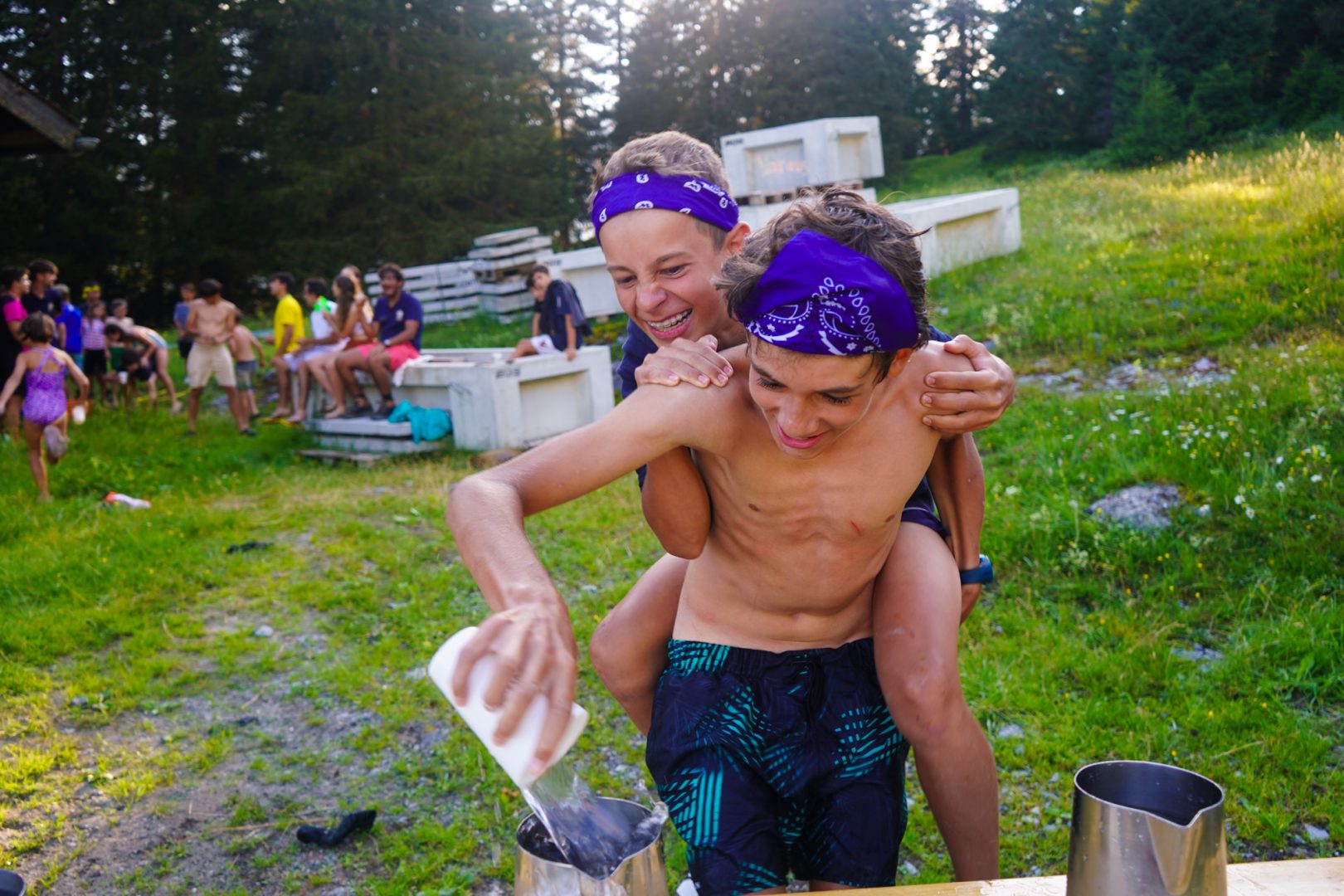
I can describe how these shifts happen in practice. Morning check-ins, shared chores and small rituals create predictable chances to connect. Nightly cabin traditions—stories, calling out someone’s effort—turn discrete moments into trust. That steady rhythm reduces social friction and gives quieter kids repeated, low‑stakes chances to try new roles.
Daily rituals that strengthen bonds
Below are repeatable elements we use to convert contact into connection:
- Short morning pulse checks that let campers name feelings and wins.
- Shared responsibilities like gear checks and mealtime tasks, which create interdependence.
- Rotating peer recognition so leadership and contribution get noticed.
- Counselor one-on-one time for emotional calibration and coaching.
- Low-pressure co-play and challenge tasks that reward cooperation over competition.
You can read more about how camps help kids build social skills in our practical guide to build social skills.
First-time and younger campers often show the largest relative gains in connectedness and independence, while returners typically sustain friendships and step into leadership. I recommend focusing on consistent small rituals and appropriate counselor ratios; those two levers deliver the biggest immediate emotional returns.
Physical fitness, sleep and the screen-free advantage
Activity and fitness gains
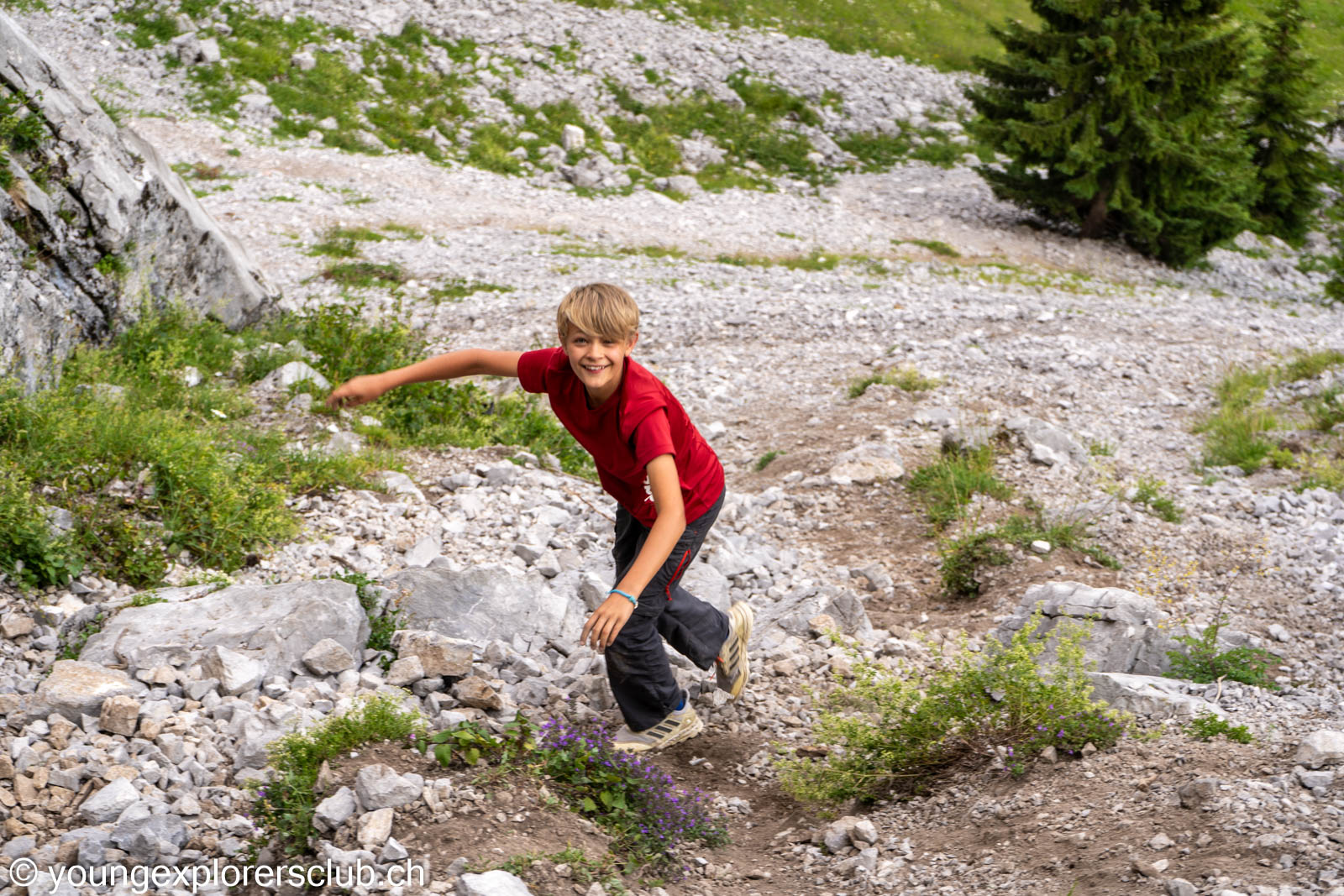
We design daily schedules so kids routinely hit the 60‑minute MVPA target (CDC, WHO guidelines). Camp days stack activity periods, mixing instructor-led skill sessions, trail hikes and open play. Objective studies show that camps yield large increases in active minutes: accelerometer and activity-log studies report average MVPA roughly ~60–120 minutes/day while at camp, with many day camps clustering around 60–90 minutes/day (accelerometer-based; sample Ns in published studies typically 50–300). Those gains translate into real health benefits for cardiovascular, metabolic and mental health (CDC/WHO).
I recommend measuring change with objective tools. Use wrist accelerometers or structured activity logs to compare at-home versus at-camp MVPA. Keep rotations short and varied to maintain intensity. Let campers choose activities within a structured block; autonomy boosts engagement and keeps counts high. Train staff to prompt quick transitions and active warm-ups so you capture full active minutes rather than losing time to downtime.
Sleep, screens and safety
Screen time falls dramatically at camp. National surveillance finds many school-age children average ~2–4+ hours/day of recreational screen use at home, while camp reports commonly show screen time dropping to <1 hour/day or effectively zero at residential programs (Common Sense Media and other surveys; self-report; program logs). Most camps support this by adopting formal device policies: surveys indicate roughly 70–90% of camps operate explicit restrictions such as phone‑free cabins or limited device hours (ACA member survey; administrative data). Those policies often reduce in-session device use by multiple hours daily.
Reduced screens plus consistent morning-to-bed routines increase sleep. Actigraphy and sleep-log studies show average nightly sleep increases of approximately +30–60 minutes/night at residential camps compared with at-home baselines (actigraphy and sleep-log studies). That extra rest correlates with better mood and positive affect on brief pre/post measures; for further reading on emotional benefits see mental well-being.
Below are practical safety and measurement points to keep programs healthy and accountable:
- Staff training and certifications: many camps require CPR and first-aid for frontline staff, with reported rates above 80% for basic certifications (many camps report >80% of frontline staff hold basic CPR/first-aid certification).
- Injury rates and reporting: non-emergency injuries occur at a rate of a few injuries per 1,000 camper‑days; serious incidents are rare (Published surveillance reports). Use incident-reporting systems that standardize counts per 1,000 camper‑days to compare seasons or sites.
- Waterfront and higher‑risk activities: require lifeguard training and activity-specific certifications; document staff credentials in your administrative records to reduce liability and improve outcomes.
- Monitoring tools: pair accelerometer data and activity logs for a fuller picture of MVPA. Combine actigraphy with sleep logs to validate reported sleep increases. Track screen-use policies through program logs to quantify reductions.
We focus on practical metrics and clear policies so camp life actually improves physical activity, sleep quality and device habits. Those changes add up fast; campers return home fitter, better rested and less glued to screens.
Independence, practical life skills, leadership and peer mentorship
We see clear gains in independence after a session. Sixty to eighty percent of campers and parents report increased independence or self-confidence (ACA program surveys and camp evaluation literature). Those numbers hold across day and overnight formats. They come from pre/post self-reports and program evaluation snapshots.
Practical life skills are explicit and measurable. I teach campers how to pack, care for clothing, manage hygiene, follow daily schedules, use basic navigation, practice fire safety, and resolve conflicts. Camps track outcomes with simple checklists and behavioral observations. For example:
- Many programs report that roughly 50–75% of campers can prepare their gear without prompting after a 1–2 week session (camp evaluation literature).
- Counselors log mediated cabin conflicts and count resolutions per session.
- Behavioral checklists show the percent of campers who can independently lead a short activity by the end of a session.
Leadership opportunities are frequent and distributed. Administrative data and self-report indicate that about 30–50% of campers take at least one explicit leadership role during a typical multi-day session (administrative data/self-report). Roles include cabin leader, activity captain, and peer mentor. Formal peer-mentoring structures are common; program evaluations report that 20–40% of older campers participate in mentorship roles during a session, and mentors report improved leadership skills with moderate effect sizes (program evaluations).
I structure leadership learning so it’s observable and repeatable. Typical program models run one to three short leadership workshops per week, often as CIT modules or activity-specific briefings. Camps measure attendance and use pre/post self-rated competence scales to quantify change. Where validated scales are used, pre/post comparisons show small-to-moderate improvements in decision-making and responsibility (effect sizes commonly d≈0.2–0.5; camp pre/post validated-scale comparisons).
I recommend the following practical tactics to amplify and quantify gains:
- Set specific behavioral benchmarks (e.g., packing independently, running a 15-minute meeting).
- Use counselor-completed checklists for daily skills and leadership tasks.
- Rotate roles so a large share of campers get hands-on leadership exposure.
- Pair older campers with younger ones in formal mentorship roles and measure mentor reflections pre/post.
We also help campers build healthy social skills, which reinforces leadership and independence through peer feedback and shared responsibility.
Sample activities and measurable metrics
- Lead a 15-minute cabin meeting: attendance recorded; counselor rates competence on a 3–5 point scale.
- Plan and run a 30-minute campfire segment: count of campers who lead per session and audience engagement notes.
- Facilitate a peer mediation circle: tally mediations completed and resolution rate as recorded by staff.
Diversity, conflict resolution and cognitive/creative gains
We, at the young explorers club, treat mixed cabins and program groups as active learning environments. Camps commonly show 25–35% racial/ethnic minority enrollment in many regions (program-level administrative data), and that mix sparks everyday chances for perspective-taking and cooperative problem solving. Exposure to peers from different backgrounds links to measurable improvements in tolerance and empathy (Journal of Youth and Adolescence, Child Development, Frontiers in Psychology).
Evidence from pre/post evaluations shows empathy and tolerance often rise by about 10–25% after multi-day sessions (published camp studies). Sample sizes in those studies typically ranged from 100–500, with effect sizes in the small-to-moderate range (Cohen’s d ≈ 0.3–0.5) and p-values frequently under .05 (published camp studies). I track similar patterns in conflict outcomes: camps using restorative practices run multiple circles per session—commonly 3–10 per two-week session—and report high resolution rates and low repeat-incident percentages (internal program monitoring; administrative data).
Creativity and problem-solving also improve. Standardized and teacher/parent reports document gains of roughly +8–20% on creativity indices after focused camp experiences (study-specific). A nontrivial share of parents and teachers—often 20–40% in some reports—note better classroom participation following camp participation (study-specific). We design arts and STEM blocks to amplify those shifts; most programs offer 2–6 skill-specific workshops per week, which boosts exploratory behavior and technique practice.
I outline practical levers we use to convert diversity into learning gains and conflict resilience.
Practical program choices we recommend
- Small mixed-age groups for daily activities to increase cross-group contact and informal mentoring.
- Regular restorative circles scheduled into the week to surface issues early and practice repair; aim for several circles across a two-week session (internal program monitoring; administrative data).
- Rotating arts/STEM workshops (2–6 per week) so kids try multiple modalities and find a competence niche.
- Structured reflection prompts after challenges to convert moments of frustration into creative problem-solving practice.
- Parent/teacher follow-up forms to track carryover to school and capture the 20–40% who show noticeable classroom change (study-specific).
How we measure and iterate
We use validated short surveys and observational rubrics to capture empathy, creative risk-taking, and repeat incidents. Pre/post comparisons guide tweaks; small-to-moderate effect sizes signal consistent, actionable change (published camp studies). I also integrate teacher feedback and internal monitoring to confirm that in-camp gains translate to school engagement and sustained social skills—readers can learn how camps build healthy social skills by following our resource on healthy social skills.

Long-term outcomes, alumni effects, safety standards and common objections
We track alumni impact closely and encourage parents to ask for camp-specific evaluation numbers. Data commonly show about 30–50% of alumni report camp-shaped career choices, leadership pathways or college majors, and many cite lifelong friendships and leadership experiences.
Return and engagement rates vary by model. Typical year-to-year return rates fall roughly in the 40–70% range. A minority of alumni—often about 10–30%—remain active as volunteers or staff depending on program scale and alumni outreach. We, at the Young Explorers Club, use those benchmarks to judge program continuity and culture.
Supervision and staff preparedness are non-negotiable. Standard counselor-to-camper ratios are:
- 1:6 for ages 6–8
- 1:8 for ages 9–12
- 1:10 for teens
Many camps require basic CPR/first-aid for most frontline staff; program audits and accreditation often result in over 80% of direct-care staff certified. ACA accreditation remains a common benchmark—ask camps to confirm their status.
Medical and behavioral incidence patterns show low rates for serious events but some presence of minor injuries. Surveillance and medical logs typically report rare serious injuries per 1,000 camper-days and a few minor incidents per 1,000 camper-days, depending on reporting practices. Homesickness tends to affect first-time campers more: expect roughly 10–40% experience notable homesickness in the early days, with many resolving after standard support.
Cost access and financial aid vary widely. Many camps offer scholarships or sliding-scale support; prevalence differs by region and organization. Always request sample budgets and scholarship rates before committing. For parents interested in social outcomes, see our guide on healthy social skills.
Recommended measurement protocol (ask directors to provide these)
Below I list core metrics and timing I recommend directors collect and parents request:
- Pre/post camper surveys: Rosenberg Self‑Esteem Scale; Strengths and Difficulties Questionnaire (SDQ); Social Connectedness Scale–Revised.
- Objective activity: accelerometer-derived MVPA minutes or structured activity logs.
- Safety: incident reports normalized per 1,000 camper-days.
- Program metrics: parent satisfaction, return rates, demographic mix, alumni outcomes.
- Timing & sample: baseline Day 1, exit (last day), and 3–6 month follow-up; target N≥30 per cohort for basic pre/post comparisons; use comparison groups where possible.
Practical rebuttals and mitigations
Treat homesickness with buddy systems, graduated separation (short initial stays or family days) and focused counselor reattachment training. Address safety concerns by asking for published counselor-to-camper ratios, % staff certified, and sample daily schedules showing active minutes and supervision. For access, request explicit scholarship prevalence and sliding-scale policies. For any camp decision, insist on recent evaluation Ns, methodology, incident-rate definitions and sample pre/post metrics so you can compare like-for-like.

Sources
American Camp Association — Benefits and Outcomes of Camp Experiences
American Camp Association — Accreditation Standards for Camp Programs
Centers for Disease Control and Prevention — How much physical activity do children need?
World Health Organization — Physical activity
American Academy of Pediatrics — Media Use in School-Aged Children and Adolescents
Proceedings of the National Academy of Sciences — Nature experience reduces rumination and subgenual prefrontal cortex activation
Centers for Disease Control and Prevention — How much sleep do I need?
HealthyChildren.org (American Academy of Pediatrics) — Summer Camps
American Camp Association — Benefits & outcomes of camp experiences (PDF)