
The complete family camp checklist: essentials for outdoor adventures
Pack smarter for your family adventure camp. This complete checklist covers shelter, safety, meals, and experiential activities for kids aged 8 to 17.
TL;DR:
- A customized, environment-specific checklist reduces stress and enhances safety during family camping trips.
- Key essentials include a larger tent, temperature-rated sleeping bags, and a layered clothing system.
- Involving kids in planning and packing builds ownership, confidence, and a deeper connection to outdoor activities.
Packing for a family adventure camp is one of those tasks that looks simple until you’re standing in your driveway at 6 a.m., wondering if you forgot the sleeping pads. For families heading into the mountains or wilderness with kids aged 8 to 17, the stakes are real: missing a key item can turn an exciting trip into a stressful ordeal. The right checklist does more than keep you organized. It reduces anxiety, boosts safety, and frees everyone up to actually enjoy the experience. This guide covers must-have gear, smart packing strategy, and how to get your kids meaningfully involved from the very start.
Table of Contents
- How to plan your family camp checklist
- The essentials: Shelter, sleeping, and clothing
- Safety and camp kitchen: Must-haves for adventurous families
- Experiential add-ons: Activities, learning, and involvement for kids
- Comparison table: Must-haves versus nice-to-haves
- What most family camp checklists miss: Our practical perspective
- Ready for your next outdoor adventure?
- Frequently asked questions
Key Takeaways
| Point | Details |
|---|---|
| Prioritize comfort | Choose a tent and sleeping gear that exceed your family’s size and temperature needs for restful nights outdoors. |
| Layer clothing | A three-layer clothing system keeps kids warm and dry no matter the weather. |
| Safety first | A well-stocked first aid kit, emergency signals, and proper hydration are non-negotiable for safe camping. |
| Get kids involved | Assigning tasks and providing hands-on activities deepens learning and fun for campers aged 8 to 17. |
| Essentials over extras | Focus on must-haves for safety and comfort—extras are nice but should never replace the basics. |
How to plan your family camp checklist
Building a solid family camp checklist is not about copying a generic list from the internet. It starts with understanding your specific trip: the terrain, the weather, how many nights you’re staying, and the ages and needs of every person going. A three-night summer camp in the Swiss Alps calls for very different gear than a weekend trip to a flat campground in the Midwest.
Start by matching your gear and clothing choices to the environment. Research expected nighttime temperatures, rainfall probability, and elevation. These factors directly affect what shelter, sleep system, and layers you need. Next, think about the age range in your group. Kids aged 8 to 12 need comfort and simplicity. Teens aged 13 to 17 can handle more responsibility and may want their own gear to manage.
Consider the camp’s goals, too. If experiential camp learning is part of the program, you’ll want to pack tools that support hands-on discovery, like field guides or journals. If the focus is physical adventure, prioritize durable, lightweight gear.
Here are the core categories every family checklist should cover:
- Shelter: Tent, footprint, stakes
- Sleep system: Sleeping bags, sleeping pads
- Safety: First aid kit, navigation tools, lighting
- Kitchen: Stove, cookware, food, water
- Clothing: Layered system for all conditions
- Learning and entertainment: Journals, games, activity tools
As recommended for family camping, prioritize larger tents, temperature-rated sleeping bags, and sleeping pads, and always test your gear at home before the trip.
Pro Tip: Do a backyard trial run the weekend before your trip. Set up the tent, cook a simple meal on the camp stove, and sleep outside. You’ll discover what’s missing and what’s unnecessary before it matters.
The essentials: Shelter, sleeping, and clothing
Once you understand the planning basics, you can focus on the big three essentials: shelter, sleeping, and clothing. These are the items that most directly affect your family’s comfort and safety, and they deserve the most attention.
Shelter: Always size up when choosing a tent. A family of four should look at a six-person tent. The extra space accommodates gear storage, reduces the feeling of being cramped, and gives kids room to move around during rainy days. Look for a tent with a solid rain fly and good ventilation.
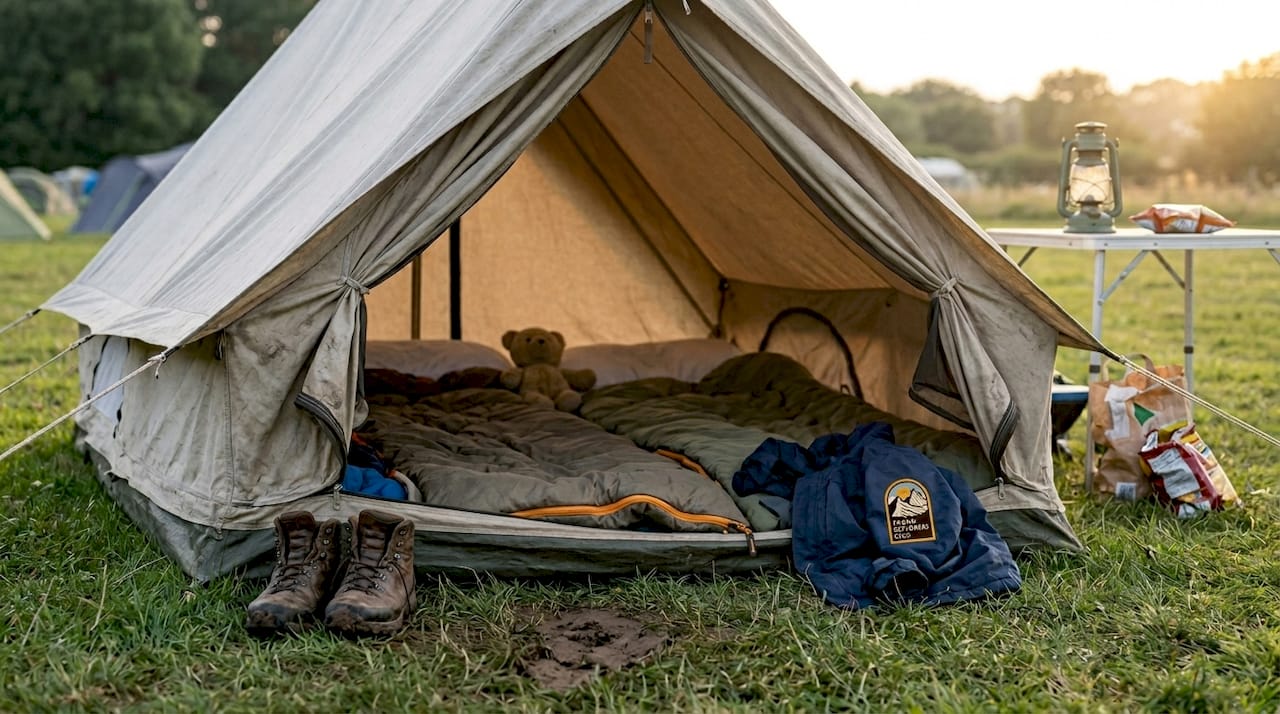
Sleeping system: Temperature-rated sleeping bags are non-negotiable. Choose bags rated at least 10°F below the lowest expected nighttime temperature. Pair each bag with a sleeping pad or air mattress. Sleeping directly on the ground pulls heat away from the body fast, especially for smaller kids.
Clothing: The layering system is your best friend in variable mountain or outdoor conditions. The three-layer approach works like this: a moisture-wicking base layer (wool or synthetic), a mid layer for warmth (fleece), and a waterproof outer shell. Avoid cotton entirely. It absorbs moisture and stays wet, which can cause chilling quickly.
| Item | Recommendation | Why it matters |
|---|---|---|
| Tent | Size up by 2 people | Space for gear and comfort |
| Sleeping bag | Rated 10°F below low temp | Prevents cold nights |
| Sleeping pad | One per person | Insulation from ground |
| Base layer | Wool or synthetic | Moisture management |
| Mid layer | Fleece jacket | Core warmth |
| Outer layer | Waterproof shell | Wind and rain protection |
| Socks | Multiple pairs, wool | Blister prevention |
Pro Tip: For kids who are new to camping, pack one or two comfort items from home, like a favorite pillow or a small stuffed animal. Familiar items help children sleep better and feel more secure in an unfamiliar setting.
Also pack a complete camp packing list for reference during your trip so nothing gets left behind at the site.
Safety and camp kitchen: Must-haves for adventurous families
With your essentials packed, safety and mealtime happiness become the next priorities. These two categories are closely linked: a well-fed, well-protected family is a happy one.
Safety essentials are not optional. Every family should carry:
- A family first aid kit that includes children’s medications, blister care, and any prescription items
- One headlamp per person, with fresh batteries
- A whistle for every child
- A multi-tool or Swiss Army knife
- Duct tape for gear repairs
- Navigation tools: a paper map, a compass, and a GPS device or offline maps on your phone
As safety experts note, every person in the group should have their own headlamp and whistle. These are not shared items. If someone gets separated or needs help in the dark, individual gear saves time and potentially lives.
Camp kitchen setup follows a simple sequence:
- Identify a flat, sheltered cooking area away from tents
- Set up your stove on a stable surface
- Organize food in bear-safe containers or hang bags if required
- Fill and filter water before cooking begins
- Assign one adult and one teen helper for each meal
For water, the standard recommendation is one gallon per person per day. That covers drinking, cooking, and basic hygiene. Bring a water filter or purification tablets as backup.
For meal planning at camp, keep it simple and hearty. Foil packet dinners are a camp classic: toss protein, vegetables, and seasoning into foil, seal it, and cook over coals. Kids love making their own packets, and cleanup is minimal.
Experiential add-ons: Activities, learning, and involvement for kids
Once the basics are squared away, the real magic of family camping comes through hands-on experiences and discovery. Gear gets you there, but experiences are what kids remember.
Assign daily tasks by age. This builds responsibility and keeps everyone engaged:
- Ages 8 to 10: Gathering kindling, setting out utensils, sorting snacks
- Ages 11 to 13: Setting up sleeping areas, helping filter water, washing dishes
- Ages 14 to 17: Cooking meals with supervision, reading the map, leading a short hike
As scouting resources suggest, assigning age-appropriate tasks and incorporating tools like field guides and nature journals transforms camping from passive to active learning. Pack a blank journal for each child and encourage them to sketch plants, record weather, or write about their day.
Building curiosity at camp is one of the most powerful things a family can do together. Simple science activities, like testing soil types or tracking animal prints, make the natural world feel alive and accessible.
Pro Tip: Design a nature scavenger hunt tailored to your location before you leave home. Include items like a feather, a rock with a pattern, evidence of an animal, and a plant with five leaves. Kids of all ages will stay engaged for hours.
“Skills first, gear simple.” This is the scout approach, and it works just as well for families. When kids know how to start a fire safely, read a trail marker, or purify water, they feel genuinely capable. That confidence carries far beyond the campsite.
For families interested in custom camp experiences, structured programs can build on these same principles with expert guidance.
Comparison table: Must-haves versus nice-to-haves
Even the best lists can end up overly long. Here’s how to quickly separate what’s critical from what’s just nice for your family adventure.
The consensus among camping experts is clear on core standards: one gallon of water per person per day, temperature-rated sleeping bags, and a full layering system for clothing. Everything else falls into the nice-to-have category.
| Category | Must-have | Nice-to-have |
|---|---|---|
| Shelter | Tent, rain fly, stakes | Footprint, tent fan |
| Sleep | Sleeping bag, sleeping pad | Pillow, eye mask |
| Safety | First aid kit, headlamp, whistle | Satellite communicator |
| Kitchen | Stove, cookware, water filter | Camp coffee press, spice kit |
| Water | 1 gallon/person/day | Flavored drink packets |
| Clothing | Base, mid, outer layers | Rain pants, gaiters |
| Activities | Field guide, journal | Board games, hammock |
| Extras | Duct tape, multi-tool | Solar lantern, camp chairs |
When weight or space is tight, cut from the nice-to-have column first. You will not miss the camp chairs. You will absolutely miss the headlamp.
This framework also helps when packing with teens. Let them make choices within the nice-to-have category. It gives them ownership without compromising safety or comfort.
What most family camp checklists miss: Our practical perspective
You’ve got the comparisons. Now here’s what even the most detailed online checklists nearly always miss.
First, emotional comfort items for first-time campers rarely appear on any list. A child who can’t sleep because they’re anxious or cold will affect the entire group’s experience. A small comfort item or a familiar bedtime routine packed into the trip plan matters more than a second lantern.
Second, no written checklist replaces a backyard trial run. When families actually sleep outside, cook a meal on the camp stove, and pack and unpack their bags, they discover real gaps. The air mattress that won’t inflate. The stove that needs a new igniter. The sleeping bag that smells like storage.
Third, and this is the one we feel most strongly about: let your kids help build the checklist. When a 10-year-old helps decide what snacks to pack or a 14-year-old researches what navigation tools to bring, they arrive at camp with a sense of ownership. That ownership turns into excitement, and excitement turns into resilience when things get hard.
Finally, ditching non-essentials is not deprivation. It is a gift. Kids with fewer gadgets and distractions at camp tend to engage more deeply with outdoor activities and youth development. Boredom at camp is often the beginning of creativity.
Ready for your next outdoor adventure?
With your checklist in hand and confidence growing, the next step is finding a community that values adventurous, growth-filled family outdoor experiences.
At Young Explorers Club Switzerland, we design programs that bring everything on this checklist to life, and then some. From structured survival skills to mountain biking and team challenges, our expert-led camps are built for kids and teens aged 8 to 17 who are ready to grow through real adventure. Explore our teen summer camps or ask about custom family camps tailored to your group’s goals. Your family’s most memorable summer is closer than you think.
Frequently asked questions
What should every family pack for a summer camp with kids ages 8 to 17?
Every family should bring a tent sized up from their group number, temperature-rated sleeping bags, a three-layer clothing system, a first aid kit, and activity tools like field guides or journals to support hands-on learning.
How much water should we bring on a family camping trip?
Plan on one gallon per person per day to cover drinking, cooking, and basic hygiene, and always bring a backup water filter or purification tablets.
What food is best for kids at camp?
Simple, hearty meals like foil-packet dinners and a solid supply of snacks are ideal because they’re easy to prepare, involve kids in cooking, and keep energy levels high throughout the day.
How can we get kids involved in the camping experience?
Assign age-appropriate camp tasks like gathering kindling, filtering water, or leading a short hike, and encourage each child to keep a nature journal to record their observations and discoveries.
Recommended
- What To Pack For Summer Camp In Switzerland: Ultimate Checklist | Young Explorers Club Switzerland
- The Ultimate Checklist For Preparing Your Child For Summer Camp | Young Explorers Club Switzerland
- Adventure Camp Activities List For Kids: 2026 Guide
- Camping With Kids In Switzerland: Campsite Guide | Young Explorers Club Switzerland
- Campingchecklista 2026: 40% färre misstag med smart packning