How Swiss Camps Foster Creative Problem-solving
Swiss camps use outdoor, multi-day design-thinking cycles to boost creative problem-solving, resilience and attention.
Overview
Swiss camps pair multi-day, nature-based challenges with structured design-thinking cycles. They push rapid idea generation, focused selection and testing, collaborative teamwork, calibrated risk and guided reflection. These cycles speed creative problem-solving and build transferable skills like resilience. Programs use alpine terrain, established youth organisations and short, repeatable measurements (cognitive tests and psychometrics). That mix yields measurable gains in attention, executive function, collaboration and practical problem-solving.
Key Takeaways
- Core pedagogy uses a repeatable cycle: divergent idea generation, convergent selection and testing, teamwork, risk-tolerance practice and structured reflection. It teaches design thinking and builds resilience.
- Context advantages: Switzerland’s geography, dense club networks and cultural acceptance of supervised multi-day trips let programs run repeated, scaffolded real-world challenges and fast feedback loops.
- Evidence: Research and program evaluations report short-term gains in attention, working memory and social outcomes. Camps use brief cognitive tests and standardized tools (e.g., TTCT, PSI, digit-span) along with observable metrics.
- Common formats include day camps, residential summer camps, hut expeditions and STEM sprints. Staffing guidance targets roughly 1:6 for younger children, about 1:8–1:12 for older cohorts, and tighter ratios (1:4–1:6) for high-risk modules.
- Activity design uses 60–120 minute blocks or 2–5 day iterative projects (propose–try–evaluate–adapt). Each activity pairs with at least one psychometric and one observable metric, such as iteration count, task completion or leadership instances.
Pedagogy and Cycle
The typical instructional cycle emphasizes both divergent and convergent thinking within a short feedback loop. Repeating this cycle across activities builds both cognitive skills and behavioral habits (e.g., reflection, risk calibration, teamwork).
Cycle steps
- Divergent idea generation: rapid brainstorming under time constraints to encourage novelty.
- Convergent selection: focused criteria-based selection of feasible options.
- Testing and iteration: build–test–refine loops, often low-fidelity and time-boxed.
- Risk-tolerance practice: supervised exposure to calibrated challenge to build confidence and decision-making under uncertainty.
- Structured reflection: guided debriefs linking process to outcomes and transferable heuristics.
Context and Logistics
Location and institutional structures shape what is feasible. Swiss programs leverage high-quality outdoor infrastructure and wide participation through clubs and schools to run repeatable, short-cycle interventions.
Formats
- Day camps: focused single-day design challenges and skill sessions.
- Residential summer camps: multi-day immersive tracks with progressive skill scaffolding.
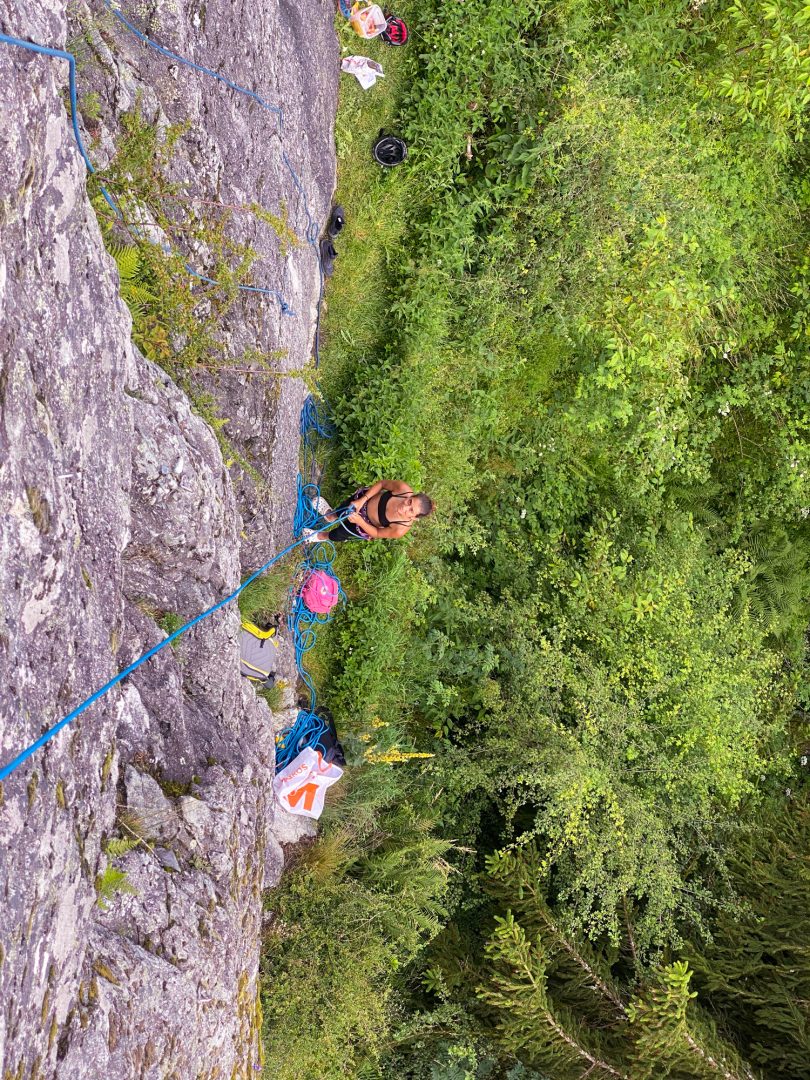
- Hut expeditions: small-team, high-autonomy projects in alpine settings.
- STEM sprints: concentrated, project-based experiments often paired with prototyping tools.
Staffing and safety
Recommended ratios balance support and autonomy and tighten for higher-risk activities. Typical guidance:
- Young children: ~1:6
- Older cohorts: ~1:8–1:12
- High-risk modules: ~1:4–1:6
Assessment and Outcomes
Programs combine brief psychometrics with observable behavioural metrics to produce actionable evaluation data within short timeframes.
Measurement approaches
- Cognitive tests: short, repeatable instruments (e.g., digit-span) to track attention and working memory.
- Standardized tools: creativity and problem-solving assessments like the TTCT or personality/skill indices such as the PSI.
- Observable metrics: iteration count, task completion rates, leadership instances, peer-feedback tallies and safety incident logs.
- Mixed methods: combine quantitative pre/post tests with structured observation and short qualitative reflections to capture learning processes.
Activity Design Guidance
Design activities to be time-boxed, measurable and repeatable. Pair each activity with at least one psychometric and one observable metric so facilitators can iterate program elements rapidly.
Timing and structure
- Short blocks: 60–120 minute sessions for focused skill practice and rapid iteration.
- Iterative projects: 2–5 day cycles for deeper experimentation: propose → try → evaluate → adapt.
- Metrics per activity: example pairings—iteration count + digit-span for cognitive load; task completion + peer-rated collaboration for social skills.
Practical Notes
To scale and maintain quality, programs should document standard operating procedures for safety, measurement protocols, staffing models and debrief templates. Emphasize repeatability so outcomes can be compared across cohorts and activities.
https://youtu.be/Hg6e28rzzfA
Definition & Opening claim
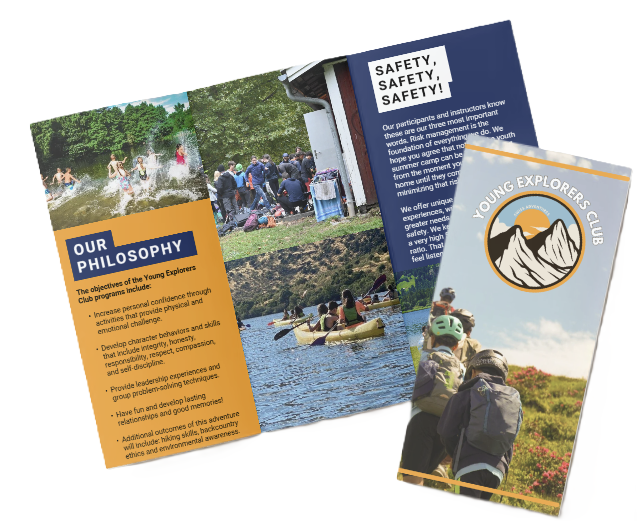
We, at the Young Explorers Club, define creative problem‑solving in youth settings as a repeatable cycle: idea generation (divergent thinking), focused selection and testing (convergent thinking), collaborative teamwork, a healthy appetite for manageable risk, and structured reflection. This blend produces practical solutions and builds transferable skills like resilience and design thinking. Camps that combine active outdoor tasks with guided reflection accelerate that learning.
The World Health Organization recommends 60 minutes of daily physical activity for children aged 5–17 (WHO). That guideline reinforces why outdoor education and experiential learning are core to our approach: movement and risk‑managed challenges sharpen attention, increase idea fluency, and create authentic feedback loops. Imitating a design sprint across a hike, a ropes element, and a debrief strengthens both cognition and social competence.
Switzerland’s terrain and camp culture multiply these effects. Alpine approaches, mountain bivouacs and multi‑day routes give repeated, scaffolded chances to propose, prototype and revise solutions. Nature‑based learning provides immediate consequences for choices, so teams test assumptions fast and adjust. We use those conditions to structure tasks that echo real design thinking cycles while remaining age‑appropriate.
Core components we emphasise
- Divergent thinking — Encourage rapid idea generation with low‑stakes prompts and timed sprints; I use sketching and role‑play to lower inhibition.
- Convergent thinking — Teach criteria for choosing ideas and run quick field tests so selection lands on feasible, safe options.
- Collaborative teamwork — Rotate roles, teach conflict rules and run peer feedback rounds so every child learns leadership and listening.
- Risk tolerance — Calibrate challenges to push comfort boundaries while keeping safety clear; incremental exposure builds confidence and resilience.
- Structured reflection — Debrief with guided questions and simple metrics so campers generalise lessons to new tasks.
I link these components with short cycles: propose, try, evaluate, adapt. That rhythm is easy to embed in a hike, a shelter‑building task, or a low‑cost engineering challenge. For more on how outdoor practice improves cognition and engagement, see our piece on outdoor learning.
Evidence and measurable impacts
We rely on a small but consistent body of evidence showing outdoor programs improve attention, executive function and social outcomes. Berman, Jonides & Kaplan (2008) found significant gains in working memory and attention after a nature walk compared with an urban walk; we reference that study for its experimental demonstration that short outdoor exposure can change cognitive performance. Rickinson et al. (2004) reviewed outdoor learning and reported consistent benefits for personal and social development and some evidence for improved academic motivation. Across adventure and outdoor education literature, reported effect sizes for self‑concept, interpersonal skills and problem‑solving typically fall in the small‑to‑moderate range (d ≈ 0.2–0.6). Public‑health guidance from WHO and Swiss health authorities aligns regular outdoor physical activity with mental‑health and cognitive benefits, supporting program‑level claims.
We translate these findings into practical evaluation choices and keep measurement brief, reliable and repeatable. Short‑term (immediate post) tests capture acute cognitive boosts. Follow‑ups at around three months help show retention and transfer to school or home settings. We embed hands‑on tasks such as engineering challenges to elicit real problem‑solving behaviour and pair them with standardized instruments so outcomes are interpretable across cohorts. For an example of activities we use, see our engineering challenges.
Recommended measures and reporting
Below are instruments and reporting rules we use to produce defensible, comparable results:
- Creativity: Torrance Tests of Creative Thinking (TTCT).
- Problem solving / group functioning: Problem‑Solving Inventory (PSI); TEAM scales; Group Environment Questionnaire.
- Executive function: digit span and standard working‑memory tasks (span and complex span variants).
- Reporting format: always give pre/post means ± SD with sample n; compute Cohen’s d and report measurement timing (immediate post, 3 months post).
- Headline metrics: percent improvement and Cohen’s d with labels (d ≈ 0.2 = small, 0.5 = moderate, ≥ 0.8 = large).
- Timing note: report exact follow‑up windows and any attrition rates so readers can judge robustness.
We recommend sample sizes that allow detection of small‑to‑moderate effects; where resources are constrained, prioritize repeated measures within participants and clear reporting of SDs and n. When presenting outcomes, we highlight both statistical and practical significance so camp directors, parents and funders can see real, measurable impacts.
Swiss context: scale, culture and structural advantages
We build programmes that lean on a unique Swiss mix: deep-rooted youth associations, immediate access to alpine terrain, and a cultural comfort with multi-day outdoor trips. Longstanding organisations — scouts, sports clubs and mountain guides — feed both leaders and norms into local camps. Official participation figures are tracked by the Swiss Federal Statistical Office (FSO), and programme counts and annual reach can be found with Swiss Scouting / Swiss Youth Hostels, which helps us benchmark scale and demand.
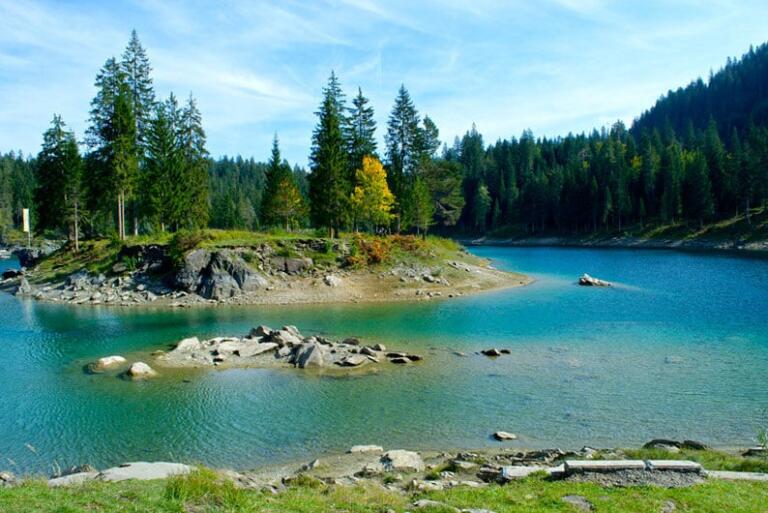
Geography acts like a natural curriculum. Short drives or public-transport hops take groups to lakes, trails and high-alpine classrooms. That proximity lets us run repeated, progressive challenges across days, which accelerates creative problem-solving. We shape activities to exploit outdoor learning, so kids iterate solutions against real-world constraints and receive quick feedback.
Culturally, families accept supervised risk and multi-day trips as developmentally valuable. That social acceptance lets us push complexity: multi-step engineering tasks on hut expeditions, group robotics sprints in residential camps, or language-immersion hikes with task-based prompts. National policy and local regulations support these formats, so we can maintain safety without flattening challenge.
Typical camp formats and staff-to-camper guidance
Below are common camp types and the staffing norms we use to keep challenge and care balanced:
- Day camps — flexible single-day programmes; staffing varies but often skews toward higher ratios for mixed-age groups.
- Residential summer camps — multi-day stays where routine supervision, mentorship and project continuity matter; typical staffing spans 1:8–1:12 for older campers.
- Mountain hut expeditions — high-supervision alpine trips that demand tighter oversight and specialist leaders; we adopt 1:6 or better for younger or less-experienced groups.
- STEM/robotics camps — workshop-style delivery with equipment and small-group troubleshooting; ideal ratios hover around 1:8 to keep technical coaching effective.
- Language camps — immersion settings where daily interaction doubles as instruction; we maintain lower ratios for younger children.
- Scout camps — tradition-driven programmes emphasizing leadership progression; staffing follows age-based recommendations.
We use the practical rule of thumb from Swiss practice: aim for 1:6 with younger children and 1:8–1:12 for older cohorts. That range preserves hands-on coaching while letting peer collaboration scale problem complexity. Staff skills matter as much as numbers: leaders with outdoor, pedagogical and technical experience let us run lower ratios more efficiently.
We also audit local site access, emergency response time and transport options before finalising group sizes. Those structural checks, combined with Switzerland’s dense network of clubs and huts, let us deliver high-impact creative problem-solving experiences at scale.
Pedagogies and activities that directly build creative problem‑solving
We, at the Young Explorers Club, pick pedagogies that produce observable gains in creative problem‑solving and real growth in campers’ confidence. I design activities so action leads to reflection, reflection leads to new ideas, and those ideas go back into action. I pair clear metrics with each activity so staff can track progress and tweak instruction fast.
Core approaches and activities
-
Experiential learning cycles — multi‑day shelter build. Campers run repeated build‑test cycles across 2–5 days. We count design iterations and use the TTCT for pre/post creative‑thinking shifts. Typical session blocks run 60–120 minutes; longer builds let iteration rates rise.
-
Challenge‑by‑choice with graduated risk — 2‑day high‑ropes module. We let campers choose engagement level, then increase challenge incrementally. We log peer leadership instances and use a simple PSI to capture shifts in risk tolerance. Staff ratios for high‑risk work stay at 1:4–1:6.
-
Team design projects — 3‑day raft building and engineered shelter work. Teams follow iterative design sprints, prototype, test, and improve. We administer pre/post self‑efficacy surveys and count iterations to measure teamwork gains and problem‑solving persistence.
-
Interdisciplinary STEM workshops — 1–3 day robotics challenge. We mix coding, sensors, and maker education tools so kids learn through doing. Success is tracked by task completion rates and peer role assessments. For full program details see our STEM camps overview.
-
Nature immersion and unstructured play — short forest sessions or extended environmental monitoring (3–7 days). We measure attention and executive function with pre/post digit‑span or brief working‑memory tasks after nature sessions. Free play time seeds divergent thinking and opens space for emergent problem solving.
-
Facilitation of reflection and debrief — journals and group processing after every major activity. Facilitators collect qualitative reflections and camper testimonials and triangulate those with quantitative tools (TTCT, PSI, TEAM) and observable metrics like time to consensus or iterations completed.
I recommend pairing each activity with at least two metrics: one psychometric (TTCT, PSI, TEAM) and one observable metric (iterations, leadership instances, task completion). Staff should plan sessions in 60–120 minute blocks, scale multi‑day projects to 2–5 days, and enforce 1:4–1:6 ratios on high‑risk modules.
https://youtu.be/9np4fAZwE5Y
Practical examples, tools and program designs used in Swiss camps
Activity bank with measurement notes
Below I list core activities and a one-line measurement suggestion for each.
- Raft/bridge building (low-tech): count design iterations, measure float/load success rate, log leadership counts per team.
- Shelter design (low-tech): track number of prototypes, time to waterproof, peer-rated safety score.
- Map-based treasure hunts: measure navigation accuracy, route efficiency, and number of collaborative decisions.
- Constrained cooking challenges: record number of recipe iterations, hygiene checkpoints passed, and leadership swaps.
- Arduino projects: log code commits and hardware iterations; measure sensor accuracy and task completion.
- Raspberry Pi environmental sensors: track sensor uptime, data points collected per day, and calibration cycles.
- LEGO Mindstorms robotics (1–3 day challenges): track number of design iterations, successful task completion rate, and peer assessment of roles.
- micro:bit quick builds: measure time-to-working-prototype and number of shared code blocks.
- Improvisation theatre prompts: count novel scene starts and peer-rated creativity scores.
- Story co-creation: measure contribution balance and number of divergent plot branches.
- Recycled-materials design challenges: count prototype versions, material reuse percentage, and functionality tests.
Tools, software, age guidance, assessment and procurement notes
At the Young Explorers Club, we pick tools for durability and learning value. Arduino Uno fits age 11+ with supervision; I recommend guided circuits and simple sensor tasks first. Raspberry Pi 4 suits environmental monitoring projects and supports image and data logging. LEGO Mindstorms/EV3 provides fast prototyping for robotics; keep challenges to 1–3 days for clear learning cycles. micro:bit works well from age 8+ for entry-level coding and physical computing.
We use software that lowers barriers and scales complexity: Scratch and Blockly for block coding, Tinkercad for 3D and circuit simulation, and MIT App Inventor for basic mobile interfaces. Tinkercad and Scratch let campers visualize ideas before they build.
For assessment, pair activities with standardized and group tools: Torrance Tests of Creative Thinking (TTCT) for divergent thinking, Productive Systems Inventory (PSI) for process measures, and the Group Environment Questionnaire to assess team dynamics. Use these alongside the in-session metrics listed above.
Procurement and program design notes I follow: pair a low-tech design phase with high-tech prototyping to control costs and boost inclusion. Schedule robotics as short sprints (1–3 days). Run environmental monitoring over 3–7 days for meaningful datasets. For longer maker tracks, combine micro:bit and Arduino ladders to scaffold skills.
Explore our practical robotics offerings for detailed session examples: robotics programs
Case studies, comparisons and story ideas to illustrate camp advantages
Suggested case studies
We suggest pursuing these case study profiles to show how camps foster creative problem‑solving:
-
Alpine scout camp — Multi‑day problem challenges in high alpine terrain. Small cohorts (12–20) or medium (20–60). Collect:
- cohort size
- staff qualifications (% with first‑aid / pedagogical training)
- program length (residential)
- pre/post tests (sample n)
- attendance / return rates
- incident rate per 1,000 camper‑days
- one camper quote
Example anecdote: a team rerouted a water filter using tent poles and an old pack strap; a camper later said, “We fixed the water and didn’t give up.”
- Urban maker camp (Zurich/Berne) — Blends coding, rapid prototyping and outdoor play. Day and week‑long formats fit local families. Track measurable outcomes such as a demo project success rate and executive‑function gains. These sites pair well with engineering curricula; we link to an example on engineering challenges for hands‑on inspiration: engineering challenges.
- Language project camp — Project‑based language tasks (planning a mini‑expedition, producing a showcase) that force iterative problem solving. Measure language output, collaboration scores, and return rates at 3–6 month follow‑up.
- Mountain hut expedition — Team decision‑making under limited resources. Ideal for measuring leadership emergence and resilience. Capture a vivid camper quote describing a creative choice under pressure.
Data template, comparative angles and storytelling
Use a consistent data template per case study to enable comparisons and meta‑analysis.
- Cohort size
- Staff qualifications (% with first‑aid / pedagogical training)
- Program length (day / week‑long / residential)
- Measurable outcomes (pre/post tests with sample n)
- Attendance / return rates
- Incident rate per 1,000 camper‑days
- One vivid anecdote or camper quote of a creative solution
- Timing of measurement (immediate post and, where possible, 3–6 month follow‑up)
For comparative analysis consider dosing, time outdoors and outcome timing. A typical camp week runs 35–56 hours of concentrated programming; compare that to Swiss school week hours (OECD/Swiss education statistics). Contrast hours outdoors per week in camps with the WHO recommendation of 60 minutes/day (WHO). Specify whether reported gains are immediate post or measured after 3–6 months.
Follow this storytelling template in every profile to keep narratives tight and comparable:
- Context — setting, cohort, baseline measures
- Challenge — the problem participants faced
- Process (iterations) — what teams tried, failed, adapted
- Outcome — quantitative measures + a camper quote illustrating the lived experience
- Takeaway — practical implication for camp design, policy or curriculum
Keep narratives tight and use quotes to humanize data. Emphasize concrete measures alongside the camper quote to show both effect size and lived experience. We’ll use these profiles to demonstrate how scout camp, maker camp and mountain hut formats each produce distinct creative problem‑solving pathways.
https://youtu.be/9np4fAZwE5Y
Sources
- World Health Organization — Physical activity
- Swiss Federal Statistical Office — Sport and physical activity
- Federal Office of Public Health (Switzerland) — Bewegung / Physical activity
- Swiss Guide and Scout Movement — Scouts Suisse / Guides Schweiz
- Swiss Youth Hostels (Hostelling International Switzerland) — Youthhostel.ch
- Berman, M. G., Jonides, J., & Kaplan, S. — The cognitive benefits of interacting with nature
- National Foundation for Educational Research (NFER) — A review of research on outdoor learning (Rickinson et al., 2004)
- Routledge — Outdoor Adventure Education: Foundations, Theory, and Research (Ewert & Sibthorp)
- Routledge — Adventure Therapy: Theory, Research, and Practice (Gass, Gillis & Russell)
- OECD — Education (data and country comparisons)
- Mind Garden — Problem‑Solving Inventory (PSI)
- Mind Garden — Group Environment Questionnaire (GEQ)
- ScienceDirect — Torrance Tests of Creative Thinking (TTCT)