Summer Camp In Switzerland: Answering Your Most Common Questions
Parents’ quick guide to summer camps in Switzerland: seasons, ages, prices, safety, packing, travel and booking tips.
Summer Camps in Switzerland — A Parent’s Guide
We’ve created this guide to answer parents’ top questions about summer camps in Switzerland. It summarizes camp seasons, typical ages, session lengths, price ranges, and regional activity options. The guide explains camp types, daily schedules, staffing and safety standards, travel logistics, packing tips, and booking and document requirements. Use it to compare programs and pick the right fit.
Key Takeaways
Quick summary of the most important points:
- Season and participants: Camps run mainly June–August for ages 7–17. Sessions usually last 1–4 weeks. One- to two-week sessions suit sampling or building confidence. Three weeks or more deliver measurable language or skill gains.
- Costs: Day camps run about CHF 150–600 per week. Residential camps usually cost CHF 800–1,800 per week. Elite programs start around CHF 1,800 and can exceed CHF 4,000 per week. Swiss residential options often cost roughly 20–50% more than many European alternatives.
- Safety and staffing: Typical staff-to-camper ratios range from 1:5 to 1:12, with lower ratios for younger children and higher-risk activities. Instructors hold relevant certifications plus first-aid and lifeguard training. Keep emergency numbers handy: 144 (medical), 118 (fire), 112 (general).
- Locations and logistics: Choose regions by activity—Bernese Oberland for mountains, Valais for alpine sports, Lake Geneva for water activities, Ticino for Italian-speaking camps, Central Switzerland for mixed programs. Most camps are reachable by train and provide supervised transfers. Reserve transfers early.
- Booking and documents: Expect 10–50% deposits, often non-refundable, with final payment due 4–8 weeks before start. Carry a passport valid at least three months beyond the stay, any required visas, and travel insurance (Schengen typically requires €30,000 medical coverage). Bring signed parental consent for unaccompanied minors.
Camp Seasons, Ages & Session Lengths
Season
Peak season is June–August, with most programs concentrated in July and August. Some language or specialty camps may offer shorter spring or autumn sessions.
Ages
Most camps accept children aged 7–17, though younger mini-camps (5–7) and older teen leadership programs exist. Check each program’s age group and any mixed-age activities.
Session lengths
Common session lengths are 1, 2, 3, or 4 weeks. Choose 1–2 weeks for sampling or confidence-building; choose 3+ weeks for real language acquisition or skill improvement.
Costs
Price ranges vary by type, location, and inclusions:
- Day camps: ~CHF 150–600/week depending on activities and length of day.
- Residential camps: ~CHF 800–1,800/week for typical programs including meals and activities.
- Elite or specialist programs: start at ~CHF 1,800/week and can exceed CHF 4,000/week.
- Compare inclusions: transport, insurance, excursions, equipment rental, and language tuition can affect price significantly.
Types of Camps
- Day camps — local activities, no overnight stay.
- Residential camps — boarding, full program and supervision 24/7.
- Language immersion — classes plus cultural activities.
- Sports and adventure — hiking, climbing, skiing, watersports depending on region.
- Specialty camps — arts, STEM, robotics, performing arts, equestrian, sailing, etc.
- Elite academies — high-performance training with specialized coaching and smaller groups.
Daily Schedule & Activities
A typical day balances structured instruction, free play, meals, and rest. Example schedule:
- Morning: arrival, warm-up, instructional sessions or classes.
- Midday: group activities, supervised lunch, rest.
- Afternoon: skills sessions, excursions, team games.
- Evening: dinner, campfire or social activities, quiet time.
Specialized activities (mountain sports, watersports, language labs) follow extra safety checks and appropriate instructor-to-participant ratios.
Staffing & Safety Standards
Key safety points to check before booking:
- Ratios: typical 1:5–1:12 depending on age and activity.
- Certifications: staff should have relevant qualifications, first-aid training, and lifeguard certificates where applicable.
- Emergency contacts: keep 144 (medical), 118 (fire), 112 (general) handy.
- Medical protocols: ask about on-site medical staff, medication handling, and allergy procedures.
- Safeguarding: background checks, child protection policies, and clear supervision rules are essential.
Locations & Travel Logistics
Choose a region based on your child’s interests:
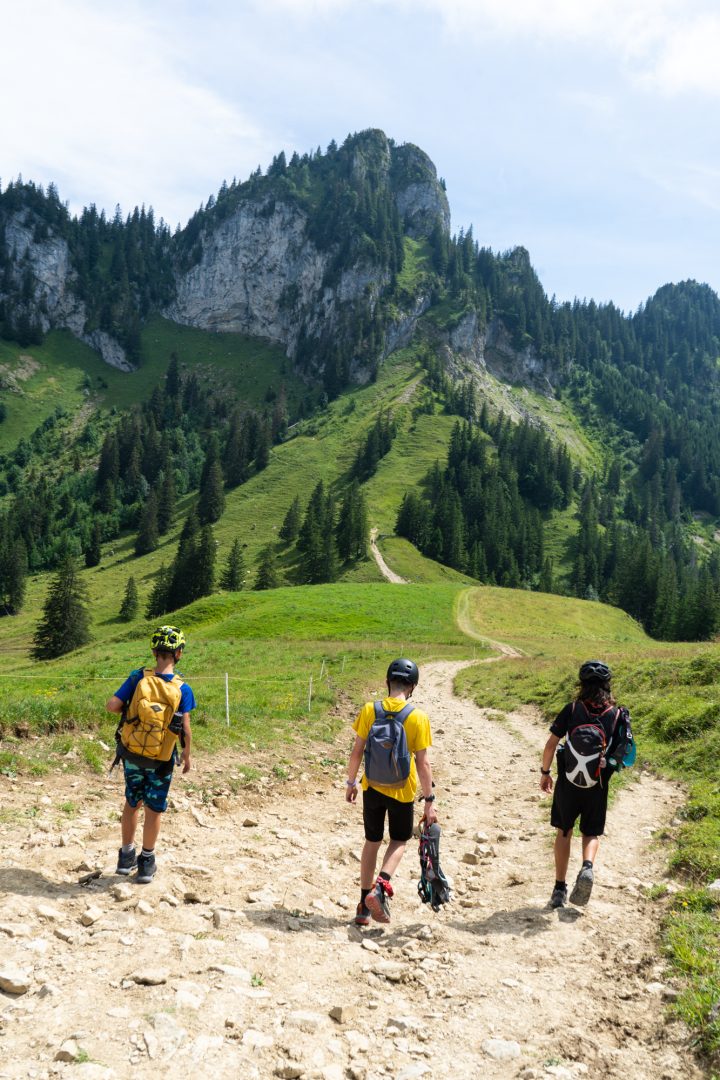
- Bernese Oberland: mountain activities, hiking, climbing.
- Valais: alpine sports, higher-altitude training.
- Lake Geneva: watersports and bilingual programs.
- Ticino: Italian-language camps and milder climate.
- Central Switzerland: mixed programs and easy rail access.
Most camps are reachable by train and offer supervised transfers from major stations or airports—book transfers early as capacity can be limited.
Packing Tips
- Documents: passport valid at least three months beyond the stay, visas if required, photocopies of documents, and signed parental consent for unaccompanied minors.
- Clothing: layered clothing for variable mountain weather, waterproof jacket, sturdy shoes.
- Gear: sport-specific items if required (check with the camp for what’s provided).
- Health: prescription medications in original packaging with instructions, basic first-aid kit, sunscreen.
- Extras: refillable water bottle, small daypack, backup contact details, and a list of allergies/medical needs.
Booking & Document Requirements
Financial and paperwork checklist:
- Deposit: expect 10–50% deposits, often non-refundable.
- Final payment: usually due 4–8 weeks before program start.
- Passport & visas: passport valid at least three months beyond the stay and any required visas.
- Insurance: travel and medical insurance is required—Schengen typically requires €30,000 medical coverage for visa purposes.
- Consent forms: signed parental consent and any medical authorization forms for minors travelling alone.
How to Choose the Right Camp
- Match interests: pick camps aligned with your child’s interests (language, sport, arts).
- Check age groups: ensure activities and peer groups match your child’s developmental level.
- Compare session lengths: shorter stays for sampling; longer for skill or language gains.
- Review safety and staff credentials: ask about ratios, certifications, and safeguarding policies.
- Budget and inclusions: compare what’s included (meals, transfers, equipment, excursions).
- Logistics and travel: confirm transfer options, train accessibility, and arrival/departure requirements.
- Read reviews and ask questions: speak directly with camp directors about medical, dietary, and emergency protocols.
Use this guide to compare programs and pick the right fit for your child. If you’d like, tell me your child’s age, interests, and preferred region and I can suggest specific camp types or checklist questions to ask providers.
Quick essentials — fast facts every parent needs first
We, at the young explorers club, give short, practical facts so you can decide fast. Read the bullets below, then check the packing link for gear and layers.
At-a-glance facts
- Main months: June–August.
- Typical ages: 7–17 (most programs aim at that range).
- Session lengths: 1–4 weeks are common; some run 6–8+ weeks.
-
Price ranges:
- Day camps: CHF 150–600 per week.
- Residential camps: CHF 800–1,800 per week.
- Elite programs: CHF 1,800–4,000+ per week.
- Altitude examples: base camps often sit between 400 m and 1,800 m; many excursions reach above 2,000 m.
- Weather note: lake-side camps are noticeably warmer. Alpine camps need warmer gear and you can still find snow patches above ~2,000 m in summer.
- Safety and environment: Switzerland is widely regarded as a safe, multilingual, outdoors-focused destination for youth programs.
- Languages spoken (population share): German 62.6%, French 22.9%, Italian 8.2%, Romansh 0.5% (FSO).
- Emergency numbers to save on your phone: 144 (medical), 118 (fire), 112 (general).
Recommendation: Match camp type to your child’s comfort with altitude and weather. Pick lake camps for milder temperatures and alpine camps for mountain skills and cooler nights. Bring layers for alpine days and waterproofs for sudden showers.
For a concise gear list, see our packing checklist. It highlights insulation for high-altitude days, sun protection for lakes, and what to label for communal living.
If you want a deeper comparison of camps by cost, length, or language, ask and I’ll lay out options that fit your priorities.

Who attends, expected outcomes and how group/session choices matter
We, at the young explorers club, run programs for children and teens aged 7–17. Our groups are split so campers mix with peers at similar developmental stages. That keeps activities age-appropriate and learning realistic.
Typical cohorts, group sizes and staffing
Here’s a quick breakdown of common structures you’ll see:
- Age bands: 7–10, 11–13, 14–17. Each band has different activity intensity and supervision needs.
- Group sizes: most camps host between 40 and 200 campers; smaller camps often range from 10 to 60. Smaller groups suit focused skills or family-style experiences.
- Staff ratios: expect roughly 1:5–1:12 staff-to-camper. Ratios trend lower for younger children or when high-risk activities (climbing, water sports) are involved.
- Instructor qualifications: for high-risk or specialized sessions I require instructors with relevant certifications and first-aid training. For younger cohorts I prioritize staff with child-care experience and lower ratios.
These elements combine to shape safety, daily rhythm and the type of social experience your child will have.
Session lengths, outcomes and how choices change results
Short sessions of 1–2 weeks are excellent for confidence building and initial exposure. Campers get to try new activities, make friends quickly and decide what they enjoy. Noticeable confidence gains often appear within this timeframe for language camps.
For measurable language or skill progress I recommend sessions of 3+ weeks. Real improvement in fluency, technical skills or leadership requires repeated practice and time for learning curves.
Choose session length based on goals:
- If your priority is confidence, sampling or easing a child into sleepaway camp: pick 1–2 weeks.
- If your priority is measurable language gains or technical skill development: choose 3 weeks or longer.
Supervision and activity choice matter. Younger cohorts and high-risk activities need lower staff-to-camper ratios and targeted instructor qualifications. I adjust staffing, schedules and safety briefings to match the activity risk profile. That reduces incidents and increases learning time.
Practical advice I give parents:
- Match age band to social goals, not just birth year. Some children thrive with slightly older peers if they seek challenge.
- Opt for smaller group sizes for intensive skill work or a quieter social environment.
- Ask about exact staff ratios for the specific activities your child will do, not only the camp-wide average.
- Consider a short session first if your child has never been away from home; upgrade to a longer session if they respond well.
If you need help selecting which camp and session length fit your goals, use our guide to choose the best camp.
Types of camps, typical daily schedules and sample week
Camp types and language programmes
We offer a clear breakdown so parents and kids can pick what fits best.
- Residential camps: keep children on-site for several days; they’re ideal for independence and full immersion in activities.
- Day camps: suit families who want daily drop-off and a local routine.
- Language immersion camps: run entirely in the target language; campers live and socialize in that language.
- Blended programmes: mix formal lessons with activity-based practice.
- Elective lessons: let campers pick targeted classes—useful for intermediate learners.
- Sports camps: focus on single-sport skill development or multi-sport rotations.
- STEAM and academic camps: combine hands-on science, tech and problem-solving workshops.
- Arts camps: emphasise visual and performing arts.
- Adventure camps: prioritise outdoor skills, multi-day treks and technical activities.
We teach German, French, Italian and Romansh across language options, and we adapt levels from beginner to advanced. If you need help deciding, see choose a camp for quick guidance. We, at the Young Explorers Club, design programs so language growth happens inside fun, structured days.
Typical day, common activities, safety and a sample week
The typical daily flow follows a reliable pattern: breakfast → morning lessons or skills workshops → midday lunch → afternoon sports or adventure → free time → dinner → evening programme.
Common activities and the sample week are listed next:
-
Popular activities:
- Hiking
- Climbing
- Mountain biking
- Watersports (kayaking, paddleboarding)
- Ropes courses and via ferrata
- Orienteering
- Arts & drama
- Leadership training
We rotate activities so campers learn new skills while building confidence.
-
Safety essentials we enforce:
- Helmets and appropriate protective gear.
- Certified guides for technical outings.
- Age-appropriate programming and reduced staff-to-camper ratios for higher-risk activities.
- Instructors meet national mountain guide standards where applicable and carry current first-aid certifications.
- We maintain clear emergency procedures and daily check-ins.
-
Sample 1-week mid-range multiactivity agenda:
- Day 1: Arrival, orientation, gear check, light introductory hike.
- Day 2: Morning language lessons, afternoon climbing session with certified instructors.
- Day 3: Full-day excursion to a lake or glacier valley with guided learning and packed lunch.
- Day 4: Morning language lessons, afternoon mountain biking on graded trails.
- Day 5: Leadership workshop in the morning followed by a team challenge in the afternoon.
- Day 6: Morning free time and skills clinics, watersports session in the afternoon.
- Day 7: Wrap-up activities, awards, departure.
We recommend parents check specific activity schedules and safety briefings for each camp session. Staff ratios, kit lists and instructor credentials are always available before booking.
https://youtu.be/5n7h0J-X1WI
Costs, fees, booking, deposits, cancellations and budgeting examples
We, at the Young Explorers Club, lay out what you’ll pay and how payments work. Prices vary by program type and service level. Expect Day camps from CHF 150–600 per week, standard residential programs around CHF 800–1,800 per week, and elite options from CHF 1,800 to CHF 4,000+ per week.
I explain the currency and billing practices. Most Swiss camps bill in CHF. Some providers will accept EUR, GBP or USD, but exchange fees and invoice terms can change the final cost. We always recommend checking the billing currency before you commit.
What’s included, excluded and how bookings flow
Below are the typical items you’ll find and the booking steps you’ll follow:
- Typical inclusions: tuition, accommodation, most meals, daily activities and some excursions.
- Typical exclusions: travel to and from camp, travel insurance, special equipment rental, and certain premium excursions.
-
Booking mechanics:
- Application
- Deposit (commonly 10–50%)
- Final payment typically due 4–8 weeks before start
Check the registration timeline for precise deadlines.
- Deposits and cancellations: many camps keep deposits as non-refundable. We advise buying travel insurance that includes trip cancellation and medical cover.
- Discounts: look for early‑bird, sibling and returning camper reductions; these can shave off a meaningful chunk.
I give practical budgeting examples so you can compare options quickly. Use the sample scenarios below as templates you can adapt with real flight and transfer costs.
Sample budget scenario (2 weeks)
- Standard residential: 2 × CHF 1,200 = CHF 2,400 + return flights CHF X + transfers CHF Y + insurance CHF Z
- Elite program: 2 × CHF 3,000 = CHF 6,000 + return flights CHF X + transfers CHF Y + insurance CHF Z
I flag a regional cost comparison. Swiss residential camps usually command a premium versus many other European options — expect roughly 20–50% higher fees on average. Always confirm details directly with providers before booking.
I recommend these practical steps when planning payment and cancellations:
- Reserve early to lock in early‑bird discounts and preferred dates.
- Keep copies of invoices and deposit receipts.
- Read cancellation terms line by line; note any non‑refundable amounts and deadlines.
- Buy a policy that covers trip cancellation, medical emergencies and any sport‑related activities your child will do.
https://youtu.be/MR55ll62dqs
Locations, travel logistics, accommodation and food
We, at the Young Explorers Club, place camps in regions that match the main activities kids want to try. The Bernese Oberland (Interlaken, Lauterbrunnen) delivers hiking, canyoning and alpine-lake days. Valais (Verbier, Zermatt) focuses on glacier hikes and mountain biking. The Lake Geneva region (Montreux, Vevey) balances watersports with culture. Ticino (Lugano) brings Mediterranean-influenced lake activities and milder weather. Central Switzerland (Lucerne, Engelberg) suits ropes courses and easy day trips.
Travel times are short by Swiss standards and predictable: Swiss public transport runs frequently and reliably. Typical connections include:
- Zurich–Interlaken ≈ 2 h
- Geneva–Zermatt ≈ 3.5–4 h (via Visp)
- Zurich–Lugano ≈ 2.5–3 h
Most camps are reachable by train and bus, and they publish recommended arrival stations and transfer options. We often provide meet-and-greet or supervised transfer choices from major stations; compare easier access (short transfer times) with a more remote wilderness feel when deciding which program fits your child. For help on picking a program that matches access and activities, see our guide to choose the best camp.
Accommodation and meals
- Dorms (2–6 campers) for social groups and younger campers.
- Cabins that offer a campy, small-group vibe for older kids.
- Hotel-style facilities with private rooms or en-suite options for families who want added comfort.
- Meals: three meals per day plus snacks; menus usually rotate each day to keep energy levels up.
- Dietary accommodations: vegetarian, vegan, halal, kosher and allergy-aware menus are available when we get advance notice.
- Tap water: potable across Switzerland, so refill bottles at your accommodation.
Arrival and practical travel tips
We recommend booking travel that arrives within the camp’s stated arrival window to avoid long waits. Supervised transfers are convenient for families unfamiliar with Swiss stations; reserve these early since spaces can fill. Expect transfer fees occasionally; check what’s included in the camp fee. Pack layers and good walking shoes—mountain weather can change fast even on short trips. If you’re preparing a travel plan, our checklist on what to pack will speed decision-making. Make sure medical and dietary information is complete on registration forms so we can meet special needs from day one.

Safety, medical care, staff qualifications, visas and travel documents
We treat safety as non-negotiable and keep emergency information highly visible. Call 144 for medical emergencies, 118 for fire, and 112 for general emergencies.
We keep trained first-aiders and complete first-aid kits on site, and we maintain formal links with nearby clinics and hospitals because Swiss health care is excellent. For parents who want more detail on daily health procedures and on-site treatment, see our medical care page. We also carry clear protocols for common issues like allergic reactions and dehydration, and we log every incident.
We staff camps with a mix of local Swiss and international counsellors. Most camps require first-aid certification, lifeguard certification for aquatic programs, and specialist instructor credentials for activities such as climbing or mountain biking. We run background checks and collect references on every staff member. We expect staff to follow strict safeguarding procedures and to report concerns immediately.
We follow recommended staff-to-child ratios and adjust them for age and activity risk. Typical ratios run from about 1:5 to 1:12; we lower that number for young children and for high-risk sessions like ropes courses or open-water swims. We also assign float staff for peak activities and overnight supervision.
We expect routine vaccinations to be up-to-date before arrival, and we advise parents to check each camp’s COVID-19 policies before booking. Passport validity should extend at least three months beyond the planned departure date. If a Schengen visa is required, applicants will commonly need travel insurance with a minimum medical coverage of €30,000. For unaccompanied minors, camps often request a signed parental authorization letter; some countries require notarization. We provide template consent letters to simplify that process.
Documents to carry with your child:
Essential travel and health documents
Carry the following with the child and place copies in hand luggage as well:
- Passport (valid at least three months beyond stay)
- Visa, when required (Schengen visa holders: ensure travel insurance meets the €30,000 medical minimum)
- Signed parental consent or guardianship letter (notarized if requested)
- Original vaccination and medical records
- Travel insurance details and policy number
- Emergency contact list with phone numbers and local camp contacts
- Camp confirmation letter and arrival instructions
- A list of medications with dosing instructions and storing notes

Sources
Swiss Federal Statistical Office — Languages and population by region
MySwitzerland / Switzerland Tourism — Summer in Switzerland
Federal Office of Public Health (FOPH) — Travelling and health
European Commission — Schengen visa
Vision of Humanity / Institute for Economics & Peace — Global Peace Index
SBB CFF FFS — SBB | Swiss Federal Railways
ch.ch — Emergency numbers in Switzerland
Federal Office for the Environment (FOEN/BAFU) — Drinking water