The Best Summer Camp In Switzerland For Making International Friends
Switzerland summer camps: diverse cohorts, short rail transfers, language immersion and strong safety to build lasting international friendships.
Choosing Swiss Summer Camps to Build International Friendships
Overview
We find Switzerland’s summer camps combine high international attendance, four official languages, and efficient rail links. They give children daily, low‑friction chances to form lasting cross‑cultural friendships. When choosing a camp to make international friends, we check verifiable nationality counts and splits, clear language‑immersion hours (2–4/day), strong staff‑to‑camper ratios (we prefer 1:6), and transparent safety, transfer, and medical arrangements before booking.
Key Takeaways
- Look for a strong international mix: typically 20–40 nationalities per session with a clear international/local split of about 60% international to maximize cross‑cultural contact.
- Prioritize programs that drive interaction: 2–4 hours/day of language immersion, 60–80% team or cross‑cultural activities, and 4–8 planned intercultural events per session.
- Verify safety and logistics: published transfer times from ZRH/GVA/BSL (typically 1–3 hours), onsite medical staffing, nearest hospital drive times, and written emergency and evacuation procedures.
- Confirm staffing and accommodation policies: aim for staff‑to‑camper ratios of 1:6 (acceptable up to 1:8), require background checks and certifications, and ensure roommate rotation or intentional language mixing.
- Book with lead time and clear costs: prefer sessions of two weeks or more (three to four weeks for stronger bonds). Reserve 3–6 months ahead, and 6–12 months for popular programmes. Ask for exact 2‑week and 4‑week prices, deposit terms, and scholarship options.
Selection Criteria
When evaluating camps, emphasize verifiable data rather than marketing language. Request published nationality breakdowns, daily schedules showing immersion blocks, and a sample activities calendar that highlights team-based and intercultural events. Look for explicit policies on roommate assignment and scheduled opportunities to rotate groups so friendships form across cultures rather than within single-language clusters.
Safety & Logistics
Confirm written details for arrival and transfer logistics (including times from major airports), the presence of an onsite nurse or medical team, and the location and drive time to the nearest hospital. Ask for the camp’s emergency response and evacuation procedures in writing and verify staff training and certification records.
Staffing & Accommodation
Prefer camps with a 1:6 staff‑to‑camper ratio; accept up to 1:8 if the camp provides extensive activity leadership and supervision. Require background checks, first‑aid/CPR certifications, and clear policies on staff nationality mix (diverse staff can encourage international interaction). Ensure accommodation policies explicitly support intentional language mixing or scheduled roommate rotations to maximize cross‑cultural friendship formation.
Booking & Cost Tips
Reserve early: 3–6 months before typical sessions, and 6–12 months for highly sought programmes. For budgeting, request exact pricing for 2‑week and 4‑week options, clear deposit and refund terms, and any available scholarships or aid. Prioritize sessions of at least two weeks for meaningful bonding; three to four weeks increases chances of lasting friendships.
Why Switzerland Is Ideal for Making International Friends
We, at the young explorers club, pick Switzerland for its clear advantages in creating lasting international friendships. The country pulls a steady stream of global visitors and seasonal residents, so summer camps here naturally draw diverse cohorts. That mix makes it easy for kids to meet peers from many countries and practice social skills in real settings. Many top camps report high shares of overseas participants; I always ask camps for their exact Y% international participation before recommending them.
Switzerland‘s four official languages—German, French, Italian and Romansh—gives campers organic language exposure every day. That variety supports authentic language practice inside and outside activities. For families prioritizing immersion, we point them to our language immersion Switzerland guide to match expectations and program structure.
Rail connectivity and short transfers work in favour of international attendance. Major Swiss hubs (ZRH, GVA, BSL) are commonly used for camp arrivals, and many camp regions are reachable by straightforward train routes from nearby capitals within roughly three hours. That means shorter multi-leg transfers, fewer missed connections and less travel fatigue for young travellers. I still verify transfer itineraries for each camp region to ensure the single-leg or one-transfer journeys advertised are realistic for your arrival day and time.
Safety and healthcare infrastructure are strengths parents mention first. Switzerland consistently ranks near the top of global safety and health indexes, which translates into reliable emergency response, clean facilities and strong on-site medical provisions at camps. I always confirm a camp’s on-site medical staffing and local hospital access as part of my vetting.
Compared with Alpine camps in nearby countries, Swiss programs often highlight superior rail links, bilingual or multilingual staff and lower average transfer times between airport and site. Those operational differences matter when you’re flying in from another continent and want quick, predictable arrivals. I encourage families to compare published train times and the camp’s actual transfer logistics rather than relying on generalized claims.
Practical advantages for building international friendships
- Multicultural cabins and activity groups that mix nationalities.
- Daily language exposure outside formal classes.
- Short travel legs that reduce arrival stress and allow kids to start socializing sooner.
- High-quality facilities and medical standards that give parents peace of mind.
- Staff who speak multiple languages and model intercultural communication.
What to verify before booking
- The camp’s published Y% of participants from abroad (request recent, verifiable figures).
- Latest Switzerland Tourism visitor trends if you need broader context.
- Exact travel times from major airports (ZRH, GVA, BSL) and typical train durations from nearby capitals.
- The camp’s transfer procedure: single-leg transfers, meeting points, and contingency plans.
- On-site medical staff levels and nearest hospital details.
- Languages spoken by counsellors and whether language-mixed groupings are enforced.
- Policies for integrating new international arrivals during the first 48 hours.
- References from other international families who attended in the past two seasons.
We, at the young explorers club, use these practical checks to recommend camps that genuinely support international friendships, strong language exposure and worry-free logistics for families traveling from abroad.

Typical International Profile and Program Features That Foster Friendships
We, at the young explorers club, evaluate camps using clear, confirmable metrics so friendships form naturally and safely. I’ll state the patterns you should expect, the program elements that actually create bonds, and the verification items you must request from any camp.
Top-line participant profile and logistics
Camps that build cross-cultural friendships usually list strong diversity numbers. Look for “nationalities represented” in the program brochure; leading Swiss programs commonly host 20–40 nationalities per session (confirm the exact count per session). Expect an international/local split example such as 60% international / 40% Swiss — this varies by session and must be verified. Typical session sizes range 80–300 campers; confirm the exact session size for the programme you’re considering. Target camps serving ages 8–18 with common brackets of 8–12, 13–15 and 16–18.
Safety, staffing and credentials
We insist on transparent staffing figures. Typical staff-to-camper ratios run 1:6 to 1:8; ask camps to publish their exact staff-to-camper ratio 1:6 (or the actual ratio offered). Request the percentage of counselors with lifeguard and first-aid certification and require confirmation that background checks and child-protection training are performed and recorded.
Program features that generate friendships
Language immersion and shared challenges accelerate connection. Aim for 2–4 hours/day of structured classes; check the advertised “language immersion hours” and confirm the daily schedule. Design should favor group-based experiences: 60–80% of activities delivered as team or cross-cultural sessions increases shared time and mutual reliance. Intercultural programming should be explicit: expect 4–8 planned intercultural events per session (international nights, cultural fairs, language tandems). We check for examples and frequency of events; camps should provide past-session schedules and photos.
Operational mechanics that matter
Small operational details produce big social returns. Programs that rotate mixed-nationality groups, run roommate rotations, use buddy systems and schedule short structured reflection after activities see faster friendship formation. Verify how often roommates rotate, whether buddies are assigned across nationalities, and if reflection periods are led by trained staff.
Sample daily schedule and quick verification checklist
Below are a recommended day and the items we always verify with camps:
- 08:00 — Breakfast + quick ice-breaker
- 09:30–12:00 — Language/skill classes (2–3 hours)
- 12:30 — Lunch
- 14:00–17:30 — Team adventure or sport (mixed-nationality teams)
- 18:30 — Dinner
- 19:00–21:00 — Evening intercultural activity (international night, talent show)
Verification items we request from every camp:
- Exact count of nationalities represented per session (confirm the advertised 20–40 nationalities).
- International vs local split per session (example: 60% international / 40% Swiss).
- Confirm typical session size (typical session size 80–300 campers).
- Publish exact staff-to-camper ratio (verify whether they meet a 1:6 counselor ratio or specify the actual ratio).
- Percentage of counselors with lifeguard/first-aid certification and proof of background checks/child-protection training.
- Confirm actual language immersion hours (2–4 hours/day recommended).
- Activity breakdown showing 60–80% group/team or cross-cultural activities.
- Number and examples of intercultural events (confirm 4–8 cultural events per session and list recent examples; advertise “international nights”).
- Policies on rotating mixed-nationality groups, roommate rotation frequency, buddy systems and structured reflection times.
- Minimum session length (we recommend 2-week sessions for stronger friendships — confirm each camp’s minimum).
We encourage families to request sample day schedules and a recent activity breakdown before booking. When camps provide these specifics, you’ll see quickly whether their design will consistently create international friendships.

Top Swiss Camps to Research and Profile
We, at the Young Explorers Club, recommend these programmes when families are choosing an international summer camp Switzerland, summer school Switzerland or sports and languages Switzerland option. Below is a one-row-per-camp comparison table; every field marked as a placeholder must be verified with the provider before publishing.
| Camp name | Founded | Ages | Nationalities | Session lengths | Price range | Staff:camper | Accreditation |
|---|---|---|---|---|---|---|---|
| Leysin American School Summer Programme | YEAR_FOUNDED | 11–18 | ~25+ | 1–4 weeks (exact weeks: WEEKS) | CHF [2-week: X–Y] / [4-week: X–Y] | 1:6 (verify) | [ACCR] |
| Aiglon College Summer Programme | YEAR_FOUNDED | 11–18 | ~25+ | 2–4 weeks (exact weeks: WEEKS) | CHF [2-week: X–Y] / [4-week: X–Y] | 1:6–1:8 (verify) | [ACCR] |
| St. George’s International School – Summer Camps | YEAR_FOUNDED | 7–16 | ~20+ | 1–3 weeks (exact weeks: WEEKS) | CHF [2-week: X–Y] / [4-week: X–Y] | 1:8 (verify) | [ACCR] |
| Institut auf dem Rosenberg / International School of Lausanne – Summer offerings | YEAR_FOUNDED | 10–18 | ~25+ | 1–4 weeks (exact weeks: WEEKS) | CHF [2-week: X–Y] / [4-week: X–Y] | 1:6 (verify) | [ACCR] |
| Interlaken region — Adventure & outdoor camp providers | YEAR_FOUNDED (per provider) | 8–17 | 15–35 (estimate) | 1–3 weeks (WEEKS) | CHF [2-week: X–Y] / [4-week: X–Y] | 1:6–1:10 (verify) | [ACCR] |
Verification checklist before publishing
- Confirm exact year founded for each camp with the provider.
- Verify precise weeks offered per session (replace WEEKS placeholders).
- Get the typical number of nationalities per session (replace estimates).
- Request exact price per 2-week and 4-week session (replace CHF X–Y).
- Obtain the confirmed staff-to-camper ratio for each programme.
- Ask for a list of accreditations (national camp association, International Camp Accreditation, school accreditations).
- Cross-check any promotional claims against provider documentation and include updated figures in the final profile.
For background reading and recruitment tips, consult our page about international summer camp Switzerland.

Activities, Accommodation and Daily Life That Build Cross‑Cultural Bonds
We, at the young explorers club, design daily life and activity mixes so friendships form naturally across languages and cultures. I prioritize high-contact, team-based programs and shared living to push campers into repeated, meaningful interactions. Camps should still be checked for exact schedules, but I use the following editorial standard as a baseline you can verify per camp.
Activity mix I recommend for maximal cross-cultural bonding
The activity allocation below is designed to create repeated, cross-context interactions where friendships stick. Confirm exact percentages with each camp.
- Adventure / outdoor: 40% — alpine hiking, climbing, canoeing, ropes courses, via ferrata, glacier walks as age-appropriate. These alpine activities create shared challenge and rapid trust.
- Sports: 25% — team sports, water sports, mountain biking. Competitive and cooperative sports accelerate language practice.
- Arts / creativity: 15% — music ensembles, drama, photography, visual arts. Creative projects give quieter campers a leadership role.
- Language / academic: 15% — language classes and project-based learning that tie into other activities.
- Cultural / social: 5% — international nights and cultural fairs that highlight food, music and short presentations.
I always tell families to verify the camp’s exact percentages, but this allocation produces repeated, cross-context interactions where friendships stick. For more on the overall program philosophy see our guide to an international summer camp.
Instructor qualifications and safety
Typical certification rates vary by camp. Expect around 30–60% of staff to hold professional coaching or outdoor certifications; request exact percentages and CVs/certificates before booking. I also recommend camps provide:
- Certified guides for high‑risk alpine activities.
- Clear maximum group sizes per activity and per guide.
- Written emergency and evacuation procedures tied to local services.
Many camps sit between about 500–1,500 m elevation, so altitude-aware medical screening and acclimatization plans should be documented. Ask whether first‑aid-trained staff are present during every off-site activity.
Accommodation, dining and communal life
Rooms of 2–4 are typical. I push for double and triple rooming with international pairings to promote rapid connection. Recommended policies include:
- Room formats: single/double/triple, but prioritize dormitory rooms mixed-nationality with rooms of 2–4.
- Roommate requests: allow requests but keep a portion of assignments randomized so campers meet new peers.
- Rotation: consider rotating roommates every 1–2 weeks to broaden social networks.
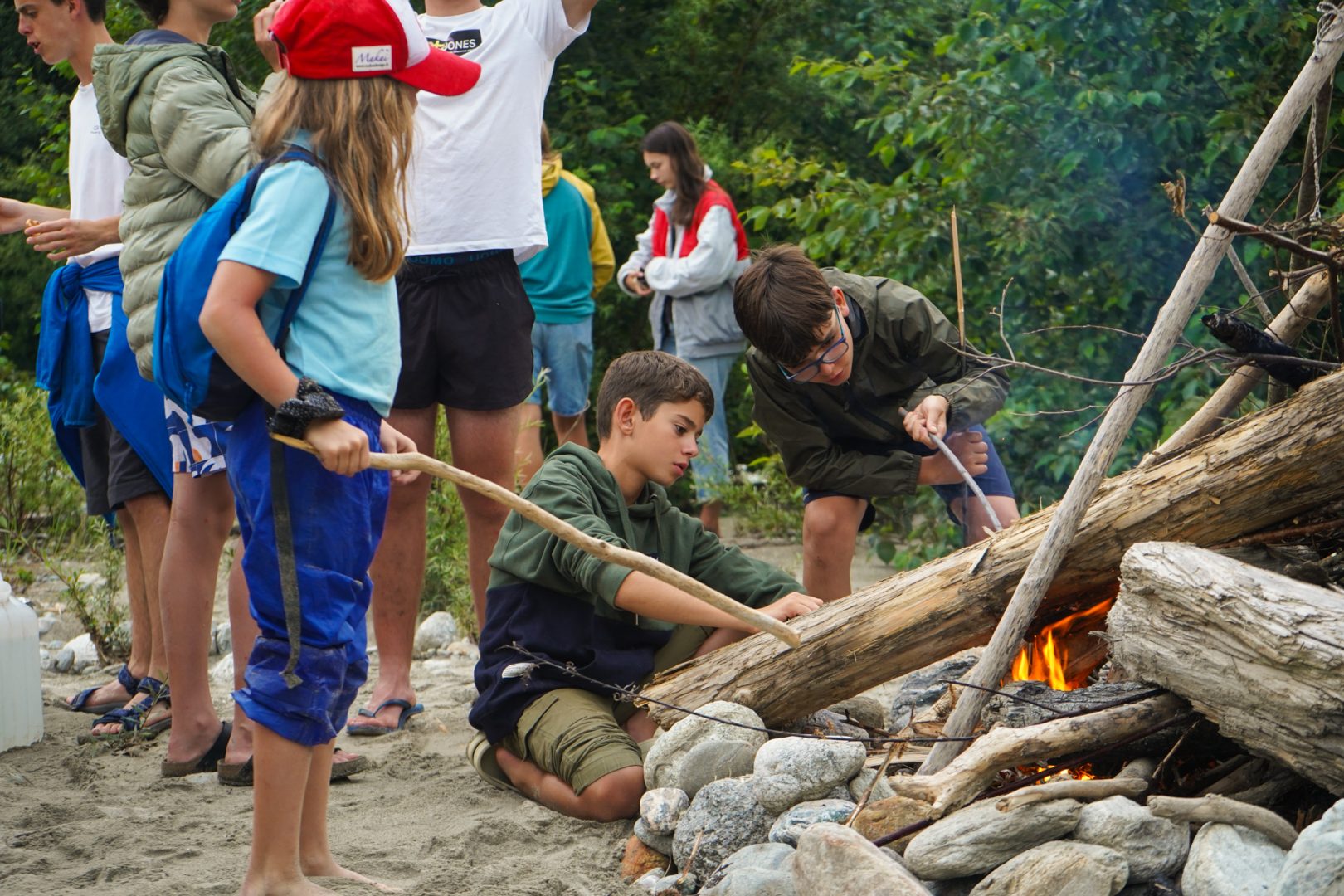
Meals typically run 3 meals/day + snacks. Confirm kitchen procedures for allergens and special diets (halal, kosher, vegetarian/vegan) and insist on written allergen policies and menu samples. Communal dining and large common rooms magnify cross-cultural exchange; look for campfire circles, assembly areas and shared sports fields to encourage evening socializing.
Roommate‑mixing policies to confirm
I urge parents to check these details explicitly with any camp they consider:
- Whether rooms are randomized or by request.
- If roommate rotations happen and how often (weekly, biweekly, none).
- How language-mixing is managed when assigning roommates.
- Whether same‑age and same‑gender considerations are enforced alongside international mixing.
Operational checklist to request from camps
Below are practical items I always ask camps to supply in writing before enrollment:
- Cleaning schedules and shared-space sanitation procedures.
- Laundry frequency and how laundry is handled for campers.
- Wi‑Fi rules, device policies and any usage limits.
- Curfew times and enforcement approach.
- Visitor policies and sign‑in/out procedures.
- Activity group sizes and staff-to-camper ratios by activity.
- Copies of staff CVs/certificates and the percentage of certified instructors (estimate 30–60%).
- Exact altitude of the site (most fall in the 500–1,500 m range) and any altitude-related protocols.
- Sample weekly menu with allergen handling procedures.
I also recommend parents review communal spaces in photos or virtual tours so they can see how communal dining, lounges and sports fields will support interaction. If you want a deeper operational primer, check our advice on choosing an international summer camp.

Safety, Medical Care, Accreditation and Travel Practicalities
Safety & accreditation checklist
Below we list the documentation and figures every parent should request and verify before booking a camp.
- Accreditation: request copies of national camp association or school accreditation and any International Camp Accreditation certificates. Confirm validity dates and published scope of each certificate. This proves camp accreditation and program scope.
- Staff vetting: ask for written policies on staff recruitment, evidence of staff background checks, and child-protection training. Request the exact percentage of staff with first-aid and lifeguard certifications, plus renewal dates. Insist these numbers are current and auditable.
- Medical provisions: confirm whether the camp offers 24/7 medical coverage. Request onsite medic hours, the total number of medical staff, and any standing arrangements with local GPs or hospitals. Ask camps to state ratios clearly (for example: “1 medical staff per X campers”) so you can compare offerings.
- Nearest hospital & drive time: get the name of the nearest hospital and a verified drive time. Don’t accept vague claims; ask for a documented estimate and the route used to verify it.
- Emergency protocols: request written evacuation plans, emergency contact procedures, reporting lines and details of drill frequency. Review the chain of command and how parents are notified in an emergency.
- Insurance requirements: check required international health/accident insurance, recommended coverage limits and any mandatory vaccination or medical forms. Request sample wording for consent or insurance confirmation the camp expects.
Require camps to publish exact figures you can verify: transfer times (1–3 hours by train/car typical), airport codes ZRH/GVA/BSL used for arrivals, exact medical staffing levels (e.g., “1 medical staff per X campers”) and nearest hospital drive times. We, at the young explorers club, expect transparency on each point before a deposit is taken.
Travel & visa logistics
Use ZRH, GVA or BSL as the primary arrival airports, and confirm which the camp recommends. Typical transfer times are 1–3 hours by train or car; camps should verify exact times and publish them. As an example, Interlaken is roughly two hours from Zurich (ZRH) — confirm the specific route and seasonal variations.
Check transfer options and costs carefully. Camps may offer organized shuttles, timetabled SBB train connections or private transfers. Request transfer schedules, exact pricing in CHF (CHF X–Y), and minimum/maximum group sizes for shuttle runs. Ask for contingency plans for delayed flights.
Visa notes are essential for non-EU/EEA nationals. Many students need a Schengen visa for camps; camps should state whether they provide invitation or confirmation letters and offer guardian/consent letter templates. Request sample letters early so you can start your application. Always check the embassy/consulate for the latest rules before booking.
For a compact reference on planning logistics and document templates, consult our summer camp guide to see typical transfer schedules and recommended paperwork.

Cost, Scholarships, Booking Timeline and Decision Checklist
We, at the young explorers club, outline realistic cost expectations and the key decisions that help maximise friendship formation at summer camp. Typical published ranges are: per 2‑week session CHF 1,500–6,000 and per 4‑week session CHF 3,000–10,000, with an average cost per 2‑week CHF 2,500–4,500. Confirm exact prices with each camp before you commit; we always validate current fees for families who ask. Use “camp cost CHF” as a search term when you compare offers.
What’s usually included and what’s extra
- What’s usually included: tuition, accommodation, meals, standard day trips and activities, and basic onsite insurance. Camps vary on specifics, so ask for written inclusions.
- Common extras: international flights, travel insurance, visa fees, specialised equipment rentals, airport transfers (confirm each camp for exact CHF X–Y), and optional premium excursions.
Scholarships and discounts
Many camps offer scholarships and discounts, especially early‑bird rates or need‑based awards. Typical partial scholarships range from 10–50%; exact percentages of camps offering support and award sizes vary widely. Ask each programme for current scholarship availability, eligibility rules, and application deadlines. We encourage families to apply early and to request any required documents well before a camp’s deadline.
Booking timeline and deposit rules
I recommend you reserve 3–6 months in advance for the best nationality mix and 6–12 months for very popular programmes. Typical deposit 10–30% of the fee; check each camp’s stated deposit % and refund/cancellation policy before payment. Confirm whether deposits are refundable, transferable, or held as credit in case of cancellation.
Decision thresholds I use when evaluating camps
- Target 10+ nationalities per session for a meaningful international experience; aim for 20+ when possible.
- Staff ratio: staff-to-camper ratio ≤1:8 is acceptable; preferentially 1:6 or better.
- Session length: recommended minimum 2‑week session; 3–4 weeks is best for deeper cultural exchange and stronger friendships.
Camp booking checklist
Below is the checklist I ask camps to provide before families book summer camp Switzerland; use it as your camp booking checklist.
- Current / expected nationality breakdown for the intended session
- Staff-to-camper ratio and staff qualifications (copies of certificates on request)
- Medical coverage details, onsite medic hours and nearest hospital
- Sample daily schedule and activity breakdown (percent group activities)
- Cancellation/refund policy and deposit %
- Visa support letters and recommended insurance
- Exact price per session (2-week and 4-week) and list of extras
For guidance on choosing programmes and friendship formation, we link parents to our planning resources when they decide to book summer camp Switzerland.
https://youtu.be/Hg6e28rzzfA
Sources
Switzerland Tourism — Facts & figures
Swiss Federal Statistical Office (FSO) — Tourism statistics
SBB CFF FFS — Timetable & network (train travel times and connections)
Institute for Economics & Peace — Global Peace Index
OECD — Health at a Glance (health system data)
World Health Organization (WHO) — Switzerland country profile
American Camp Association (ACA) — Accreditation & standards for camp operations
WYSE Travel Confederation — Youth travel research & statistics
Swiss State Secretariat for Migration (SEM) — Visa regulations and entry requirements