Why Families Return To Summer Camp In Switzerland Year After Year
Swiss summer camps: safe, accredited programs with on-site medical care, alpine outdoor days, family traditions and clear transfer policies.
Swiss Summer Camps: Why Families Keep Returning
We’re seeing families return to Swiss summer camps year after year. The country’s high safety standards, rapid healthcare access and formal mountain‑rescue systems give parents clear peace of mind. Long family traditions and accredited programs with certified staff add trust. Camps schedule extensive outdoor time in the Alps and use transparent logistics and pricing. That mix yields visible child development and strong family value.
Recommendation: Check cantonal licences and staff certifications before booking. Choosing camps with clear transfer options and flexible cancellation terms reduces stress and increases convenience.
Key Takeaways
- Safety & healthcare: National safety standards, rapid healthcare access, on‑site medical teams and formal mountain‑rescue plans provide reliable protection and peace of mind for parents.
- Family continuity: Signature rituals, alumni networks, sibling pathways and legacy incentives create emotional attachment and sustain family retention across generations.
- Outdoor program: Alpine terrain enables 5–7 hours outdoors daily, with age‑graded activities that meet activity guidelines and boost physical and psychosocial development.
- Quality assurance: Cantonal licences, recognised accreditations, certified staff and pre/post assessments produce measurable gains in language, leadership and social skills.
- Convenience & value: Accessible transfers, clear cost breakdowns, returning‑family discounts and flexible cancellation policies make camps convenient and increase perceived value.
Booking Tips
- Verify the camp’s cantonal licence and any accreditations.
- Ask for staff certification lists and medical staffing details.
- Confirm transfer options, arrival/departure logistics and refund/cancellation policies.
- Look for programs that provide pre/post assessments to track development.
https://youtu.be/Hg6e28rzzfA
Safety, Health Infrastructure and Peace of Mind
We pick Switzerland because safety and predictable emergency response are non-negotiable for families. The country consistently ranks among the safest in the world — Global Peace Index 2023: Switzerland in the top 10 — and that baseline reduces everyday risk for kids at camp. Low violent crime and steady political conditions mean fewer surprises for parents, and we build our operations on that stable foundation.
Healthcare access here is fast and reliable. Hospitals are close to population centres, ambulances reach towns quickly, and many residential camps keep formal ties with local hospitals so medical care moves smoothly when needed. We staff residential programs with on-site medical coverage or rapid transport plans to a nearby clinic. That practical setup matters more than claims: it turns theoretical safety into real, usable care.
Mountain and environmental safety are treated seriously at every level. Building codes, avalanche monitoring and canton-level rescue coordination create a safety net most parents never see — until they need it. We train leaders in mountain rescue procedures and run drills that match local standards. That means real rescue resources and formal plans instead of improvisation.
Parents tell us that visible systems equal calm. One family said, “Knowing there was an on-site nurse and formal mountain-rescue plan let us relax.” We hear that often, and we design our procedures to create that same peace of mind for every household. For more on why families trust Switzerland for camp safety, see why Switzerland is the safest.
Checklist: essential safety metrics we report
Below are the specific items I recommend you check and that we publish for transparency:
- Staff-to-child ratios — look for “1:6 to 1:8 for younger children, 1:8 to 1:10 for older kids”.
- First-aid and CPR certifications — confirm “mandatory WHO/Red Cross-standard first-aid training for staff”.
- On-site medical coverage — note whether a nurse or doctor is present for residential programs.
- Formal hospital ties and emergency transport plans — ask which local clinic or hospital we coordinate with.
- Written mountain-rescue and evacuation plans — verify canton and national coordination procedures.
- Regular safety drills and outdoor-safety training standards — check frequency and instructor qualifications.
I recommend families ask camps for documented evidence of each item above. We make those records available and communicate changes immediately. That keeps expectations aligned and gives parents a clear path to evaluate safety.
Operational tips I follow and share with families:
- Confirm ratios for the specific session you book.
- Ask for staff first-aid certificates by name and date.
- Request a copy of the emergency-response flowchart.
- Check transfer speed to hospital and whether the camp runs seasonal avalanche briefings or local-rescue liaison meetings.
We combine national-level safety strengths with transparent, on-the-ground systems so families can relax and kids can focus on exploration.

Tradition, Community and the Emotional Pull
We, at the Young Explorers Club, see repeat families and multi-generational patterns every season. Parents rebook because loyalty grows from ritual, visible growth in kids, and trusted staff. Siblings follow older brothers and sisters. That continuity turns single visits into family traditions.
How we build continuity
I list the practical ways we create attachments and an alumni network that lasts:
- Alumni network and reunions that keep connections alive year-round.
- Scholarships and legacy places that encourage return bookings across generations.
- Signature rituals — opening and closing bonfires, camp songs, and rites of passage that kids remember.
- Structured handoffs where older campers mentor younger siblings, reinforcing belonging.
- Documented traditions and photo archives that feed nostalgia and re-enrollment.
Measuring loyalty and psychosocial impact
We track loyalty with clear benchmarks. Suggested targets include “% returning families (target 30–60%)” and parent-satisfaction targets of “85–95%” in testimonials and surveys. I recommend these practical KPIs to show longevity and trust:
- Retention rate by family, year-over-year;
- Sibling-enrolment percentage;
- Alumni engagement score (events, donations, referrals);
- Longitudinal surveys of social skills and resilience.
Peer-reviewed findings consistently report gains in belonging, resilience, independence, confidence and social skills after camp experiences, and we use that language in our communications. We measure psychosocial gains with pre/post surveys, teacher and parent feedback, and short alumni check-ins. Those data points do two things: they validate the emotional pull families feel, and they give us concrete levers to improve programming.
We also cultivate stories. Testimonials and ritual moments become the social proof that drives rebooking. Families return because they see measurable growth in their children and because they want those shared memories again — the kind you read about in our pieces on creating lasting memories. We keep registration easy for returning families, offer legacy incentives, and highlight alumni paths so coming back feels natural and rewarded.
https://youtu.be/V823vgQB6hk
Access to Nature and Outdoor Physical Activity
How Swiss terrain shapes daily activity
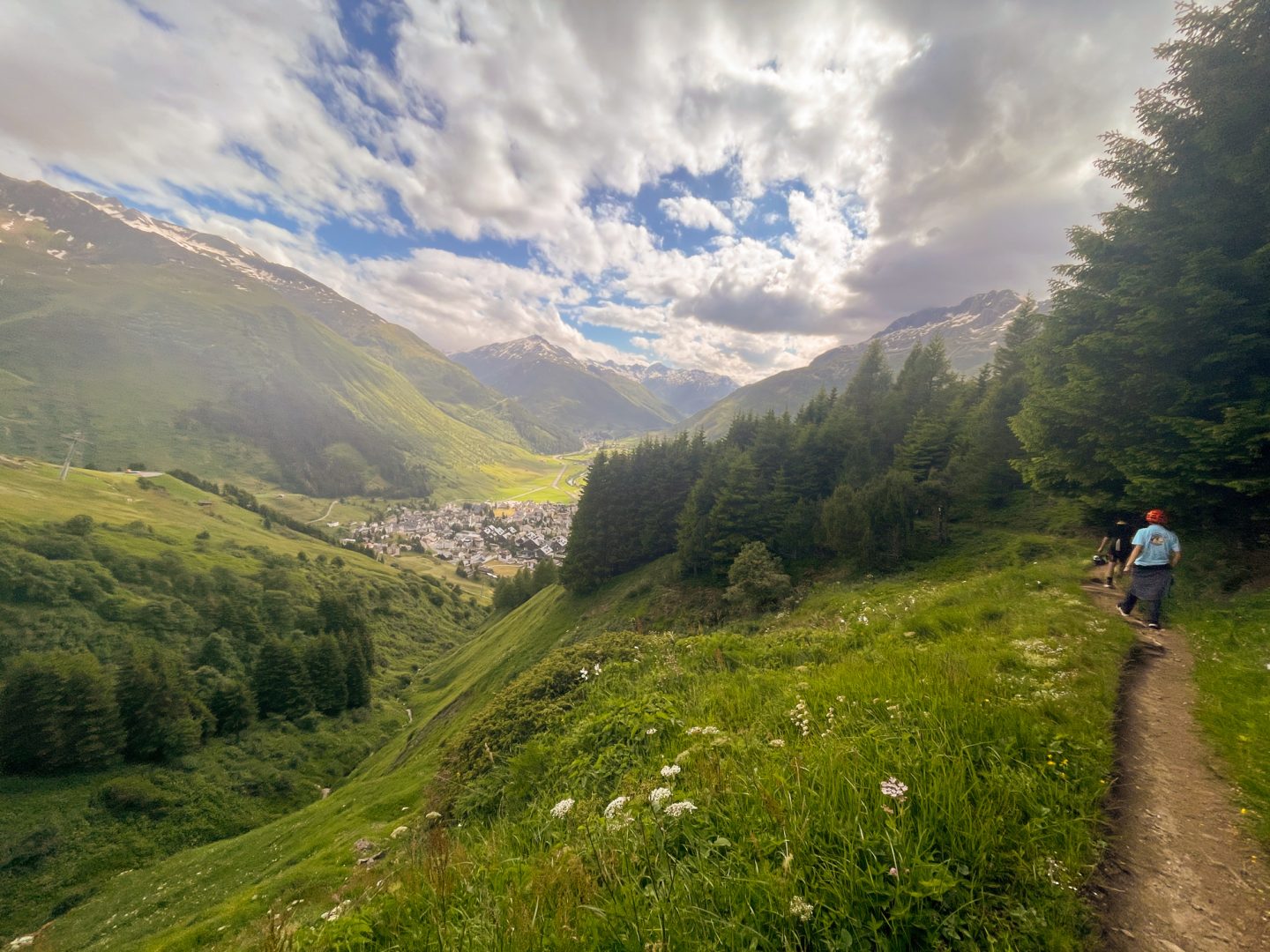
We place kids where the landscape itself becomes the playground. Roughly 60% of Switzerland’s land is mountainous, and the Alps include 48 four-thousanders that define long ridgelines, valleys and lake basins. Those features let us run multi-activity programs that keep campers outdoors most of the day. Typical multi-activity camps average about 5–7 hours outdoors per day, so children accumulate active time through both structured sessions and free play. The World Health Organization recommends 60 minutes daily of moderate-to-vigorous activity for ages 5–17 (WHO: 60 minutes/day for children (5–17)), and our schedules make that target easy to hit without forcing intensity.
We use nature-based learning to link movement with curiosity. Short, steep hikes become geology and ecology lessons. Mountain biking adds skill progression and confidence. Canoeing and orienteering teach teamwork and decision-making. That mix keeps kids engaged and moving while they explore the Alps and nearby lakes.
Typical activities and safety measures
Below are the common activities and the safety rules we enforce on every trip:
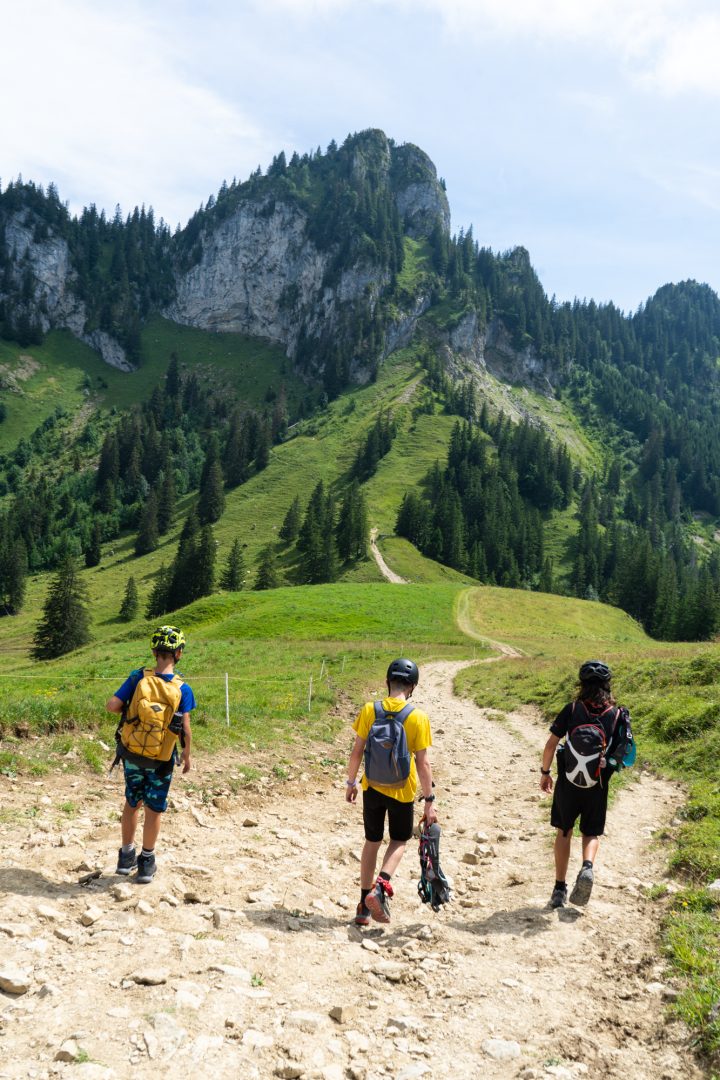
- Hiking: graded routes by age and fitness; gradual altitude gain for acclimatisation.
- Mountain biking: fitted bikes, trail grading, mandatory helmets and skills clinics.
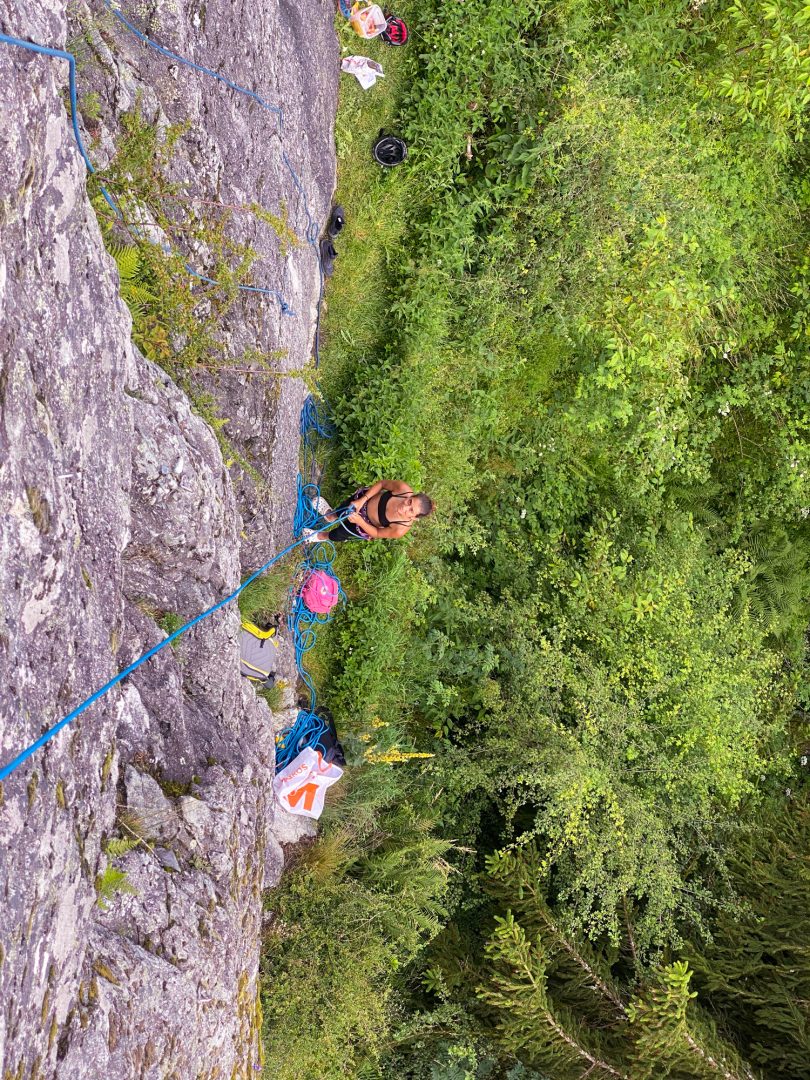
- Climbing and via ferrata: certified belayers and route limits based on age.
- Canoeing and water sports: life jackets, swimmer evaluations and instructor ratios.
- Orienteering and nature education: map skills, low-impact campsites and leave-no-trace practice.
- Free outdoor play: supervised time for creative, unstructured activity.
We require formally certified instructors for mountain and water activities and keep adult-to-child ratios conservative. Program leaders write altitude-acclimatisation plans when routes rise quickly. We set age-appropriate limits for distance, vertical gain and technical difficulty. Emergency plans and local mountain rescue contacts sit in every team leader’s pack.
We, at the young explorers club, balance big days on the trail with recovery—shorter hikes, shaded rest stops and a clear hydration strategy. That keeps activity sustainable across a week of camp and helps build lasting habits of outdoor play and active living. Learn more about why summer camps are essential for personal growth in our detailed program overview: why summer camps are essential.

Program Quality, Accreditation, Staff Credentials and Measurable Child Outcomes
We, at the young explorers club, evaluate program quality through three clear trust signals: cantonal regulations, recognized camp associations and international accreditation or quality marks used in Switzerland.
Parents should ask to see the cantonal licence and any association memberships. They can also verify a camp’s accreditation and quality marks before booking to confirm standards.
Staff qualifications and vetting are non-negotiable. We hire a mix of local and international staff to combine regional knowledge with global best practice. Key targets we use are:
- 100% staff certified in first aid
- 60–90% staff with formal outdoor / climbing / water-safety certification
Every staff member undergoes background checks and reference verification. We share CV highlights and certifications on request so families can see the qualifications and recent training dates.
Continuity reinforces safety and program quality. We aim for a return-staff rate of 30–60%. That range preserves institutional memory and helps new staff integrate faster. High return-staff rates reduce turnover-related risk and improve day-to-day consistency for children.
I track and report measurable child outcomes so families see real impact. Core metrics we collect and share are:
- 60+ minutes MVPA per day at camp (moderate-to-vigorous physical activity)
- Short pre/post language tests to quantify progress in immersion tracks
- Social-skills and leadership assessments completed by activity leaders
- Parent satisfaction surveys with targets of 85–95%
Reporting templates and timelines
Below are the formats we use to turn those metrics into actionable reports:
- Pre/post assessment templates: baseline, mid-camp check and post-camp summary for language and social skills
- Daily activity logs: minutes of MVPA, main activities, and any safety notes
- One-week parent follow-up survey: immediate impressions and satisfaction scoring
- Three-month parent follow-up survey: retention of gains and behaviour change
- Short topline report for parents at departure summarizing certifications of supervising staff, background-check confirmation and return-staff rate
I recommend families request sample pre/post assessment results and a recent parent survey summary before committing. We provide clear documentation on staff qualifications, background checks and continuity so parents can judge both safety and educational value.
https://youtu.be/H5dYnfoTd30
Multilingual, Cultural and Educational Advantages
At the Young Explorers Club, we build multilingual programs around Switzerland’s four official languages: German, French, Italian and Romansh. By placing camps in native regions, we create authentic language immersion that extends far beyond the classroom. Each immersion track includes 90–120 minutes/day structured language lessons, and we wrap that with full-immersion environments during meals, activities and free time.
We design educational programs that balance language learning with STEM and environmental science modules. These sessions reinforce vocabulary through hands-on projects while boosting problem-solving and leadership skills. We also run explicit leadership and teamwork training that translates to measurable gains in confidence and public speaking.
We report progress simply and clearly so families see real development. Our reporting uses a pre-camp baseline, mid-camp checks and post-camp surveys. We include pre/post short assessments to show language progress (suggested metric: % improvement on simple vocabulary/phrase tests over a 2-week camp), plus qualitative notes from counselors on participation and speaking confidence. For a quick read, we produce parent summaries with a short chart and three practical recommendations for ongoing practice.
Program structure and progress reporting
- Regional immersion placement that prioritizes the camp’s dominant language and culture.
- Daily structured lessons (90–120 minutes/day) focused on practical phrases and conversation.
- Full-immersion periods where language use is natural and activity-driven.
- STEM and environmental science modules that reinforce terminology and inquiry skills.
- Leadership and teamwork sessions targeting presentation skills and group problem-solving.
- Pre-camp baseline, mid-camp checks and post-camp surveys with simple, repeatable templates.
- Pre/post short assessments showing % improvement on vocabulary/phrase tests over a 2-week stay.
- Parent-ready summaries combining numeric gains and counselor observations.
We track both quantitative and qualitative outcomes so assessment feels useful, not academic. Families see vocabulary increases, improved pronunciation, and stronger public-speaking confidence in campers who stick with immersion. We encourage parents to continue routine practice at home; small daily habits sustain gains long after camp ends. Learn what makes Swiss camps unique by reviewing how location, curriculum and reporting combine to create lasting language and leadership results.

Family Convenience, Logistics, Cost and Value Perception
We, at the young explorers club, plan every practical detail so families can focus on the experience. Camps in Switzerland typically sit within a common transfer radius of 60–120 minutes from Zurich or Geneva airports and often provide train station and airport pickup/drop-off. I always tell parents to confirm typical transfer times and sample transfer costs with each provider before booking, since providers vary by shuttle size and distance. Strong transport links make same-day travel realistic for day camps and short residential stays. You can read about our approach to family-friendly logistics for more on transfers and safety.
Program formats span the spectrum. We offer:
- Day camps for families needing local care
- One-week residential stays for full-immersion adventure
- Multi-week programmes for longer skill building
- Family options such as sibling programs and parent-weekend stays
Expect typical pricing bands to set your expectations: day camps CHF 150–600 per week; residential CHF 700–2,500 per week. Prices change with activity intensity, staff ratios and accommodation level. I recommend you compare the program format—day camp vs residential—against your schedule and goals. Short residential stays often include more specialised activities and evening programming, which raises the camp cost but increases perceived value for many families.
Value hangs on measurable elements. I always evaluate:
- Safety systems and emergency procedures
- Staff quality, training and child-to-staff ratios
- Breadth of activities and skill progression
- Language and educational programming
- Food standards and accommodation comfort
We find parents renew when the staff feel competent and communicative, meals satisfy picky eaters, and children grow in confidence. Repeat-booking incentives further encourage loyalty. Many camps offer returning family discounts in the 5–15% range, plus sibling discounts and flexible cancellation policies introduced since 2020. Typical flexible cancellation windows are free cancellation up to 30–60 days before camp, but you should verify each provider’s terms.
Hidden costs checklist
Below is a short checklist I use to avoid surprises. Verify each item with your chosen programme:
- Transport and transfer fees beyond standard pickups
- Specialised gear for activities (wetsuits, climbing harnesses, skis)
- Travel and medical insurance
- Optional excursions or instructor-led extras
- Equipment rental and laundering fees
I also run a simple ROI comparison to sell the value internally and to families. Compare the cost of one week of residential camp (use CHF 700–2,500) against combined private childcare or tutoring for the same week. For example, two full days of private tutoring and childcare at local rates can approach a mid-range residential fee, yet camp adds social learning, outdoor skills and sustained staff supervision. When you factor in returning family discounts and bundled sibling rates, the effective per-child cost often drops, improving value.
We keep communication clear about transport links and airport transfer options, highlight flexible cancellation policies up front, and show exact inclusions to prevent hidden fees. Those measures make logistics feel manageable and strengthen the sense that camp cost aligns with real family value.

Sources
Institute for Economics & Peace — Global Peace Index 2023
World Health Organization — WHO Guidelines on physical activity and sedentary behaviour (2020)
Swiss Federal Statistical Office (FSO) — Geography (statistics)
Federal Office of Public Health (FOPH) — Health system
Swiss Alpine Club (SAC) — 4000ers of the Alps
Switzerland Tourism — Family holidays
Swiss Youth Hostels — Hostelling International Switzerland
American Academy of Pediatrics — The Power of Play
Berman et al. — The cognitive benefits of interacting with nature (PNAS)
Federal Office for Civil Protection (FOCP) — Civil protection and rescue services