

Family Adventure Planning Guide for Outdoor Trips
Unlock unforgettable outdoor experiences with our family adventure planning guide! From timelines to packing tips, start your journey today!
TL;DR:
- Effective family outdoor trips require early planning, age-appropriate activities, and involving children in every stage. Proper preparation includes detailed health, gear, and safety measures to ensure a fun and safe experience for everyone. Recognizing common mistakes and structure-oriented itineraries help families create memorable adventures while minimizing stress and delays.
A family adventure planning guide is a structured framework for organizing outdoor trips that are safe, age-appropriate, and genuinely fun for every member of your group. The best trips don’t happen by accident. They start with a realistic timeline, tools like itinerary builders and the CDC Yellow Book, and programs like the National Park Service’s Junior Ranger that get kids invested before you ever leave home. This guide walks you through every stage of outdoor adventure planning, from picking the right destination to packing the right gear, so your family spends less time stressed and more time outside.
How to build your family adventure planning timeline
Start planning a typical family trip at least 12 weeks out. International destinations or peak-season travel require 4–6 months of lead time to handle passports, vaccinations, and flight bookings at the best prices. Routine passport processing alone takes 4–6 weeks. Missing that window forces expensive expedited fees or, worse, a canceled trip.
Here is a practical sequence to follow:
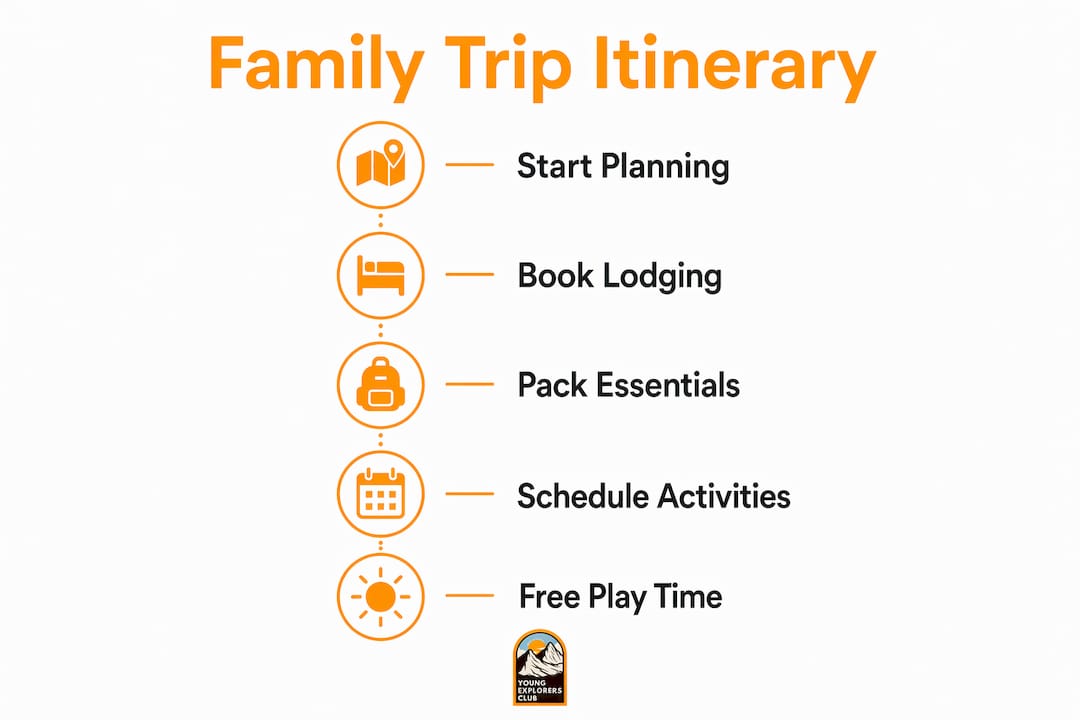
- Set your travel window first. Align dates with school calendars and work schedules before you look at a single destination.
- Check passport and document status. Renew anything expiring within six months of your return date.
- Choose your destination. Filter by age-appropriate activities, safety ratings, and realistic travel costs for your family size.
- Book flights and lodging. Set fare alerts on Google Flights or Hopper to catch price drops on your target route.
- Schedule health consultations. Book a travel medicine appointment as soon as your destination is confirmed, not two weeks before departure.
- Build your activity list. Research specific trails, parks, or programs available at your destination and note any permit or reservation requirements.
Pro Tip: Book your lodging before your flights. Accommodation availability in popular outdoor destinations like Yellowstone or Zion fills up months ahead of peak season, and your lodging location determines which activities are actually accessible.
Choosing the right destination means matching the trip to your youngest child’s abilities, not your most adventurous adult’s wish list. A 5-year-old can handle a 2-mile nature walk at Acadia National Park. That same child will not enjoy a 10-mile ridge hike in the Cascades. Be honest about physical limits early, and you avoid the most common source of family trip conflict.
What does a good family activity itinerary look like?
The strongest travel itinerary for families is built around blocks, not lists. Plan morning movement, a midday pause, an afternoon transition, and evening lodging as four distinct segments each day. This structure forces you to account for setup time, travel between sites, and energy levels rather than just stacking activities on a calendar.
Limit yourself to one main activity per day with flexible space around it. That sounds conservative until you realize how much time transitions actually consume with kids. Loading gear, finding parking, applying sunscreen, locating bathrooms, and managing snack requests can easily add 90 minutes to any outing.
Match activity intensity to your youngest child’s age:
- Toddlers (ages 2–4): Short nature walks of 0.5–1 mile, sensory play near water, easy picnic spots with open space to run
- Early school age (ages 5–8): Moderate trails up to 3 miles, beginner rock scrambles, Junior Ranger program activities at national parks
- Tweens (ages 9–12): Half-day hikes, kayaking, mountain biking on beginner trails, overnight camping
- Teens (ages 13+): Multi-day backpacking, climbing, whitewater rafting, and multisport adventure programs that combine several disciplines
Free play is not wasted time. Build 60–90 minutes of unstructured outdoor time into every afternoon. Kids who have space to explore on their own terms are more cooperative during the structured parts of the day.
Pro Tip: Leave the last hour of every afternoon completely empty on your itinerary. That buffer absorbs delays, gives tired kids a recovery window, and turns a stressful scramble into a relaxed end to the day.
What gear and health prep do families need for outdoor adventures?
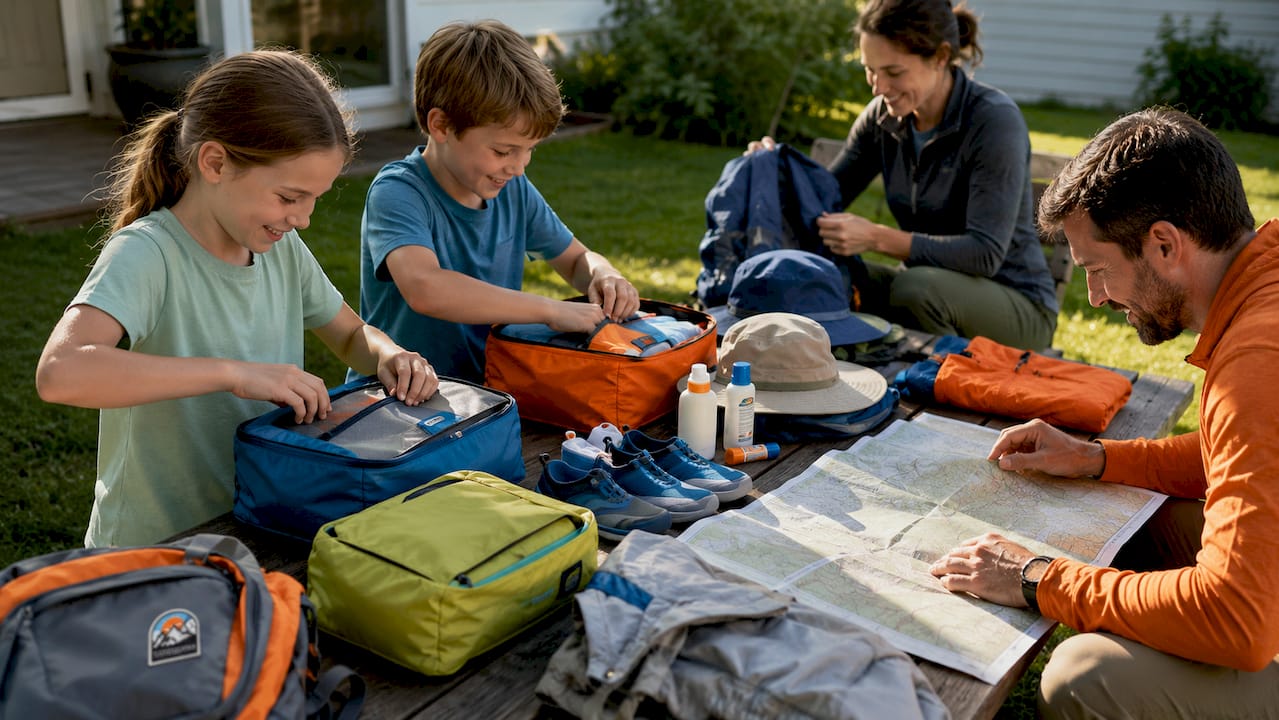
Packing for a family outdoor trip is not about bringing everything. It is about bringing the right things for the specific conditions your kids will face. Use this table as your baseline adventure trip checklist, then adjust for your destination and season.
| Category | What to Pack | Why It Matters |
|---|---|---|
| Sun protection | SPF 50+ sunscreen, UV-blocking hats, sun shirts | Children’s skin burns faster than adults’; reapply every 2 hours on active days |
| Insect protection | DEET-based repellent (30% for kids), permethrin for clothing | Regions like Guatemala and Belize carry insect-borne virus risks that affect children severely |
| Medical kit | Antihistamines, EpiPen if prescribed, blister care, pain reliever | Wilderness settings require self-sufficiency; pharmacies may be hours away |
| Hydration | Insulated water bottles, electrolyte packets, water filter for backcountry | Dehydration is the leading cause of early trip fatigue in children |
| Footwear | Broken-in trail shoes or boots for every child | New footwear causes blisters; test all shoes on a local hike before the trip |
| Layers | Moisture-wicking base layer, fleece mid-layer, waterproof shell | Mountain weather changes fast; kids lose body heat faster than adults |
Health preparation starts earlier than most families expect. The CDC Yellow Book 2026 edition recommends scheduling a pre-travel health consultation as soon as your destination is confirmed. Vaccines take weeks to reach full effectiveness. Waiting until the month before departure means some vaccines simply won’t protect your child in time.
For international destinations, ask your travel medicine provider specifically about rabies pre-exposure prophylaxis for children traveling in rural areas. Children are at higher risk because they are more likely to approach animals and less likely to report a bite immediately.
Pro Tip: Pack clothing and gear in individual packing cubes labeled by child. Each kid can manage their own cube, which speeds up morning routines and teaches responsibility without adding stress to your day.
How do you keep your family safe on outdoor adventures?
Safety in outdoor adventure planning is not about eliminating risk. It is about knowing which risks are manageable and preparing for them specifically. The National Park Service’s Hike Smart guide and Junior Ranger programs give kids concrete safety knowledge before they hit the trail. Children who complete Junior Ranger materials understand trail markers, wildlife distance rules, and what to do if they get separated from the group.
Before any trip, run through this safety preparation list:
- Check current site conditions. The NPS Current Conditions tool shows trail closures, wildlife activity, and crowd levels. Visiting early or late in the day reduces both crowds and heat exposure.
- Plan your communication strategy. Identify cell coverage gaps at your destination and carry a satellite communicator like a Garmin inReach for backcountry trips.
- Manage altitude carefully. For mountain destinations above 8,000 feet, plan an acclimatization day before any strenuous activity. Altitude sickness affects children as readily as adults.
- Assign a meeting point. Every child old enough to walk independently should know a specific landmark to return to if separated.
- Carry a printed emergency contact card. Include local emergency numbers, your lodging address, and any medical information for each child.
Involving kids in pre-trip planning directly improves their behavior and engagement on the trip itself. Communicating trip plans to children in advance reduces anxiety and increases cooperation during long travel segments. Show them the trail map. Let them pick one activity. Give them a small job like tracking the water supply or reading the trail signs.
“The families who have the best outdoor trips are the ones where the kids feel like participants, not passengers.” This shift in dynamic changes everything about how children handle challenges on the trail.
What are the most common family adventure planning mistakes?
Most family trips go wrong for the same predictable reasons. Recognizing these patterns before you leave is the fastest way to improve your success rate.
- Overpacking the schedule. Three big activities in one day sounds exciting in planning. On the ground, it produces exhausted, uncooperative children by 2 p.m. Cut your activity list by 30% and add that time back as buffer.
- Ignoring the youngest child’s pace. The trip moves at the speed of your slowest, most tired family member. Plan for that reality from the start, not as a reaction to a meltdown.
- Underestimating transitions. Getting four people out of a campsite or hotel room and onto a trailhead takes longer than you think. Add 30 minutes to every transition estimate.
- Skipping health preparation. Illness is the most common reason family trips end early. A travel medicine consult and a well-stocked medical kit are not optional for international or remote destinations.
- Not involving the kids. Children who had no input into the trip have no investment in making it work. Even small choices, like which trail snack to bring, create ownership.
Pro Tip: After every trip, spend 15 minutes writing down what worked and what didn’t regarding sleep, meals, packing, and energy levels. Post-trip notes transform a generic checklist into a personalized system that gets better every year.
Key takeaways
Successful family outdoor adventures depend on early planning, age-matched activities, honest packing, and involving your kids in every stage of the process.
| Point | Details |
|---|---|
| Start planning early | Begin 12 weeks out for domestic trips and 4–6 months out for international or peak-season travel. |
| Build block itineraries | Structure each day as morning movement, midday pause, afternoon transition, and evening lodging rather than a list of activities. |
| Match activities to age | Base every activity choice on your youngest child’s physical limits, not your most capable family member’s preferences. |
| Prepare health and gear early | Book a travel medicine consult immediately after confirming your destination; pack child-specific gear for conditions, not generic adult lists. |
| Involve kids in planning | Children who help plan the trip are more cooperative, more engaged, and more resilient when things don’t go perfectly. |
What i’ve learned after years of watching families plan adventures
The single biggest mistake I see families make is treating the itinerary as a performance. They build a schedule that looks impressive on paper and then spend the whole trip trying to execute it perfectly. The families who actually enjoy their outdoor trips are the ones who treat the plan as a starting point, not a contract.
Involving kids in the planning process is not just a nice idea. It is a practical tool. When a 9-year-old has chosen the trail, they will push through tired legs to finish it. When a teenager has helped research the campsite, they will set up the tent without being asked. That buy-in is worth more than any piece of gear you can buy.
I also think most families underestimate how much family adventure travel changes children over time. One well-planned outdoor trip builds more confidence and problem-solving ability than months of structured activities at home. The key word is “well-planned.” A chaotic, exhausting trip where nobody had fun does the opposite.
The health and safety preparation piece is non-negotiable, and I say that without apology. Skipping a travel medicine consult to save time is a false economy. One preventable illness or injury ends the trip and costs far more than the appointment ever would. Do the prep. It takes two hours and it protects everything else you’ve invested in the experience.
— Guillem
Take your family’s next adventure further with Youngexplorersclub
Planning a great family outdoor trip takes real work. Youngexplorersclub takes that work and builds it into a world-class program. Based in Switzerland, Youngexplorersclub runs international summer camps that combine mountain biking, climbing, survival skills, and multisport adventures with expert safety management and optional language immersion in English and French. Every activity is designed around the same principles in this guide: age-appropriate challenge, structured pacing, and genuine personal growth.

If you want your child to experience outdoor leadership development in one of the world’s most spectacular natural environments, Youngexplorersclub is the program built for exactly that. Browse the full program lineup and registration details at the link above.
FAQ
How far in advance should families start planning outdoor trips?
Start planning domestic family trips at least 12 weeks ahead. International or peak-season destinations require 4–6 months of lead time to handle passports, vaccinations, and competitive flight pricing.
How many activities should families plan per day on outdoor trips?
Plan one main activity per day with flexible time around it. Stacking multiple big activities causes fatigue and reduces enjoyment, especially for younger children.
What health preparations are required for family outdoor adventures?
Book a travel medicine consultation as soon as your destination is confirmed. The CDC Yellow Book 2026 edition recommends early vaccination scheduling because most vaccines need several weeks to reach full effectiveness.
How do you keep kids safe and engaged on family hikes?
Use the NPS Junior Ranger program to teach kids trail safety before the trip. Assign each child a specific role on the trail, share the route map with them in advance, and always identify a meeting point in case of separation.
What is the best way to pack for a family outdoor adventure?
Pack by condition and activity rather than using a generic list. Use individual packing cubes per child, prioritize sun protection, insect repellent, a personal medical kit, and broken-in footwear for every family member.
