How to prepare your child for outdoor adventures
Discover how to prepare for outdoor adventures with your child, ensuring safety, fun, and unforgettable memories. Get expert tips now!
TL;DR:
- Proper preparation tailored to a child’s age enhances outdoor adventure safety and enjoyment.
- Fostering flexibility and shared responsibilities encourages personal growth and resilience in youth.
Planning an outdoor adventure for your kids or teens sounds exciting until you realize how much is actually riding on it. Get the preparation wrong and you’re looking at a miserable, possibly unsafe experience that your child will want to forget. Get it right and you create something powerful: a moment where your son or daughter discovers what they’re truly capable of, builds real friendships, and comes home genuinely changed. This guide walks you through everything, from age-appropriate planning to safety systems to fostering the personal growth that makes outdoor adventures so valuable in the first place.
Table of Contents
- Understanding age-appropriate planning for outdoor adventures
- Packing essentials and clothing: Getting it right for every age
- Safety systems: Group roles, first aid, and route communication
- Fostering growth: Using outdoor adventures for confidence and teamwork
- What most parents overlook: Prioritizing flexibility and the journey
- Connect your child’s adventure with growth: Our programs and resources
- Frequently asked questions
Key Takeaways
| Point | Details |
|---|---|
| Tailor plans to age | Customize adventure routes and timing for each child’s abilities to keep experiences safe and enjoyable. |
| Smart packing matters | Layered clothing, youth-specific first aid, and sun protection are essential for every outdoor family trip. |
| Safety is teamwork | Assign roles, set clear ground rules, and maintain communication so everyone knows what to do during the adventure. |
| Focus on growth | Structured outdoor adventures can boost confidence, leadership, and teamwork skills for kids and teens. |
| Flexibility is key | Expect to adapt your plan based on group energy, weather, or teachable moments; the journey is the success. |
Understanding age-appropriate planning for outdoor adventures
Once you recognize the stakes of a well-prepared adventure, the next step is to match your plans to your child’s age and needs. A common mistake parents make is treating every child the same way regardless of age, fitness level, or emotional readiness. A 9-year-old and a 16-year-old need fundamentally different adventures, even if they’re headed to the same trail.
Research from the Appalachian Trail Conservancy confirms that age-appropriate hiking planning including distance, hike type, and built-in flexibility matters far more than a one-size-fits-all itinerary. That flexibility piece is especially important because kids tire unexpectedly, weather shifts, and enthusiasm can spike or crash without warning.
Here’s a quick comparison table to help you frame realistic expectations:
| Age group | Recommended distance | Best route type | Focus |
|---|---|---|---|
| 8 to 11 | 2 to 5 miles | Loop or short out-and-back | Fun, play, discovery |
| 12 to 14 | 5 to 10 miles | Out-and-back or moderate loop | Skill-building, teamwork |
| 15 to 17 | 8 to 15+ miles | Long loops, overnight options | Leadership, independence |
For younger children aged 8 to 11, loop hikes are ideal because they feel like a complete journey with a natural endpoint. Out-and-back routes can feel discouraging for young kids because the turnaround point feels arbitrary. For teens aged 12 to 14, introduce moderate challenges with clear milestones, like reaching a viewpoint or crossing a stream. For older teens, consider multi-day elements and let them take ownership over parts of the planning process.
Key principles regardless of age:
- Set realistic daily distance and time goals, then plan for 20% less
- Build in buffer time for rest, exploration, and unexpected delays
- Let the group influence the plan to increase buy-in and motivation
- Choose routes with bail-out points so you can shorten the adventure if needed
Exploring flexible trip planning principles can help parents understand how adaptability actually improves outcomes rather than lowering standards. For larger groups or school trips, custom group camp options provide structured frameworks that account for varied ages and abilities in the same group.
Pro Tip: When your child asks “Are we there yet?” treat it as data, not complaining. It usually means they need a snack, water, or a new point of interest to focus on. Build micro-goals into your route so there’s always something worth looking forward to in the next 20 minutes.
Packing essentials and clothing: Getting it right for every age
With a flexible plan set, making the right packing choices ensures children are comfortable and protected from the elements. Clothing and gear are where many parents underestimate the details, and the consequences show up fast when the temperature drops or the rain arrives.
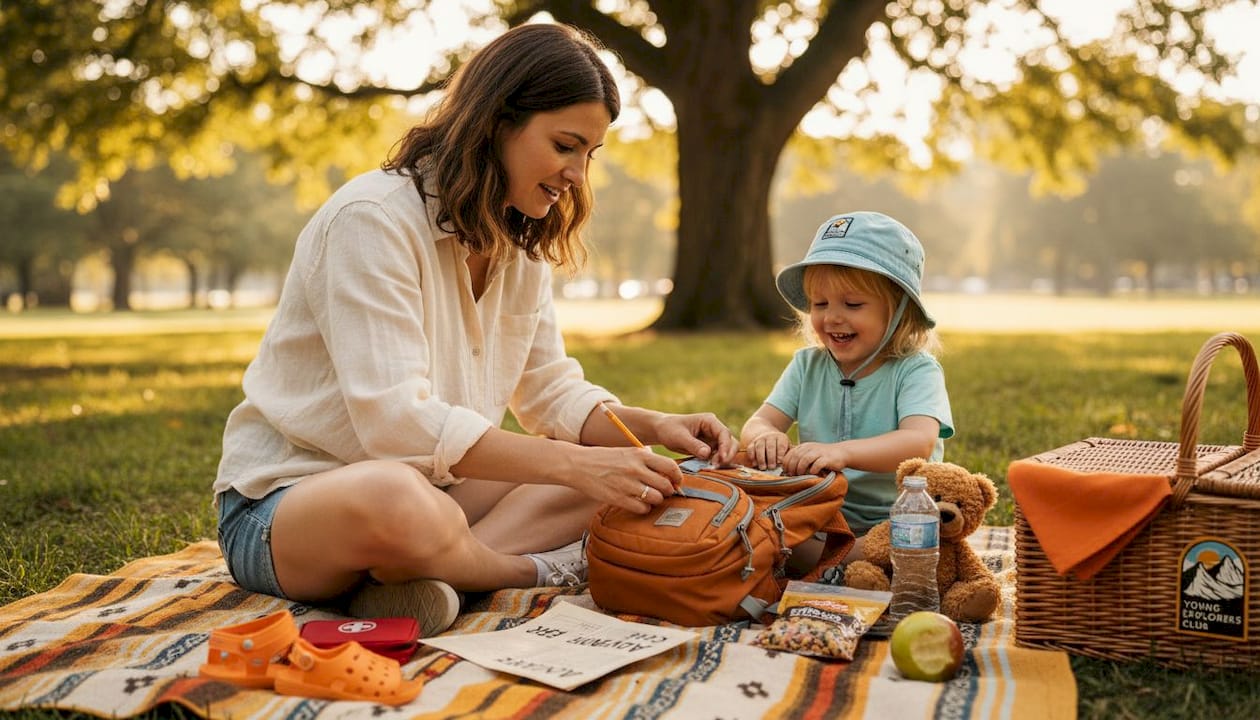
According to children’s outdoor packing guidance from Valley Children’s Healthcare, kids’ outdoor preparation should emphasize weather adaptability through layering, plus sun and bug protection alongside a youth-oriented first aid kit. The layering system is worth understanding clearly: a moisture-wicking base layer (against the skin), an insulating mid layer (fleece or down), and a waterproof outer shell. Each layer serves a distinct purpose and can be added or removed as conditions change.
Here’s a packing breakdown by age group:
| Item | Ages 8 to 11 | Ages 12 to 14 | Ages 15 to 17 |
|---|---|---|---|
| Base layer | Essential | Essential | Essential |
| Waterproof shell | Parent carries | Child carries | Child carries |
| Extra socks | 2 pairs | 2 pairs | 1 to 2 pairs |
| SPF 30+ sunscreen | Parent applies | Child-managed | Self-managed |
| Blister plasters | In parent kit | In group kit | Own kit |
| Headlamp | Shared | Own | Own |
| Emergency whistle | On child | On child | On child |
Beyond clothing, the first aid kit for youth adventures needs some specific items:
- Child-appropriate pain reliever (acetaminophen or ibuprofen with correct dosing info)
- Moleskin and blister bandages (blisters are the number one comfort issue)
- Antihistamine for allergic reactions to plants or insect stings
- Wound wash, sterile gauze, and medical tape
- Tick removal tool, especially for wooded or grassland routes
- A written emergency contact card inside the kit
Bug protection often gets overlooked until someone is covered in bites. DEET-based repellents are effective but should be applied by adults for younger children. For kids under 12, look for repellents with 10 to 30% DEET concentration. After the hike, do a full tick check on every child, including hair, behind the ears, and behind the knees.
For a full gear reference, the outdoor gear checklist covers what to bring for different activity types and age ranges.
Pro Tip: Repack your first aid kit after every trip, not before. Check what was used and what expired, and make restocking part of your post-adventure routine. Involve your kids in this process as well. When teens know where the supplies are and how to use them, it becomes a real confidence builder.
Safety systems: Group roles, first aid, and route communication
Once you’ve packed smart, establishing safety routines will help keep every family member healthy and on-track during the adventure. A well-prepared group isn’t just one with good gear. It’s one where every person knows their role and the plan.
Practical family safety approaches include setting group roles and ground rules, tailoring first aid to youth, and planning frequent water and snack breaks to reduce exhaustion and sun risk. Implementing these before you leave the trailhead is essential because it’s hard to establish authority and clarity once the group is tired and spread out on a trail.
Here’s a simple step-by-step system for group safety:
- Assign a hike leader who sets the pace at the front. This is usually a responsible adult or older teen.
- Assign a sweep who stays at the back to ensure no one falls behind. This person carries a whistle.
- Designate the first aid carrier, usually the most prepared adult, and ensure everyone knows where the kit is.
- Set a meeting point at every trail junction in case the group gets separated.
- Leave your plan with someone at home: trail name, parking location, expected return time, and an emergency contact number.
- Set a turnaround time, not a turnaround destination. If 2 PM arrives and you haven’t reached the summit, you turn around anyway.
For weather-aware hiking safety, the principle is simple: build your decisions around conditions, not ambitions.
“The most common danger on family hikes isn’t wildlife or terrain. It’s dehydration and fatigue from pushing too far without adequate breaks. Build a water and snack break into every 45 to 60 minutes, and make it non-negotiable.”
Scheduled breaks serve a triple purpose: they prevent physical fatigue, create natural moments for the group to reconnect and communicate, and give adults time to check on quieter children who might not speak up when they’re struggling.
Understanding risk-managed approaches helps parents see that managing risk doesn’t mean eliminating challenge. It means building in systems that keep challenges safe and productive. For deeper reading on how these principles transfer into learning outcomes, exploring outdoor learning best practices provides valuable perspective on why the outdoors is such an effective classroom.
Fostering growth: Using outdoor adventures for confidence and teamwork
Safety and logistics set the foundation. Now parents can elevate the experience by creating opportunities for personal growth and team connection. The activities you build into your adventure can transform a fun hike into a genuine developmental milestone.
Research from Utah State University Extension shows that confidence building through adventure programs uses measurable “confidence characteristics” including leadership and teamwork, evaluated through participant surveys. This means that growth isn’t just something you hope happens; it can be structured, observed, and reinforced deliberately.
Research from MDPI also shows that structured nature experiences in camp settings support measurable youth development outcomes across mental health, social health, and emotional competencies.
Here’s a practical framework for building growth into your outdoor adventure:
- Give every child a defined role: navigator, nature logger, first aid assistant, or group photographer. Responsibility creates ownership.
- Set group challenges that require cooperation: crossing a stream safely, reading a map together, building a simple camp kitchen setup.
- Debrief the day each evening: ask three questions. What went well? What was hard? What would you do differently?
- Celebrate non-athletic wins: the child who encouraged a younger sibling, the teen who identified the bird species, the kid who kept spirits up during a difficult section.
Confidence characteristics to watch for and reinforce:
- Willingness to try something unfamiliar without guarantees
- Ability to communicate needs clearly to the group
- Patience and support shown toward peers who are struggling
- Problem-solving when something doesn’t go as planned
- Persistence through physical and mental discomfort
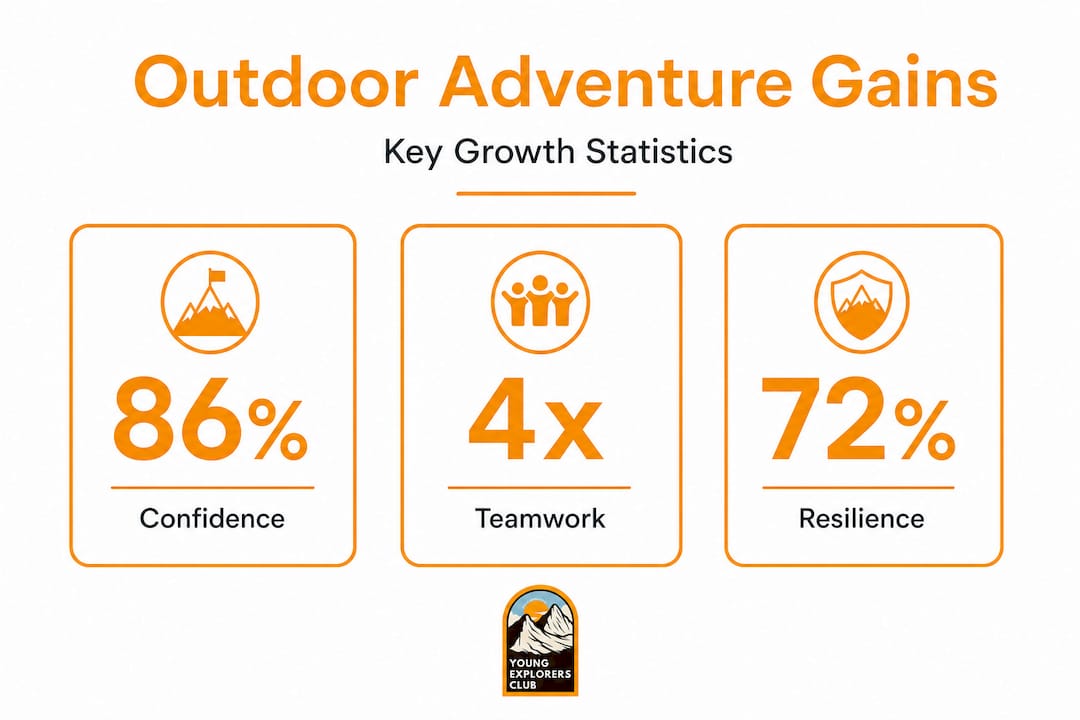
Statistic callout: Studies show that youth who participate in structured outdoor adventure programs report measurable gains in self-confidence and social competency, with effects that persist well beyond the program itself.
Explore more about adventure confidence-building insights and how structured activities outside the classroom produce results that traditional settings often can’t replicate. For a specific look at how group dynamics work in nature, team spirit outdoors breaks down the mechanisms behind genuine cooperation.
What most parents overlook: Prioritizing flexibility and the journey
With the how-to framework covered, it’s worth stepping back to reflect on the deeper value of outdoor family adventures. Here’s something we see often: parents arrive at an outdoor adventure with a clear definition of success. The summit. The full route. Every planned activity completed on schedule. And when a tired 10-year-old or a reluctant 14-year-old slows things down, the parent’s stress rises and the experience sours.
The uncomfortable truth is that rigid success metrics undermine the very thing outdoor adventures are meant to build. Enjoyment, bonding, and real-time adaptability are the actual drivers of youth motivation and long-term resilience. When a child sees a parent pivot gracefully, find joy in the unexpected, and treat a shortened route as a success because everyone is smiling, that models a mindset that serves them for life.
The Appalachian Trail Conservancy recommends that parents expect to modify or shorten activities based on comfort and enjoyment, rather than treating the destination as the only success metric. This isn’t lowering the bar. It’s understanding what the bar actually measures.
Letting the group influence pace and outcomes shifts the dynamic completely. A teen who feels heard about wanting to spend 30 extra minutes at the waterfall is far more engaged on the rest of the trail than one who was dragged past it. These moments of growth through adaptable experiences often become the stories families tell for years.
Pro Tip: Once a day, stop without a reason. Not for water, not for directions. Just stop, look around, and ask your child what they notice. Some of the most memorable learning moments come from the spaces between the planned activities.
Connect your child’s adventure with growth: Our programs and resources
To make preparation even simpler and create lasting learning outcomes, connect with expert-guided programs designed for youth and families.
The frameworks in this guide work beautifully for family-organized trips. But there’s something uniquely powerful about placing your child in a structured, professionally run outdoor environment where every activity is designed with their development in mind.

At Young Explorers Club Switzerland, we combine adventure, safety, and intentional personal growth into programs that do the planning heavy lifting for you. Our teen summer camp programs bring together young people from around the world in the Swiss Alps, where mountain biking, climbing, survival skills, and multisport activities build exactly the confidence and teamwork skills described in this guide. For younger children, our range of outdoor activities for children ensures every age group gets an experience matched to their readiness, in a bilingual, supportive environment that parents trust.
Frequently asked questions
How do I keep kids motivated during outdoor adventures?
Let children help set goals, include fun activities or scavenger hunts, keep distances realistic, and take breaks for snacks and play. Age-appropriate planning with built-in flexibility keeps engagement high across the whole group.
What is the best way to handle weather changes when outdoors?
Check forecasts before leaving, pack layers and waterproof clothing, and plan your route to allow easy turnarounds if conditions worsen. Following youth-oriented packing guidance ensures your kids are dressed for adaptability, not just the forecast.
How do outdoor adventures help build confidence in kids?
Well-structured activities give children a safe space to explore new skills, solve problems with peers, and reflect on their accomplishments. Adventure confidence programs use measurable characteristics like leadership and teamwork to track and reinforce real growth.
What safety protocols are most important for family adventures?
Assign group roles, communicate plans and expected return times, carry a youth-adapted first aid kit, and take frequent hydration breaks. Family-focused safety systems are most effective when roles are established before the hike begins, not in the middle of it.