How Outdoor Camps Help Kids Make Real Friends
Overnight outdoor camps speed friendships: screen-free routines, small cohorts and trained counselors build trust and social skills.
How outdoor camps turn strangers into friends
Outdoor camps turn strangers into friends through sustained, often round-the-clock proximity, shared routines, rituals and device-free time. These settings let children practice trust, humor and reliability with repeated low-stakes interactions. Small, stable cohorts, cooperative tasks and trained counselors help kids build social skills. Multi-day or overnight sessions produce measurable gains in social competence and faster, deeper bonds than fragmented day programs or online contact.
Why immersion matters
Immersion creates far more shared contact hours than short visits, so children move faster from surface talk to honest sharing. Predictable schedules and daily rituals give regular opportunities for trust to develop, while repeated low-stakes exchanges let kids test social skills safely.
Role of screen-free time and structure
Screen-free policies reduce digital distraction and boost face-to-face attention, which encourages deeper, longer conversations. When combined with small groups, cooperative activities and counselors trained in inclusion and conflict mediation, camps provide a scaffold for friendships and help manage homesickness and disputes.
Key Takeaways
-
Immersion matters: overnight camps give far more shared contact hours than day camps, so kids move faster from surface talk to honest sharing.
-
Predictable interactions: repeated low-stakes interactions, shared responsibilities and daily rituals create chances for trust and an inside culture to form.
-
Screen-free attention: screen-free policies cut digital distraction and boost face-to-face attention, leading to deeper conversations.
-
Small stable groups: groups of about 6–12, cooperative activities and counselor training in inclusion and conflict mediation support friendships and manage homesickness and disputes.
-
Parent guidance: parents should match duration to a child’s readiness and choose camps that publish cabin size, counselor ratios and training, device policy and clear social programming.
Recommendations for parents
Match duration to readiness
Parents should consider a child’s prior experience, age and temperament when choosing overnight versus day options. Shorter overnight stays can be a good bridge for kids new to being away from home.
What to look for in camp policies
-
Cabin size: published average cabin or cohort size so you know how many peers your child will be with.
-
Counselor ratios and training: clear counselor-to-camper ratios and evidence of training in inclusion, conflict mediation and child development.
-
Device policy: explicit screen rules to ensure face-to-face social time and reduced digital distraction.
-
Social programming: scheduled cooperative activities, rituals and opportunities for leadership and responsibility.
-
Session length: options for multi-day, overnight and progressive stays so you can grow a child’s confidence over time.
Practical tips
Prepare kids by emphasizing cooperation, practicing short separations and discussing how to handle minor conflicts. Choose camps that communicate clearly about cabin life and counselor support so families know the social framework that will help friendships form.
Why outdoor camps are uniquely good for making real friends
We see friendship form faster at outdoor camps because kids live, eat and play in the same place for days or weeks. About 14 million children attend camps each year (American Camp Association), so this accelerated social learning happens at scale. Our overnight programs amplify that effect by creating continuous, shared routines that turn strangers into teammates.
Proximity matters. Short contacts let kids show only surface traits. Continuous contact reveals habits, humour and reliability. Shared cabins, meals and evening rituals provide repeated low-stakes moments where trust builds naturally. Device limits and screen-free policies reduce distraction and increase real attention to peers, so conversations go deeper and last longer than they would online or in fragmented school settings.
We program activities and schedules to create those micro-rituals — quick cabin check-ins, meal-time roles, evening story swaps — because inside jokes and routines are the scaffolding of friendship. Campers who stay multiple sessions or in 2+ week sleepaway sessions get more of these interactions, which speeds bonding and broadens the pool of potential friends.
How continuous proximity speeds bonding — key mechanics and comparisons
Below are the core reasons proximity accelerates real friendship, and a simple contact-hours comparison to show the magnitude:
- Repeated low-stakes interactions: small, frequent moments (passing a plate, late-night card games) let kids test humour and reliability without pressure.
- Shared responsibilities: chores and team tasks reveal competence and character quickly.
- Rituals and routines: consistent rhythms (wake-up, cabins, lights-out) create predictability, which builds psychological safety.
- Reduced digital distraction: device policies raise face-to-face attention and encourage longer conversations.
- Contact-hours comparison:
- Day camp: ~6–8 hours/day — concentrated activity, limited downtime for bonding.
- Overnight camp: ~24 hours/day — shared meals, cabins and evening routines provide continual social practice.
We recommend parents consider longer sessions if their child needs time to warm up socially. For quick, practical tips on helping kids connect, read our guide to make friends quickly. Camp friendship isn’t accidental; it’s the predictable result of sustained proximity, low-distraction interaction and repeated small moments that let real relationships form.

Evidence and statistics showing camps boost social development
Key statistics and findings
I rely on the strongest figures from camp and public-health research. Here are the facts I use to make decisions and explain outcomes:
- 14 million children attend camps each year (American Camp Association).
- 45% of teens say they are online almost constantly (Pew Research Center, 2018).
- Camps are linked with gains in social competence, confidence, independence and improved peer relationships (reported by camp research organizations).
- Many program evaluations show a large majority of parents and campers notice social-skill improvements after camp (parent/camper reports, program evaluations).
- Play is central to this change: “play is essential to development,” and camps provide both structured and unstructured play that drives social-emotional growth (American Academy of Pediatrics).
How the evidence translates to practice
I see these numbers as proof that concentrated, offline social practice works. High-screen habits leave teens less practiced at face-to-face cues. The Pew Research Center, 2018 statistic gives a clear counterpoint: constant online time reduces in-person rehearsal. Camps create a focused counterbalance.
We design schedules that mix guided exercises with free play to strengthen real-world skills. The American Academy of Pediatrics statement supports this approach: camps deliver both the predictable structure kids need and the unscripted moments where friendships actually form. That balance builds empathy, turn-taking, conflict resolution and emotional regulation.
Parents notice the difference fast. Program evaluations report that most parents and campers see marked social gains (parent/camper reports, program evaluations). We use short assessments and staff observations to track these gains so we can adjust activities and coaching in real time.
Practical ways we apply the research
- Repeated, low-stakes social tasks that mirror real life: cabin projects, team challenges and evening reflection circles. These give kids practice reading faces, managing frustration and celebrating others.
- Reduce passive spectator time and increase active roles. Kids lead small groups, run skits and teach games. Leadership practice accelerates confidence and independence (reported by camp research organizations).
- Coach staff to scaffold rather than rescue. When conflicts pop up, counselors guide resolution instead of solving issues for campers. That produces durable peer skills.
We also help families bridge the gap between screen life and camp life. I recommend parents read our guide on make friends quickly before drop-off. That resource gives short tips to reinforce social habits at home and sustain progress after camp ends.
Use the stats as a planning tool. The American Camp Association and camp evaluations show scale and consistent outcomes. Combine those findings with the AAP’s play emphasis and you get a simple prescription: fewer uninterrupted screens, more intentional play, and repeated opportunities to practice social interactions. That formula produces real friendships and measurable social development.

How structured activities and group design create strong social bonds (mechanisms and measurable skills)
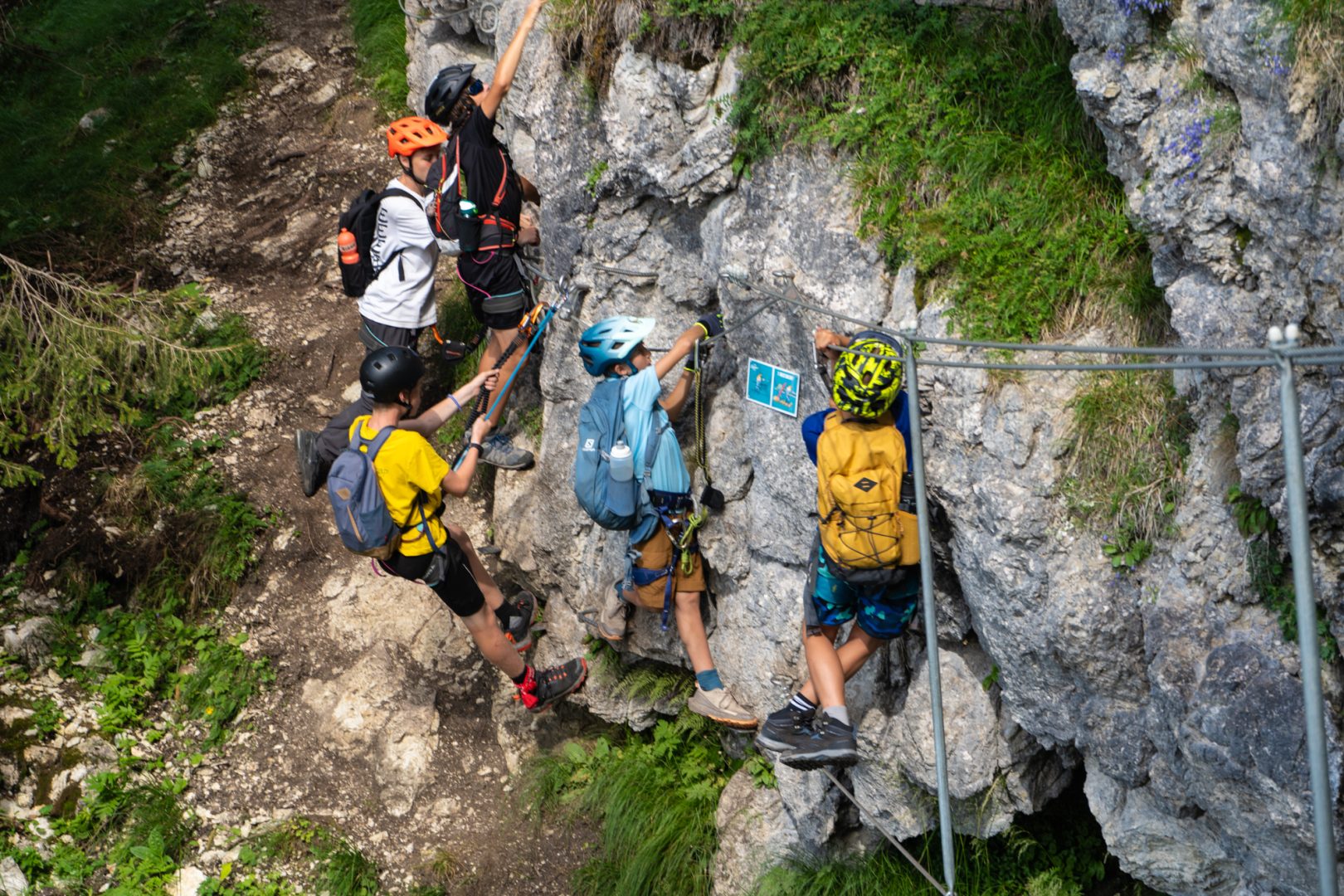
We, at the young explorers club, design groups and programs so kids form real friendships fast. Small-group cohorts of about 6–12 campers let kids interact repeatedly without feeling overwhelmed. Team challenges, low-ropes elements, canoeing trips and cabin tasks give kids clear shared goals. Those tasks create reliance on one another and speed up trust. Daily rhythms — meals, evening programs and shared chores — become micro-rituals that shape an inside culture and cement lasting bonds.
We set activities so each interaction has purpose. Cooperative tasks force students to plan, talk and adjust together. When everyone must depend on one another to succeed, interdependence follows. Competitive events can still bind a group through shared challenge, but they can also create winner/loser dynamics that need careful adult facilitation to keep inclusion high. I often pair a competitive event with a debrief or cooperative follow-up to rebalance team identity.
Core skills and activity examples
Below are the core social skills we build and short activity-to-skill examples that show how each skill develops:
- Communication: campers practice giving clear instruction and active listening during partner tasks and route planning.
- Conflict resolution: we coach small groups to negotiate solutions during resource-limited challenges and cabin disagreements.
- Empathy and perspective-taking: reflection prompts after partner tasks help campers name others’ feelings and viewpoints.
- Cooperation and teamwork: shared goals on a canoe trip or low-ropes course require synchronized effort and shared responsibility.
- Leadership and inclusion: rotating roles in cabins and on teams let quieter kids try leadership and experienced kids practice inclusion.
Activity-to-skill examples in one line each:
- Low-ropes course: builds trust and cooperation.
- Canoe team: builds communication and shared responsibility.
- Cabin chores: builds interdependence and reliability.
- Group games/icebreakers: build perspective-taking and inclusion.
I also ensure activities explicitly teach how to invite quieter peers in. We model phrases, coach turn-taking and reward inclusive choices so leadership looks like making space, not just directing.
Measuring social change and program choices
I use mixed methods to measure social outcomes. Pre/post surveys capture campers’ own sense of connection. Counselor ratings track observable changes in cooperation and inclusion. Peer nominations highlight who children see as friends or leaders. Behavioral observation during tasks gives context to those numbers.
A typical survey item I use reads: “I made a new close friend at camp” with responses from strongly disagree to strongly agree.
Reporting metrics I share include percentage of campers who say they made a close friend, percentage of parents noting increased social confidence, and counselor-rated change in cooperation scores from pre to post.
I keep measurement practical. Surveys are short. Observations focus on specific behaviors — sharing responsibility, asking for help, inviting others. When I spot negative competitive effects I adjust facilitation immediately. For more on how camps promote social skills, I encourage families to read how we help kids build healthy social skills.

Overnight vs. day camps: how duration and dose affect friendship formation
Dose and how immersion accelerates bonds
We see two clear patterns: continuous shared time speeds emotional closeness, and repeated daytime contact builds familiarity more slowly. Overnight camps wrap social routines into a 24/7 cycle — shared cabins, nightly rituals, and waking moments create intense, repeated opportunities for conversation and cooperative problem-solving. Sessions commonly run one to three weeks or longer, which produces faster, deeper attachments because kids move from surface talk to honest sharing in days rather than weeks.
Day camps give repeated daily contact but campers go home each evening. They’re great for steady exposure: kids meet the same peers for 6–8 hours a day, learning games and skills that scaffold friendships. If attendance spans multiple weeks, those bonds can reach similar depth to an overnight session, but they usually need more calendar time.
Concrete comparison helps make the point. A two-week overnight session offers roughly 14 days × 24 hours = 336 hours of continuous shared routines. A two-week day-camp sequence (10 weekdays × ~8 hours) yields about 80 hours of same-group daytime exposure. That disparity explains why overnight programs often produce quicker intimacy.
Intensity also creates challenges. Immersive settings push kids into deeper emotions sooner, which can trigger homesickness or conflict. Proper staff training, clear cabin rituals, and gradual exposure reduce those risks. We encourage families to look at preparation resources to help younger campers prepare emotionally before a first night away: prepare emotionally.
Side-by-side pros and cons
Below I list the main trade-offs so you can match duration to a child’s readiness and your goals:
- Overnight: immersive; faster intimacy through shared routines and nightly rituals. Ideal for older or experienced campers and for forming deep, lasting friendships quickly. Downside: higher emotional intensity and more challenging homesickness.
- Day: lower barrier for first-timers and younger children. Easier on homesickness and fits family schedules. Requires repeated weeks to equal overnight depth.
- Common note: program quality, staff skill, and activity design shape outcomes as much as hours do. A well-run day program with consistent groups can outperform a poorly run overnight session.
We recommend matching duration to the child’s temperament and goals. For fast, deep bonds choose immersive sessions; for gradual social growth, pick day options and commit to multiple weeks.
The role of counselors, staff training, and camp culture in fostering friendships
We set counselor-to-camper ratios commonly at 1:6–1:12 depending on age and activity; lower ratios increase individualized attention and make it easier for friendships to start. Lower ratios let counselors spot exclusion early and step in quickly, so small tensions don’t harden into social rifts. Staff training in inclusion, conflict mediation, and group facilitation raises the odds that camp culture will actively support lasting bonds. For more on how those social skills develop, see how camps build healthy social skills.
When low ratios pair with trained staff, conflict resolution happens sooner and one-on-one support is realistic. That combination reduces unresolved tension and increases inclusion, especially for quieter children. Trained counselors read group dynamics, rotate groupings thoughtfully, and coach kids through awkward moments so friendships can persist beyond a single activity.
Concrete staff practices that create connections
We use the following routines to promote friendships:
- Structured icebreakers that surface commonalities, so kids find shared interests fast.
- Cabin-mate rotations that mix social circles over the course of the session.
- Buddy systems for new or shy campers to guarantee an entry point into the group.
- Inclusive games that reward cooperation rather than just competition.
- Routine 1:1 check-ins by counselors to catch worries before they spread.
- Daily cabin circles where counselors model active listening and empathy.
- Evening sharing time that encourages vulnerability in a safe setting.
Counselors model empathy during cabin circles and coach language for repair after disputes, which teaches kids how to rebuild trust themselves. Rotating small-group tasks exposes campers to a wider range of peers while keeping groups small enough for meaningful interaction. If staff-training rates aren’t available, we ask camp directors for concrete examples or collect parent testimonials to illustrate how training affects friendships.

Practical tips for parents: choosing a camp that helps kids make friends
We, at the Young Explorers Club, look for camps that structure social life so friendships can form naturally. Choose camps that keep cabin groups small and stable — ideally 6–12 campers per cabin — and maintain a counselor ratio around 1:6–1:12 so every child gets attention. Look for programs that pair clear device policies and screen-free expectations with trained counselors who receive conflict-mediation and inclusion training. Keep an eye on how the schedule balances structured activities with unstructured play; both are essential for teamwork and free-form bonding.
Ask these operational questions and expect concrete answers. Request the average cabin size and counselor turnover rates. Ask about counselor background and the specifics of their training, including conflict mediation. Request the camp’s device policy and examples of how screen-free time is enforced. Ask for samples of icebreakers and inclusion practices and a sample daily schedule that shows free time and group time. If the camp hesitates at any of these, consider that a red flag.
For parents of first-timers or shy children, start with gradual exposure. Begin with day camps or short overnight stays to build confidence. I recommend 3–7 day day camps or a one-week sleepaway as stepping stones. A shorter initial stay lets campers practice routines and meet peers without overwhelming social pressure. We follow staged onboarding: meet-the-counselor calls, buddy assignments, and a simple checklist for the child’s first 48 hours to reduce anxiety and encourage connection.
We expect camps to have intentional social programming, not accidental socializing. That means:
- Explicit icebreakers that rotate groupings so kids interact with many peers.
- Cooperative challenges and low-risk shared tasks where success depends on small groups.
- Routine low-pressure hangouts in cabins or common areas that reward slow-building friendships.
We also evaluate device policies as a friendship factor. Camps that enforce clear screen-free periods increase in-person conversations, spontaneous play, and sustained attention to peers. Look for camps that explain enforcement (e.g., phones collected, limited supervised check-ins) and how they handle homesickness messages.
Quick checklist and questions to copy
Use the following list when you contact camps — ask for names, examples, or documentation whenever possible.
- Ask about cabin size and counselor turnover.
- Ask for examples of inclusion practices and icebreakers.
- Ask about the device policy and screen-free rules.
- Request references from other parents regarding social outcomes.
- Ask whether the camp conducts pre/post social-skill surveys or provides follow-up.
We advise requesting concrete examples and parent references. Also ask to see a sample daily schedule to confirm an honest mix of structured group time and unstructured free play. If you want additional guidance on helping your child form connections quickly at camp, consult our resource on how to help your child make friends for practical activities and conversation starters.

Sources
American Camp Association — Benefits of Camp
American Camp Association — Research & Policy (Studies and Reports)
Pew Research Center — Teens, Social Media & Technology 2018
American Academy of Pediatrics — The Importance of Play in Promoting Healthy Child Development and Maintaining Strong Parent-Child Bonds
Bratman S.B., Hamilton J.P., & Daily G.C. — Nature experience reduces rumination and subgenual prefrontal cortex activation
Children & Nature Network — Research
American Psychological Association — The healing power of nature (Monitor on Psychology article)
UNICEF — Play Is a Right: The Importance of Play for Children