
How Swiss Camps Handle Homesick Phone Calls
Swiss camps use short, supervised call windows in the first 48-72 hours to manage homesickness and reduce early departures.
Summary
Swiss camps manage homesick phone calls by using short, scheduled and usually supervised call windows during the critical first 48–72 hours. Staff coach parents to keep messages brief and forward-looking to reduce anxiety. Calls are logged for timing and tone; staff use scripted reassurance and redirection. Persistent or complex cases are escalated to senior staff for faster support. Camps track KPIs and keep records in line with Swiss data-protection guidance to limit early departures. We recommend camps adopt these practices to reduce early exits.
Key Takeaways
- Timing: Most homesick calls occur in the first 48–72 hours. Short, scheduled call windows with supervision lower distress and reduce repeat calls.
- Clear phone policies: Use scheduled windows, time limits (usually 5–15 minutes), and supervision for younger campers to set firm expectations for families and staff.
- Staff training: Staff train in active listening and de-escalation, including redirecting campers to activities, scripted coaching for parents, and clear escalation paths that aim for resolution within 24–48 hours.
- Prevention: Intake screening and pre-camp parent orientation, with 1–2 sentence message templates, help reduce early homesickness.
- Data & KPIs: Camps log anonymized call metadata, follow Swiss data-protection guidance on recordings, and track KPIs (call counts, timing, resolution rates, early departures) to improve practice.
Recommended Implementation Steps
Practical steps camps can adopt to mirror Swiss best practices:
- Define call windows: Establish supervised, scheduled windows during the first 48–72 hours.
- Set limits: Implement clear time limits (typically 5–15 minutes) and communicate them to families before arrival.
- Train staff: Provide training in active listening, scripted reassurance, redirection techniques, and escalation protocols.
- Use scripts & templates: Prepare short, forward‑looking scripts for parents and staff (1–2 sentence templates for pre-camp messaging and on-call coaching).
- Escalate quickly: Route persistent or high-risk cases to senior staff with a goal of resolution within 24–48 hours.
- Monitor & measure: Track KPIs—call counts, timing, resolution rates, and early departures—and review them regularly.
- Ensure compliance: Maintain records and any recordings in line with Swiss data-protection requirements, anonymize metadata where possible.
Metrics & Data Protection
Camps should log anonymized call metadata (timing, duration, general tone) and track resolution outcomes. Where recordings are used, follow Swiss data-protection guidance on consent, storage, and retention. Regular KPI reviews help refine policies and reduce early departures.
https://youtu.be/CQ0P2d38mDM
Overview: How common homesickness is, why phone calls matter, and when they happen
We see homesickness across a wide range of campers. Our camp averages 30 homesick calls per season — well within the 20%–60% prevalence.
Timing drives both risk and response. Most calls cluster in the first 48 hours and many peak: 48–72 hours after arrival. Staff watch the arrival period closely because the first 48 hours are critical; interventions there change outcomes more than later efforts.
Phone calls matter because they can soothe or prolong distress. A short, reassuring call often reduces separation anxiety and supports camper adaptation. Conversely, long or emotionally loaded calls can magnify longing and increase the chance a family asks for early pickup. We track an early departure rate separately and discuss it with parents; early departure: 1%–5% (illustrative) is the range programs commonly cite.
Timing and impact
I monitor when calls happen and how they affect behavior. Day 1 calls are usually about logistics and missing home. Day 2 calls often surface deeper emotion as routine settles and homesickness becomes clearer. After day 3, most campers show steady adaptation and fewer distress calls. I coach parents to keep calls brief, neutral, and forward-looking to help that adaptation.
Variation factors
These are the main variables that change call frequency. Below I list what I watch for and how I act on each.
- Age: younger campers show higher frequency of homesick calls. I schedule extra check-ins for younger age groups.
- Session length: shorter sessions tend to have higher call frequency; longer sessions see more camper adaptation as time passes.
- Prior separation experience: campers with limited overnight separation history have higher homesickness risk. I ask families about prior stays during registration.
- Individual temperament: some kids need more time to settle. I pair them with experienced counselors to speed adjustment.
- Family messaging style: calls that rehearse leaving often increase anxiety. I train parents on call content and timing.
I also provide resources for parents who want hands-on guidance. For practical tips on calming conversations and preparing kids before arrival, I point families to our homesickness support guide.
Operational notes
- Record call timing and tone so follow-up is consistent.
- Use short, scheduled calls in the first 48 hours to reduce impulsive long conversations.
- Escalate to a one-on-one counselor check when calls continue past day 2.
- Communicate early departure implications clearly, since an elevated early departure rate shifts staffing and bed availability.
We collect simple metrics each season: number of homesick calls, timing by day, age group, and any resulting early departures. That data helps me refine policies and coach parents before arrival.
Phone policy, supervision and technology options camps use
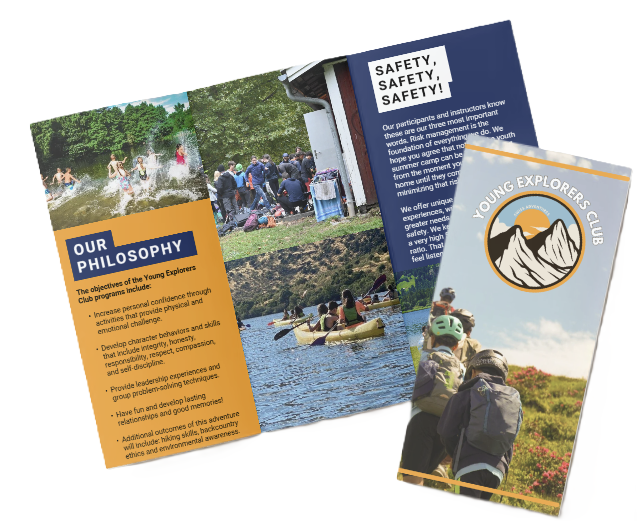
We, at the Young Explorers Club, set clear boundaries so calls help campers instead of increasing homesickness. Policies balance emotional needs with group time. We require scheduled windows and define call duration up front to prevent disruption and repeated requests.
We use common policy elements across programs: scheduled parent call windows; supervised calls; call duration limits; and staff present when needed. Typical metrics we follow are:
- Scheduled call: 5–15 minutes
- Average call duration: 6–12 minutes
- % supervised: ~70% (for younger campers)
- Typical scheduled video slot: 10–20 minutes
Those frames make expectations clear to families and staff. For guidance on timing between time zones I point families to a short how-to on video call.
Technology choices match policy. We run camp-management platforms like CampMinder, UltraCamp, CampBrain and Active/ActiveWorks to schedule slots, record permissions and log metadata. For telephony and conferencing we integrate RingCentral or 3CX for camp lines, and offer Zoom or FaceTime for supervised video slots. WhatsApp and Signal work well for brief text check-ins or group updates, while camp-managed tablets and supervised landline booths give staff control of hardware and privacy. I recommend keeping social-media-style apps off official contact lists and routing everything through camp-managed accounts.
Staff role and parental reassurance protocol are central. We train staff to:
- Introduce themselves at the start of a call
- Keep calls within the agreed call duration
- Escalate concerns using a short script
- Log and anonymize call metadata (time, duration, staff present)
Sample policy (adaptable)
- Who may call: authorized guardians only; emergency contacts listed in CampMinder/UltraCamp/Active/ActiveWorks.
- When: one scheduled call in first 48 hours; ad-hoc calls allowed at staff discretion; additional slots on request during low-activity periods.
- Length: scheduled call: 5–15 minutes; typical scheduled video slot: 10–20 minutes; average call duration: 6–12 minutes recommended.
- Supervision: supervised calls for under-12s; % supervised: ~70% (for younger campers); staff present when camper wants.
- Tools: supervised landline booths, camp-managed phones/tablets, scheduled Zoom/FaceTime slots, WhatsApp/Signal groups for brief messages.
- Escalation & logging: staff follow parental reassurance protocol on emotionally charged calls; log and anonymize call metadata (time, duration, staff present); escalate clinical concerns to senior staff.
I keep these rules visible on enrollment pages and remind families before arrival. For details about staff roles and expectations see camp supervision.
https://youtu.be/oBnHz4C4SfI
Intake, pre-camp orientation and parental messaging strategies
We at the Young Explorers Club run a focused pre-camp orientation and a parent webinar to set expectations and cut early homesick calls. Camps that run pre-camp orientation sessions or parent webinars report lower early homesick calls — illustrative reduction: 10%–40% (illustrative). We frame the sessions around clear rules for contact, emotional prep, and practical tips for parents.
Intake screening
We use intake screening to flag kids who need extra support. Make sure intake screening covers intake questions: previous overnight separations, anxiety history, past homesickness incidents and attachment concerns. Key intake questions include:
- Previous overnight separations?
- History of anxiety or mental-health diagnoses?
- Past homesickness incidents and how they were handled?
- Attachment concerns and typical coping strategies?
- Parent/camper communication preferences (text, call, video)?
We log answers and assign a contact staffer for high‑risk campers so parents have a single point of contact.
Parent messaging, templates and call policy
We give parents clear messaging guidelines and short parent templates. Emphasize that brief, upbeat messages work best. Recommend message length: 1–2 sentences and coach parents to avoid words like “homesick” or “pick up“. We also discuss text vs. voice and when each helps; for practical tips on calls across time zones we link to a short guide on text vs. voice: text vs. voice.
Two-sentence parent templates we provide:
- Template A (short): “Hi! We’re thinking of you — have a great day. Can’t wait to hear about the campfire tonight! Love, Mum & Dad.”
- Template B (reassuring): “So proud of you — have fun meeting new friends. Call us after dinner if you want to chat.”
We ask parents to follow a simple policy example: limit: 1 parent call in first 48 hours (policy example). Sample pre-camp email language we send: “Recommended: send one short, upbeat text or voicemail during the first 48 hours. Keep messages brief and positive; avoid mentioning pickup or homesickness.”
For measurement we track number of homesick calls among campers whose parents attended orientation vs. those who didn’t and plot a comparative chart if possible to evaluate impact. For guidance on emotional prep we also recommend our pre-camp orientation material: pre-camp orientation.

Staff training, call scripts and techniques to resolve homesickness
We train every counselor on core skills: active listening, de-escalation, distraction techniques, structured scripting for parent conversations, and a clear escalation protocol. We schedule 4–8 hours training pre-season and run brief weekly refreshers to keep skills sharp. That combination of staff training hours and repeat practice drives consistency.
Training dosage and effectiveness
We use focused modules that blend instruction with role-play and real-call reviews. Role-play lets staff practice scripted responses and improvise within safe bounds. We log anonymized outcomes and track the correlation between staff training hours and homesickness resolution rate. Camps that adopt a dedicated training program report faster resolution — 60% vs 30% (example). Our operational target is resolution within 24–48 hours; we commonly aim for 24–48 hours (target) for most incidents.
Scripts, phrasing and escalation
Keep openings short and reassuring. Use the example line verbatim when it fits: “Hi — I’m [Name], the counselor with [Camper]. They’re doing okay and we’re helping them join an activity right now.” Teach counselors to use redirecting questions such as asking about a favorite activity, a friend’s name, or a specific game to pivot attention. Coach parents on brief, supportive language: “A short, upbeat message helps. If you’d like to say one thing to encourage them, that works best.” Apply de-escalation steps if the camper stays upset, then follow the clinical referral/escalation protocol and notify senior staff.
I recommend these staff actions during and after each call:
- Verify identity and current status.
- Use active listening and validate feelings.
- Redirect to a specific activity or friend.
- Coach parents on short, encouraging remarks.
- Log the call (anonymized) and next steps.
- Schedule a follow-up check-in within 12–24 hours.
- Escalate if needed and record resolution timing.
Short staff checklist for call handling
Use the checklist below during every homesick call. It keeps calls consistent and records clear.
- Verify camper identity and current status.
- Use active listening and validate feelings.
- Redirect to a specific activity.
- Coach parent on brief, supportive language.
- Log call (anonymized) and actions taken.
- Schedule follow-up check-in within 12–24 hours.
- Escalate to senior staff or clinical lead if needed.
- Record resolution timing.
Training methods I favor
I run scenario-based drills and graded role-play so staff face a range of intensities. We review anonymized call logs weekly to refine scripts and to test which scripted responses work best. Tracking outcomes lets us adjust training hours and content quickly. For practical tips on calming tactics and parent coaching, see our piece on homesickness prevention.

Legal, safeguarding and measurement: Swiss rules, documentation and KPIs to report
We follow Swiss privacy rules closely. The DSG (Swiss Data Protection Act) defines how we collect, store and share call-related data.
Have legal counsel review any policies on storage/retention of call logs and recordings. Recordings require explicit parental consent under most interpretations of the DSG. Keep data minimised and document the legal basis for each retention decision.
Safeguarding measures are non-negotiable. We implement a two-adult rule whenever possible and require staff presence during calls with minors under a certain age. Recording calls only happens with parental consent and clear protocols. Train staff to log who is present and to step in if a call escalates; this preserves safeguarding and reduces risk.
We keep a structured incident log for every homesick interaction. Each entry should include:
- Timestamp and caller identity
- Staff present
- A concise summary of the issue and steps taken
- Follow-up actions and outcomes
Follow incident log retention practices and align with local guidance: incident log retention — recommended retention: 1 year (check local regs). For recordings and sensitive notes, consult counsel before extending retention.
KPIs and reporting
Track these KPIs each season and report them consistently. Sample numbers for a mid-size programme:
- Total campers per season: 800
- Homesick incidents: 120 (15% incident rate)
- Calls logged: 95
- Average call duration: 8 minutes
- Resolved within 48 hours: 78% (93/120)
- Early departures due to homesickness: 2 (0.25% of campers)
- Staff training on homesickness (avg): 6 hours
Set practical benchmarks and targets:
- Reduce repeat calls by 30% in year 1.
- Resolve >70% homesickness incidents within 48 hours.
- Early departure rate <1% (ambitious target).
Use visuals to make these KPIs actionable. I recommend:
- Bar charts for call timing (day 1 vs day 2 vs later).
- Line charts for year-over-year trends.
- A KPI dashboard snapshot showing incident rate, resolved within 48 hours and early departure rate at a glance.
For operational guidance and parent communication tips, point families to resources like homesickness at camp. I require monthly reviews of the KPI dashboard and quarterly legal audits to keep our safeguarding and DSG compliance aligned with practice.
https://youtu.be/WNsfsFtJCWo
Practical checklists, templates and anonymized Swiss case studies to include
Ready-to-use one-pager checklist
We provide a compact checklist you can print and pin at the office or hand to parents at drop-off. Use this as a single-sheet quick reference.
- Intake screening: capture previous overnight separations, anxiety history, past homesickness and relevant notes from the intake questionnaire.
- Parent pre-camp guidance and webinar attendance: confirm webinar completed and share parent templates for first-day calls.
- Scheduled supervised call windows: set first 48 hours emphasized windows and note time slots in the session plan.
- Staff homesickness training — training 4–8 hours: record completion and trainer name.
- Logging system for calls and anonymized outcomes: maintain an incident log updated after each call.
- Escalation plan and clinical referral pathway: list contacts, thresholds for escalation and next steps.
- Privacy consent wording for supervised calls: have signed consent before any recorded or supervised conversation.
Templates, files and anonymized vignettes
We include downloadable parent templates; staff scripts; intake questionnaire items for homesickness risk; incident log; sample phone policy; and consent wording for supervised calls. Provide copyable text and PDFs, and offer multilingual templates in German, French, Italian and English so local families can read and sign in their language.
I recommend embedding a single-page PDF with the parent template: 1–2 sentences for first-day calls and a staff script: 6–8 steps for guided staff responses.
Sample privacy consent wording (short): “I consent to a supervised call between my child and myself during the scheduled camp call window. I understand staff may listen to ensure wellbeing and to follow camp safety procedures.” Place this on the intake form and save a signed copy in the camper file.
Use these template items as-is or adapt language for local cantons. For files, offer:
- Copyable text blocks for SMS or email parent templates.
- Printable intake questionnaire pages that include homesickness flags.
- An incident log form pre-populated with fields: date, time, caller, length, interventions, outcome.
Anonymized Swiss case vignettes (for training and parent reassurance). Include the exact example vignette, verbatim:
“Age 9, 2-week session; 1st-day call lasted 12 minutes; staff used distraction + parent coached to keep message short; camper engaged in activity and did not call again; resolved within 24 hours.”
Add two additional anonymized vignettes with clear metrics for staff learning:
- Age 11, 1-week session; initial call 20 minutes; staff implemented activity re-engagement and peer buddy check; resolved in 36 hours.
- Age 7, 3-week session; initial call 8 minutes; staff shortened subsequent calls, increased daytime activities and parent messaging to positive prompts; resolved in 48 hours.
Training pull-quote: 12-minute initial call; resolved: 24 hours.
Benchmarks (state plainly so staff know targets):
- Training: 4–8 hours
- Reduce repeat calls by: 30%
- Resolution target: >70% within 48 hours
- Early pickup target: <1%
For operational use, we keep a logging taxonomy: incoming/outgoing, supervised/unsupervised, staff interventions (distraction, peer buddy, scheduled activity), and outcome (resolved, follow-up, clinical referral). If escalation is needed, refer to the clinical referral pathway on the back of the checklist and contact the designated clinician.
Link parents to additional reading on homesickness prevention with a short anchor inside welcome materials: homesickness prevention.

Sources
American Camp Association — Homesickness at camp
Bundesamt für Statistik (BFS) — Kultur, Sport und Freizeit
Federal Data Protection and Information Commissioner (FDPIC) — Data protection in Switzerland
Schweizerisches Rotes Kreuz — Angebote und Schutzkonzepte
American Academy of Pediatrics / HealthyChildren — Separation Anxiety
CampMinder — Camp management software
UltraCamp — Online camp registration & management
CampBrain — Camp registration & management software
Active (Activenetwork) — Camp & recreation management (ActiveWorks)
WhatsApp — Simple. Secure. Reliable messaging
Zoom — Video Conferencing, Web Conferencing, Webinars