
Summer Camp In Switzerland For European Families: Easy Access And Convenience
Swiss summer camps made easy for families: quick 30–120min transfers from ZRH/GVA/BSL, shuttles, train links and clear pricing — easy travel.
Travel to Swiss summer camps — quick guide
Overview
We help European families travel to Swiss summer camps with minimal fuss. Major air hubs — Zurich, Geneva and Basel — link closely to camp regions. Transfers usually take 30–120 minutes. High‑speed and regional rail offer frequent connections. Camps often operate in several languages and post clear pricing. They also run organised shuttles and give firm guidance on passports, insurance and packing. That keeps door‑to‑door logistics simple. Parents spend more time with their children and less on transport.
Key Takeaways
- Zurich, Geneva and Basel link directly to most camp regions. Transfers typically take 30–120 minutes, depending on the camp’s location.
- Travel documents: Travellers from the EU/EEA usually use national ID for Schengen travel. Families from the UK need passports. Non‑EU nationals must check Schengen stay limits and visa requirements.
- Rail travel: Daytime direct trains cut door‑to‑door time and lower emissions. Book 6–12 weeks ahead and reserve seats on high‑speed routes.
- Typical costs: day camps CHF 150–600/week (≈€140–€560). Residential camps CHF 800–3,500/week (≈€740–€3,240). Day programmes generally suit ages 3–12. Residential stays suit 8–17.
- Arrival logistics: Confirm shuttle services or parking before travel. Pack a connection kit and carry medical documents. Factor transfer time into your arrival plan.
At-a-glance: why Switzerland is easy for European families
We, at the Young Explorers Club, make access a priority so families spend more time with kids and less on logistics. Major air hubs — Zurich (ZRH), Geneva (GVA) and Basel (BSL) — connect directly to most camp regions, and typical airport-to-camp transfers run 30–120 minutes.
EU and EEA citizens travel visa-free within the Schengen Area; carrying national ID cards is usually enough. UK families post‑Brexit will need passports. Camps operate in a multilingual environment: German, French, Italian and English are widely used, so language rarely becomes a barrier for international families.
Here’s how the major hubs map to camp areas and typical transfers:
Quick airport orientation
- Zurich (ZRH): central and northeast Switzerland — ideal for camps around Lucerne, Interlaken and Engadin; transfers often 45–90 minutes.
- Geneva (GVA): western Switzerland and Valais/Verbier regions — the hub for families coming from France and southern UK; transfers commonly 60–120 minutes.
- Basel (BSL): northwest access — convenient for families from Germany and eastern France; many camps are within 30–90 minutes.
We often recommend the Paris→Geneva route for camps in Verbier/Valais. Paris–Geneva by TGV Lyria takes roughly 3h05 to Geneva, then a regional shuttle to Verbier of about 1h45. Families can expect a straightforward door-to-door journey and arrive for midday or afternoon check-in without stress. For practical tips on connections and local transfers, consult our transport guide.
Expect transparent pricing that helps planning: day camps typically run CHF 150–600 per week (≈ €140–€560). Residential camps range CHF 800–3,500 per week (≈ €740–€3,240). Age group breakdowns are simple: day camps usually serve ages 3–12, while residential programmes cover roughly 8–17. I recommend checking travel times and transfer options alongside price when booking; small differences in transfer length can make a big difference for family convenience.
Travel times & typical connections (train and plane)
Typical connections & approximate durations
I list common door-to-door routing estimates below so you can plan logistics and arrival windows. Times are approximate — always check live timetables and fares with SBB and TGV Lyria.
- Paris → Geneva: ~3h05 by TGV Lyria.
- Paris → Zurich: ~4h direct by TGV Lyria / high-speed train.
- London → Geneva: ~7h+ by Eurostar + TGV Lyria (via Paris or Lille); direct flight ~1h45.
- Berlin → Zurich: flight ~1h40.
- Milan → Zurich: ~3h20–3h40 by EuroCity.
- Munich → Zurich: ~4h by ICE/EC.
- Frankfurt → Zurich: ~4h by ICE.
- Brussels → Geneva: ~6h by train.
- Amsterdam → Zurich: ~7–8h by train.
Example itinerary and practical tips
We, at the young explorers club, often recommend the Paris morning TGV option for a same-day arrival: board a morning TGV to Geneva (~3h05), take a midday shuttle to alpine bases (≈1h45), then check in that afternoon.
Allow at least 45–90 minutes between international arrivals and onward regional connections for passport control, luggage, and transfers.
I advise booking high-speed seats early for the best fares and choosing flexible tickets if your family needs wiggle room. Use SBB for precise regional connections and platform changes, and TGV Lyria for exact high-speed schedules. For short flights from major hubs, factor in airport transfer time and security — often 60–90 minutes extra each way.
Pack a small connection kit (documents, snacks, chargers, small toiletries) to avoid scrambling during transfers. If you’re coordinating multiple families, stagger arrival windows to simplify camp check-in and shuttle capacity.
For a fuller planning checklist and timing tips see our Travel planning guide.

Train travel advantages, cost and booking tips
We, at the Young Explorers Club, recommend trains for family travel to Swiss summer camps. Trains drop you in city centers, which often cuts door-to-door time compared with flying into out-of-town airports. Shorter transfers mean less stress for kids and simpler connections to camps.
Trains also score on comfort and luggage. You can bring larger bags without heavy fees and move strollers or equipment between carriages more easily. Pick daytime direct services and you’ll avoid late-night arrivals and complicated overnight transfers. Domestic links inside Switzerland work best via SBB for schedules and bookings, and international travelers can combine SBB with major operators such as TGV Lyria, EuroCity, ICE and Eurostar — including Eurostar + TGV combos for UK–Switzerland travel.
Practical advantages
I list the practical advantages here:
- City-center to city-center travel often reduces door-to-door times.
- Lower carbon footprint compared with short-haul flights.
- Easier luggage handling and generous carry options.
- Simpler transfers and less time in security lines with young children.
Typical pricing and how to read it
Advance train fares vary widely by route and booking horizon. For example, Paris–Geneva advance tickets commonly range from €35–€120 one-way. Prices will climb closer to departure and during peak summer. Flights on the same corridors can range roughly €40–€200 depending on season, so trains can be competitive or cheaper once you factor in airport transfers and extra baggage costs.
Booking rhythm and tactics
Recommended timing and tactics for booking:
- Book 6–8 weeks ahead for the best standard rail fares.
- Book earlier for peak summer; 6–12 weeks ahead is safer for families.
- Watch for early-bird promotions that may appear even earlier.
- Prefer direct daytime trains when you’ll have luggage or young children.
Operational choices
Use SBB for Swiss domestic connections and timetable checks, and buy international segments via the operator selling the best advance fare (TGV Lyria, EuroCity, ICE or Eurostar). Confirm seat reservations on high-speed routes; reservations can be compulsory on some services.
Quick booking checklist
- Book 6–8 weeks ahead for typical discounts; extend to 6–12 weeks in July–August.
- Choose direct daytime trains to minimize transfers.
- Reserve seats on high-speed and international services.
- Compare total door-to-door cost, not just ticket price — include transfers, taxis, or rail-to-camp shuttles.
- Use SBB to plan Swiss legs and check connection times.
- Pack smartly and use flexible luggage options; see our what to pack checklist for families.
Flights, low-cost options and airport hubs
Direct flights from most European capitals to Zurich (ZRH) and Geneva (GVA) take about 1–2 hours. Connections to Basel (BSL), Lugano (LUG) and seasonal Sion (SIR) add flexibility for families spread across the continent. Short flight times make arrival days simple, but total travel time depends on transfers and airport procedures.
Key routes and carriers
I often see families book with Swiss, easyJet, British Airways, Lufthansa, Air France and ITA, plus a number of regional operators. Typical one-way economy fares range from €40–€200 depending on season and how far ahead you book. Low-cost options can be cheap upfront — watch baggage and ancillaries closely, since fees can double the ticket price. Compare door-to-door time, not just airborne minutes. For some city-to-camp pairs a direct train can beat flying once you include check-in, baggage collection and a coach transfer.
Practical travel tips
Below are quick actions we recommend to keep transfers smooth and costs predictable:
- Check whether the camp runs organised shuttles. A flight arrival plus a 60–90 minute coach transfer is common. Camps often coordinate shuttle times.
- Factor in baggage fees on low-cost fares. Add sports kit, extra shoes and any musical instruments to your budget.
- Compare total travel time including airport procedures. Trains may be faster for short hops.
- Book early for the best seats and wider flight choices; last-minute fares can spike in peak season.
- Time your arrival to avoid tight connections. We allow at least 2–3 hours between flight arrival and shuttle departure.
- Read seasonal schedules for smaller airports like SIR; routes may only run during summer.
- Use the parents guide to plan details and ground transport options.
We check all these items on behalf of families when coordinating pick-ups, and we’ll remind you of transfer times and baggage limits before travel.
Driving, car transfers and mountain logistics
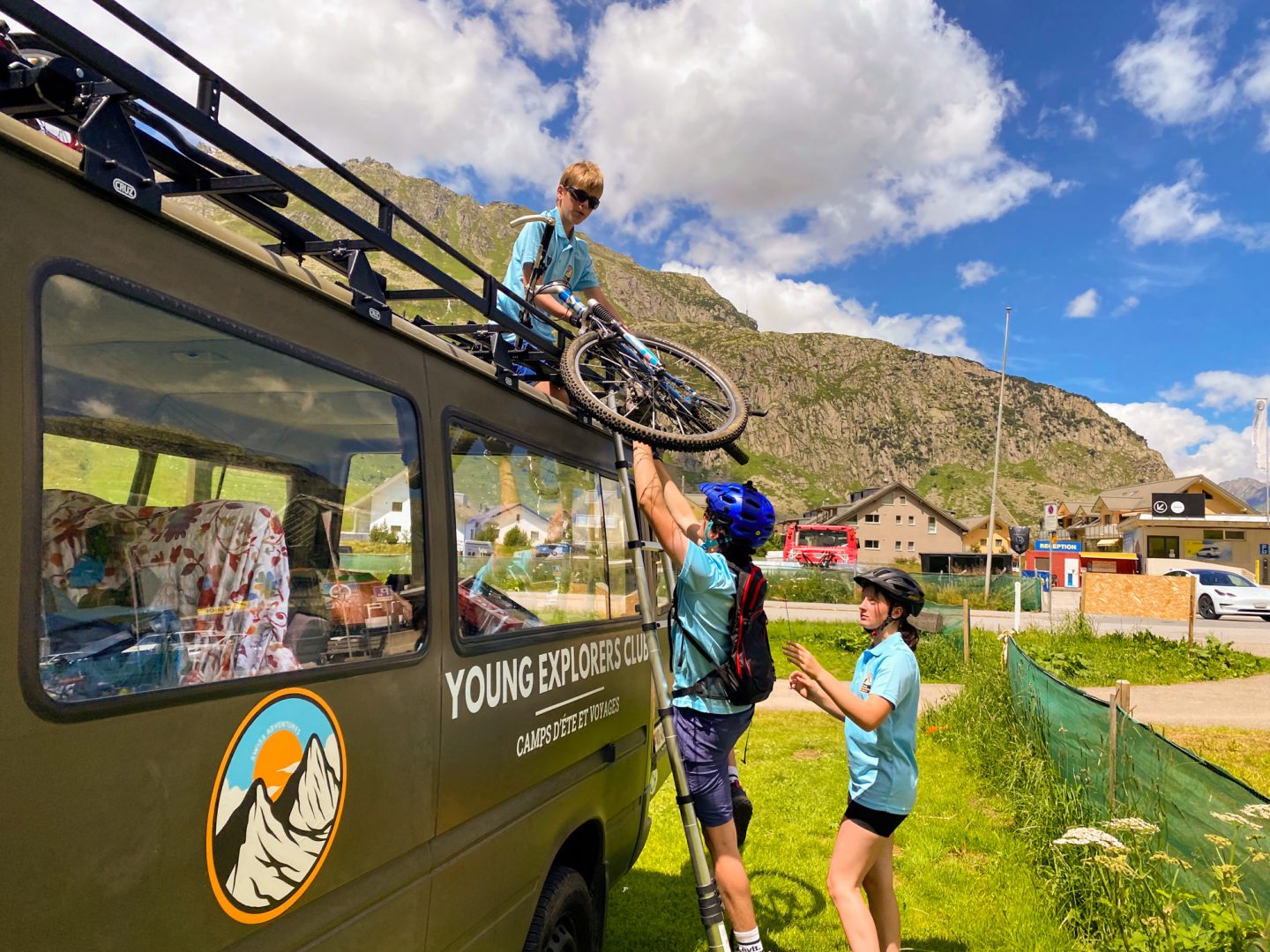
We, at the young explorers club, handle driving and transfer advice so families can plan travel with confidence. Routes are short by Swiss standards and transfers are predictable: Geneva to Verbier/Valais mountain areas typically takes 1–2 hours; Zurich to Lucerne and central Switzerland resorts is 45–90 minutes; Zurich to Interlaken and the Bernese Oberland runs about 1.5–2.5 hours; Milan into Ticino or southern Switzerland averages 2–3.5 hours. Expect most car transfers to fall between 45 and 150 minutes depending on traffic and final drop-off.
Swiss motorways are well maintained and fast. You must display the annual motorway vignette for any motorway use. Cross-border driving within Schengen is straightforward. Bring vehicle registration, proof of insurance (carry the green card if your insurer requires it) and valid ID for every traveller. Small delays can happen at border crossings during peak holiday weekends, so factor that into your timing.
Mountain and remote-access notes you should plan around:
- Some villages restrict private vehicles; the last leg may require a shuttle, local bus or cable car.
- Parking availability varies widely. Camps sometimes charge for parking or insist on designated drop-off points and timed arrivals.
- Narrow mountain roads and hairpins mean speed averages drop considerably; allow extra time for the final ascent.
Public transport often competes well with driving for convenience and predictability. For timed connections, local shuttle info and family-friendly transfer options consult our getting around Switzerland resource.
Driving checklist for families
Use this checklist before departure so you don’t hit unexpected snags:
- Vehicle registration document and proof of valid insurance (green card if required).
- Motorway vignette displayed on the windscreen.
- Compliant child seats and any boosters required by law.
- Passports or national ID cards for every traveller.
- Route plan with alternative roads and estimated transfer times.
- Parking plan: reserved spaces, charges, or camp drop-off arrangements.
- Shuttle/cable car reservations if the camp’s last mile forbids private cars.
- Emergency numbers, local breakdown coverage and some cash for small parking fees.
We recommend booking transfers and checking the camp’s parking policy well in advance.
Camp types, costs, sample providers, health, documents and practical packing
We, at the Young Explorers Club, group camps by format and age so families can pick what fits their child and schedule. Day camps (ages 3–12) run daytime programmes with local pick-up. Residential or boarding camps take campers aged roughly 8–17 for one or more weeks and include full board and activities. Specialist camps focus on adventure, language immersion, sports, STEM or the arts. Family camps let parents join activities alongside children.
Typical costs (2020s snapshot) vary widely. Day camps usually range from CHF 150–600 per week (≈ €140–€560). Residential/boarding camps typically run CHF 800–CHF 3,500 per week (≈ €740–€3,240). Many providers offer multi-week discounts, early-bird rates and sibling reductions. We encourage families to factor in travel, insurance and any optional excursions when comparing prices. For rail savings and logistical ease we often recommend the Swiss Travel Pass for family travel and camps’ group shuttles; the pass can cut costs and simplify transfers—consider a pass when booking. Swiss Travel Pass
Representative providers to scout include Les Elfes International (Verbier); Aiglon College summer programmes; International School of Geneva; Zurich International School; La Garenne (Montreux); and regional sports/adventure camps across Engadin and Davos. For any camp you shortlist, verify these essentials before you book: age range, exact dates, a sample weekly price, what’s included (meals, excursions, insurance), airport shuttle or pick‑up options, and primary teaching languages. Camps often state whether they include on-site insurance or require families to provide proof.
Health and documents
We expect families to bring proof of entitlement to public healthcare where applicable. European travellers should carry the European Health Insurance Card (EHIC); UK travellers should bring a GHIC if eligible. Non-EU nationals must check Schengen rules (90 days in any 180-day period) and confirm visa requirements. Camps commonly require proof of travel and medical insurance—so secure that policy before arrival.
Most camps ask for:
- Copy of the child’s passport or national ID.
- A signed parental medical consent and authorization form.
- Emergency contact information and an up-to-date medication list with dosing instructions.
- Proof of the travel/medical insurance the camp requires.
We advise families to note any allergies, dietary needs and special medical plans in advance. Camps usually request an emergency care plan and may ask for physician notes if a child needs regulated medication at camp.
Packing and on-site practical notes
Pack smart and label everything. Typical items we tell families to include are:
- Layered clothing for warm days and cool evenings.
- Sturdy hiking shoes plus comfortable trainers.
- Swimwear and quick-dry towel.
- Sun protection: hat, sunscreen, sunglasses.
- Waterproof jacket and lightweight rain gear.
- All medications in original packaging, with clear instructions and a copy of prescriptions.
- A written emergency plan and camper medical form.
- Swiss plug Type J (230 V) adapter and a small power bank.
- Name labels for clothing, water bottles and devices.
Many international camps can accommodate special diets and have multilingual staff, but mobility access may be limited at higher-altitude or remote venues. For booking timing, reserve summer slots 3–6 months ahead or earlier for popular international programmes; book 6–12 weeks ahead to hunt down rail bargains and lower fares. When you confirm a place, double-check included services so you won’t pay twice for transfers, meals or excursions.

Sources
Swiss Federal Railways — Timetables & connections
TGV Lyria — Paris–Geneva / Paris–Zurich schedules
Eurostar — International connections to continental Europe
State Secretariat for Migration (SEM) — Entry and residence / Schengen information
Switzerland Tourism — Travel information and regional gateways
Swiss Travel System — Swiss Travel Pass fares and conditions
Zurich Airport (ZRH) — Flights & transport information
Geneva Airport (GVA) — Official passenger information
EuroAirport Basel Mulhouse Freiburg (BSL) — Flights & connections
European Commission — Schengen Area and border rules
European Commission — European Health Insurance Card (EHIC) information
Federal Office of Public Health (FOPH / BAG) — Health information for travellers
Swiss Federal Customs Administration — Motorway vignette & driving information