

Travel Summer Camps 2026: 30% Confidence & Skills Boost
Discover how travel summer camps deliver 30% confidence gains through adventure sports, language immersion, and personal development. Expert guide for parents choosing transformative programs.
Most parents view travel summer camps as expensive vacations with minimal educational return. Research reveals these programs actually deliver measurable improvements in confidence, language acquisition, and personal development. This guide clarifies what travel summer camps truly offer, how they foster growth through adventure sports and language immersion, and how to select the right program for your child’s developmental needs.
Table of Contents
- Understanding Travel Summer Camps: Definition And Scope
- The Role Of Adventure Sports In Child Development
- Language Learning Through Immersive Camp Environments
- Personal Development Outcomes: Beyond Adventure And Language
- Safety And International Considerations For Parents
- Common Misconceptions About Travel Summer Camps
- Comparing Travel Summer Camps With Traditional Camps
- Choosing The Right Travel Summer Camp For Your Child
- Explore Transformative Travel Summer Camps With Young Explorers Club
- Frequently Asked Questions About Travel Summer Camps
Key Takeaways
| Point | Details |
|---|---|
| Holistic Development | Travel camps integrate adventure, language immersion, and personal growth into comprehensive programs. |
| Confidence Building | Adventure sports deliver approximately 30% improvement in self-confidence and problem-solving abilities. |
| Language Acceleration | Immersive bilingual environments accelerate language acquisition by up to 40% compared to classroom learning. |
| Parental Satisfaction | Parents rate developmental outcomes at 4.7 out of 5, reflecting high satisfaction with growth results. |
| Enhanced Safety | Travel camps report 15% fewer safety incidents than traditional camps through strict EU compliance protocols. |
Understanding Travel Summer Camps: Definition and Scope
Travel summer camps represent multi-week international programs combining adventure sports, language immersion, and structured personal development activities. Unlike traditional day camps or residential programs confined to single locations, these camps move participants through diverse European destinations while maintaining consistent educational and developmental frameworks.
These programs typically serve children and teenagers aged 8 to 17 years. The age-specific design ensures activities match developmental stages while challenging participants appropriately. Younger children engage in supervised group adventures building foundational skills, while teenagers tackle more complex challenges requiring advanced problem-solving and leadership.
The international immersive nature distinguishes travel camps from conventional options. Participants experience multiple cultures, languages, and environments within single sessions. This exposure builds cultural competence and adaptability that classroom education cannot replicate.
Core program elements include:
- International travel across multiple European destinations
- Adventure sports like mountain biking, climbing, and survival skills
- Structured language learning in bilingual environments
- Cultural immersion through local interactions and experiences
- Personal development activities focusing on leadership and teamwork
The comprehensive approach of travel summer camps creates synergies between physical challenges, cognitive development, and social-emotional growth. Each component reinforces the others, producing outcomes greater than isolated activities could achieve.
The Role of Adventure Sports in Child Development
Adventure sports form the physical foundation of travel camp experiences. Mountain biking through Alpine trails, scaling climbing walls, and practicing survival skills in wilderness settings push children beyond comfort zones in controlled, supervised environments. These challenges build physical capabilities while developing crucial psychological attributes.
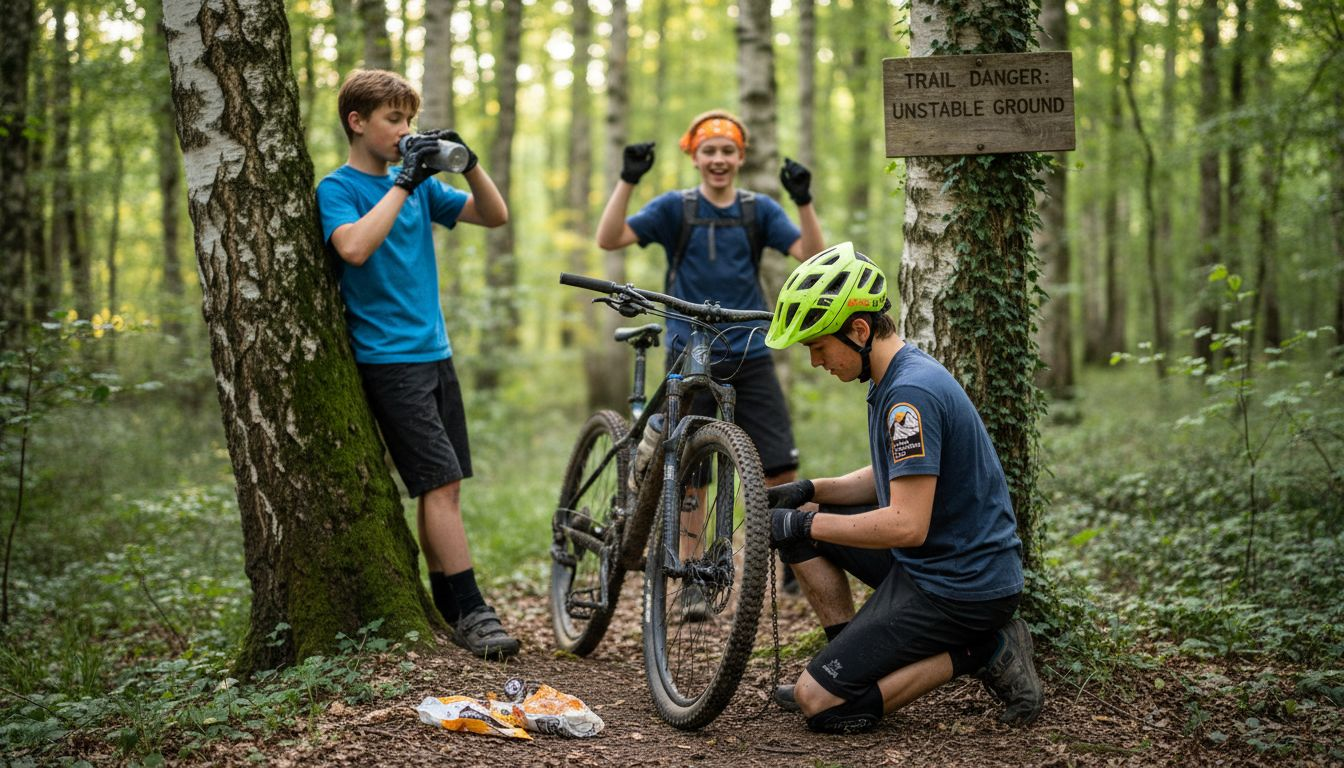
Research demonstrates that structured adventure activities generate approximately 30% improvement in self-confidence and problem-solving skills. The gains stem from mastering progressively difficult tasks, receiving immediate feedback, and experiencing tangible achievement. When a child successfully completes a challenging climb or navigates a difficult trail, the confidence boost extends beyond the immediate activity.
Teamwork emerges naturally from group adventure challenges. Participants must communicate effectively, coordinate actions, and support teammates to succeed. Multi-day expeditions require collaborative planning, shared responsibility, and mutual encouragement. These experiences teach cooperation far more effectively than classroom exercises.
Key developmental benefits include:
- Physical fitness and coordination improvements
- Enhanced risk assessment and decision-making abilities
- Increased resilience through overcoming physical challenges
- Stronger peer relationships built through shared achievements
- Leadership skills developed by guiding group activities
Pro Tip: Prepare your child physically before camp by introducing hiking, cycling, or climbing activities at home. Basic fitness and familiarity with outdoor challenges maximize camp benefits and reduce initial adjustment stress.
Adventure sports create authentic challenges where children experience real consequences of decisions and actions, teaching lessons that abstract instruction cannot replicate.
The benefits of adventure camps extend well beyond the program duration. Skills and confidence gained transfer to academic performance, social relationships, and future challenge navigation.
Language Learning Through Immersive Camp Environments
Language immersion represents the second pillar of travel camp programs. Unlike classroom instruction relying on rote memorization and grammar drills, immersive environments force practical language use in authentic contexts. Children communicate to meet real needs, negotiate activities, make friends, and solve problems.
Most European travel camps operate in bilingual or multilingual environments. English and French dominate, though some programs incorporate German or Italian depending on location. Staff members speak multiple languages fluently, modeling natural code-switching and providing support when participants struggle.
Research indicates that immersion accelerates language acquisition by approximately 40% compared to traditional classroom methods. The acceleration results from constant exposure, immediate feedback, and high motivation. Children want to communicate with peers and participate fully, driving active practice rather than passive study.
Effective language immersion combines:
- Structured morning language classes teaching grammar and vocabulary
- Afternoon activities conducted entirely in target languages
- Multilingual peer groups encouraging natural practice
- Cultural experiences providing authentic language contexts
- Evening social activities reinforcing conversational skills
Pro Tip: Select camps offering graded immersion levels matching your child’s current language ability. Complete beginners benefit from gradual introduction with more native language support, while intermediate learners thrive in deeper immersion with minimal translation.
The language immersion approach at specialized camps produces functional fluency rather than academic knowledge. Children learn to think and express themselves directly in target languages instead of mentally translating from native tongues.
Personal Development Outcomes: Beyond Adventure and Language
Travel summer camps explicitly target social-emotional growth alongside physical and cognitive development. Program designers structure activities to build specific attributes like leadership, empathy, independence, and self-awareness. These outcomes often matter most to parents evaluating long-term program value.
Leadership opportunities emerge throughout camp experiences. Older participants lead younger groups during activities, plan expedition routes, and facilitate evening discussions. These responsibilities develop decision-making abilities, communication skills, and accountability in low-stakes environments where mistakes become learning opportunities.
Empathy and cultural competence grow through diverse peer interactions and cultural immersion. Children encounter different perspectives, customs, and communication styles daily. Navigating these differences builds tolerance, curiosity, and interpersonal sensitivity that increasingly globalized futures demand.
Parents consistently rate personal development outcomes highly. Average satisfaction scores of 4.7 out of 5 regarding developmental growth reflect observable changes parents notice after camp. Children return more independent, confident, and socially capable.
Key personal development outcomes include:
- Enhanced self-confidence from mastering new skills
- Greater independence through managing daily routines
- Improved emotional regulation under stress or challenge
- Stronger communication and conflict resolution abilities
- Increased cultural awareness and perspective-taking
Experiential learning methodology underpins these outcomes. Rather than lectures about teamwork or resilience, children experience authentic situations requiring these attributes. The emotional weight of real challenges makes lessons memorable and transformative.
The structured approach to choosing camps ensures programs align with family values and developmental priorities, maximizing personal growth potential.
Safety and International Considerations for Parents
Safety concerns naturally dominate parent decision-making about travel camps. International programs involving adventure sports and multiple locations create legitimate questions about supervision, emergency protocols, and risk management. Evidence demonstrates that well-run travel camps actually maintain superior safety records compared to traditional alternatives.
All reputable European travel camps operate under strict EU safety standards requiring 100% compliance with child protection, activity supervision, and emergency response regulations. These standards exceed requirements in many other regions, providing robust safety frameworks.
Bilingual emergency communication systems ensure clarity during critical situations. Staff members speak languages of primary participant nationalities, eliminating dangerous communication barriers. Emergency protocols receive multilingual documentation, and parents access 24-hour contact lines in their preferred languages.
Statistical analysis reveals that accredited travel camps report 15% fewer safety incidents than traditional camps. The improvement stems from stricter staff training requirements, lower participant-to-supervisor ratios, and more comprehensive risk assessment protocols.
Key safety features include:
- Certified instructors for all adventure sports activities
- Medical staff available 24 hours with multilingual capabilities
- Comprehensive insurance covering international travel and activities
- Regular safety audits by independent accreditation bodies
- Detailed emergency response plans tested through regular drills
Pro Tip: Before enrolling, request copies of safety certifications, insurance policies, and emergency protocols. Reputable camps provide this documentation readily and answer specific safety questions thoroughly.
The most critical safety factor is transparent communication between camps and parents. Programs that openly share policies, provide regular updates, and welcome questions demonstrate commitment to participant wellbeing.
The comprehensive safety approach balances calculated risks that promote growth with protective measures ensuring participant security.
Common Misconceptions About Travel Summer Camps
Several persistent myths discourage parents from considering travel summer camps despite their documented benefits. Addressing these misconceptions helps families make informed decisions based on evidence rather than assumptions.
Myth one claims travel camps pose excessive safety risks due to international movement and adventure activities. Data contradicts this belief, showing that properly accredited programs maintain superior safety records through enhanced protocols and supervision. The 15% reduction in incidents compared to traditional camps reflects systematic risk management.
Myth two suggests travel camps prioritize adventure while neglecting educational content and language learning. Reality reveals that approximately 80% of quality travel camps integrate structured language instruction with adventure activities. The combination represents intentional program design, not competing priorities.
Myth three portrays travel camps as unstructured fun lacking developmental frameworks. Parents expressing this concern overlook the explicit personal growth objectives embedded in program design. The 4.7 out of 5 parental satisfaction ratings regarding development demonstrate that camps deliver measurable growth outcomes.
Common misconceptions include:
- Belief that international travel creates unmanageable safety risks
- Assumption that adventure focus excludes academic or language learning
- Perception that programs lack structured personal development components
- Concern that costs exceed value delivered to participants
- Worry that children lack maturity for international experiences
Addressing these myths requires examining actual program structures, safety records, and participant outcomes rather than relying on generalized assumptions about camp experiences.
Comparing Travel Summer Camps with Traditional Camps
Understanding how travel camps differ from traditional residential or day camps helps parents evaluate which option best serves their children’s needs. Each model offers distinct advantages, but travel camps provide unique benefits for families prioritizing cultural competence, language acquisition, and diverse experiences.
Traditional camps typically operate from single locations, offering consistent facilities and staff throughout sessions. Activities focus on recreational skills, social development, and local nature exploration. These programs excel at building community and providing comfortable, familiar environments.
Travel camps sacrifice some consistency for breadth of experience. Multiple destinations, varied activities, and diverse cultural exposures create richer learning opportunities. The trade-off requires greater adaptability from participants but develops flexibility and resilience traditional settings cannot match.
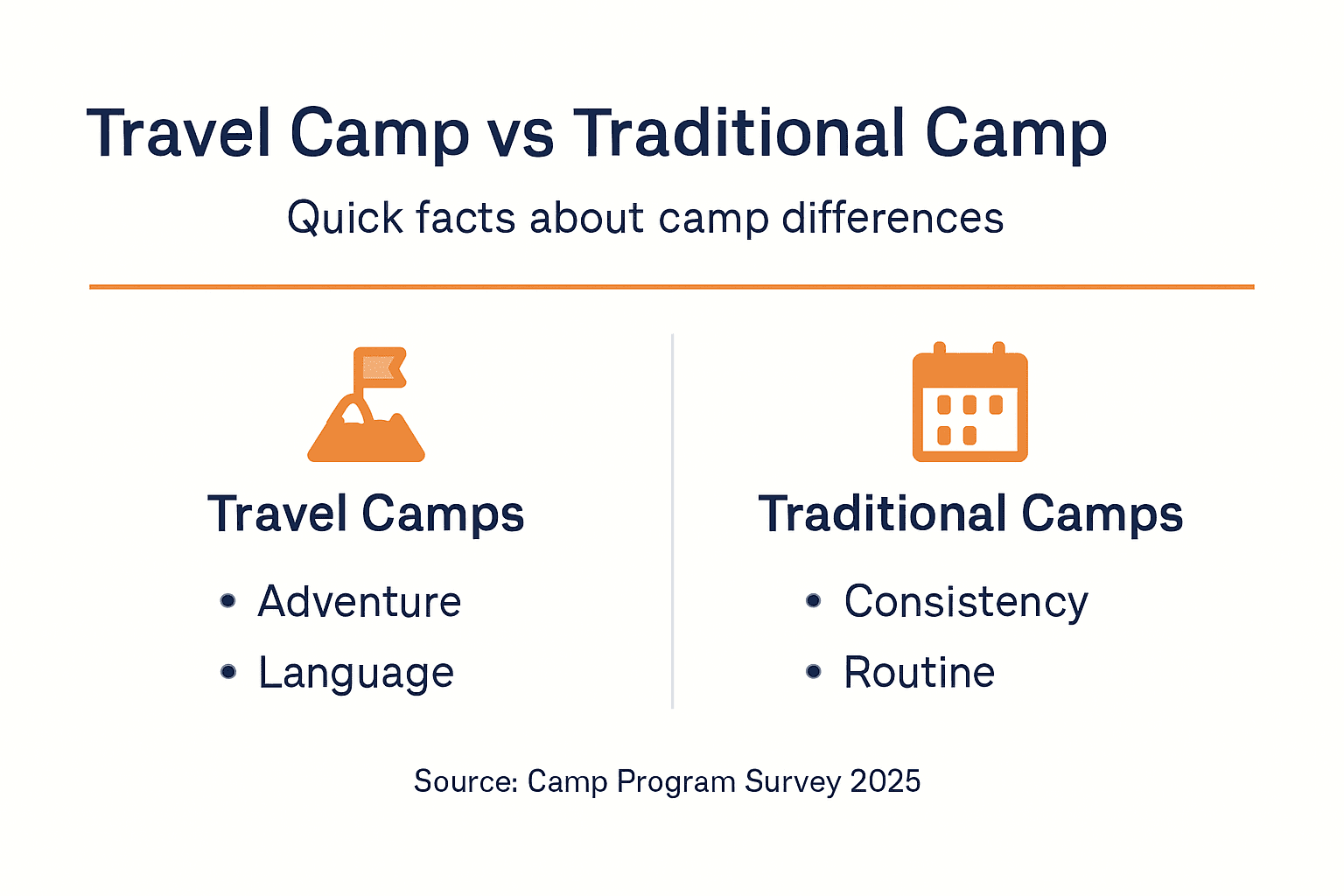
| Aspect | Travel Summer Camps | Traditional Camps |
|---|---|---|
| Location | Multiple international destinations | Single fixed location |
| Language Learning | Structured immersion in 2-3 languages | Minimal or optional language instruction |
| Cultural Exposure | Deep immersion in multiple cultures | Limited to local culture |
| Adventure Sports | Advanced activities like climbing, mountain biking | Basic recreational activities |
| Personal Growth Focus | Leadership, independence, cultural competence | Social skills, teamwork, recreation |
| Safety Protocols | EU-standard international compliance | Varies by region and accreditation |
| Cost Range | Higher due to travel and specialized instruction | Lower with local operations |
Parent priorities significantly influence camp selection. Families valuing cultural competence, language skills, and international exposure find travel camps align better with goals. Those prioritizing familiarity, lower costs, or children requiring more support benefit from traditional options.
Key comparative advantages include:
- Travel camps deliver superior cultural competence development
- Language acquisition accelerates 40% faster in immersive settings
- Physical skill improvements exceed traditional camp outcomes
- Personal independence grows more rapidly through travel challenges
- Traditional camps offer greater consistency and familiarity
The decision framework for choosing camps should weigh child readiness, family priorities, and developmental goals against program characteristics.
Choosing the Right Travel Summer Camp for Your Child
Selecting an appropriate travel summer camp requires systematic evaluation of program features, safety credentials, and alignment with your child’s developmental needs. Following a structured decision process helps families identify optimal matches while avoiding common pitfalls.
Begin by researching safety certifications and accreditations. Verify that programs maintain current licenses, insurance coverage, and compliance with EU safety standards. Check independent reviews and request references from families whose children previously attended.
Evaluate the balance between adventure, language, and personal development components. Programs should integrate all three elements rather than emphasizing one at others’ expense. Review daily schedules to ensure structured learning complements active experiences.
Assess your child’s readiness for international travel and group living. Consider maturity level, previous camp experience, language abilities, and comfort with new situations. Camps offer varying support levels, so match program intensity to current capabilities while providing appropriate challenge.
Follow this selection process:
- Define your family’s primary goals for the camp experience
- Research programs meeting safety and accreditation standards
- Compare activity offerings, language options, and developmental frameworks
- Read detailed parent reviews and request family references
- Discuss options with your child to assess interest and readiness
- Contact camps directly with specific questions about policies and approaches
- Review all contracts, insurance, and emergency protocols carefully
- Prepare required documentation well before deadlines
- Arrange physical preparation activities to build fitness and skills
- Maintain communication with camp staff during the session
Pro Tip: Avoid selecting camps based primarily on cost. Safety standards, staff qualifications, and program balance matter far more than price differences. Inadequate supervision or poorly designed activities create risks that no cost savings justify.
The comprehensive guide to choosing summer camps provides detailed evaluation criteria. Additional resources about European camp options and preparation strategies support informed decision-making.
Explore Transformative Travel Summer Camps with Young Explorers Club
Young Explorers Club delivers exactly what this guide describes: accredited international travel summer camps combining adventure sports, language immersion, and structured personal development in safe, supervised environments throughout Switzerland and Europe.
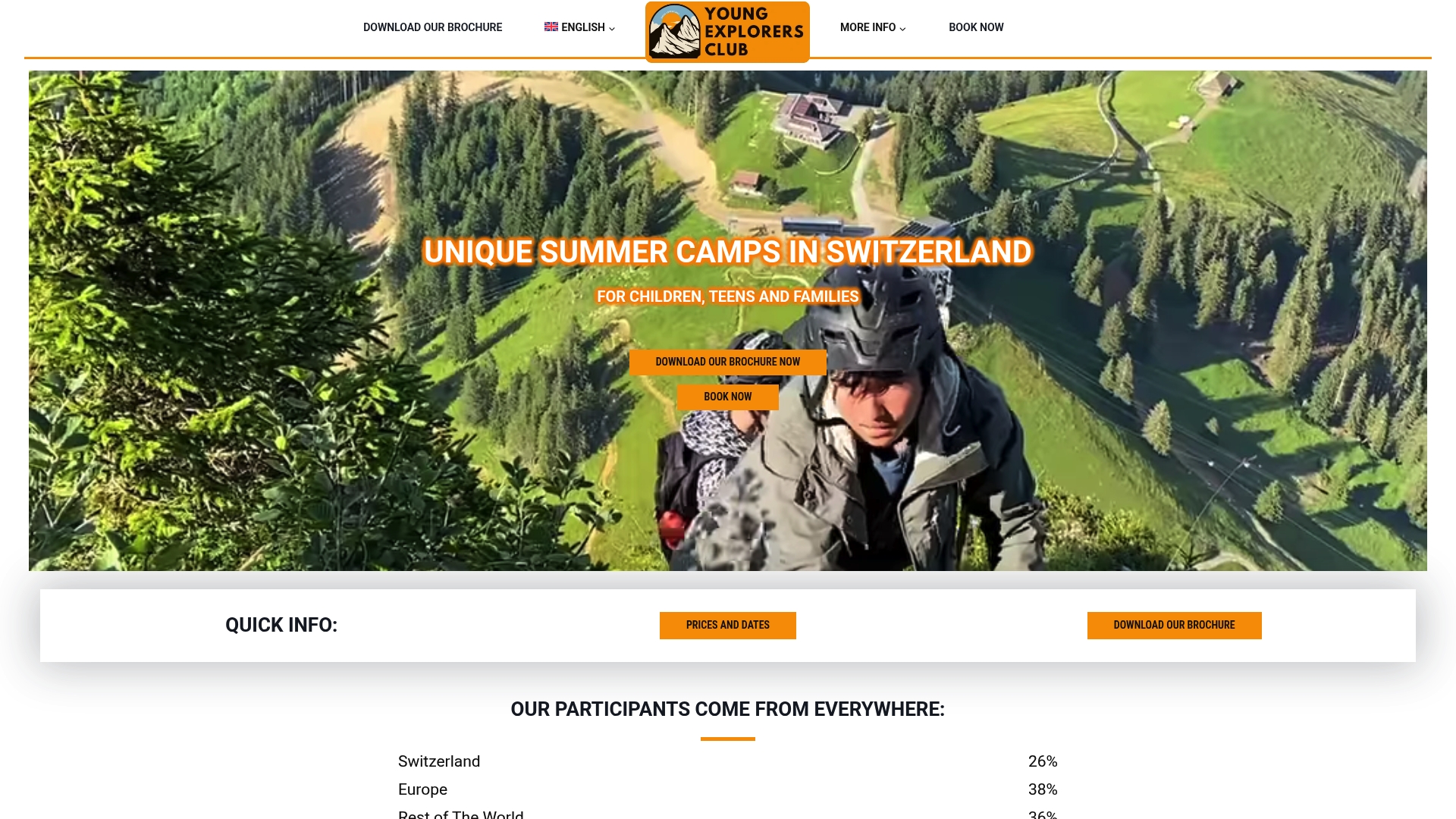
Our programs serve children and teenagers aged 8 to 17 years through carefully designed experiences balancing physical challenge, cognitive growth, and social-emotional development. Experienced multilingual staff guide participants through mountain biking, climbing, survival skills, and cultural exploration while maintaining strict EU safety standards. Whether your teenager seeks intensive adventure through our specialized teen programs or your family prefers weekly activities in Vaud, our comprehensive offerings match diverse needs and developmental stages.
Frequently Asked Questions About Travel Summer Camps
What ages are travel summer camps suitable for?
Travel summer camps typically serve children and teenagers aged 8 to 17 years. Programs design age-specific activities matching developmental stages, with younger participants receiving more supervision and structured support while teenagers tackle advanced challenges requiring greater independence.
How is language immersion structured in camps?
Quality camps combine structured morning language classes teaching grammar and vocabulary with afternoon activities conducted entirely in target languages. Multilingual peer groups encourage natural practice while cultural experiences provide authentic contexts. Staff members speak multiple languages fluently, offering support when participants struggle while maintaining immersive environments.
Are travel summer camps safe for children?
Accredited travel camps maintain superior safety records, reporting 15% fewer incidents than traditional camps through strict EU compliance, lower participant-to-supervisor ratios, and comprehensive risk management. All programs require certified instructors, 24-hour medical staff, international insurance coverage, and detailed emergency protocols tested through regular drills.
What should parents prepare before sending children to these camps?
Parents should verify safety certifications and insurance coverage, ensure all required documentation is complete, arrange appropriate clothing and equipment, prepare children physically through fitness activities, and discuss expectations openly. Contact camps with specific questions about policies, communicate any special needs clearly, and establish communication plans for the session duration.
How do travel camps differ from traditional local camps?
Travel camps offer international destinations, structured language immersion, deeper cultural exposure, and advanced adventure sports compared to traditional camps operating from single locations with recreational activities. Travel programs develop cultural competence and language skills 40% faster while building greater independence, though they require higher adaptability from participants and involve greater costs.
Recommended
- How International Summer Camps Boost Confidence And Independence | Young Explorers Club Switzerland
- Cómo Los Campamentos Internacionales De Verano Aumentan La Confianza Y La Independencia | Young Explorers Club Switzerland
- Como Os Campos De Férias Bilingues Ajudam As Crianças A Aprender Mais Depressa (fr/en) | Young Explorers Club Switzerland
- Wie Internationale Sommercamps Das Selbstvertrauen Und Die Selbstständigkeit Stärken | Young Explorers Club Switzerland
