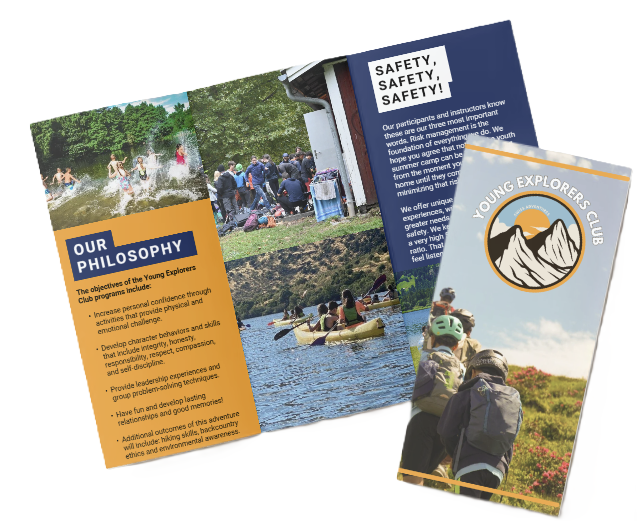
A Day In The Life Of A Young Explorers Club Camper
Full-day outdoor camp for kids 6-12 – skill-based nature adventures (canoeing, archery), safety-first staff, meals, and reduced screen time.
A Day in the Life of a Young Explorers Club camper
I run a focused outdoor program for kids ages 6–12. The day lasts eight hours and blends hands-on outdoor skills (firecraft, shelter-building, knots, map-reading) with supervised water and adventure activities. Small-group skill blocks pair with signature experiences and guided free play. I never leave water activities unsupervised and follow strict safety, staffing, meal and allergy protocols. Those routines help me track gains in independence, teamwork, and reduced screen time.
Daily Schedule
The program follows a predictable rhythm to maximize learning, energy, and safety.
- Arrival / Check-in — greeting, health checks, and equipment review.
- Opening Circle — group goals, safety brief, and orientation.
- Activity Blocks — multiple 45–90 minute skill sessions in small groups.
- Lunch / Rest — supervised meal and quiet time.
- Afternoon Activities — signature experiences, water or adventure rotations, and guided free play.
- Closing Circle — reflection, skill badges, and handover to parents.
Core Activities and Learning Goals
The focus is on practical outdoor skills and social-emotional growth through rotated activities and scaffolded challenges.
- Canoeing, hiking, and supervised water play for outdoor confidence.
- Archery, low-ropes, and skill workshops to build coordination and focus.
- Science-in-nature sessions to spark curiosity and observation skills.
- Small-group skill blocks to foster teamwork and individualized progression.
- Guided free play to encourage creativity and independent problem-solving.
Safety and Operations
Safety-first operations are central to the program design.
- Certified first-aiders and lifeguards on-site during activities.
- Clear staff-to-camper ratios (typically 1:6–1:10) tailored to activity risk.
- Daily equipment checks, routine emergency drills, and documented medication protocols.
- No unsupervised water activities — always staffed and monitored.
- Structured incident reporting and parent notification procedures.
Meals, Allergies, and Packing
Meals and allergy management are handled proactively to keep campers safe and nourished.
- Balanced child-friendly meals and snacks provided when included.
- Allergen zones and labeled items to reduce cross-contact risk.
- Medication and dietary protocols documented and followed by staff.
- Recommended packing checklist:
- Water bottle
- Hat
- Sunscreen
- Closed-toe shoes
- Change of clothes
Parent Communication and Outcome Measurement
Clear communication and measurable outcomes help families see growth and stay informed.
- Daily handovers at pick-up to summarize the day.
- Midday messages and photo updates when appropriate.
- Pre/post surveys and skill badges to track confidence and skill gains.
- Incident and medication logs shared with caregivers as needed.
Key Takeaways
- Full-day, eight-hour schedule with structured arrival, activity blocks, rest, and closing.
- Core focus on outdoor skills and social-emotional learning through varied rotations.
- Safety-first operations with trained staff, clear ratios, and routine checks.
- Meals, allergies, and packing are proactively managed to reduce risk and keep kids comfortable.
- Parent communication and outcome measurement use daily updates, photos, and pre/post assessments to show progress.
YOUTUBE VIDEO
Young Explorers Club — Day at a Glance
I open the day to a pale dawn on backpacks, the scent of wet pine, and the bright slap of a canoe against the dock. I plan each day to build outdoor skills and social-emotional growth for children aged 6–12. The program runs as a full 8-hour day example, and typical sessions host 60–120 campers. I mix active skill stations, guided free play, and reflective moments so kids leave with new competence and confidence.
I structure activities to teach practical skills and team behavior. Morning blocks favor hands-on learning: firecraft basics (safety first), shelter-building, knot work, and map-reading.
Midday focuses on low-stakes group challenges and creative exploration — nature journaling, animal-tracking, and simple ecological experiments.
Afternoons often include canoeing or supervised water time, longer hikes, and cooperative games that practice leadership and empathy. I rotate skill difficulty by age so older campers mentor younger ones.
Meals and nutrition are practical and safe. I schedule two snack breaks and a sit-down lunch. The kitchen provides balanced, child-friendly meals and accommodates allergies and dietary restrictions. Staff are trained in food-safety protocols and allergen response. I also encourage parents to label foods and share specific needs during registration.
Safety and risk management guide every decision. I set clear behavioral expectations before activities begin. Staff carry first-aid kits and radios; a certified first-aider is on site at all times. Water activities run with lifeguards on duty and a published buddy system. I keep emergency plans visible and practice quick evacuation and medical-response drills with staff.
Staffing blends experience, training, and a child-centered approach. Each team includes lead instructors with outdoor credentials, lifeguards where needed, and several assistant counselors who focus on emotional support and small-group facilitation. I hire for strong communication skills and mandate regular training in child safeguarding, first aid, and activity-specific safety.
I keep parents informed through multiple touchpoints. Daily pickup includes a short verbal handover. I send a midday message for early concerns and post optional photo highlights to a secure feed. For families new to camp, I suggest reading Your first summer camp before day one. I require emergency contacts on file and a signed pickup authorization for every authorized guardian.
Typical day schedule and operational targets
I use the following timeline and targets as a working template and measurement tool; I adjust them by site, age group, and weather.
- 08:15–09:00 — Arrival, check-in, name tags, morning circle and safety briefing.
- 09:00–11:00 — Skill stations (firecraft, shelter-building, knots) in small groups.
- 11:00–11:30 — Snack and short reflection, behavior check-ins.
- 11:30–12:30 — Guided hike or water activity with certified supervision.
- 12:30–13:15 — Lunch (on-site meal service or supervised packed lunches).
- 13:15–14:30 — Quiet activities, crafts, nature journaling, social-emotional games.
- 14:30–15:45 — Big-group challenge or extended adventure (canoe trip, orienteering).
- 15:45–16:00 — Cool-down, debrief, and pickup preparation.
- Operational targets — Session size: 60–120 campers; typical day length: 8 hours; staff-to-camper targets: usually 1:6 for younger groups and 1:10 for older groups; at least one certified first-aider and required lifeguard coverage for water activities.
Morning: Arrival, Warm-Up & Opening Circle
I open drop-off between 8:00 and 9:00 AM. Arrival is structured so the whole site runs smoothly and kids settle quickly.
A site-wide attendance check-in takes about 15–20 minutes total, which works out to roughly 1–2 minutes per child during peak arrival. I run a consistent routine to keep that window efficient: quick parent sign-in, a verbal health check, sunscreen applied if authorized, and phone collection if the program enforces it. I aim for a 90% on-time arrival rate and track punctuality so staff can plan activities without constant interruption.
Check-in steps and what I expect from families
Follow these check-in steps so drop-off moves quickly and safely:
- Parent sign-in: confirm who’s picking up and any last-minute notes.
- Verbal health check: report fever, vomiting, or recent exposure to illness.
- Sunscreen: apply at arrival if consented, or confirm staff can apply.
- Phone collection: hand devices over only if the site enforces this policy.
- Quick questions: let staff know changes in medication, pickup plans, or behavior notes.
I run a 10–20 minute opening circle after most campers have arrived. That short block sets group norms, introduces the daily theme, reviews safety, and lays out the schedule. Opening circle offers clear benefits: it creates structure, builds group cohesion, and smooths transitions into activities. I watch for kids who struggle with stillness; for very active children it can slow their transition. To offset that I add a two-minute warm-up game or a quick stretch so energy gets channeled.
Morning activity blocks usually consist of one or two sessions, each lasting 45–75 minutes. That length gives enough time for skill practice, exploration, and supervision without losing attention. I assign staff based on age and activity risk; ratios sit between 1:6 and 1:10 depending on the group. During arrival and the early activities I schedule more staff on hand to keep check-in moving and to support transitions.
Practical tips I share with families: arrive as close to 8:00 as possible if you want full participation in the morning theme. Label sunscreen and hand it to staff if you prefer them to apply it. If you’re new to drop-off, I recommend reading Your First Summer Camp for a quick orientation and what to bring.
Activity Blocks: Mid-Morning Skill Learning & Afternoon Workshops
I schedule mid-morning skill blocks to build competence and confidence. Sessions are focused and skill-forward, so campers leave each block with something they can repeat and improve. I keep groups small and predictable so instructors can coach technique and keep an eye on safety.
I aim for at least 60% of the day outside, and I organize activity length and intensity around that goal. Mid-morning slots run 45–90 minutes depending on the activity. Afternoon workshops are tighter: 45–75 minutes per session, with 1–3 blocks available so campers can rotate through offerings or dive deep on a single skill. Elective free-choice time sits between 10–30% of the afternoon—young campers get closer to 10–15%, older kids up to 20–30% so they can self-direct their learning. I also schedule signature experiences like overnight campfires, low-ropes team challenges, and science-in-nature sessions about 1–2 times per week to create memorable milestones.
Typical Activity Menu & Logistics
Below are the rotating activities and how I usually staff and time them:
- Hiking — 60–90 minutes; group size 8–15; helmets not required; staff ratio 1:8–15 depending on route difficulty.
- Canoeing — 60-minute session; 2 counselors per canoe; max 6 campers per canoe; USCG-approved lifejackets required; lifeguard or waterfront-certified instructor on duty.
- Archery — 45–60 minutes; group size 8–12; coach-to-camper ratio 1:8; helmets not required; clear shooting line protocols enforced.
- Nature crafts — 45–60 minutes; group size 8–15; emphasis on local materials and leave-no-trace principles.
- Low-ropes / team challenges — 45–75 minutes; group size 8–15; lower staff ratios and certified facilitators for high elements.
- Science-in-nature workshops — 45–75 minutes; group size 8–12; hands-on experiments and data collection that extend into free choice.
- Biking / Climbing skills — 45–75 minutes; helmets required; lower staff ratios for climbing; gear checks before every session.
- Skill workshops (knotwork, map & compass, wilderness first aid basics) — 45–75 minutes; group size 8–15; progressive curriculum so campers build on prior sessions.
I enforce standard safety and equipment protocols across every block:
- Lifejackets required for all water activities and must meet USCG approval.
- Helmets mandatory for biking and climbing.
- Waterfront and high-risk activities operate with reduced ratios and certified staff.
- All equipment receives daily inspection and pre-activity checks.
I balance learning, play, and choice so campers develop skills and ownership. For new families I point them to a concise primer on getting started with camp, like the first summer camp, to set expectations and prepare gear.

Lunch, Midday Rest & What to Pack
Lunch and midday rest
I schedule lunch around 12:00–12:45 PM. Campers get 30–45 minutes to eat, refuel, and reset. For day camps I expect lunch plus one or two snacks; full-day programs often provide three meals and one or two snacks. Meals aim to be balanced — a source of protein, a fruit or vegetable, and whole grains — and may follow USDA nutrition standards (USDA).
I enforce a screen-free day of about 6–8 hours to encourage social connection and outdoor focus. For parents I use a clear line: “Phones collected at arrival and returned at pick-up to encourage social connection and outdoor focus.” If phones are collected, I return them at pickup. I also recommend leaving other electronics at home; devices distract, break, and create separation from the group experience.
Allergies get specific attention. I document dietary needs on the intake form, set allergen-safe zones, and maintain clear medication workflows and emergency action plans. Staff carry or have fast access to epinephrine and other prescribed medicines, and I train the team on the camp’s action plans so responses are quick and calm.
I build midday rest into the schedule. Younger campers nap or have quiet rest; older kids get quiet time to read, do low-energy crafts, or journal. Rest reduces afternoon meltdowns and keeps energy steady for hikes, games, or evening activities.
Packing checklist
Below I list what every camper should bring and how to prepare items for camp:
- Daypack: comfortable and sized for the camper.
- Labeled water bottle (1 L or larger): refillable and leak-proof.
- Hat and sunscreen SPF 30+: reapply midday as directed.
- Closed-toe shoes: required for trails, climbing, and active games.
- Change of clothes and a light rain jacket.
- Packed lunch if the program asks families to provide food; follow allergy rules.
- Labeled medication with clear administration instructions and the completed intake form.
- Small comfort item for younger children if the program allows.
- No electronics: I encourage families to leave phones, tablets, and gaming devices at home.
Label everything. I use permanent markers or iron-on name tags and place names on water bottles, clothing, and shoes. Lost items are held for 30 days, then donated or discarded if unclaimed.
I advise parents to double-check medication labels and emergency contacts before the first day. If you want more preparation tips for a child’s first camp experience, see my guide to first summer camp.

Safety, Staff Training & Inclusion Policies
I prioritize clear, enforceable safety practices so parents and campers know what to expect every day. Frontline counselors are seasonal staff aged 18–25, and lead instructors are typically 21 or older. I set staff-to-camper ratios to match age and risk: 1:6 for the youngest campers and 1:10–12 for older groups, with lower ratios for waterfront or higher-risk activities.
I require 30–40 hours pre-season training for all staff. That training covers orientation, child development, activity-specific instruction and formal safety procedures. Every staff member receives CPR and First Aid certification. I complete 100% background checks and reference checks for all hires before they work with campers. I also keep Annual health forms updated for each camper so medical and allergy information is current.
I maintain strict medication and health protocols. Medications are stored locked, administered only by trained staff, and logged in documented medication records. Allergies and medication plans are clearly documented and accessible to on-duty instructors. An on-site AED and first-aid kits at every activity area are standard. I ensure reliable communication through cell coverage or two-way radios and run Monthly emergency drills for fire/evacuation and missing-child scenarios to keep response times sharp.
I make inclusion a practical part of daily operations. Staff are trained in bullying prevention and positive behavior supports, and I offer accommodations such as one-on-one aides, a sensory-friendly space and adapted activities when needed. Behavior incidents follow a clear, progressive policy: redirect → time-in → parent conference, with each step documented and parents notified promptly.
Day-to-day operational checklist
Review this list to see how policies show up during a typical camp day:
- Staff ratios: 1:6 for youngest groups; 1:10–12 for older campers; reduced ratios at waterfront and high-risk activities.
- Training: 30–40 hours pre-season training plus ongoing skills refreshers.
- Certifications & vetting: 100% background checks, reference checks, CPR/First Aid certification for all staff.
- Health documentation: Annual health forms updated and reviewed before arrival.
- Medication procedures: locked medication storage, trained staff administer meds, documented medication logs.
- Emergency readiness: on-site AED, first-aid kits at activity areas, reliable radios/cell coverage, Monthly emergency drills.
- Inclusion supports: one-on-one aide, sensory-friendly space, adapted activities; staff trained in bullying prevention and positive behavior supports.
- Behavior management: progressive steps (redirect → time-in → parent conference) with incident reports and parent notification.
I encourage parents to read practical guides before camp; for families preparing for their child’s first stay I point them to the first summer camp resource for arrival tips and what to pack.
Daily Schedule, Logistics, Costs, Outcomes & Parent Communication
I run an 8-hour day that balances activity, downtime and clear handoffs. Sample daily timeline follows exactly as used in camp:
- 8:00–9:00 AM — Arrival & sign-in (60 min)
- 9:00–9:15 AM — Opening circle (15 min)
- 9:15–10:30 AM — Activity block 1 (75 min)
- 10:30–10:45 AM — Snack & transition (15 min)
- 10:45–12:00 PM — Activity block 2 (75 min)
- 12:00–12:45 PM — Lunch (45 min)
- 12:45–1:15 PM — Quiet/rest / supervised free play (30 min)
- 1:15–2:30 PM — Activity block 3 or workshop (75 min)
- 2:30–3:00 PM — Team game / camp-wide event (30 min)
- 3:00–3:30 PM — Closing circle & pickup prep (30 min; closing circle 10–15 minutes)
- 3:30–4:00 PM — Pickup window (30 min)
Pickup windows commonly run 3:30–4:30 PM for an 8-hour day; expect most families to arrive in the first 15 minutes and take about 5–10 minutes each.
Logistics are kept simple so parents can plan. Sign-in uses a quick digital check-in with a clipboard backup. I enforce a firm deposit (typically 25%) to hold a spot and publish cancellation and refund policies clearly at registration. Typical day camp pricing ranges from $200–$500 per week. I apply late-pickup fees when needed; common examples are $1–$5 per minute after the grace period.
Daily parent updates and photos are sent as standard practice via the camp app or email by late afternoon. You’ll receive at least one photo and a short summary of activities, progress on skills and any notes about meals or incidents. If parents are new to camp, I point them to resources like Your first summer camp for practical prep and what to pack.
Outcomes tracked include both hard and soft gains. National participation is large — 14 million children attend camp annually (American Camp Association). I track measured outcomes such as increased confidence, independence, teamwork, resilience, outdoor skills and reduced screen time. Measurement tools include pre/post surveys, parent feedback and skill badges to quantify progress. Weekly summaries document activities that map to those outcomes.
KPIs, enrollment targets & follow-up
- Parent satisfaction target: 90%+ via post-session surveys
- Camper return rate goal: 50–70% year over year
- Conversion targets: registration conversion 2–5%; newsletter opt-in 10–20%
- Measurement tools: pre/post surveys, attendance logs, skill-badge completion and weekly coach notes
- CTAs to use on pages and emails:
- Register
- Schedule a Tour
- Download Sample Schedule
- Recommended nurture: automated 3-email series (welcome, logistics, urgency reminder). Use limited capacity messaging like “Limited to 120 campers per session” to lift conversions.
I recommend clear, frequent communication and transparent pricing. That keeps families confident and improves enrollment conversion and retention.
Sources:
American Camp Association — (no article or blog post title provided)