How Swiss Camps Teach Decision-making Under Pressure
Young Explorers Club Swiss camps train fast, resilient decision-making using RPD, stress inoculation and scenario-based drills.
Young Explorers Club programs
The Young Explorers Club runs Swiss alpine, scout, first‑aid and mountain‑guide camps. These programs teach participants to make fast, resilient decisions under physical stress, uncertainty and time pressure. Training combines recognition‑primed decision (RPD) methods from naturalistic decision making with deliberate stress inoculation, scenario‑based training and systematic after‑action review (AAR). All instruction sits inside a strong safety culture and uses multilingual staff while following a progressive overload model.
Key Takeaways
Training approach
We blend pattern recognition, stress exposure and deliberate practice using realistic, safety‑managed scenarios to maintain high learning pressure while limiting risk.
- Recognition‑primed decision (RPD) based pattern recognition for rapid, experience‑driven choices.
- Deliberate stress inoculation to build resilient performance under physiological and cognitive load.
- Scenario‑based training paired with focused AARs to accelerate learning and correct errors.
Progressive overload and drill design
Training progresses from low‑cue, low‑pressure to high‑ambiguity, high‑physiological demand so recognition patterns form reliably.
- Low‑fidelity drills: high‑cue, low‑pressure practice to teach templates and recognition.
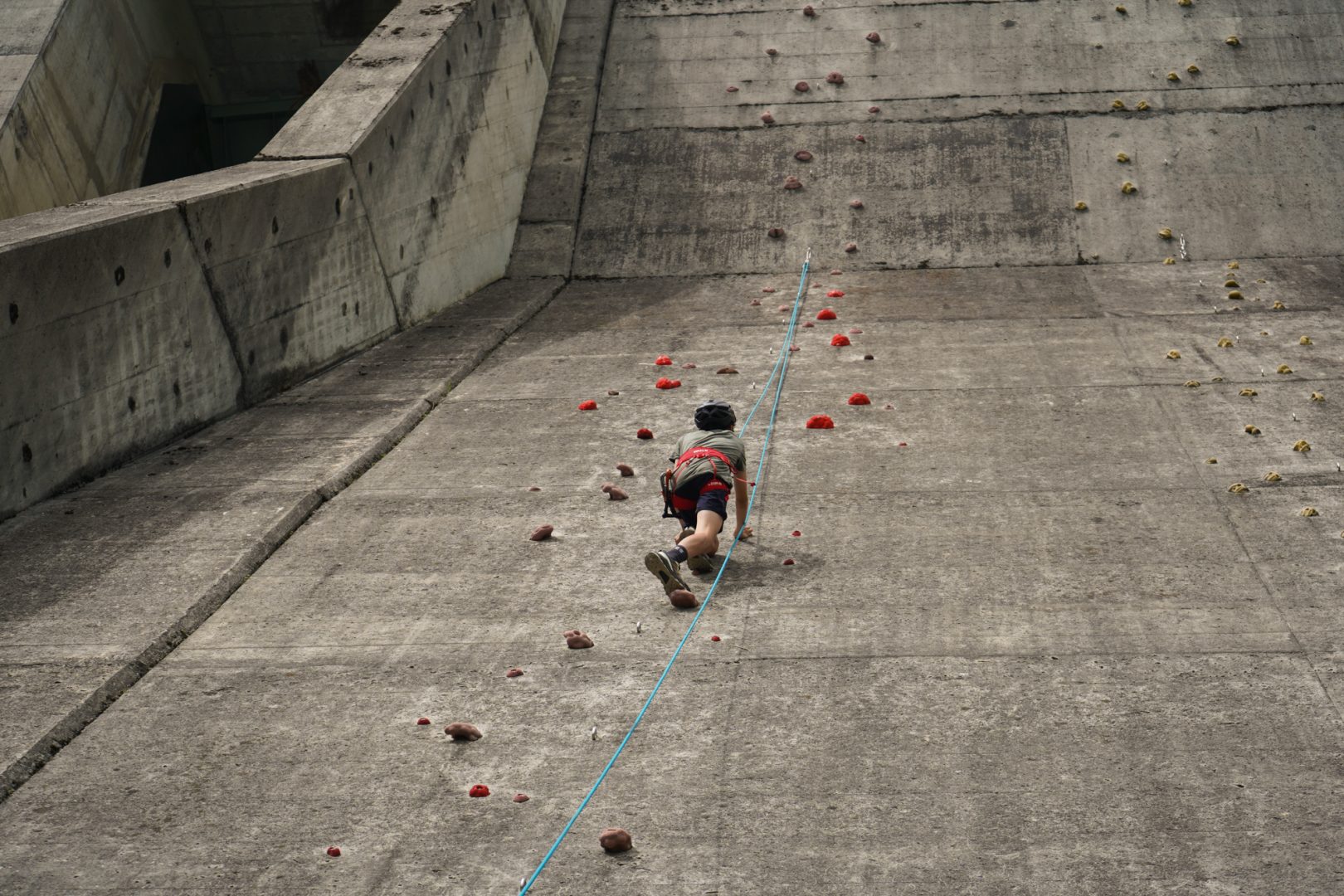
- Physiological stress: add exertion (e.g., uphill movement) to replicate bodily demands.
- Time pressure & ambiguity: compress decision windows and reduce information clarity to trigger RPD use.
Short, repeatable drills (5–15 minutes) with rapid templates and focused AARs (10–20 minutes) consolidate skills and build automatic responses. We recommend repeating small drills often to boost retention.
Measurement & assessment
Objective and subjective metrics are paired to track learning, retention and operational transfer.
- Objective metrics: decision latency, decision accuracy, heart rate (HR) and heart rate variability (HRV), and other physiological markers.
- Structured assessment: rubriced situational awareness ratings and scenario checklists.
- Self‑report scales: STAI and NASA‑TLX to monitor perceived stress and workload.
- Data use: analyze metrics to target follow‑up practice and ensure learning transfers to real operations.
Safety and logistics
Safety is integral: multilingual instructors, strict safety checklists, defined emergency chains and local rescue partnerships keep training realistic and secure.
- Multilingual staff ensure comprehension and inclusive instruction.
- Safety checklists & escalation paths are enforced at every site.
- Local rescue links and partnerships with emergency services provide rapid response capability.
Summary: By combining RPD‑based pattern recognition, progressive overload, short repeatable drills and robust measurement inside a rigorous safety culture, the Young Explorers Club accelerates the formation of resilient decision skills that transfer to real‑world operations.
Swiss Camps at a Glance: Scope, Thesis and Key Organizations
We, at the Young Explorers Club, assert that Swiss camps — especially alpine/outdoor leadership, scout, first-aid and mountain-guide programs — train participants to make fast, resilient decisions under physical stress, uncertainty, and time pressure by blending recognition-primed decision techniques from naturalistic decision making (NDM) with deliberate stress inoculation, scenario-based training and systematic after-action review (AAR). These elements sit inside a strong safety culture that keeps risk acceptable while preserving realistic pressure for learning.
Switzerland’s population is about 8.7 million and its multilingual fabric (German, French, Italian, Romansh) shapes how camps are delivered. We staff programs to match local language needs and adapt curricula so instruction and debriefs stay clear under stress. Local adaptation reduces cognitive load during high-pressure choices and improves transfer of skills to real life.
Key organizations that set standards, provide training and often run large-scale programs include:
- Swiss Alpine Club (SAC)
- Kandersteg International Scout Centre (KISC)
- Pfadi Schweiz / Scouts Switzerland
- Swiss Red Cross
- Rega (Swiss Air-Rescue)
- Swiss Federal Office of Sport (BASPO)
- Swiss mountain guide associations
- Kantonal Bergrettung
We use those organizations’ guidance when we design curricula and emergency protocols.
Program scope, metrics and practical rules of thumb
Below are common program ranges and quick calculations you can use to compare reach across cantons and language regions.
- Typical alpine camp altitude range: 1,000–3,000 m, which creates variable physiological stress that influences decision speed and error rates.
- Common camp lengths: 3–14 days, with short courses focusing on acute decision drills and longer stays allowing progressive exposure and consolidation.
- Instructor:participant ratios: many camps target 1:6–1:12. Expect lower ratios for high-risk modules (e.g., technical climbing, swiftwater), and factor that into scenario complexity.
- Per-capita participation formula you can use for regional comparison: Participants per 100,000 = (total participants / 8,700,000) * 100,000. Example: 10,000 annual participants ≈ 115 participants per 100,000 people.
We recommend applying progressive overload in scenario design: start with low-fidelity pressure, add physiological demands (fatigue, altitude), then introduce time constraints and ambiguous information. That sequence aligns with NDM principles and speeds recognition-primed decision formation.
Operationally, I advise these practical steps we use in camp planning:
- Recruit bilingual or multilingual staff for the target canton.
- Run built-in AARs after every critical evolution to codify heuristics.
- Simulate realistic ambiguity rather than scripted single-right-answer problems.
- Coordinate emergency protocols with Rega, local mountain guides and Kantonal Bergrettung partners.
For leadership development, integrate short solo reflective periods between scenarios so participants consolidate pattern recognition without cognitive overload — this taps the importance of reflection time in durable learning.
We structure safety oversight so it supports decision-making practice: safety officers monitor physiological indicators, adjust scenario intensity in real time, and intervene only when necessary to preserve learning momentum. That preserves pressure while keeping activities within accepted risk thresholds set by SAC, BASPO and the Swiss Red Cross guidelines.
Finally, link scenario work to other skill domains via cross-training: combine first-aid scenarios with navigation and team leadership tasks so participants face multi-domain decision trade-offs. If you want an operational primer on how outdoor programs build confidence and decision skills, review our approach to outdoor leadership which mirrors the same NDM and stress-inoculation principles we describe here.
Core Teaching Principles: Recognition-Primed Decision, Stress Inoculation and Deliberate Practice
Theoretical foundations
We ground our training in a few compact, evidence-backed principles. Recognition-Primed Decision (RPD) explains how experienced decision-makers rapidly match current cues to stored patterns and then mentally simulate a chosen action; we teach this as pattern recognition and rapid mental rehearsal (Klein (1998) “Sources of Power”). Naturalistic decision making (NDM) frames decisions in real settings with uncertainty, time pressure and high stakes; we use it to design realistic scenarios that provoke real choices. The Yerkes-Dodson law reminds us that arousal and performance follow an inverted-U relationship: moderate stress often sharpens focus, while excessive stress degrades skill. Stress Inoculation Training (Meichenbaum) gives us a method: graded exposure plus coping skills to raise stress tolerance. We embed deliberate practice (Ericsson) principles by isolating skills, repeating them with focused goals, and delivering immediate feedback so learners refine pattern recognition and response execution.
Camp application: drills, progression and AARs
We translate theory into short, repeatable cycles so skills build reliably over time. Below are the core exercises and timing we use.
- Short decision drills: run 5–15 minute decision drills that simulate a sudden weather change or leadership split; follow with a 10–20 minute debrief using AAR prompts.
- Scenario progression: start with high-cue, low-pressure pattern drills to build recognition; then add ambiguous cues and time pressure to stress pattern selection (RPD/NDM); finish with multi-factor crises for stress inoculation.
- Graded environmental and social stressors: introduce cold, altitude, fatigue and role conflict in measured steps so campers learn coping tactics without unsafe overload.
- Deliberate practice cycles: isolate one decision element (e.g., route-choice under low visibility), repeat it with targeted feedback, then increase difficulty. We schedule many short reps rather than a few long runs, consistent with Ericsson.
- Immediate feedback via structured AARs: use the simple debrief formula—What was supposed to happen? What actually happened? Why? What next? Keep AARs focused and timed: 10–20 minutes after short drills, longer after complex scenarios.
We pair these modules with our outdoor leadership lessons so campers transfer decision skills into team roles and real expeditions.

Training Modalities and Signature Drills That Create Pressure
We structure pressure into progressive, repeatable formats so trainees experience real-time decision costs. We mix high-fidelity scenario-based training and moulage with shorter role-play and tabletop drills to build sensorimotor and cognitive transfer. Simulations give richer sensory cues and higher logistical cost; tabletop rehearsals save resources and work well for cognitive rehearsal and clarifying team roles. We link practical sessions to team challenges to reinforce cross-team coordination under stress.
Signature drills and operational templates
Below are the operational templates I use daily; each one forces time pressure and predictable measurement windows.
- Rapid Drill template (fast pressure): 5-minute scenario → 2-minute individual decision → 5-minute team communication → 10-minute debrief.
- Forced-choice scenario: 60–90 min “forced-choice” scenario with evolving injects and real-time stressors; decision-forcing case elements increase cognitive load.
- Rapid reaction drill: 5–10 min “rapid reaction” drills repeated multiple times per day.
- Summit-planning simulation: full-day planning + execution exercise with daily AARs.
- Multi-day expedition: continuous exposure with nightly AARs and planned decision checkpoints.
- Moulage and wounded-patient scenarios, night exercises, and controlled exposure to cold or altitude to add physiological stress exposure.
Recommended drill durations are clear: rapid drills 5–15 min; scenario + debrief 45–120 min. A practical day-structure example we use is 3x decision drills per day + 1 AAR session. I schedule drills so sensory load ramps up, then include reflection windows that solidify learning.
Measurement, comparison and practical tips
We track objective metrics alongside qualitative after-action review notes. Key measures include:
- Decision time (s/min)
- Decision accuracy (binary or rubric)
- Team communication counts (calls, confirmations)
- Physiological markers if available (heart rate, HRV)
We pair those with observational notes about role-play fidelity and stress signs. I recommend mixing modalities: use high-fidelity simulation when sensorimotor transfer matters (e.g., belay failure, moulage) and tabletop for planning, role assignments, and inexpensive repetitions. Force-choice scenarios create evolving ambiguity; rapid drills sharpen reflexive choices. Run short repeats to habituate stress responses, then validate on longer exercises like summit-planning or multi-day expeditions. Keep debriefs focused, metric-driven, and linked to specific behaviors you want repeated.
Measuring Success: Assessment, Metrics and Transferable Outcomes
We measure both speed and substance. Core metrics I track are decision latency, decision quality scored on a 0–10 rubric, situational awareness (SA) scores, stress tolerance via self-report (STAI or visual analogue scales), and physiological markers like heart rate and heart rate variability (HRV). I always pair immediate pre/post measures with a follow-up to capture retention and transfer.
I recommend these instruments for clear, comparable results: State-Trait Anxiety Inventory (STAI) for perceived stress, NASA-TLX for cognitive workload, team performance rubrics adapted from military/EMS AAR checklists, and scenario scoring rubrics (0–10). If we collect physiology, we report group means ± SD for HR and HRV at baseline versus scenario.
We interpret metrics with practical thresholds. Decision accuracy is the percent correct per the rubric. Decision latency should be reported as mean ± SD. Situational awareness (SA) scores combine checklist items and observer ratings. For stress tolerance, report STAI means ± SD and consider visual analogue scales for session-level snapshots. I link measurement to applied skills like time management; our programs reinforce quick prioritization and we document transfer to everyday scheduling with a focus on time management.
Practical benchmarks and reporting template
Use the following fields in every pre/post report:
- Pre-test scenario score (0–10)
- Post-test scenario score (0–10)
- % change = ((post − pre) / pre) * 100
- Mean difference with 95% CI
- Decision latency mean ± SD
- Accuracy rate (% correct by rubric)
- Retention at follow-up (same scoring)
- STAI and NASA-TLX means ± SD
- Physiology: HR/HRV group means ± SD baseline vs. scenario
Include this sentence as a reporting template and replace X/Y with program-specific results: “participants improved decision latency by X% and accuracy by Y% after a 5-day program.”
Aim for a retention rate target >50% at 3 months for behavioral skills. When reporting physiology, show baseline and scenario means ± SD and note any stress-response patterns.
We translate metric gains into transferable outcomes by linking scores to observable behaviors:
- Faster, more accurate rapid assessment in field scenarios
- Clearer team communication and callouts
- Better contingency planning and contingency triggers
- Measurable gains in confidence and leadership as reflected in rubric scores
For longitudinal claims, always include pre/post improvement, retention rate at follow-up, and confidence intervals. We present results in plain tables and one-page executive summaries so program directors and parents see immediate impact without wading through raw logs.

Safety, Physiology and Instructor Standards
Safety culture and operational timing
We build a safety culture around clear, repeatable systems and local partnerships. Below are the operational elements we enforce on every trip:
- Structured checklists for pre-departure, camp setup and high-risk activities.
- Redundancy in equipment and processes — a belt-and-suspenders approach to critical items.
- Clear emergency escalation chains with written roles and triggers.
- Formal liaison with Rega and Kantonal Bergrettung for rescue coordination.
- Pre-trip risk register, plus 1–3 backup plans for route, shelter and extraction.
- Minimum gear list enforced per participant and activity.
- Daily weather briefings and defined go/no-go criteria.
- Written emergency contacts and mapped nearest evacuation points.
We follow Swiss Alpine Club (SAC) safety standards for alpine operations and require participant insurance and parental consent as part of enrollment. Typical remote mountain rescue windows run an example range 30–90+ minutes depending on terrain and access; urban rescues are generally faster. We always verify Kantonal and municipal regulations for legal minima and adapt timings accordingly.
Physiology, instructor credentials and ratios
We train instructors to read human factors under pressure. Stress narrows attention, reduces working memory and increases reliance on heuristics — which leads to missed cues and rushed choices. Altitude-related cognitive decline commonly appears above >2,000–2,500 m. We monitor heart rate variability and behavioral signs to spot early degradation.
Sleep and acclimatization are non-negotiable. We plan for 7–9 hours of sleep for adolescents and adults, and we allow 24–48 hours for acclimatization at elevations above 1,800–2,000 m when practical. Decision drills follow rest periods so learning isn’t compromised by fatigue.
Instructor teams combine local mountain guides, certified youth leaders (Pfadi badge system), Swiss Red Cross first-aid instructors and wilderness medicine–trained staff (WFR/WEMT). WFR courses typically run 70–80 hours, and we expect recent continuing education on top of core certification. Typical instructor:participant guidance targets lower ratios for high-risk work (1:4–1:8) and higher ratios for older youth or low-risk programming (1:10–1:15). Earlier guidance in Swiss settings often recommends 1:6–1:12; we verify and cite the specific camp or canton regulation before publishing specifics.
When we publish staff bios we highlight these CV items: formal qualifications and certification(s); years of alpine experience; emergency response record and references; pedagogical training and recent continuing education; and named certifications such as SAC course leader, WFR and Swiss Red Cross instructor. We pair those credentials with practical drills and outdoor leadership exercises so instructors can coach sound decision-making under pressure.
Camp Types and Case Examples That Demonstrate Decision Training in Action
We survey five Swiss program types that train young people to make decisions under pressure and show concrete ways they measure impact. We focus on operational details you can reproduce: seasonality, ratios, signature scenarios, measurable learning gains and incident-rate reporting.
Case-study template and sample sketches
Below are the template fields I collect for each program, followed by anonymized sketches that match the profiles in the outline.
- Camp name
- Location
- Typical season dates
- Participants/year and participant-days (year noted)
- Age ranges
- Instructor credentials and instructor:participant ratio
- Headline learning objectives
- One concrete scenario used to teach decisions
- Measured outcomes (pre/post scores, decision latency change, pass rates)
- Anonymized incident statistics (minor vs major) and incident rates per 1,000 participant-days
- Follow-up retention at 3 months (if available)
Alpine leadership camp (SAC-style)
- Location = Canton alpine hut area
- Season = July–August
- Participants/year = N (collect per year)
- Age range = 16–20
- Instructor credentials = Swiss Alpine Club courses instructors and certified mountain guides
- Instructor:participant ratio = near 1:6 for technical field days
- Headline objective = rapid route assessment and group decision-making when weather and time compress choices
- Signature scenario = a summit-planning simulation with injected weather updates, time delays and a tired participant
- Measured outcomes = short decision-assessment: sample template pre-test 4.2/10 → post-test 7.6/10, with decision latency reduced X% after a 5-day program
- Incident reporting follows the template: incidents per 1,000 participant-days = (incidents / participant-days) * 1,000
Scout camp (Kandersteg International Scout Centre and Pfadi Schweiz)
- Location = Kandersteg / Kanton sites
- Season = summer weeks
- Participants/year = annual visitors (collect)
- Age range = 11–17
- Instructor credentials = Pfadi-trained leaders (Pfadi Schweiz)
- Ratio varies 1:8–1:12 depending on activity
- Headline objectives = team communication and low-stakes leadership rotation
- Signature scenario = night-navigation with casualty moulage that forces quick triage and route-choice
- Measured outcomes = rubric improvements in team communication and self-reported confidence gains
- We reference Kandersteg International Scout Centre (KISC) when describing the international scale and program cadence
Mountain-guide apprenticeship and certification courses
- Location = mixed alpine bases
- Season = spring–autumn
- Participants/year = cohort-based (collect)
- Age range = 18+
- Instructor credentials = certified mountain guides and apprenticeship supervisors
- Instructor:participant ratio = often 1:4 during technical exposures
- Objectives = split-second risk assessment, client-management decisions and ethical go/no-go calls
- Signature scenario = simulated client with escalating symptoms during an exposed ridge traverse, forcing simultaneous client care and route choice
- Measured outcomes = certification pass rates and time-to-decision metrics during assessed climbs
Swiss Red Cross first-aid/outdoor emergency courses
- Location = regional training centers
- Season = year-round
- Participants/year = course completions (collect)
- Age range = 16+
- Instructor credentials = Swiss Red Cross certified instructors
- Hands-on ratio = near 1:6 for moulage
- Signature scenario = multi-casualty evacuation with limited evacuation routes and simulated communication breakdowns
- Measured outcomes = clinical decision accuracy and triage time reductions; these courses are the main source for objective clinical decision metrics used by other camps
Corporate leadership retreats in alpine settings
- Location = private alpine lodges and group sites
- Season = spring–autumn
- Participants/year = cohort-based
- Age range = adult
- Instructor credentials = blended guides and corporate facilitators
- Instructor:participant ratios vary widely
- Objectives = fast stakeholder-alignment and decision framing under time pressure
- Signature scenario = compressed planning exercise where teams must choose between safety, schedule and stakeholder expectations with real penalties for poor choices
- Measured outcomes = behavioral ratings and decision latency from digital logs
Operational and reporting tips we recommend collectors follow
- Always include year and sample size when you publish scores.
- Anonymize incident data to categories (minor vs major) before reporting.
- Convert totals into incident rates per 1,000 participant-days to make different programs comparable.
- Track short-term retention at three months to see whether decision gains persist.
We use the formula and these fields when we audit programs or design new simulations. For practical curriculum design that uses physical exertion to sharpen choices, see our note on physical challenges. For adapting scenarios into leadership syllabi, consult our guidance on outdoor leadership.
Sources
Swiss Alpine Club (SAC) — Swiss Alpine Club (SAC) – Courses & Training
Kandersteg International Scout Centre (KISC) — About KISC
Pfadi Schweiz — Pfadi Schweiz – Pfadibewegung Schweiz
Swiss Red Cross — First aid courses
Federal Office of Sport (BASPO) — Federal Office of Sport (BASPO)
Federal Statistical Office (FSO / BFS) — Federal Statistical Office
IFMGA / UIAGM — International Federation of Mountain Guides Associations
Gary Klein — Sources of Power: How People Make Decisions
Naturalistic decision making — Wikipedia
NASA — NASA Task Load Index (NASA‑TLX)
State‑Trait Anxiety Inventory (STAI) — Mind Garden
Wilderness Medical Society — Wilderness medicine education & resources