Summer Camp In Switzerland For Kids Who Love The Outdoors
Swiss outdoor summer camps: hiking, climbing, sailing and alpine ecology for ages 6–17. Secure, certified instructors; mid‑June to late‑August.
Switzerland as a Base for Outdoor Summer Camps
We find Switzerland‘s high mountains, gentle valleys and clear lakes create a compact, well‑connected base for outdoor summer camps. The camps teach hiking, climbing, water skills and alpine ecology. Most run mid‑June to late‑August, with higher routes open into September. Programs include day, residential and specialist formats. Organizers require certified instructors, staged acclimatization and strict safety and medical procedures.
Key Takeaways
Terrain and activities
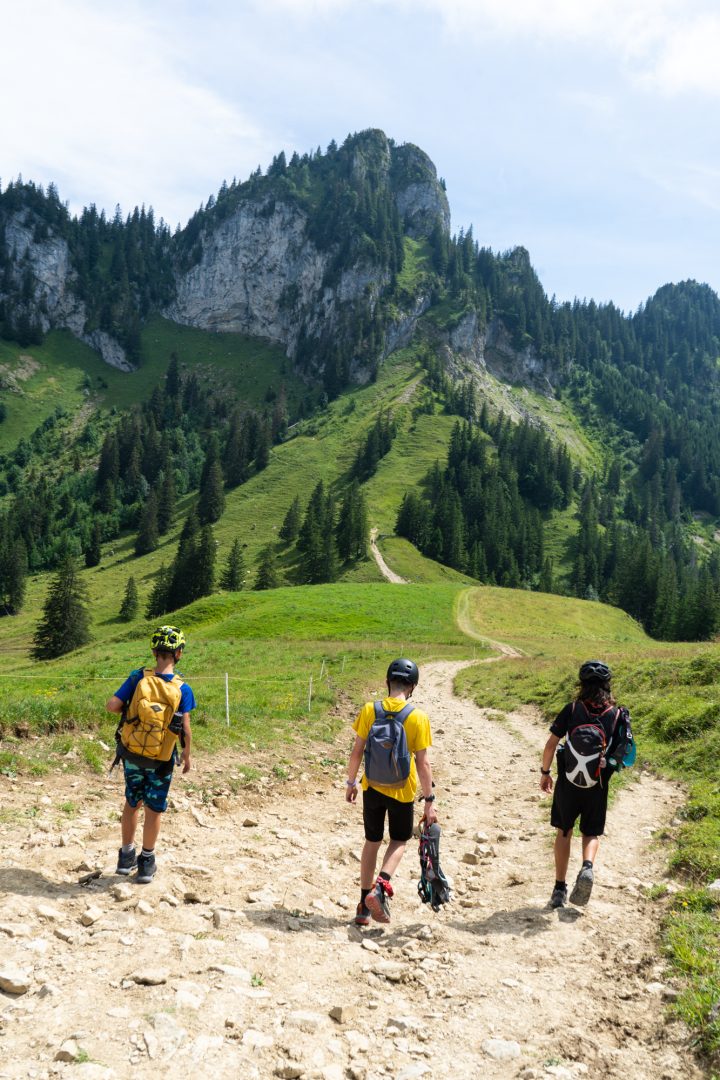
About 60% sit in alpine areas, with the rest near lakes and valleys. That mix lets camps build progressive programs covering:
- hiking and graded mountain routes
- via ferrata and rock climbing
- mountain biking
- sailing and other water sports
- glacier introductions and basic alpine skills
Leaders match routes and skills to age and ability.
Accessibility and season
Switzerland’s SBB rail and bus network links many camps within 1–3 hours of Zurich, Geneva or Basel. The main window runs mid‑June to late‑August, while high‑altitude routes remain available into September.
Choosing a format
Day camps suit younger and local children. Residential camps usually suit ages 8–9 and up and develop independence. Reserve high‑alpine and glacier programs for experienced teens and plan for proper acclimatization.
Safety and staffing
Camps require activity‑specific instructor credentials and pediatric first aid. They set clear staff‑to‑child ratios, collect detailed medical paperwork and publish emergency and evacuation plans.
Planning and costs
Expect around CHF 150–450 per week for day camps, and CHF 700–3,000+ per week for residential programs. Book popular sessions three to twelve months in advance. Pack layers and altitude‑appropriate kit. You can rent technical equipment locally if needed.
https://youtu.be/TxzJUThsDGE
Why Switzerland is ideal for an outdoor summer camp
We, at the young explorers club, choose Switzerland because its geography and infrastructure let us run safe, adventurous programs across short travel times. It has 26 cantons and four national languages: German, French, Italian and Romansh. The country covers about 41,285 km² and had roughly 8.7 million residents in 2023. Currency is CHF and time zone is CET/CEST.
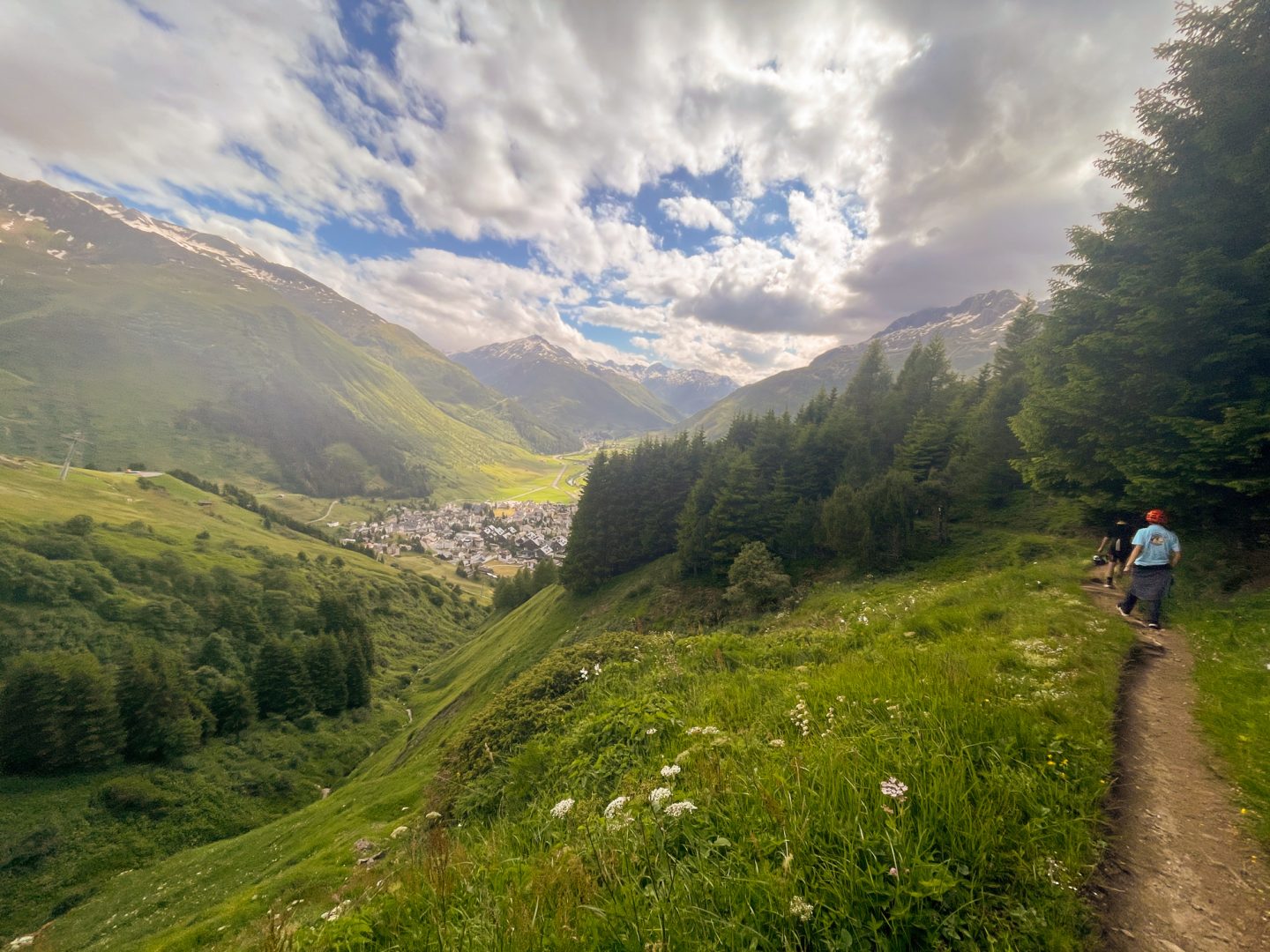
The landscape drives the experience. Roughly 60% of the country is mountainous, split between the Alps and the Jura. The highest summit, Dufourspitze, reaches 4,634 m. That variety gives us steep alpine ridges for technical hiking and climbing, gentle valleys for multi-day treks, and clear lakes for canoeing and swimming. We use those zones to teach alpine ecology, navigation, and water skills in real settings.
Transport is a major advantage. Switzerland’s national public transport network — SBB plus dense regional rail and bus links — means camps are often reachable within 1–3 hours from major international airports: Zurich (ZRH), Geneva (GVA) and Basel (BSL). We always check SBB timetables when planning transfers and share train connections with families well before arrival.
The seasonal window is straightforward and practical. Our main camp season runs mid‑June to late‑August. Prime alpine hiking usually spans June–September, depending on altitude and lingering snow. Higher routes open later and may require more experienced leaders and snow-aware kit.
Quick practical facts and tips
Below are compact facts and direct recommendations that parents and leaders will find useful:
- Swiss basics: 26 cantons; four languages; area ~41,285 km²; population ~8.7 million (2023); currency CHF; CET/CEST time zone.
- Terrain mix: ~60% mountainous (Alps and Jura); highest peak Dufourspitze 4,634 m. Ideal for hiking, climbing, alpine ecology studies, and lake activities.
- Accessibility: excellent rail/bus network (SBB); many camps 1–3 hours from ZRH, GVA, BSL. Check SBB timetables for exact connections.
- Seasonality: main camps mid‑June to late‑August; alpine hiking prime June–September by altitude and snow conditions.
- Practical tip: pick camp dates with altitude in mind. Lower-elevation programs start earlier and stay warmer. High-alpine routes need later-season windows and flexible itineraries.
We plan logistics to minimize travel stress and maximize outdoor time. That means choosing sites close to reliable public transport, scheduling acclimatization hikes for higher-altitude weeks, and keeping alternative low-altitude activities ready if snow or weather closes a route. For packing guidance, consult our what to pack page to match gear with altitude and activity.

Types of camps, who they suit, and how to pick one
We, at the Young Explorers Club, break camps into clear formats so families can pick what fits their child. Below are common camp formats and how they tend to match different ages and goals.
- Day camps run mornings and afternoons and work best for younger or local kids who need home routines.
- Residential camps put kids on-site for anywhere from a long weekend to full-season programs; they accelerate independence and immersion and suit ages roughly 8–9 and up.
- Family/adventure camps let parents share the experience and are great for mixed-age families who want guided outings without full kid-only responsibility.
- School-run international camps tend to follow academic calendars, often operate bilingually, and attract global participants in tourist hubs like Interlaken, Zermatt, and Geneva.
- Specialized skills camps—climbing, sailing, mountain biking, wilderness survival—focus training hours on one discipline and demand specific equipment and instructor credentials.
Session length and age models influence skill progression and social fit. Common session lengths are:
- 1‑week tasters for first-timers to test confidence.
- 2‑week sessions for solid skill-building and social bonding.
- 3–4 week intensives for measurable progress in a sport or leadership.
- Full-season 6+ week stays for deep immersion and expedition experience.
Typical age brackets cluster by developmental goals:
- 6–8: introductions, simple group games, short excursions.
- 9–12: core outdoor skills, longer day hikes, basic multi-day trips.
- 13–17: adventure leadership, technical skills, multi-day high-altitude expeditions (only for experienced teens).
Many Swiss camps welcome international participants and operate bilingually; search regional listings for diversity and language options. For a curated list you can compare, see best summer camps for an overview of styles and locations.
Match format to the child, not the parent. Choose a day camp if your child is anxious about overnight stays or you live nearby. Opt for residential camps to build confidence, social independence, and sustained skill training—especially from age 8–9 onward. Reserve high‑alpine or glacier programs for experienced teens who’ve had prior altitude exposure and formal acclimatization; instructors should require proven experience and a clear acclimatization plan.
Quick selection checklist
Consider these items when evaluating a program:
- Age‑appropriateness and session length options.
- Staff-to-camper ratios and instructor qualifications.
- On-site medical staff and medication protocols.
- Safety and emergency procedures, including evacuation plans.
- Accommodation style (tents, cabins, dorms) and supervision levels.
- Language of instruction and support for non-native speakers.
- Clear cost breakdown and what’s included (meals, equipment, transport).
- Independent reviews, parent references, and recent inspection reports.
Top Swiss regions for outdoor camps and what each offers
We, at the young explorers club, pick regions for specific outdoor skills and ages. Each area offers distinct terrain, weather and access logistics.
Regions and highlights
Below I list the main Swiss zones I use for outdoor camps and what each delivers on skills and adventure:
- Bernese Oberland (Interlaken, Grindelwald, Lauterbrunnen): Classic alpine playground for hiking, via ferrata, canyoning, rock climbing and paragliding. Interlaken Ost is the nearest hub and many routes require onward transfers by train or cable car. The peaks here commonly sit between 2,000–3,800 m, so altitude and weather can change fast; I plan routes that match group ability and daily conditions.
- Valais / Zermatt / Saas‑Fee: Best for high‑alpine trekking and glacier introductions with guided rope-and-harness work. Mountain biking is excellent thanks to lift access that opens longer descents. Visp is the rail hub for Zermatt and Saas‑Fee, followed by regional transfers. Zermatt gives direct access to glaciers and routes above 3,000 m, so I only schedule these for experienced older kids or groups with guided training.
- Lake Geneva region (Montreux, Lausanne): Ideal for sailing, windsurfing and lake ecology studies. Programs run bilingually in French and English, which helps international groups and language practice alongside water skills.
- Graubünden (Davos / St. Moritz): Strong on mountain biking, orienteering and alpine wildlife observation. I favour multi‑day hut-to-hut treks here for older teens who can carry packs and use map-and-compass skills.
- Central Switzerland (Lucerne / Engelberg): Perfect for lake activities, low-altitude alpine hikes and ropes courses. You’ll get fast access from Zurich and gentler gradients for younger or less experienced campers.
Matching region to ability and practical tips
I match terrain to age, fitness and technical skills. For younger kids and first-timers, I choose calmer, lake-based camps with short hikes and supervised water sports. Intermediate groups get Bernese Oberland and Graubünden for steeper trails, via ferrata basics and sustained mountain biking. Advanced groups head to Valais and Zermatt for glacier introductions and high‑alpine routes above 3,000 m.
Practical tips I always follow:
- Build acclimatisation days into any high-altitude trip. Kids feel better with a slow ascent and a rest day.
- Use local hubs (Interlaken Ost, Visp, Zurich) for reliable rail and lift connections. Trains and cable cars cut approach time and reduce fatigue.
- Insist on guided glacier sessions with rope and harness for any glacier exposure. Guides teach knots, team travel and crevasse awareness.
- Pick lift-assisted mountain biking to give kids longer descents while keeping climbs manageable.
- Keep group sizes and skill mixes narrow on technical terrain; smaller, homogenous groups learn faster and stay safer.
For a clear idea of daily routines and what campers should expect, see What kids should expect, which I use when briefing parents and participants.
https://youtu.be/3zuB-YMjPmI
Typical activities, a sample weekly schedule, instructor standards and learning outcomes
Core activities and session lengths
We offer a focused set of outdoor modules that build skills progressively. Typical activities include:
- Day hikes: 3–8 km for younger children, 8–15 km for older kids; multi-day treks 10–30 km for teens.
- Via ferrata and rock climbing: short skills sessions then guided routes; typical session 1.5–3 hrs.
- Mountain biking: trail technique, line choice and bike care with progressive route difficulty.
- Lake sailing and kayaking: flat-water skills, capsize drills and basic seamanship.
- Ropes and cable courses: confidence-building elements and belay practice.
- Orienteering and map & compass: route planning, pace counting and timed exercises.
- Low-impact nature education and wildlife tracking: species ID, sign reading and journaling.
- Campcraft and basic first aid: shelter-building, fire safety and wound care.
- Environmental science labs: water testing, soil surveys and simple data logging.
Session lengths are set to match attention spans. Typical activity windows run 1.5–3 hrs. I limit elevation gain for under-12s to 300–500 m per day unless they’re already acclimatized.
Sample daily schedule, instructor standards and measurable outcomes
A representative residential day follows a clear rhythm:
- 07:30 wake; 08:00 breakfast.
- 09:00 morning skills session (map reading or climbing technique), 2 hrs.
- 11:30 mini hike or lake swim, 1.5–2 hrs.
- 13:00 lunch and rest.
- 14:30 afternoon activity (mountain biking or canoeing), 2–3 hrs.
- 17:30 free time or workshops (nature journaling), 1 hr.
- 19:00 dinner; 20:00 campfire and leadership activities; 21:30 lights out (age-dependent).
Instructor standards I require are strict and specific:
- Climbing instructors: must hold national climbing certification or IFMGA-level credentials for high alpine or glacier work.
- Water-sports staff: should be certified by the Swiss Sailing Federation or an equivalent authority.
- All staff: carry pediatric first-aid certification and activity-specific qualifications.
- Training: every instructor is trained in Leave No Trace principles and site risk assessment.
Measurable learning outcomes I use clear, practical benchmarks. By week’s end campers should be able to:
- Navigate a 5 km route independently using map and compass.
- Demonstrate basic rope and rock safety (proper knots, belay checks).
- Apply Leave No Trace ethics during camp activities.
- Show teamwork and increased independence during multi-hour sessions.
- Record environmental observations and basic data in a field journal.
For a quick preview of expectations and logistics see our guide to summer camp in Switzerland for details on age groups and activities.
https://youtu.be/P6xxnGEblvE
Safety, staffing, medical, accommodation and food
I set clear staff-to-child ratios and stick to them. Typical industry norms are 1:6–1:8 for ages 6–8, 1:8–1:10 for ages 9–12, and 1:10–1:15 for teens. I increase supervision to 1:4–1:6 for high‑risk activities like glacier travel, technical climbing, or open-water instruction. I require criminal background checks and expect core certifications: pediatric first aid, child safeguarding training, and activity‑specific qualifications (such as IFMGA for glacier activities, Swiss Alpine Club training, and national sailing/motorboat certificates where relevant).
I collect comprehensive medical paperwork before arrival. That includes up‑to‑date immunizations (routine childhood vaccines plus tetanus recommended), allergy and medical histories, signed parental consent, emergency contacts, and primary physician details. I keep those forms on hand and review them with the day leaders. For camps operating in high‑alpine zones I build emergency plans that list the nearest hospital or clinic and describe helicopter evacuation protocols; REGA air rescue is commonly used in Switzerland and is integrated into many alpine plans.
I manage accommodations to match group age and activity. Options include dormitory or bunkrooms for younger groups, mountain huts for older or experienced groups, chalets, family‑run hostels, and camping/tented villages. I provide three meals a day plus snacks; alpine huts serve simpler, hearty fare. I handle special diets—vegetarian, halal, gluten‑free, nut‑free—when parents give advance notice. For a clear sense of daily life and sleeping arrangements, see what kids should expect.
I build environmental stewardship into daily routines. Camps I run teach Leave No Trace principles, organise waste sorting and recycling, and schedule trail maintenance or habitat‑respect projects. I enforce group size limits in sensitive alpine meadows and ban open fires in dry conditions.
Verification checklist for parents
Before you book, ask the camp to provide the following and publish them where possible:
- Staff ratios by age group and increased supervision for high‑risk activities.
- Instructor qualifications and copies or summaries of activity certificates.
- Criminal background check and child safeguarding policy.
- Full medical protocols, required immunizations, and the medical form template.
- Emergency procedures, nearest hospital/clinic, and helicopter evacuation plan (note use of REGA).
- Medevac and insurance coverage requirements and recommendations.
- Accommodation type and sleeping arrangements.
- Meal plans and special‑diet accommodations.
- Environmental rules (Leave No Trace, fire policies, group limits).

Costs, travel, packing essentials and booking timeline
We, at the Young Explorers Club, lay out realistic budgets so families can plan confidently. Typical program fees run from about CHF 150–450 per week for day camps and CHF 700–3,000+ per week for residential camps, depending on prestige, location and included extras. Equipment rental usually costs CHF 50–300 per week. Factor those as base numbers and expect variation by season and program.
Plan for additional expenses beyond tuition. These commonly include:
- Travel (international flights or regional trains)
- Buying or renting specialized gear
- Travel and health insurance
- Visas (Schengen visa where required)
- Optional excursions or private instruction
Switzerland uses the Schengen entry system, so check visa requirements for your nationality well before booking. Major arrival airports are Zurich (ZRH), Geneva (GVA) and Basel (BSL). Trains run on the SBB network and connect most towns efficiently; many camps provide organized transfers from major hubs, which can simplify arrival and departure logistics.
I advise booking early for peak season. Reserve the most popular June–August sessions 6–12 months ahead, or allow at least 3–4 months for smaller or local camps. Programs often reward early commitment: expect early-bird discounts in the 10–20% range and common multi-week savings for back-to-back sessions. Always read the camp cancellation policy closely—note whether your deposit is refundable and what penalties apply for changes. Buy travel insurance that covers trip cancellation, medical repatriation and activity risk for outdoor programs; standard policies may exclude certain adventure activities, so confirm coverage.
I recommend carrying prescribed medications in original packaging with clear instructions and advance notice to the camp medical staff. Keep digital copies of travel documents and emergency contacts. If you need help choosing gear or understanding transport options, consult our what to pack checklist for a detailed breakdown and local tips: what to pack.
Packing & gear checklist (essentials)
Below are the core items I expect every camper to bring for a safe, comfortable outdoor week:
- Daypack 20–30L for hikes and daily gear
- Water bottle 1–1.5 L, refillable and durable
- Headlamp plus spare batteries
- Hiking boots with ankle support (broken-in)
- Waterproof, breathable shell jacket
- Base layers, a fleece mid-layer and an insulated jacket for cold evenings
- Swimwear and quick-dry towel
- Prescribed meds in original packaging with dosing instructions and emergency contact information
Keep gear compact and weather-appropriate. Label items clearly. For expensive technical gear consider renting locally—it often costs CHF 50–300 per week and saves baggage hassle. If you plan guided or technical activities, confirm specific equipment lists with the camp before departure.
Sources
Swiss Federal Statistical Office — Population and households
SBB – Swiss Federal Railways — Timetable & routes
IFMGA — International Federation of Mountain Guides Associations
Swiss Alpine Club (SAC) — Swiss Alpine Club
Leave No Trace Center for Outdoor Ethics — Leave No Trace Principles
World Health Organization (WHO) — Travel and health
State Secretariat for Migration (SEM) — Entry and visa (Visum)
Federal Office of Public Health (FOPH/BAG) — Travel and health
Zurich Airport — Plan your journey
EuroAirport Basel Mulhouse Freiburg — Passenger information