Summer Camp In Switzerland Vs. Summer Camp In France: Key Differences
Compare summer camps in Switzerland vs France: costs, activities, safety, subsidies and transport to help families choose the right program.
Summer Camp in Switzerland vs. Summer Camp in France
We compare summer camps in Switzerland and France to help families make informed choices.
Key Differences
France runs a much larger camp market, with roughly 2–3 million annual participants and many municipal-backed options. Switzerland’s market is smaller, about 50,000–250,000 participants, and concentrates on alpine, small-group and bilingual programmes. These differences shape price ranges (Swiss CHF 150–3,000/week vs French €80–1,200/week), subsidy availability, regulatory and staffing models, and transport and logistics choices families should weigh.
Key Takeaways
- Market & format: France’s larger market yields broad variety and many municipal or CAF-supported choices. Switzerland favours smaller cohorts, closer adult-to-child ratios and strong links to outdoor education.
- Cost & subsidies: Swiss camps usually cost more and offer fewer nationwide subsidies. Families often rely on employer or cantonal support, or scholarships. French camps commonly benefit from CAF and municipal means-tested pricing.
- Activities & accommodation: Swiss programmes concentrate on alpine sports with certified guides and chalet-style residentials. French options span coastal sailing, equestrian and cultural programmes with a wider mix of gîtes and communal dorms. Match activity risk to provider certifications.
- Safety & staffing: France uses prefectoral authorisation and BAFA/BAFD-trained staff with set ratios. Switzerland follows canton-level rules, requires certified alpine guides and qualified lifeguards for higher-risk activities. Check certificates and staff-to-child ratios before booking.
- Logistics & policies: France often provides local bus or train pickups and offers more flexible municipal cancellation or refund paths. Switzerland tends to use private transfers, enforces stricter cancellation terms and makes comprehensive travel and cancellation insurance essential.
Practical Recommendations
- Verify certifications: Ask for copies of staff qualifications, alpine-guide certificates and lifeguard licences for high-risk activities.
- Confirm ratios and supervision: Get written staff-to-child ratios for the relevant age group and activity.
- Budget for transfers: Include private transfer costs common in Switzerland when comparing total price.
- Buy insurance: For Swiss camps, consider travel and cancellation insurance that covers alpine activities and private-transfer scenarios.
- Check subsidies: For French options, investigate CAF and municipal support; for Swiss options, ask about cantonal, employer or scholarship aid.
Bottom line: France offers greater variety and more subsidy-supported, local options; Switzerland offers specialized alpine experiences with higher costs and stricter logistics. Families should prioritise safety, certification and total cost (including transfers and insurance) when choosing between the two.
https://youtu.be/MO0jS3NJzys
Quick comparison: participation, timing and session length
Participation & market size
We, at the Young Explorers Club, see a stark contrast in scale between France and Switzerland. France reports roughly 2–3 million children attending organised holiday camps — colonies de vacances and accueil de loisirs — in a typical pre‑pandemic year. Switzerland is far smaller, with annual participation commonly estimated between 50,000 and 250,000. Those gaps shape everything from pricing to program diversity. Larger French numbers mean more specialised offers and high-volume providers. Smaller Swiss numbers produce tighter cohorts, often with stronger links to local outdoor education and bilingual instruction. If you’re comparing options, think about whether you value variety and scale or smaller groups and personalised attention. You can read more about picking a summer camp in Switzerland on our summer camp in Switzerland guide.
Timing and session length
Most camps in both countries stick to short, focused sessions. Below are the typical patterns you’ll encounter.
- Session length: Most sessions run 1–2 weeks, though multi‑week stays of 1–4 weeks are common for families wanting deeper immersion.
- Peak months: July–August are the busiest months in both countries. France often centres camps on July and August with regional calendar staggering. Switzerland’s main season runs July to mid‑August, with some camps operating from June through September.
- Booking and flexibility: Short sessions make staggered arrivals possible. We recommend booking early for July weeks and considering multi‑week stretches if you want continuity and language immersion.
We design our programmes to fit these rhythms. Short stays let families test a camp without long commitments. Multi‑week options deliver stronger skill progression and social bonding. Choose the format that matches your child’s temperament and your travel plans.

Cost, subsidies and what’s included
We, at the Young Explorers Club, break costs down so parents can compare quickly. Typical headline ranges are Switzerland: CHF 150–3,000/week and France: €80–1,200/week, with a mix of CAF subsidies, means-tested pricing and differences between day and residential options.
Typical ranges
- Swiss day camps: CHF 150–400 per week.
- Swiss residential/boarding: CHF 800–3,000+ per week (typical range CHF 800–2,500/week depending on prestige, location, inclusions).
- French day camps: €80–250 per week.
- French residential/boarding: €200–1,200/week, with public or municipal options and CAF‑subsidised stays often at the lower end.
Subsidies and pricing differences
France offers CAF subsidies and municipal pricing that can cut family costs substantially; means-tested pricing is commonly applied by local authorities. Switzerland has less national subsidisation—families usually rely on employer support, cantonal schemes or private scholarships for discounts. In Switzerland you’ll more often find targeted scholarships from individual camps or foundations.
What higher prices buy
Premium Swiss programmes tend to include guided mountain activities, specialist instructors and higher staff ratios. In contrast, lower‑end French municipal stays typically include meals and on‑site activities but offer limited off‑site trips.
What prices commonly cover
- Meals: full board for residential stays or lunch/snacks for day camps.
- Basic activity equipment and on‑site supervision.
- Local transport for scheduled activities; major off‑site trips may cost extra.
- Specialist services (medical staff, professional guides) are more often included in higher‑tier Swiss camps.
For concrete examples: a CHF 1,500/week Swiss alpine boarding camp typically includes full board, guided mountain activities and professional guides. A €350/week French municipal stay may include meals and activities but limited off‑site trips.
If you want a practical next step, see our guide on how to choose which compares inclusions, subsidy options and value per price point.
Safety, regulations and staffing (ratios & qualifications)
Ratios et qualifications
Nous, au Young Explorers Club, distinguons clairement les approches française et suisse sur les taux d’encadrement et les exigences de diplôme. Voici les points clés pour comparer rapidement les pratiques courantes et les obligations légales locales.
- France : pré‑autorisation préfectorale pour les « séjours de vacances », fiche sanitaire obligatoire pour chaque enfant, animateurs titulaires du BAFA et directeurs souvent titulaires du BAFD. Ratios usuels cités : moins de 6 ans ≈ 1:4 ; 6–11 ans ≈ 1:8 ; 12 ans et plus ≈ 1:12 — les règles locales peuvent varier.
- Suisse : réglementation cantonale (pas de loi fédérale unique), forte exigence de gestion des risques pour les activités alpines et nautiques, exigences de sauveteur pour les activités aquatiques et guides reconnus (certification Swiss Alpine Club ou équivalente). Pratiques courantes : moins de 8 ans ≈ 1:6 ; 8–12 ans ≈ 1:8–10 ; adolescents ≈ 1:10–12. Les camps résidentiels prévoient souvent une surveillance de nuit additionnelle (1:10–20 selon l’âge et la taille).
Documents, assurance et procédures d’urgence
Nous exigeons des dossiers médicaux complets et des procédures claires. En France, la fiche sanitaire accompagne l’inscription et facilite la gestion des traitements et allergies. En Suisse, on parle de medical file équivalent avec les mêmes attentes pour allergies, traitements et contacts d’urgence.
Nous demandons aussi des preuves d’assurance responsabilité civile et des protocoles écrits pour l’évacuation et la prise en charge d’urgence. Les vaccinations ne sont généralement pas exigées par défaut dans l’un ou l’autre pays, sauf règles spécifiques d’institutions particulières.
Les obligations de secourisme sont comparables : premiers secours obligatoires pour les encadrants, contrôles de casier et vérifications administratives selon le canton ou la préfecture. Pour les activités aquatiques, nous veillons à la présence de personnel titulaire d’une certification de sauveteur. Pour les sorties en montagne, nous demandons des guides certifiés reconnus.
Pour vous aider à trancher entre options suisses et françaises, consultez notre guide pratique choisir le camp.
Nous recommandons d’exiger avant de confirmer l’inscription :
- Fiche sanitaire à jour
- Copie d’assurance responsabilité civile
- Plan d’urgence détaillé
- Preuve des qualifications (BAFA/BAFD ou certifications suisses)
https://youtu.be/y1MtieihXwk
Activities, geography and accommodation differences
Activities and geography
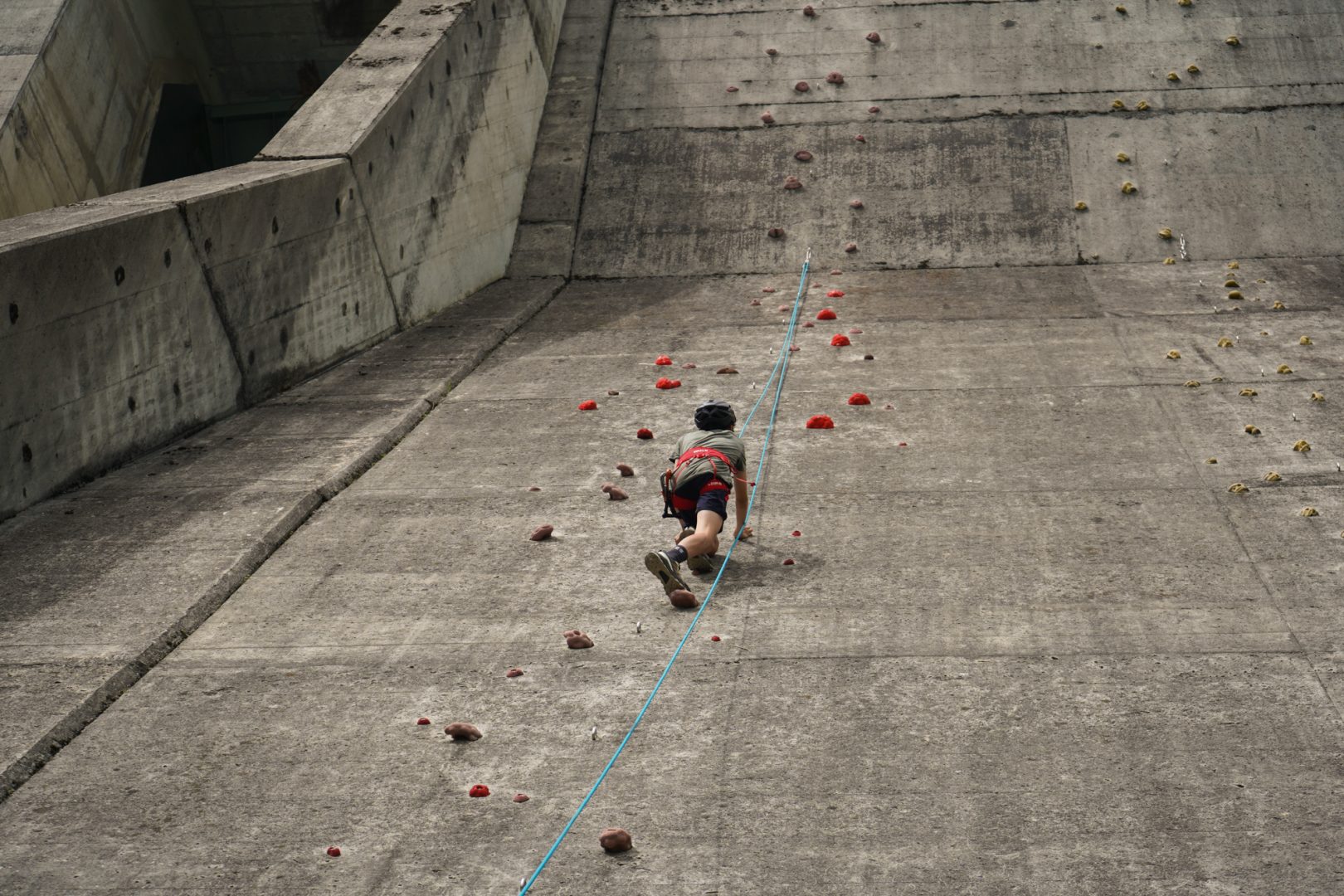
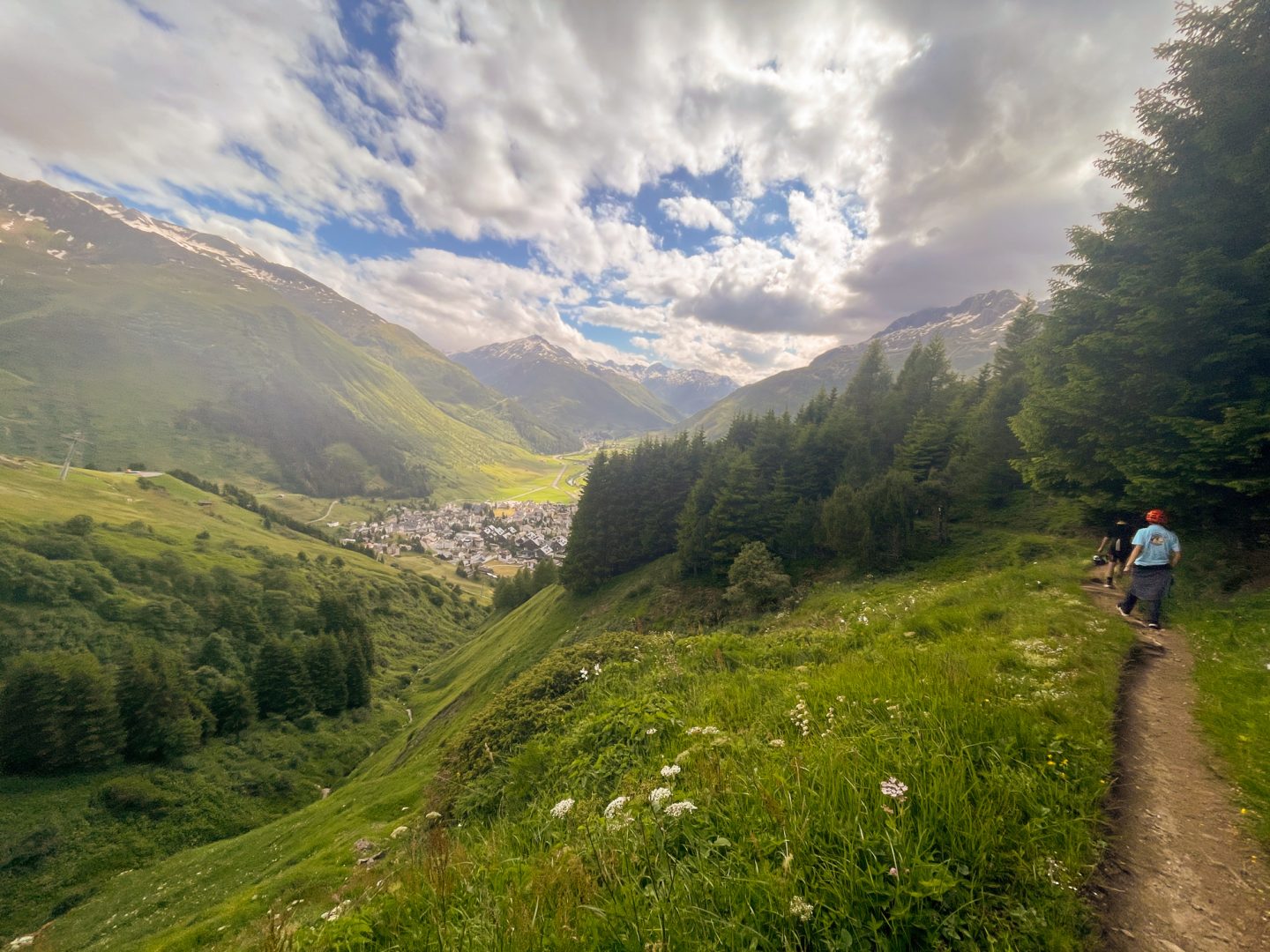
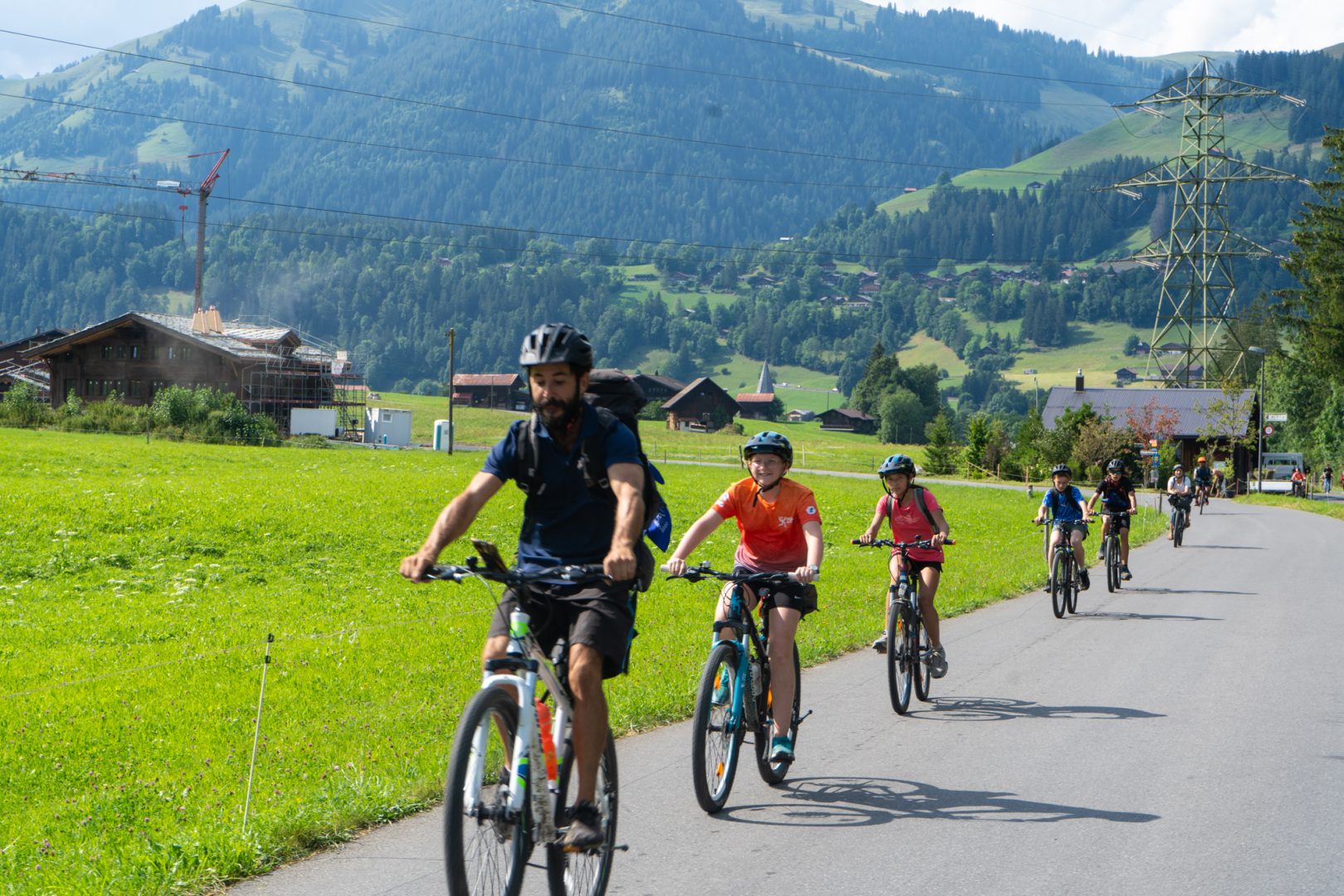
Switzerland centres its programmes on alpine adventure. Hiking, mountain biking, climbing and via ferrata dominate the activity roster, with lake sports like kayak and stand‑up paddle added where terrain allows. Icy ridgelines and steep trails lead to focused alpine safety training and guided expeditions. Certified alpine guides are common and small-group adventure programmes are standard practice. For a direct comparison of why Swiss mountain programmes feel different, see our page about Swiss camps.
France offers a wider geographic spread. Coastal centres run sailing and windsurfing on the Mediterranean or Atlantic. Rural and countryside camps favour equestrian programmes and farm‑based activities. Mountain camps exist too, but you’ll also find multi‑activity “colonies” that mix historical excursions, cultural visits and sports days. Programmes in France often prioritise variety and local culture as much as technical outdoor skills.
Below I list typical activity mixes so you can compare at a glance:
- Switzerland: hiking, mountain biking, climbing, via ferrata, kayak/stand‑up paddle on alpine lakes, alpine safety courses, guided summit treks with alpine guides.
- France: sailing and windsurfing, equestrian lessons, countryside hikes, cultural and historical excursions, multi‑activity days in seaside or gîte settings.
Accommodation, meals and safety
We, at the Young Explorers Club, place equal emphasis on lodging quality and safety credentials. Swiss camps tend to be residential and set in chalets or purpose‑built centres. Full board is common and catering often matches higher expectations for dietary needs and allergy handling. Premium options may offer single rooms or small dorms instead of larger dormitory blocks. Communal dining still happens, but kitchens often have the flexibility to prepare specialised meals.
In France accommodation varies more. You’ll see municipal centres, rural gîtes, mountain refuges and seaside centres. Communal dorms remain typical for many residential stays, especially in CAF‑supported centres where facilities can be simpler. Full board is widespread, but menus may lean local and rustic; organisers often run communal dining and shared kitchen setups.
High‑risk activities demand extra qualifications everywhere. Mountain routes require certified mountain guides and specific alpine training for staff. Water programmes must be supervised by qualified lifeguards or sailing instructors. We expect closer supervision ratios for via ferrata, technical climbs and open‑water sessions. Staff training includes first aid and emergency response; medical arrangements are agreed before departure and cover dietary needs and on‑site health incidents.
Practical recommendations I use when advising families:
- Check the activity list and confirm instructor qualifications for alpine guides or lifeguards.
- Verify sleeping arrangements: chalet single rooms vs gîte dormitory vs communal dining halls.
- Ask about full board menus and how dietary needs and allergies are handled.
- Confirm supervision ratios for high‑risk activities and on‑site first aid cover.
This comparison helps match a child’s interests to the right environment: choose Swiss mountain‑focused programmes for technical alpine skills and lakeside adventure, and French camps for coastal sports, equestrian options and cultural variety.
https://youtu.be/MO0jS3NJzys
Logistics, enrollment and who attends
We, at the Young Explorers Club, run programmes that cover age ranges 4–17. Programmes split into preschool (4–6), children (7–12) and teens (13–17). Offerings vary by country and provider mix, so families should match their child’s maturity and activity level to the right group.
Enrollment and program types
Below are the common programme types and the age groups that typically attend; use this to check fit before you enrol.
- Day camp France municipal: popular with local families, often supported by municipal or CAF funding and aimed at 4–12 year olds. Bus pickups from town centres are common.
- Residential/boarding: full-week stays for 7–17 year olds; many Swiss camps run private boarding options and international camps attract older teens.
- Language immersion (séjours linguistiques): usually 7–17; structured classes plus activities, ideal for family language goals.
- Specialty camps: sailing, equestrian, mountain skills — age minimums vary but many start at 8–10.
- International camps: multi‑national cohorts, intensive English or mixed-language instruction, common in Switzerland.
I recommend confirming minimum and maximum ages, group sizes, and whether mixed-age cabins are used. Ask for the programme schedule and child-to-staff ratios before you commit.
Transport, transfers and arrival logistics
France and Switzerland handle transport very differently. In France, municipal and CAF‑supported camps often include bus pickup points at schools or town centres and organised train meet‑ups. That makes day camp access straightforward for local families. Switzerland leans private: camps frequently arrange train connections plus local minibuses or bespoke airport transfers for international arrivals. Rural and mountain camps typically require 1–3 hours of travel from major city hubs; for example, Geneva to an Alpine camp is commonly 1.5–2 hours by coach or minibus — see options near Geneva for specifics.
Practical enrolment details you should confirm before booking:
- Who signs children in/out: most camps require parents or authorised adults to sign kids in at arrival; older teens may be allowed to travel alone with written consent.
- Transfers: check whether transfers (bus pickup, train meet-up, airport transfer) are included in the published fee or charged extra. Private Swiss transfers are often additional.
- Arrival/departure logistics: residential weeks usually start mid‑afternoon and finish late morning; day camps have fixed drop‑off/pick‑up windows and sometimes late‑stay options.
I advise preparing a signed authorisation list, emergency contact card, and any transport vouchers the camp issues. We handle logistics directly when possible, and we always confirm transfer details in writing before travel.

Insurance, cancellation, pricing drivers and cultural emphasis
We, at the Young Explorers Club, always start with insurance: get travel insurance plus accident and medical cover before booking. We advise you to confirm whether the camp fee already includes civil liability and accident insurance, since some providers bundle those and others leave families to arrange them. We recommend policies that cover trip cancellation, emergency medical evacuation and activity-specific risks for high-risk programmes like alpinism or sailing.
Camp cancellation rules differ sharply between countries. Swiss premium camps often enforce stricter cancellation policies, with partial refunds only and late fees for last-minute drops. French municipal centres and traditional colonies de vacances usually offer more flexible cancellation windows and clearer refund pathways via CAF subsidies. We suggest checking the fine print on cancellation fees and refund timelines before you pay any deposit.
COVID policies still vary by operator. Some camps require tests or proof of vaccination; others allow rescheduling or full refunds for COVID-related interruptions. We urge you to get written clarity on test, vaccine and isolation requirements, plus the provider’s refund or rescheduling rules if an outbreak affects your session.
Main price drivers
These factors explain why Swiss camps often cost more and help you compare offers clearly:
- Location and prestige — Alpine luxury sites carry higher operating costs and command premium prices; municipal centres in France tend to be lower-cost.
- Staff wages — higher salaries and employment taxes in Switzerland push fees up; check staff qualifications and pay levels on the programme sheet.
- Activity risk level — high-risk programmes (alpinism, sailing) need certified guides and special insurance, which raises the price.
- Accommodation quality — private chalets or on-site hotels cost more than school dorms or community centres.
- Staff-to-student ratio — lower ratios mean more supervision and higher per-child fees; ask for exact numbers.
- Meals and transport inclusions — full board and organised transfers add to the headline price but simplify logistics.
- Permits and operating costs — alpine permits and mountain-rescue agreements are tangible costs in Switzerland that you won’t always see in France.
- International branding — globally marketed camps set higher prices for multilingual instruction and reputation management.
We recommend treating the price as a bundle: a higher fee can include better staff training, lower risk activities per instructor, and tighter safety procedures. If budget is a constraint, choose camps with simpler activity lists or municipal providers that subsidise places.
We keep two practical tips on cancellation and insurance. First, buy cancellation cover that explicitly mentions pandemic, illness and travel-disruption clauses; it often costs less than losing a deposit. Second, ask the provider to confirm in writing which insurances are included in the fee and which you must buy separately.
Cultural and educational emphasis shapes daily life at camp. French colonies de vacances put socialisation, civic education and cultural outings first. They often receive public subsidies and emphasise inclusion and group activities. We see that approach work well for kids who benefit from structured social programmes and community-focused learning.
Swiss programmes skew towards outdoor skills, autonomy in nature and language exchange. Many Swiss camps hire certified mountain guides and offer high‑skill instruction alongside multilingual immersion. If language learning matters, we run a bilingual camp Switzerland that combines certified instructors with real mountain-based skills.
We encourage you to match educational emphasis to your child’s needs: pick French colonies for civic and social learning, and Swiss camps for technical outdoors skills and language immersion.
Sources
American Camp Association — 2022 State of the Camp Industry
Office fédéral de la statistique (SFSO) — Sport, loisirs et culture
Ministère de l’Éducation nationale et de la Jeunesse — Les accueils collectifs de mineurs (ACM)
Caisse d’Allocations Familiales (CAF) — Partir en vacances : aides et prestations
Institut national de la jeunesse et de l’éducation populaire (INJEP) — Études et publications
Service-public.fr — Accueils collectifs de mineurs : règles et démarches
Service-public.fr — Le BAFA et le BAFD
Club Alpin Suisse (SAC) — Sécurité en montagne et formation
The Local Switzerland — Actualités et articles (contexte coûts de la vie et activités estivales)
INSEE — Statistiques et études (jeunesse, loisirs, population)