

The Role of Leadership Development in Camps
Discover the role of leadership development in camps and how it shapes youth through real challenges. Transform your camp programs today!
TL;DR:
- Leadership development in camps provides youth with authentic, real-world opportunities to practice key skills like decision-making and teamwork. Structured reflection and progressive roles amplify learning, creating lasting social-emotional growth beyond traditional environments. Trained staff and integrated reflection ensure every activity fosters genuine leadership, benefiting both campers and the overall camp culture.
Leadership does not wait for a title. For many young people, the role of leadership development in camps is the first place they discover they have something worth contributing to a group. Unlike a classroom or a sports league, a camp places youth inside real situations where the stakes feel genuine: a team that depends on them, a challenge with no obvious answer, a moment where they have to speak up or step back. That combination of pressure, community, and guided reflection produces something a lesson plan rarely can. This article breaks down exactly how that happens and what you, as a camp leader or program organizer, can do to make it happen intentionally.
Table of Contents
- Key Takeaways
- The role of leadership development in camps
- Core skills youth build through camp programs
- Effective leadership development structures within camps
- The impact of leadership training on camp staff
- Practical steps to cultivate leadership at your camp
- My perspective on what camps get wrong
- Discover leadership in action at Youngexplorersclub
- FAQ
Key Takeaways
| Point | Details |
|---|---|
| Camps are unique leadership labs | Immersive, real-world challenges at camp produce leadership growth that classroom settings cannot replicate. |
| Five core skills define camp leadership | Communication, teamwork, initiative, resilience, and decision-making are the skills youth build through camp experiences. |
| Progressive roles drive measurable growth | Moving youth from camper to counselor through structured steps creates clear milestones and lasting development. |
| Debriefing is the most underused tool | Guided reflection after activities transforms experiences into real social-emotional learning. |
| Staff training lifts the whole program | Leadership training in camps gives staff the confidence to support all youth, including those with complex needs. |
The role of leadership development in camps
Most youth programs claim they build leaders. Camps actually do it, and the difference comes down to environment. A classroom delivers content. A camp delivers context. When a group of teenagers has to plan a route through the Swiss Alps, mediate a disagreement over shelter-building strategies, or push through exhaustion on a mountain bike trail, they are practicing leadership, not studying it.
The camp environment has features that most other youth settings cannot offer. Consider what happens when you remove a young person from their everyday social hierarchy, put them in a cabin with strangers, and give them a week of outdoor challenges with no screens and no familiar safety nets. That context forces genuine interaction. Youth leadership develops through outdoor challenges, teamwork, and reflection in ways that structured classroom activities simply do not trigger.
What makes camp even more distinctive is the availability of mentors who are not teachers and not parents. Counselors occupy a unique position: trusted adult, near-peer, guide. That relationship gives campers permission to try leadership behaviors they might never risk in front of a teacher or coach.
Pro Tip: Design your camp activities so that every challenge requires at least three distinct roles to complete: one person to lead, one to communicate outward, and one to track progress. Rotating those roles across the week gives every camper repeated practice in each.
The contrast with traditional sports settings is worth noting. A sport has a coach who decides the play. Camp activities at their best give the group the decision. That shift from compliance to agency is where real leadership development begins.
Core skills youth build through camp programs
The five core leadership skills that camps reliably develop are communication, decision-making, teamwork, resilience, and initiative. Each one connects to real outcomes young people will use for decades.
Here is how each skill shows up in a camp context and why it matters:
- Communication. Campers learn to give clear instructions during high ropes courses, to listen actively during group debrief circles, and to resolve conflict in shared living situations. These are the same skills that employers consistently rank as priorities for new hires.
- Decision-making. When a group has to choose a route, allocate resources during a survival challenge, or decide how to help a struggling teammate, they practice judgment under pressure. Leadership skills and resilience rank among the most sought-after competencies for future employment, making these camp moments directly career-relevant.
- Teamwork. Shared meals, shared tents, and shared goals create interdependence. Campers learn quickly that individual ego is a liability when the team needs to move as one.
- Resilience. Failing a challenge, then trying again, in a psychologically safe environment is one of the most powerful things a camp can offer. The benefits of leadership development include measurable confidence gains that persist long after camp ends.
- Initiative. Camps reward the camper who spots a problem and acts. That recognition shapes behavior in ways that last.
“The impact of leadership camps extends far beyond the summer. When youth practice leading under real conditions and reflect on what happened, the skills become part of how they think.”
The social-emotional learning integration is not accidental. Well-designed camps build it into the structure: morning check-ins, evening reflections, peer feedback sessions. These practices make the skills visible and name-able, which is what turns an experience into a lesson.
Effective leadership development structures within camps
Knowing that camps build leadership is useful. Knowing how to build it is what separates good programs from great ones.
The most evidence-backed structure is a progressive role pathway. Successful programs rely on a clear sequence: Camper, Leader-in-Training (LIT), Counselor-in-Training (CIT), and then Junior Counselor or full Counselor. Each level comes with new responsibilities, new skill expectations, and new reflection requirements.
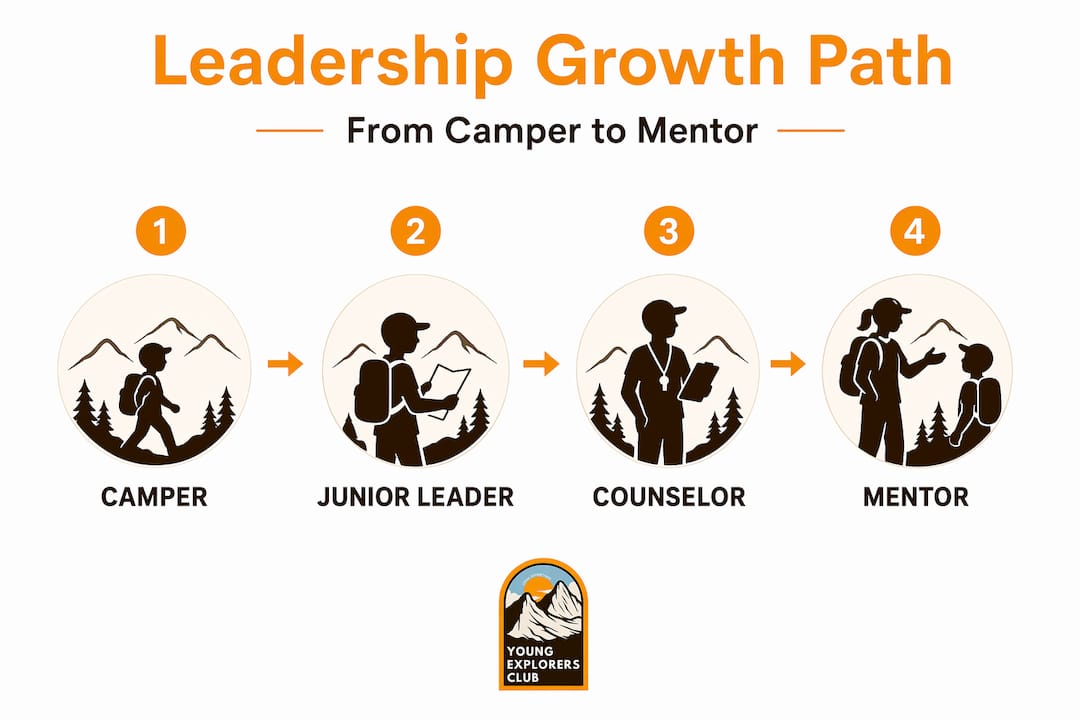
Here is a comparison of what each stage typically looks like:
| Role | Primary responsibility | Key skill focus | Reflection format |
|---|---|---|---|
| Camper | Participate fully | Self-awareness, communication | Daily group debrief |
| LIT | Support group activities | Teamwork, initiative | Weekly one-on-one mentor check-in |
| CIT | Lead segments of the day | Decision-making, facilitation | Written reflection journal |
| Junior Counselor | Manage a small group | All five core skills | Peer review and mentor feedback |
This structure works because it creates measurable milestones. Youth know exactly what they are working toward. Mentors know exactly what to observe. The program becomes self-reinforcing.
Activity debriefing deserves special attention here. It is the single most underused tool in camp leadership development. Activity debriefing is what turns camp activities into genuine social-emotional learning. A rock climb without a debrief is exercise. A rock climb followed by ten minutes of structured reflection on fear, support, communication, and trust is leadership training.
Pro Tip: Use a simple three-question debrief after every major activity: What happened? What did you notice about how you led or followed? What would you do differently next time? These three questions work for any age and any activity type.
Mentors and peer networks amplify everything else. When mentors at youth camps are trained to give specific, behavior-based feedback rather than generic praise, youth learn faster and retain more.
The impact of leadership training on camp staff
Staff development is where many camps leave significant value on the table. The focus is often entirely on youth programming, while the adults running the program receive minimal preparation. That gap matters more than most organizers realize.
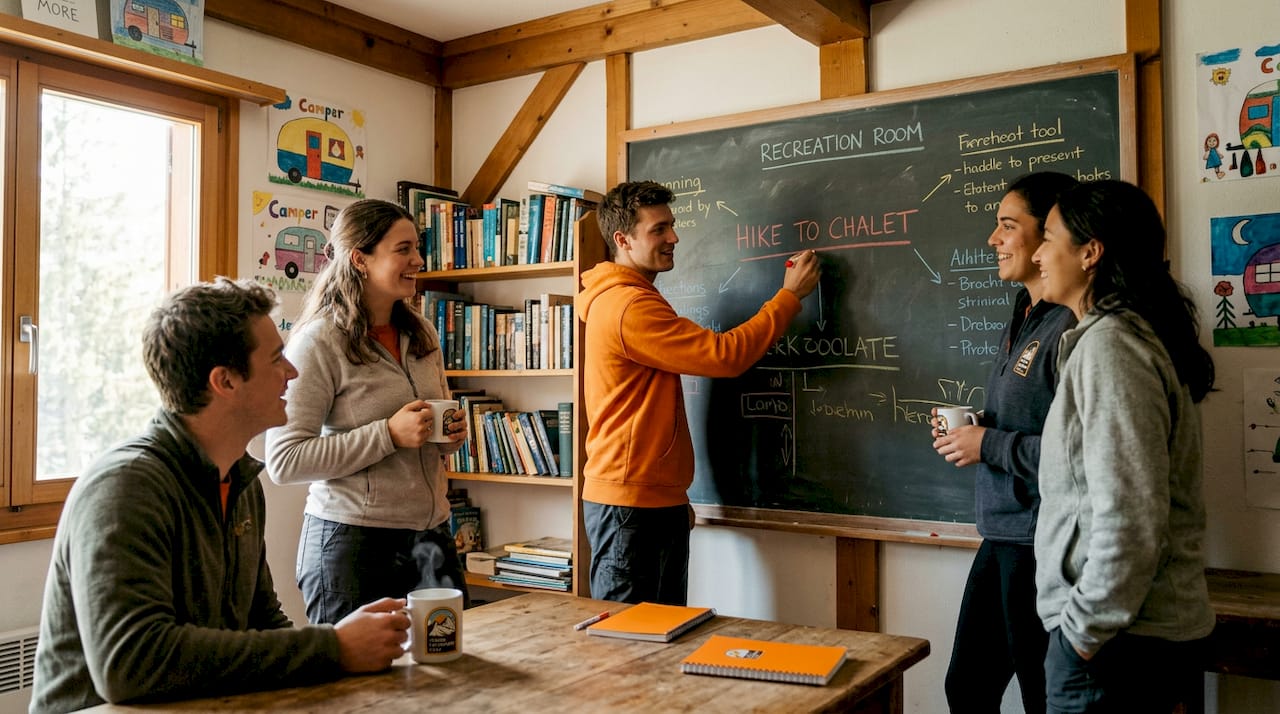
Leadership training in camps gives staff the tools to set clear routines, manage group dynamics, and create inclusive environments where every child can participate and thrive. The data on this is striking: 99.7% of participants in specialized staff leadership training report increased confidence in supporting children with disabilities and managing challenging behaviors.
Strong staff leadership produces a cascade of benefits throughout the program:
- Safety improves because trained leaders anticipate problems, communicate proactively, and respond calmly under pressure.
- Inclusion deepens because leaders who understand their own biases and communication styles create space for more youth to feel seen and valued.
- Youth outcomes strengthen because confident, well-prepared counselors model the exact leadership behaviors they are trying to develop in campers.
- Retention increases because staff who feel developed and supported stay longer and recruit peers.
Strong leadership prepares teams to manage the full range of youth needs, from typical developmental challenges to more complex behavioral situations. That preparation is not optional in a high-quality program. It is the foundation everything else is built on.
The most effective staff training mirrors the same experiential approach used with youth: real scenarios, structured reflection, peer feedback, and progressive responsibility. Staff who experience leadership development themselves become significantly better at facilitating it for campers.
Practical steps to cultivate leadership at your camp
Understanding the principles is one thing. Translating them into program design is where your actual work begins. Here is a practical sequence for camp leaders and youth program organizers who want to build or strengthen leadership development at their camps:
- Map your current experience against the five core skills. For each activity in your program, identify which leadership skills it develops and whether it includes a structured reflection component. Gaps will become immediately obvious.
- Build a progressive role structure. If you do not already have an LIT or CIT pathway, design one. Define what each role requires, what support participants receive, and how progress is measured. Clear expectations at each stage matter enormously.
- Train your staff in leadership development facilitation. Counselors need to know how to run an effective debrief, give behavior-based feedback, and recognize leadership moments in real time. This is a skill set that requires dedicated training time.
- Integrate psychological safety into your culture. In-person leadership programs yield transformational growth precisely because they create psychological safety and community. That safety does not happen automatically. It requires intentional norms, consistent modeling by staff, and clear community agreements from day one.
- Use team challenges as your primary skill-building vehicle. Problem-solving activities, wilderness navigation, and group construction projects create authentic leadership moments. The challenge is the vehicle. The debrief is the destination.
- Connect camp experiences to life outside camp. Help youth articulate what they learned in terms they can use: “I led my group through a disagreement by listening first” is a story a teenager can tell in a job interview or school application.
Pro Tip: Create a “Leadership Moment” board at your camp where staff and campers can post brief notes about leadership behaviors they observed in others. Public recognition of specific behaviors reinforces exactly the actions you want to see more of.
Learning how to foster leadership in camps is not about adding leadership workshops to an already full schedule. It is about redesigning existing activities so leadership development runs through everything your camp does.
My perspective on what camps get wrong
I have seen leadership programs that look great on paper and produce almost nothing in practice. The common thread is almost always the same: the activities are there, but the reflection is missing. Camps invest in rope courses, leadership hikes, and team challenges, then move straight to the next activity without asking the group what just happened.
In my experience, the debrief is where leadership development actually occurs. The climb is just the setup. What you make of it afterward determines whether a camper walks away with a story or a skill.
The other thing I have noticed is that camps often reserve leadership roles for the youth who already look like leaders: the confident ones, the extroverts, the high achievers. That pattern reinforces existing hierarchies instead of disrupting them. The quiet kid who keeps the group calm during a crisis is leading. The planner who thinks three steps ahead while everyone else reacts is leading. Build systems that surface and name those contributions, and you will develop leadership in youth who would never have been labeled leaders otherwise.
Leadership development also enriches camp culture in ways that benefit every program outcome: staff morale, youth engagement, and community cohesion. When leadership development programs for teenagers are embedded into the full camp experience rather than siloed into a special track, the effects are visible camp-wide.
— Guillem
Discover leadership in action at Youngexplorersclub
At Youngexplorersclub, leadership development is not a separate module. It is built into every week of camp in the Swiss Alps. From teen programs with structured LIT pathways to mentored outdoor challenges that build communication, resilience, and initiative, the experiences are designed so youth practice real leadership from their first day on site.
If you are looking for a program that combines experiential learning, multilingual community, and genuine personal growth, the Youngexplorersclub summer camp for teens is worth exploring. You can also discover the full range of weekly programs and leadership activities at the Young Explorers Club. Every week is designed to send young people home with skills they did not arrive with.
FAQ
What is the role of leadership development in camps?
Leadership development in camps gives youth repeated, real-world practice in communication, decision-making, teamwork, resilience, and initiative within a psychologically safe and immersive environment. It is most effective when activities include structured reflection and progressive responsibility.
How does leadership training in camps benefit camp staff?
Staff who receive leadership training show significantly greater confidence in managing group dynamics and supporting youth with diverse needs. Research shows that 99.7% of trained staff report increased confidence in supporting children with challenging behaviors.
What leadership activities work best for campers?
Team challenges, wilderness navigation, problem-solving scenarios, and high ropes courses all create authentic leadership moments. The activity itself is less important than the structured debrief that follows, which transforms experience into learning.
How do you build a leadership program at a camp?
Start by mapping existing activities to the five core leadership skills, then create a progressive role structure from camper to counselor, train staff in facilitation and debriefing, and embed reflection into every major activity across the program.
When does leadership development have the most impact on youth?
Leadership development is most effective when youth move through progressively responsible roles with measurable growth expectations and regular structured reflection. The combination of real challenges, mentorship, and guided reflection is what drives lasting change.
