
What Is Educational Tourism? A Guide for Parents
Discover what is educational tourism and how it enriches your child’s learning through unique travel experiences. Explore now!
TL;DR:
- Educational tourism emphasizes purposeful learning experiences that promote cultural understanding and personal development beyond sightseeing. Such trips lead to academic gains, emotional resilience, and long-term motivation for higher education and global careers when well-structured. The most effective programs integrate clear goals, community engagement, reflective practice, and appropriate durations to maximize developmental outcomes for children and teens.
Educational tourism is travel where learning and intellectual growth are the primary purposes, blending cultural immersion with structured educational goals. Defined by the World Tourism Organization, it covers any trip outside a person’s usual environment lasting more than 24 hours where education is the main or secondary motivation. For parents and educators, this definition matters because it separates purposeful learning travel from ordinary sightseeing. School trips to ancient ruins, language immersion camps in Switzerland, youth science expeditions, and cultural exchange programs all qualify. Understanding what educational tourism is helps you choose experiences that genuinely develop your child rather than simply entertain them.
What is educational tourism and why does it matter for youth?
Educational tourism is a recognized category within the broader travel industry, but the standard term used by researchers and policymakers is learning travel or study tourism. Both phrases describe the same core idea: travel designed to produce measurable growth in knowledge, skills, or cultural understanding. The World Tourism Organization places it within a framework where education drives travel decisions, not just leisure or relaxation.
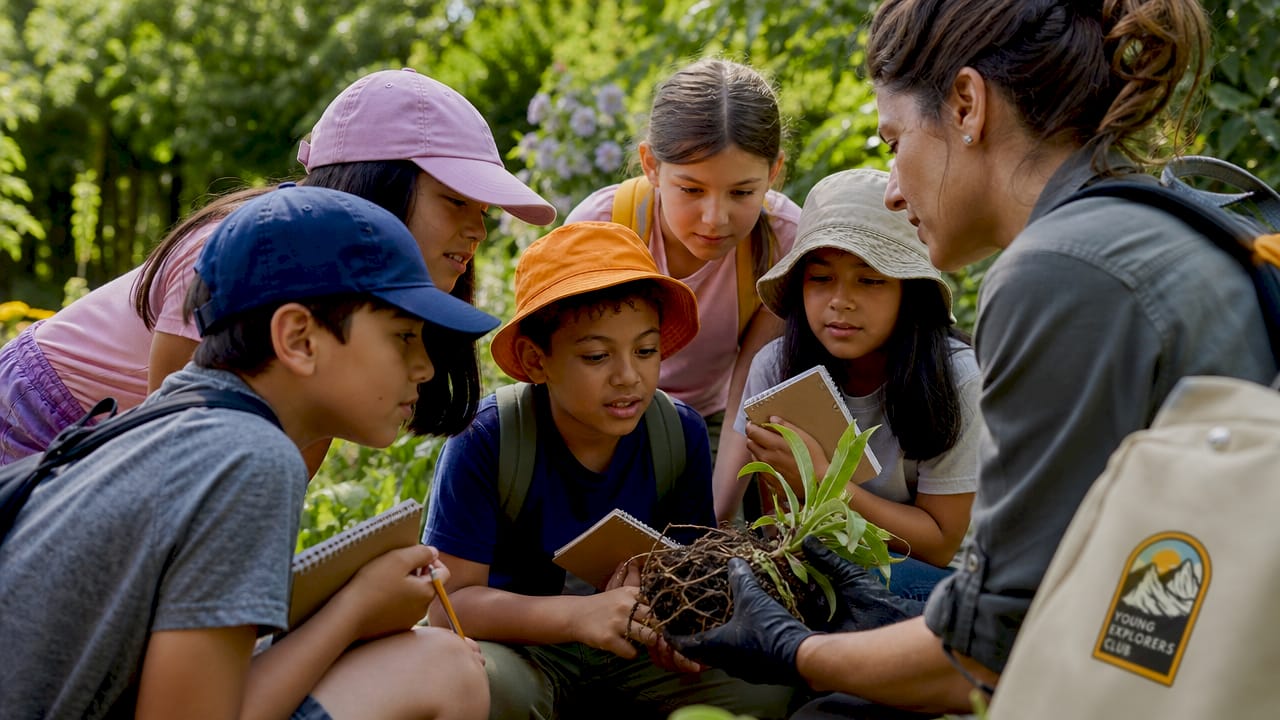
For children and teens, this distinction carries real weight. A week in Rome spent on a guided art history program produces different outcomes than a week at a beach resort, even if both involve travel. The program structure, the interaction with local experts, and the reflective activities built into the itinerary determine whether a trip qualifies as genuine educational tourism or simply a holiday with a museum stop.
The importance of learning travel also extends beyond academics. Researchers consistently link study tourism to stronger self-confidence, greater independence, and a measurable shift in how young people see their place in the world. These outcomes do not happen automatically. They require intentional program design, which is why understanding the definition is the starting point for every parent or educator evaluating options.
What are the key benefits of educational tourism for children and teens?
The benefits of educational tourism span three areas: academic performance, emotional development, and long-term life orientation. Research confirms that 74% of educators and parents acknowledge measurable personal development benefits for students who participate in educational travel, with the strongest academic gains appearing in history, geography, and social studies. That figure reflects a broad consensus, not an outlier finding.
Emotionally, the gains are equally significant. Studies tracking adolescents on international trips document a predictable arc: anxiety in the first days, followed by curiosity, then a genuine sense of accomplishment. This sequence builds self-regulation and what researchers call internalized learning attitudes. In plain terms, students learn to manage discomfort and convert it into motivation.
“Real transformation happens during unstructured downtime on educational trips, where students build independence by navigating logistics and social situations.” — Essential Benefits of Educational Travel
The long-term effects are equally compelling. Longitudinal studies link educational travel with higher pursuit of higher education and international careers. Students who travel for learning purposes in their teens are statistically more likely to pursue globally oriented professions. For parents thinking about their child’s future, that data point deserves serious attention.
- Academic gains: Strongest in history, geography, and social studies
- Emotional resilience: Anxiety converts to curiosity and accomplishment within days
- Cross-cultural competence: Direct interaction with host communities builds genuine global awareness
- Long-term motivation: Linked to higher education pursuit and international career orientation
- Independence: Unstructured travel moments teach real-world problem-solving that classrooms cannot replicate
Pro Tip: When evaluating a program, ask the organizer how much unstructured time is built into the schedule. Programs that allow teens to navigate a city, order food, or solve a logistical problem on their own produce stronger developmental outcomes than fully escorted itineraries.
What are the main types of educational tourism?
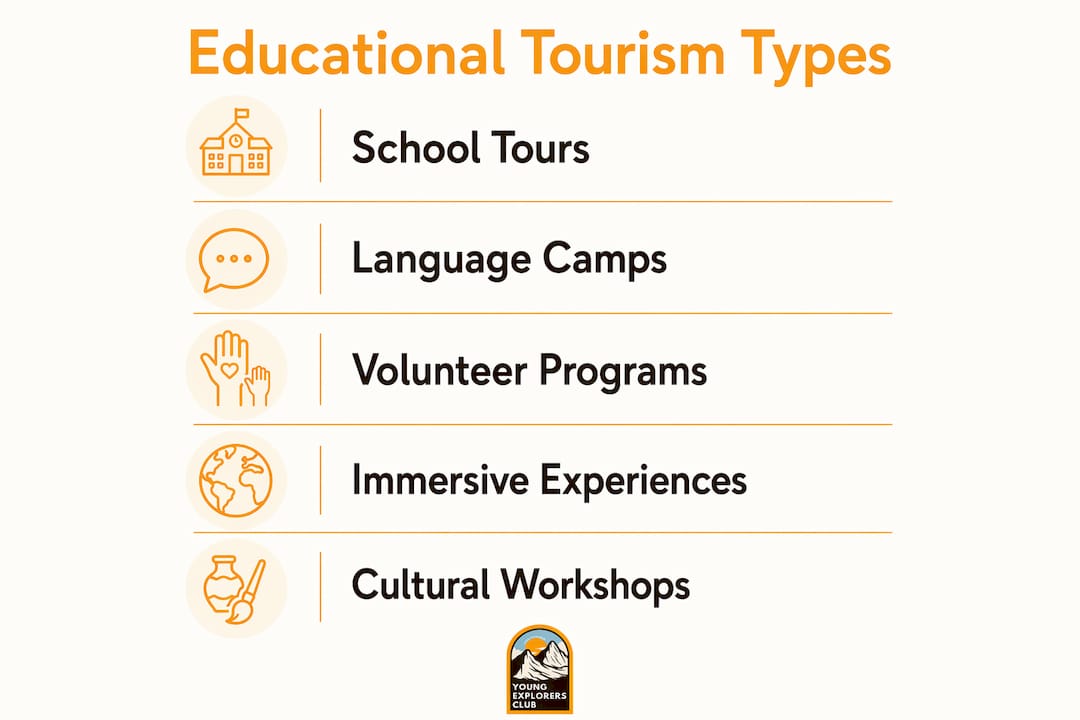
Educational tourism programs range from tightly structured school curricula delivered abroad to open-ended immersive experiences where the environment itself is the teacher. Understanding the main formats helps you match the right type to your child’s age, learning style, and goals.
| Format | Structure level | Best for | Example |
|---|---|---|---|
| School-sponsored study tours | High | Curriculum reinforcement | History trip to Athens or Rome |
| Language immersion camps | Medium-high | Language acquisition and cultural fluency | German or French camp in Switzerland |
| Youth exchange programs | Medium | Cross-cultural competence and independence | AFS, Rotary Youth Exchange |
| Science and environment workshops | Medium | STEM learning and ecological awareness | Marine biology field school in Costa Rica |
| Self-directed family travel | Low | Curiosity-driven, flexible learning | Multi-country trip with local guides |
The most successful models, according to a systematic review of 88 peer-reviewed articles, integrate policy and pedagogy aligned with local contexts. This means the best programs are not generic. They are built around the specific ecology, culture, or social context of the destination.
Language immersion camps represent one of the fastest-growing formats. Programs lasting two to four weeks enable adaptation and integration of language learning with real-life experiences, producing measurably stronger outcomes than classroom-only instruction. The combination of structured lessons in the morning and cultural excursions in the afternoon creates a feedback loop that accelerates both language acquisition and cultural understanding.
Volunteer and community-based programs occupy a different space. Projects like urban agriculture, renewable energy modeling, and habitat restoration place students in active learning roles rather than passive observer roles. These formats are particularly effective for teens aged 14 and older who are ready to engage with real-world problems.
Pro Tip: For children aged 8 to 13, structured programs with clear daily routines and supervised group activities produce the best results. For teens aged 14 and older, look for programs that include at least some self-directed time and community interaction.
How to plan effective educational trips for children and teens
Planning a high-value educational trip requires more than booking flights and accommodation. The decisions you make before departure determine whether the experience produces lasting growth or fades within weeks of returning home.
-
Define clear learning goals first. Decide whether the primary aim is language acquisition, cultural competence, STEM enrichment, or personal development. This goal shapes every other decision, from destination to program format to duration.
-
Match duration to depth. Short trips of three to five days work for curriculum reinforcement. Genuine transformation requires longer exposure. Programs of two to four weeks allow students to move past initial culture shock and begin integrating new experiences into their existing understanding.
-
Prioritize community engagement. Programs that connect students with local experts and communities consistently outperform those that keep participants in tourist-only environments. Ask whether the program includes home stays, community projects, or sessions led by local professionals.
-
Plan for culture shock, not around it. The first 48 to 72 hours of an international trip often produce anxiety and disorientation. This is not a problem to solve. Culture shock drives emotional resilience and learning when program staff are trained to use those moments as teachable points rather than suppress them.
-
Build in reflective review. A trip without structured reflection risks remaining a collection of photos. Journals, group debriefs, and post-trip projects consolidate both emotional and cognitive learning. Without this step, the educational value of travel stays superficial.
-
Address cost early. Schools using active fundraising reduce family costs by 50 to 70 percent, and many providers offer need-based scholarships. Payment plans spread costs over six to twelve months. Cost is a real barrier, but it is rarely insurmountable with early planning.
For families exploring options independently, educational travel ideas for families with children aged 8 to 17 offer a practical starting point for matching destinations and formats to specific age groups.
What are common misconceptions about educational tourism?
The most persistent misconception is that educational tourism is simply sightseeing with a worksheet attached. This view underestimates both the research behind effective program design and the genuine developmental outcomes that well-structured travel produces. A bus tour of three capitals in five days is not educational tourism. It is tourism with an educational label.
A second misconception concerns cost. Many parents assume educational travel is exclusively for affluent families. The data does not support this. Fundraising, scholarships, and payment plans make programs accessible across income levels, and many schools have dedicated staff to help families navigate financial support options.
“Educational tourism is best seen as a mindset focused on curiosity, openness, and active learning, not just a type of trip.” — Far Horizons
Parents also sometimes worry that discomfort or homesickness signals a program failure. The opposite is true. Emotional shifts from anxiety to curiosity are documented as integral to the learning process. Programs that eliminate all discomfort also eliminate much of the developmental value.
- Misconception: Educational tourism is just tourism with a museum stop. Reality: Effective programs integrate structured learning, community engagement, and reflective review.
- Misconception: It is too expensive for most families. Reality: Fundraising and scholarships routinely reduce costs by half or more.
- Misconception: Homesickness means the trip is not working. Reality: Emotional discomfort is the mechanism through which resilience and independence develop.
- Misconception: Older teens benefit more than younger children. Reality: Children as young as 8 show measurable gains from age-appropriate structured programs.
For schools considering group formats, custom camps and trips for schools offer tailored structures that address both curriculum alignment and safety requirements.
Key takeaways
Educational tourism produces the strongest outcomes when learning goals, program structure, community engagement, and reflective review are all deliberately designed into the experience before departure.
| Point | Details |
|---|---|
| Clear definition matters | Educational tourism is travel where learning is the primary purpose, not a secondary add-on. |
| Benefits are research-backed | 74% of educators and parents confirm measurable personal development gains from educational travel. |
| Program format shapes outcomes | Language immersion, community projects, and structured study tours each produce different and complementary results. |
| Culture shock is an asset | The discomfort of the first 48 to 72 hours abroad is the mechanism that builds emotional resilience. |
| Reflection consolidates learning | Without structured post-trip review, travel risks remaining a superficial experience rather than a lasting one. |
Why I think we underestimate what travel does to a young person
I have watched hundreds of children arrive at camp in Switzerland carrying the same expression: a mix of excitement and barely concealed anxiety. By day three, something shifts. Not because we engineered a breakthrough, but because the environment demanded something from them that their usual routine never does.
The research on unstructured travel time confirms what I have seen firsthand. Parents often underestimate these moments, the ones where a teenager has to figure out a train schedule in a foreign language, or negotiate a disagreement with a bunkmate from a different country. These are not inconveniences. They are the actual curriculum.
What I find most underappreciated in conversations about educational tourism is the role of boredom and open time. The instinct for parents and program designers alike is to fill every hour. Resist that instinct. The moments where a child sits with unfamiliarity and decides what to do next are the moments that build the kind of independence no classroom exercise can replicate.
The programs that produce the most lasting change are not the ones with the most impressive itineraries. They are the ones that treat global citizenship as a skill to be practiced, not a concept to be explained. That distinction is everything.
— Guillem
Discover educational travel programs at Youngexplorersclub
Youngexplorersclub runs international summer camps in Switzerland that combine structured language learning, outdoor leadership, and genuine cultural immersion for children and teens aged 7 to 17.
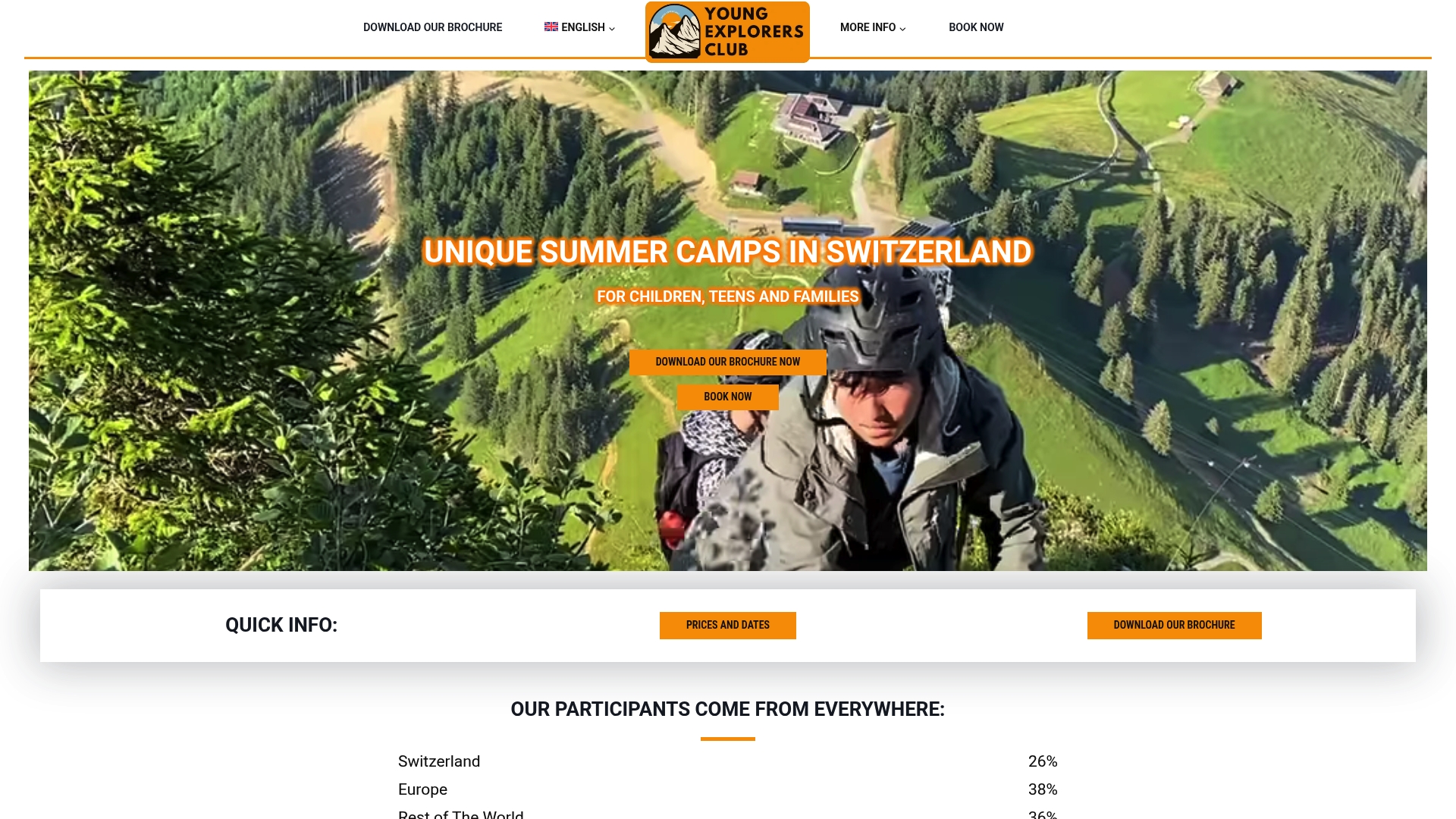
Programs run in English and French, with optional German courses, and are designed to balance structured daily learning with the kind of open, exploratory time that research consistently links to the strongest developmental outcomes. Whether you are a parent looking for a first international experience for your child or an educator planning a group trip, the summer camps in Switzerland at Youngexplorersclub offer a structured, safe, and genuinely transformative starting point. Explore the full range of international camp programs to find the right fit for your child’s age, interests, and learning goals.
FAQ
What is the definition of educational tourism?
Educational tourism is travel outside a person’s usual environment where education or intellectual development is the primary or secondary purpose, as defined by the World Tourism Organization. It includes school trips, language camps, youth exchanges, and science expeditions.
What can children and teens learn from educational travel?
Students gain academic knowledge in subjects like history and geography, develop emotional resilience through culture shock, build cross-cultural competence, and strengthen independence through real-world problem-solving. Longitudinal research links educational travel to higher rates of pursuing higher education and international careers.
How long should an educational trip be to produce real results?
Programs lasting two to four weeks produce the strongest outcomes because they allow students to move past initial disorientation and begin integrating new experiences into lasting knowledge. Shorter trips of three to five days work best for targeted curriculum reinforcement rather than deep personal development.
Is educational tourism affordable for most families?
Cost is a manageable barrier. Schools using active fundraising reduce family costs by 50 to 70 percent, and most reputable providers offer need-based scholarships and payment plans spread over several months.
What makes an educational tourism program effective?
The most effective programs combine structured learning with community engagement, build in unstructured time for independent problem-solving, and include reflective review activities after the trip. Programs that connect students with local experts and host communities consistently outperform those that keep participants in tourist-only environments.