
What Is a Multisport Camp? Benefits, Structure & Guide
Discover what makes multisport camps ideal for kids 8-17. Learn about daily structure, research-backed benefits, and how to choose the right program for your child’s development.
Many parents believe early specialization is the key to athletic success, but research tells a different story. 89% of NFL first-rounders were multisport athletes as teens, proving that variety builds champions. This guide explains what a multisport camp is, how it works, who benefits most, and why experts recommend this approach. You’ll discover camp structures, health advantages, and practical tips for choosing the right program for your child’s development and interests.
Table of Contents
- What is a multisport camp?
- How a multisport camp is structured: A typical day
- Core benefits of multisport camps for kids aged 8 to 17
- Multisport vs. single-sport camps: Key differences
- How to choose the right multisport camp for your child
- Discover multisport adventure with Young Explorers Club Switzerland
- Frequently asked questions
Key Takeaways
| Point | Details |
|---|---|
| Broader athletic development | Multisport camps help kids develop strength, agility, and confidence across activities. |
| Lower injury risk | Rotating sports at camp reduces overuse injuries and burnout compared to early specialization. |
| Social and emotional growth | Kids build teamwork, friendships, and self-confidence through varied group challenges. |
| Expert-recommended path | Health organizations prefer multisport engagement for children up to age 14–15. |
What is a multisport camp?
A multisport camp offers scheduled experiences in three to six different sports and recreation activities throughout each session. Children rotate through age-appropriate drills, team games, skill blocks, and challenges designed to build broad athletic foundations. The main difference from single-sport camps is clear: the focus is on comprehensive skill development, teamwork, and enjoyment rather than competition or early specialization.
These programs feature structured daily rotations through skill stations, drills, small-sided games, and team challenges across various sports. Instead of spending eight hours perfecting one skill, campers might experience soccer in the morning, basketball after lunch, swimming in the afternoon, and rock climbing before dinner.
Key features of multisport camps:
- Exposure to multiple athletic disciplines in one program
- Age-grouped instruction that matches developmental stages
- Emphasis on fun, exploration, and skill variety
- Lower pressure environment compared to competitive single-sport training
- Opportunities for social connection across different activities
“The beauty of multisport camps lies in their ability to develop well-rounded athletes who discover what they truly love through hands-on experience, not parental pressure or early commitment.”
This approach aligns perfectly with how children naturally learn and grow. Young athletes benefit from discovering their strengths across different contexts while building the motor skills, coordination, and confidence that transfer between sports. Parents appreciate the multisport camp variety that keeps kids engaged without the burnout risk of year-round specialization.
How a multisport camp is structured: A typical day
Understanding what your child’s day looks like helps you visualize how these programs support development. Most camps follow a set schedule that includes warm-ups, skills instruction in 20 to 45 minute blocks, team games, supervised snack times, swimming, and age-based electives. The typical day includes warm-up activities, skill instruction in rotating sports, games, snacks and lunch, swim or recovery time, and electives, all tailored by age.
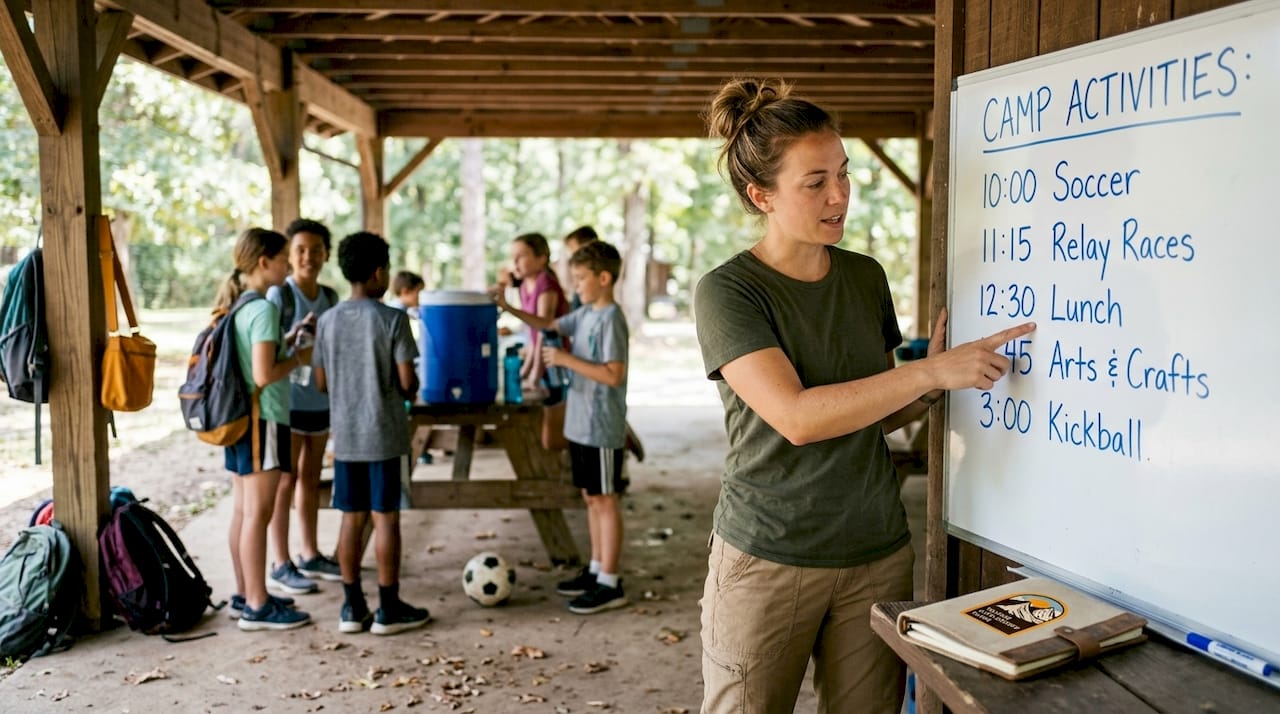
Younger children aged 8 to 10 receive shorter, more frequent rotations to match their attention spans and energy levels. Older kids aged 11 to 17 participate in longer sessions that build endurance and allow deeper skill development. This rotating structure keeps everyone engaged, prevents boredom, and balances group activities with individual challenges.
Sample daily schedule for ages 8-10:
| Time | Activity | Duration |
|---|---|---|
| 8:00 AM | Arrival and dynamic warm-up | 20 min |
| 8:20 AM | Soccer skills and small games | 40 min |
| 9:00 AM | Basketball fundamentals | 40 min |
| 9:40 AM | Snack and hydration break | 20 min |
| 10:00 AM | Swimming and water games | 45 min |
| 10:45 AM | Outdoor adventure activity | 45 min |
| 11:30 AM | Lunch and rest period | 45 min |
| 12:15 PM | Team challenge or relay races | 30 min |
| 12:45 PM | Cool-down and reflection | 15 min |
Sample daily schedule for ages 11-17:
| Time | Activity | Duration |
|---|---|---|
| 8:00 AM | Arrival and sport-specific warm-up | 25 min |
| 8:25 AM | Tennis or volleyball session | 60 min |
| 9:25 AM | Mountain biking or trail running | 60 min |
| 10:25 AM | Snack break | 15 min |
| 10:40 AM | Rock climbing or ropes course | 60 min |
| 11:40 AM | Swimming or kayaking | 50 min |
| 12:30 PM | Lunch and social time | 45 min |
| 1:15 PM | Team sport (football, ultimate frisbee) | 60 min |
| 2:15 PM | Elective choice or skill clinic | 45 min |
| 3:00 PM | Cool-down and departure prep | 15 min |
Pro Tip: Ask camp directors about their rotation philosophy. The best programs balance structured skill-building with free play, ensuring kids develop technique while maintaining the joy of movement.
This structure supports trying new activities at camp in a safe, supervised environment. The variety also naturally builds team spirit in camps as children collaborate with different peers throughout the day, forming friendships across activity groups rather than staying in one competitive bubble.
Core benefits of multisport camps for kids aged 8 to 17
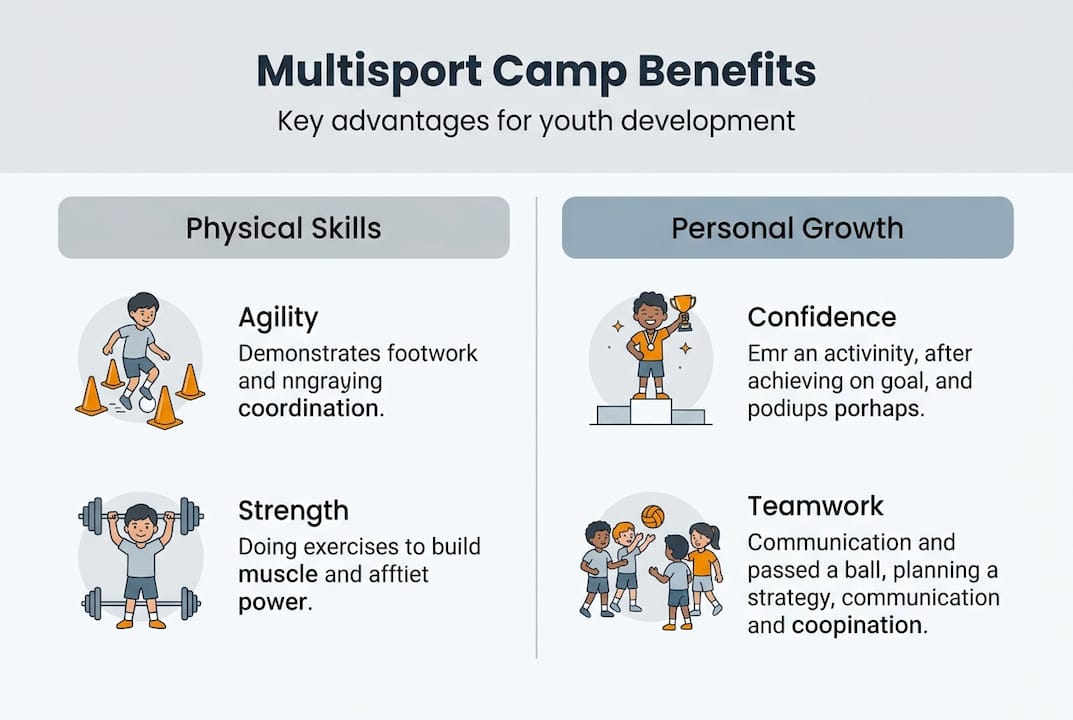
The daily structure reveals why this format delivers powerful developmental benefits. Research shows multi-sport training improves agility and reduces overuse injuries and burnout, with 89% of NFL first-rounders having participated in multiple sports during their youth.
Physical development advantages:
- Better overall athleticism and agility compared to early specialization
- Reduced risk of overuse injuries from repetitive single-sport movements
- Improved cardiovascular fitness through varied activity types
- Development of diverse motor skills and movement patterns
- Stronger core stability and balance from cross-training effects
Studies demonstrate that multisport participation enhances agility more effectively than single-sport focus during developmental years. When children practice different movement patterns, they build neural pathways that improve coordination, reaction time, and spatial awareness across all physical activities.
Mental and emotional benefits:
- Lower rates of burnout and mental fatigue
- Increased intrinsic motivation and love of physical activity
- Better stress management through activity variety
- Enhanced problem-solving as kids adapt to different sport contexts
- Greater resilience when facing new challenges
Social and character development:
- Improved teamwork skills across different group dynamics
- Confidence from discovering multiple strengths and abilities
- Broader peer connections beyond one team or sport
- Leadership opportunities in various settings
- Reduced pressure and increased enjoyment of athletics
89% of NFL first-round draft picks played multiple sports in high school, demonstrating that athletic excellence comes from variety, not early specialization.
The importance of rest days for young athletes cannot be overstated. Multisport camps naturally incorporate recovery by rotating muscle groups and movement types, reducing repetitive strain while maintaining engagement.
Pro Tip: Watch for camps that emphasize skill progression over winning. The best programs celebrate personal improvement and effort, creating an environment where kids feel safe taking risks and trying new things without fear of failure.
Multisport vs. single-sport camps: Key differences
Understanding these benefits helps parents compare options effectively. Experts recommend multisport participation until age 14 to 15 for most children, as early specialization risks injury and burnout but can work with proper management for dedicated older teens.
| Feature | Multisport Camp | Single-Sport Camp |
|---|---|---|
| Age recommendation | Ideal for ages 8-15 | Better for 15+ with clear passion |
| Skill focus | Broad athletic foundation | Deep technical mastery |
| Injury risk | Lower (varied movements) | Higher (repetitive strain) |
| Burnout potential | Minimal | Moderate to high |
| Social environment | Diverse peer groups | Sport-specific community |
| Pressure level | Low to moderate | Moderate to high |
| Long-term benefits | Versatility, adaptability | Competitive edge in one sport |
| Cost consideration | Equipment variety included | May require personal gear |
Single-sport camps serve a purpose for older teenagers who have identified a clear passion and competitive goal. However, early specialization carries risks including overuse injuries, psychological burnout, and reduced overall athleticism. Major organizations including the American Academy of Pediatrics and International Olympic Committee recommend multisport participation during developmental years.
“Children who specialize early may gain short-term competitive advantages, but they often plateau in their teens while multisport athletes continue developing the diverse skills that lead to long-term success and lifelong enjoyment of physical activity.”
When single-sport camps make sense:
- Your teenager has identified a clear passion and competitive goal
- They’re seeking college recruitment or elite-level competition
- The program includes proper periodization and recovery protocols
- Your child actively requests focused training in one discipline
- The camp emphasizes skill development over constant competition
Multisport camps develop broader skillsets, social comfort, adaptability, and genuine passion for movement. They create athletes who love being active rather than kids who feel trapped in one pursuit. The international camp culture in programs like those in Switzerland adds another dimension, exposing children to different sports traditions and coaching philosophies from around the world.
How to choose the right multisport camp for your child
With these differences clear, you’re ready to evaluate specific programs. Look for certified, trained staff and age-specific programming that matches your child’s developmental stage. Research shows you should prioritize programs with certified coaches and age-specific structures, while monitoring that total activity hours stay below your child’s age in weekly practice hours.
Essential evaluation criteria:
-
Staff qualifications: Verify coaches hold current certifications in their sports and child safety training including CPR and first aid.
-
Age-appropriate programming: Confirm the camp groups children by developmental stage, not just chronological age, with activities matched to physical and emotional maturity.
-
Sport variety and rotation: Ask about the specific sports offered and how frequently children rotate between activities throughout each day and week.
-
Safety protocols: Review emergency procedures, supervision ratios (ideally 1:8 or better for younger children), equipment maintenance standards, and injury prevention practices.
-
Skill level accommodation: Ensure the program supports both beginners discovering new activities and more experienced young athletes looking to expand their repertoire.
-
Activity-to-rest balance: Check that schedules include adequate hydration breaks, rest periods, and recovery time between high-intensity activities.
-
Communication practices: Understand how staff will update you on your child’s progress, challenges, and daily experiences.
-
Facility quality: Visit if possible to assess equipment condition, playing surfaces, shade availability, and overall safety of the environment.
Questions to ask camp directors:
- What is your coaching staff’s background and certification status?
- How do you modify activities for different skill levels within age groups?
- What happens if my child doesn’t enjoy a particular sport?
- How do you track and prevent overuse or fatigue?
- What is your approach to competition versus skill development?
- How do you handle homesickness or social challenges?
- What percentage of campers return year after year?
Pro Tip: Consider your child’s personality and interests when choosing between adventure-focused, team-sport-centered, or outdoor-exploration programs. The best camp matches their natural curiosity while gently pushing them beyond their comfort zone.
Review the weekly camp activities offered by programs you’re considering. A quality multisport camp should offer enough variety to keep children engaged while providing sufficient repetition for skill development. Look for programs that balance structured instruction with creative play, allowing kids to apply new skills in game situations rather than endless drills.
Discover multisport adventure with Young Explorers Club Switzerland
Armed with everything you need to make a confident choice, explore an option that brings all these benefits together for your child. Young Explorers Club Switzerland offers age-tailored, certified, diverse multisport summer experiences in one of the world’s most stunning outdoor environments. Our programs combine the athletic variety you’ve learned about with international community building, outdoor adventure, and personal development in the Swiss Alps.
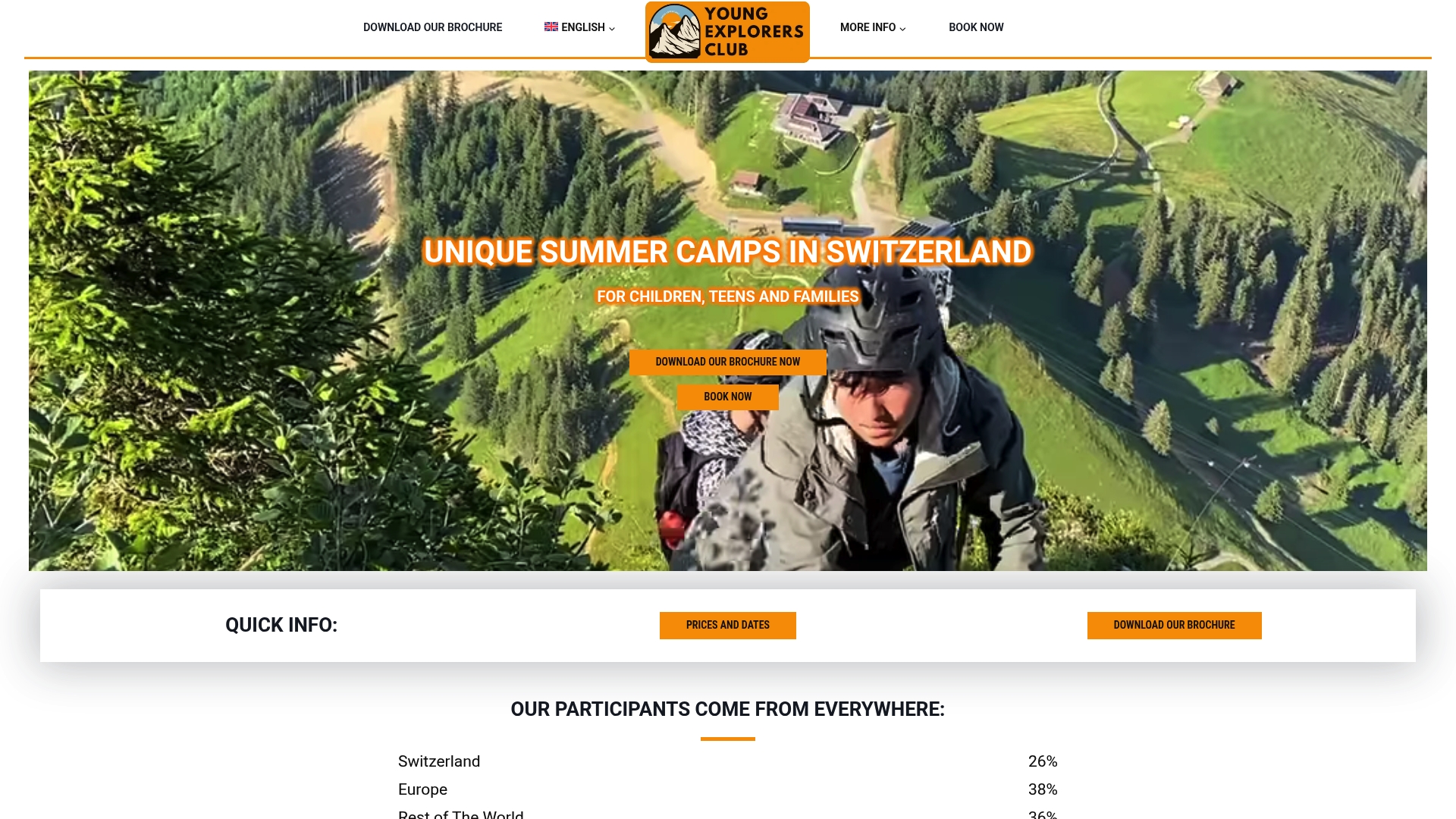
Our certified coaches design daily rotations that keep children engaged while building the broad athletic foundation experts recommend. From mountain biking and rock climbing to team sports and water activities, campers discover their strengths across multiple disciplines. The international environment adds another dimension, with children from around the globe learning together, sharing sports traditions, and building friendships that transcend borders.
Whether your child is an adventurous beginner or an experienced young athlete looking to expand their skills, our programs provide the structure, safety, and variety that support healthy development. Explore Swiss summer camp options that emphasize growth over competition, skill-building over specialization, and joy over pressure. Join our international camp community and discover why outdoor activities for youths in Switzerland create transformative summer experiences. Learn more or book a tour today.
Frequently asked questions
Is a multisport camp better than a specialized camp for my child?
Research shows multisport camps reduce injuries and improve agility, making them ideal for most kids under 14 to 15. They build broader athletic foundations while maintaining enjoyment and reducing burnout risk.
How many different sports will my child try in a multisport camp?
Most programs rotate children through three to six different sports and recreational activities during a typical week. This includes structured skill stations and team challenges across sports like basketball, soccer, flag football, baseball, swimming, and outdoor adventure activities.
Are multisport camps suitable for teenagers and beginners?
Yes, quality programs offer age-grouped programming and skill blocks designed for all levels. Camps use age-tailored schedules to match children’s maturity and experience, ensuring both beginners and seasoned athletes find appropriate challenges.
What should I look for when choosing a multisport camp?
Prioritize certified coaches and age-specific structure as key factors. Also evaluate sport variety, safety protocols, supervision ratios, activity-to-rest balance, and whether the program emphasizes skill development and enjoyment over competition.
At what age should my child consider specializing in one sport?
Experts recommend maintaining multisport participation until age 14 to 15 for most children. Specialization before this age increases injury and burnout risk, though older teens with clear passion and proper coaching support may benefit from focused training.