

What makes Swiss camps unique for kids in 2026
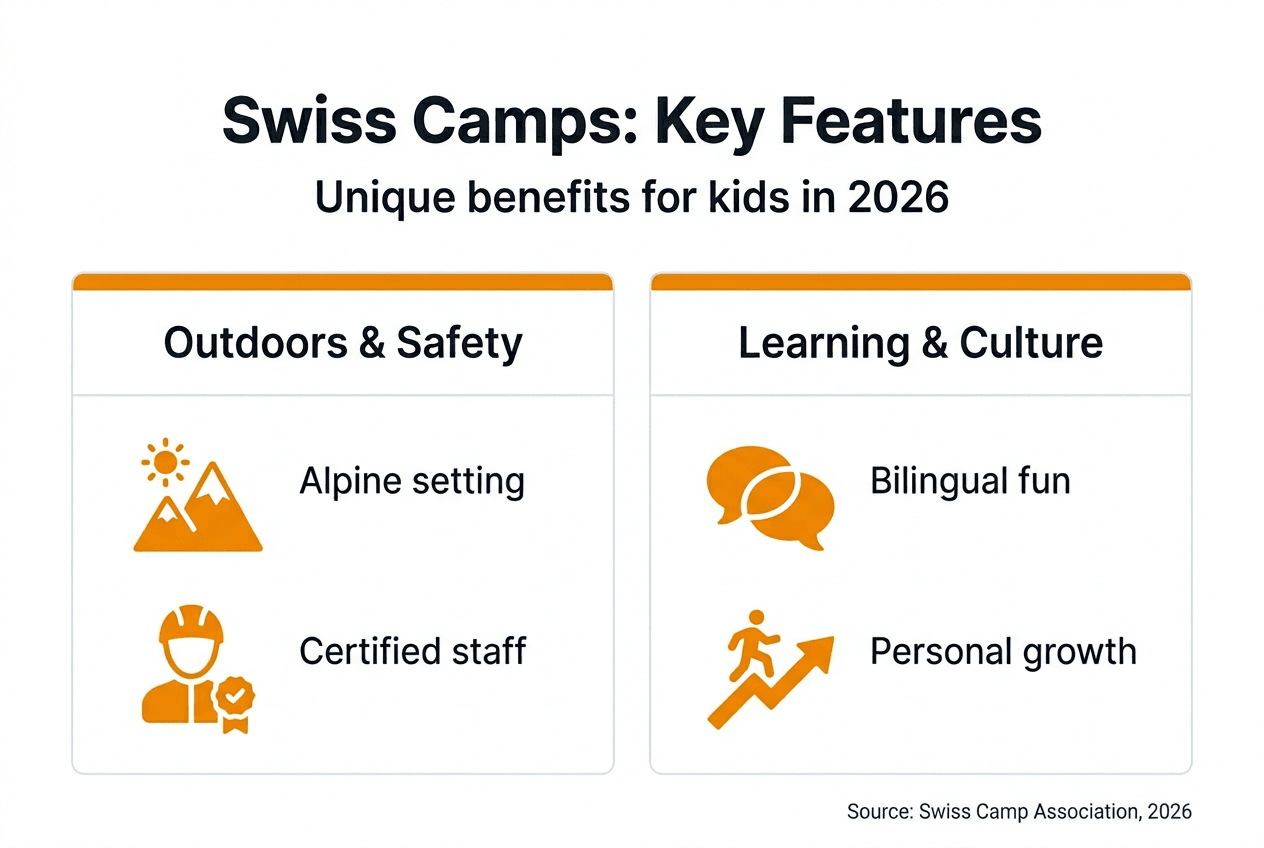
Discover how Swiss summer camps combine alpine adventure, proven safety protocols, bilingual immersion, and experiential learning to transform children aged 8-17 in 2026.
Most parents assume summer camps offer similar experiences: sports, crafts, and supervised fun. Yet Swiss camps stand apart by weaving together alpine adventure, rigorous safety protocols, experiential learning, and bilingual immersion into a transformative experience. For children aged 8 to 17, these programs deliver measurable growth in leadership, resilience, and global awareness. This guide reveals what truly sets Swiss camps apart and why they represent an unmatched investment in your child’s development.
Table of Contents
- Safe And Structured Adventure In The Swiss Outdoors
- Experiential Learning And Personal Development At Swiss Camps
- Bilingual Education And Cultural Immersion In The Swiss Alps
- Evaluating Accreditation, Staff Quality, And Accessibility
- Explore Unique Swiss Summer Camps For Your Child
- Frequently Asked Questions
Key takeaways
| Point | Details |
|---|---|
| Safety first | Swiss safety regulations mandate comprehensive risk assessments and trained staff for all adventure activities. |
| Personal growth | Experiential learning programs produce 20% increases in leadership skills through structured outdoor challenges. |
| Bilingual advantage | Daily immersion in German and English naturally accelerates language acquisition during authentic cultural exchanges. |
| Alpine environment | Natural terrain enables unique outdoor education impossible in traditional camp settings. |
| Verified quality | Accreditation through recognized Swiss organizations ensures experienced staff and proven safety protocols. |
Safe and structured adventure in the Swiss outdoors
Switzerland’s alpine landscape creates extraordinary opportunities for outdoor education. Camps leverage glacial lakes, mountain trails, and limestone cliffs for activities like kayaking, hiking, and rock climbing that would be impossible elsewhere. The terrain itself becomes the classroom.
What separates Swiss camps from other adventure programs is the regulatory framework. Swiss safety regulations mandate comprehensive risk assessments and staff training for adventure activities, creating a structured environment where children can push boundaries without unnecessary danger. This isn’t bureaucracy for its own sake. Swiss camps report significantly lower accident rates in organized adventure tourism compared to independent activities, proving that proper oversight enhances rather than restricts the experience.
Staff qualifications make this possible. Instructors hold certifications from recognized Swiss organizations and undergo continuous training in emergency response, first aid, and activity-specific skills. Before each season, camps conduct detailed risk assessments for every activity, identifying potential hazards and implementing mitigation strategies. Emergency protocols include evacuation plans, communication systems, and partnerships with local medical facilities.
Pro Tip: Ask potential camps about their instructor-to-camper ratios for specific activities. Quality programs maintain lower ratios during technical pursuits like climbing or water sports, ensuring adequate supervision without hovering.
Parents should request documentation of staff qualifications and safety certifications during the selection process. Questions about emergency procedures, incident response times, and medical partnerships reveal how seriously a camp takes safety. The goal is finding programs that balance calculated risk with robust safety nets, allowing children to develop confidence through genuine challenges. For comprehensive guidance, explore summer camp safety standards in Switzerland to understand what markers indicate quality programs.
“The mountains teach resilience. Our structured approach ensures every child returns home with new capabilities, not just memories.”
Experiential learning and personal development at Swiss camps
Swiss camps apply Kolb’s experiential learning cycle to outdoor education with remarkable results. This model moves children through concrete experience, reflective observation, abstract conceptualization, and active experimentation. A climbing wall becomes a laboratory for examining fear, strategy, and perseverance.
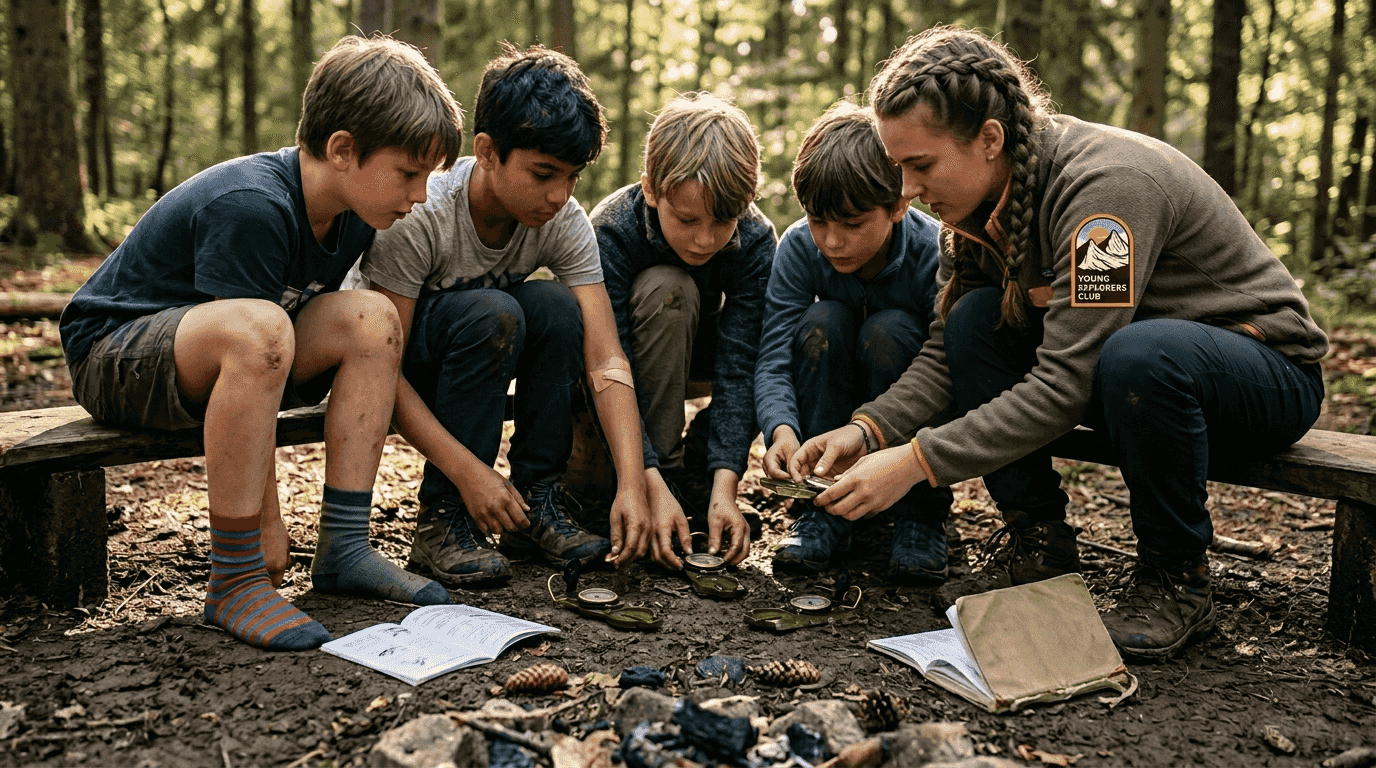
Research validates this approach. Participants showed 20% increases in leadership skills and 15% gains in resilience scores after experiential learning programs at Swiss camps. These aren’t abstract benefits. Children return home better equipped to handle conflict, make decisions under pressure, and collaborate with diverse personalities.
The structure looks like this:
- Campers engage in a challenging activity like navigating unfamiliar terrain or solving a group problem.
- Facilitators guide reflection sessions where children examine their reactions, choices, and emotions.
- Discussion extracts broader principles about teamwork, communication, or self-awareness applicable beyond camp.
- New activities provide opportunities to test these insights, reinforcing learning through repetition and variation.
This cycle repeats throughout the camp experience, building neural pathways that transform temporary insights into lasting capabilities. A child who learns to manage frustration during a difficult hike carries that skill into academic challenges and social conflicts.
Pro Tip: Look for camps that explicitly describe their personal development curriculum, not just their activity roster. Quality programs articulate how specific experiences contribute to defined growth objectives.
The integration of personal development with outdoor adventure distinguishes Swiss camps from purely recreational programs. Activities serve dual purposes: they’re inherently enjoyable and deliberately designed to cultivate specific competencies. Cultural experiences add another dimension, exposing children to different perspectives and communication styles that build empathy and adaptability. Programs focused on leadership development for teenagers and resilience building for children demonstrate this intentional approach to growth.
Bilingual education and cultural immersion in the Swiss Alps
Language acquisition accelerates dramatically through immersion, and Swiss camps blend adventure with bilingual learning in ways traditional classrooms cannot replicate. Children learn German or French not through rote memorization but through negotiating daily activities, forming friendships, and navigating authentic cultural exchanges.
The alpine setting enhances this linguistic immersion. In villages like Leysin, children engage with local communities during excursions, market visits, and cultural activities. Language becomes a tool for genuine communication rather than an academic subject. This context drives motivation. A child trying to order lunch in German experiences immediate feedback that textbooks cannot provide.
Daily schedules integrate language learning into natural rhythms:
- Morning activities conducted in the target language build vocabulary around specific contexts.
- Mealtime conversations with multilingual staff and campers provide informal practice.
- Evening reflections encourage children to articulate experiences in both languages.
- Cultural activities like cooking regional dishes or learning local traditions create memorable anchors for new vocabulary.
The effectiveness stems from removing the self-consciousness that often inhibits language learning. When everyone is stretching beyond their comfort zone, whether on a climbing wall or in conversation, mistakes become normalized as part of growth. Children develop fluency faster because they’re focused on communication, not perfection.
Parents gain multiple benefits from this approach. Children return with improved language skills, expanded cultural awareness, and enhanced cognitive flexibility from code-switching between languages. These advantages extend well beyond camp, supporting academic performance and future career opportunities in increasingly globalized fields. Explore learning German at summer camp for specific program details, or discover how international summer camps build global communities that sustain cross-cultural friendships beyond the summer session.
Evaluating accreditation, staff quality, and accessibility
Not all Swiss camps deliver equal value. Parents should evaluate accreditation and certifications to ensure quality programming and experienced staff. Official recognition from Swiss educational authorities signals adherence to standards for safety, curriculum, and operational practices.
Staff qualifications deserve particular scrutiny. Experienced counselors hold relevant certifications in outdoor education, language instruction, or youth development. They understand child psychology, maintain appropriate boundaries, and recognize signs of distress or conflict. Ask specific questions about staff selection, training duration, and supervision ratios.
| Certification Type | What It Indicates | Questions to Ask |
|---|---|---|
| Swiss Adventure Education | Qualified outdoor instruction and risk management | How many instructors hold current certifications? |
| Language Teaching Credentials | Professional language education training | What are instructor native language backgrounds? |
| First Aid/Emergency Response | Medical emergency preparedness | When were staff last certified or re-certified? |
| Child Safety Certification | Background checks and child protection protocols | What screening processes apply to all staff? |
Financial considerations affect camp selection, but cost should not automatically exclude families from consideration. Scholarships may be available to make high-quality Swiss camps accessible to more families. Many programs offer need-based financial aid, payment plans, or early registration discounts that significantly reduce the barrier to entry.
Pro Tip: Contact camps directly about financial assistance even if scholarships are not prominently advertised on their websites. Many programs maintain discretionary funds for qualified families who demonstrate genuine interest and need.
When evaluating camps, request detailed information about:
- Emergency medical protocols and proximity to healthcare facilities
- Communication policies for reaching children during the session
- Behavioral expectations and conflict resolution approaches
- Refund or cancellation policies if circumstances change
- References from families whose children attended in previous years
The investment in a quality Swiss camp experience pays dividends through skills and perspectives children carry forward. Thorough vetting ensures your family selects a program aligned with your values and your child’s developmental needs. Resources like evaluating summer camp safety standards provide frameworks for comparing options systematically.
Explore unique Swiss summer camps for your child
You now understand what distinguishes Swiss camps: rigorous safety within adventurous alpine settings, proven personal development through experiential learning, and authentic bilingual immersion that transforms how children see the world. These elements combine to create experiences that genuinely change trajectories.
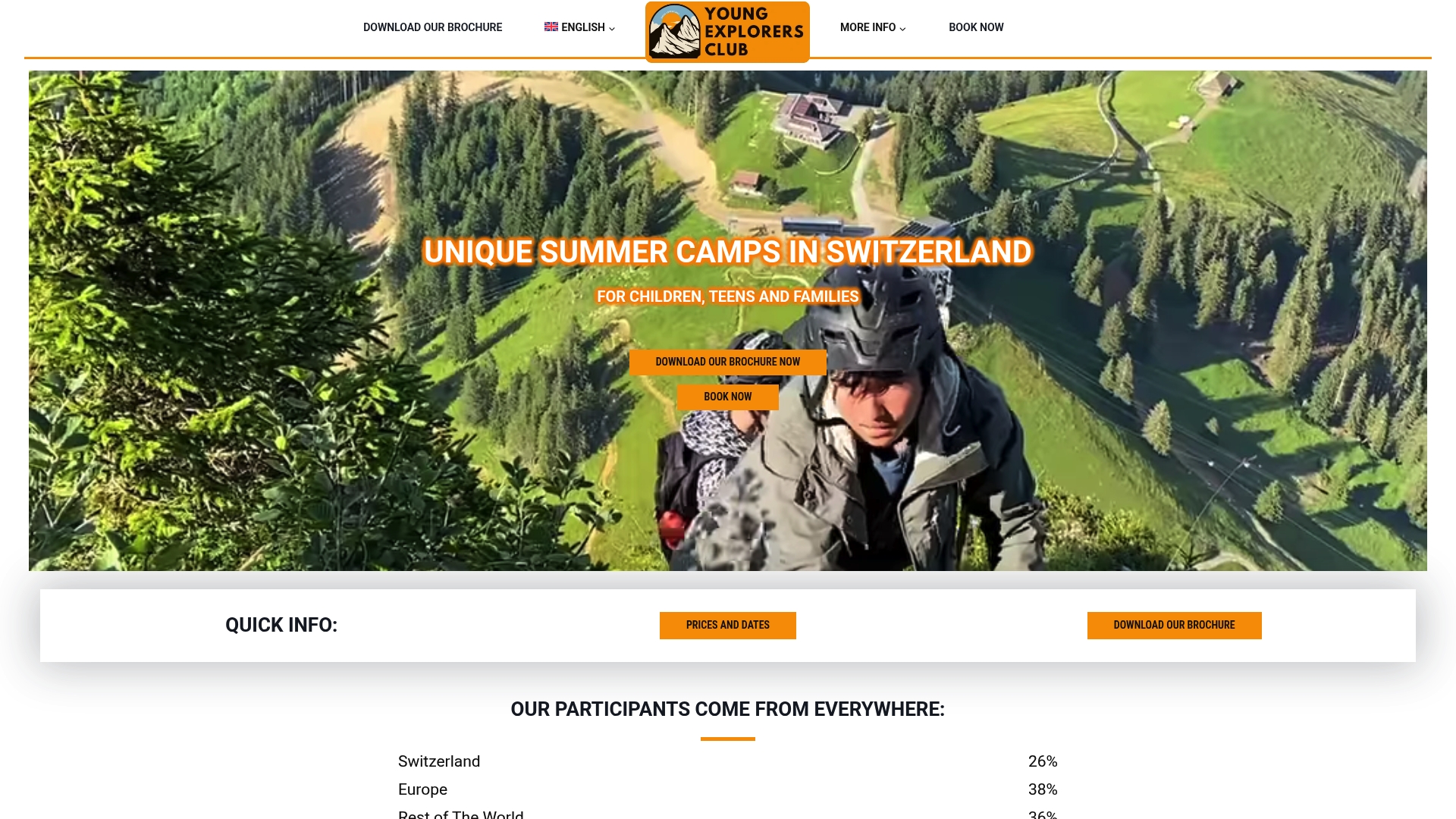
Young Explorers Club delivers these benefits through accredited programs in stunning Swiss locations. Our camps blend mountain biking, climbing, and multisport adventures with structured personal development curricula and optional German language immersion. Experienced staff guide children through challenges that build confidence, resilience, and leadership capabilities they’ll use for life. Our international community brings together children from around the world, creating friendships that span continents and cultures. Explore our camp and travel options to find the perfect fit for your child’s 2026 summer adventure.
Frequently asked questions
What age groups do Swiss summer camps typically serve?
Most Swiss camps welcome children aged 8 to 17, with some programs specifically designed for the 9 to 16 range. Age groupings ensure activities and social dynamics match developmental stages. Younger children focus on foundational skills and confidence building, while teenagers engage in more complex challenges requiring advanced problem-solving and leadership.
How do Swiss camps ensure children’s safety during adventure activities?
Strict Swiss regulations require comprehensive risk assessments, certified instructors, and detailed emergency procedures for all adventure programming. Staff undergo intensive training in activity-specific skills, first aid, and crisis response. Camps maintain partnerships with local medical facilities and implement supervision ratios appropriate to each activity’s risk profile.
What makes the bilingual education in Swiss camps effective?
Immersion through daily activities creates authentic communication needs that accelerate language acquisition far beyond classroom learning. Children use their target language during meals, excursions, and social time with multilingual peers and staff. This natural context removes self-consciousness and makes language learning inseparable from the camp experience itself.
Are scholarships available to help with camp costs?
Many Swiss camps offer need-based scholarships, payment plans, or early registration discounts to broaden accessibility. Financial aid availability varies by program, so families should inquire directly with camps about assistance options. Some camps maintain discretionary scholarship funds not publicly advertised but available to families demonstrating genuine interest and financial need.
How do experiential learning programs differ from regular camp activities?
Experiential learning intentionally structures activities to promote specific developmental outcomes like leadership, resilience, and teamwork. Facilitators guide reflection sessions where children examine their experiences, extract broader principles, and test insights through subsequent challenges. This cycle transforms fun activities into deliberate growth opportunities with measurable impacts on capabilities and confidence.
Recommended
- Summer Camp Switzerland | International Camp And Travel
- Best Summer Camps In Switzerland For 2025: Complete Guide | Young Explorers Club Switzerland
- Easter Traditions In Switzerland For Children | Young Explorers Club Switzerland
- Summer Camps For 6-8 Year Olds In Switzerland | Young Explorers Club Switzerland
