

Your family camp selection workflow, step by step
Discover a clear family camp selection workflow to confidently choose the best summer camp for your child, focusing on safety and fit.
TL;DR:
- Selecting the right international adventure summer camp involves thorough criteria assessment, deep research, and safety verification to ensure a good fit for your child’s needs. A deliberate, focused evaluation of three finalists yields more confident choices than broadly skimming many options, especially regarding staff ratios, language immersion, and activity quality. Early preparation of registration documents and understanding camp features helps optimize logistics, while asking specific safety and inclusivity questions ensures a secure and enriching experience.
Picking the right international adventure summer camp for your child is genuinely hard. Not because good camps don’t exist, but because the decision touches safety, language, personality fit, and logistics all at once. Parents of kids aged 8 to 17 who want a bilingual, outdoor, experiential program face an even more specific challenge: the options are fewer, the stakes feel higher, and the distance adds a whole new layer of complexity. A structured family camp selection workflow cuts through that noise. Follow each phase deliberately, and you stop second-guessing and start booking with confidence.
Table of Contents
- Understanding your child and defining selection criteria
- Researching and narrowing down camps efficiently
- Ensuring safety and quality through key questions and standards
- Managing registration and preparing for camp logistics
- Avoiding common pitfalls and ensuring a successful camp experience
- Why deep evaluation beats broad searching in camp selection
- Explore tailored bilingual international adventure camps with Young Explorers Club
- Frequently asked questions
Key Takeaways
| Point | Details |
|---|---|
| Start early | Begin camp research and booking 3 to 6 months ahead to secure preferred weeks. |
| Define child readiness | Assess your child’s maturity and interests before selecting camp types and durations. |
| Narrow to three camps | Focus on evaluating three camps deeply using key filters like location, price, and program fit. |
| Verify safety rigor | Ask specific safety questions, focusing on staff ratios, training, and emergency protocols. |
| Manage registration carefully | Complete all forms on time and prepare logistics to ensure smooth camp enrollment. |
Understanding your child and defining selection criteria
Now that you understand why selecting the right camp matters, let’s examine how to define your key selection criteria based on your child.
Before you open a single camp website, spend time observing your child honestly. Not the child you hope they are, but the child they actually are right now. Are they asking to go away independently, or does the idea quietly make them anxious? Do they light up during physical challenges, or does real satisfaction come from language and social connection? These answers shape every filter you will apply later.
Emotional and physical readiness is the first thing to assess. Matching readiness over age is the real deciding factor for overnight versus day programs, since immersive outdoor settings build independence most effectively when a child genuinely wants that challenge, not when they are pushed into it. A 10-year-old who has never slept away from home needs a different conversation than a 10-year-old who already leads sleepovers.
Once readiness is clear, list your non-negotiables. For families targeting bilingual adventure camps, those criteria typically look like this:
- Age range: Does the camp group your child with peers of similar maturity, not just birth year?
- Language immersion level: How much of daily activity happens in the second language, not just a scheduled class?
- Activity types: Mountain biking, climbing, and survival skills each require different physical confidence levels.
- Session length: Two weeks feels very different from four weeks, especially for a first international experience.
- Safety provisions: Staff ratios, medical access, and behavioral protocols for inclusive summer camps matter regardless of your child’s profile.
Pro Tip: Write your criteria down as a short checklist before researching. When you are three hours into reading camp websites, you will want something to anchor you back to what actually matters for your child.
Researching and narrowing down camps efficiently
With clear criteria set, the next step is to research and efficiently narrow your camp options to finalists.
The most common mistake in the family camp planning process is trying to evaluate too many camps at once. The result is decision fatigue, not clarity. Instead, use your criteria filters in the first pass to thin the field fast, then commit serious attention to just three finalists.
Here is a practical four-step process for this phase:
- Apply hard filters first. Location, price range, age group, and language format eliminate most options quickly. For Swiss Alps programs, you are typically looking at 3-camp shortlisting using filters like these 8-12 weeks before camp starts.
- Build a side-by-side comparison. Pull specific data from each finalist’s website and staff directly. Gut feelings don’t hold up under scrutiny; numbers do.
- Check session availability early. Popular weeks at international bilingual adventure programs often fill in January. If you have non-flexible travel dates, start this step before anything else.
- Contact each camp directly. Email responses tell you a lot. A camp that answers questions thoroughly and quickly is often better run than one with glossy marketing and slow replies.
Here is a sample comparison framework for evaluating three finalist family camps side by side:
| Criteria | Camp A | Camp B | Camp C |
|---|---|---|---|
| Staff-to-camper ratio | 1:8 | 1:10 | 1:6 |
| Bilingual immersion | 70% daily | 40% daily | 85% daily |
| Session lengths | 2, 3 weeks | 1, 2 weeks | 2, 4 weeks |
| Price (CHF) | 5,400 | 4,800 | 7,200 |
| Outdoor activities | 6 types | 4 types | 9 types |
| Emergency medical access | On-site nurse | Local clinic | On-site nurse + doctor |
Pro Tip: When comparing prices, always calculate cost per day rather than total session price. A three-week program that looks expensive can be better value than a two-week program with add-on fees for activities.
Ensuring safety and quality through key questions and standards
Having shortlisted camps, verifying their safety and quality is critical before making final decisions.
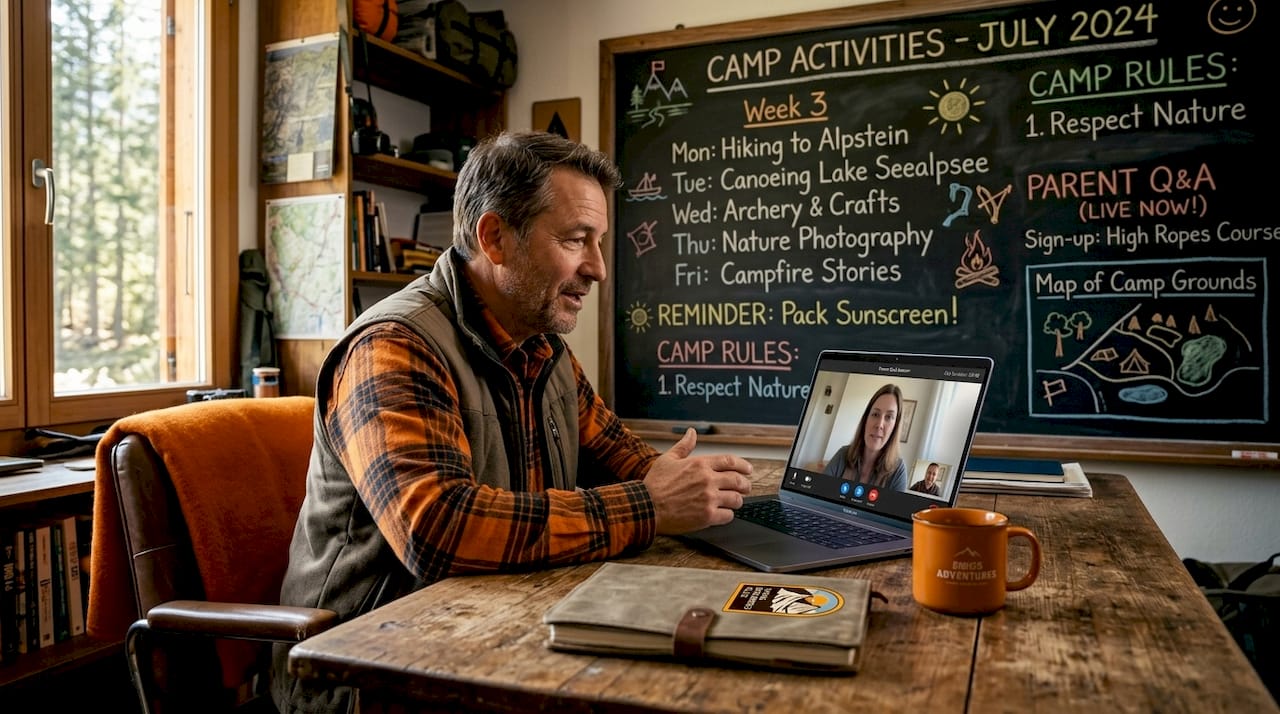
Safety at an international adventure camp is not just about accident rates. It covers daily structure, staff quality, emergency systems, and how the camp handles situations no parent wants to think about but every parent must ask about.
The American Camp Association recommends staff-to-camper ratios of 1:8 for ages 6-8 and 1:10 for ages 9-14, with tighter ratios required for water sports and overnight adventure activities. Use these benchmarks as a floor, not a ceiling.
Ask each shortlisted camp these specific questions:
- What are your staff-to-camper ratios by activity type and age group?
- How are staff background-checked and trained for outdoor leadership?
- What is your protocol when a child has a severe allergy or requires daily medication?
- How do you handle bullying or social conflict between campers?
- What is your emergency evacuation procedure, and how quickly can you reach hospital-level care?
- Can you provide two parent references from families with children similar in age and background to mine?
“A camp that cannot answer your safety questions clearly and specifically during the inquiry stage is showing you exactly how it will respond under pressure.”
These are not aggressive questions. Any camp worth attending will answer them without hesitation and with specifics, not generalities. Verifying health screening procedures also matters before committing. Ask exactly what medical information they collect and who reviews it.
Pro Tip: Request the camp’s emergency protocol document in writing. A camp that has it ready to send is one that has actually practiced it.
Managing registration and preparing for camp logistics
Once camps are selected and safety verified, let’s focus on managing registration and logistics efficiently.
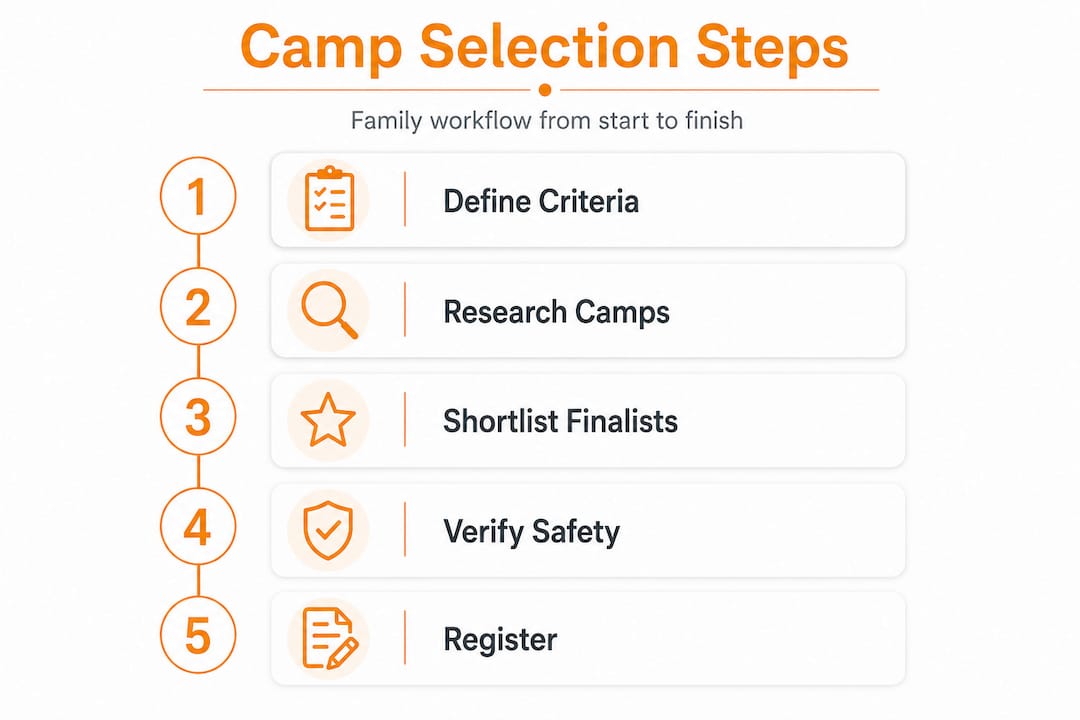
Registration for international programs has more moving parts than most parents expect. Prepare early, and nothing feels rushed. Wait until the last few weeks, and you are scrambling across time zones to complete paperwork.
Follow these steps in order:
- Gather documents before the form opens. You will need medical history, immunization records, emergency contacts, allergy details, and a signed consent waiver.
- Understand payment structure. Swiss Alps programs typically cost CHF 5,400 to 8,200 for 2 to 3 week sessions, with forms and payments due 1-2 weeks before camp start. Confirm whether deposits are refundable.
- Book travel early. International flights to Switzerland in summer fill quickly. Coordinate arrival and departure days against camp start and end times to avoid overnight delays with children.
- Prepare your child for the environment. If the camp is bilingual, practice using both languages at home in the weeks leading up. Even simple daily habits reduce first-day anxiety dramatically.
| Document type | When to prepare | Notes |
|---|---|---|
| Medical history form | 6-8 weeks before camp | Include current medications and allergies |
| Parental consent waiver | 4 weeks before camp | Often requires notarization for international camps |
| Emergency contact sheet | 6 weeks before camp | Include a local contact in camp’s country |
| Packing list | 3 weeks before camp | Request camp-specific list; outdoor gear matters |
| Travel documents | 8-10 weeks before camp | Passport validity, visas if required |
If you have more than one child attending, align their sessions carefully. For multi-child family trip planning, session overlaps make travel and logistics far simpler and give siblings shared experiences to talk about for years.
Pro Tip: Photograph every completed form and store them in a shared cloud folder your partner can also access. When a camp asks for a document you sent three weeks ago, you find it in 30 seconds.
Avoiding common pitfalls and ensuring a successful camp experience
Careful preparation helps, but knowing what pitfalls to watch for ensures a more positive camp journey.
Even well-researched families fall into predictable traps. Here are the most common ones, and how to avoid them:
- Taking bilingual claims at face value. Parents regularly overlook asking what percentage of activities use the second language natively and what proportion of staff are native speakers. “Bilingual environment” can mean daily immersion or it can mean one French class per afternoon.
- Skipping parent references. Requesting two recent references from families with similarly aged children is one of the most powerful quality checks available to you. It costs five minutes of your time and can save you from a costly mismatch.
- Underestimating separation anxiety. Even confident, social children can struggle the first few nights away from home in a foreign country. Walk through what camp life will look like before they go, including homesickness. Normalize it. Camps that handle it well have clear check-in call schedules.
- Ignoring refund policies. Some camps have rigid no-refund policies dressed up in friendly language. Read cancellation terms before signing, not after.
- Responding to pressure tactics. “Only two spots left” messaging is common. Sometimes true, often not. If you feel rushed toward a decision before you have your references and safety answers, that is a signal, not an incentive.
The goal of all this preparation is not just a smooth booking. It is a camp experience that genuinely builds confidence in your child rather than one that looks good on paper and delivers a mediocre week.
Pro Tip: Ask the camp directly: “Can you share a sample weekly schedule?” If it shows meaningful language use, structured outdoor challenges, and unstructured social time, the program has been thoughtfully designed.
Why deep evaluation beats broad searching in camp selection
Here is the counterintuitive truth about the family camp selection workflow that most articles skip entirely: doing more research does not produce better decisions. Doing deeper research on fewer options does.
Most parents start selecting summer camps with a browser full of tabs and a vague sense that more information will eventually produce clarity. It rarely does. The anxiety of comparing ten camps lightly results in worse decisions than deeply assessing three finalists on meaningful criteria like staff ratios and curriculum depth. This is not an opinion. It is a documented pattern in how humans process complex decisions under uncertainty.
What actually builds confidence is knowing your three finalist camps so well that you can articulate exactly why each one does or doesn’t fit your child. At that point, the choice becomes obvious rather than agonizing.
There is also something important about what you are actually evaluating. Marketing language at international adventure camps has become sophisticated. Every camp website talks about “growth,” “connection,” and “adventure.” None of that language tells you anything useful. What tells you something useful is a 1:6 staff ratio during water activities, a counselor who has led alpine trekking for seven years, and a parent of a shy 12-year-old who tells you her daughter came home speaking French at the dinner table.
Those specifics only emerge when you go deep. Three camps, fully investigated. That is the move. Not thirty camps half-skimmed at midnight. The confidence outcomes parents consistently report from well-matched adventure programs are almost never the result of a lucky pick. They come from a deliberate process.
Explore tailored bilingual international adventure camps with Young Explorers Club
Having learned how to select the right camp, here’s how Young Explorers Club can support your family’s journey to an unforgettable international adventure camp experience.
If your criteria include genuine bilingual immersion, challenging outdoor activities, strong staff ratios, and a Swiss Alps setting your child will talk about for years, Young Explorers Club was built specifically for that combination. Every program detail, from the mountain biking routes to the survival skill sessions, is designed around the kind of experiential learning that camps genuinely committed to child development actually deliver.
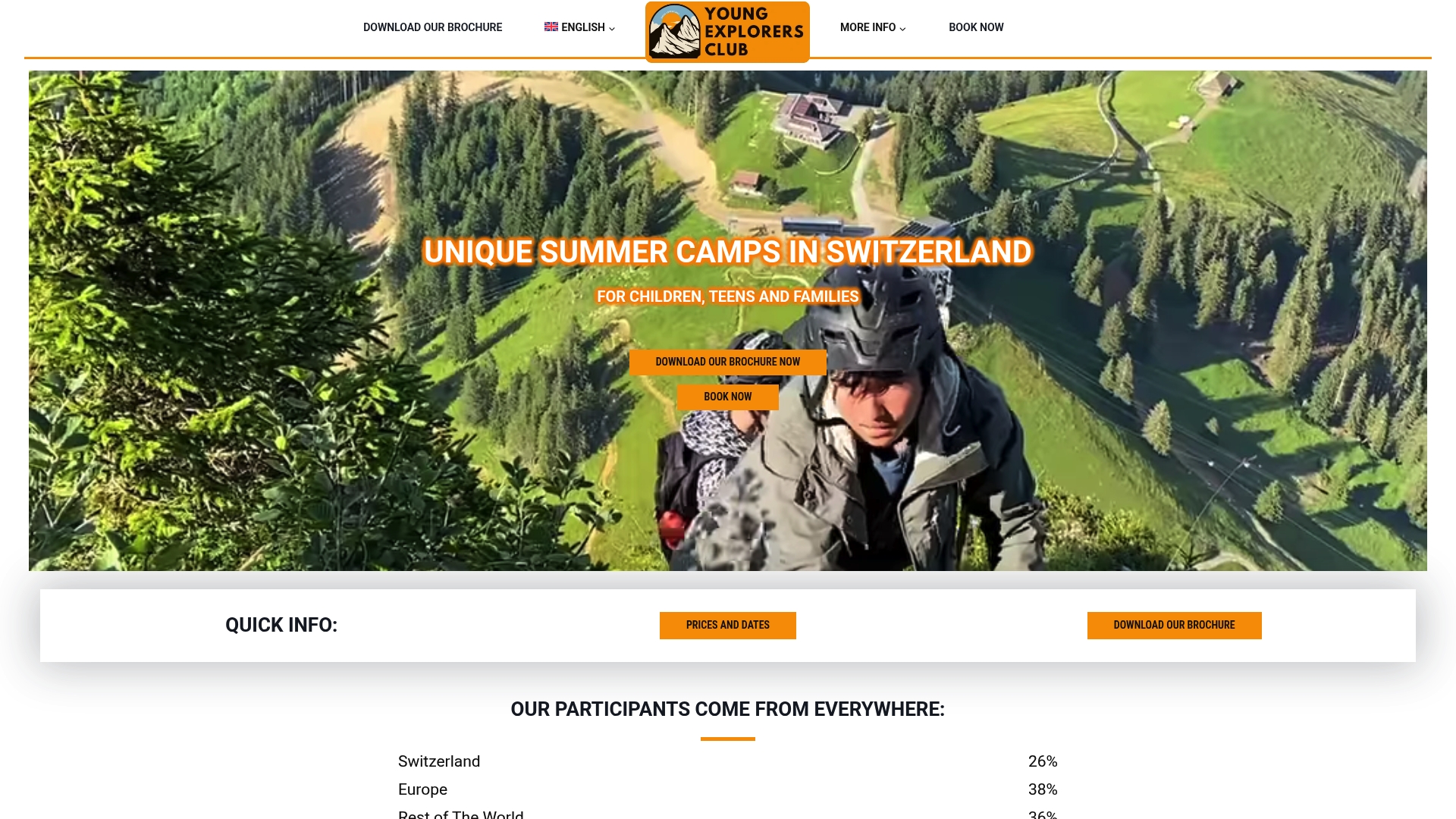
Young Explorers Club offers language-integrated adventure programs where English and French are woven throughout daily life, not confined to a classroom hour. Flexible session lengths, transparent pricing, and a team that answers parent questions with real specifics make the booking process far less stressful. If you want a program designed to push kids beyond their comfort zone in the safest possible way, this is a strong place to start your final shortlist.
Frequently asked questions
How early should I start the family camp selection process to secure popular weeks?
Begin your search at least 3 to 6 months before camp starts, as popular sessions fill by January or February for international adventure programs.
What staff-to-camper ratios ensure safety at international outdoor camps for 8-17 year olds?
Look for ratios of 1:8 for ages 6-8 and 1:10 for ages 9-14, with tighter ratios around 1:6 or better for overnight and water-based activities.
What documents do I need to prepare for registering my child in an international bilingual camp?
You will typically submit medical history, emergency contacts, parental consent waivers, allergy information, session selections, and payment, with forms due 1-2 weeks before camp starts.
How can I verify a camp’s bilingual immersion quality before booking?
Request sample daily schedules and ask what percentage of activities use the second language. Native speaker percentages in staff are a strong indicator of authentic immersion rather than surface-level exposure.
What should I do if my child has special needs or dietary restrictions when selecting camps?
Ask each camp directly about accommodations, staff training for neurodiverse children, and specific allergy protocols. Camps with clear, detailed answers on these points are the ones that have actually planned for them, not just anticipated the question.
