
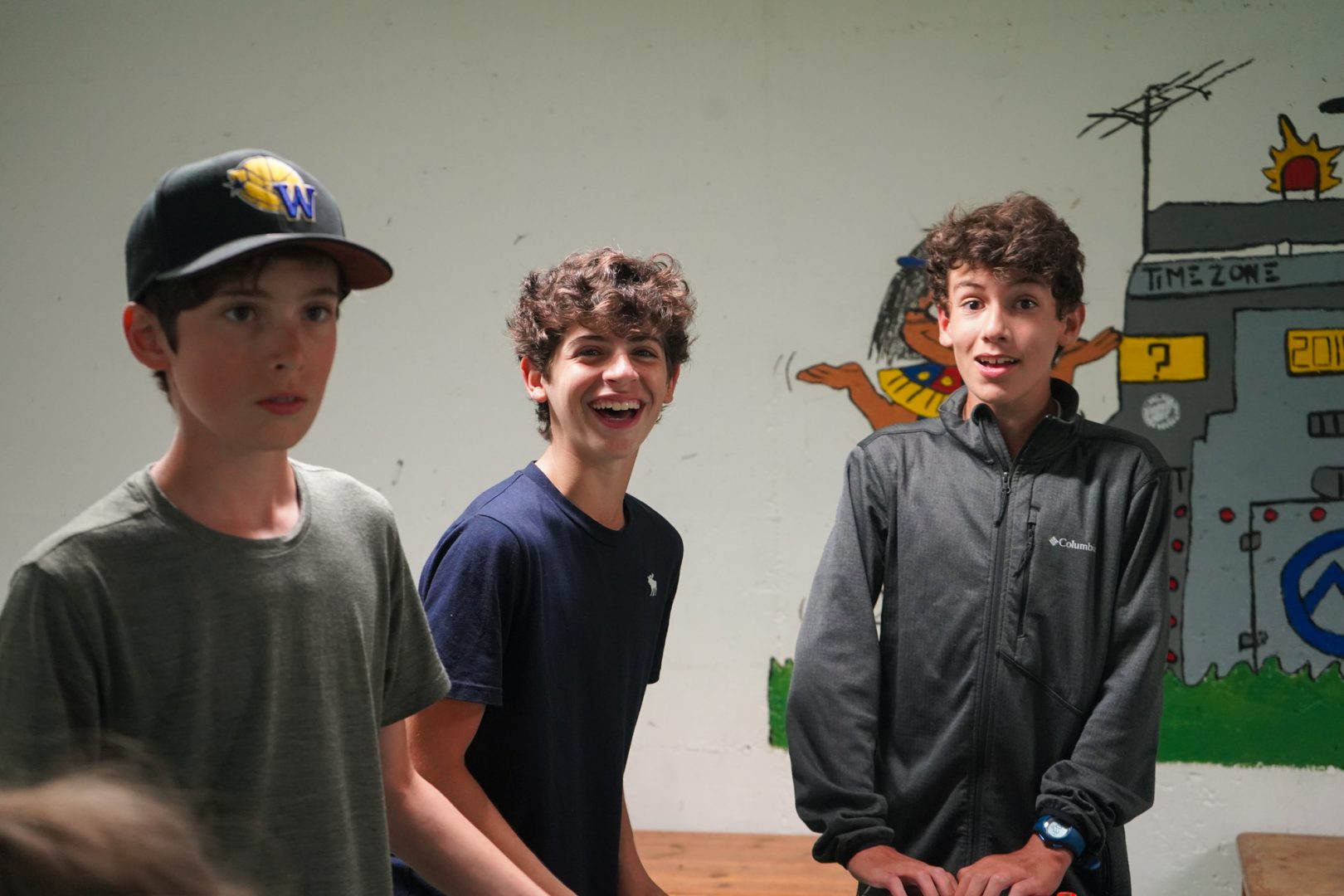
Drama And Theater Camps For Children
Drama & theatre camps for kids—structured sessions that boost confidence, communication and SEL. Day, overnight, intensives; register early.
Drama and theater camps for children
Drama and theater camps for children deliver structured, age-banded instruction and production experiences—day, overnight, week-long, multi-week and virtual. They target measurable gains in confidence, communication, collaboration and other SEL skills. Successful programs align session length, camper-to-staff ratios, curriculum (acting fundamentals, improv, stagecraft), safety and inclusion practices, and operational choices (cost, staffing, tech, enrollment timing). That alignment produces demonstrable outcomes and family-facing metrics.
Key Takeaways
Market and timing
Market size: Roughly 14 million people attend camps each year. Summer demand peaks June–August. Programs usually open registration 3–6 months before peak weeks. Many sessions sell out 6–12 weeks before start. We recommend planning promotions and waitlists well in advance.
Formats and logistics
Formats: Camps run half-day to multi-week and include residential and virtual options. Sessions commonly last 1–8 weeks. Final performances usually run 30–90 minutes. We advise planning tech and rehearsal schedules to match that range.
- Session types: day, overnight, week-long, multi-week, virtual
- Performance length: 30–90 minutes
- Rehearsal planning: align tech runs and dress rehearsals with final performance length
Measurable outcomes and measurement
Outcomes: Drama work builds confidence, public speaking, teamwork, empathy and executive function. Track impacts with pre/post SEL surveys. Monitor parent NPS, retention, performance attendance and participant demographics. Use those metrics to refine curriculum and marketing.
- Survey tools: pre/post SEL questionnaires, observational rubrics
- Operational metrics: enrollment conversion, attendance rate, retention year-over-year
- Family-facing metrics: NPS, performance attendance, satisfaction comments
Staffing, safety and inclusion
Ratios: Use recommended camper-to-staff ratios: 6:1 (ages 4–6); 8–10:1 (7–10); 10–12:1 (11–14). Require background checks, CPR certification and DEI training. Provide accommodations like quiet spaces, visual schedules and gender-inclusive casting. Train teams on behavior support and emergency plans.
- Safety protocols: emergency plans, medication procedures, incident reporting
- Inclusion practices: accommodations, adapted rehearsals, accessible staging
- Staff training: behavior support, de-escalation, cultural competency
Costs and operations
Pricing: Day camps typically run $100–$600 per week. Overnight programs tend to range $400–$1,200+ per week. Define equipment tiers and livestream specs up front. Use early-bird pricing and targeted marketing to hit enrollment goals. Monitor conversion and attendance so you can adjust offers.
- Budget items: staffing, facility rental, costumes, tech, insurance
- Revenue tactics: early-bird discounts, sibling discounts, payment plans
- Tech specs: livestream quality tiers, camera angles, audio mixing for performances
Key facts and market snapshot
Quick benchmarks
Here are the compact numbers I use for planning programs and advising parents:
- 14 million — annual U.S. camp attendees (American Camp Association).
- Day camp — varies by state; day camps dominate younger age groups (check local ACA for exact figures).
- Specialty/performance — commonly 20–30% of offerings, region-dependent.
- Session length — 1–8 weeks.
- Camper-to-staff ratios — 6:1 (ages 4–6); 8:1–10:1 (ages 7–10); 10:1–12:1 (ages 11–14).
- Cost ranges — day camp $100–$600/week; overnight $400–$1,200+/week.
- Daily structure — warm-up 30–45 min; skill blocks 60–90 min.
- Final performance — 30–90 minutes.
- Registration timing — open registration 3–6 months before summer; many camps fill 6–12 weeks before peak sessions.
Market size, seasonality and day vs. overnight patterns
We operate inside a market anchored by about 14 million annual attendees (American Camp Association). Demand concentrates in summer, with a clear summer peak in June–August, but many camps run spring-break, holiday and year-round sessions. I usually see registration open 3–6 months before summer, and high-demand weeks fill 6–12 weeks ahead of time.
Day camps tend to serve younger kids and shorter sessions. Residential intensives draw older campers and multi-week schedules. Distribution shifts by urban versus rural areas and by region; local ACA figures will give the best breakdown for your state. For planning, assume day camp popularity among younger families and reserve more slots for residential intensives when promoting multi-week theater tracks.
Practical enrollment notes I recommend to parents and program directors:
- Start outreach and early-bird pricing when registration opens 3–6 months out.
- Expect peak weeks in late June through mid-July and early August to sell out first.
- Use the camper-to-staff ratios above to size casts and rehearsal groups; smaller ratios work best for young children in musical theater.
We design curriculum that helps kids build confidence and collaboration, and we link program outcomes to how camps encourage creative problem-solving by offering project-based productions; see our resource on how we encourage creativity for examples you can apply.

Measurable benefits, outcomes and evidence
We, at the young explorers club, track clear, measurable gains from drama and theatre camps. Drama activities drive social-emotional learning (SEL) and improved communication through deliberate practice: monologues, ensemble projects and improvisation. I see measurable gains in confidence and public speaking, collaboration/teamwork, creativity, empathy, literacy and executive function skills across age groups.
Core benefits, mechanisms and evidence
Monologue work usually yields the biggest lift in verbal confidence and presentation skills. Ensemble projects foster teamwork and perspective-taking; improvisation trains adaptability and active listening. Those mechanisms translate into outcomes that matter in school and life: higher classroom participation, stronger peer leadership and better audition success.
Three research sources support these links. Catterall (UCLA CRESST), “Doing Well and Doing Good by Doing Art” (2012) shows arts-engaged students have higher academic and civic outcomes, including communication and school engagement. Fancourt & Finn (2019) report that arts participation associates with improved mental-health and social outcomes, with moderate effect sizes on social-emotional metrics. The National Endowment for the Arts, “How Art Works” (2012) documents connections between arts involvement and social-capital outcomes such as communication and empathy. I use those findings to justify collecting SEL and participation data at our programs. Drama complements other activities: compared with sports and music, theatre is particularly strong for confidence + public speaking and perspective-taking, while combined programming often produces broader SEL gains. Our sessions also boost social skills through structured ensemble challenges.
Measurement suggestions and example outputs
Collect a compact set of metrics that show change and reach. Below are practical items I recommend tracking and how to report them:
- Pre/post assessment: administer a short SEL survey on Day 1 and on the final day. Report mean pre and post scores with 95% CIs, absolute mean difference and standardized effect size (Cohen’s d). Visualize with bar charts or paired-line plots to show individual and average change.
- Parent NPS: ask parents how likely they are to recommend the camp; report NPS and distribution by cohort.
- Retention % / repeat camper %: track year-over-year return rates to show sustained value.
- Attendance at final performances: percent of invited audience who attend or view livestream/recording; include views and engagement time.
- Demographics: collect age, grade, zip code, race/ethnicity, household income band to document reach and equity.
- Behavioral outcomes: track audition success, classroom participation notes from teachers, and peer leadership roles where possible.
Example SEL survey item and reporting guidance:
- Item: “On a scale 1–5, rate your child’s confidence speaking in front of peers.”
- Reporting: show mean pre and post with 95% CIs, calculate the absolute mean difference and Cohen’s d. A paired-line plot clarifies individual change and highlights response variance.
Concrete outcome examples I report back to families and funders include measurable increases in communication and teamwork scores on SEL surveys and observed shifts in classroom behavior. One parent summarized the impact: “My shy 9-year-old scored 2/5 on confidence speaking in front of peers at Day 1 and 4/5 at final performance — their teacher later reported improved classroom participation.” Use that kind of anecdote alongside your quantitative metrics to tell a full story.
I recommend including both program-level KPIs (retention %, attendance, NPS) and learner-level SEL change (pre/post assessment, behavioral notes). Those combined measures demonstrate measurable gains and help refine curriculum each season.

Camp types, ages, session lengths and ideal group sizes
Major camp formats
We, at the Young Explorers Club, break drama and theater offerings into clear formats so parents and campers can match goals to structure. Below are the main formats, target ages, typical session lengths, and the ideal camper profiles.
- Day camp — Target ages: preschool–elementary (4–10). Typical session length: half-day (3–4 hours) or full-day (6–8 hours); sessions run from 1–8 weeks. Ideal camper profile: beginner to intermediate; families wanting daytime care plus steady skill-building.
- Overnight (residential) camp — Target ages: 9–18. Typical session length: multi-day to multi-week residential sessions. Ideal camper profile: intermediate to advanced; campers seeking an immersive experience and social independence.
- Week-long intensives — Target ages: 7–18. Typical session length: 1 week with an intensive daily schedule. Ideal camper profile: focused skill development and short-term commitment.
- Multi-week intensives (2–8 weeks) — Target ages: 10–18. Typical session length: multi-week (2–8 weeks). Ideal camper profile: advanced students preparing for auditions or full production experience.
- Semester/weekend programs & after-school clubs — Target ages: 6–18. Typical session length: weekly sessions across a semester or weekend intensives. Ideal camper profile: students supplementing school-year activities.
- Virtual/online drama camps — Target ages: 6–18. Typical session length: synchronous live sessions plus asynchronous work; recommend virtual rehearsal 60–120 minutes per live session. Ideal camper profile: remote learners or families needing flexible schedules.
- Specialty and touring camps — Target ages: vary by specialty; often 10–18 for technical and advanced specialties. Typical offerings: musical theater, improv, technical theater, Shakespeare camps, puppetry, stage combat, film & screen acting, and drama therapy. Ideal camper profile: students wanting concentrated study in one discipline.
Age-band specifics
I introduce age-band specifics so you can choose a developmentally appropriate option.
- Preschool (ages 4–6): half-day, play-based activities and an introduction to performance.
- Elementary (ages 6–10): half- or full-day programs with scene work, basic music/voice, and ensemble games.
- Middle (ages 11–13): multi-week options emphasizing character work and small productions.
- High school/teens (ages 14–18): intensives, audition prep, tech leadership, and touring opportunities.
Recommended ratios and ensemble sizes
I recommend specific camper-to-staff ratios and ensemble sizes to keep learning safe and productive. Use these exact figures as screening criteria when you evaluate programs.
- Recommended camper-to-staff ratios: 6:1 (ages 4–6); 8:1–10:1 (ages 7–10); 10:1–12:1 (ages 11–14). Teens may be up to 15:1 with experienced staff.
- Ideal rehearsal/performance ensembles: 8–25 for plays; monologue coaching groups of 1–4.
Program focuses and final outcomes
I list compact program focuses so you can match final outcomes to your child’s goals.
- Performance-focused | Ages 8–18 | Final product: full play or musical — final performance 30–90 minutes.
- Skill-building | Ages 6–14 | Final product: scenes, monologues, skill demo.
- Technical theater | Ages 12–18 | Final product: technical portfolio and backstage run.
- Improv | Ages 7–16 | Final product: showcase of short-form improvisations.
- Virtual camp | Ages 6–18 | Final product: recorded or livestreamed showcase.
Virtual recommendations and practical tips
We keep virtual rehearsals short and active to hold attention. Live sessions should run 60–120 minutes and include interactive warm-ups, breakout scene work, and camera-friendly staging. Our approach pairs those live blocks with brief asynchronous tasks—line runs, recorded rehearsals, and short practice videos. Parents should expect predictable schedules and clear tech instructions. We also emphasise social connection online and link program goals to in-person outcomes; see how camps foster creativity and problem-solving for practical examples.

Curriculum elements, sample weekly schedule and final performance
We, at the Young Explorers Club, build a curriculum that balances craft, play and technical skill so campers finish confident and capable. I break the core elements into focused modules that rotate through the week and build toward a showcase.
Acting fundamentals are daily: voice, diction and movement drills that improve projection, clarity and stage presence. I pair those with improvisation and ensemble games to sharpen listening, risk-taking and quick thinking. Script study and character work teach text analysis, objectives and physical choices so students make honest acting choices. Stagecraft covers lights, sound, props and costume basics; campers learn how technical elements support storytelling. For musical theater I add music and vocal coaching that focuses on breath, pitch and text-driven phrasing. I include audition technique and on-camera basics so teens understand slate, cold reads and framing for film or screen casting. Every element feeds the rehearsal process, which culminates in a public or recorded showcase that highlights growth.
Sample 5-day full-day camp schedule (daily structure)
Here’s a practical daily rhythm I use for a five-day full-day camp:
- Morning warm-up (30–45 min): voice, movement and ensemble games to focus energy and build group trust.
- Skill block 1 (60–90 min): concentrated acting technique, improv or vocal work with immediate practice.
- Lunch and break: supervised downtime to reset and hydrate.
- Skill block 2 (60–90 min): scene work, music rehearsal or technical labs for lights/sound/props.
- Rehearsal/stagecraft (60–90 min): block scenes on feet, integrate tech cues and run-throughs.
- Reflection/cool-down (15–30 min): journaling, peer feedback and short mindfulness to close the day.
- Day 4 is a dress rehearsal; Day 5 is the public performance or recorded showcase.
I structure each day so skills introduced in the morning get applied in the afternoon rehearsal. That creates rapid skill transfer and visible progress.
I adapt this schedule for other formats. For half-day camps I omit the second skill block and shorten rehearsal; the day becomes morning warm-up + one skill block + reflection. For virtual camps I reduce live session length and recommend a live virtual rehearsal (60–120 min) supported by asynchronous practice and recorded homework so students get both instructor feedback and flexible practice time.
Final performance logistics and format are things I plan from Day 1. The final performance length ranges from 30–90 min depending on age and format. Delivery options I offer include:
- Parent showcase
- Public performance
- Recorded digital showcase
- Livestream
For younger children I recommend shorter showcases with multiple class presentations; for teens I program a full-length play or musical with full technical support.
I set measurable learning objectives and use simple assessments to show growth. For example:
- By Day 3 each camper will perform a 1–2 minute monologue with clear voice and stage focus.
- I collect pre/post measures using SEL survey items and instructor rubrics that evaluate voice, movement and teamwork.
- Those rubrics give families concrete feedback and let instructors adjust pacing mid-week.
Family engagement and logistics are practical and simple. I suggest:
- Post-show Q&A sessions
- Quick backstage tours
- Recorded keepsakes so families keep a memory of progress
For audience planning I cover capacity, accessible seating and ticketing options—free, donation-based or priced—plus permissions for recording. I also use a straightforward photo/video release form for parents with clear yes/no options for photo, video and streaming consent.
I encourage you to see how camps encourage creativity in other program areas; it ties directly into dramatic play and ensemble work.
Cost, scholarships, staffing, safety and inclusion
We, at the Young Explorers Club, price programs to match goals and family budgets. For quick reference we use the benchmark string: day camp $100–$600/week; overnight $400–$1,200+/week. Day options often break down like this:
- Half-day / day (budget): $100–$400 per week
- Full-day (6–8 hours): $200–$600 per week
- Higher-end specialty day camps: can reach $100–$600/week
- Residential / Overnight programs: $400–$1,200+/week
- Multi-week intensives / elite programs: typically $800–$3,000+
I clearly disclose additional fees so families don’t get surprises. These often include costumes, performance tickets, travel, materials and extended care. I also recommend offering early-bird and sibling discounts and advertising what percentage of scholarship spots you hold. Many ACA-member camps offer need-based scholarships or sliding scales, so I suggest listing work-exchange or community-partnership slots and pursuing corporate or arts grants.
Staffing, safety and inclusion (practical lists and checklists)
Below are the core roles, legal checks, training targets and practical inclusion measures every drama camp should track:
-
Key staff roles I budget for:
- Artistic director, lead teacher/director, assistant counselors
- Technical crew lead, music director, stage manager
- Health/safety officer
-
Required checks and baseline training:
- Background checks
- CPR/First Aid (pediatric where possible)
- Child safeguarding / mandated reporter training
-
Experience and pre-camp training targets:
- Aim for at least 60–70% of adult staff with theater teaching experience in specialty camps
- Pre-camp orientation: 8–16 hours covering safety, pedagogy, inclusion and production logistics
- DEI training: at minimum 4–8 hours focused on inclusion and accommodations, plus role-specific modules for leads
-
Essential safety & health policies to publish:
- Emergency action plan, allergy/medication protocols, incident reporting
- Code of conduct, guardian consent, immunization/medication administration policies
- Ventilation plans, cohorting where appropriate, and adherence to up-to-date local public-health guidance
-
Inclusion practices I implement:
- Make auditions optional/open and use role rotation
- Provide accommodations for neurodiverse children: quiet spaces, visual schedules, sensory-friendly rehearsals
- Offer gender-inclusive casting and costume options
- Publish clear scholarship and financial-aid information
-
Cost drivers and parent checklist (questions families should ask):
- Major cost drivers: staff experience, facility rental, production scale, licensing (musical rights), staff-to-camper ratios
- Ask about refund/cancellation policy, inclement weather plans, what’s included/excluded (costumes, tickets), staff-to-camper ratios, medical policy, background-check practices
-
Hiring and operations toolkit:
- Interview prompts: previous theater teaching, age-range experience, behavior-management approach, accommodation experience
- Required legal/safety checks and simple incident-report / medical-release templates to adapt locally
- Simple accommodations examples: designated quiet space during long rehearsals, visual schedules for daily activities, sensory-friendly rehearsal times
We, at the Young Explorers Club, keep a short parent-facing checklist and provide templates so programs can implement these items quickly. For parents looking for practical enrollment advice I link to useful parent tips about camp choices and preparation.
Operations, facilities, tech, marketing and enrollment strategy
Facilities & equipment checklist
We keep a compact checklist for spaces and kit before each session.
- Space: rehearsal room / black box / stage; dedicated backstage for props and costumes; secure tech booth with sightlines to the stage.
- Essential equipment: PA/sound system, stage lighting or portable lighting kits, portable staging risers, wireless and handheld microphones, props and costumes, sewing and repair kit, stocked first-aid kit.
- Minimal / low budget: portable PA, basic lighting kit, 2–4 handheld mics, smartphone tripod for recording, a free Zoom account; recommended upload 5 Mbps minimum for single-camera or basic multi-camera streaming.
- Mid-tier: compact mixer, battery-powered stage lighting, wireless lav and handheld mics, external camera(s), OBS setup for switching, Vimeo account for private streaming; target upload 10+ Mbps.
- High-tier: multi-camera switcher, professional lighting board, wireless in-ear monitors, dedicated streaming encoder, licensed musical playback tools and redundancy for critical systems.
Tech, management, marketing and enrollment operations
We run virtual and hybrid drama sessions using a mix of reliable platforms. For live rehearsals and parent-facing workshops we use Zoom or Microsoft Teams, and capture multi-angle shows with OBS feeding Vimeo or YouTube for delivery. For editing and highlights we rely on Adobe Premiere Rush or iMovie, and keep score sheets, scripts and videos on shared drives like Google Drive. Project work and task lists live in Trello/Asana so directors and counselors stay aligned.
We set a minimum livestream spec of internet upload speed 5–10 Mbps for reliable multi-camera streaming and recommend wired connections for primary encoders. Virtual rehearsal timing should be shorter; schedule live virtual rehearsal 60–120 min blocks and pair them with asynchronous rehearsal tasks and recorded parts parents can play back.
For registration and camp operations we use proven systems: CampMinder, Active Network (Camp & Class Manager), Regpack, CampSite, or CampBrain depending on scale. For communications we send segmented campaigns through Mailchimp or Constant Contact. We handle payments and ticketing via Eventbrite, and process transactions with Stripe or Square.
A practical integrated stack we recommend is Regpack for registration and payments + Mailchimp for email communications + Zoom for virtual classes + OBS + Vimeo for polished streamed performances. That combo covers enrollment, family outreach, live instruction and secure delivery.
We open enrollment strategically: registration opens 3–6 months before major summer sessions, and we promote an early-bird discount to accelerate commitments. Many camps fill 6–12 weeks before peak sessions, so we use a waitlist system and automated reminders. We incentivize referrals with rewards in the $25–$50 range and offer sibling discounts of 5–15% to improve retention.
When delivering performances we combine OBS for production switching with Vimeo or YouTube for audience delivery, and always secure recording permissions and set privacy choices up front. We plan audience capacity, accessible seating, ticket pricing or donation options, and a clear recording/photo release workflow.
Our marketing tests focus on a few core messages: faculty credentials, safety protocols, low ratios, the final performance, and testimonials showing measurable outcomes such as SEL gains. We begin promotions when registration opens 3–6 months out, announce the early-bird discount, then send periodic reminders and last-chance messages 6–12 weeks before sessions. We run A/B tests comparing family-focused messaging (community, care, logistics) versus skills-focused messaging (public speaking, audition prep) and track open and conversion rates.
Operationally we track key metrics so we can iterate quickly:
- Enrollment conversion rates
- Open/click rates
- NPS (Net Promoter Score)
- Retention %
- Waitlist size
- Performance attendance
For ticketing we recommend Eventbrite or integrated ticketing in your registration tool, and processing payments through Stripe or Square. We always obtain explicit recording and photo permissions and keep release forms centrally stored.
We emphasize outcomes in parent-facing copy and link to resources that show how camp activities encourage developmental gains — see how we encourage creativity and how camp builds self-esteem. We also share practical tips for parents to smooth drop-off, tech prep and performance day logistics.

Sources
American Camp Association — Camp Trends
National Endowment for the Arts — How Art Works
Arts Council England — The Value of Arts and Culture to People and Society
National Endowment for the Arts / James S. Catterall — Doing Well and Doing Good by Doing Art
Research in Drama Education — Journal homepage
Frontiers — Arts, Health and Wellbeing (collection)
Centers for Disease Control and Prevention — Operating youth and summer camps (considerations)
American Academy of Pediatrics (HealthyChildren.org) — Summer Camps


