English-speaking Summer Camps In Switzerland: Complete List
Verified list of English-speaking summer camps in Switzerland (ages 6–18). Day, residential & boarding options, dates, prices.
English-Speaking Summer Camps in Switzerland: Complete List
Overview
We, at the Young Explorers Club, put together this resource to simplify camp selection and planning.
We compiled a verified directory of English-language summer programmes across Switzerland for ages 6–18. The list includes day camps, residential stays and mini-boarding options. Sessions mostly run 1–4 weeks. Sample weekly fees range from about CHF 200 to CHF 4,500. Full-summer packages can reach CHF 20,000. Each camp entry uses a standard template: region, type, ages, session dates and lengths, price and inclusions, activities, capacity, staff-to-camper ratio, safety and accreditation, transport and application details. Regional groupings, filters and verification notes make comparisons, budgeting and travel or visa planning easier.
Key Takeaways
- Program formats: The list covers English‑language programmes for ages 6–18 in multiple formats (day, residential, boarding, family) with most sessions of 1–4 weeks.
- Typical costs: day camps CHF 200–800/week; residential CHF 1,200–4,500/week; full‑summer CHF 6,000–20,000, plus extra fees for transfers, excursions and insurance.
- Verification: Every listing is verified (phone, email, website or brochure) and uses consistent data fields to make side‑by‑side comparisons straightforward.
- Safety and staffing: Common staff‑to‑camper targets are 1:6–1:15, with mandatory background checks and first‑aid trained staff; request safeguarding and medical plans before booking.
- Filters and planning: Regional groupings and filters (age, price, region, activity) help plan travel logistics, local activities and visa requirements.
Key facts at a glance (who this guide is for and fast numbers)
We, at the Young Explorers Club, created this guide for parents, teens, and international students who want English-language summer programmes in Switzerland. We cover programmes delivered primarily in English, full immersion options, and some bilingual camps where English is the main language of instruction. For a broader listing and programme details see our English camp in Switzerland page.
Quick facts — at a glance
Below are the fast-reference facts you can scan before digging deeper.
- Typical ages served: ages 6–18.
- Typical session length: 1–4 weeks.
- Typical formats: day camp, residential camp, mini-boarding, family camps.
- Typical price ranges (verify with provider; ranges vary by activity, prestige, location):
- Day camps: CHF 200–800/week.
- Residential camps: CHF 1,200–4,500/week.
- Whole-summer residential packages (6–8 weeks): CHF 6,000–20,000 (full-summer).
- Safety and staffing highlights: staff-to-camper ratio 1:6–1:10 for younger children; DBS/CRB checks; first-aid trained staff.
Flagship price snapshots (illustrative)
- TASIS — TASIS Summer Programs (Lugano): approx. CHF 2,000–3,500/week.
- Institute Le Rosey — Le Rosey Summer Sessions (Rolle / Gstaad): approx. CHF 4,500–8,000/week.
- Aiglon College — Aiglon Summer School: approx. CHF 3,000–6,000/week.
These examples show price variation by location, facilities, and programme length; confirm prices directly with providers.
How this “Complete List” is organized (inclusion criteria, verification and data collected)
Inclusion criteria & verification
We, at the Young Explorers Club, apply clear inclusion criteria before a programme appears on the list. Every entry must meet these exact phrases: location in Switzerland; primary programme language English; publicly advertised summer session for minors; verified contact page. We also tag listings with the keywords “inclusion criteria”, “verified summer programme”, “English-language” so readers can filter and trust the dataset.
We verify entries by phone or email confirmation, by checking official school and camp websites, and by reviewing brochure PDFs. Each listing shows the verification method used (phone / email / brochure) and the date of last update. We encourage readers to confirm details directly with camps because session dates, prices and capacities can change between updates. For a quick example of a typical offering, see this English camp in Switzerland.
We provide four main filters to help readers refine choices:
- Age
- Price
- Region
- Activity type
Every camp entry displays which filter categories it fits so you can compare options at a glance.
Data points collected for every camp
These exact items will appear for every listing:
- Camp name
- Region / city
- Type (day / residential / boarding / semi-residential / family)
- Ages served
- Session dates & lengths
- Typical session price or price range
- Language of instruction
- Main activities
- Capacity
- Staff-to-camper ratio
- Accreditation / insurance
- Airport pick-up options
- Transport info
- Application deadline
- Scholarships / discounts
- Contact details
We capture each data point with source notes (phone, email, website, brochure) and a last-checked date. We format session dates and prices consistently so you can compare quickly. If a camp offers multiple session types or price tiers, we list them separately and note which verification method covered each detail.

How to read each camp entry and regional grouping for the full list
Fields shown for each camp listing
Below are the exact fields you’ll see for every camp entry and what each means.
- Camp name — the official name.
- Short tagline — one-line summary of the camp vibe.
- Region / nearest airport / town — e.g., Lake Geneva / Geneva (GVA) / Montreux; entries are tagged with short travel notes like “30–60 min from Geneva.”
- Camp type — day | residential | semi-residential | family.
- Ages served — shown as ages X–Y (exact).
- Session dates & lengths — session length X weeks or multiple options; listed as 1-week, 2-week, full-summer where relevant.
- Language of instruction — labelled as English-language programme, bilingual, or English as main language.
- Price — price CHF per week and whole-session where available; we also note what’s included (meals, excursions, equipment).
- Capacity and international mix — capacity N and approximate percent international.
- Staff-to-camper ratio — staff-to-camper 1:X is listed for transparency.
- Accreditation / child-safety measures — includes DBS/CRB checks and Swiss cantonal permits where applicable.
- Activities — concise activity list (see example entries for typical offerings).
- Travel logistics — nearest international airports and on-site transfer services.
- Application deadline & deposit policy — deposit %, cancellation windows and refund details.
- Scholarships / discounts — early-bird, sibling rates, or limited scholarships.
- Contact info & link to official page — phone, email and direct link; check our guide to an English camp in Switzerland for examples.
Use the above bullets to scan quickly. Each field appears in the same order so you can compare camps fast.
Regional groupings and short travel/time notes
We group camps by region to help plan travel and activities. Each regional block lists expected travel times to the main airports, typical summer weather, and the camp emphases.
- Lake Geneva / Vaud canton (Geneva, Lausanne, Montreux) — 20–60 min from Geneva (GVA). Summers are warm with lake breezes. Emphasis on international-school summer programmes and water sports on Lake Geneva. Typical tag: “30–60 min from Geneva.”
- Zurich & Schwyz region (Zurich, Zug) — 20–50 min from Zurich (ZRH). Weather is mild and sunny. Many international-school day camps and short residential options.
- Bernese Oberland / Interlaken / Thun — about 2 hrs from major airports. Expect cooler mountain air and afternoon storms. Focus on hiking, climbing and mountain biking for adventure campers.
- Valais (Verbier, Zermatt) — 1.5–3 hrs from Geneva or Zurich. Warm valleys and brisk alpine peaks. Camps focus on high‑alpine hiking and mountain skills.
- Graubünden / Engadin (Davos, St. Moritz) — 2–3 hrs from Zurich or Milan. High-altitude weather with clear days and cool nights. Known for boarding-style programmes and alpine sports.
- Ticino (Lugano) — often travelled via Milan (MXP). Mediterranean-like summers and bilingual programmes with an English option.
- Central Switzerland (Lucerne, Engelberg) and French-speaking Romandy — short drives from Zurich or Geneva depending on location. Expect varied terrain, lots of day-camp options and regional programmes.
We tag each camp entry with region and a short travel note such as “1 hr from Geneva” and repeat key facts like ages X–Y, price CHF, capacity N, session length X weeks, English-language programme and staff-to-camper 1:X to make comparison simple.

Categories of English-speaking camps and representative highlights
-
International school summer programmes
Typical ages: 8–17. Session length: 1–4 weeks. Prices vary widely with day and residential options; sample weekly costs are shown in school listings. Staff mixes include academic teachers plus activity leaders and typical staff-to-camper ratios around 1:8–1:12 (TASIS Summer Programs). Common locations are Lake Geneva and Zurich. Typical activities mix classroom English, project-based learning, sports, and arts.
Example programmes you’ll find:
- TASIS The American School in Switzerland — TASIS Summer Programs
- Collège du Léman — CDL Summer School
- International School of Geneva (Ecolint) — Summer School
- International School of Lausanne (ISL) — ISL Summer Programmes
- Zurich International School (ZIS) — ZIS Summer Camps
- ISZL — ISZL Summer Programmes
- Brillantmont International School — Brillantmont Summer
Case study — TASIS Summer Programs: session lengths 1–4 weeks; ages 8–17; price example CHF 2,000–3,500/week; language of instruction English; academics plus sports and arts with published capacity and staff-to-camper ratios (TASIS Summer Programs).
-
Boarding / elite school summer sessions
Typical ages: 12–18 with session lengths from 1 up to full-summer options. Prices run higher because they’re full-board and premium; commonly described as boarding school summer programmes. Major locations are Vaud, Graubünden, and Valais. Programmes lean intensive: full days of academics, enrichment and high-end extracurriculars with strong international mixes.
Flagship names include: Institute Le Rosey — Le Rosey Summer Sessions (Rolle / Gstaad); Aiglon College — Aiglon Summer School; Leysin American School — LAS Summer Programmes.
Case study — Le Rosey Summer Sessions: ages 12–18; variable session lengths; price example CHF 4,500–8,000/week; full-board and high international mix (Le Rosey Summer Sessions).
-
Adventure & outdoor camps (Swiss Alps)
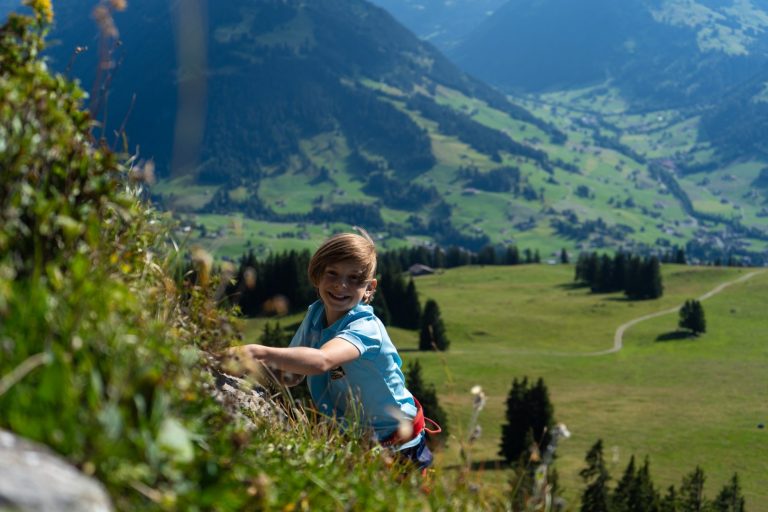
Typical ages: 10–17. Session length: 1–3 weeks. Activities focus on alpine hiking, via ferrata, rock climbing, mountain biking, and rafting with certified guides and mountain-safety training. Staff-to-camper ratios tend to be higher for safety, around 1:6–1:10 (representative Interlaken adventure camp).
Base locations include the Bernese Oberland (Interlaken/Thun) and Valais.
Case study — representative Interlaken adventure camp: ages 10–17; 1- & 2-week sessions; price CHF 1,200–2,500/week; certified guides and safety training included (representative Interlaken adventure camp).
-
Language immersion / English camps
Typical ages: 6–16. Session length: 1–4 weeks. Many run CEFR-aligned classes and some enforce an English-only policy to accelerate fluency (keyword: English language immersion). Pricing comes in day and residential formats with staff-to-camper ratios commonly 1:8–1:12 (a bilingual school English immersion programme). Locations are often on international school campuses or in lakeside villas.
Case study — a bilingual school English immersion programme: 1-week options available; price CHF 700–2,000/week depending on boarding and services (a bilingual school English immersion programme).
-
Sports camps (sailing, tennis, mountain biking, multi-sport)
Typical ages: 8–17. Session length: 1–2 weeks is standard. Features include certified coaches, high-quality facilities, and sport-specific curricula. Prices vary by sport and coach level. Lakeside venues and international schools host most sailing and tennis camps.
Case study — sailing camp on Lake Geneva: typical price CHF 600–1,800/week; equipment and supervised water-safety included (sailing camp on Lake Geneva).
-
Arts & music; STEM & coding; Day & community camps; Family & short-stay programmes
Typical ages: 6–18 depending on the focus; many run as day or short residential options. Price, staffing and locations vary; the majority are hosted at international school campuses or community centres. Staff qualifications range from certified instructors and conservatory tutors to industry mentors; staff-to-camper ratios span 1:6–1:15 depending on intensity and activity focus.
Quick reference — cost, intensity and seasonality
- International school programmes: mid-to-high cost; full-day academic weeks; peak early and mid-summer (TASIS Summer Programs).
- Boarding / elite sessions: highest cost; fully immersive full-day schedules; run across the summer with popular early- and late-season sessions (Le Rosey Summer Sessions).
- Adventure/outdoor camps: mid cost; physically intensive full days with safety briefings; concentrated in high summer months (representative Interlaken adventure camp).
- Language immersion camps: low-to-mid cost; mix of full or half-day study and activities; popular throughout July and August (a bilingual school English immersion programme).
- Sports camps: low-to-mid cost depending on sport; mostly half- to full-day practice schedules; season depends on sport (sailing in summer, mountain biking late summer) (sailing camp on Lake Geneva).
- Arts/STEM/day camps: variable cost; often half-day or modular full-day options; frequent in school holiday windows on international campuses.
We, at the Young Explorers Club, keep this list current and recommend checking individual programme pages for exact dates, detailed inclusions and the latest staff ratios — start with our guide to an English camp in Switzerland for a practical next step.

Costs, discounts, budgeting, safety, staffing and insurance
We list typical cost ranges so families can budget with confidence.
Day camps typically run CHF 200–800/week, while residential programs usually range CHF 1,200–4,500/week. A full-summer CHF 6,000–20,000 is common for 6–8 week residential stays.
We also flag the extra costs you should expect:
- Airport transfers: CHF 100–400 one-way depending on distance.
- Special trips / activity supplements: about CHF 50–500 per trip.
- Travel and medical insurance: typically adds CHF 20–60/week.
- Visa application fees: follow national Schengen rates.
Common discounts are available and often stack. Expect early-bird reductions of 5–15% and sibling discounts of 5–10%. Camps frequently offer multi-session or loyalty discounts for returning families.
For practical planning we provide a sample 2-week residential budget using typical figures:
- Tuition & board: CHF 2,800/week × 2 = CHF 5,600
- Airport transfers (round-trip): CHF 250 × 2 = CHF 500
- Insurance (CHF 40/week): CHF 80
- Activity supplements / excursions: CHF 200
- Pocket money / personal expenses: CHF 150
Total estimated: CHF 6,530 (example; use the camp’s current fees to calculate an exact total). For programme and price details see our English camp in Switzerland page.
We keep safety and staffing front and centre. Typical staff-to-camper targets sit between 1:6–1:15, tighter for younger children and looser for older teens. Camps must run mandatory background checks and employ first-aid trained staff; we expect written evidence of both. Medical coverage should include an on-site infirmary or clear directions and drive-times to the nearest hospital listed on each programme entry. Proof of travel/medical insurance is normally required; we recommend international coverage that includes repatriation. Camps operating in Switzerland should hold cantonal licences and appropriate Swiss insurance where applicable.
Safety checklist parents should request
We advise parents to ask camps for these documents before booking:
- Staff-to-camper ratio by age group
- Copies of staff DBS/CRB-equivalent checks and safeguarding training certificates
- First-aid trained staff and number of medics/nurses on-site
- Medical and evacuation plans, nearest hospital details
- Child protection / safeguarding policy and recent inspection/permit reports
- Insurance coverage requirements and proof of public liability insurance
We recommend requesting camps’ safeguarding policy and recent inspection or accreditation reports before booking.
Travel, visas, vaccinations, how to choose the right camp and FAQs
Travel and medical essentials
We, at the Young Explorers Club, handle visa and travel questions every season and advise families early. Non‑EU students will often need a short‑stay Schengen visa for stays under 90 days; if a stay exceeds 90 days or requires academic registration your family must check with the cantonal migration office about residence permits. Check visa requirements at least 8–12 weeks before travel; camps typically require a copy of passport and visa at enrolment.
Major airports to consider are Zurich (ZRH), Geneva (GVA), Milan Malpensa (MXP) for Ticino and regional Bern‑Belp. Book transfers early and confirm late‑arrival procedures. We recommend you request written confirmation of exactly what the camp price includes (meals, excursions, equipment) before paying a deposit.
Keep routine childhood vaccinations up to date and follow any camp‑specific medical form requirements. Confirm the current COVID or vaccine policy for each programme before travel. Ensure travel and medical insurance covers repatriation and the activities your child will do (for example, mountain rescue if applicable). We often advise families to have local emergency contact details and copies of medical forms stored both with camp staff and in your child’s luggage.
We run an English camp in Switzerland and include transfer booking guidance with every booking; check specific transfer fees and deadlines early to avoid premium charges.
How to choose the right camp — decision framework, questions and FAQs
Use these quick filters to shorten your shortlist:
- Age
- Cost
- Session dates
- Activity type
- Residential/day
- Accreditation
Ask these 10 interview questions exactly as listed when you talk with camp directors:
- What is your staff-to-camper ratio by age group?
- Are staff DBS/CRB‑equivalent background checks completed and can you provide evidence?
- How many staff are first‑aid trained and is there a nurse on site?
- Can you provide a sample daily schedule for my child’s age group?
- Are meals included and can you share sample menus?
- What is your cancellation and refund policy (deposit % and refund windows)?
- What medical and evacuation arrangements are in place (nearest hospital, transport time)?
- Do you offer airport transfers and what are the fees/deadlines to book them?
- What is your international mix and typical capacity for sessions my child will attend?
- Can you share your safeguarding policy and recent inspection/accreditation reports?
Practical FAQs and short sample answers you can use:
- “What language is used at camp?” — Typically English, but confirm for bilingual programmes.
- “Do they accept non‑European passports?” — Many do; check Schengen visa requirements.
- “What is the approx. staff-to-camper ratio?” — Typical ranges are 1:6–1:10 for younger children and up to 1:10–1:15 for older teens.
- “Is medical care on-site?” — Many camps have an on‑site infirmary or nurse and formal ties to the nearest hospital; each listing states distance/time.
- “Are meals included?” — Varies: full board, half‑board or packed lunch options; check the price inclusions column.
- Transfer booking deadlines — Book transfers as soon as you confirm sessions; camps set deadlines and often close transfer bookings several weeks before arrival.
- Late arrival policy — Confirm the camp’s procedure and any extra fees; many camps require immediate notification and have specified check‑in windows.
Use the decision checklist and sample timeline we provide when making your final choice: they list application deadlines, deposit schedules and recommended booking milestones. Save the parent email template below and send it to any camps where details are missing.
Hello [Camp name] team,
I am considering enrolling my child in your summer programme and need to confirm a few details before booking. Please can you provide the following information:
- Exact session dates and session length available for ages [X–Y].
- Current price per week and any additional fees (airport transfer, activity supplements, insurance).
- Deposit required and full cancellation/refund policy.
- Staff-to-camper ratio for my child’s age group and evidence of background checks (DBS/CRB-equivalent) and first-aid training.
- Medical facilities on-site and nearest hospital (name and travel time).
- Airport transfer options, fees and booking deadlines.
- Dietary provision and sample menus.
- Scholarships, early-bird or sibling discounts available.
- Proof of accreditation / cantonal permits and your safeguarding policy.
- Any visa support documents you provide for non‑EU students.
Thank you — please also confirm the best person to contact and expected response time.
Best regards,
[Parent name]

Sources
Below are official pages and authoritative government sources used to compile the “English‑Speaking Summer Camps in Switzerland: Complete List”. Each link shows the organization name followed by the page title.
Institut Le Rosey — Summer Sessions
Aiglon College — Aiglon Summer School
Leysin American School — LAS Summer Programmes
Collège du Léman — Summer School
Brillantmont International School — Brillantmont Summer
St. George’s International School — Summer Camps
International School of Geneva (Ecolint) — Summer School
Zurich International School (ZIS) — Summer Camps
International School of Lausanne (ISL) — Summer Programmes
International School of Zug and Luzern (ISZL) — Summer Programmes
CISV Switzerland — CISV Summer Programmes
Swiss Federal Statistical Office — Tourism & Hospitality Statistics
State Secretariat for Migration (SEM) — Entry to Switzerland / Visa Information