
English-speaking Summer Camps In Switzerland: Complete List
Verified list of English-language summer camps in Switzerland for parents, teens & international students — compare prices, dates & safety.
Verified English-Language Summer Camps in Switzerland
We compiled a complete list of verified English-language summer camps across Switzerland for parents, teens and international students. Our entries standardize region, camp type, ages, session dates, prices, staff ratios, accreditation and travel logistics. The comparison covers common formats (day, residential, boarding), session lengths (1–4 weeks) and typical price ranges. A parental safety checklist helps families shortlist and enquire with confidence.
Overview of offerings
Formats and session lengths
We list camps by the most common formats:
- Day camps — children return home each day.
- Residential — full-time boarding for the session.
- Mini-boarding — short-term overnight stays.
- Family formats — family-oriented or accompanying-parent options.
Sessions typically run 1–4 weeks, with some providers offering flexible start dates and multi-week discounts.
Typical ages and staffing
Camps commonly accept ages 6–18. Expect recommended staff-to-camper ratios near 1:6–1:15 depending on age and activity. Providers should run background checks and ensure first-aid trained staff are on site.
Costs and budgeting
Typical price ranges
Typical costs vary by format and location:
- Day camps: roughly CHF 200–800 per week.
- Residential camps: usually CHF 1,200–4,500 per week.
- Full summer attendance can total CHF 6,000–20,000 depending on length and extras.
Budgeting tips
- Plan for extras: airport transfers, excursions, insurance and equipment fees.
- Start visa checks 8–12 weeks before travel if you require one.
- Look for early-bird or sibling discounts to reduce costs.
Regional and activity differences
Listings are organised by region: Lake Geneva, Zurich, Bernese Oberland, Valais, Graubünden, Ticino and Central. We note travel times, local climate and the activities each area favours — for example, watersports near lakes, hiking and alpine sports in mountain regions, and language or arts programmes near cities.
Safety, verification and practical checks
Verification and documentation
Entries require an English-language programme, a publicly advertised Swiss summer session and a verified provider contact. Each entry shows how we verified details and the last-update date.
Safety checklist for parents
- Confirm staff-to-camper ratios and age-group supervision levels.
- Request evidence of background checks, first-aid training and safeguarding policies.
- Ask for CVs, inspection reports and references before booking.
- Clarify health, medication and emergency procedures.
- Verify travel logistics including recommended arrival times and transfer options.
Key Takeaways
- Inclusion and verification: listings require an English-language programme, a publicly advertised Swiss summer session and a verified provider contact. Each entry shows how we verified details and the last-update date.
- Typical offerings and costs: camps take ages 6–18 and run day, residential, mini-boarding and family formats. Sessions last 1–4 weeks. Expect day camp fees of roughly CHF 200–800/week and residential fees of CHF 1,200–4,500/week.
- Regional and activity differences: listings are organised by region and note travel times, local climate and favoured activities.
- Safety and staffing: plan for staff-to-camper ratios near 1:6–1:15. Providers should run background checks and keep first-aid trained staff on site. Ask for CVs, safeguarding policies and inspection reports before you book.
- Budgeting and logistics: budget for extras and start visa checks 8–12 weeks before travel. Look for early-bird or sibling discounts.
If you would like the full camp list organised by region or a printable parental checklist, tell me which region(s) or age group(s) you want and I will prepare it.
Key facts at a glance (who this guide is for and fast numbers)
We, at the young explorers club, created this snapshot for parents, teens and international students looking for English-language summer programmes in Switzerland. I write from practical experience helping families compare academic focus, activity balance and logistics. Parents will find the quick numbers useful; teens will find the format and price cues fast to scan.
Who this guide is for
We target three main groups: parents planning childcare or enrichment; teens seeking adventure and language practice; and international students wanting an English immersion experience that supports later study. For a fuller catalogue of options, see our English camp in Switzerland listing.
Quick facts (at-a-glance)
Below are compact facts to help you shortlist quickly before you contact providers.
- Typical ages served: ages 6–18.
- Typical session length: session length 1–4 weeks.
- Typical formats: day camp, residential camp, mini-boarding and family camps.
- Typical price ranges (verify with provider): Day camps CHF 200–800/week; residential CHF 1,200–4,500/week; whole-summer packages CHF 6,000–20,000 (price CHF, cost per week).
- Safety and staffing highlights: staff-to-camper ratio 1:6–1:10 for younger children; DBS/CRB checks and first‑aid trained staff required by most reputable providers.
-
Price examples from flagship camps (examples only — verify when publishing):
- TASIS The American School in Switzerland — TASIS Summer Programs (Lugano): example price range CHF 2,000–3,500/week (TASIS The American School in Switzerland).
- Institute Le Rosey — Le Rosey Summer Sessions (Rolle / Gstaad): example price range CHF 6,000–9,000/week (Institute Le Rosey).
- Aiglon College — Aiglon Summer School (Chesières-Villars): example price range CHF 2,500–4,500/week (Aiglon College).
- Clarification: ranges vary by location, activity intensity, level of boarding and institutional prestige; always confirm availability, exact itineraries and current fees directly with providers.

How this Complete List is organized (inclusion criteria, verification and data collected)
We, at the young explorers club, only list programmes that meet clear labels: inclusion criteria, verified summer programme, and English-language. Each entry shows the date it was last updated and a verification method so families can act with confidence. See our English camp in Switzerland for an example of how entries look on the page.
What we checked and what we display
- Inclusion criteria: Location must be in Switzerland; the primary programme language must be English-language; the camp must run a publicly advertised summer session for minors; and the provider must have a verified contact page.
- Verified summer programme: We confirm each listing by at least one of the following methods:
- Phone and/or email confirmation with the provider
- Cross-checking the official school or provider website
- Reviewing brochure PDFs supplied by the provider
- Data points collected per camp (these exact items will appear for every listing):
- Camp name
- Region / city
- Type (day / residential / boarding / semi‑residential / family)
- Ages served
- Session dates & lengths
- Typical session price or price range
- Language of instruction
- Main activities
- Capacity
- Staff-to-camper ratio
- Accreditation / insurance
- Airport pick-up options
- Transport info
- Application deadline
- Scholarships / discounts
- Contact details
- How we verified listings: confirmation by phone and/or email with each provider; comparisons with official provider websites; and brochure PDFs where available. Each camp entry shows which verification method we used (phone / email / brochure) and notes the last-update date so you can judge recency.
- Reader filters and verification note: We provide filters so you can narrow the list by age, price, region, and activity type. Each filtered result still displays the verification method and last-update date so you can follow up directly with the camp.
How to read each camp entry and regional grouping for the full list
We, at the Young Explorers Club, present every camp entry in a fixed layout so families can scan and compare quickly. Each listing is compact and data-rich; I explain the fields you’ll see and how the regional groups are organized. Use this as your checklist when you review the full list.
Camp entry fields
Below are the exact fields included on each published entry and what I expect you to find in them:
- Camp name (official name) — the programme’s legal or public brand.
- Short tagline (1 line) — quick positioning line that sums up the camp.
- Region / nearest airport / town — e.g., Lake Geneva / 1 hr from Geneva.
- Camp type — day | residential | semi‑residential | family.
- Ages served — exact range, e.g., 8–14.
- Session dates & lengths — explicit sessions listed, e.g., 4 sessions: 1‑week options; 2‑week intensive; full-summer.
- Language of instruction — English only / bilingual / English as main language (each will display “English-language programme” where applicable).
- Price — shown per week and per whole session when available; amounts shown in CHF and include what’s covered (meals, excursions, equipment).
- Capacity and average international mix — e.g., capacity 150; 50% international, 30% EU, 20% Switzerland.
- Staff-to-camper ratio — e.g., staff-to-camper 1:8 (always displayed as 1:X).
- Accreditation / child-safety measures — DBS equivalent checks, Swiss cantonal permits, and other accreditation.
- Activities — short bullet list for quick scanning (sailing, tennis, alpine hiking, arts, academic).
- Travel logistics — nearest international airports and transfer services; short travel note like “1 hr from Geneva.”
- Application deadline and deposit policy — deposit %, cancellation/refund windows, deadline dates.
- Scholarships/discounts — early-bird, sibling, need-based if available.
- Contact info & link to official page — phone, email and official website link.
I format the price, age range, staff ratio and capacity as headline facts so you can compare at a glance (ages X–Y; price CHF; staff-to-camper 1:X; capacity N; session length X weeks; English-language programme).
Regional grouping and travel/weather notes
- Lake Geneva / Vaud canton (Geneva, Lausanne, Montreux) — Travel: 20–60 min from Geneva (GVA). Summers are warm and often breezy on the lake; expect 20–28°C. Camps here lean toward international school-style programmes and water sports on Lake Geneva. Each entry will show a short travel note like “30 min from Geneva.”
- Zurich & Schwyz region (Zurich, Zug) — Travel: 20–50 min from Zurich (ZRH). Weather is moderate and sunny with occasional showers; daytime temps usually 18–26°C. This region hosts many international school day camps and urban-residential options with strong academic or arts tracks.
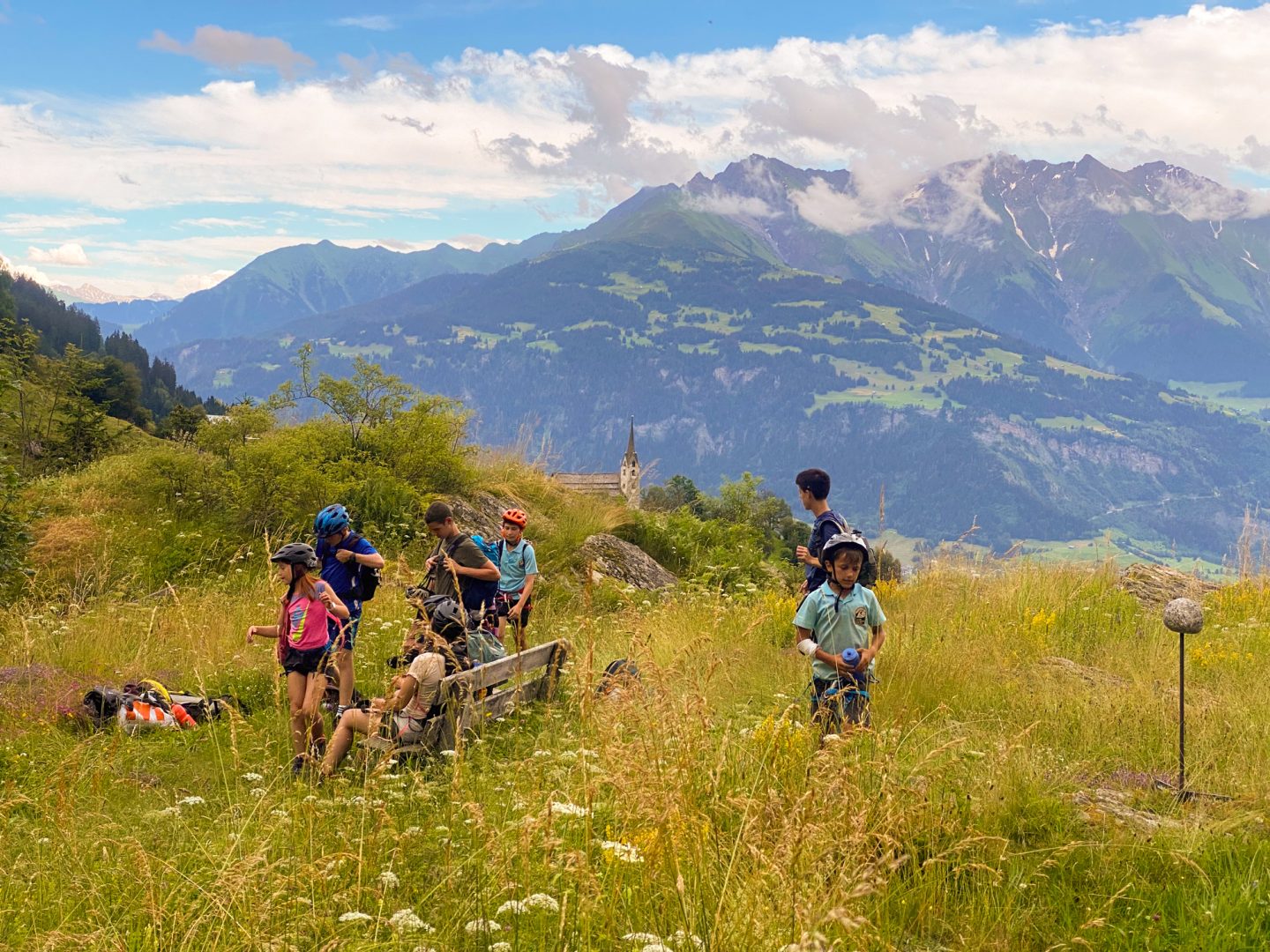
- Bernese Oberland / Interlaken / Thun — Travel: ~2 hrs from major airports. Mountain afternoons bring cooler air and clear skies; expect 15–22°C, cooler at altitude. Camps emphasize hiking, climbing and mountain biking; entries highlight adventure-focused activities and expected travel time from airports.
- Valais (Verbier, Zermatt) — Travel: 1.5–3 hrs from Geneva/Zurich. Summers are typically sunny and dry with warm valley temps and cool alpine evenings. Expect high‑alpine hiking and mountain-skill programmes; entries will flag altitude, required kit and travel logistics.
- Graubünden / Engadin (Davos, St. Moritz) — Travel: 2–3 hrs from Zurich or Milan. Weather is cooler and often ideal for vigorous outdoor sports. Many camps here are boarding-style with prestige boarding school sessions and alpine-sports emphasis.
- Ticino (Lugano) — Travel: Milan MXP is often used. The climate is milder and more Mediterranean; expect 22–30°C. Camps offer bilingual/English school programmes and plenty of outdoor water and cultural activities.
- Central Switzerland (Lucerne, Engelberg) and French-speaking Romandy — Travel times vary; many sites are short drives from Bern, Zurich or Geneva. This grouping includes regional day camps and mixed-format programmes that serve local families and international visitors alike.
I show travel times to Geneva, Zurich, Milan and Bern where relevant and flag the recommended arrival airport per camp. For help choosing which region fits your child’s goals and travel plans, see choose the best camp.

Categories of English-speaking camps and representative highlights
Category highlights and case studies
We break camps into six practical categories and point to representative programmes and numbers so you can compare quickly.
-
International school summer programmes — Typical ages 8–17; sessions run 1–4 weeks; prices range from mid to high depending on boarding and prestige. Locations include Lake Geneva and Zurich. Staff ratios often 1:8–1:12 with language teachers holding CELTA/PGCE qualifications. Flagship names: International School of Geneva (Ecolint) — Summer School; International School of Lausanne (ISL) — ISL Summer Programmes; Zurich International School (ZIS) — ZIS Summer Camps. Case study: ISL Summer Programmes are usually a 2‑week intensive for ages 10–15 with sample fees CHF 1,200–2,400 per 2‑week session (ISL Summer Programmes).
-
Boarding / elite school summer sessions — Typical ages 12–18; sessions 1–6 weeks with full‑summer options; prices sit at the high end. Locations: Vaud, Graubünden, Valais. Staff-to-camper targets 1:6–1:10 with full‑board pastoral teams. Flagship names: Aiglon College — Aiglon Summer School; Institute Le Rosey — Le Rosey Summer Sessions; Leysin American School — LAS Summer Programmes. Case study: Aiglon Summer School runs ages 12–17; sample 2‑week fee CHF 5,000 (Aiglon Summer School).
-
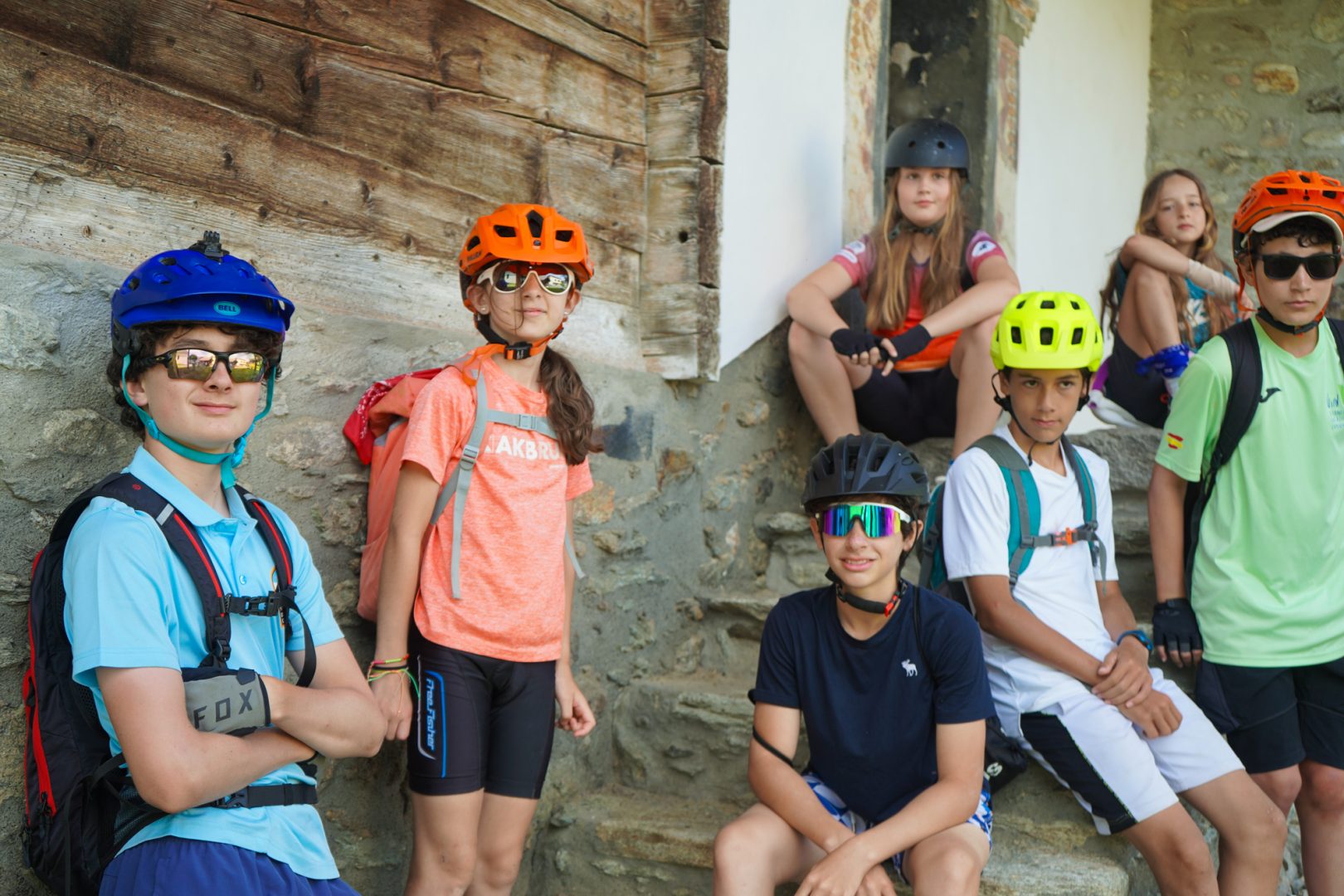
Adventure & outdoor camps (“adventure camp Swiss Alps”) — Typical ages 10–17; sessions usually 1–2 weeks. Activities focus on hiking, via ferrata, rock climbing, mountain biking and canoeing. Locations: Bernese Oberland / Interlaken / Thun. Staff ratios commonly 1:6–1:10 with UK/Swiss mountain‑qualified instructors. Case study: Interlaken adventure camp has capacity ~100, a staff‑to‑camper ratio of 1:8, and a 1‑week price near CHF 1,350 (Interlaken adventure camp).
-
Language immersion / English camps — Typical ages 6–16; sessions 1–4 weeks; prices lean lower to mid-range and often include CEFR-aligned classes. Activities blend English classes, language labs and cultural excursions. Teachers usually hold CELTA/TEFL certificates and ratios run 1:8–1:12. Keywords: English language immersion, English-only policy. Flagship example: CDL Summer School (Collège du Léman). Case study: CDL Summer School serves ages 8–15 with 2‑week prices roughly CHF 1,200–2,200 (CDL Summer School). For a focused immersion option see our English camp in Switzerland.
-
Sports camps — Typical ages 8–17; sessions commonly 1–2 weeks. Pricing: day camps CHF 200–800/week, residential CHF 1,200–3,500/week. Activities include sailing, tennis, mountain biking and multi-sport options. Coaches hold sport‑specific certifications. Case study: Tennis camp at Brillantmont Summer offers daily coaching with sample 1‑week day/half-board fees CHF 300–900 (Brillantmont Summer).
-
Arts, music, STEM, day & family programmes — Typical ages 6–18 depending on focus; sessions 1–4 weeks. Prices and inclusions vary with faculty intensity. Staff are specialist teachers, musicians or engineers with ratios 1:8–1:15. Case study: TASIS Summer runs arts weeks with fee examples comparable to our international school listings (TASIS Summer).
Category comparison
Cost ranking (general): boarding/elite > international school programmes > residential adventure/language > day camps. We note intensity differences: full‑board weeks include round‑the‑clock pastoral care and activities, while day camps run school‑hour or full‑day schedules only. We observe seasonality: most camps operate June–August, with some schools offering early, late and full‑summer packages.
Costs, discounts, budgeting, safety, staffing and insurance
We, at the Young Explorers Club, present clear cost expectations so families can plan with confidence. Typical published fees run from CHF 200–800/week for day camps and CHF 1,200–4,500/week for residential stays; a full-summer CHF option for 6–8 weeks commonly falls between CHF 6,000–20,000.
Plan for these extra predictable costs. Common add-ons include:
- Airport transfers: CHF 100–400 one-way depending on distance.
- Activity supplements or special trips: CHF 50–500 per trip.
- Insurance (travel & medical): CHF 20–60/week.
- Visa application fees: standard national Schengen fees where applicable.
Discounts and timing matter. Typical reductions are:
- Early-bird: 5–15%.
- Sibling discounts: 5–10%.
- Multi-session or loyalty discounts: for repeat bookings (varies by provider).
Sample two-week residential budget to make sums practical. Use this as a template and adjust per provider.
- Tuition and board (2 weeks): CHF 1,800–6,000 (example mid-range CHF 2,400/week × 2 = CHF 4,800).
- Airport transfers (return): CHF 200–400 (example CHF 300).
- Insurance (2 weeks): CHF 40–120 (example CHF 80).
- Spending money / pocket money: CHF 100–300 (example CHF 150).
- Activity supplements / excursions: CHF 50–300 (example CHF 200).
Estimated total (example mid-range): CHF 5,530 (CHF 4,800 + 300 + 80 + 150 + 200). Adjust totals per actual provider fees and any discounts applied.
I recommend checking the specific English camp details early; a fast way to review options is our English camp page for Switzerland.
Safety checklist for parents to request
Ask providers for these items and keep copies on file:
- Staff-to-camper ratio and typical group sizes, with target staff-to-camper 1:6–1:15 depending on age.
- Proof of background checks (DBS/CRB equivalent) for all staff.
- Number of first-aid trained staff and details on on-site medics or nurses.
- Clear evacuation and medical emergency plans, including nearest hospital distance/time.
- Child safeguarding policy and the latest inspection summary or report.
- Insurance requirements and what the camp’s policy covers; demand proof that camps require travel/medical insurance and recommend international coverage including repatriation.
- Swiss cantonal licence status or equivalent local safety certifications.
I insist families request staff CV summaries, recent inspection reports and the provider’s safeguarding policy before booking. That paperwork gives you the detail you need to judge safety, staffing and overall value.
Travel, visas, vaccinations, how to choose the right camp and FAQs
Travel, visas and medical essentials
We, at the Young Explorers Club, advise families to start travel planning early. Schengen visa rules apply for non‑EU students: short‑stay Schengen visas are required for stays under 90 days where applicable (Schengen visa). For stays longer than 90 days or programmes that require academic registration, follow the cantonal migration office procedures for the correct visa or residence permit. Major airports to consider are Zurich (ZRH), Geneva (GVA), Milan Malpensa (MXP) for Ticino transfers, and Bern‑Belp for regional connections.
Plan to check visa requirements at least 8–12 weeks before travel. Camps usually ask for a passport copy and visa evidence at enrolment. Keep digital and hard copies of travel documents and emergency contacts.
On health and vaccinations, make sure routine childhood immunisations are current. Review the camp’s specific medical form and vaccine/COVID policy well before arrival. Camps typically require a completed medical form plus emergency contact details and any treatment authorisations. If your child needs prescription medication, bring original packaging and a doctor’s note. We also recommend travel insurance that covers medical care and repatriation.
How to choose the right camp — filters, questions, checklist and FAQs
Use these six quick filters to narrow choices quickly:
- Age range and maturity level.
- Cost and what’s included.
- Session dates and duration.
- Activity focus (language, sports, adventure).
- Residential versus day camp.
- Accreditation and local permits.
Ask these 10 quick interview questions of camp directors before you enrol:
- What is your staff‑to‑camper ratio for my child’s age group?
- Are background checks (DBS/CRB equivalent) carried out for all staff?
- Is there a nurse or medic on‑site 24/7? If not, where is the nearest hospital and how long to reach it?
- Can you share a sample daily schedule for my child’s age group?
- Are meals included and can you provide sample menus / dietary accommodation?
- What is your policy for medical emergencies and evacuation?
- What are your deposit, cancellation and refund terms?
- Do you provide airport pick‑up and what are the fees/timelines to book transfers?
- What accreditation or cantonal permits do you hold?
- Do you offer early‑bird, sibling or multi‑session discounts?
Use this template parent email to request missing details (paste and edit before sending):
Subject: Enquiry — [Child’s name], aged [X], [session dates]
Hello [Camp name / Director],
I am considering enrolling my child, [name], aged [X], in your [session dates / programme name]. Could you please confirm the following details?
- Exact session dates and session length for [selected session].
- Price per week and total price for the session; what is included (meals, excursions, equipment)?
- Deposit amount, payment schedule and cancellation/refund policy.
- Staff‑to‑camper ratio for age [X] and number of staff with first‑aid qualification on site.
- Are background checks (DBS/CRB equivalent) carried out for all staff? Can you share your safeguarding policy?
- Medical facilities on site; is a nurse/medic present 24/7? Nearest hospital and travel time?
- Airport pick‑up options, costs and booking deadlines.
- Insurance requirements and recommended coverage (medical, repatriation).
- Application deadline and any required documents (passport copy, visa, medical form).
- Any scholarships, early‑bird or sibling discounts available?
Please also confirm how you verified enrolment details and when this information was last updated. Thank you — I look forward to your reply.
Kind regards,
[Parent name] [Phone] [Email]
FAQ & practical tips — common questions and short answers:
- “What language is used at camp?” — Typically English; check listings for bilingual programmes and strict English‑only policies.
- “Do they accept non‑European passports?” — Many camps do; check visa needs early.
- “What is the approx. staff‑to‑camper ratio?” — Expect around 1:6–1:10 for younger children and 1:10–1:15 for teens.
- “Is medical care on‑site?” — Varies by camp; some have an on‑site nurse, others will list the nearest hospital and transfer times.
- “Are meals included?” — Options range from full board to day camps that require a packed lunch; verify for each programme.
- Travel FAQs: confirm transfer booking deadlines, learn the camp’s late arrival policy, and get the delayed‑flight contact procedure before travel.
We provide a downloadable decision checklist, sample timelines and a printable comparison matrix to help you shortlist and compare camps; see how to choose for guidance and timelines.

Sources
Below are official pages and authoritative government sources used to compile the “English‑Speaking Summer Camps in Switzerland: Complete List”. Each link shows the organization name followed by the page title.
Institut Le Rosey — Summer Sessions
Aiglon College — Aiglon Summer School
Leysin American School — LAS Summer Programmes
Collège du Léman — Summer School
Brillantmont International School — Brillantmont Summer
St. George’s International School — Summer Camps
International School of Geneva (Ecolint) — Summer School
Zurich International School (ZIS) — Summer Camps
International School of Lausanne (ISL) — Summer Programmes
International School of Zug and Luzern (ISZL) — Summer Programmes
CISV Switzerland — CISV Summer Programmes
Swiss Federal Statistical Office — Tourism & Hospitality Statistics
State Secretariat for Migration (SEM) — Entry to Switzerland / Visa Information