How camp builds confidence and bilingual skills fast
Discover what camp-based language learning is and how it builds confidence and bilingual skills fast, transforming education into fun!
TL;DR:
- Camp-based language learning immerses children in real-world, daily situations, enhancing speaking and confidence.
- Short-term gains from camp can fade without continued practice within 90 days.
- Emotional engagement and social interaction at camp build lifelong confidence and a positive identity as a speaker.
Most parents assume that learning a second language means sitting in a classroom, memorizing vocabulary lists, and drilling verb tenses until something sticks. It’s a reasonable assumption — school has always been the default. But here’s what the research and decades of camp experience tell us: classroom-only language learning often fails to produce children who can actually hold a conversation. Camp-based language learning flips this model completely, placing kids in a living, breathing environment where the language is the air they breathe, not just a subject they study.
Table of Contents
- What is camp-based language learning?
- How camp experiences boost language skills and confidence
- The challenges and nuances: retention, backgrounds, and skills
- Maximizing the impact: What parents can do before and after camp
- Why focusing on confidence beats grammar drills for lifelong language success
- Ready to unlock your child’s bilingual adventure?
- Frequently asked questions
Key Takeaways
| Point | Details |
|---|---|
| Immersion is powerful | Living and playing in a new language accelerates real-world fluency and confidence. |
| Confidence spikes first | Children become eager speakers quickly, setting the stage for lifelong bilingual growth. |
| Retention needs support | Follow-up practice at home is key to ensure language gains last after camp ends. |
| All kids benefit | Children of all social and ethnic backgrounds see similar camp-based language boosts. |
What is camp-based language learning?
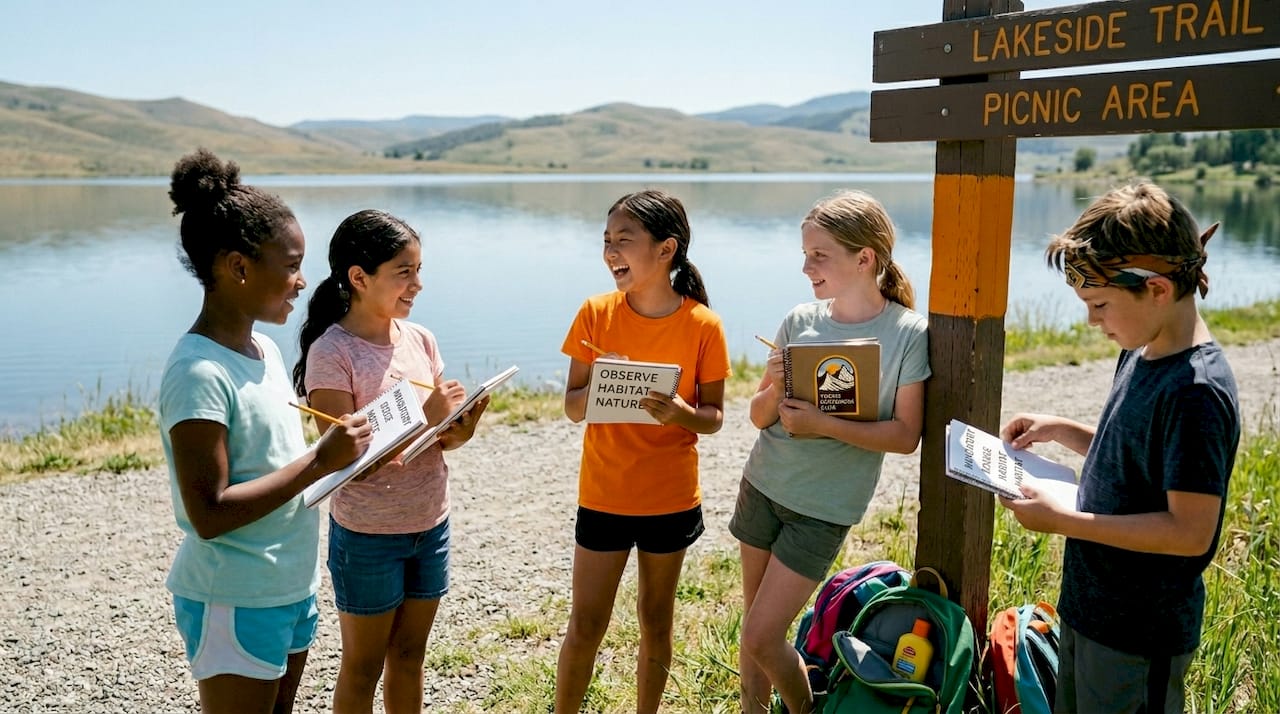
Camp-based language learning means acquiring a new language not through textbooks and tests, but through full immersion in a real, active environment where that language is used constantly. Instead of conjugating verbs on a worksheet, your child is negotiating who climbs first on a rock face, asking a teammate to pass the ball during a football game, or working out directions during a mountain trail hike — all in the target language.
The core elements that make this model distinct include:
- Real-world communication: Language is used to complete actual tasks, not practice drills.
- 24/7 exposure: Children hear and speak the language during meals, activities, downtime, and evening programs.
- Cultural immersion: Campers interact with peers from different countries, which builds cultural intelligence alongside language ability.
- Adventure as the vehicle: Activities like climbing, survival skills, mountain biking, and team sports create natural, high-engagement contexts where language becomes essential.
- Low-pressure environment: Mistakes happen in a safe, supportive setting, which reduces fear and accelerates learning.
This is fundamentally different from a school setting. In school, language is compartmentalized to a 50-minute block. At camp, it’s woven into every hour of every day. The global language benefits of bilingualism extend well beyond vacation — they include stronger cognitive flexibility, better career outcomes, and deeper cross-cultural empathy.
“Camp-based language immersion places children in authentic communicative situations that simply cannot be replicated in a traditional classroom. The stakes feel real, and that’s exactly what accelerates learning.”
Research backs this up powerfully. Immersion program effectiveness for children from varying backgrounds matches or exceeds traditional classroom immersion gains, which means camp works across the board — not just for children who already have an academic advantage. This equity finding is significant. It tells us that the immersive, social nature of camp levels the playing field in a way that structured classroom instruction rarely does.
Building camp confidence and skills is not just a nice side effect. It’s a central outcome of the model, and it’s deeply tied to how quickly children actually start using a new language out loud. Understanding overcoming language barriers becomes a lived experience, not a theoretical lesson, when your child has to communicate in French to complete a team challenge.
How camp experiences boost language skills and confidence
With the basics covered, it’s helpful to understand exactly how camp environments supercharge language learning compared to other settings.
The mechanism is actually simpler than most people expect. When children are engaged, having fun, and emotionally invested in an activity, their brains absorb language more effectively. There is no passive memorization happening. Every word learned is attached to a moment, a face, a success, or a laugh.
Here’s how the process typically unfolds over a camp session:
- Day one to three: Children orient to the new environment. They start picking up high-frequency words and phrases tied to daily routines — meal times, greetings, team names, activity instructions.
- Day four to seven: Confidence begins climbing. Campers start attempting sentences, making errors freely because peers and counselors respond with encouragement, not correction.
- Week two: Speaking fluency increases noticeably. Children initiate conversations, joke around in the new language, and navigate group activities with growing independence.
- End of session: Social communication skills, cultural comfort, and spoken fluency show the strongest gains. Many children report the language now “feels natural” in informal settings.
Research confirms that short-term language gains at camp are especially strong for speaking and confidence, which are exactly the skills that matter most for real-world use.
| Skill area | Camp gain (short-term) | Classroom gain (same period) |
|---|---|---|
| Spoken fluency | High | Moderate |
| Listening comprehension | High | Moderate |
| Social communication | Very high | Low to moderate |
| Cultural confidence | Very high | Low |
| Grammar accuracy | Moderate | High |
| Written expression | Low to moderate | High |
The table tells an important story. Camp isn’t trying to replace school — it’s filling in the gaps school consistently leaves wide open. Most children leave years of classroom language study unable to hold a real conversation. Camp gets them talking in days.
Adventures like global camp adventures don’t just add excitement. They create the exact high-stakes, high-reward situations where language sticks permanently. And for parents curious about the mechanics of it all, the science behind accelerating language learning at camp is well-documented and worth exploring.
Pro Tip: Before signing your child up, ask the camp how they integrate the target language into physical activities — not just classroom sessions. The answer will tell you whether the program is truly immersive or just a school with a campfire.
The challenges and nuances: retention, backgrounds, and skills
While growth at camp can be spectacular, parents should be aware of a few underlying complexities and how sustained gains are best supported.
The most important nuance to understand is this: camp creates a powerful but temporary immersion bubble. Once that bubble pops and your child returns home to an environment where the new language is rarely heard or spoken, skill retention becomes vulnerable.
What the research tells us about retention:
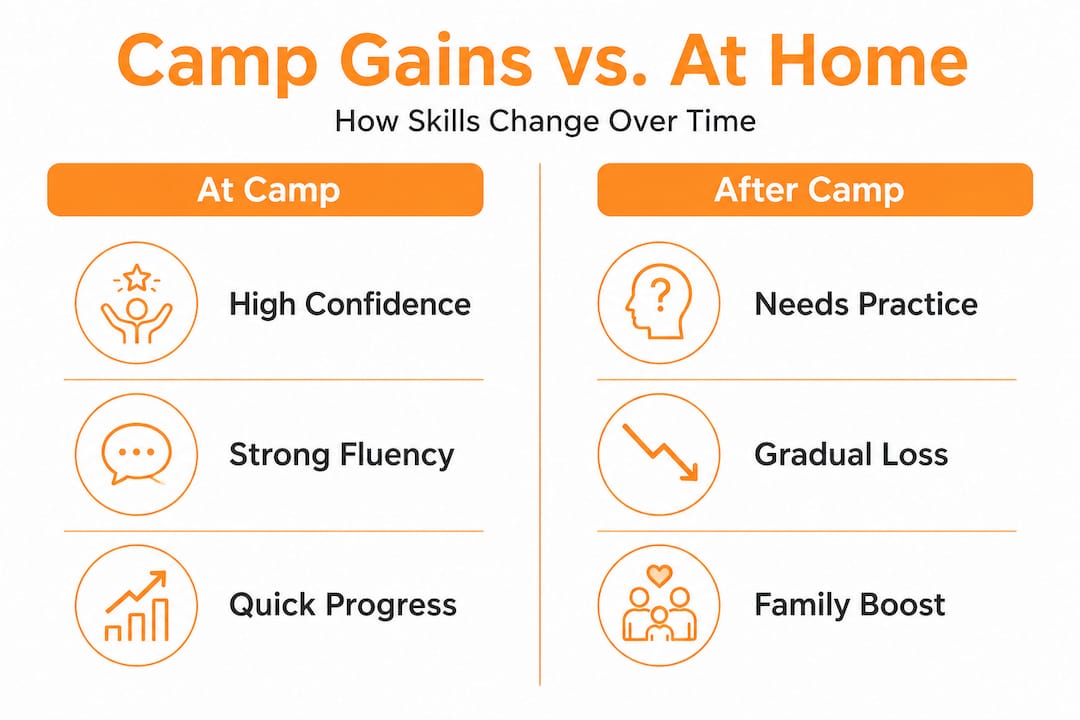
According to immersion retention studies, without a 90-day follow-up of continued language exposure, some gains fade — particularly written skills and grammar accuracy. Spoken confidence tends to hold longer, but even that can erode without reinforcement.
Here’s how different skill types hold up after camp ends:
- Speaking confidence: Holds relatively well if the child uses the language socially, even occasionally.
- Listening comprehension: Fades moderately without continued media exposure in the target language.
- Vocabulary: Drops significantly if not reinforced through reading, conversation, or media.
- Grammar and writing: Most vulnerable to regression without structured follow-up.
| Outcome type | At camp | 30 days post-camp | 90+ days post-camp (no follow-up) |
|---|---|---|---|
| Spoken confidence | Peaks | High | Moderate |
| Vocabulary | High | Moderate | Low |
| Grammar | Moderate | Moderate | Low |
| Cultural openness | Very high | High | High (more resilient) |
The good news is that diverse backgrounds see equal benefits during camp. Immersion program data shows children from working-class and ethnic minority families gain just as much from immersion as their peers from different socioeconomic backgrounds. Camp is a genuine equalizer when it comes to language growth.
Understanding bilingual camp learning speed also helps parents set realistic expectations — it’s fast, but it’s not magic. The gains are real and meaningful, but they require support to last. For families exploring additional options, understanding language learning abroad as a broader strategy can help you design a multi-year plan for bilingualism, not just a one-summer sprint.
Stat to remember: Children who receive continued language exposure within 90 days of camp retain significantly more vocabulary and spoken fluency than those who don’t. This single variable may matter more than the camp itself.
Maximizing the impact: What parents can do before and after camp
Knowing the hurdles, what can parents do to help their child get the most from a camp language experience — and keep those benefits alive after returning home?
The answer involves deliberate action on both ends of the camp experience. Most parents think their job is done once they’ve registered their child and dropped them off. In reality, the real work for families happens before the first day and after the last.
Before camp:
- Build excitement about the language. Watch a fun movie in French or English together. Point out that this is the language your child will be using at camp. Make it feel like a superpower, not a homework assignment.
- Introduce a few key phrases. You don’t need to teach grammar. Simple greetings, numbers, and food words give your child an immediate confidence boost on arrival.
- Set a personal language goal. Ask your child: “What’s one thing you want to be able to say by the time you come home?” This gives them ownership of their learning.
- Encourage open-mindedness about making mistakes. Normalize errors as part of learning. Children who fear being wrong speak less, which means they learn less.
- Read about Switzerland or the camp’s home region. Cultural curiosity primes children to engage more deeply with international peers. Check out tips for preparing for camp to cover all the practical angles too.
After camp:
- Organize a weekly video call with a camp friend. Social bonds formed at camp are powerful motivators. If your child stays connected with a friend who speaks the target language, language practice becomes a pleasure, not a chore.
- Switch one streaming show to the new language. One episode a week in French or English adds up fast. It’s low-effort and surprisingly effective for maintaining listening skills.
- Find a local language club or online program. Many cities have conversation clubs for kids. Virtual meetups are another great option.
- Plan the 90-day follow-up deliberately. Research confirms that retention is at risk without support or additional immersion within 90 days of camp. Mark that window on your calendar and treat it as seriously as the camp itself.
Pro Tip: Create a small “language wall” at home where your child posts new words they want to remember. Seeing them every day — even without actively studying them — reinforces vocabulary retention through what researchers call “ambient exposure.”
Why focusing on confidence beats grammar drills for lifelong language success
Stepping back, there’s a deeper lesson from years of seeing children thrive at language camps, and it’s not just about verb conjugations.
The children who leave camp and go on to become genuinely bilingual adults are rarely the ones who scored highest on grammar tests. They’re the ones who left camp willing to try. Willing to sound silly. Willing to stumble through a sentence in front of a group and laugh about it afterward. That willingness — that specific emotional resilience toward language — is the most valuable outcome camp produces, and it’s almost impossible to teach in a classroom.
Grammar can be corrected. Accent can be refined. Vocabulary can be expanded through reading. But the fear of speaking, once it becomes deeply ingrained in a child’s relationship with a language, is genuinely hard to undo. Many adults who studied a language for years in school still freeze the moment a native speaker walks toward them. Camp breaks that freeze response early, when the brain is still elastic and social belonging is the most powerful motivator a child has.
What camp does brilliantly is make speaking feel like play rather than performance. When a child is mid-rappel down a cliff face and needs to communicate with their partner, they’re not thinking about whether their accent is perfect. They’re focused on connection. That’s the state in which language truly sticks — when it’s emotionally meaningful, socially necessary, and low on self-consciousness.
The experiential learning benefits that come from an outdoor, adventure-based program aren’t just about physical skills. They build the psychological architecture that makes lifelong language learning possible. A child who climbs a mountain in a language they barely knew three weeks ago carries something back home that no workbook could ever give them.
We believe this is the true ROI of a language camp: not the vocabulary count, not the test scores, but the child who now sees themselves as someone who can speak another language. That identity shift is everything.
Ready to unlock your child’s bilingual adventure?
If your child deserves more than textbook exercises and fill-in-the-blank worksheets, a camp-based language experience in Switzerland could be the turning point that changes how they see themselves as a communicator and as a global citizen.
At The Young Explorers Club, we’ve designed immersive programs that combine genuine outdoor adventure with bilingual English and French environments, giving children the real-world language exposure that schools simply can’t provide. Whether your child is brand new to a second language or looking to level up their skills through activity-based learning, we have a program that fits. Explore our top-rated Swiss summer camps or learn more about specialized German language camps for an even wider bilingual experience. Join our thriving international camp community and give your child a summer they’ll remember and skills they’ll use for life.
Frequently asked questions
How quickly do children improve their language skills at camp?
Campers often show noticeable improvements in speaking and confidence within just a few days, with speaking gains being the strongest and most immediate outcome of short-term immersion programs.
Will my child lose their new skills after camp?
Skill retention peaks when families provide continued exposure in the first 90 days at home, since retention fades significantly without follow-up immersion or practice opportunities.
Does camp-based language learning help children from all backgrounds equally?
Yes, evidence shows that working-class and ethnic minority children gain just as much as their peers, with diverse background results matching traditional immersion outcomes across all social class groups.
What types of language skills improve most at camp?
Speaking and social communication improve fastest during camp, while grammar and writing develop more slowly and require continued structured practice after the camp session ends.
Recommended
- Why Language Camps Boost Kids’ Skills And Confidence
- Summer Camp Switzerland | International Camp And Travel
- Como Os Campos De Férias Bilingues Ajudam As Crianças A Aprender Mais Depressa (fr/en) | Young Explorers Club Switzerland
- Building Confidence Through Adventure Activities | Young Explorers Club Switzerland
- Essential Camping Tips for Beginners: Master Your Adventure