
Youth development: A parent’s guide to growth-focused camps
Discover what youth development really means. Learn how growth-focused camps empower children with skills and confidence for a brighter future.
TL;DR:
- Positive Youth Development (PYD) emphasizes building young people’s assets like skills, relationships, and identity, rather than fixing problems. Effective camps foster the 5Cs—Competence, Confidence, Connection, Character, and Caring—through experiential learning and structured reflection. International adventure camps uniquely promote lasting growth by providing supportive, multicultural environments that encourage genuine challenge and self-discovery.
Most parents assume youth development means stepping in when something goes wrong — addressing bad behavior, low grades, or social anxiety. That assumption misses the bigger picture entirely. Modern youth development, especially the approach known as Positive Youth Development (PYD), is a strengths-based approach that focuses on building your child’s assets — their skills, relationships, and sense of identity — rather than patching up weaknesses. Adventure camps, particularly international ones, are among the most effective environments for putting these principles into practice.
Table of Contents
- Understanding youth development: The essentials
- The 5Cs model: Foundations for thriving youth
- How do camps nurture youth development? Methodologies that matter
- Complexities and cultural perspectives in youth development
- Beyond prevention: Why PYD is redefining outcomes for teens
- Our take: Why adventure camps are uniquely powerful for youth development
- Ready to help your child grow through adventure?
- Frequently asked questions
Key Takeaways
| Point | Details |
|---|---|
| Strengths-based approach | Youth development builds assets like skills, relationships, and confidence, not just fixing problems. |
| 5Cs framework impact | Competence, confidence, connection, character, and caring form the foundation for thriving youth. |
| Adventure camps accelerate growth | Experiential learning and challenge-based activities in camps drive deeper social-emotional learning and resilience. |
| Cultural adaptation matters | Top camp programs honor diverse backgrounds, making growth accessible to every child. |
| Proven methodologies | Safe environments, supportive mentors, and reflection cycles power positive youth development. |
Understanding youth development: The essentials
Youth development is a broad term, but at its core it describes the lifelong process through which young people acquire the knowledge, attitudes, and skills they need to become healthy, contributing members of society. The traditional “deficit model” (treating youth as problems to be solved) dominated thinking for decades. Programs built on this model focused on keeping kids away from drugs, gangs, and poor decisions. They measured success by what did not happen.
Positive Youth Development flips this logic completely. Instead of asking “What is wrong with this kid?”, PYD asks “What does this kid need to thrive?” The focus shifts from risk reduction to asset building. According to this strengths-based framework, the goal is to grow the skills, relationships, and identity that allow young people to live full, purposeful lives.
“The most powerful shift in youth work over the last 30 years has been moving from ‘what’s wrong with young people’ to ‘what do young people need to grow.’ That distinction changes everything about program design.” — Youth development researcher perspective
Key assets PYD programs seek to build include:
- Social skills, such as cooperation, empathy, and conflict resolution
- Academic and physical competence across multiple domains
- A stable sense of identity, including cultural belonging and personal values
- Positive relationships with peers, caring adults, and community
- A sense of contribution, feeling that one’s actions matter to others
These assets do not develop in isolation. They grow best in rich, supportive environments — exactly the kind that well-designed adventure camps are built to create.
The 5Cs model: Foundations for thriving youth
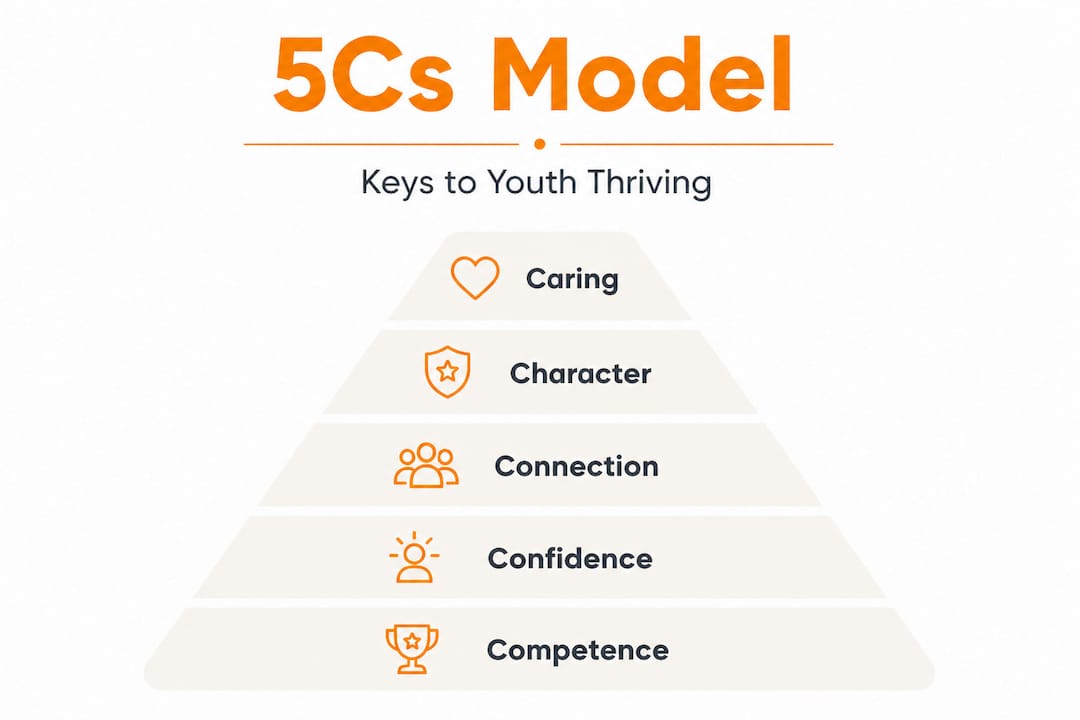
The most widely used framework in PYD research is the 5Cs model: Competence, Confidence, Connection, Character, and Caring. When all five are present together, researchers observe a sixth C emerge naturally: Contribution. Each of these pillars maps directly onto the experiences a great camp delivers.
| The C | What it means | How a camp fosters it |
|---|---|---|
| Competence | Skills in social, academic, and physical domains | Mastering a new sport or outdoor skill like rock climbing |
| Confidence | A positive sense of self-worth and identity | Completing a challenging hike independently for the first time |
| Connection | Positive bonds with peers, adults, and community | Building global friendships with campers from other countries |
| Character | Integrity, moral standards, and personal values | Navigating group decisions fairly during team challenges |
| Caring | Empathy and compassion for others | Supporting a struggling teammate on a ropes course |
| Contribution | Giving back and feeling one’s actions matter | Leading a group activity or mentoring a younger camper |
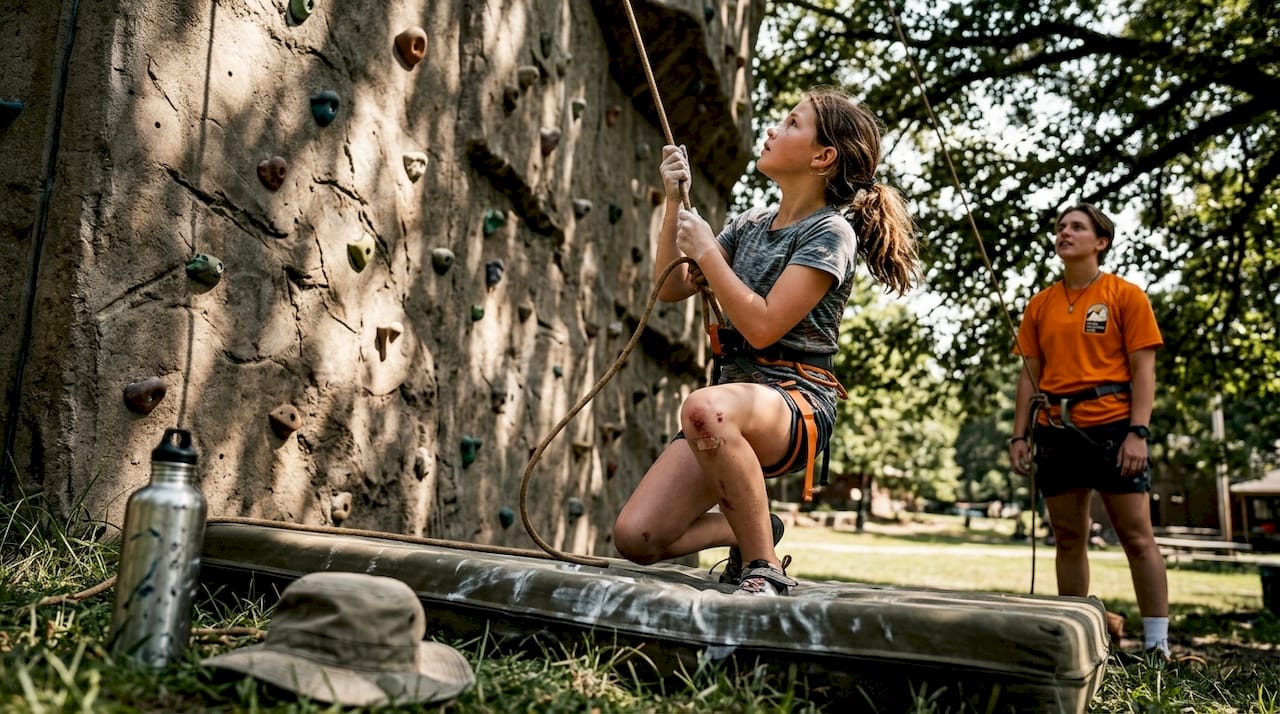
Let’s bring these to life with real camp scenarios. A 13-year-old who has never rock climbed before might fail on her first attempt at the wall. The camp experience does not minimize that failure — it uses it. A trained facilitator helps her reflect on what happened, identify what she can adjust, and try again. That cycle builds Competence and Confidence simultaneously.
Connection takes on a different shape at international camps. When a child from Canada works alongside a child from Germany and a child from Brazil to navigate a wilderness challenge, the friendships formed are unlike anything available at home. Research on fostering team spirit without competitive pressure shows these cross-cultural bonds are among the most durable outcomes of camp experiences.
Character and Caring are less visible but equally important. Group living situations create daily moments where children must choose fairness, honesty, and empathy. A child who takes the last portion of food at dinner without thinking is gently guided toward considering others. These small moments, repeated daily over weeks, produce lasting behavioral shifts.
Pro Tip: When evaluating any camp, ask specifically how staff facilitate reflection after activities. Camps that rush from one activity to the next without structured reflection miss half the developmental opportunity.
How do camps nurture youth development? Methodologies that matter
Understanding the framework is just the start — how do real-world camps actually put these principles into action? The answer comes down to specific, evidence-backed methodologies that separate developmental camps from recreational-only programs.
The foundational approach is experiential learning, a cycle of experience, reflection, conceptualization, and application. A child attempts something challenging (experience), talks through what happened (reflection), understands why it worked or did not (concept), then applies that insight to the next challenge. This experiential learning cycle is not just a teaching tool — it is the engine of personal growth.
Here are four core methodologies found in high-quality camps:
- Challenge and reflection cycles: Structured debriefs after every significant activity, not just at the end of the day
- Caring adult mentors: Low youth-to-counselor ratios ensure every child has at least one trusted adult relationship
- Peer collaboration: Activities designed so that no single child can succeed alone, requiring genuine teamwork
- Goal-setting practices: Children set personal goals at the start of the session and track progress throughout
The data on outcomes is compelling. Adventure programs that include structured reflection outperform traditional programs in social-emotional learning and resilience measures. Confidence and Connection specifically emerge as the two key mediators for mental health improvements after camp.
| Methodology | Primary outcome | Secondary outcome |
|---|---|---|
| Experiential learning cycle | Resilience | Critical thinking |
| Caring adult mentorship | Confidence | Sense of belonging |
| Peer collaboration | Teamwork | Empathy |
| Challenge + reflection | Self-efficacy | Identity formation |
| Goal-setting | Motivation | Accountability |
The environment itself matters too. Creating a safe space for personal growth does not mean removing all discomfort — it means ensuring every child feels emotionally secure enough to take real risks. A well-run camp builds what developmental psychologists call “optimal challenge”: the sweet spot where a task is hard enough to push growth but supported enough that failure does not become destructive.
Pro Tip: Balance matters in intense activity programs. The role of rest days in recovery and emotional processing is often overlooked — children need downtime to integrate new experiences, not just more activities stacked on top.
Complexities and cultural perspectives in youth development
While methods are key, it is important to consider the layers of nuance — especially across global and multicultural settings. Not every model fits every child, and honest youth development practitioners acknowledge this openly.
The 5Cs model itself is still being debated in academic circles. Researchers argue about whether the five Cs represent truly independent factors or whether they cluster differently depending on cultural context. Some cultures emphasize collective identity over individual confidence, meaning a Western-designed confidence-building exercise might feel alienating to a child from a community-oriented background. Frameworks like the Māori concept of Mana Taiohi demonstrate that youth flourishing looks different across cultural traditions and requires culturally sensitive design.
There are also developmental timeline concerns. Competence and Confidence, two of the strongest predictors of positive outcomes, can actually decline in late adolescence if the program does not provide adequate challenge and support as youth mature. A 10-year-old and a 16-year-old need very different types of growth experiences, and camps that apply one-size-fits-all programming often see diminishing returns with older teens.
For international camps specifically, this means:
- Culturally adaptive facilitation: Staff trained to recognize and honor diverse communication styles and values
- Flexible programming: Activities that allow multiple paths to success, not just one culturally dominant definition of achievement
- Inclusive community norms: Group agreements co-created by campers that reflect the diversity of the group
- Language accessibility: Bilingual or multilingual environments that reduce the social disadvantage of language barriers
“Thriving emerges from the interaction between a young person’s strengths and the resources available in their context. Camps that provide both genuine challenge and genuine support — calibrated to the individual — unlock developmental outcomes that school settings rarely can.” — Relational systems theory perspective, Journal of Youth Development
The role of encouraging healthy peer relationships across cultural differences is one of the most undervalued outcomes of international camps. Children who learn to form meaningful friendships with peers unlike themselves develop a social flexibility that serves them for life.
Beyond prevention: Why PYD is redefining outcomes for teens
Understanding complexity helps parents choose wisely — now let’s re-examine what truly makes for positive outcomes in today’s world. The clearest conclusion from decades of research is that the old prevention-first model simply does not produce the same results as a strengths-first approach.
PYD rejects the deficit focus entirely, emphasizing thriving through alignment between youth strengths and their environments. This is not just philosophical — it shows up in outcomes data. Programs designed around asset building produce stronger social-emotional learning gains, higher self-reported well-being, and more durable confidence improvements than programs built around preventing negative behaviors.
Key benefits of PYD-aligned adventure programs include:
- Measurable improvements in self-efficacy after just two to four weeks of intensive programming
- Stronger peer relationships that persist after camp ends
- Greater willingness to attempt new challenges in school and home environments
- Reduced anxiety around social situations, particularly in children who attended international camps with diverse peer groups
It is worth noting that critiques of PYD exist. Some researchers point to gaps in long-term efficacy data, particularly in Sport for Development (SfD) contexts where PYD principles are applied without intentional program integration. The key variable, consistently, is reflection. Adventure programs that encourage kids to try new things without structured debriefing produce shallower outcomes than those that treat reflection as non-negotiable.
The research also confirms that adventure formats specifically outperform traditional programs in building the Confidence and Connection dimensions that most powerfully predict long-term mental health. That is not a minor finding. It means the format of the program — outdoors, physical, relational, challenging — genuinely matters for the depth of growth.
A camp as a safe growth space is most effective when children experience real stakes in a genuinely supportive environment. That combination is rare in everyday life and almost impossible to replicate inside a classroom.
Pro Tip: When reading camp marketing materials, look for explicit language around reflection, facilitation, and personal growth — not just a list of cool activities. The activities are the vehicle; the facilitation is what drives the development.
Our take: Why adventure camps are uniquely powerful for youth development
After working with young people across dozens of cohorts, one pattern stands out clearly: typical afterschool programs struggle to deliver the same depth of transformation found in well-designed international, challenge-based camps. The reason is not the activities themselves — it is the totality of the environment.
In an afterschool program, a child goes home at 3:30 pm. Whatever breakthrough they had in the last hour gets absorbed back into the familiar routines of home, school, and screens. At a residential adventure camp, that breakthrough is followed by dinner with the same peers who witnessed it, a reflective session with a trusted counselor, a night of shared space, and then a new challenge the next morning that builds on the previous day’s growth. The developmental gains compound in a way that simply does not happen in one-hour sessions.
We have seen it repeatedly: the child who could not speak in group settings during day one of a two-week program leading the campfire discussion by day twelve. Not because someone told her to, but because the environment created the conditions for that growth to happen naturally. Real adventure — supported by thoughtful facilitation and genuine peer connection — activates all five Cs in a compressed timeframe that longer, lower-intensity programs rarely match.
The most lasting change we observe happens when youth are gently pushed outside their comfort zones while surrounded by supportive peers and caring adults who know how to hold space for growth. Our adventure education guide explores exactly how this process works and what to look for when choosing a program that delivers on these promises.
Ready to help your child grow through adventure?
If you’re inspired to put these principles into action, here’s how to take the next step.
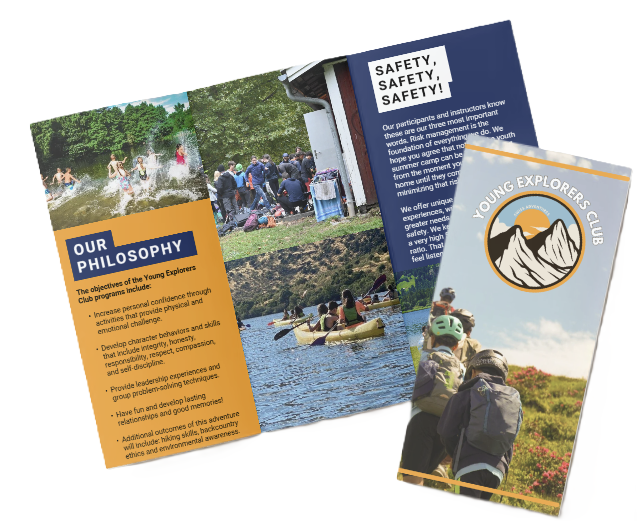
At Young Explorers Club, our international summer camps in Switzerland are designed from the ground up around the PYD framework and the 5Cs model. Every activity, every facilitated reflection session, and every cross-cultural friendship opportunity is intentional. We are not just offering a fun summer — we are offering a structured growth environment that has been shown to produce real, lasting results.
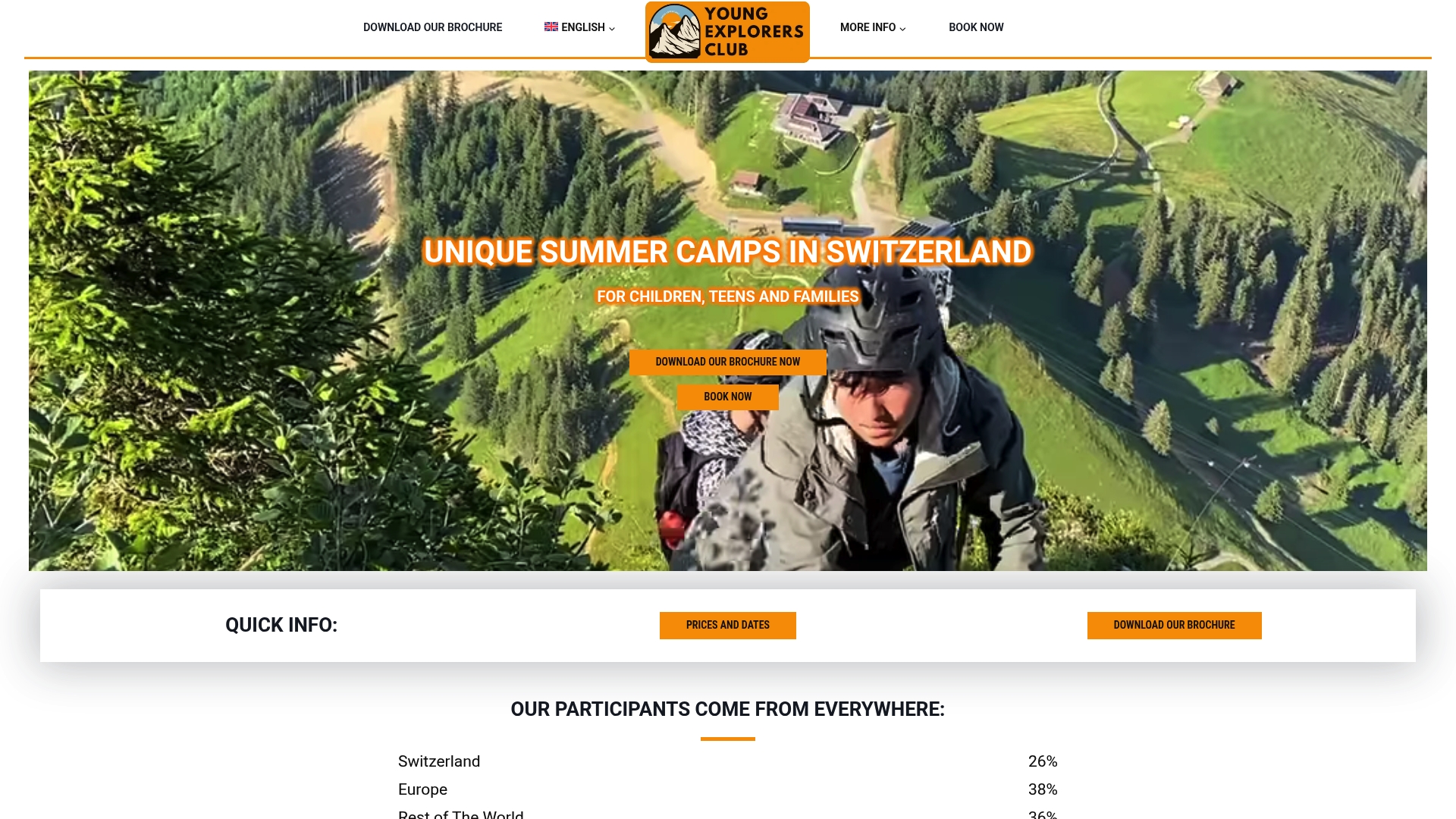
Our global camp community brings together children and teens from dozens of countries, creating exactly the kind of diverse peer environment where Connection and Caring develop most powerfully. And our bilingual English-French setting adds an extra layer of cognitive and cultural flexibility that supports identity development across every dimension. Explore our programs and resources on experiential learning for kids to see how we translate research into real experiences.
Frequently asked questions
How does youth development differ from traditional discipline or prevention programs?
Youth development focuses on building strengths and assets in young people rather than simply preventing problems. The PYD approach grows skills, relationships, and identity as the primary goal, not just reducing risky behavior.
What practical benefits can my child gain from attending an adventure camp?
Adventure camps using PYD frameworks build confidence, connection, resilience, and social-emotional skills. Research shows these programs outperform traditional settings in social-emotional learning when structured reflection is included.
How can international camps support youth from different cultures?
Top programs use culturally adaptive facilitation and inclusive community norms to ensure every child can thrive. Cultural adaptations are necessary because models like the 5Cs play out differently across cultural traditions and need to be applied with sensitivity.
Are there any downsides or criticisms to the PYD framework?
Some researchers note limited long-term efficacy data in certain program settings, particularly where PYD principles are applied without intentional facilitation. PYD critics point to the need for tighter integration between the framework and specific program activities to see consistent results.
How is progress measured in youth development at camps?
Growth is tracked through observable changes in social confidence, teamwork, self-advocacy, and how a child responds to setbacks over the course of the program. Counselors use structured observation, camper self-reflection journals, and end-of-session conversations to capture development that standardized tests would miss entirely.
Recommended
- What Is A Personal Growth Camp? Benefits And Activities
- Why Camps Are A Safe Space For Personal Growth | Young Explorers Club Switzerland
- What Is Youth Adventure Tourism? A Parent’s Guide To Camps
- How Mentors At Youth Camps Shape Kids For Life
- Group activities that boost mental well-being for all ages | Level Up Spot
- How Can You Start a Profitable Martial Arts School Summer Camp