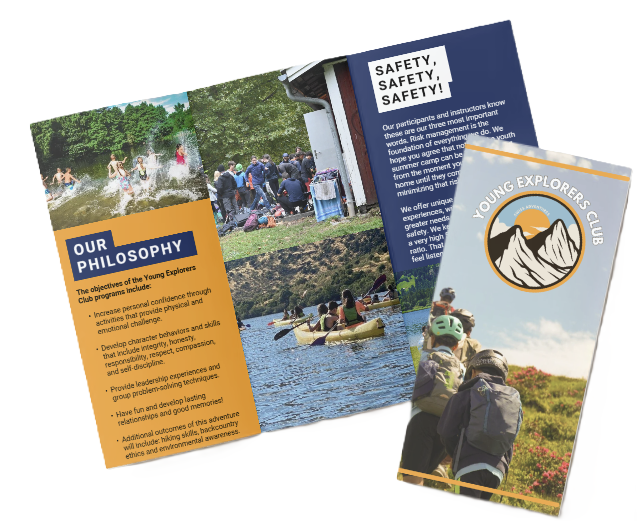
What is youth adventure tourism? A parent’s guide to camps
Discover what youth adventure tourism really means for kids aged 8-17 and how Swiss summer camps combine adventure, teamwork, and language immersion for real personal growth.
Most parents picture summer camp as a break from school, a chance for kids to swim, make friends, and come home with a few bug bites. That picture is incomplete. Youth adventure tourism is a structured form of travel and outdoor education designed specifically for young people aged 8 to 17, blending physical challenge, cultural exchange, and language immersion into a single experience. Swiss summer camps sit at the center of this movement, offering programs that build real skills alongside real adventures. If you are weighing options for your child this summer, this guide will help you understand exactly what these programs offer and why they matter.
Table of Contents
- Defining youth adventure tourism: More than just thrills
- Core features of Swiss adventure camps for youth
- Personal growth and measurable benefits for children
- Safety, suitability, and inclusivity: What parents need to know
- How to choose and prepare for a Swiss youth adventure camp
- Explore leading Swiss youth adventure camps
- Frequently asked questions
Key Takeaways
| Point | Details |
|---|---|
| Growth beyond adventure | Youth adventure tourism in Switzerland fosters confidence, teamwork, and personal growth alongside outdoor fun. |
| Safety is a priority | Swiss camps uphold high safety standards with certified staff and structured risk management. |
| Preparation pays off | Booking early and understanding camp features helps ensure the best experience for your child. |
| Benefits stretch beyond camp | Children gain lasting skills in language, leadership, and wellbeing thanks to research-based camp programs. |
Defining youth adventure tourism: More than just thrills
To understand what sets these programs apart, it helps to start with a clear definition. Youth adventure tourism is tailored for ages 8 to 17, with a focus on physical activity, interaction with nature, and cultural or language immersion. That is a very different thing from a family vacation or a school field trip.
The key distinction is structure. These programs are intentionally designed to push young people just beyond their comfort zone in a safe, supervised environment. The challenge is the point. When a 12-year-old navigates a mountain trail with a small team, she is not just getting exercise. She is practicing decision-making, communication, and trust.
Swiss adventure camps deliver this through a combination of outdoor activities, team projects, and language exposure. Here is what a well-designed program typically includes:
- Guided outdoor challenges such as hiking, climbing, and mountain biking
- Team-based problem solving that builds communication and leadership
- Language immersion in English, French, or German throughout daily life
- Cultural exchange with peers from different countries
- Reflection time to process experiences and set personal goals
“Adventure education is not about the activity itself. It is about what the activity reveals about the participant and what the participant learns to do differently as a result.”
This philosophy is what separates youth adventure tourism from ordinary recreation. The mountains are the classroom. The team is the curriculum.
Core features of Swiss adventure camps for youth
Switzerland is not an accidental choice for these programs. The landscape, the multilingual culture, and the country’s long tradition of outdoor education make it one of the best places in the world to run a youth adventure camp. Swiss camps feature daily activities such as hiking, climbing, and biking, with sessions running from one to four weeks and bilingual immersion options built into the schedule.
Here is a comparison of what different session lengths typically offer:
| Session length | Best for | Key focus |
|---|---|---|
| 1 week | First-time campers | Orientation, core activities |
| 2 weeks | Returning campers | Skill progression, teamwork |
| 3 to 4 weeks | Teens seeking deep growth | Leadership, language fluency, independence |
A typical day at a Swiss adventure camp moves through several phases. The morning usually starts with a team activity outdoors, such as a guided hike or a climbing session. The afternoon shifts to a structured team project or language class. Evenings bring group reflection, free time, and social activities with peers from around the world.
Here is a numbered breakdown of how a well-run Swiss camp structures the experience:
- Morning adventure block with certified outdoor instructors
- Midday language or cultural activity in small groups
- Afternoon team challenge focused on collaboration and problem solving
- Evening reflection to reinforce learning and build self-awareness
- Weekend excursions to Swiss towns, lakes, or mountain regions
Many families also explore French-speaking summer camps as a way to add a language goal to the adventure experience. For parents curious about how camps divide structured time and free time, the balance between structure and free time is a topic worth reading about before you book.
Pro Tip: If your child has a specific sport or interest, look for camps that offer specialty tracks. Some Swiss programs include gymnastics camp options alongside their core adventure curriculum, which helps kids stay engaged throughout the session.
Personal growth and measurable benefits for children
Parents often ask: what does my child actually walk away with? The answer is more concrete than most people expect.
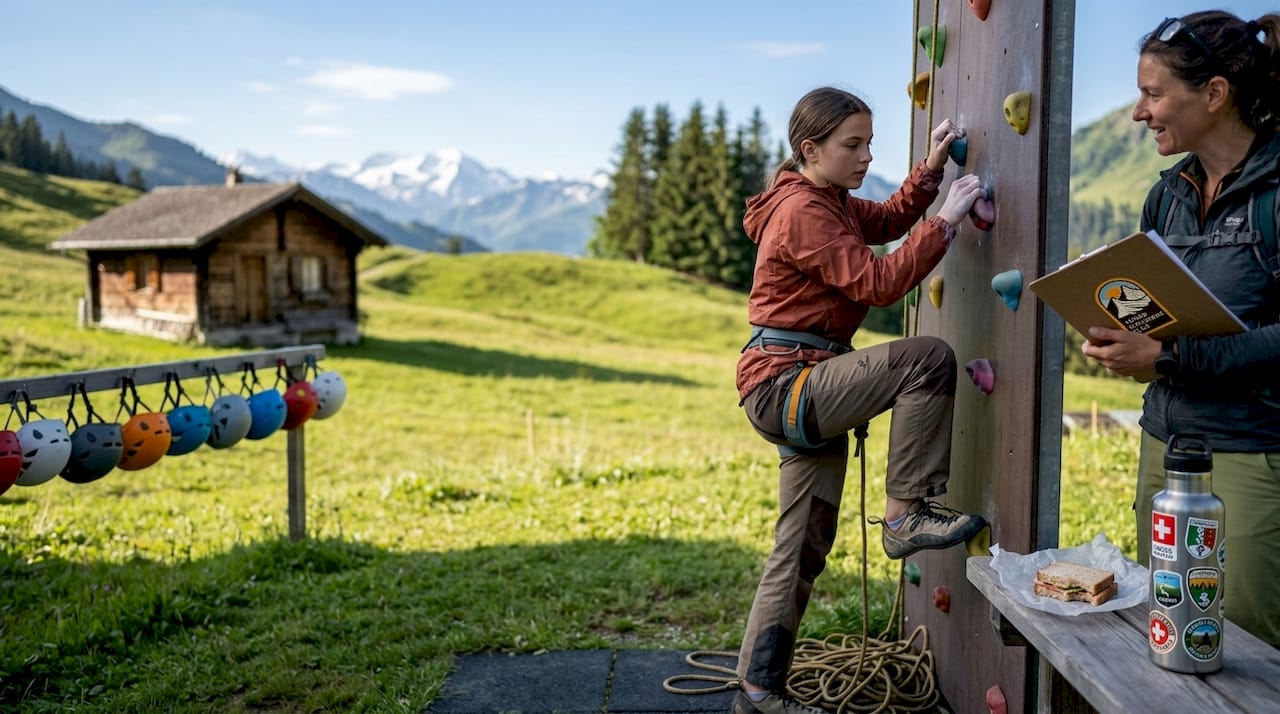
A systematic review of 18 studies found that adventure programs deliver positive physical, social, and emotional outcomes for youth. These are not soft impressions. Researchers measured them.
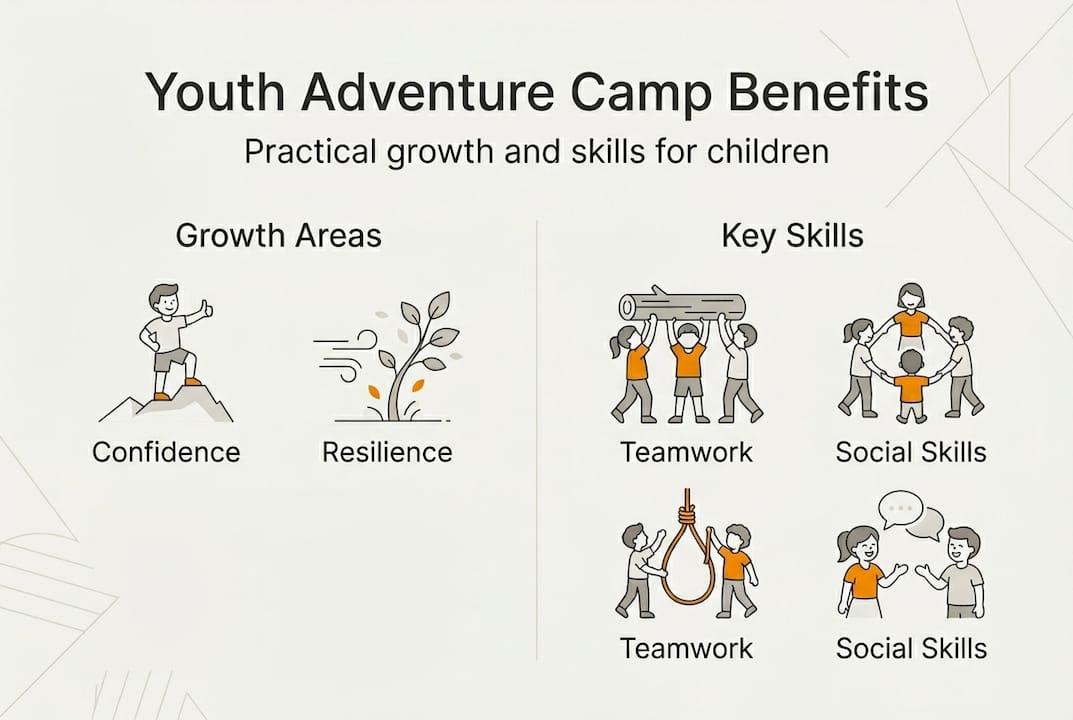
One quasi-experimental study found that wellbeing scores improved by +12.73 points after participation in an adventure education program, a result that was statistically significant at p less than 0.001. That is a meaningful shift in how young people feel about themselves and their relationships.
Here is a summary of the core benefits researchers have documented:
| Benefit area | What it looks like in practice |
|---|---|
| Self-confidence | Willingness to try new challenges, speak up in groups |
| Resilience | Recovering from setbacks without giving up |
| Social skills | Forming friendships across language and cultural barriers |
| Physical fitness | Improved stamina, coordination, and outdoor competence |
| Emotional regulation | Managing frustration and anxiety in unfamiliar situations |
Beyond the data, children often return from these programs with something harder to measure: a sense of what they are capable of. That shift in self-perception tends to carry into school, friendships, and family life.
For parents who want to go deeper on the research, the mental health benefits of outdoor activities for kids is a strong starting point. You can also read more about building confidence through adventure to understand the specific mechanisms at work.
Safety, suitability, and inclusivity: What parents need to know
Safety is the first question most parents ask, and it should be. The good news is that reputable Swiss camps operate under rigorous standards.
Swiss camps require staff certifications, emergency plans, and low staff-to-child ratios, typically between 1:6 and 1:10, with over 90% of staff holding relevant certifications. That level of oversight is not common everywhere, and it is one of the reasons Switzerland has earned a strong reputation in youth outdoor education.
It is also worth knowing that soft adventure is the most common format for youth camps, prioritized for inclusivity and beginner accessibility. Soft adventure means activities like hiking, kayaking, and low-ropes courses rather than extreme climbing or whitewater rapids. Most children, including those with no prior outdoor experience, are well-suited for these programs.
Here is what to look for when evaluating a camp’s safety standards:
- Staff certifications in first aid, outdoor leadership, and child supervision
- Clear emergency protocols and communication systems for parents
- Low camper-to-staff ratios so every child gets individual attention
- Activity progression that starts easy and builds gradually
- Inclusive design that accommodates different fitness levels and needs
Pro Tip: Ask the camp directly about their incident reporting process. A well-run program will have a clear, transparent answer. If they hesitate or give a vague response, that tells you something important.
For a detailed look at what to check before enrolling, the guide on Swiss camp safety standards covers the key criteria. If your child is on the younger end of the age range, there are also dedicated options for younger campers worth exploring.
How to choose and prepare for a Swiss youth adventure camp
Choosing the right camp takes more than a quick search. Here is a practical step-by-step approach to making a confident decision.
- Start early. Book between January and April for the widest selection. Top Swiss camps fill quickly, and prices typically range from CHF 2,500 to CHF 9,000 per week including full board.
- Check accreditations. Look for camps with certified staff, transparent safety records, and clear program descriptions.
- Match the program to your child. Consider age, fitness level, language goals, and whether your child prefers team sports, nature exploration, or creative challenges.
- Talk to your child before booking. Involve them in the decision. A child who feels ownership over the choice will arrive more motivated.
- Prepare together. Review the packing list, discuss what to expect, and talk through any worries they have about being away from home.
Before departure, make sure your child has the right gear and a realistic picture of what daily life at camp looks like. The guide on preparing for camp in Switzerland walks through everything from clothing to mindset.
A few things to pack that parents often forget:
- A small journal for evening reflections
- Layers for mountain weather, which changes fast
- A reusable water bottle for daily hikes
- Comfort items for younger campers adjusting to being away from home
Pro Tip: Have a short conversation with your child about one specific goal they want to achieve at camp, whether that is making a friend from another country, learning ten new French words, or reaching the top of a climbing wall. A concrete goal gives them something to work toward from day one.
Explore leading Swiss youth adventure camps
Once you know what to look for and how to prepare, the next step is finding the right program for your child’s specific goals and personality.
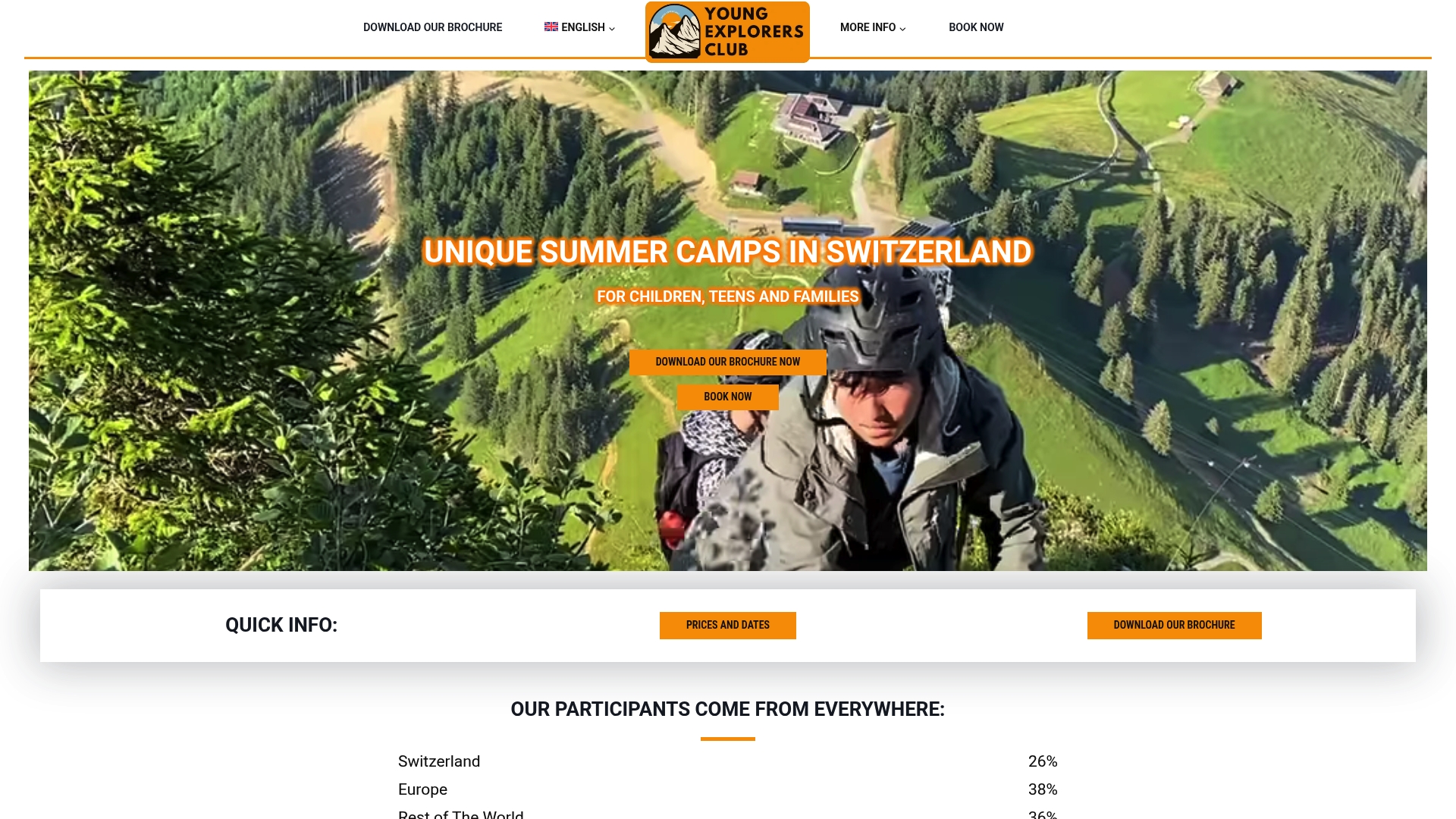
Young Explorers Club offers certified, safety-focused adventure camps in Switzerland designed for children and teens aged 8 to 17. Programs combine outdoor challenges with personal development, teamwork, and language immersion in a supportive international environment. Whether your child wants to learn German at summer camp or connect with peers from around the world through an international summer camp community, there is a program built for that goal. Spots for summer 2026 are filling up, so now is the right time to explore your options, download the brochure, and reach out to the team with any questions.
Frequently asked questions
What age range is best suited for youth adventure tourism in Switzerland?
Swiss adventure programs are designed for children aged 8 to 17, with activities and group structures adjusted to match each age group’s physical and emotional development.
Are Swiss adventure camps safe for children with no prior outdoor experience?
Yes. Soft adventure is the most common format at youth camps, meaning activities are accessible, well-supervised, and designed to build skills gradually from the ground up.
What measurable benefits do children gain from youth adventure tourism?
Research shows children gain confidence, resilience, and improved social skills, with one study recording wellbeing score improvements of +12.73 points after completing an adventure education program.
How soon should I book a Swiss summer adventure camp?
Book between January and April to secure your preferred session and dates, as the most popular Swiss camps fill up months in advance.
Do Swiss youth adventure camps offer language immersion options?
Yes. Many Swiss camps provide bilingual immersion programs in English, French, or German, woven into daily activities rather than delivered as separate classroom lessons.