Exploring Swiss Wildlife: A Guide For Young Explorers
Family guide to Switzerland wildlife: quick alpine-to-plateau habitats, kid-safe outings, species ID, seasonal tips & simple citizen science.
Family-friendly wildlife guide: Switzerland’s compressed elevation and habitats
I study Switzerland‘s sharp elevation span, from about 193 m valleys to 4,634 m peaks. That compression packs distinct habitats—Plateau, subalpine forest, treeline, alpine meadow and high peaks—into short travel times, so families can reach varied wildlife without long transfers. This guide focuses on kid-friendly habitats and flagship species (marmots, Alpine ibex, chamois, waterbirds). It also includes clear safety and gear advice, seasonal timing, and simple citizen-science actions families can use to observe and support conservation.
Key takeaways
- Short outings: Switzerland’s tight vertical and habitat gradient (Plateau, Jura, Alps) lets families do quick trips that sample different ecosystems and wildlife.
- Habitat specialists: Flagship species stick to specific habitats: marmots, Alpine ibex and chamois in alpine meadows and cliffs; roe and red deer, foxes and badgers on plateaus and in forests; waterbirds and amphibians at lakes, rivers and wetlands.
- Prioritize safety and minimal disturbance: keep outings short, dress in layers, stay on marked trails, keep distance from wildlife, supervise pond activities, and carry binoculars, a field notebook and a basic first-aid kit.
- Record observations: capture core fields (species, count, date/time, GPS, habitat, photo) to support monitoring and restoration.
- Time activities to the season: spring migration and amphibian breeding; summer alpine flowers and active marmots; autumn migrations; winter tracking. Use short projects (BioBlitz, pond dipping, pollinator gardens) to engage children.
Kid-friendly habitats and what to look for
Plateau (lowlands and agricultural land)
The Plateau is easiest for quick family outings: low elevation, accessible trails and many parks. Look for roe deer, red deer at dawn/dusk, foxes near edges, and smaller mammals and songbirds in hedgerows.
Subalpine forest and treeline
Subalpine forests are great for short walks under trees. Children enjoy searching for woodpeckers, signs of badgers and deer tracks. The treeline is an accessible place to watch the transition from forest to rocky alpine habitat.
Alpine meadows and cliffs
Alpine meadows are colorful in summer and where you can often spot marmots sunning on rocks, and higher up, Alpine ibex and chamois on cliffs. Keep children on trail edges and use binoculars to view animals at a safe distance.
Wetlands, lakes and rivers
Waterbodies support waterbirds and amphibians. Supervised pond-dipping lets kids find tadpoles and dragonfly larvae—always minimize handling and return organisms quickly to the water.
Flagship species — where and when to see them
- Marmots: alpine meadows, active in late spring–summer, often near burrow entrances.
- Alpine ibex and chamois: rocky slopes and cliffs, best seen from safe vantage points in summer and early autumn.
- Roe and red deer: forest edges and lower valleys, most visible at dawn/dusk and during rut in autumn.
- Waterbirds and amphibians: lakes, rivers and wetlands—spring is prime for migration and amphibian breeding.
Safety and gear (family basics)
Emphasize simplicity and preparedness. Keep outings short and comfortable for children.
- Clothing: dress in layers, waterproof outerwear, sturdy shoes or boots, hat and sun protection.
- Safety items: basic first-aid kit, whistle, small flashlight, and any necessary medications.
- Observation tools: binoculars (kid-sized or with strap), a simple field notebook and pencil, and a camera or phone for photos.
- Wildlife etiquette: stay on marked trails, do not feed wildlife, keep noise low, and maintain a respectful distance—use binoculars or zoom lenses for close views.
- Pond/stream safety: supervise children closely, don’t let them enter deep or fast water, and avoid slippery banks.
How to record and report observations
Keeping records turns fun outings into useful data for conservation. Use a simple checklist or phone app to capture the essentials.
- Species: common name (or photo for later ID).
- Count: number of individuals observed.
- Date/time: when the observation happened.
- Location: GPS coordinates or nearest place name.
- Habitat: short note (alpine meadow, wetland, forest edge).
- Photo: one image if possible—helpful for verification.
Submit records to local monitoring programs or use popular platforms when appropriate; even simple local park records help restoration planning.
Seasonal timing and easy family projects
Spring
Focus: migration, amphibian breeding, early flowers. Good activities: supervised pond dipping, frog- and toad-watching, and learning migrating bird calls.
Summer
Focus: alpine flowers and active marmots. Good activities: short hikes to alpine meadows, a BioBlitz (identify as many species as possible in a set time), and building a small pollinator garden at home.
Autumn
Focus: bird migration and deer rut. Good activities: dawn/dusk wildlife watching, leaf and seed identification, and documenting seasonal changes.
Winter
Focus: tracking mammals in snow and quiet winter birdwatching. Good activities: learning to identify tracks, short snowshoe walks, and photographing winter adaptations.
Simple citizen-science actions for families
- Mini BioBlitz: set a timer for 30–60 minutes and list as many species as you can in a small area.
- Pond dipping: use a small net, inspect briefly in a tray of water, identify common larvae and return them gently.
- Pollinator watch: count pollinators visiting flowers for 10 minutes and note the plant species.
- Photo logs: take photos of plants and animals and add brief notes—images help experts verify IDs later.
Final tips for family-friendly wildlife outings
Keep outings short, flexible and child-centered. Plan for regular breaks, bring snacks, and let children lead some discovery moments. Emphasize respect for nature—observe, record and leave no trace. With a little preparation, Switzerland’s compressed elevation and habitat diversity makes it easy for families to experience a wide range of wildlife in short, safe trips that build curiosity and conservation values.
Why Swiss Wildlife Is Perfect for Young Explorers
Switzerland packs big vertical change into a small area: 41,285 km² with elevations from about 193 m to 4,634 m at Dufourspitze. I find that this contrast—roughly two miles of vertical difference—gives kids a fast, visible progression of habitats and wildlife. Roughly 60% of the country is Alps, about 30% is the Central Plateau and 10% the Jura, so families can reach distinct ecosystems without long transfers.
Quick elevation guide and family access
193 m —————————————- 4,634 m
(Plateau/valleys ~200–800 m; subalpine/forest band ~800–1,800 m; treeline ~1,800–2,200 m; alpine zone above ~1,800–2,200 m; high peaks to 4,634 m)
I use this simple bar when planning short outings with children. Many family-friendly short hikes and shoreline visits stay within the Plateau and lower subalpine band, which keeps routes safe and sheltered. I recommend checking a compact gear checklist before you head out — see what to pack for a family trip to Switzerland with kids. I also advise keeping routes short, watching the weather, and supervising pond-dipping and shore explorations closely.
Kid-friendly habitats
- Alpine (above treeline): Rocky slopes, alpine meadows and scree host marmots that whistle from burrows, ibex on cliffs and chamois on ledges. Children often spot bright gentians and occasional edelweiss in summer. It’s cooler and windier up here, so I tell families to layer up and carry windproofs.
- Jura: Lower limestone ridges and mixed forests give easy ridge walks and broad views. Kids may see roe deer at dawn or woodpeckers on old trees. The trails are usually gentler than high-alpine routes, which makes them great for first-time mountain walks.
- Central Plateau: Rolling fields, farms and small woods concentrate common birds, butterflies and small mammals like foxes and hedgehogs. Short nature trails and educational farms put wildlife close without long climbs, so I often plan half-day outings here for younger kids.
- Rivers, lakes and wetlands: Shorelines of larger lakes and smaller ponds attract waterbirds and migrating flocks. Families can do supervised pond-dipping to find pond life or spot trout in cold streams. I emphasize keeping a safe distance from nesting areas and using nets and trays gently.
- Forests: From lowland broadleaf woods to montane conifers, forests are good for birdwatching and insect hunts. I teach children to look for signs—tracks, droppings and scratch marks—instead of approaching shy mammals. Shaded trails also help on hot days.
Practical tips I use on every trip: keep outings short, plan for quick exits if weather turns, bring a field guide or app for quick IDs, and encourage quiet observation. These small measures let kids get close to wildlife safely and leave habitats undisturbed.
Flagship Species and Where to See Them (Alps, Lakeshores, Forests)
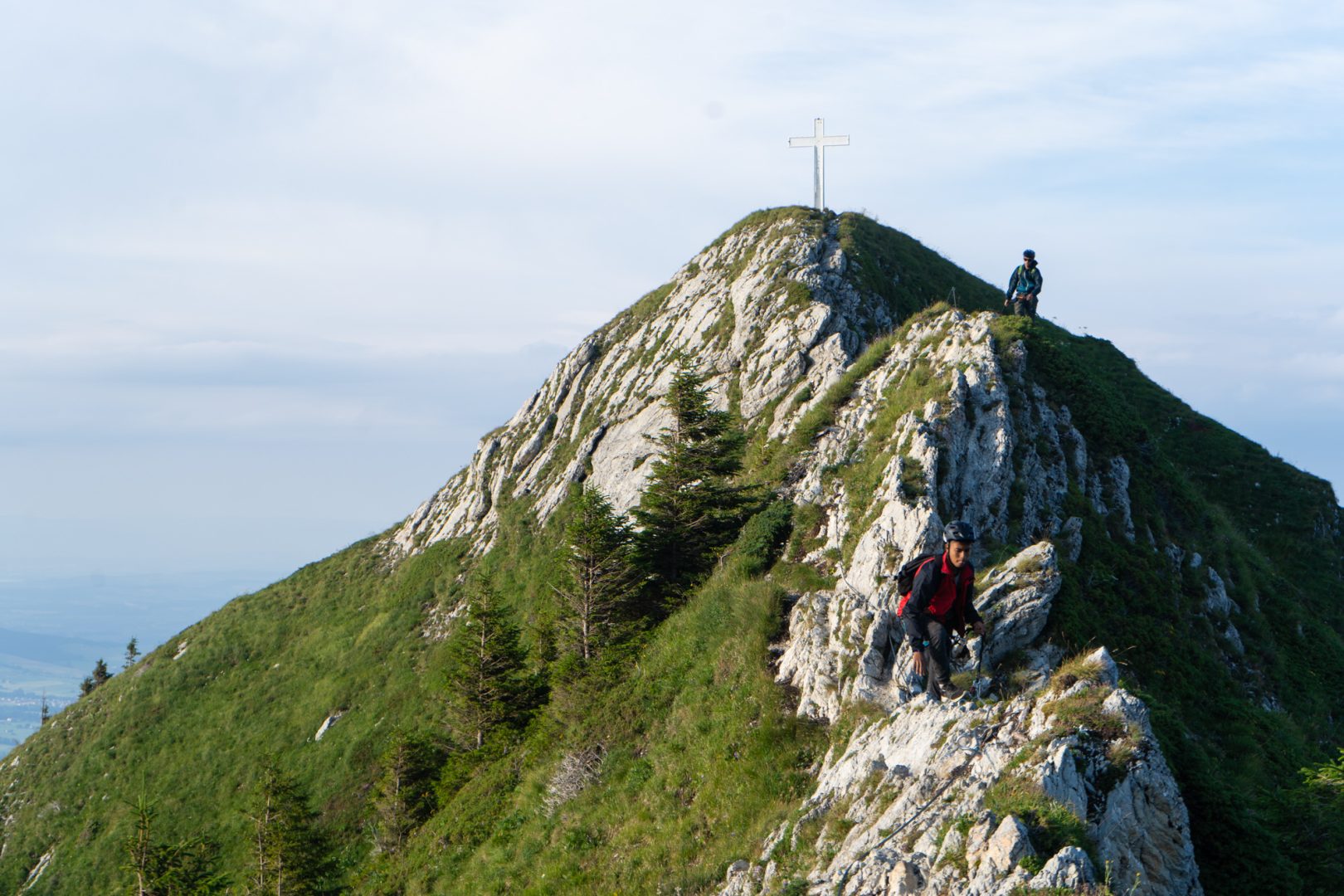
Alpine zones above the treeline (roughly 1,800–2,200 m) host specialists you won’t find lower down. I look for Alpine ibex on steep, rocky ledges; males show curved horns and stick to cliffs between about 1,500–3,200 m. Chamois move with quick, bounding steps on broken slopes. Marmots live in alpine meadows from roughly 1,500–3,000 m, are active in summer and hibernate in winter, and give themselves away with a sharp whistle. High-elevation birds include alpine choughs, snow finches and ptarmigan; the bearded vulture occurs regionally after reintroduction programs.
Across lower elevations and forests you’ll encounter a different set. Red deer and roe deer use woodland and edge habitats; red foxes patrol farmlands and plateaus; European badgers prefer woodland edges. The Alpine ibex and Eurasian beaver have both recovered or returned through reintroduction and natural spread. Predators are still scarce: wolves began a reliable comeback in the early 2000s and Eurasian lynx persist in small numbers. All large carnivores are monitored, so consult local ranger updates before visiting remote areas.
Lakes and wetlands concentrate waterbirds and migrating species during seasonal peaks. I scan reedbeds and shallow bays at dawn and dusk for concentrated activity.
Forest specialists hide in understory and deadwood; look for movement, calls and feeding signs rather than direct sightings.
Practical tips I use in the field:
- Bring low-power binoculars and a compact field guide. I prefer 8×42 for steady views and easier ID of birds and mammals.
- Start early; many alpine species are active at dawn and late afternoon.
- Move quietly and keep to trails. You get better sightings and reduce disturbance.
- Learn a few calls and whistles — marmot alarm whistles and chough calls are highly distinctive.
- Check local trail and wildlife notices; some areas restrict access for breeding seasons.
Spotting checklist and most-likely-to-see mammals
Use these quick lists on hikes and family outings.
Animals to spot (ID tips included):
- Marmot — plump rodent; whistles from burrow, often sunning on rocks.
- Alpine ibex — curved horns on males; silhouettes on high cliffs.
- Chamois — smaller than ibex; moves in quick, springing bounds.
- Alpine chough — glossy black bird with yellow bill; aerial acrobatics.
- Ptarmigan — cryptic plumage; white in winter for camouflage.
Plants to find (quick markers):
- Edelweiss — star-shaped, woolly flower in rocky meadows.
- Gentian — deep blue, trumpet-shaped blooms.
- Cushion plant — low, rounded mats hugging the ground.
- Alpine aster — daisy-like flower across high meadows.
- Saxifrages — small rosettes in rock crevices.
Most-likely-to-see mammals with habitats:
- Roe deer — plateau woodlands and forest edges.
- Red fox — plateau and farmland edges.
- Marmot — alpine meadows (~1,500–3,000 m).
- Alpine ibex — rocky alpine slopes (~1,500–3,200 m).
- European badger — woodland edges.
If you’re planning a family outing, I often recommend a short family trip that mixes plateau walks, lake edges and a gentle alpine trail for the best chance to tick several of these species and plants off your list.
Biodiversity Overview, Protected Areas and Conservation Status
I summarize Switzerland’s species richness with concise counts: birds ≈ 430 species recorded (about 300 breeding), vascular plants roughly 3,000–4,500 species, mammals about 80–100 native species, amphibians around 15–20 species, and reptiles approximately 10–25 species (Sources: Biodiversity Monitoring Switzerland (BDM); Federal Office for the Environment (FOEN); Swiss Ornithological Institute (Vogelwarte)).
Simple comparison (text):
- Taxon type: recorded / breeding (approx.)
- Birds: 430 recorded / ~300 breeding
- Vascular plants: 3,000–4,500 species
- Mammals: 80–100 species
- Amphibians: 15–20 species
- Reptiles: 10–25 species
(Sources: Biodiversity Monitoring Switzerland (BDM); Federal Office for the Environment (FOEN); Swiss Ornithological Institute (Vogelwarte))
Protected areas are limited but meaningful. The Swiss National Park was created in 1914 and covers roughly 174 km² (FOEN). National parks, nature reserves and Natura 2000 sites together form the backbone of current protection, and I keep an eye on ongoing monitoring and habitat restoration projects led by national agencies (FOEN).
There are clear conservation successes and persistent challenges. The Alpine ibex returned from near-extinction following reintroductions in the late 19th and early 20th centuries, and the Eurasian beaver has staged a notable comeback through reintroductions and natural return (FOEN). At the same time I watch declines in farmland birds, habitat loss and fragmentation, roadkill mortality, and warming-driven shifts in alpine habitats. Large carnivores such as wolves and lynx exist in small, closely monitored populations; their numbers and distributions are tracked by national agencies (Federal Office for the Environment (FOEN); Biodiversity Monitoring Switzerland (BDM)).
I give practical field guidance for young explorers and their leaders. Stay on marked trails and keep a respectful distance from animals during breeding seasons. Use binoculars or a spotting scope for close views rather than approaching. Keep dogs leashed near nesting areas and alpine meadows. Record what you see and submit observations to local citizen science platforms — that data feeds the recovery and monitoring efforts run by the agencies named above. If you’re planning a family trip in Switzerland I recommend timing visits to avoid peak breeding periods for sensitive species and choosing guided nature activities that follow local regulations.
Where to check updates
I consult these primary monitoring bodies for the latest distribution maps, legal status and project updates:
- Biodiversity Monitoring Switzerland (BDM)
- Federal Office for the Environment (FOEN)
- Swiss Ornithological Institute (Vogelwarte)
Freshwater, Amphibians, Reptiles, Insects and Pollinators
Switzerland supports a surprising range of cold‑adapted freshwater life and herpetofauna. I often point out that roughly 15–20 amphibian species occur here, including the fire salamander (Salamandra salamandra) and the common frog (Rana temporaria). Reptiles are fewer but notable, with about 10–25 species present; the European adder (Vipera berus) is the snake people most commonly spot.
Large lakes such as Lake Geneva (Léman), Lake Constance (Bodensee) and Lake Neuchâtel act as vital stopovers for migratory birds and sustain cold‑water fish like trout and other salmonids in feeder streams. Wetlands are limited in extent and many areas are under active restoration. I’ve seen beaver activity locally re‑create wetland pockets, which benefits amphibians, invertebrates and waterfowl.
Pollinators keep both alpine flora and agriculture productive. Key species include the honeybee (Apis mellifera), several bumblebee species (Bombus spp.) and hoverflies. Butterfly diversity includes alpine specialists such as the Apollo butterfly (Parnassius apollo). I emphasize pollinators on every trip because they connect mountain meadows to human food systems and to delicate high‑altitude plants.
Kid activities and protocols
I use simple, safe protocols that teach observation, species ID and respect for habitats.
Pond survey / pond dipping protocol:
- Sweep a net through shallow water; transfer finds briefly to a tray for ID and counting.
- Photograph each specimen, then return all animals to the water where you found them.
- Supervise children closely, avoid deep water, and wear gloves if needed.
- Never remove animals from the site or disturb sensitive breeding ponds without explicit permission.
Pollinator garden planting list (choose native varieties and check local guidance):
- Gentians
- White clover (Trifolium repens)
- Wild thyme (Thymus serpyllum)
- Oxeye daisy (Leucanthemum vulgare)
- Common knapweed (Centaurea nigra)
- Yarrow (Achillea millefolium)
- Birdsfoot trefoil (Lotus corniculatus)
- Field scabious (Knautia arvensis)
- Alpine aster
- Black medick (Medicago lupulina)
Safety, permits and ethics:
- Many protected waterbodies and reserves require sampling permits.
- Avoid handling protected species; use photos and citizen records instead of collecting.
- Teach kids to respect signs and seasonal closures.
I recommend submitting observations to citizen science platforms to make your findings count. Useful tools include iNaturalist, local bumblebee monitoring schemes and the national portals linked to Biodiversity Monitoring Switzerland. For a practical family focus, consider linking a wildlife day to a short family trip so kids can compare lake and mountain sites.
Explore Safely and Responsibly — Practical Kit, Rules and Ethical Media Tips
I always plan safety first. Dress in layers to handle rapid weather and altitude changes. Wear sturdy footwear and stay on marked trails; many sensitive alpine habitats recover poorly from trampling. Keep distance from wildlife: roughly 50 m from large mammals like ibex, and about 10–20 m from birds and nesting areas. Never feed wild animals. Follow local protected-area rules — for example, Swiss National Park regulations generally prohibit leaving marked trails, camping, fires and dogs in many zones — and check specific rules before visiting.
Practical kit and field-guide essentials
To prepare families for a day out, I pack the following items and recommend lightweight, kid-friendly optics.
- Comfortable, broken-in footwear and a waterproof jacket
- Hat, sun protection, and a spare warm layer
- Small binoculars (8x or 10x magnification; 21–32 mm objective; ideally under ~450 g)
- Field notebook and pencil, plus a magnifying glass for insects and leaves
- Camera or phone with extra battery or power bank (use telephoto rather than approach)
- Basic family first-aid kit tailored to your group’s needs
- Lightweight daypack with water and snacks
I carry compact binoculars that kids can hand-hold without tiring. If you want a packing checklist, see my what to pack guide.
I suggest these guides and apps to identify species and log sightings: Collins Bird Guide, regional bird guides from the Swiss Ornithological Institute (Vogelwarte), and alpine plant pocket guides. Use apps like iNaturalist, eBird, Merlin Bird ID, and the Biodiversity Monitoring Switzerland (BDM) portals to support learning and contribute records.
For ethical photography, avoid flash on nests and in caves. Use a long lens or digital zoom so you don’t approach animals. Follow a simple three-step routine:
- Observe quietly
- Use zoom or telephoto to frame shots
- Back away if the animal shows stress (alert posture, alarm calls, or fleeing)
Never publish precise nest or den locations for sensitive species.
I always bring a basic family first-aid kit and verify emergency numbers before I leave. In Switzerland, useful numbers include 112 (EU emergency) and 144 (medical ambulance); confirm local police, fire and ambulance contacts for your destination.

Activities, Citizen Science, Seasonal Calendar and Kid Engagement
Citizen science and reliable records
I recommend these platforms for families: iNaturalist, eBird, Biodiversity Monitoring Switzerland (BDM) portals and projects run by the Swiss Ornithological Institute. I point kids and teens to these because they turn observations into usable data and connect you with experts.
Record these core fields for every sighting to make it reliable:
- Species name — confirms identification
- Count — shows abundance
- Date/time — indicates timing
- GPS location — allows mapping
- Habitat notes — provides context
- Observer name — for attribution and follow-up
- Photo — key for verification
I also suggest noting behavior and weather as short comments; those clues often matter for researchers.
Use simple protocols I follow on field trips:
- Take at least one clear photo, ideally from different angles.
- Record coordinates from your phone before you lose signal.
- If unsure of the species, enter a best guess and mark it as tentative.
- Keep disturbance to a minimum — observe from a distance and avoid handling animals.
- Upload observations soon after the visit; apps like iNaturalist and eBird streamline this.
I often point families to BDM portals and Swiss Ornithological Institute initiatives when they want to join structured monitoring. Those programs accept volunteer submissions and provide training materials.
Family projects, seasonal calendar and engagement tools
Try these short projects with kids; each one fits into a single outing and builds skills.
- 30-minute Backyard BioBlitz: Goal — record 20 species across plants, birds, insects and fungi. Record the start/end time, make a species list and take photos for verification.
- Pond dipping with a sighting card: Fields — species name (or best guess), date/time, habitat, a quick sketch and three clues (size, color, behavior).
- Build a pollinator garden: Choose native plants, document visitors weekly and photograph pollinators.
- Make a bug hotel: Monitor occupants with a weekly photo log and short notes on what you see.
- Install nest boxes: Check them at recommended intervals, record occupancy and add photos to a citizen-science platform.
Use the seasonal calendar below to pick the best outings and set expectations:
- Spring (March–May): Migrant birds return and amphibians breed. Early wildflowers bloom in lowlands. Peak migration happens March–May.
- Summer (June–August): Alpine flowers peak (timing shifts with altitude). Marmots are active. Butterflies and pollinators are abundant.
- Autumn (September–November): Second migration pulse occurs and fruiting increases for foraging species. Waterbird movements are strong from August into October.
- Winter (December–February): Birds concentrate on valleys and lakeshores. Look for tracks and indirect signs in snow. Higher alpine animals are less accessible.
Prepare engagement tools beforehand to maximize learning. I create or print:
- A family wildlife safety checklist.
- A short wildlife quiz of 8–10 questions.
- A month-by-month checklist listing 3–5 species to look for.
- A suggested next-steps learning path linking families to local groups such as Pro Natura, Swiss National Park programs, Swiss Ornithological Institute (Vogelwarte) activities and BDM citizen-science initiatives.
For follow-up I recommend these apps and organizations for identification, reporting and deeper learning: iNaturalist, eBird, Merlin Bird ID and the Biodiversity Monitoring Switzerland (BDM) portals. On the organizational side, check Swiss National Park, Pro Natura, Swiss Ornithological Institute (Vogelwarte) and the Federal Office for the Environment (FOEN) for courses and volunteer opportunities.
I also advise families to pack light but smart. If you want a quick prep checklist, see my advice on what to pack before you head out.
Sources:
Federal Office for the Environment (FOEN) — [no article/blog title provided] — https://www.bafu.admin.ch
Biodiversity Monitoring Switzerland (BDM) — [no article/blog title provided] — https://www.biodiversitymonitoring.ch
Swiss National Park — [no article/blog title provided] — https://www.nationalpark.ch
Pro Natura — [no article/blog title provided] — https://www.pronatura.ch
Swiss Ornithological Institute (Vogelwarte) — [no article/blog title provided] — https://www.vogelwarte.ch
BirdLife International — [no article/blog title provided] — https://www.birdlife.org
IUCN Red List — [no article/blog title provided] — https://www.iucnredlist.org
WWF Switzerland — [no article/blog title provided] — https://www.wwf.ch
iNaturalist — [no article/blog title provided] — https://www.inaturalist.org
eBird — [no article/blog title provided] — https://ebird.org