10 Key Benefits of Outdoor Learning for Kids
Discover the benefits of outdoor learning for kids! Boost academic performance, enhance mental health, and foster social skills through nature.
TL;DR:
- Outdoor learning enhances children’s academic, emotional, and physical development through nature-based experiences. It promotes resilience, social skills, creativity, and lifelong environmental stewardship while benefiting teachers’ well-being. Adults should favor unstructured exploration to maximize the developmental potential of outdoor environments.
Screen time is up, attention spans are down, and kids are spending more hours indoors than any previous generation. If you’re a parent or educator searching for solutions, the benefits of outdoor learning may be exactly what you’re looking for. Research increasingly confirms that moving education outside produces measurable gains in academic performance, mental health, physical development, and social skills. This article breaks down ten specific, research-backed benefits so you can make informed decisions about how to bring more outdoor learning into children’s lives.
Table of Contents
- Key takeaways
- 1. Real gains in literacy and numeracy
- 2. Stronger attention and mental focus
- 3. Reduced anxiety and better emotional regulation
- 4. Amplified benefits for disadvantaged children
- 5. Physical literacy and motor skill development
- 6. Resilience through risky play
- 7. Social skills and peer communication
- 8. Creativity and imaginative thinking
- 9. Environmental awareness and lifelong stewardship
- 10. Teacher well-being and sustainable education
- My take: the adult instinct to over-direct is the biggest obstacle
- Put these benefits to work at Youngexplorersclub
- FAQ
Key takeaways
| Point | Details |
|---|---|
| Academic performance improves outdoors | Nature-based instruction leads to measurable gains in literacy, math, and attention. |
| Mental health benefits are real | Nature exposure reduces anxiety and stress hormones, supporting emotional regulation in children. |
| Physical literacy grows through outdoor play | Movement in natural settings builds coordination, confidence, and healthy lifelong habits. |
| Social skills develop naturally outside | Collaborative outdoor activities strengthen communication, peer relationships, and teamwork. |
| Nature builds future stewardship | Early contact with green spaces shapes positive environmental attitudes that last a lifetime. |
1. Real gains in literacy and numeracy
One of the most compelling benefits of outdoor learning is its direct impact on academic outcomes. A 2026 study found improved academic performance and reduced anxiety among children engaged in nature-based education, with notable gains in literacy and numeracy. These aren’t marginal improvements. Teachers in the same study reported that children came back from outdoor sessions more focused and ready to engage with classroom content.
The mechanism behind this is well understood. Our brains evolved in outdoor settings, and natural environments restore attentional capacity that indoor, screen-heavy environments drain. This is often called Attention Restoration Theory, and its effects are visible in classrooms: children who spend structured time outdoors consistently show better recall and problem-solving ability than those kept exclusively indoors.
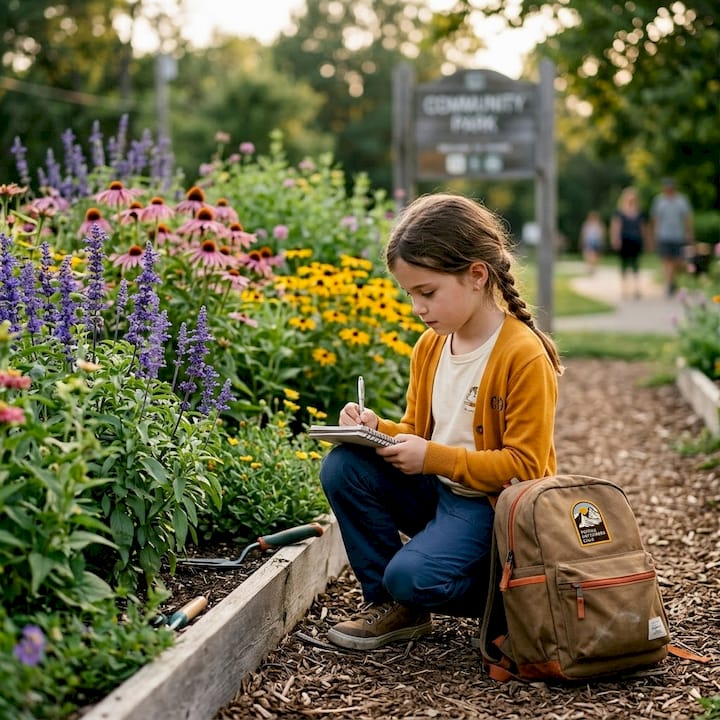
Outdoor learning activities like nature journaling, measurement exercises in gardens, or storytelling walks provide context that makes abstract concepts stick. When a child measures the circumference of a tree trunk instead of a worksheet circle, the math becomes real.
2. Stronger attention and mental focus
Even short, consistent outdoor exposure enhances focus and reduces stress, helping children reset attention so they can learn more effectively indoors. A 20-minute walk in a green space before a reading session produces different cognitive results than 20 minutes of additional screen time. The sensory variety of natural environments, sounds, textures, light changes, does what no fluorescent classroom can replicate.
This makes outdoor time one of the most cost-effective tools available to educators. You don’t need elaborate outdoor classroom benefits to see results. A patch of grass, a school garden, or a local park will do the job.
Pro Tip: Schedule outdoor sessions before subjects that require the most concentration, like reading or math. The attentional reset gives children a meaningful cognitive advantage for the tasks ahead.
3. Reduced anxiety and better emotional regulation
The impact of outdoor learning on mental health is one of its most well-documented advantages. A review of 123 studies showed reduced anxiety and behavioral issues in children with regular nature exposure. Lower cortisol levels, calmer behavior in classrooms, and improved mood were consistent across diverse age groups and backgrounds.
Children who struggle with emotional regulation often find that outdoor environments give them the sensory input and physical movement they need to self-regulate. The open space reduces the triggers associated with crowded, noisy classrooms. The absence of rigid furniture and formal rules allows for a different kind of presence.
“Nature doesn’t demand performance. It invites participation. That distinction matters deeply to children who feel they are constantly falling short indoors.”
This is why the advantages of outdoor education extend beyond academic performance. A child who can regulate their emotions is a child who can learn, cooperate, and grow.
4. Amplified benefits for disadvantaged children
Not all children benefit equally from outdoor learning, and that’s a point worth sitting with. Research shows that nature disproportionately benefits disadvantaged youth, with greater reductions in anxiety, behavioral issues, and psychological disorders among children from lower-income backgrounds.
Outdoor learning serves what researchers call an “equigenic” role. It narrows developmental gaps that other educational interventions often fail to close. Children who lack access to mental health services, tutoring, or enrichment programs can experience meaningful development simply through structured time in green spaces. For educators working in under-resourced schools, this is one of the most important facts in the research on why outdoor learning is important.
5. Physical literacy and motor skill development
Movement in natural environments builds a different kind of physical competence than gym class. A 2025 intervention study found that physical activity programs in natural environments improved physical literacy, self-confidence, and communication skills simultaneously. The uneven terrain, variable conditions, and open-ended challenges of outdoor spaces develop coordination and spatial awareness that flat indoor floors simply cannot.
Here’s what physical literacy development through outdoor learning looks like in practice:
- Balance and coordination improve through navigating rocks, slopes, and uneven ground.
- Cardiovascular fitness increases through longer, more varied movement patterns outdoors.
- Fine motor skills develop through activities like building shelters, tying knots, or handling natural objects.
- Body awareness grows as children adapt movement to changing terrain and conditions.
Children who develop physical confidence early carry it forward. They’re more likely to stay active through adolescence and into adulthood. That’s a health dividend that pays for decades.
Pro Tip: When organizing outdoor learning activities for younger children, resist the urge to over-structure movement. Unstructured physical exploration in natural settings often produces better motor development outcomes than directed drills.
6. Resilience through risky play
This benefit makes some parents uncomfortable, but the research is clear. Nature-based risky play builds resilience, social competence, and emotional regulation in ways that sanitized indoor environments cannot replicate. Climbing a tree, crossing a stream, or building a fire under supervision challenges children physically and emotionally. They encounter real uncertainty, make real decisions, and experience real consequences.
Overly sanitized environments hinder risk assessment development. When children never encounter manageable risk, they don’t develop the internal framework for evaluating danger, tolerating discomfort, or persisting through difficulty. The result is young people who are less prepared for the inevitable challenges of adult life.
Adventure education in nature, like what Youngexplorersclub offers through climbing and survival activities, gives children exactly this kind of structured challenge within a safe framework.
7. Social skills and peer communication
Outdoor environments strip away some of the competitive, performance-oriented dynamics of formal classrooms. Children interact differently when they’re building something together, navigating a trail, or solving a problem without textbooks.
Physical activity in natural settings improves communication skills and personal and social competencies alongside physical development. Children negotiate roles, resolve disagreements, practice leadership, and support peers, all organically, without a worksheet telling them to do it.
The social benefits are even more pronounced in mixed-age or mixed-background groups. A shared challenge like building a raft or tracking animals creates authentic peer connection faster than almost any indoor group activity.
Pro Tip: For educators, try assigning outdoor group challenges with no single “right” answer. Open-ended problems like shelter building or natural scavenger hunts generate richer social interaction than guided tasks.
8. Creativity and imaginative thinking
The educational benefits of nature extend into creativity in ways that are easy to underestimate. Outdoor learning materials like sticks, stones, leaves, and water are open-ended in a way that manufactured toys and structured curriculum are not. Children must supply the meaning.
Child autonomy and simple natural materials stimulate imagination and complex problem-solving in ways that adult-directed activities rarely achieve. When an educator steps back and observes rather than directs, children’s creativity flourishes. They invent games, build worlds, and test ideas with a freedom that structured indoor learning rarely permits.
This isn’t just about fun. Creativity is a core cognitive skill with direct links to academic performance, professional success, and personal well-being. Outdoor play is one of the most natural ways to develop it.
9. Environmental awareness and lifelong stewardship
Children who spend regular time in nature develop something more than knowledge about ecosystems. They develop an identity rooted in connection to the natural world. That identity shapes behavior and values for life.
Compare how children relate to nature based on access:
| Children with regular outdoor learning | Children with limited outdoor access |
|---|---|
| Higher environmental concern and responsibility | Lower engagement with conservation issues |
| Greater curiosity about natural systems | Less intrinsic motivation to protect nature |
| Stronger sense of personal connection to place | More abstract relationship with the environment |
| More likely to pursue environmental activities as teens | Tend to disengage from nature-based topics |
Early experiences in green spaces create positive environmental attitudes that persist into adulthood. Families looking for highland excursions that build this connection can find that immersive nature experiences cement these values in ways a classroom lesson simply cannot.
10. Teacher well-being and sustainable education
This benefit is often overlooked in conversations about outdoor learning, but it matters enormously. Teachers involved in outdoor learning programs report lower stress and reduced burnout risk. At a time when teacher shortages are a genuine national concern, anything that improves educator well-being is worth taking seriously.
When teachers feel better, they teach better. Outdoor sessions also vary the instructional rhythm in ways that give educators creative breathing room. The outdoor classroom benefits both sides of the learning relationship, not just the children.
My take: the adult instinct to over-direct is the biggest obstacle
I’ve seen a lot of outdoor learning programs, and the pattern that stands out most is this: the adults are often the limiting factor. The instinct to plan every minute, supervise every interaction, and redirect every moment of free exploration is deeply ingrained. It comes from a good place. But it undercuts the developmental magic of being outside.
Outdoor learning thrives when adults step back and allow children genuine autonomy. The negotiation that happens when kids have to figure something out together, without a teacher resolving the dispute, is irreplaceable. The problem-solving that emerges when there’s no “right answer” provided is where real cognitive development happens.
My experience watching children in well-designed outdoor programs is that the breakthroughs come during the unscripted moments. A kid who has been disengaged all year suddenly becomes the group expert on identifying plant types. A child with poor social skills becomes a natural leader when everyone is physically on equal footing. You cannot manufacture those moments. You can only create the conditions for them.
For parents and educators alike, the practical lesson is this: resist the urge to fill every outdoor session with structured activity. Schedule in the unplanned time. Observe rather than direct. The learning that happens in those gaps is often the most lasting.
— Guillem
Put these benefits to work at Youngexplorersclub

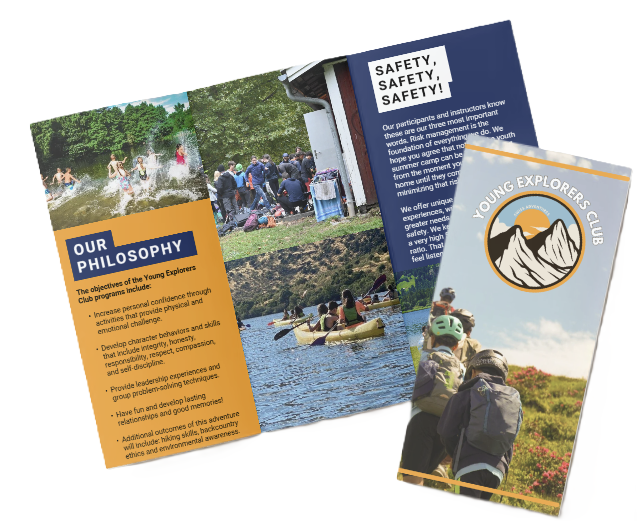
If you’re ready to give children a real-world experience of everything this article covers, Youngexplorersclub offers exactly that environment. Based in Switzerland, the programs combine mountain biking, climbing, survival skills, and multisport adventures with genuine personal development in stunning natural settings. Children and teens build confidence, resilience, and social skills while genuinely engaging with the outdoors.
Whether you’re looking for a summer camp in Switzerland for your child, a dedicated teen adventure program, or custom outdoor trips for school groups, Youngexplorersclub gives young people the immersive outdoor education that research consistently shows makes a lasting difference.
FAQ
What are the main benefits of outdoor learning for children?
Outdoor learning improves academic performance, mental health, physical fitness, social skills, and creativity. Research shows consistent gains in literacy, attention, and emotional regulation with regular outdoor education.
Why is outdoor learning important for child development?
Outdoor learning supports holistic development because it combines physical movement, sensory experience, and social interaction in ways that indoor settings cannot replicate. It also builds resilience through age-appropriate risk-taking.
How does outdoor learning benefit students academically?
Nature-based education improves academic performance by restoring attention and providing experiential context for abstract concepts. Children retain information better when lessons are connected to real-world, physical experiences.
What outdoor learning activities work best for school-age children?
Nature journaling, shelter building, trail navigation, garden math, and group survival challenges are all effective. The most impactful activities combine physical movement, open-ended problem-solving, and peer collaboration.
Does outdoor learning help children with anxiety?
Yes. A review of 123 studies found that nature exposure reduces anxiety and behavioral issues in children, with the strongest effects seen among disadvantaged youth.