
Instagram-worthy Family Moments In Swiss Alps
Instagram-worthy family photos in the Swiss Alps – train/cable-accessible peaks, golden-hour light, wide frames and kid-friendly safety tips.
Photographing Family Moments in the Swiss Alps
Photographing Instagram-worthy family moments in the Swiss Alps relies on authentic high-elevation backdrops. Peaks such as the Matterhorn, Gornergrat and Jungfraujoch give instant scale. Many summits are reachable by train, cable car or cogwheel railway. Plan compositions that keep subjects low in wide frames. Shoot at golden hour or match framing for seasonal comparisons. Keep sessions short and comfortable, and don’t overrun children’s limits. Prioritise safety and easy transport access for kids.
Key Takeaways
Location & Composition
Use the Alps’ true scale—place families low against dramatic peaks. Pick locations you can reach by train or cable car to cut approach time. For wide environmental images, keep the horizon low and leave breathing space above the summit to emphasise height.
Gear Choices
Bring lenses and tools that let you switch quickly between wide context and intimate interaction.
- Wide-angle glass (16–35mm full-frame equivalent) for environmental shots.
- Standard zoom (24–70mm) for interactions and family candids.
- Telephoto (70–200mm) to compress peaks and capture distant moments.
- Lightweight tripod and spare batteries, especially for cold conditions and long exposures.
Light & Exposure
Shoot at golden hour for depth and alpenglow. For seasonal side-by-side shots, record elevation, dates and tripod height. Add +0.7–+1.3 EV for snowy scenes to avoid underexposure and preserve highlight detail.
Family Comfort & Safety
Prioritise comfort and safety. Choose non-technical viewpoints and allow 24–48 hours for acclimatisation above about 2,500 m. Pack layers, snacks and a first-aid kit. Check operator age and weight limits for any transport (cable cars, trains, etc.). Keep sessions short and allow breaks—children perform best when comfortable.
Creating Instagram Carousels
Build carousels of 3–6 images showing intent and variety. A balanced sequence might be:
- Establishing (wide environmental)
- Candid (interaction, emotion)
- Detail (hands, clothing, textures)
- Action (movement or play)
- Silhouette or alpenglow finale
Use the caption formula: emotional lead + location/elevation/time + short story + CTA. Post during high-engagement windows for your audience.
Hard facts & scale
We, at the young explorers club, plan family shoots with clear, measurable scale in mind. Switzerland covers roughly 41,285 km², and the Alps take up about 60% of that area, producing dramatic vertical relief and countless high-elevation backdrops. Those figures help set expectations: you’re working with real mountains, not studio props, so compositions that make people look small against vast terrain work naturally.
The Alps offer genuine scale because there are over 40 peaks above 4,000 m. That abundance means you can frame a family as a single point of interest against a massive ridge and get an immediate sense of awe. Practical choices also make this easy. Many photo-ready summits and ridgelines are reachable by train, cable car or cogwheel railway — examples include the Gornergrat Railway, the Jungfrau Railway and the Titlis Rotair — so you can pull off dramatic family shots without long, technical hikes.
Key elevations for scale compositions
Below are the high points I recommend for shots that emphasize size and drama:
- Dufourspitze (Monte Rosa) — 4,634 m
- Matterhorn — 4,478 m
- Jungfraujoch — ≈ 3,454 m
- Mt. Titlis — 3,238 m
- Gornergrat — 3,089 m
- Schilthorn — 2,970 m
I use those peaks as reference anchors when planning framing, lighting and transport logistics. For route ideas and family-friendly itineraries that connect these viewpoints, see our family trip in Switzerland.
Compose for scale by placing people low in the frame and leaving ample sky or mountain mass above them. Wide-angle lenses exaggerate foreground size; a 16–35mm on full-frame or equivalent gives that epic feeling while keeping faces readable. Position kids or parents at a clear foreground anchor — a boulder, fencepost or trail marker — to give the eye a reference point.
Timing and light matter. Early morning and late afternoon create depth with long shadows and softer highlights on ridgelines. Overcast days flatten contrast and can make giants feel less dramatic; I avoid those for scale shots unless I aim for moody, cinematic portraits. Wind and temperature change rapidly at elevation, so pack layered clothing and quick wraps for kids between takes.
Accessibility and safety are non-negotiable with families. I pick locations served by mountain railways or cable cars to minimize approach time and fatigue. Trains and cogwheel railways let you arrive rested and focused on composition rather than exertion. I also scout platforms and viewing areas in advance and choose spots with safe, non-technical footing for children.
Gear and practical tips I rely on:
- Fast telephoto (70–200mm) to compress scale when you want the mountain to loom closer.
- Wide lens for environmental portraits that show people tiny against rock.
- Lightweight tripod for stable low-light shots and group photos.
- Spare batteries kept warm and accessible; cold drains power quickly.
- Plan shots near facilities when possible so breaks and toilets are easy for kids.
I balance technique with family comfort. Short sequences of intentional shots beat long sessions that exhaust children. Aim for three great frames per location: a wide environmental image, a mid-distance portrait and a close, candid moment. That mix gives you Instagram-ready variety while respecting kids’ limits.

Seasonal side-by-side photo comparison (summer vs winter)
We shoot the exact same viewpoint in summer and winter to show how light, color and activity transform a place. Keep framing identical, note elevation and dates in the caption, and capture both sessions at golden hour to maximize tonal difference.
Caption template
Use this exact format:
Location — elevation — date (e.g., Gornergrat 3,089 m — 12 Aug 2025 / 03 Jan 2026).
Include elevation and both dates to emphasize seasonal change and to help viewers compare conditions.
What to look for in each season
- Summer: alpine meadows, wildflowers in peak bloom (July–August), turquoise lakes with clear reflections and softer evening light.
- Winter: snowy wonderland, crisp blue-sky days, holiday-market vibes and sledging scenes; snow season runs November–February with peak coverage December–February.
Practical shooting advice I use to nail perfect side-by-side comparisons
- Match framing exactly: use a tripod and a fixed focal length or mark the position on the ground so you return to the same spot. Note compass bearing or save the GPS coordinate.
- Keep camera height and crop identical: measure tripod height or place a small marker for the tripod foot.
- Exposure strategy: shoot in RAW both seasons. For summer, f/8–f/11 keeps me sharp through the scene; ISO 100–200. For winter, dial exposure compensation +0.7 to +1.3 stops to avoid underexposed snow. Bracket when in doubt.
- White balance: set a consistent WB preset or record a custom Kelvin value so colors compare accurately across seasons.
- Filters: use a circular polarizer in summer to deepen skies and reduce reflections on lakes. In winter, remove it unless you’re cutting glare.
- Motion and activity: add people or props—sleds, bright jackets, or a picnic blanket—to show scale and seasonal use. I frame kids sledging in winter to contrast with wildflower picnics in summer.
- Smartphone tips: lock focus/exposure, use grid lines, and keep the phone at the same height. Many phones let you save a focal length or use a tripod adapter.
- Timing: shoot both scenes at golden hour. The warm low sun in summer enhances wildflower hues; winter golden hour sharpens shadows and deepens sky color.
- Practical note: keep notes (date, time, lens, settings) so you can repeat the setup in subsequent years and build a time-lapse series.
Shot checklist (quick items to tick before you shoot)
- Exact viewpoint marked and GPS saved
- Tripod height and compass bearing recorded
- RAW capture enabled
- Aperture and ISO consistent across seasons
- Exposure compensation set for snow scenes
- Golden-hour window scheduled
- Props/people planned for scale
- Caption formatted: Location — elevation — date
We often plan these shoots as part of a family trip, which makes it easy to return to the same spots and capture a true seasonal comparison.
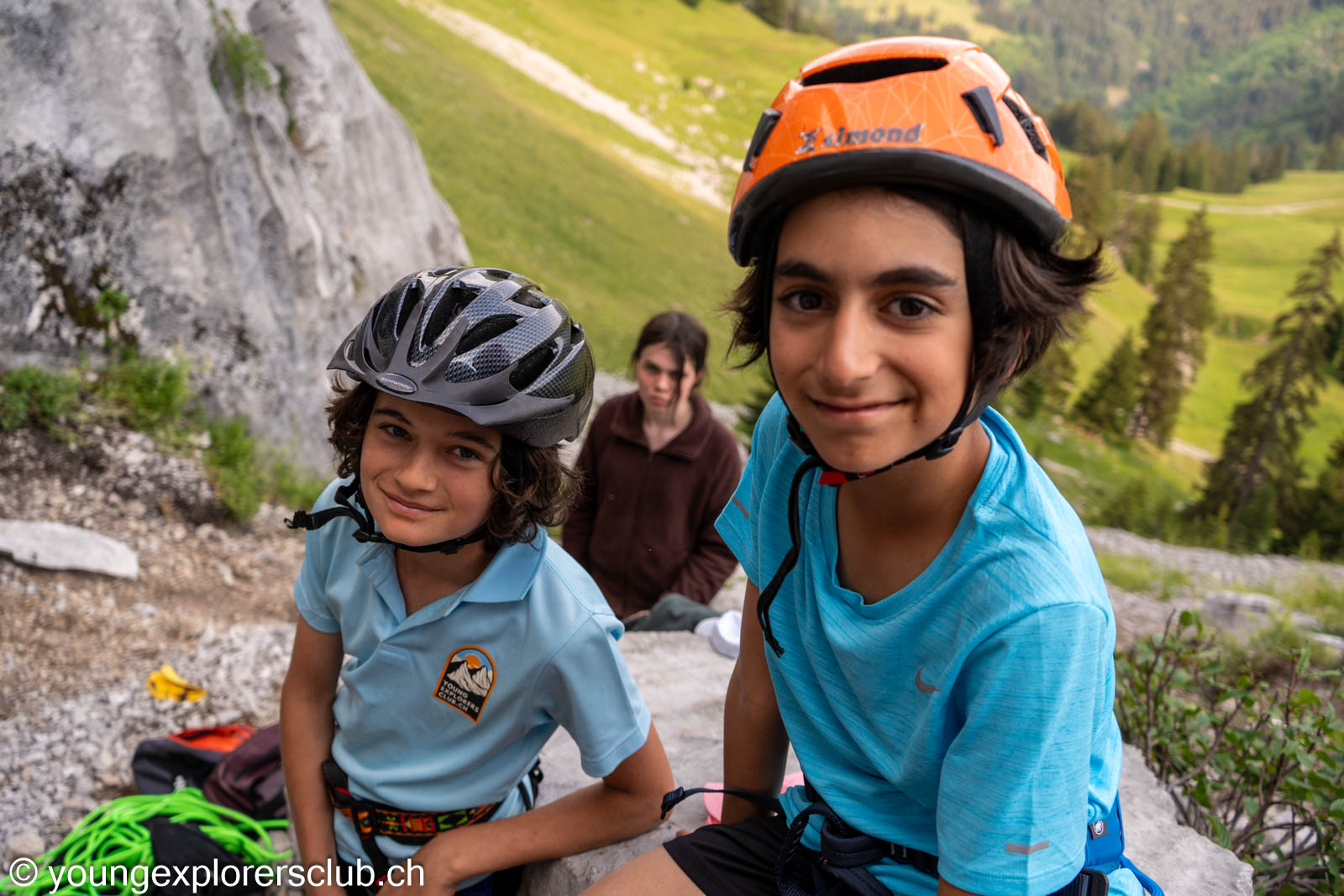
Top photo spots for families (what to shoot, elevation, travel notes)
Zermatt & Matterhorn
Elevation: Zermatt village ~1,600 m; Matterhorn 4,478 m.
What to shoot: Pyramid-peak silhouettes at sunrise and alpenglow at sunset. Capture car-free village streets and wooden chalets for lifestyle frames.
Travel notes: Plan train travel and a luggage transfer since Zermatt is car-free.
Ideal photo types: Wide-angle village + peak and backlit family silhouettes.
Gornergrat
Elevation: 3,089 m.
What to shoot: Panoramic Gornergrat viewpoint for expansive Matterhorn vistas.
Travel notes: The cogwheel railway from Zermatt takes about 30–40 minutes.
Timing & approach: Best light is sunset for warm alpenglow or morning for crystal-clear air. Aim for wide panoramas and family silhouettes with the peak compressed by a longer lens.
Jungfraujoch “Top of Europe”
Elevation: ≈3,454 m.
What to shoot: Glacier vistas, year-round snow and the snow playgrounds that kids love.
Travel notes: The Jungfrau Railway from Interlaken via Lauterbrunnen or Grindelwald requires roughly 2 hours with connections.
Timing & approach: Shoot midday for the clearest sky; consider blue-hour silhouettes. Try snow portraits and long-exposure glacier textures.
Schilthorn / Piz Gloria
Elevation: 2,970 m.
What to shoot: Use the 360° platform for dramatic cliff photos and James Bond views.
Travel notes: Cable lifts from Mürren give easy family access.
Timing & approach: Golden hour yields the most sweeping light. Capture cliff-edge panoramas and mid-length family portraits.
Mt. Titlis
Elevation: 3,238 m.
What to shoot: The rotating Rotair cable car, glacier park and ice cave.
Travel notes: The Rotair from Engelberg takes about 30–40 minutes total.
Timing & approach: Midday works best for active snow shots in summer. Focus on action frames and close-ups inside the ice cave.
Lauterbrunnen Valley & Falls
Elevation: Valley floor ~800–1,000 m.
What to shoot: Frame Staubbach and Trümmelbach with steep cliffs for dramatic scale.
Timing & approach: Late afternoon gives soft side-light; May–June brings peak waterfall flow. Use an ND filter for silky-water long-shutter shots and portrait-in-valley scale photos.
Interlaken & Lakes Brienz/Thun
Elevation: Interlaken ~568 m.
What to shoot: Glassy morning reflections and family shots on boats with mountain backdrops.
Timing & approach: Early dawn yields the calmest water and best reflections.
Mürren / Wengen
Elevation: Villages ~1,600–1,300 m.
What to shoot: Car-free alpine-village charm and easy cable access.
Timing & approach: Golden hour warms chalet façades for lifestyle imagery. Shoot wide environmental frames and candid family interactions.
Gear and transport tips
Bring these essentials and follow a few travel notes for smoother shoots:
- Lenses: wide-angle 16–35mm for panoramas, 24–70mm for family interaction, 70–200mm for compressed peaks and candid moments.
- Accessories: tripod, ND filter for waterfalls, spare batteries, weatherproof camera cover, microfibre cloth.
- Timing: dawn for reflections and backlit peaks; golden hour for village warmth; midday for snow activity.
- Rail and lift timings:
- Gornergrat Railway Zermatt → Gornergrat ≈ 30–40 min
- Jungfrau Railway Interlaken → Jungfraujoch ≈ 2 hr incl. transfers
- Titlis Rotair Engelberg → Titlis ≈ 30–40 min
- Car-free logistics: Zermatt, Mürren and Wengen require luggage planning and short transfers.
We, at the young explorers club, recommend our family trip guide for packing and transfer tips.

Seasonal timing, lighting, composition and Instagram strategy
Light and timing
We, at the Young Explorers Club, plan shoots around golden hour. Aim 30–60 minutes after sunrise and 30–60 minutes before sunset for warm tones and long shadows that flatter faces and alpine textures. Blue hour and night scenes work great too; bring a tripod and use long exposures for crisp mountain silhouettes and starry-sky family portraits. Stay flexible: mountain weather can shift fast, so check local forecasts and have a backup plan for nearby sheltered spots or indoor activities.
Seasonal photo calendar:
- May–June: spring melt and waterfalls.
- July–August: wildflowers, alpine meadows and clear lakes (wildflower peak July–August).
- September: larch turns golden.
- October: crisp autumn light.
- November–February: snow, sledging, winter sports and Christmas markets.
Remember that sunrise and sunset times change with elevation. We always check exact times for the summit or station we’re shooting to nail the light.
Instagram tactics
Use the following structure and tools to turn those moments into a high-engagement post.
Post structure (carousel 3–6 images):
- Establishing
- Candid
- Detail
- Action
- Silhouette
Suggested posting windows: 11:00–13:00 & 19:00–21:00 CET.
Geotagging: tag the exact mountain station (Gornergrat, Jungfraujoch, Titlis) to boost discoverability.
Caption formula: short emotional lead + place/elevation/time + short story + CTA (question or save/share).
Ready-made caption templates (fill placeholders):
- “Sunrise at Gornergrat (3,089 m) — [kids’ first alpine sunrise]. What’s your favorite mountain memory?”
- “Sledging day at Titlis (3,238 m) — [date]. Cold cheeks, warm hearts. Tell us your favorite winter game!”
- “Quiet morning by Lake Brienz — [village], [elevation]. Reflections and tiny boots. Where would you take your family next?”
- “Car-free Zermatt with the kids — Matterhorn (4,478 m) at sunset. Small feet, big views. ❤️”
- “Top of Europe, Jungfraujoch (≈3,454 m) — [date/time]. Snow all year and a lot of firsts. Drop a ❄️ if you’d come!”
Hashtag strategy (mix 10–20 tags):
- Broad (4–6):
- #SwissAlps
- #Switzerland
- #FamilyTravel
- #TravelPhotography
- Niche/local (6–10):
- #Zermatt
- #Gornergrat
- #Jungfraujoch
- #Titlis
- #Lauterbrunnen
- #Interlaken
- #LakeBrienz
- #LakeThun
- #Mürren
- #Wengen
- Branded/custom (2–4):
- #VisitSwitzerland
- #FamilyInTheAlps
- #SwissAlpsWithKids
- Local-language:
- #Schweiz
- #Suisse
- #Svizzera
Post formatting tips we follow: lead with a short emotional line, include elevation/spot and time, add a CTA, and always geotag. Keep carousels to 3–6 images for best engagement. For inspiration on kid-friendly photo locations and activities, check our family trip guide.

Family-friendly photogenic activities (what to book, ages, photo tips)
We, at the young explorers club, pick activities that produce natural, frame-ready moments while keeping kids safe and happy. Short scenic hikes and valley viewpoints create easy wins for families. Choose stroller-friendly valley walks for children aged 3+ and use a baby carrier on higher-altitude trails. Pack a light daypack, water and snacks. Expect 1–3 hour outings; pick trails with benches and short turnaround options so you can control timing for golden-hour shots.
Cable cars and cogwheel trains work for every age, though you should always check operator rules before booking. Rides to summits vary from about 10 to 60 minutes, giving you multiple photo opportunities: arrival and departure candids, panoramic platform family portraits and playful frames with wind-tousled hair. Typical cable-car fares range CHF 8–70 per person, so budget accordingly and book in high season.
Sledging and toboggan runs suit toddlers with supervision and older kids through their teens. For action shots, aim low to the track and freeze motion with a fast shutter. Supervised short runs make great parent–child frames at the run start and finish.
Paragliding tandem flights are memorable but usually limited to teens and older children based on operator age and weight rules. A helmet-cam POV plus a wide-angle airborne panorama sells the scale of the Alps better than a handheld crop.
Alpine lakes offer calm, reflective shots. Book boating or paddleboarding sessions where operators supply lifejackets; children must wear them. Early-morning light gives glassy reflections. Shore portraits and small-boat family frames work best when everyone relaxes and interacts naturally.
Farm visits and alpine pastures are photo gold for all ages. Capture candid cultural moments like cheesemaking, hands cradling curds, cow bells and close-up textures. These scenes document local life and make strong, timeless images.
Photo tips & quick camera notes
- Sledging: low-angle + fast shutter (1/500–1/2000s), continuous drive to catch motion.
- Paragliding: helmet-cam POV and a wide-angle for aerial panoramas.
- Paddleboarding: eye-level or slightly low for strong reflections and stable horizons.
- Farm visits: tight detail shots and candid family portraits during tasks.
- Lakes & boats: shoot during golden hour and aim for symmetrical reflections.
- Cable cars/trains: shoot arrival/departure candids and use the platform for wide family portraits.
We advise booking popular activities in advance during July–August and school holidays. Many operators require reservations and may enforce age/weight rules. Keep a small stroller for valley trails and a comfortable baby carrier for steeper paths. Bring spare layers, sun protection and a small lens cloth — mountain weather and lake spray will test your gear.
Safety note: always use provided helmets and harnesses, confirm operator age/weight limits and follow local staff guidance. We, at the young explorers club, recommend carrying a simple first-aid kit and a charged phone with offline maps when you head up from the valley.

Practical logistics, safety, budgeting and ethical shooting
We, at the Young Explorers Club, treat altitude as a serious planning factor. At elevations above ~2,500 m we allow 24–48 hours for acclimatization and we hydrate frequently. Children and infants are more sensitive, so we schedule easy first days and watch for headaches, nausea or breathlessness. We carry a small first-aid kit and know the emergency numbers 112 / 144. We remind families that mountain rescue can incur costs and we buy travel insurance that includes mountain rescue cover.
We plan travel around the main hubs: Zurich (ZRH), Geneva (GVA) and Basel (BSL). Typical rail times help us estimate transfer days: Zurich → Interlaken ≈ 2 hours; Zurich → Lucerne ≈ 45 minutes; Geneva → Zermatt ≈ 3 hours (with connections). We often use the Swiss Travel Pass for consecutive days of unlimited travel on most trains, buses and boats because it keeps transit simple for families. We avoid tight connections with heavy luggage and we factor extra time for car-free villages like Zermatt, Mürren and Wengen where luggage transfers or extra walking are required.
We respect drone and photography regulations. Drones are restricted in many areas and nature reserves. Drones above certain weights may require registration or permission, so we check the Federal Office of Civil Aviation and local rules before flying. We ask permission before photographing locals or farm animals and we avoid disturbing wildlife or picking rare alpine flowers. We stick to marked paths, prefer public transport, and support local businesses.
We budget conservatively and update figures before travel. Typical costs we use for planning:
- Cable-car or summit railway rides: CHF ~8–70 per person per ride.
- Mid-range family hotel: CHF ~150–300 per room/night.
- Casual family meal: CHF ~15–35 per person; restaurant mains: CHF ~25–50.
We confirm rail and cable-car times and book seats in peak periods (July–Aug, Dec–Jan), especially for the Jungfrau Railway and the Gornergrat. We check child discounts—many operators offer half-price or free travel up to certain ages, so we verify before purchase.
Packing checklist and sample daily budgets
Below we include a concise checklist for family days and three sample daily budgets to match different travel styles.
- Essentials to pack:
- travel insurance with mountain rescue cover
- small first-aid kit and sunscreen
- layered clothing and a warm hat
- child carrier for hikes and sturdy shoes
- reusable water bottles and snacks
- copies of passports, local currency and credit card
- Sample daily family budgets:
- Economy: CHF 100–150/day (light transport, picnic lunches)
- Mid-range: CHF 250–400/day (family hotel, cable cars, restaurants)
- Splurge: CHF 500+/day (upscale hotels, private guides, fine dining)
For activity ideas that fit these logistics and budgets we often point readers to a helpful family trip guide that pairs well with our planning approach.

Photo gear, camera settings, smartphone hacks and quick packing setups
Recommended gear & quick packing
I always keep gear compact and family-friendly; here’s what we bring on alpine days:
- Cameras: latest flagship smartphone (iPhone/Pixel/Samsung with portrait & panorama) plus a mirrorless body option (Sony A7III/A7 IV, Fujifilm X-T4, or Canon R-series).
- Lenses: wide 16–35mm for vistas, 24–70mm as the do-everything walkaround, 70–200mm for candid moments and wildlife.
- Accessories: lightweight tripod, polarizing filter, ND filter, two spare batteries, SD cards, microfibre cloth, and a small gimbal like the DJI Osmo Mobile.
- Lightweight two-person setup: one mirrorless body with a 24–70mm, smartphone, small tripod, and polarizer — fast to pack and fast to use.
Quick packing setup per person:
- Camera bag: mirrorless body + 24–70mm; small pouch with spare battery, SD card, polarizer.
- Daypack: reusable water bottle, snacks, sunscreen, microfibre cloth, baby carrier if needed, and a basic first-aid kit.
We at the young explorers club keep this kit light so kids and parents can move easily on trails and in alpine meadows.
Camera settings, smartphone hacks, composition and ethics
Camera settings:
- Landscapes: set aperture f/8–f/11 with ISO 100–200 and use a tripod for long exposures.
- Family portraits: choose aperture f/2.8–f/5.6, shutter 1/125–1/500s; use single-shot or burst for unpredictable kids.
- Action (sledging, etc.): pick shutter 1/500–1/2000s, continuous drive, and raise ISO only as needed.
- Backlit subjects: expose for the person with +0.3 to +1 EV or add a small fill-flash.
- Night and blue-hour: demand a tripod and long exposures (5–30s); open the aperture for stars.
Smartphone hacks we use daily:
- Enable HDR for balanced highlights and shadows.
- Turn on gridlines for composition and horizon control.
- Shoot RAW/Pro mode when available for maximum editing latitude.
- Use portrait mode for subject separation and soft backgrounds.
- Use panorama to capture ultra-wide alpine bowls.
- Use a gimbal for smooth family videos and steadier group shots on the move.
Composition checklist to follow on every shoot: capture one wide environmental frame, one mid-length family interaction, and one tight detail shot (hands, boots, cowbells). I tell families to take multiple frame types so you always leave with a story.
Respect and safety matter. Pack out trash and use reusable bottles; avoid trampling flowered meadows for posed shots and hire local guides when relevant. Always ask permission before photographing people, keep distance from wildlife and farm animals, follow trail rules, and comply with drone restrictions.
For inspiration on family routes and photo-friendly spots check our guide to a family trip in Switzerland.
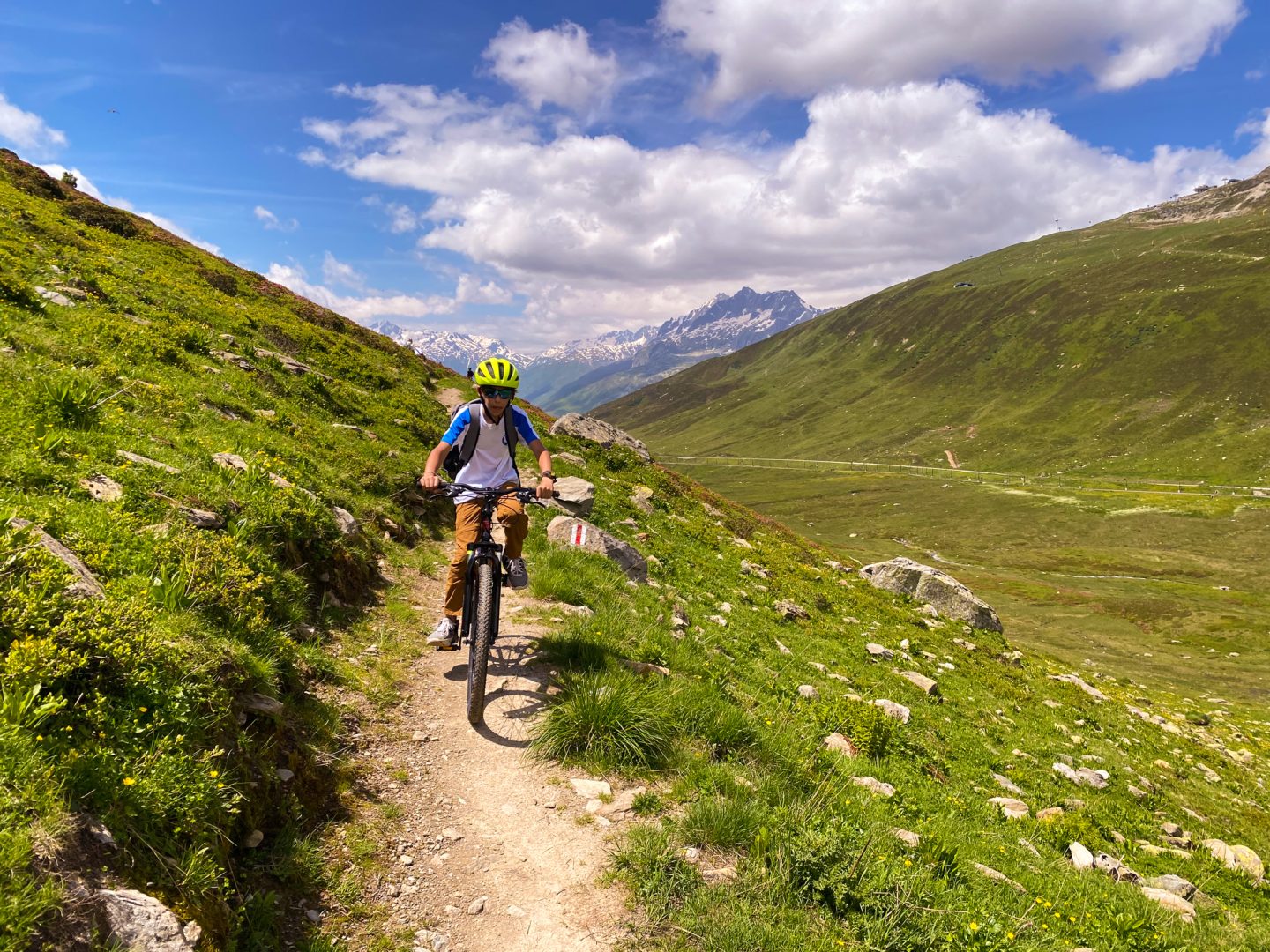
Sources
Swiss Federal Statistical Office — Territory statistics
Switzerland Tourism — The Alps
Federal Office of Civil Aviation (FOCA) — Drones: rules and good practice
Swiss Federal Railways (SBB) — Timetables & routes
Jungfrau Railways — Jungfraujoch – Top of Europe
Gornergrat Bahn — Gornergrat Railway & viewpoint
Titlis Engelberg — Mount Titlis, Rotair cable car & glacier park
Zermatt Tourism — Zermatt & the Matterhorn
Interlaken Tourism — Interlaken between Lakes Thun & Brienz
Lauterbrunnen Tourism — Lauterbrunnen Valley & falls