How Camps Build Healthy Social Skills
Camps that build social skills using small stable groups, adult mentorship, mixed-age mentoring, brief SEL lessons and simple impact measurement
Camp design to build healthy social skills
I design camps to build healthy social skills through stable, small peer groups and sustained adult modeling and coaching. They use mixed-age mentoring, repeated cooperative tasks, low-risk challenges and structured reflection. Campers get frequent, real-world practice and role rehearsal. I find multi-day sessions with 2–3 short SEL lessons per week work best. Systematic staff training and simple pre/post measurement plans increase durability of gains and let camps demonstrate impact.
Key Takeaways
- Prioritize small, stable groups; intensive adult mentorship; mixed-age mentoring; repeated cooperative tasks; low-risk practice; and structured reflection. These mechanisms produce measurable social-skill development.
- Favor multi-day exposure: week-long or multi-week sessions with 2–3 brief SEL lessons and daily embedded practice. Those formats yield stronger, more durable gains than single-day events.
- Measure feasibly and rigorously by pairing a 6–10 item pre/post camper survey with a validated instrument (SSIS, SDQ, Rosenberg) on a subsample. Report new-friend rates, pre/post means, percent change and effect sizes.
- Ensure staff fidelity with 8–24 hours of pre-camp training, weekly 30–60 minute boosters and regular 15–20 minute in-session observations using competency checklists. I coach leaders to run brief, focused observations and give clear feedback.
- Operationalize practice by setting age bands and group sizes (approximately 6–8 for young children, 8–12 for older). Rotate leadership roles, schedule daily debriefs, and coach parents to reinforce skills at home.
Practical implementation notes
Session format: Prioritize multiple consecutive days (e.g., week-long or multi-week) and embed 1–3 brief SEL lessons weekly with daily practice opportunities.
Measurement checklist:
- Administer a concise 6–10 item pre/post camper survey to all participants.
- Use a validated instrument (e.g., SSIS, SDQ, Rosenberg) on a subsample for benchmarking.
- Report outcomes: new-friend rates, pre/post means, percent change, and effect sizes.
Staff development: Allocate 8–24 hours of pre-camp training, weekly 30–60 minute booster sessions, and routine 15–20 minute observations using competency checklists. Coach observers to deliver concise, actionable feedback.
Group structure and practice
- Group sizes: ~6–8 for younger children; ~8–12 for older campers.
- Mixed-age mentoring: Pair or mix ages so older campers model and support younger peers.
- Role rotation: Rotate leadership roles to provide repeated role rehearsal and increasing responsibility.
- Daily debriefs: Short, structured reflection after activities to consolidate learning.
- Parent coaching: Share simple reinforcement strategies so gains generalize to home.
If you want, I can draft a sample 6–10 item pre/post survey, a brief competency checklist for observations, or a sample pre-camp training syllabus.
Why Camps Are Powerful Engines for Social-Skill Development
25–26 million youth attend organized camps annually in the U.S., so camp settings are a large-scale, high-impact out-of-school environment for social-skill development. I treat camps as organized laboratories for social-emotional learning; Durlak et al. (2011) found an average +11 percentile-point academic gain from school-based SEL programs, and the core components they identify—explicit instruction, safe practice opportunities, and positive adult modeling—map directly onto well-run camps.
Camps structure repeated, real-world practice in ways schools often cannot. Stable small groups (cabins/units) provide predictable contexts for feedback and role rehearsal; I recommend group sizes of about 6–8 for early elementary and 8–12 for older campers. Frequent, scaffolded counselor coaching supplies timely modeling. Mixed-age mentorship gives older campers leadership practice while younger campers gain role models. Repeated cooperative tasks—team challenges, chores, belay teams—create cycles of attempt, feedback and improvement. Low-stakes risk activities build trust and resilience, and structured reflection helps campers consolidate what they learned. Unstructured free play completes the loop: it lets kids invent games, negotiate rules and test social roles.
Core mechanisms with practical examples
- Small stable peer groups — Cabin roles such as meal setup and duty rotations give campers recurring chances to practice responsibility and cooperation.
- Intensive adult mentorship — A counselor models and coaches a camper through resolving an equipment dispute, then debriefs the interaction.
- Mixed-age peer mentoring — Buddy pairings have older campers lead a skills station for younger peers, providing leadership practice and peer modeling.
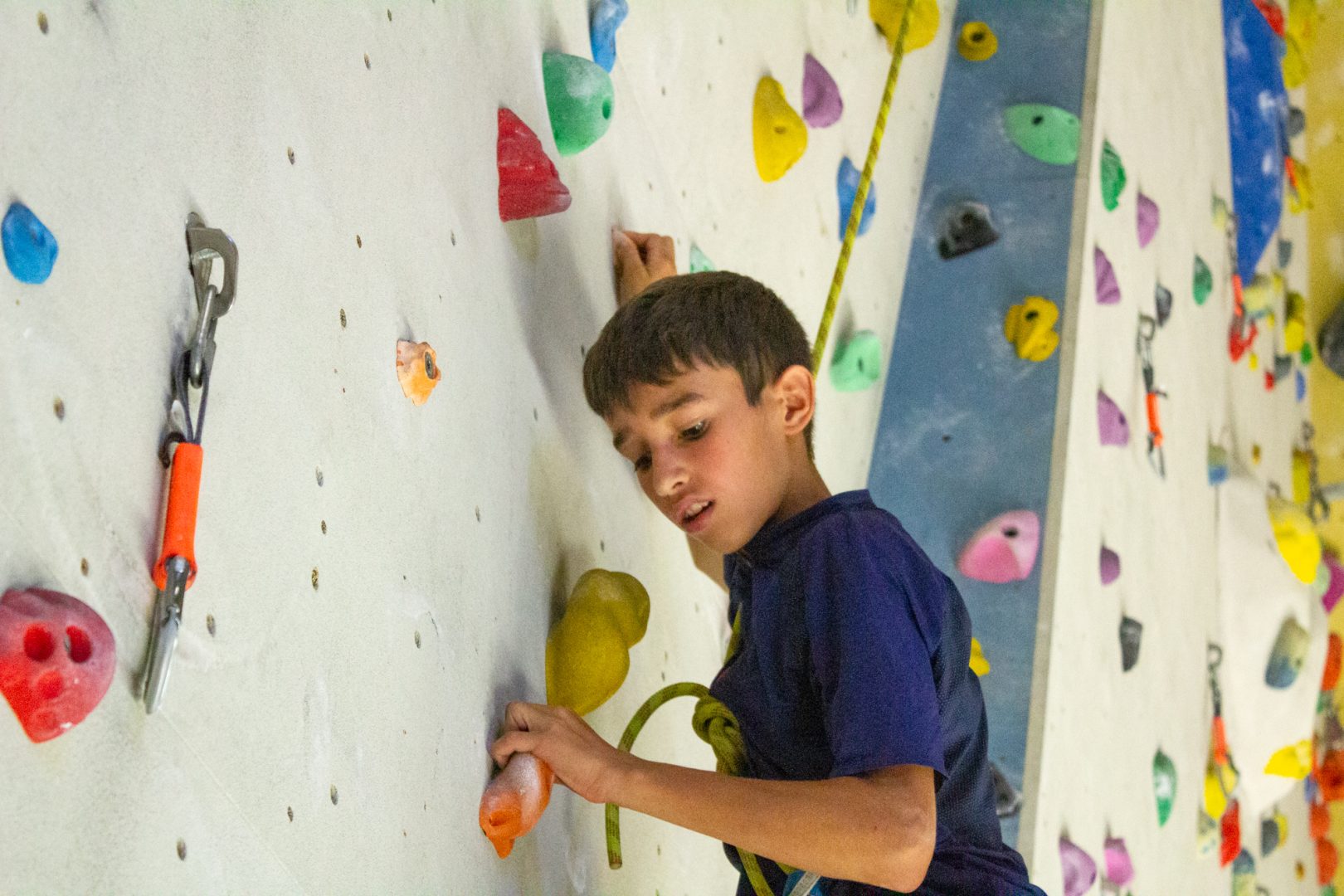
- Repeated cooperative tasks — Ropes-course belay teams run repeated rounds, practicing clear communication and shared accountability.
- Low-stakes risk-taking — Progressive challenge-course elements let campers attempt, fail, retry and receive peer encouragement.
- Structured reflection — Nightly debriefs use guided questions (What worked? What would you try differently?) to build metacognition.
- Unstructured play — Free-play periods let campers form games, negotiate rules and let informal leaders emerge.
Multi-day exposure matters. I find week-long or multi-week sessions produce stronger, more durable social-skill gains than single-day events because habits need repetition and continuity to consolidate. For program design, include 2–3 explicit SEL sessions per week (10–20 minutes each) plus daily embedded practice across cabin life, activities and debriefs.
Measurement should balance feasibility and rigor. I measure core social outcomes with validated tools and simple camp-friendly surveys. Validated instruments I recommend are the SSIS (Social Skills Improvement System) (ages ~3–18; ~10–20 minutes), the SDQ (Strengths and Difficulties Questionnaire) (versions for ages 2–17; ~5–10 minutes), and the Rosenberg Self-Esteem Scale (adolescents, ~5 minutes).
Recommended approach:
- Pair a brief 6–10 item pre/post camper survey with one validated instrument administered to a subsample to balance feasibility and rigor.
- Track key outcomes including:
- New-friend rates (% reporting at least one new close friend)
- Teamwork/cooperation via observational rubrics or SSIS subscales
- Leadership (role-taking frequency and self-efficacy scores)
- Communication (peer/counselor checklists)
- Conflict resolution (incident rates and SDQ prosocial scores)
- Independence/resilience (self-reliance items and return rates)
- Report clearly: include percentage of campers who “made a new friend,” pre/post mean and SD, % change and effect size (Cohen’s d).
Many camps benchmark new-friend rates at 60–80% and aim for return rates over 50% for overnight programs; tailor these to your data.
Evidence and research design
The evidence base is promising but incomplete. Durlak et al. (2011) gives a rigorous school-based SEL benchmark; aggregate camp outcome surveys from the American Camp Association (ACA) show consistent gains in friendship-making, independence, leadership and confidence. Still, fewer large randomized trials exist for camps versus schools. I encourage matched cohorts, waitlist controls or randomized designs where feasible, plus cross-camp data sharing to build generalizable evidence.
Staff training and fidelity
Staff are the primary agents of change. I require pre-camp training of 8–24 hours covering SEL fundamentals, conflict mediation, inclusive facilitation and lesson practice, plus weekly 30–60 minute boosters and at least one 15–20 minute fidelity observation per counselor per session. Use competency checklists, direct observation rubrics and periodic inter-rater checks to maintain fidelity.
Suggested training structure:
- Pre-camp intensive: 8–24 hours (SEL basics, mediation, role-play).
- Weekly boosters: 30–60 minutes focused on upcoming challenges and reflection.
- In-session fidelity: one 15–20 minute observation per counselor per session with feedback and inter-rater checks.
Operational recommendations for directors and parents
I advise directors to build these operational practices into programs and parent messaging. Concrete steps for camps:
- Set explicit age bands and group sizes.
- Embed short SEL lessons several times weekly.
- Rotate leadership roles and use mixed-age buddies.
- Schedule daily debriefs.
- Implement a minimal measurement plan: 6-question pre/post camper survey + one validated instrument for a subset.
- Review structured leader curricula and mentoring models (see youth leadership program examples for structured leader practice and mentoring in camp contexts).
For parents, suggest three simple follow-ups:
- Arrange a playdate with a cabin peer.
- Assign a home leadership task (e.g., lead a family game or chore rotation).
- Use nightly debrief questions: What did you try today? Who helped you? What will you try tomorrow?
In short, well-designed camps combine stable peer contexts, intentional adult mentorship, repeated cooperative practice, opportunities for low-stakes risk, and structured reflection to produce measurable gains in social skills. Building measurement and staff-fidelity systems into routine operations will help camps demonstrate impact and continuously improve.
Sources:
Durlak et al. (2011) — The Impact of Enhancing Students’ Social and Emotional Learning: A Meta‑Analysis of School‑Based Universal Interventions
American Camp Association — ACA research and white papers
CASEL — CASEL frameworks / CASEL Guide to Effective Social and Emotional Learning
Social Skills Improvement System (SSIS) — Social Skills Improvement System (assessment)
Strengths and Difficulties Questionnaire (SDQ) — Strengths and Difficulties Questionnaire (assessment)
Rosenberg Self‑Esteem Scale — Rosenberg Self‑Esteem Scale (assessment)
CampMinder — CampMinder (camp management)
CampBrain — CampBrain (camp management)
UltraCamp — UltraCamp (camp management)
Active Network — Active Network (camp modules)
Sawyer — Sawyer (camp product)
CampDoc — CampDoc (health/forms)
Qualtrics — Qualtrics (survey platform)
SurveyMonkey — SurveyMonkey (survey platform)
Google Forms — Google Forms (survey tool)
REDCap — REDCap (data capture platform)