Overview
Camps as a complementary third space
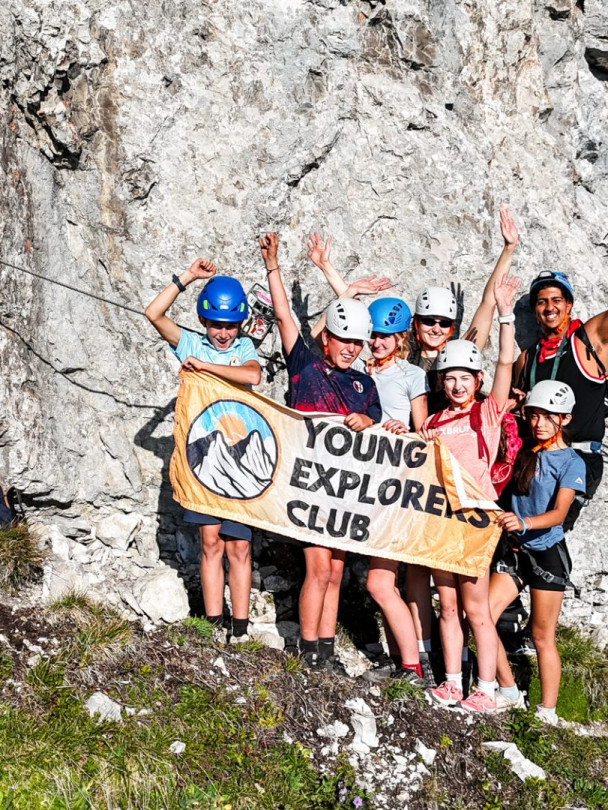
Camps serve as a complementary third space to home and school. They provide extended, play-driven outdoor time, structured skill sessions, and supervised risk-taking. These activities build physical health, creativity, and confidence. We’re the Young Explorers Club, and we combine immersive peer living, progressive responsibility, focused practice, and measurable enrichment. That approach addresses access and program evaluation, helping close gaps in social-emotional learning, motor development, and academic continuity throughout childhood.
 Watch on YouTube
Camps at a Glance: Scale, Definition and Core Benefits
We, at the Young Explorers Club, see camps serve 26+ million campers annually, according to the American Camp Association (ACA). Camps act as a third setting alongside home and school, and they complement both by offering immersive, play-driven experiences that last beyond a single afternoon.
Types and clear definitions
Camps come in several formats; common types include:
- Day camp — full- or half-day programs focused on outdoor play, skill blocks, and group games.
- Overnight / sleepaway camp — multi-night stays with cabins or bunks, shared meals, and round-the-clock staff supervision.
- Specialty camps — focused tracks such as STEM, arts, or sports that give intensive practice time.
- Academic / residential — school-like schedules combined with extended immersion for advanced study or enrichment.
- Therapeutic / adaptive — medically or developmentally adapted programs that prioritize safety and targeted outcomes.
- Family camps — programs where families join to learn, hike, cook, or simply play together.
Core benefits that fill gaps left by home and school
Home typically provides daily routines, family-led socialization, caregiver-managed risk, and variable outdoor time. School delivers curriculum-driven learning, classroom social structures, and consistent schedules. Camps add what both often lack — extended free play and unstructured outdoor exploration that supports physical health and curiosity; I encourage families to read about the importance of unplugging when discussing outdoor time.
Supervised risk-taking and experiential challenges are core camp features. Kids practice judged risks on low-stakes climbs, canoe trips, or ropes courses, which helps grow confidence and adaptive problem solving. We point parents to our practical tips for parents to prepare kids for those moments.
Multi-day peer living matters: shared bunks, group chores, and communal meals create intensive social contexts where youngsters try out roles, learn negotiation, and build friendships fast. Those environments accelerate social learning in ways a 45-minute class can’t. For coaches and parents wanting specifics, our piece on how camps build social skills explains typical stages.
Focused blocks for skills and leadership are another advantage. Whether a week of theater or a two-week wilderness program, campers get concentrated practice, immediate feedback, and repeated responsibility. That structure produces measurable gains in competence — explore the list of 10 life skills commonly taught at adventure camps to see the pattern.
Social-emotional benefits are direct and observable: camps foster independence, emotional regulation, and teamwork. They create achievement moments that boost confidence; see how camp experience builds self-esteem through accomplishment. Camps also reduce stress by offering nature access, peer support, and activity variety—read about camps and mental well-being for details.
Responsibility is taught through role-based tasks like leading a cabin, managing gear, or running an activity. Those chances to lead are intentional and progressive. For program examples, check how campers learn responsibility via camp routines.
Creativity and analytical thinking get a boost from project cycles, improvisation games, and open-ended challenges that nudge kids to experiment. Read about camp-driven creativity and problem-solving to see curriculum ideas you can replicate at home.
Finally, camps support a balanced childhood by filling gaps: extended play, supervised challenge, immersive social living, and focused skill time. For families weighing options, our roundup of why summer camps matter and the top benefits for teens make the case clearly. We recommend thinking of camp as a complementary third space that adds physical activity, social-emotional learning, independence, and concentrated skill development to a child’s life.
https://youtu.be/WNsfsFtJCWo
Physical Health, Screen-Time Reduction, and Outdoor Time
We, at the Young Explorers Club, build an active camp schedule so kids get real, daily movement and sustained outdoor play. Children and adolescents should get at least 60 minutes/day of moderate-to-vigorous physical activity per CDC guidance. Camps typically deliver far more than that, helping reverse trends like childhood obesity 19.7% of U.S. kids ages 2–19 (CDC). I limit screens and increase hands-on play because the American Academy of Pediatrics recommends about 1 hour/day for ages 2–5 for screen use, and camps naturally create long, restorative screen-free stretches.
Why active programming matters
- Replace sedentary hours with structured and free activity so campers build stamina, coordination, and strength.
- Regular movement supports healthy weight regulation and cardiovascular fitness, directly addressing the childhood obesity 19.7% concern (CDC).
- Less evening screen time at camp improves sleep onset and quality, which boosts mood and daytime attention.
- Skill practice—repetition on trails, in the pool, and during team games—improves motor development.
How camp delivers activity and screen reduction
- Overnight programs commonly include 2–6 hours/day of structured and free physical activity; day camps often give 3–5 hours/day.
- Extended outdoor play replaces small bursts of passive screen time with sustained, social, and physically demanding tasks that teach cooperation, risk assessment, and self-regulation.
- I encourage parents to see camp as a chance to reset daily routines: later teen bedtimes get replaced by consistent lights-out routines, and evening screens give way to campfires or leadership tasks that preserve sleep quality.
Typical full-day itinerary and activity minutes
Below is a representative full-day overnight/day-camp model and estimated moderate-to-vigorous activity ranges so you can compare home, school, and camp delivery.
- 07:00 Wake, hygiene (10–20 min)
- 07:30 Breakfast and cabin clean-up (40–60 min)
- 08:30 Activity block 1: team sports / nature hike (60–90 min)
- 10:15 Free play / skill workshop (45–60 min)
- 11:30 Activity block 2: swim / ropes course (60–90 min)
- 13:00 Lunch and rest (60–90 min)
- 14:30 Activity block 3: arts / STEM project (60–90 min)
- 16:00 Choice time / small groups (30–60 min)
- 17:00 Evening programs (campfire, skits, leadership tasks) (60–120 min)
- 20:30 Lights-out routine for younger campers / optional teen programming
Estimated minutes of moderate-to-vigorous activity/day (typical ranges):
- Home (estimate): 15–40 minutes/day — highly variable by family and neighborhood.
- School (estimate including PE/recess): 20–40 minutes/day — depends on schedule and grade.
- Camp (typical ranges): 120–360 minutes/day — depends on overnight vs. day camp and program intensity.
Practical takeaways I recommend for parents
- Pick programs with clear blocks of outdoor play and an active camp schedule so children routinely exceed the 60 minutes/day target.
- Encourage short screen ramp-downs before sleep; camps that promote unplugging help improve sleep and mood—see my notes on unplugging.
- Look for balance: camps that combine high-energy options (swim, ropes, sports) with skill-focused time (arts, STEM, workshops) help kids develop motor skills and emotional resilience.
Increased physical activity at camp produces measurable secondary benefits: better sleep, improved mood, stronger motor skills, and reduced sedentary behavior. I design schedules to make those benefits accessible every day.

Social, Emotional Development, Independence and Risk-Taking
We, at the young explorers club, see camp as a concentrated environment where peer relationships, teamwork and leadership grow through extended, peer-focused experiences and progressive responsibility. Research shows this pattern clearly: ACA compilations and youth development journals identify camp as a strong context for positive youth development with measurable gains in social skills and self-efficacy.
Camps generate social-emotional learning (SEL) and independence through predictable structures that repeat learning opportunities. Small-group activities and cabin living create countless chances for cooperative problem-solving and social negotiation. Counselors model behavior and give structured feedback that acts as social coaching and encourages emotional reflection. Camper leadership roles — from simple chores to counselor-in-training tracks — build mastery and self-efficacy by assigning meaningful responsibility. Supervised risk, like ropes courses, independent overnights or public performances, lets campers practice decision-making and recover from setbacks in a safe setting.
I illustrate age-appropriate independence-building with concrete examples below; these show how tasks scale with capacity and confidence.
Age-specific examples
- Ages 3–5 (preschool): brief, supervised separations and routine independence — toileting, dressing, joining group songs — build comfort away from caregivers.
- Ages 6–9 (elementary): peer negotiation in team games, turn-taking leadership in small projects, and self-management of gear and daily routines reinforce responsibility.
- Ages 10–13 (middle): sleepaway overnights, roles like meal prep and activity leadership, plus guided conflict mediation, increase autonomy and resilience.
- Ages 14–17 (teens): counselor-in-training positions, leading full activities, advanced wilderness and first-aid skills, and mentoring younger campers create pathways to leadership and vocational exploration.
I recommend measuring outcomes with a mix of quantitative and qualitative methods. Use pre/post SEL scales and brief self-efficacy instruments to capture change over time. Pair numeric gains with qualitative outcomes — increased confidence, fewer social anxieties, richer behavioral observations — so results reflect real-world shifts. When you report numbers, include the study or program name, sample size, timeline and effect size or confidence intervals where available; that context prevents overinterpretation and improves credibility.
For program design, emphasize progressive responsibility and clear feedback loops. Provide low-stakes supervised risk early and expand it as campers demonstrate competence. Track leadership opportunities so every age group has achievable pathways to mastery. If you want practical tips on building social skills at camp, see this short guide on social skills that complements these strategies.
Cognitive, Academic and Creative Benefits
We, at the young explorers club, build programs that reduce summer learning loss by combining structured enrichment with playful discovery. Research from RAND documents the risk of summer learning loss and highlights camp-based enrichment as an effective intervention, so we design curricula that mix targeted instruction and open-ended projects to protect and advance learning.
Types of cognitive impact by camp model
We separate models by intent and outcome. Academic enrichment and STEM camps deliver targeted instruction that shows measurable gains on curriculum-aligned assessments when exposure is substantial — typically multi-day or multi-week programming. Those gains are easiest to demonstrate with pre/post testing and comparison to baseline or control groups. Recreational and arts camps produce more indirect cognitive benefits: they strengthen executive function, boost divergent thinking, and sharpen problem-solving through project-based and play-driven experiences. Maker education and arts camps foster persistence and cognitive flexibility even without formal tests.
We recommend mixing models across a season. Academic tracks preserve and extend grade-level skills; arts and maker sessions stimulate creativity and higher-order thinking that transfer back into academics. For measurable academic impact, prioritize continuity and clear assessment windows; for creativity, prioritize iterative projects that produce learner artifacts.
Creative stimulation, methods and concrete examples
I introduce practical methods we use and the learning outcomes they generate. The following activities show how creative practice ties directly to cognitive growth:
- Project-based STEM task: designing and testing simple machines — outcomes include applied physics concepts, iterative problem-solving, and teamwork.
- Writing workshop: daily journaling with peer feedback — outcomes include written-expression fluency and audience awareness.
- Nature science investigation: multi-day data collection and analysis — outcomes include observational skills, hypothesis testing, and data interpretation.
We also use maker education labs and arts camps to practice divergent thinking through constraints: we give limited materials, clear constraints, and open goals to encourage novel solutions. Unstructured play slots let kids test ideas without penalty, which builds persistence and adaptive strategies.
For camps with academic curricula, we compare pre/post scores against baseline or control groups and report gains in familiar metrics (for example, months of learning retained or gained) by age cohort and instrument. We pair those quantitative measures with learner artifacts — portfolios, project videos, and recordings — as qualitative evidence of creative and cognitive growth. Those artifacts let mentors and parents see iterative progress that tests might miss.
We track outcomes using simple, repeatable tools: short diagnostic assessments, rubrics for project work, and reflection logs. That combination gives a clear picture of what academic enrichment and creative practice each contribute, and it helps us adjust programming to meet both curriculum goals and the cognitive skills kids need to thrive. For more on how camps encourage creativity and problem solving, see encourage creativity.

Types of Camps, Recommended Ages, Durations and Choosing the Right Fit
I outline the primary camp types so parents can match purpose with program.
- Day camp — offers daily activity with local logistics and is ideal for regular participation and lower barriers to entry.
- Overnight camp (sleepaway) — gives immersion and independence; it accelerates social-emotional growth.
- Specialty camps (STEM, arts, sports) — focus on targeted skill-building and concentrated practice.
- Therapeutic camp programs — provide accessibility and focused supports for medical, physical or developmental needs.
- Academic/residential camps — deliver intensive learning and academic acceleration.
- Family camps — create intergenerational bonding through shared outdoor experiences.
We, at the Young Explorers Club, prioritize programs that support mental well-being and stress relief; parents often see improved confidence and resilience after even short stays. I recommend checking program descriptions for explicit SEL goals and staffing ratios.
Recommended starting ages and session formats are practical guides, not strict rules. Preschool day camps usually run half-day with caregiver transitions and emphasize short separation and play routines. Full-day day camps suit elementary-aged children (ages 5–11). Many overnight/sleepaway camps accept campers around ages 7–8+, depending on policies and readiness. Session lengths range from half-day and full-day to single-day, week-long and multi-week sessions. Repeated attendance across years amplifies benefits, but even a single week can produce measurable short-term gains if the program is focused.
Typical age-by-age mapping clarifies expected outcomes:
- Ages 3–5: half-day preschool camps — routines, social play, separation skills and basic self-care.
- Ages 6–9: full-day day camps — cooperative play, emerging independence and basic skill development in sports or arts.
- Ages 10–13: overnight options and specialty tracks — increased autonomy, leadership beginnings and advanced peer negotiation.
- Ages 14–17: leadership programs, counselor-in-training roles and intensive specialty or residential academies — leadership development, vocational skills and mentoring experience.
Simple decision checklist for parents
Use this quick checklist when narrowing choices:
- Child age and developmental readiness.
- Primary goals: activity/fitness, SEL, academics/enrichment, or specific skills.
- Budget and available financial aid.
- Logistics: location, drop-off/pick-up windows, session length and medical supports.
- Desired duration/frequency and comfort with overnight stays.
- Program staff qualifications and camper-to-staff ratios.
For deeper reading on benefits and age-appropriate outcomes, see our piece that helps families support mental well-being at camp.

Access, Cost, Equity and Measuring Camp Impact
We, at the young explorers club, treat cost as a primary access barrier and plan accordingly. Many camps and nonprofits offer scholarships, sliding scale fees, or subsidized camps through partnerships with schools and social services. Public programs like the YMCA and municipal parks & rec usually provide lower-cost slots that families can rely on. I encourage staff to list available aid clearly on registration pages and outreach materials and to point families toward local community recreation options such as community recreation when appropriate.
We recommend a simple local affordability audit that programs can repeat annually. Collect average cost ranges for day versus overnight camps, note typical scholarship availability (percent of slots or dollar ranges), and track common aid sources so families can compare options quickly.
- Audit elements:
- Collect average cost ranges for day and overnight camps
- Note typical scholarship availability (percent of slots or dollar ranges)
- Track common aid sources: camp scholarships, ACA local chapters, school/community partners, municipal parks & rec, and the YMCA
- Publish ranges and the percentage of subsidized slots on registration materials
Measuring impact — practical evaluation plan
We use mixed methods to capture outcomes. Combine quantitative pre/post measures with qualitative outcome data to show both scale and story. For social-emotional learning (SEL) use validated SEL scales; for physical health log minutes of moderate-to-vigorous activity (MVPA) or use simple step/wearable summaries; for enrichment camps include academic pre/post tests. Track attendance/dosage, camper demographics, and program components so you can run subgroup analysis and estimate effect size across different groups. Collect short testimonials and counselor observations to illustrate context and program fidelity.
- Key measures and practices:
- Use validated SEL/self-esteem scales for comparability
- Record MVPA minutes or simple wearable summaries for physical-activity measurement
- Track attendance, program dosage, and demographic information for subgroup analyses
- Collect brief qualitative data (testimonials, counselor notes) to document fidelity and context
Sample evaluation timeline and measures
- Baseline (arrival): demographic intake; baseline SEL scales; academic pre-test if relevant; health/physical-activity baseline.
- Daily: attendance record; activity log or wearable summary (minutes of MVPA); brief mood check-ins.
- End-of-session: post SEL survey; academic post-test; qualitative reflection from campers; caregiver and counselor observations.
- Follow-up (3–6 months): retention checks on SEL maintenance, academic retention, and behavior changes.
Report analysis clearly. Include effect size and confidence intervals when you publish quantitative findings, and always show sample sizes and subgroup breakdowns. Use qualitative outcome reporting—testimonials, artifacts, observation summaries—to explain how and why measured changes happened. Track short-term versus longitudinal gains so funders and partners see cumulative benefits from repeated attendance.
We advise local programs to document typical local cost ranges and the percentage of scholarship slots, then advertise aid sources prominently to families. Build formal partnerships with schools and community organizations to reach underserved populations and to enable subsidized placements. Use validated SEL/self-esteem scales and straightforward physical-activity measures so results remain comparable across programs and over time.