

Outdoor Programs Build Lasting Confidence
Outdoor programs build lasting confidence by pairing repeatable skill practice, social belonging, and physical restoration with regular movement outdoors. Research recommends about 120 minutes per week in nature for population-level mental-health benefits. We’re adding progressive challenges, multi-day immersion, and months-long outcome tracking to lock in durable gains.
Program Design Recommendations
Graded Challenge and Curriculum
-
Graded challenge ladders that allow participants to progress incrementally and experience repeated mastery.
-
Structured debriefs after activities to connect skills practice to real-world confidence and to reinforce learning.
-
Multi-day immersions to intensify learning, deepen social bonds, and support longer-lasting changes.
Measurement and Evaluation
-
Measure dose: hours per week in nature and program attendance.
-
Measure outcomes: self-efficacy, self-esteem, resilience, and relevant physiological markers.
-
Timing: collect data at baseline, immediate post-program, and at follow-ups (3–12 months) to assess durability.
Equity and Access
-
Co-designed programs that reflect participant needs and local context.
-
Sliding-scale fees and subsidies to reduce financial barriers.
-
Mobile or schoolyard delivery to reach participants where they are.
-
Subsidized transport and local multilingual staff to improve accessibility and cultural relevance.
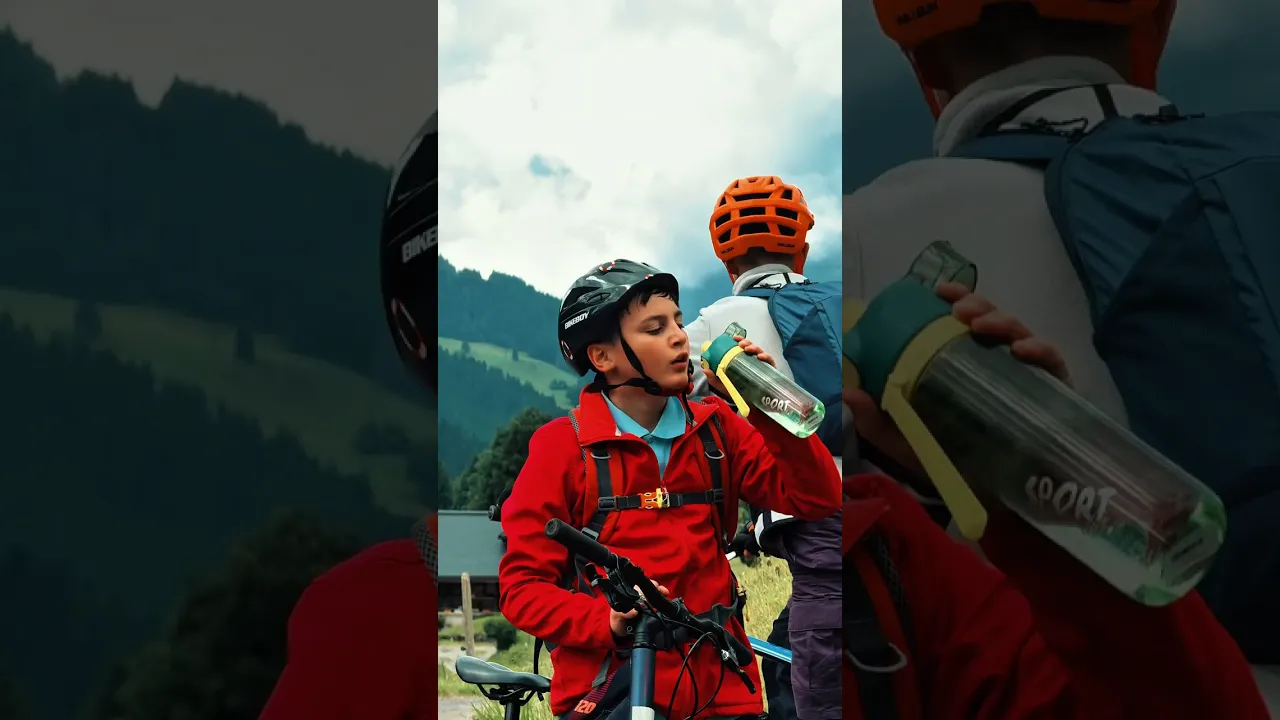 Watch on YouTube
Why this matters: global need and a practical nature dose
We see mental-health need at a population scale: the WHO reports depression at 4.4% and anxiety at 3.6%. Those headline figures argue for scalable, preventive approaches that build resilience and long-term confidence. Outdoor experiences scale well; they reach groups who won’t access clinical care and they boost skills you can practice repeatedly.
A practical minimum for mental-health–oriented nature exposure comes from White et al. 2019: about 120 minutes per week in nature is associated with good health and wellbeing. That 120-minute figure is a population-level association — a useful target to aim for, not a clinical prescription.
The WHO physical activity guidelines recommend 150–300 minutes per week of moderate-intensity aerobic activity for adults. Those minutes target cardiovascular and metabolic health, but outdoor activity delivers both movement and a nature-specific mental-health signal.
Note the overlap and the difference. The 120 minutes captures a mental-health signal linked to time spent in natural settings (White et al. 2019). The WHO 150–300 minutes targets aerobic fitness and physical disease risk reduction. Combine them by doing moderate outdoor activity in green settings and you hit both targets. That combo accelerates confidence through two clear pathways: improved fitness (we get stronger and more capable) and mastery (we learn skills, overcome small challenges, and see progress).
How to apply this practically
- Set simple weekly targets and mix them. Aim for at least 120 minutes in natural settings, and include 150 minutes of moderate activity if you can — a brisk walk, bike ride, or outdoor games count.
- Build sessions that deliver both benefits. Choose green routes for runs, parks for circuit training, and nature trails for family hikes so aerobic load and nature exposure happen together.
- Use progressive mastery to grow confidence. Start with short, achievable outings and increase duration or challenge each week. Celebrate small wins and log progress.
- Make it social and teach responsibility. Group hikes, outdoor sports and our camp programs create shared goals and leadership chances that reinforce self-efficacy.
We, at the young explorers club, design activities that map directly to these targets and help families meet the evidence-based 120-minute threshold while moving toward WHO activity goals. For practical background on why kids need more time in nature, we point families to research-backed guidance that complements these prescriptions.

Mechanisms: how outdoor experiences build long-term confidence
We, at the Young Explorers Club, aim each program at specific psychological and physiological levers that produce lasting confidence. I describe five mechanisms below and link them to practical design choices you can use immediately.
Mastery and skill acquisition
We set progressive challenges so participants register repeated wins. Bandura’s theory of self-efficacy explains why this works: concrete mastery experiences raise perceived competence and then generalize across tasks. We scaffold skills—basic map reading and compass work, then ropework, then paddling—so success compounds. That sequence turns isolated achievements into a transferable belief that “I can learn this,” which spills into schoolwork, social risks and leadership roles.
Stress reduction and physiological restoration
We plan multi-day stays in forests because the physiology matters. Park et al. report decreased cortisol and increased NK cell activity after forest exposure, with effects lasting up to 30 days. Lower baseline arousal reduces threat sensitivity. That calmer baseline makes kids and teens more willing to try novel, uncertain challenges after the trip. A measurable drop in salivary cortisol and a rise in immune markers after a forest trip correspond with larger behavioral shifts in risk-taking and persistence.
Immediate mood benefits (green exercise)
Short bouts work fast. Barton & Pretty found as little as five minutes of green exercise improves mood and self-esteem. We use quick, repeatable activities—ten-minute park runs, brief nature walks before sessions—to produce immediate uplift. Those rapid wins provide reinforcement and make participants return for more, which feeds the mastery cycle.
Social belonging and shared achievement
We build team rituals and joint goals so social reinforcement locks in confidence gains. Group expeditions create vicarious learning, peer validation and a new identity—“I’m someone who completes this.” Finishing a team overnight expedition generates shared stories and ongoing encouragement that sustain confidence longer than solo achievements.
Physical fitness and body competence
We emphasize movement variety: cycling, hill-walking and balance tasks. Improved endurance and coordination raise bodily confidence. That increased competence translates into practical autonomy—kids move more confidently in daily life, and that boosts overall self-regard.
Practical pathways (how I structure programs)
Below are concrete sequences I use to convert each mechanism into repeatable outcomes:
- Progressive skills ladder that scales with ability:
- basic map reading
- overnight route-finding
- leading a small group (produces repeated mastery)
- Multi-day forest trip protocol:
- baseline salivary sample
- 3+ days of forest immersion
- post-trip measures (targets the Park et al. effects)
- Micro green-exercise routine:
- 5–15 minute pre-session runs or walks to trigger immediate uplift (leverages Barton & Pretty)
- Team rituals that cement belonging:
- shared debriefs
- group storytelling
- peer-led reflection after expeditions to amplify social reinforcement
- Movement program for bodily confidence:
- weekly cycling/hill sessions focused on balance and endurance to build transferable physical competence
I link these pathways to program outcomes so staff can see which practice produces which psychological shift. For practical background on camp-driven self-esteem I refer to our work on self-esteem, and for evidence on why time outside matters see research on time in nature. For methods that combine skill, challenge and learning I point coaches to resources about outdoor learning.
Where possible, I measure outcomes: skill checklists, pre/post cortisol for longer trips, short mood surveys after green exercise and peer-rated belonging scales. Those measures let me adjust difficulty, session length and group composition so confidence gains hold beyond the program.

Empirical evidence: headline studies, outcomes and effect-size guidance
We, at the Young Explorers Club, treat evidence as our compass. Large-scale, population-level analyses give clear targets. White et al. 2019 found that spending at least 120 minutes a week in nature is associated with better health and wellbeing — a useful public-health dose-response benchmark.
Short exposures also matter: Barton & Pretty report that just five minutes of green exercise produces measurable mood and self-esteem improvements, so even brief interventions can shift affect and confidence.
Physiological field experiments add biological plausibility. Park et al. show multi-day forest exposure reduces salivary cortisol and raises natural killer (NK) cell activity, with some effects lasting up to about 30 days after exposure. Those are field experiments, and they demonstrate short- to medium-term biological change that can support psychological gains.
Program evaluations consistently report changes in self-efficacy, leadership and self-concept after outdoor/adventure programs (examples include Outward Bound, NOLS, adventure therapy).
Typical findings:
- Single-weekend or short programs often yield small-to-moderate immediate gains (post-program Cohen’s d ≈ 0.2–0.5) with partial retention at 3 months.
- Longer immersive expeditions (7+ days) tend to produce larger initial gains and greater sustained effects at 3–12 month follow-ups.
- Across evaluations, post-program percent changes or Cohen’s d usually fall in the modest range (≈ 0.2–0.6), with durability linked to program length and follow-up supports.
I recommend that practitioners and evaluators report these core elements to judge effect sizes and persistence accurately.
Reporting checklist and interpretation
Use the following items when you design or read studies and program reports:
- Sample frame and design — national survey; field experiment; program evaluation — larger, representative samples raise confidence.
- Sample size and attrition rates — report how many started and how many completed follow-ups.
- Primary outcomes and measurement tools — specify self-report scales, biological markers, or behavioral metrics.
- Timing of follow-ups — state immediate post-program and any 3–12 month assessments.
- Effect sizes with confidence intervals (Cohen’s d or percent change) — give both point estimates and uncertainty.
- Intention-to-treat analyses when feasible — this guards against bias from dropouts.
- Compare immediate vs sustained effects explicitly — note where gains fade and where they persist.
We encourage families and program designers to consider evidence-driven targets (for example, 120 minutes per week or brief green breaks) and to review program evaluations before committing to a format. For practical guidance on camp benefits, see our page on summer camps.
Who benefits and what types of outdoor experiences yield which confidence outcomes
We, at the Young Explorers Club, match activity format to age and need so confidence grows steadily. For children and adolescents, daily outdoor time of about 60 minutes supports self-regulation, social skills and resilience; school-based Forest School and unstructured play show small-to-moderate improvements in self-regulation and social competence. Encourage daily free play and weekly Forest School sessions (1–3 hours) for steady developmental gains and to meet recommended nature targets like 120 minutes per week — see time in nature for background.
Adults benefit from 150–300 minutes of activity weekly, with a practical target of 120 minutes+ in nature for clear mental-health benefits (White et al. 2019). I recommend regular 30–60 minute guided nature walks to accumulate that time, plus monthly skill workshops (1–3 hours) and occasional weekend expeditions for larger confidence gains. Guided walks and Shinrin-yoku produce quick mood and stress reduction, supported by physiological findings (Park et al.).
Green exercise like jogging or cycling outdoors boosts mood and self-esteem even after very short bouts; the five-minute effects are documented (Barton & Pretty). Structure sessions to include achievable physical challenges so participants experience mastery and fitness benefits that translate into everyday confidence.
Clinical and vulnerable groups need structured programs. Wilderness and adventure therapy and targeted outdoor-adventure programs report clinically meaningful symptom reductions and higher self-efficacy for conditions such as PTSD, depression and substance use. Program intensity and sample type affect effect sizes, but evaluations often find clinically significant post-program improvements in self-concept.
Older adults gain functional confidence from activities that target mobility and balance. Small-group walking, gentle hill-walking and park-based tai chi build autonomy for daily tasks. I recommend 30–60 minute sessions, 2–5 times weekly, adjusted to mobility.
Practical session examples by age group
Below are concise, practical formats I use to produce reliable confidence outcomes:
- Children (5–11): daily outdoor play ~60 min/day; Forest School weekly 1–2 hours; brief 30–45 minute skill activities during school.
- Adolescents (12–17): after-school nature clubs 60–90 min; weekend 2–3 day expeditions; multi-week leadership courses for sustained gains.
- Adults: weekly guided walks 30–60 min totaling 120+ minutes; monthly half-day skill workshops; 2–7+ day expeditions for deeper change. See how camps support mental well-being for program ideas.
- Older adults: twice-weekly walking or balance sessions 30–60 min on accessible terrain in small groups.
I pair session length, frequency and challenge with clear mastery goals. That combination converts short-term mood boosts into long-term self-efficacy and leadership skills.
Designing interventions and measuring long-term confidence
We, at the Young Explorers Club, set a minimum nature dose of 120 minutes per week (based on White et al.) to secure mental-health benefits. For combined physical and mental gains we align with WHO guidance of 150–300 minutes per week of moderate activity. Programs should capture both totals: minutes in nature and total active minutes.
Structure sessions on a graduated challenge ladder so skills, responsibility and risk increase predictably. Keep single sessions to 1–3 hours, plan weekend trips of 2–3 days, and use multi-week expeditions of 7+ days for deeper, longer-lasting change; program evaluations generally show bigger sustained gains from longer interventions. Build progression into every cycle and embed explicit transfer conversations during debriefs to help participants apply confidence in school, home and peer settings. Link learning to the broader practice of outdoor learning via outdoor learning.
Sample 12-week program
-
Weeks 1–4: skill-building with 1–2 sessions per week at 60–90 minutes focused on basic outdoor skills and establishing group norms.
-
Weeks 5–8: progressive challenge, including one weekend trip or extended session that applies skills and raises individual responsibility.
-
Weeks 9–12: consolidation combining a community project and structured reflection—journaling, storytelling and facilitated debriefs—to promote transfer to daily life.
Measure at pre, immediate post and at minimum a 3-month follow-up; ideally add 6- and 12-month checks. Capture dose (hours/week in nature), session attendance and qualitative reflection entries to link subjective narratives with quantitative change. Track attrition closely and run intention-to-treat analyses for transparent impact estimates.
Recommended measures and timings
-
Rosenberg Self-Esteem Scale — global self-worth at pre, post, 3, 6 and 12 months. Interpret changes via Cohen’s d (small ≈ 0.2, moderate ≈ 0.5, large ≥ 0.8).
-
General Self-Efficacy Scale (Schwarzer & Jerusalem) — perceived capability at the same intervals; report percent change or d.
-
Connor-Davidson Resilience Scale (CD-RISC) — track resilience under stress across pre/post/3/6/12 months.
-
PANAS — positive/negative affect at pre, immediate post and 3 months to detect mood shifts.
-
Salivary cortisol — physiological stress at pre, immediate post, 1 month and 3 months.
-
Heart rate variability (HRV) — autonomic marker at pre, post and 3 months; improved HRV indicates better regulation.
-
Sleep quality via actigraphy — monitor recovery patterns.
Data reporting and programme practices
For rigorous reporting capture sample sizes, effect sizes (Cohen’s d), confidence intervals, attrition rates and intention-to-treat results. Record dose (hours/week) to enable dose–response analyses and allow pooled comparisons across studies.
Embed structured debriefs, journaling and storytelling after challenging sessions to help participants consolidate episodic successes into broader self-efficacy narratives. Promote peer coaching and mentor modelling, and design managed-risk activities so participants face challenge without recklessness; document safety protocols and transfer-focused conversations as part of each debrief.
https://youtu.be/MO0jS3NJzys
Barriers, equity and access considerations
We recognize urban growth—about ~55% of people now live in cities—raises a central equity challenge for outdoor programs. Rapid urbanization and unequal distribution of quality green space mean nature-based experiences often miss the kids who’d benefit most. I observe fewer parks, fewer safe routes, and limited programming in lower-income neighborhoods, and that shapes long-term confidence by narrowing opportunity.
Access gaps are both physical and practical. Lower-income and marginalized communities frequently have less access to high-quality green space; that requires planning for transport, fees, caregiving and culturally relevant programming. Perceived safety, cultural norms and caregiving obligations also cut participation. Competing time demands—shift work, multiple jobs, family duties—create a real barrier that simple outreach won’t fix.
We target those barriers with partnerships and data. Forming alliances with schools, community groups and health providers helps reach underserved families where they already are. I recommend pulling local green-space access statistics—municipal park access data, schoolyard acreage or transit maps—to pinpoint neighborhoods with the biggest shortfalls and prioritize investment there.
Design choices change who shows up. Use sliding-scale fees and mobile or pop-up programs that bring nature into dense urban pockets: pocket parks, green schoolyards and short, supervised nature walks near transit hubs. When possible, co-design programming with local residents to make activities culturally relevant and to reduce safety concerns. Offer flexible scheduling, subsidized transport and onsite childcare so caregiving obligations and work schedules don’t block access.
Safety and cultural constraints demand local solutions. Hire staff from the communities you serve. Use trusted local spokespeople for outreach. Adjust program timing and structure to match cultural norms around gender, family roles and religion. Keep communication clear and multilingual. Those practical moves reduce barriers faster than generic marketing.
I track equity with disciplined monitoring. Collect participant demographic data and report differential access and outcomes publicly. Use that data to refine outreach and shift resources to close participation gaps. Targeted recruitment works best when paired with transparent reporting: it shows commitments translate into participation and improved outcomes.
Practical steps we use to reduce access gaps
- Co-design sessions with community members to align activities with cultural expectations and safety needs.
- Sliding-scale fees, scholarships and conditional vouchers tied to neighborhood income data.
- Mobile programs that convert schoolyards and pocket parks into nature classrooms.
- Partnerships with schools, health centers and community organizations for recruitment and shared facilities.
- Subsidized transport, timed shuttle runs and trip planning that match local transit options.
- Onsite childcare and family-friendly sessions so caregivers can participate or stay close by.
- Flexible scheduling (evening and weekend slots) to accommodate varied work patterns.
- Local hires and multilingual staff to build trust and improve retention.
- Systematic collection of access and outcome metrics to report disparities and direct investment.
I also weave research into our approach—encouraging studies and policy makers to support why kids need more time in nature—so funding and urban planning decisions back the communities that need parks and programming most.


