
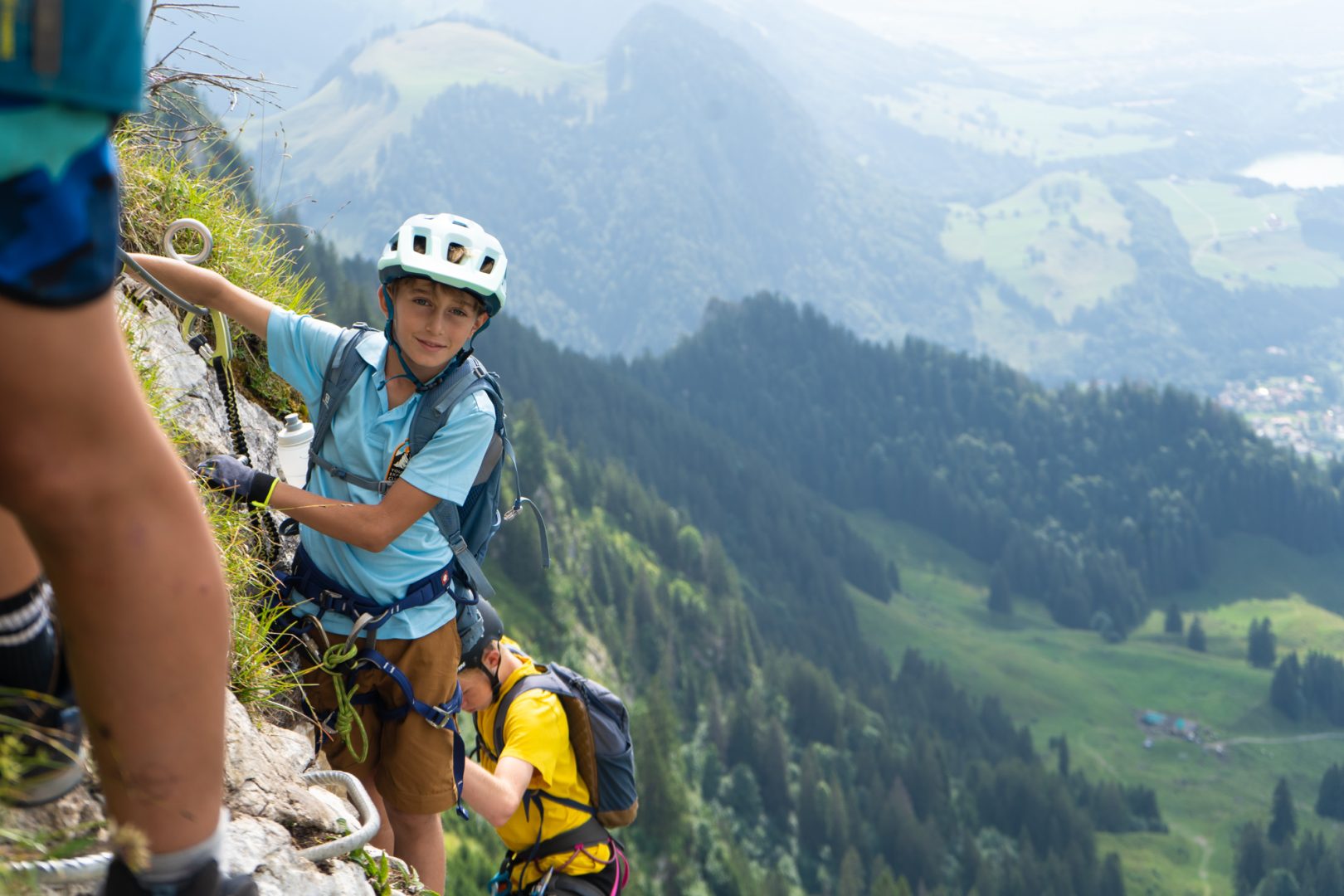
How Outdoor Sports Teach Kids Perseverance
Young Explorers Club: build kids’ perseverance through outdoor sports—micro-goals, progressive challenges, peer accountability and progress.
Young Explorers Club approach
We, at the Young Explorers Club, use outdoor sports to teach perseverance through repeated, manageable challenges like graded climbs or multi-session hikes. These tasks give quick feedback, normalize setbacks, and make small gains visible.
Our programs pair micro-goals, stepped difficulty, peer accountability, and simple metrics (attendance, retries-per-failure, validated scales like Grit-S) to grow persistence while keeping activities safe and sustainable.
Program elements
Challenges and feedback
Repeated, manageable challenges—such as graded routes or timed trail segments—provide immediate feedback that reduces frustration and supports steady mastery. Structuring sessions so progress is visible (e.g., route grades or personal best times) helps participants recognize improvement.
Tactics to train perseverance
- Micro-goals: Break objectives into short, achievable steps that build confidence and momentum.
- Planned progressive increases: Use modest, regular increments (for example, +10–20% every 2–4 sessions) to raise challenge without overwhelming participants.
- Recovery scripts and voluntary retries: Teach simple coping phrases and offer optional repeat attempts to normalize setbacks as learning opportunities.
- Peer-led accountability: Small groups and buddy systems increase follow-through and reduce dropouts.
Metrics and tracking
Combine objective and validated measures to monitor impact and guide adjustments:
- Objective metrics: attendance, retries-per-failure, route/grade progression, time trials.
- Validated self-report scales: Grit-S, CD-RISC, and measures of self-efficacy.
- Simple tracking tools: visible progress charts and short post-session check-ins to capture momentum and barriers.
Social reinforcement
Small groups, peer recognition, and visible progress tools sustain effort. When participants see peers persevering and celebrate incremental wins together, early dropout rates fall and engagement rises.
Safety and enjoyment
Make safety a priority with qualified supervision, routine gear checks, and sensible load management. Preserve enjoyment—keep activities playful and varied—so participants remain motivated for the long term while building persistence.
Key Takeaways
- Repeated, manageable challenges with immediate feedback (e.g., route grades, time trials) build frustration tolerance and steady mastery.
- Apply concrete tactics—micro-goals, planned progressive increases (+10–20% every 2–4 sessions), recovery scripts, and voluntary retries—to train perseverance as a skill.
- Combine objective metrics (attendance, retries-per-failure, grade/time progression) with validated self-report scales (Grit-S, CD-RISC, Self-Efficacy) to track impact and guide adjustments.
- Leverage social reinforcement via small groups, peer-led accountability, and visible progress tools to sustain effort and cut early dropout rates.
- Prioritize safety (qualified supervision, gear checks, load management) and keep activities enjoyable to preserve long-term engagement while building persistence.
Why perseverance matters now: the stakes and a brief, attention-grabbing vignette
A child stumbles on a steep hiking scramble, wants to quit, adjusts footing, keeps going and reaches the summit — that single climb captures daily practice and payoff; the World Health Organization and CDC recommend children 5–17 get at least “60 minutes/day” of moderate-to-vigorous physical activity, and about 70% of children quit organized sport by age 13.
Perseverance — sometimes called grit, resilience, persistence, or mental toughness — is the sustained effort to pursue and complete goals despite setbacks, disappointment, or discomfort. I view it as a skill set you can train: attention control, goal-setting, frustration tolerance and recovery, and incremental planning.
The public-health and participation stakes are straightforward. The “60 minutes/day” guideline from the World Health Organization and CDC is a health target, yes, but it’s also a daily series of short challenges where kids can practice pushing through small defeats. Those micro-challenges add up: repeated exposure to manageable struggle builds confidence that carries into sport, school and relationships. At the same time, about 70% of children quit organized sport by age 13, which shows why I prioritize teaching perseverance early so participation endures.
I’ll offer practical, evidence-based strategies you can use in outdoor sports and simple ways to measure progress inside youth programs. I also recommend checking program options that emphasize leadership skills, like this youth leadership, to pair skill training with adventure.
Practical tactics I use and how I measure them
Below are short, actionable methods and the simple metrics I track to see real change.
- Break tasks into micro-goals: set 5–10 minute objectives during practice. Measure success by the percentage of micro-goals completed per session.
- Use planned, progressive challenge: ramp difficulty across weeks so kids experience repeated small wins. Track difficulty level reached and rate of progression.
- Teach recovery scripting: have kids say a short recovery phrase after slips. Count instances of recovery scripting versus quitting attempts.
- Practice voluntary retries: encourage one immediate redo after failure. Record the retry rate and improvement on repeat attempts.
- Build peer-led accountability: rotate a child coach each session to oversee a task. Measure attendance and retention tied to leadership roles.
- Reflect with short debriefs: use two-question check-ins (“What went well?” and “What next?”). Score self-rated effort and confidence on a 1–5 scale to monitor growth over time.
I focus on short, repeatable exposures during the daily activity window, pair them with feedback, and track simple, observable metrics that show whether perseverance is strengthening session by session.
How outdoor sports teach perseverance: mechanisms and activity-specific examples
I map perseverance to specific learning mechanisms you can observe and measure in outdoor sports.
Mechanisms and micro-examples
-
Challenge + feedback loop: Outdoor activities give visible, incremental tasks and immediate feedback. I watch kids attempt a route, fall, try a different sequence, and succeed one grade higher. Micro-example: a child moves from one rock-climbing grade to the next over eight weeks. Evidence type: program evaluations and observational studies support this pattern.
-
Structured risk and failure: I expose children to managed risk so they learn to tolerate discomfort and recover. Instructors frame falls as data rather than disasters and debrief the experience. Micro-example: supervised scrambling followed by a short debrief that normalizes failure. Evidence type: qualitative program evaluations and adventure-education literature.
-
Mastery learning: I set repeated practice across varied conditions so skills generalize and persistence becomes habitual. Weather and terrain change force adaptation, and progress shows up in objective time or accuracy gains. Micro-example: trail-running pacing improves over repeated sessions and time-to-complete decreases. Evidence type: longitudinal field measures and performance data.
-
Social reinforcement: I use small groups and peer accountability to sustain effort. Teammates notice attempts, call out improvements, and push retries. Micro-example: a training triad where peers track attempts and encourage another try. Evidence type: social-science evaluations of team sports.
-
Physical exertion and executive control: I pair aerobic work with outdoor settings to boost mood and self-regulation. Improved attention makes it easier to stick with hard tasks. Micro-example: children report better focus after a guided outdoor training session. Evidence type: lab studies on nature/cognition and exercise-cognition literature.
Measurement recommendation: mix methods so you capture both behavior and experience. Combine objective performance metrics with short self-reports or instructor notes. That mixed-methods approach links what kids do with how they feel about persistence.
Specific sports, what they train, and measurable outcomes
-
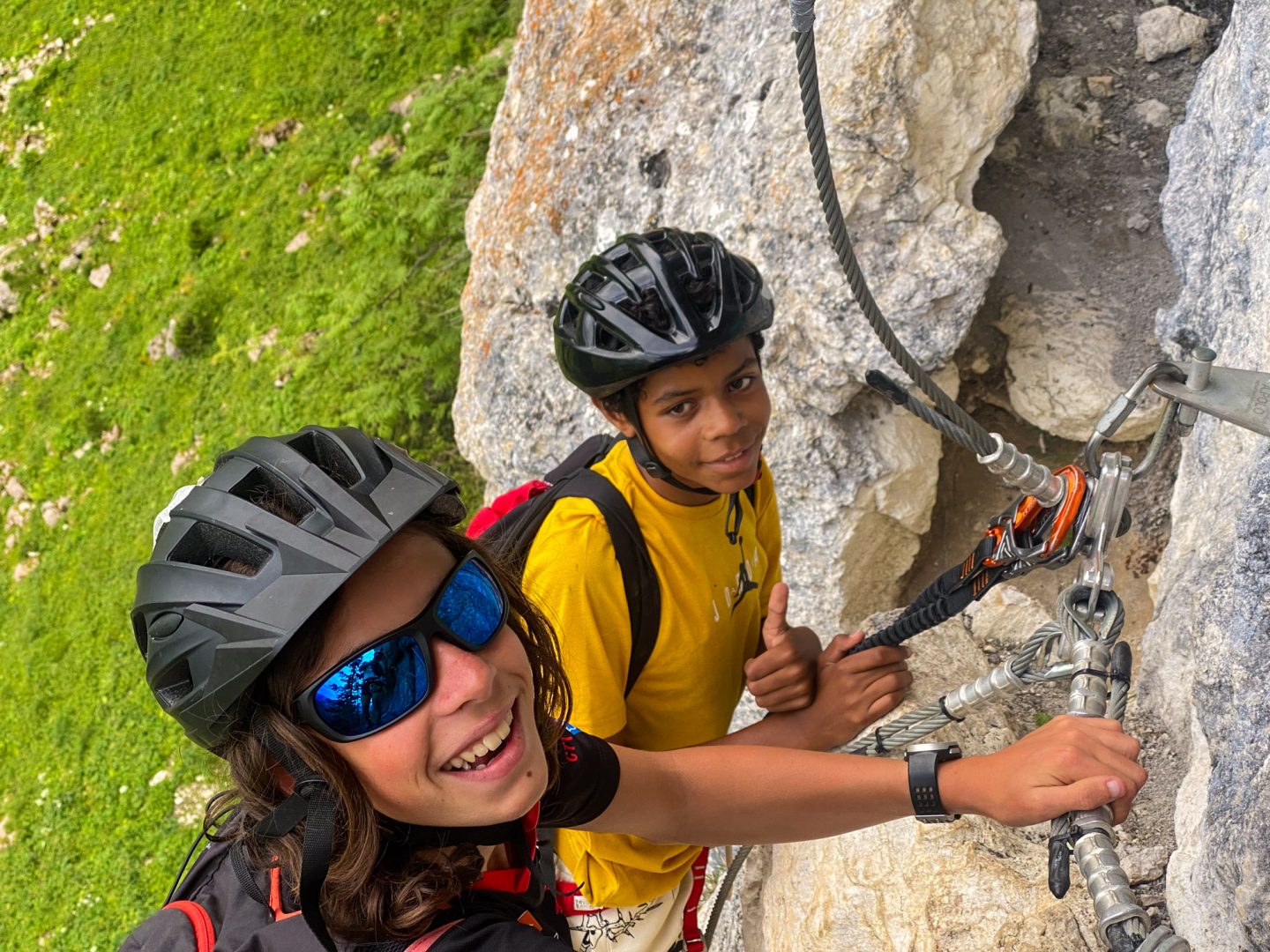
Rock climbing / bouldering — trains graded problem-solving, visible progress, and fall-recovery. Metric: route grade progression (e.g., V0 to V1 over 12 weeks). I also point coaches to practical climbing helmet tips for safety and confidence.
-
Hiking / backpacking — trains long-duration goal pursuit, planning, and delayed gratification. Metric: percent of planned summits completed or time-to-summit improvement.
-
Trail running / cross-country — trains pacing, endurance, and coping with discomfort. Metric: course time improvement (percent change).
-
Team field sports (soccer, rugby, basketball) — train repetition under social accountability and role-based persistence. Metrics: attendance/retention and drill completion rate.
-
Orienteering / adventure racing — trains problem-solving under physical stress and goal recalibration. Metric: navigation errors reduced per race.
-
Canoeing/kayaking — trains technical skill in variable conditions and iterative learning. Metric: successful maneuvers per attempt or time to finish a technical run.

What perseverance looks like in kids — behavioral markers and how to measure them
I look for clear, age-linked behaviors that show a child is building perseverance. In early childhood (ages 4–7) that usually shows as basic frustration tolerance: the child stays engaged for a short task after a minor failure. In middle childhood (8–12) I expect task persistence across days: the child returns to practice after setbacks. In adolescence (13–17) perseverance expresses as long-term goal pursuit and delayed gratification: the teen works toward season-long objectives and tolerates slower progress.
Operationalized indicators let you turn observation into data. I recommend these core metrics and how I use them:
- Retries-per-failure: count how many times a child re-attempts a task after failing once. Use this as a raw persistence signal.
- Sustained practice duration: record minutes per session and minutes per week to measure effort volume.
- Incremental goals achieved: tally the number of small, measurable goals reached over a season (e.g., mastered belay technique, completed 3 routes).
- Attendance and retention: compute percent attendance across sessions and season dropout rate as fidelity markers.
Sample checklist and scale items to track weekly or in multi-week blocks
Below are practical items I use as a short checklist or scale that coaches and parents can apply directly.
- Number of re-attempts after initial failure in a 4-week block (retries-per-failure).
- Average session attendance percentage across an 8-week block.
- Minutes per practice session (average) and minutes per week.
- Number of micro-goals achieved in a 6-week cycle (incremental goals).
- Change scores on validated scales: Short Grit Scale (Grit-S), Connor-Davidson Resilience Scale (CD-RISC), General Self-Efficacy Scale.
- Season dropout rate (%) and overall retention rate (%) for the cohort.
I use validated instruments to give subjective reports structure and to compare pre/post changes. Administer the Short Grit Scale (Grit-S) and CD-RISC at baseline and follow-up to quantify grit and resilience shifts. Track General Self-Efficacy for confidence gains. Pair those with objective metrics like attendance %, minutes practiced, time on course, grade progressed, and successful attempts after initial failure.
Example pre/post numbers (labelled as examples)
- Pre-program Grit-S mean = 3.1; Post-program mean = 3.6 (scale 1–5).
- Example program outcome: After 8 weeks of outdoor climbing sessions (N=24), mean Grit-S increased from 3.0 to 3.5 (+16.7%); session attendance averaged 88%.
Short measurement protocol you can reuse
- Baseline: administer Grit-S and CD-RISC before the first session and record initial attendance intent.
- Ongoing: log attendance and retries-per-failure weekly; capture performance metrics (time on course, grade, successful attempts after failure).
- Post: re-administer scales at 8–12 weeks and compute change scores and percent retention.
- Report: present both objective metrics (attendance, minutes, performance) and subjective scales (Grit-S, CD-RISC, Self-Efficacy).
Simple reporting and statistics I follow
I always report sample size (N). For scale changes I compute percent change = ((post – pre) / pre) * 100. If possible I include effect size (Cohen’s d) for pre/post scale shifts and present both absolute and relative changes so the results are easy to interpret for coaches and parents.
I often point program directors and parents toward complementary resources on program structure and youth skill-building — for example, my experience aligning metrics with a youth leadership program helps turn observational notes into repeatable outcomes: youth leadership program
Research evidence and program case studies: key studies, findings, and limitations
I summarize the strongest evidence linking outdoor sport and activity to perseverance, then flag where the evidence falls short. I focus on study design, main findings, and practical implications you can use when evaluating or running programs.
Key studies and findings
Below are concise study entries with the main takeaway and evidence type.
- “Grit: perseverance and passion for long-term goals.” Duckworth, Peterson, Matthews, Kelly (2007) — Finding: grit predicted retention and achievement in multiple high-challenge settings beyond IQ (West Point retention, National Spelling Bee finalists). (Quantitative, correlational)
- World Health Organization — “Guidelines on physical activity and sedentary behaviour” — Finding: children 5–17: “60 minutes/day” recommended. (Policy guideline)
- Centers for Disease Control and Prevention (CDC) — “How much physical activity do children need?” — Finding: restates the “60 minutes/day” recommendation for children. (Public-health guidance)
- Aspen Institute / Project Play and Sports & Fitness Industry Association youth-participation reports — Finding: about 70% of children quit organized sport by age 13. (Large-scale participation reports)
- Rickinson, Mark et al. — “A review of research on outdoor learning” (2004) — Finding: consistent positive outcomes in self-confidence and resilience from outdoor/adventure education, though methods vary. (Review; mixed evidence)
- Berman, Marc G.; Jonides, John; Kaplan, Stephen — “The cognitive benefits of interacting with nature.” (Psychological Science; 2008) — Finding: improved attention following walks in natural settings. (Lab/field experimental evidence)
- Outward Bound program evaluations — Finding: participants report increases in self-efficacy and teamwork after expeditions. (Program evaluations; primarily self-report)
Program case examples and limitations
Outward Bound. I describe this as expedition-based challenge courses that scale risk and require teamwork. Program evaluations consistently show self-reported increases in self-efficacy and teamwork. Those gains align with mechanisms that foster perseverance: progressive challenge, peer accountability, and short-term goal cycles that build confidence.
Scouts (Boy Scouts/Girl Scouts). The Scouts use badge and progression systems that convert large goals into measurable steps. Badge completion percentage provides an objective marker of sustained engagement and incremental mastery. I see this structure work well to reinforce persistence because it rewards repeated effort and visible progress.
School forest schools / outdoor education. These programs integrate outdoor learning into the curriculum. Rickinson et al. (2004) found qualitative and some quantitative evidence of improved confidence and cooperation. The classroom-to-field loop strengthens practice opportunities and often increases daily activity in line with WHO and CDC guidelines.
Limitations and caveats. I emphasize caution when interpreting program outcomes. Many program evaluations rely heavily on self-report measures and non-randomized designs. That creates bias risks and limits causal claims. Lab and field experiments (for example Berman et al., 2008) support mechanisms like restored attention and reduced stress, but those mechanisms aren’t uniformly proven in large RCTs across diverse youth programs. I therefore avoid overly strong causal language and recommend framing claims as probable and supported by mixed evidence.
Practical evaluation tip. I recommend pairing observational program metrics (attendance, retention, badge completion, performance logs) with validated psychometric scales (self-efficacy, grit, resilience) to strengthen inference. Triangulating objective attendance/performance data with validated self-report scales reduces reliance on single-method outcomes and produces more persuasive evidence for funders and parents.
Operational note for program design. I advise structuring activities so they:
- provide incremental goals,
- include deliberate reflection after challenge,
- document progress with objective markers, and
- measure psychosocial outcomes using validated tools.
If you’re building or assessing a program, consider linking learning outcomes to a clear progression ladder—similar to Scouts—and collecting pre/post measures to detect change.
I also maintain a practical resource perspective: if you want examples of structured leadership curricula built around outdoor challenges, see the youth leadership program for a model that aligns progression, reflection, and measurable milestones.
Program design and coaching methods that instill perseverance (practical session plans and coach language)
I design programs so challenge and recovery alternate predictably. I ramp difficulty per the rule: “increase difficulty by 10–20% every 2–4 sessions.” That steady progression forces adaptation without overwhelming a child.
I frame failure explicitly. I teach coaches to normalize setbacks and run a short post-fall debrief + goal that includes one specific practice action. That single-action focus keeps learners from freezing up and gives them a concrete next step.
I build goals from season objectives down to weekly micro-goals using SMART language. Athletes learn to set Specific, Measurable, Achievable, Relevant, Time-bound aims and then break them into weekly targets. For skill work I keep a practice/play split 70/30 so deliberate practice dominates while play preserves motivation. Social accountability gets baked in through small teams and triads so feedback is frequent and visible. Safety matters: avoid >10% sudden increases in weekly load and aim for a “60 minutes/day” overall activity target to balance progress with recovery.
I coach parents and staff to use targeted praise and strategy feedback. Useful phrases include:
- “You kept trying that tricky move and adjusted your foot—great problem-solving.”
- “That was a smart change in strategy; you learned from it.
- “I noticed you came back to try it again—that persistence matters.”
- “Small steps each time will get you to the top—what’s one tweak you’ll try next?”
- “Missing it once doesn’t mean you can’t get it. Let’s pick one thing to practice.”
I use those lines live and model them in parent briefings. I also point families toward the youth leadership program when parents want a deeper curriculum on responsibility and resilience: youth leadership program.
I use a concise 4-step micro-routine after setbacks. I run it aloud with the child so they internalize the rhythm:
- Normalize: “That was hard.”
- Analyze: “What changed or went wrong?”
- Plan: “One small next step.” (specific practice action)
- Try: “Do it now for 5 minutes.”
Saying the steps out loud reduces rumination and speeds recovery by creating a clear, time-bound action sequence.
Weekly sample session plan (measurable targets for a 6–12 week cycle)
- Week 1: Baseline assessment (skill/time/grade) and Grit-S/CD-RISC pre-tests. Record attendance %, best attempt, retries-per-failure, and a one-item self-report on effort.
- Weeks 2–3: Targeted technique drills aimed to improve a specific metric by ~10%. Use video clips and immediate corrective cues. Keep practice/play split at 70/30.
- Week 4: Mini-challenge to record “retries-per-failure” and best attempt; run coach debriefs that include one concrete practice action per athlete.
- Weeks 5–6: Progressive difficulty and social-accountability challenges in triads; set weekly micro-goals and prepare for re-measure. Monitor load to avoid >10% sudden increases.
- Weeks 7–12 (if extending to 12 weeks): Repeat progression across cycles, gradually increasing difficulty by 10–20% every 2–4 sessions and re-measure with Grit-S at the end of the cycle.
I track coaching metrics each session and review them weekly: attendance %, retries-per-failure, best attempt, grade/time, and one short self-report item on effort. Those numbers feed the next week’s micro-goals and the visual progress tools I use with kids.
I display progress where children can update it themselves. Visible tools include progress charts that record attempts, best time, and next target; sticker charts for short-term wins; and a progress board tied to attendance and retention. I also show measurable targets—grade, time, retries-per-failure—so kids see exactly what they’re improving.
I keep coach cues specific and actionable. Instead of saying “good job,” I say what was good and why, then assign a single next practice action. That habit links effort to strategy and reinforces persistence as a skill you can practice.
Practical considerations: safety, common objections, visuals, and an actionable next step (6-week pilot)
I acknowledge risk but I don’t accept avoidable harm. Outdoor sports teach perseverance best when safety is built in from day one. Reduce injury risk with progressive loads, qualified supervision, the right protective gear, warm-ups, and planned rest days. Combine challenge with fun so kids learn persistence without losing interest — remember, About 70% of children quit organized sport by age 13, so design activities that reward small wins and social connection. I also watch mental health closely: outdoor activity often lowers stress and lifts mood, but some kids fear failure. Debrief setbacks gently, normalize struggle, and offer one-on-one support when anxiety shows up.
I suggest a few visual elements for a blog or handout to make the process clear and persuasive:
- A Perseverance Cycle flowchart: Challenge → Failure → Feedback → Retry → Mastery.
- An anchor-stat bar highlighting “60 min/day” and “About 70% of children quit organized sport by age 13.”
- A 4-panel mini-case showing baseline, failure, coach action, and outcome.
- A small pre/post Grit-S snapshot with an example percent change.
I also recommend linking readers to a relevant program like the youth leadership program when suggesting community options.
Safety checklist, 6-week pilot outline, and measurement plan
Below are practical lists you can copy and use immediately.
Safety checklist
- Gear check before every session (helmets, shoes, harnesses as needed).
- Staff-to-child ratio set and posted.
- Written emergency plan and accessible first-aid kit.
- Pre-activity warm-up routine scheduled.
- Route or area inspection logged before use.
6-week pilot (ready-to-run)
- Weeks 1–2: Baseline and targeted drills. Administer Grit-S and CD-RISC pre-tests. Track attendance and retries-per-failure. Set an initial skill/time benchmark.
- Weeks 3–4: Increase difficulty progressively (~+10–20% every 2–4 sessions). Add social accountability drills (triads). Continue logging attendance and retries.
- Weeks 5–6: Run mini-challenges, repeat final skill/time tests, and re-administer Grit-S and CD-RISC.
Measurement and reporting
- Administer Grit-S at start and finish; use Grit-S every 8–12 weeks for larger programs or at baseline and post for a 6-week pilot.
- Track weekly attendance percentage and compute retention.
- Log performance metrics (grade progression, time improvement) and retries-per-failure.
- Report simple percent-change results for readers (e.g., “Grit-S increased X% (Pre n=X, Post n=X). Attendance averaged Y%.”).
Recommended materials and next steps
- Provide a downloadable checklist with equipment, a simple goal planner, and a Grit-S reference.
- Suggest community options:
- Youth climbing
- Guided hikes
- Scouts
- School outdoor clubs
Aim for 60 minutes/day spread across activities and consider repeating formal measurement on a regular cadence to see lasting gains.
Sources:
World Health Organization (https://www.who.int/publications/i/item/9789240015128) — Guidelines on physical activity and sedentary behaviour
Centers for Disease Control and Prevention (https://www.cdc.gov/physicalactivity/basics/children/index.htm) — How much physical activity do children need?
Journal of Personality and Social Psychology (https://doi.org/10.1037/0022-3514.92.6.1087) — Grit: perseverance and passion for long-term goals (Duckworth et al., 2007)
Aspen Institute / Project Play (https://www.aspeninstitute.org/programs/project-play/) — State of Play (youth sports reports)
Sports & Fitness Industry Association (https://www.sfia.org) — Youth participation reports
Field Studies Council / review (https://www.field-studies-council.org/media/329179/outdoor-learning-literature-review.pdf) — A review of research on outdoor learning (Rickinson et al., 2004)
Psychological Science / PubMed (https://pubmed.ncbi.nlm.nih.gov/19015510/) — The cognitive benefits of interacting with nature (Berman, Jonides, & Kaplan, 2008)
Outward Bound USA (https://www.outwardbound.org) — Outward Bound program evaluations (self‑efficacy and teamwork findings)
Boy Scouts of America (https://www.scouting.org) — Scouts badge/progression system (program example)
Girl Scouts of the USA (https://www.girlscouts.org) — Girl Scouts badge/progression system (program example)


