How to pack for Switzerland camp: essential guide 2026
Complete packing guide for Switzerland summer camps. Learn essential clothing layers, footwear, travel prep, and safety tips for children aged 8-17 heading to Swiss outdoor adventure camps.
Packing for a Switzerland outdoor adventure camp presents unique challenges for parents. Variable mountain weather, demanding outdoor activities, and the need to balance comfort with practicality create uncertainty about what to bring. Your child’s safety, comfort, and readiness for bilingual experiential learning depend on thoughtful preparation. This comprehensive guide walks you through essential items, layering strategies, travel logistics, and safety considerations. You’ll learn exactly what to pack, how to organize efficiently, and when to start preparing for a seamless camp experience in the Swiss Alps.
Table of Contents
- Understanding Camp Requirements And Early Preparation
- Essential Clothing And Packing For Swiss Mountain Weather
- Footwear, Gear, And Practical Essentials For Outdoor Adventure Camps
- Tips For Packing Efficiently And Managing Common Packing Mistakes
- Discover Young Explorers Club Summer Camps And Activities
- Frequently Asked Questions
Key takeaways
| Point | Details |
|---|---|
| Layer clothing strategically | Pack moisture-wicking base layers, insulating mid-layers, and waterproof outer shells to adapt to changing mountain conditions |
| Prioritize proper footwear | Sturdy walking shoes and broken-in hiking boots ensure safety and comfort across varied terrain and activities |
| Plan travel logistics early | Complete bookings and paperwork three weeks ahead to reduce stress and ensure smooth camp check-in |
| Pack smart essentials | Include universal adapters, reusable water bottles, and labeled belongings to maximize convenience and minimize hassle |
Understanding camp requirements and early preparation
Successful camp experiences begin weeks before departure. Complete travel arrangements at least three weeks ahead to secure the best flights, accommodations, and ground transportation options. This timeline allows you to gather required documents, arrange travel insurance, and coordinate with camp administrators without last-minute panic. Early preparation also gives your child time to mentally prepare for the adventure ahead.
Language readiness significantly impacts your child’s camp experience. Basic proficiency in the camp language enhances communication with counselors and peers, improving safety and social integration. Children attending bilingual or immersion programs should practice conversational phrases, safety vocabulary, and activity-related terms before arrival. Even simple greetings and common questions help build confidence and facilitate friendships.
Safety protocols form the foundation of quality outdoor programs. Research camps that follow established safety standards with trained staff, emergency procedures, and appropriate supervision ratios. Ask about staff qualifications, medical support availability, and emergency communication systems. Understanding these protocols helps you pack appropriate safety items and prepare your child for camp expectations. Verify that counselors hold current certifications in first aid, CPR, and wilderness safety relevant to planned activities.
Consider these preparation essentials:
- Confirm all registration paperwork, medical forms, and liability waivers are complete and submitted
- Gather copies of passports, insurance cards, and emergency contact information
- Schedule any required vaccinations or health checkups well in advance
- Review camp rules, daily schedules, and communication policies with your child
- Arrange prescription medication refills to last the entire camp duration plus extra days
- Check local school calendars to avoid peak travel weeks that increase costs and crowding
Pro Tip: Create a dedicated folder for all camp documents, including confirmations, packing lists, and contact numbers. Keep digital copies accessible on your phone for quick reference during travel.
Essential clothing and packing for Swiss mountain weather
Swiss summer weather demands versatile clothing that adapts to rapid changes. Mountain conditions shift from warm sunshine to cool rain within hours, requiring strategic layering approaches that balance warmth, breathability, and weather protection. The three-layer system provides maximum flexibility while minimizing luggage weight and volume.
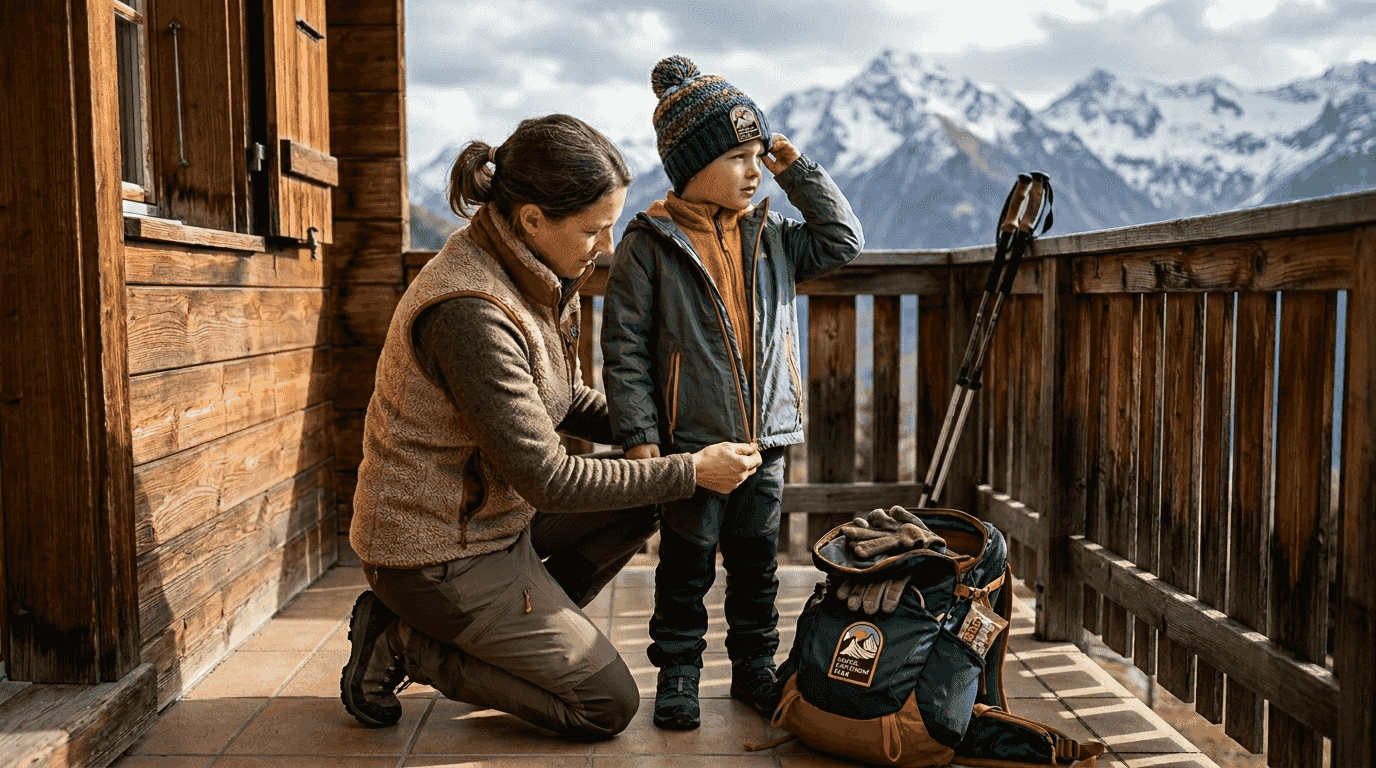
Moisture-wicking base layers, insulating mid-layers, and waterproof outer shells form the foundation of effective mountain clothing. Base layers pull sweat away from skin, keeping your child dry during active pursuits. Mid-layers trap body heat when temperatures drop. Outer layers shield against wind and precipitation while allowing moisture to escape. This system lets children add or remove pieces as conditions change throughout the day.
Quick-dry fabrics outperform cotton in outdoor environments. Synthetic materials and merino wool dry faster, resist odors, and maintain insulating properties when wet. Cotton absorbs moisture and stays damp, increasing chill risk and discomfort. Pack enough clothing for several days between laundry cycles, focusing on items that can be rinsed and dried overnight if needed.
| Layer Type | Purpose | Recommended Items | Key Features |
|---|---|---|---|
| Base Layer | Moisture management and comfort | Synthetic or merino wool shirts, long underwear | Wicks sweat, dries quickly, fits snugly |
| Mid Layer | Insulation and warmth | Fleece jacket, lightweight down vest, sweater | Traps heat, breathable, easy to pack |
| Outer Layer | Weather protection | Waterproof jacket, rain pants, windbreaker | Blocks wind and rain, sealed seams, hood |
A lightweight waterproof jacket serves as the most critical single item for Swiss mountain camps. Look for jackets with sealed seams, adjustable hoods, and adequate ventilation to prevent overheating during active movement. The jacket should fit comfortably over mid-layers without restricting arm movement for climbing, hiking, or other activities.
Pack versatile pieces that work across multiple scenarios. Convertible pants with zip-off legs transition from warm afternoons to cool evenings. Neutral colors coordinate easily, reducing the total number of items needed. Focus on functionality over fashion, prioritizing comfort and durability for outdoor wear.
Pro Tip: Test your child’s layering system before camp by wearing it on a local hike or outdoor activity. This reveals fit issues, uncomfortable seams, or missing pieces while you still have time to make adjustments.
Footwear, gear, and practical essentials for outdoor adventure camps
Proper footwear prevents injuries and ensures comfort across diverse camp activities. Sturdy walking shoes handle town exploration while hiking boots provide ankle support and traction on mountain trails. Children need both types to match activity demands and terrain conditions throughout their camp stay.
Hiking boots require careful selection and break-in time. Choose boots with good ankle support, aggressive tread patterns, and waterproof membranes for wet conditions. The boots should fit snugly with room for toes to move without sliding forward on descents. Break in new boots by wearing them on progressively longer walks at least two weeks before camp to prevent blisters and hot spots.
Comfortable downtime footwear matters as much as activity shoes. Pack sandals or lightweight sneakers for evening relaxation, indoor time, and non-strenuous activities. These shoes should be easy to slip on and off, providing relief after long days in hiking boots. Avoid flip-flops that offer minimal support and protection.
| Footwear Type | Best For | Pros | Cons | Break-in Needed |
|---|---|---|---|---|
| Hiking Boots | Mountain trails, rocky terrain | Ankle support, waterproof, durable traction | Heavier, requires break-in period | Yes, 2+ weeks |
| Walking Shoes | Town visits, easy trails, daily wear | Lightweight, comfortable, versatile | Less support, not waterproof | Minimal |
| Sandals | Downtime, showers, casual wear | Easy on/off, breathable, quick-dry | No protection, minimal support | None |
Technical gear enhances camp convenience and safety. A reusable water bottle reduces costs and environmental impact while ensuring hydration access throughout activities. Swiss tap water is exceptionally clean and safe, making refills easy at any facility. Choose insulated bottles that keep water cool during warm afternoon hikes.
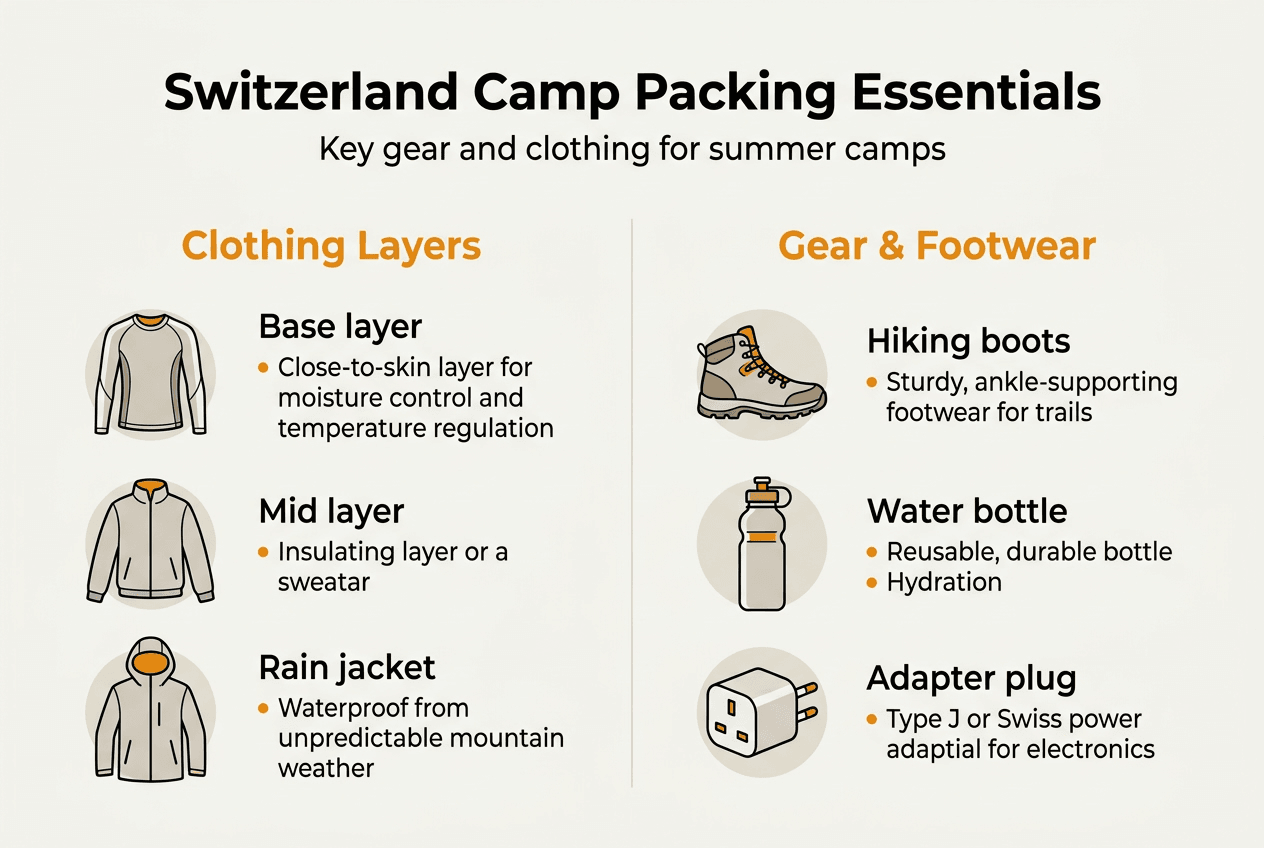
A universal power adapter is essential for Switzerland’s Type J outlets. These adapters allow charging of phones, cameras, and other electronics that keep your child connected and able to document their experience. Purchase adapters before departure, as airport versions cost significantly more and may be lower quality.
Small daypacks carry daily essentials during excursions and activities. The pack should hold a water bottle, snacks, extra layers, sunscreen, and personal items without being bulky or heavy. Look for packs with padded straps, multiple compartments, and water-resistant materials. A 15-20 liter capacity suits most children’s needs for day trips.
Additional practical essentials include:
- Sunglasses with UV protection for high-altitude sun exposure
- Sunscreen with SPF 30+ and lip balm for face and exposed skin
- Personal toiletries in travel sizes to minimize weight and meet airline regulations
- Headlamp or small flashlight for evening activities and cabin use
- Quick-dry towel that packs small and dries rapidly between uses
- Basic first-aid supplies including bandages, pain relievers, and any prescription medications
Pro Tip: Break in hiking boots by wearing them around the house with camp socks, then on short neighborhood walks, and finally on longer hikes with a loaded daypack. This gradual process reveals pressure points and allows time for adjustments before camp starts.
Tips for packing efficiently and managing common packing mistakes
Efficient packing reduces stress and ensures nothing essential gets forgotten. Start preparing at least two weeks before departure using a detailed, written checklist. This timeline allows you to identify missing items, make purchases, and wash new clothing before packing. Rushing leads to oversights that create inconvenience or require expensive replacements at your destination.
Versatile, multi-use items minimize luggage volume while maximizing functionality. A fleece jacket serves as both a mid-layer and evening wear. Convertible pants work for hiking and casual activities. Neutral-colored clothing coordinates easily, reducing the total number of outfits needed. Pack light by utilizing available laundry services rather than bringing clothing for every single day.
Follow this systematic packing sequence:
- Lay out all items on a bed or large surface to visualize the complete collection
- Remove anything that serves a single, narrow purpose unless absolutely essential
- Roll clothing tightly to save space and reduce wrinkles compared to folding
- Pack heaviest items at the bottom of the suitcase near the wheels
- Fill shoes and gaps with small items like socks, underwear, or toiletries
- Place frequently needed items in easily accessible outer pockets
- Keep one complete outfit and essential toiletries in carry-on luggage for delays
- Double-check the checklist before closing and weighing the final luggage
Label every item with your child’s name using permanent marker or iron-on labels. Clothing, gear, and accessories easily get mixed up in shared cabin spaces or during group activities. Clear identification helps counselors return lost items and prevents disputes over similar belongings. Label placement inside collars, waistbands, and gear pockets ensures visibility without affecting appearance.
Travel-sized toiletries meet airline regulations while reducing weight and bulk. Decant favorite products into small containers or purchase travel versions of essentials. Include basic first-aid supplies like bandages, antiseptic wipes, pain relievers, and any prescription medications with clear dosage instructions. Pack medications in original containers with pharmacy labels to facilitate customs clearance and camp health checks.
Avoid these common packing mistakes:
- Overpacking clothing far beyond what’s needed, adding unnecessary weight and bulk
- Forgetting universal power adapters, leaving electronics uncharged
- Ignoring weather variability by packing only for warm or cold conditions
- Bringing new, untested gear that may cause discomfort or malfunction
- Packing valuable jewelry, electronics, or irreplaceable items that could be lost or damaged
- Overlooking medication refills that need to last the entire camp duration
- Skipping the final checklist review that catches last-minute oversights
Heavy winter jackets are unnecessary for summer camps unless your child plans high-altitude glacier tours above 3,000 meters. Focus instead on effective layering with lighter pieces that combine for equivalent warmth without the bulk. A quality fleece and waterproof shell together provide better versatility than a single heavy coat.
Pro Tip: Roll clothing instead of folding to maximize suitcase space and minimize wrinkles. Place rolled items vertically in the luggage so you can see everything at once without unpacking completely.
Discover young explorers club summer camps and activities
Ready to give your child an unforgettable Swiss adventure? Young Explorers Club offers weekly outdoor camps designed specifically for children aged 8-17, combining thrilling activities with personal growth opportunities. Our expert counselors lead teen programs in mountain biking, climbing, survival skills, and multisport adventures that build confidence, teamwork, and resilience in stunning Alpine settings.
Our bilingual environment provides natural language immersion in French, English, and German without the pressure of formal classroom instruction. Children develop communication skills through authentic interactions during activities, meals, and evening programs. Our structured yet flexible approach balances adventure with safety, following established protocols that give parents peace of mind while children explore, learn, and grow in one of Europe’s most beautiful outdoor classrooms.
Frequently asked questions
How far in advance should I start packing for a Switzerland camp?
Begin packing preparations at least two weeks before departure to identify missing items and make necessary purchases without rushing. Start travel bookings and camp registration three or more weeks ahead for optimal flight options and smooth check-in processes. This timeline reduces stress and ensures you have time to address unexpected issues like passport renewals or medical appointments.
What types of clothing should my child wear at a Swiss summer camp?
Your child needs layered clothing with moisture-wicking base layers, insulating mid-layers like fleece, and waterproof outer shells to adapt to variable mountain weather. Quick-dry synthetic or merino wool fabrics outperform cotton in outdoor environments. Pack versatile pieces that work across multiple activities and weather scenarios rather than single-purpose items.
How can I ensure my child stays safe and comfortable during the camp?
Choose camps that follow established safety standards with trained staff holding current certifications in first aid and wilderness safety. Pack proper footwear, a basic first-aid kit, and ensure your child knows basic camp language phrases for effective communication. Verify that all required medications are clearly labeled with dosage instructions and packed in sufficient quantities for the entire camp duration.
Is it necessary to bring a heavy jacket for summer camp in Switzerland?
Heavy winter jackets are typically unnecessary for summer camps unless your child plans glacier tours at high altitude above 3,000 meters. Focus on effective layering with a quality fleece and waterproof shell that combine for warmth without excessive bulk. This approach provides better versatility for changing conditions throughout the day and takes up less luggage space.
Recommended
- What To Pack For Summer Camp In Switzerland: Ultimate Checklist | Young Explorers Club Switzerland
- Essential Guide: What To Pack For Switzerland For A Perfect Trip | Young Explorers Club Switzerland
- Camping With Kids In Switzerland: Campsite Guide | Young Explorers Club Switzerland
- Summer Packing List For Kids Attending Swiss Camps | Young Explorers Club Switzerland
- Kontrolna lista za zaštitu kampa od komaraca 2026